

6 Books for Self-Discovery and Personal Growth
There is a particular kind of restlessness that sends people toward books like these. It is not always a crisis. Sometimes it is just a quiet Tuesday when you realize you have been running on autopilot for longer than you care to admit. You want to understand yourself better. You want to stop repeating the same patterns, having the same arguments, or feeling vaguely dissatisfied without being able to name why. Books cannot fix all of that, but the right ones can at least hand you a decent flashlight.
The six books gathered here span decades and disciplines. Some come from psychology, some from spiritual traditions, some from the kind of hard-won personal experience that makes you trust the author immediately. None of them promise overnight results, and that is honestly one of the things that makes them worth reading. Real self-discovery tends to be slow, a little uncomfortable, and occasionally funny in retrospect. These books understand that.
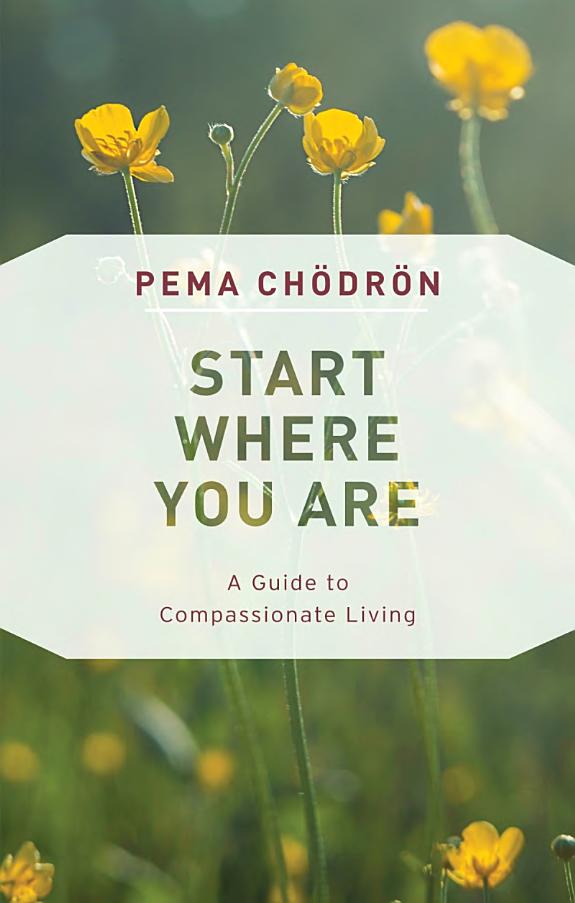
Start Where You Are
1. Start Where You Are by Pema Chodron
Pema Chodron is an American Buddhist nun whose writing has a quality that is genuinely rare: she is warm without being saccharine, and direct without being harsh. “Start Where You Are” is built around the Tibetan practice of lojong, a series of short slogans meant to train the mind toward compassion and openness. Do not let the word “slogans” put you off. These are not the kind of thing you would find on a motivational poster. They are more like small, slightly uncomfortable invitations to look at yourself honestly.
The central idea here is that you do not need to wait until you are calmer, more together, or less of a mess before you begin working on yourself. You start exactly where you are, with all the anxiety and confusion and half-formed habits intact. Chodron is particularly good at addressing the ways we harden against our own pain, building elaborate defenses that end up causing more suffering than the original wound ever did. She calls this “the armoring of the heart,” and she describes it with the kind of precision that makes you feel seen in a slightly uncomfortable way.
The writing is gentle but never vague. Chodron uses stories from her own practice and teaching to ground each concept, which keeps the book from floating off into abstraction. She also has a quiet sense of humor that surfaces just when the material gets heavy enough to need it.
“The most fundamental aggression to ourselves, the most fundamental harm we can do to ourselves, is to remain ignorant by not having the courage and the respect to look at ourselves honestly and gently.” This sentence alone is worth the price of admission.
This is perfect for readers who are drawn to contemplative traditions but want something practical and grounded, and for anyone who has ever suspected that their biggest obstacle is their own resistance to sitting still.
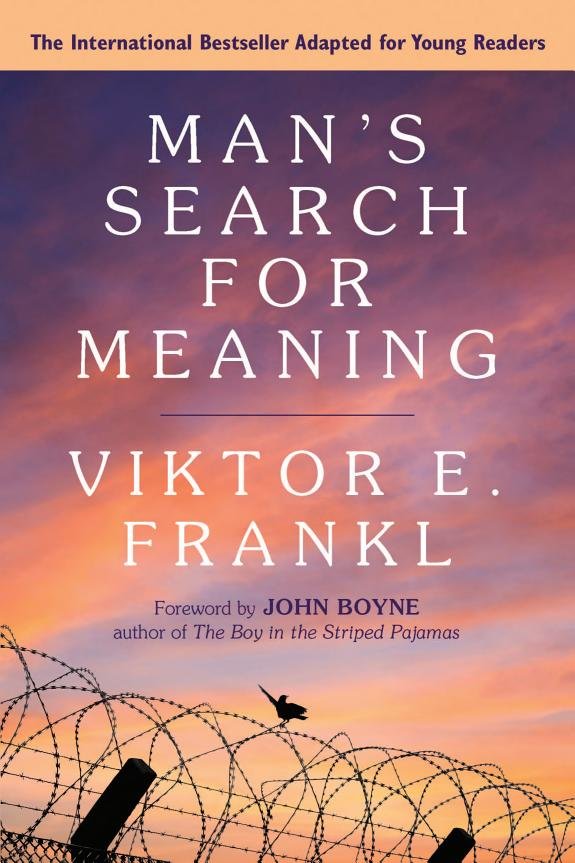
Man’s Search for Meaning
2. Man’s Search for Meaning by Viktor E. Frankl
Viktor Frankl was a psychiatrist and Holocaust survivor, and this slim book is his account of how he observed human behavior, including his own, in the Nazi concentration camps of World War II. The first half is a memoir of that experience, written with a restraint that somehow makes it more affecting than any amount of dramatic language could. The second half introduces logotherapy, his therapeutic framework built on the idea that the primary human drive is not pleasure or power but the search for meaning.
The core argument is deceptively simple: we cannot always choose our circumstances, but we can choose our response to them. Frankl saw people in the most extreme conditions imaginable, and he noticed that those who found some thread of meaning, however thin, tended to endure in ways that others did not. This is not a cheerful observation dressed up as philosophy. It is a conclusion drawn from genuine suffering, which gives it a weight that purely theoretical writing rarely achieves.
What keeps this book relevant decades after it was written is that Frankl is not telling you what to find meaningful. He is insisting that the search itself is non-negotiable, that a life organized around avoiding discomfort or accumulating comfort is a life that will feel hollow. That is a harder message than it sounds, and he delivers it without flinching.
If you are looking for permission to stop chasing someone else’s definition of success and start asking what actually matters to you, Frankl gives it, though he would probably say you did not need his permission in the first place.
This is perfect for anyone going through a period of questioning what their life is actually for, and for readers who want their self-help grounded in something harder and more serious than positive thinking.
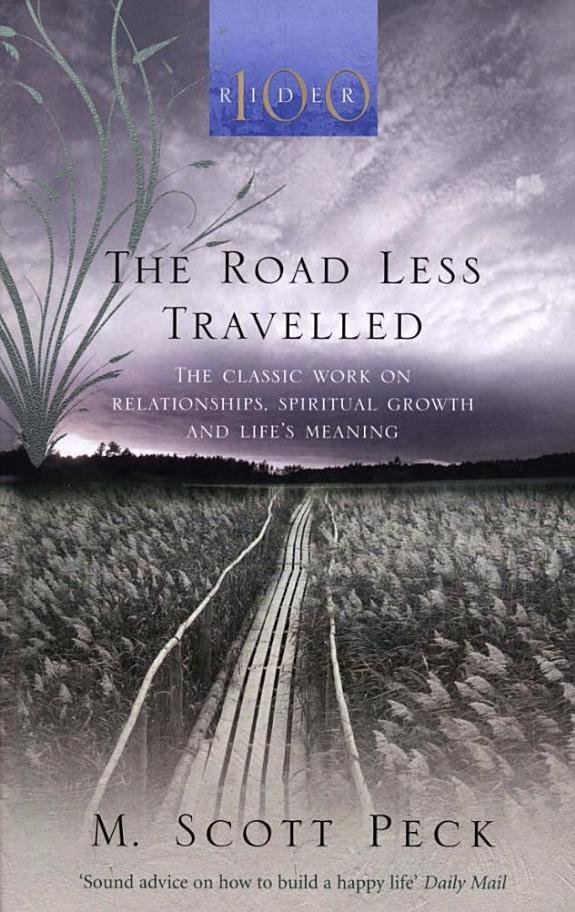
The Road Less Traveled
3. The Road Less Traveled by M. Scott Peck
M. Scott Peck opens this book with three words: “Life is difficult.” Then he explains that once you truly accept that, life actually becomes less difficult, because you stop spending all your energy being surprised and resentful that hard things keep happening. It is the kind of opening that either immediately earns your trust or makes you want to put the book down. If you are still reading after page one, you are probably the right audience.
Peck was a psychiatrist, and this book draws heavily on his clinical experience while also weaving in ideas from psychology, philosophy, and Christianity. The Christianity is worth flagging because it is not incidental. Peck’s framework is spiritual as well as psychological, and the later sections of the book lean into that quite directly. Readers who are firmly secular may find themselves skimming parts of the final third, and that is a fair response.
The sections on discipline and love are the strongest. Peck defines love not as a feeling but as an action, specifically the willingness to extend yourself for the growth of another person or yourself. He is also bracingly honest about the ways people avoid growth, including through neurosis, which he describes as a way of suffering that feels safer than changing. The book is occasionally dense and the writing is not always elegant, but the ideas are serious and worth the effort.
Peck’s insistence that genuine love requires genuine effort, and that most of what we call love is actually dependency or projection, is the kind of claim that stings a little and then slowly starts to make sense.
This is perfect for readers who want a psychologically rigorous look at growth and are open to a framework that includes spiritual dimensions, and for anyone who suspects they have been confusing comfort with contentment.
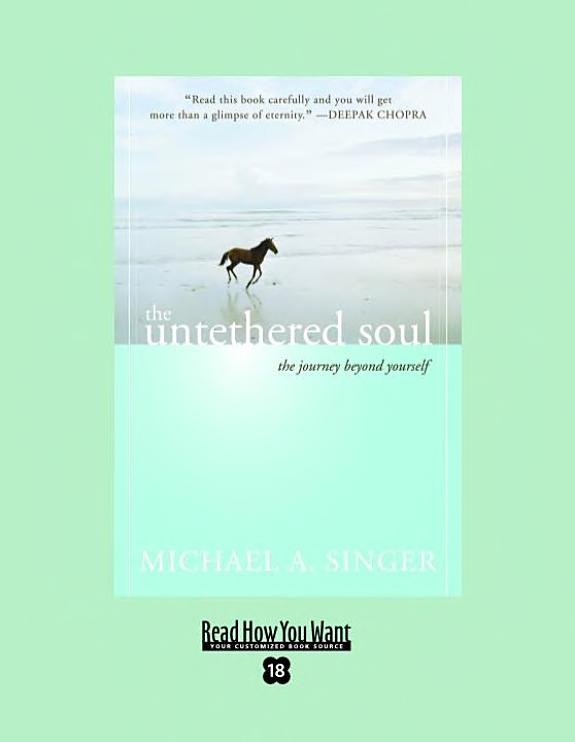
The Untethered Soul
4. The Untethered Soul by Michael A. Singer
Michael Singer’s central question in this book is deceptively simple: who is the one watching your thoughts? You can observe your own mental chatter, which means there must be something doing the observing that is not the chatter itself. Singer uses this distinction, between the constant stream of inner commentary and the awareness that notices it, as the foundation for everything else in the book. It sounds abstract, but he explains it with enough clarity and patience that it tends to land even for readers who have never thought about consciousness in these terms.
The writing is conversational and accessible without being dumbed down. Singer draws on both Western psychology and Eastern contemplative traditions without making a big show of either, which keeps the book from feeling like a lecture. His argument is essentially that most human suffering comes from our tendency to close around painful experiences rather than letting them move through us. We build a kind of internal fortress to keep certain feelings out, and then we spend enormous energy maintaining that fortress, which ends up being more exhausting than the feelings would have been.
The practical implications of this are significant. Singer is not asking you to become a passive observer of your life. He is asking you to stop letting fear and old pain make your decisions for you. That is a genuinely useful reframe, and he returns to it from enough different angles that it has time to settle in properly. This book is not for everyone, and readers who are allergic to anything that sounds remotely spiritual may find the tone off-putting.
The idea that you are not your thoughts, that you are the one noticing them, is not new, but Singer explains it in a way that feels fresh and, more importantly, applicable to ordinary daily life.
This is perfect for readers who feel exhausted by their own inner critic and want a practical framework for creating some distance from it, particularly those who are open to a lightly spiritual perspective.
The Gifts of Imperfection
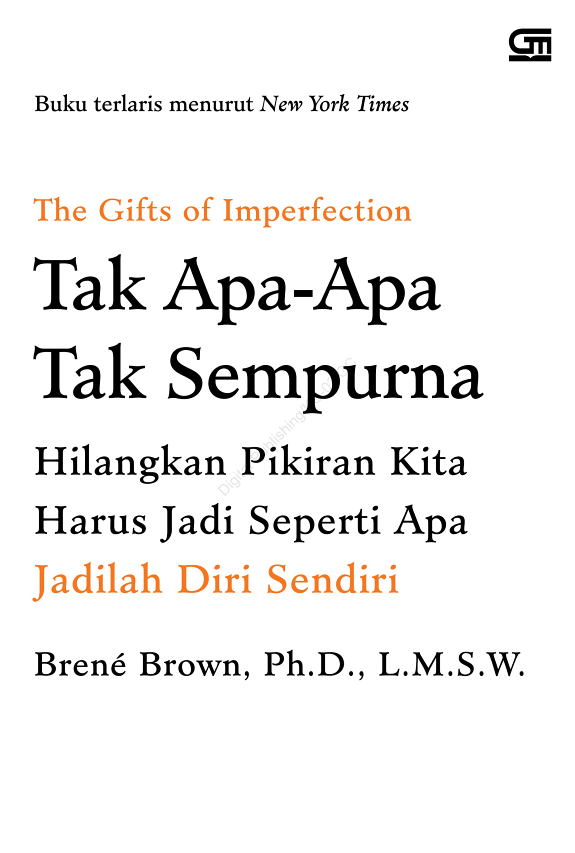
5. The Gifts of Imperfection by Brene Brown
Brene Brown is a research professor who spent years studying shame, vulnerability, and belonging, and her findings kept pointing toward a conclusion that made her, by her own account, deeply uncomfortable: the people who lived with the most joy and connection were the ones who had stopped trying to be perfect. “The Gifts of Imperfection” is her attempt to take that research and turn it into something usable, organized around ten guideposts for what she calls “wholehearted living.”
Brown’s voice is one of the most distinctive things about her work. She writes like she talks, which is to say quickly, honestly, and with a willingness to include her own failures as examples. She does not position herself as someone who has figured everything out and is now graciously sharing the secret. She positions herself as someone who is still working on it, which makes the book considerably easier to read than it might otherwise be. The research background also helps. When she makes a claim about shame or belonging, she can point to data, which gives the book more credibility than the average self-help title.
The book is not without its limitations. Some of the guideposts feel more developed than others, and readers who want deep theoretical grounding may find it a little thin in places. The tone is also very warm and encouraging, which is genuinely welcome for some readers and slightly cloying for others. If you tend to be suspicious of anything that feels too affirming, you might find yourself resisting it even when the underlying ideas are sound.
Brown’s distinction between fitting in and belonging, the idea that fitting in requires you to change yourself while belonging requires you to be yourself, is one of those simple observations that reframes a lot of old pain very quickly.
This is perfect for readers who struggle with perfectionism, people-pleasing, or chronic self-criticism, and for anyone who wants research-backed reassurance that being human and imperfect is not actually a problem to be solved.
The Four Agreements
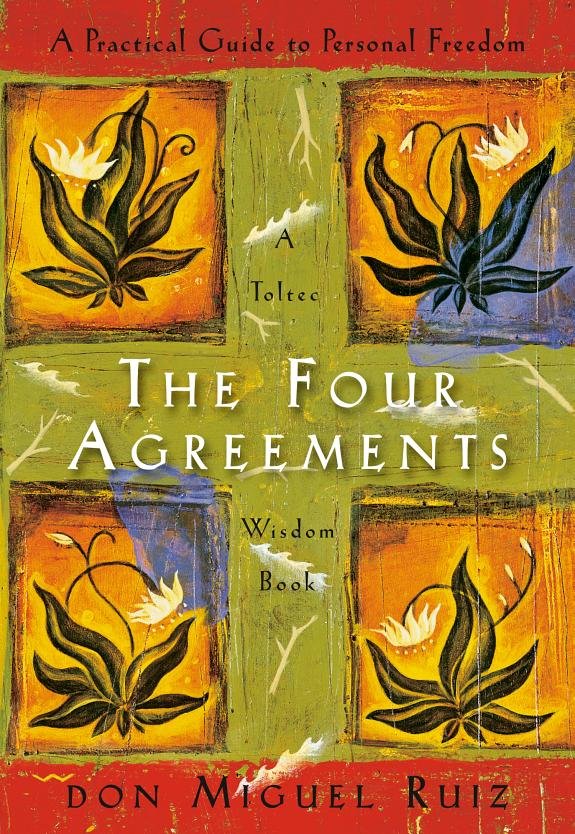
6. The Four Agreements by Don Miguel Ruiz
Don Miguel Ruiz draws on Toltec wisdom, a tradition from ancient Mexico, to offer what is essentially a framework for how to live with less suffering and more authenticity. The four agreements are: be impeccable with your word, don’t take anything personally, don’t make assumptions, and always do your best. Written out like that, they sound almost too simple. The book’s achievement is in unpacking why they are actually quite difficult to practice, and why most of us are doing the opposite without realizing it.
The writing is plain and direct, almost to the point of being stark. Ruiz does not use a lot of flourishes or extended metaphors. He makes a point, explains it, gives an example, and moves on. Some readers find this refreshing. Others find it a little flat. The book is short enough that the pacing rarely becomes a real problem, and the ideas are clear enough that you do not need much literary decoration to absorb them.
The concept Ruiz calls “the domestication of humans” is worth particular attention. He argues that from childhood we are trained through reward and punishment to adopt beliefs about ourselves and the world that are not actually our own, and that much of what we experience as our personality is really just a collection of agreements we made to survive childhood. Whether or not you accept the full philosophical framework, the observation that many of our core beliefs were formed before we were old enough to evaluate them is a genuinely useful one.
The agreement not to take anything personally is the one that tends to stop readers cold, because Ruiz explains it in a way that makes you realize how much energy you spend reacting to things that were never really about you at all.
This is perfect for readers who want a short, direct framework for examining the unconscious rules they live by, and for anyone who finds themselves repeatedly hurt by what other people say or think about them.
None of these six books will do the work for you. That is not a criticism of them; it is just the nature of the project. Self-discovery is not something you can outsource to an author, however wise or well-researched they might be. What books can do is offer a vocabulary for things you have been feeling without words, a framework for making sense of patterns you have been living inside without seeing, and occasionally the small but real comfort of knowing that someone else has been exactly where you are.
If you are new to this kind of reading, start with whichever title in this list spoke to you most in the description. If you have read widely in this space already, you will probably find something fresh here regardless, because each of these authors brings a genuinely distinct perspective. Read slowly, argue with the ideas if they need arguing with, and give yourself credit for doing something that takes more courage than it looks like from the outside.