

8 Books Every Introvert Should Read
There is a particular kind of exhaustion that comes from spending a whole weekend being social, smiling through every conversation, and then collapsing on the couch Sunday night wondering why you feel like you ran a marathon. If that sounds familiar, you are probably an introvert, and you are in very good company. Some of the most thoughtful, creative, and quietly determined people in history have been introverts. The world just does not always make it easy to remember that.
Books have a way of doing what parties rarely can: making you feel genuinely understood. The eight books collected here cover introversion from nearly every angle, whether you want science, self-help, personal stories, or practical strategies for navigating a world that often mistakes silence for emptiness. Not every book on this list will speak to every introvert, and that is worth saying upfront. But somewhere in this collection, there is almost certainly something that will make you nod along and think, finally, someone gets it.
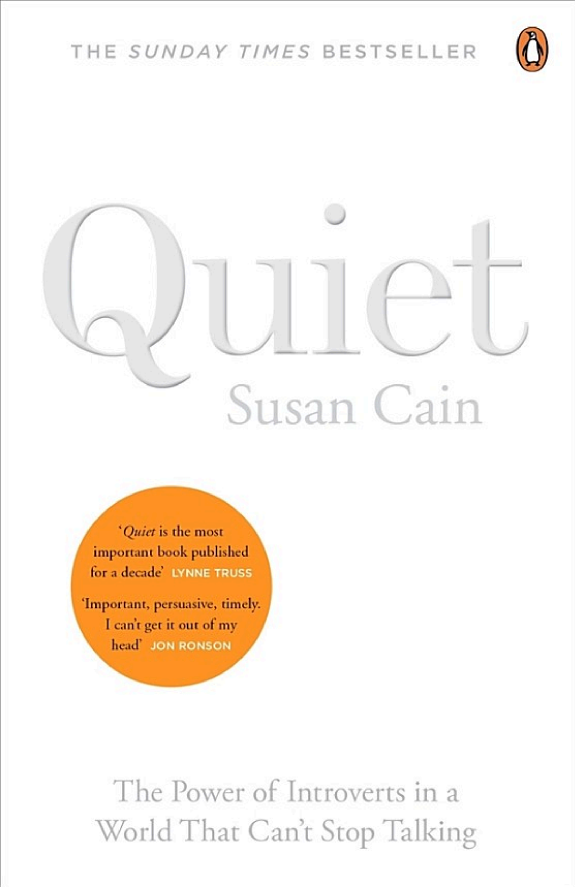
Quiet: The Power of Introverts in a World That Can’t Stop Talking
1. Quiet: The Power of Introverts in a World That Can’t Stop Talking by Susan Cain
Susan Cain did something remarkable with this book. She took a personality trait that many people had spent years quietly apologizing for and made a rigorous, well-researched case for why it matters deeply. Cain is a former Wall Street lawyer turned writer, and her background shows in how carefully she builds her argument. She draws on psychology, neuroscience, and cultural history to trace how Western society came to prize extroversion above almost everything else, and what that bias has cost us collectively and individually.
The central ideas here are genuinely interesting. Cain explores the difference between introversion and shyness, a distinction many people muddle, and she examines how open-plan offices, group brainstorming sessions, and the modern cult of teamwork can actively suppress the kind of deep, solitary thinking that produces great work. She profiles introverted leaders, scientists, and artists to show that quiet people are not simply extroverts who have not warmed up yet. They operate differently, and that difference has real value.
The writing is accessible without being dumbed down. Cain has a gift for weaving personal anecdote into broader argument, so the book never feels like a dry academic treatise. She is honest about her own introversion and the ways she has had to push against her nature, which keeps the tone warm rather than preachy. This is not a book that tells you introversion makes you special and superior. It simply makes a calm, convincing case that it makes you different, and that different deserves respect.
“Quiet” is the book that essentially started the modern conversation about introversion. Read it first, and everything else on this list will feel like it builds from here.
This is perfect for introverts who have spent years wondering why they struggle in environments built for outgoing personalities, and for extroverts who want to genuinely understand the quieter people in their lives. It is not the right pick if you want quick, practical tips rather than a thorough cultural and scientific exploration.
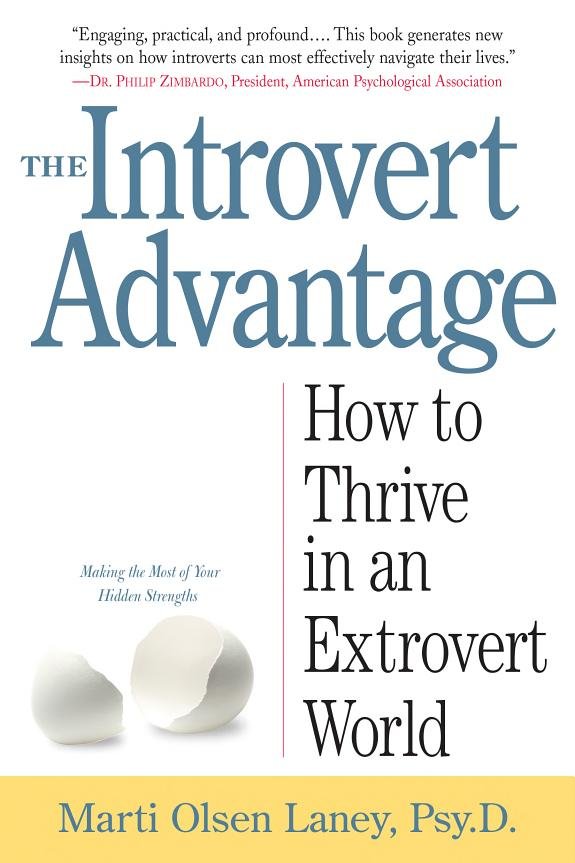
The Introvert Advantage: How Quiet People Can Thrive in an Extrovert World
2. The Introvert Advantage: How Quiet People Can Thrive in an Extrovert World by Marti Olsen Laney
Marti Olsen Laney comes at introversion from a slightly different angle than Susan Cain. She is a psychotherapist and researcher, and her approach leans heavily into the biological and neurological underpinnings of the introvert experience. One of the most useful things this book does early on is explain the actual physiological differences between introverts and extroverts, including how introverts process dopamine differently and why social stimulation drains rather than energizes them. For people who have always felt vaguely broken for needing so much alone time, this explanation alone can feel like a genuine relief.
Laney organizes the book around practical strategies as much as theory. She covers relationships, parenting, work, and social situations, offering concrete suggestions for how introverts can structure their lives to play to their strengths. There is a chapter on introvert children that stands out as particularly thoughtful, especially for introverted parents raising introverted kids and wondering whether they are doing them any favors by not forcing them into every possible social activity.
The writing style is warmer and more conversational than Cain’s, which some readers will prefer and others might find a touch less rigorous. Laney occasionally leans into the self-help genre conventions a little more than necessary, with checklists and exercises that feel slightly formulaic. But the core content is solid, and the biological framing gives the whole book a grounded quality that keeps it from veering into feel-good territory without substance.
Where “Quiet” asks why introversion matters to the world, “The Introvert Advantage” asks how individual introverts can actually make their daily lives work better. Both questions are worth asking.
This is perfect for introverts who want a science-backed explanation of why they are the way they are, combined with genuinely usable strategies for work and relationships. It is probably not the best fit for readers who prefer pure narrative over structured self-help formats.
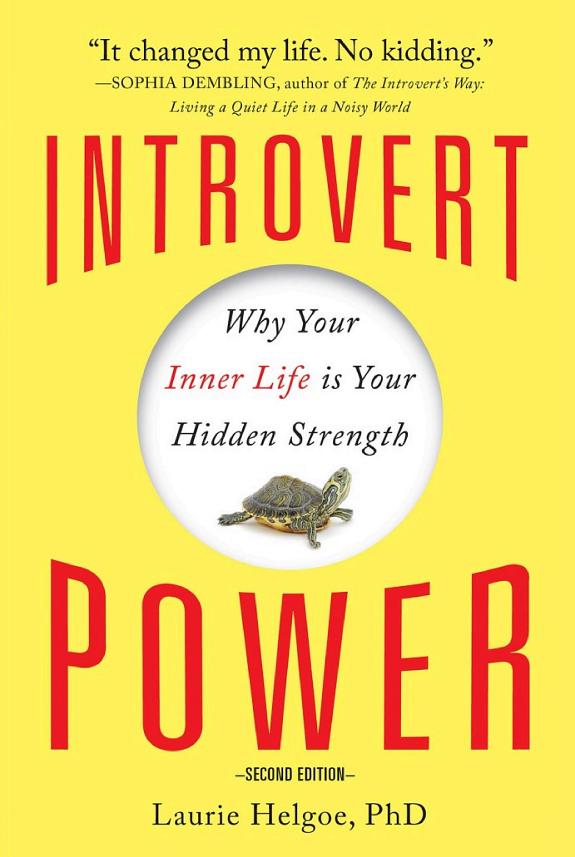
Introvert Power: Why Your Inner Life Is Your Hidden Strength
3. Introvert Power: Why Your Inner Life Is Your Hidden Strength by Laurie Helgoe
Laurie Helgoe is a psychologist, and her book takes a more unapologetically assertive stance than many others in this space. Where some introvert books spend considerable energy helping introverts cope with an extroverted world, Helgoe is more interested in asking whether introverts should have to do quite so much adapting. She argues that introversion is not just a personality style to be managed but a genuine source of depth, creativity, and inner richness that deserves to be cultivated rather than suppressed or hidden.
The book is structured around the idea of reclaiming introversion as something positive rather than something to overcome. Helgoe writes about the inner life with real enthusiasm, exploring solitude, imagination, and the particular pleasures of being alone with one’s thoughts. She makes the case that introverts are not simply people who have not yet figured out how to be more social. They are people with a fundamentally different relationship to the interior world, and that relationship has genuine worth.
Helgoe’s writing is engaging and occasionally provocative. She challenges some of the assumptions that even introverts tend to internalize about themselves, including the idea that wanting to be alone is inherently sad or antisocial. The book does not pretend that introverts have no challenges to navigate, but it refuses to treat introversion as a problem requiring a solution. That stance is refreshing, even if it occasionally tips into territory that feels more like a manifesto than a balanced exploration.
Helgoe makes a compelling argument that introversion is not a deficit to compensate for but a way of being that has its own logic, its own pleasures, and its own considerable strengths.
This is perfect for introverts who are tired of books that frame their personality as something to work around, and who want permission to actually embrace how they are wired. Readers looking for something more measured and less advocacy-driven might find the tone a bit much.
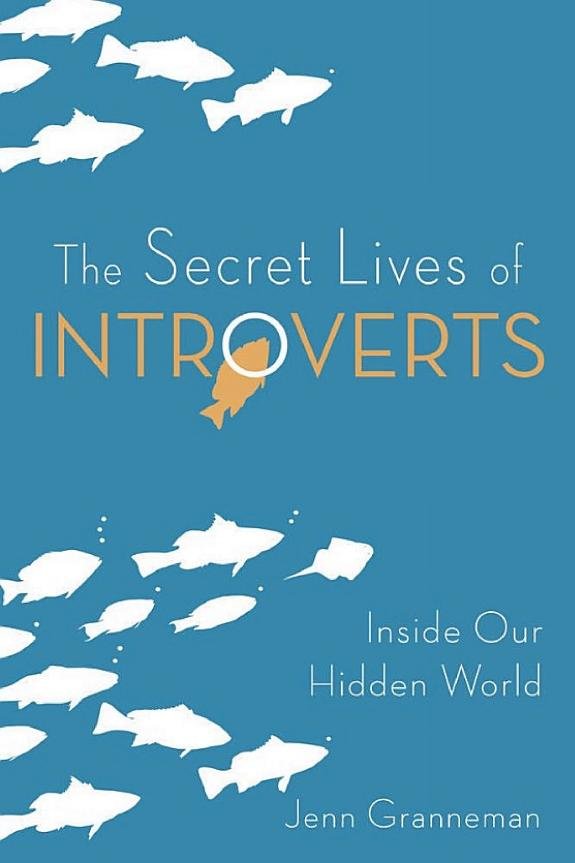
The Secret Lives of Introverts: Inside Our Hidden World
4. The Secret Lives of Introverts: Inside Our Hidden World by Jenn Granneman
Jenn Granneman is the founder of Introvert, Dear, one of the most widely read online communities for introverts, and her book carries that community spirit throughout. It is personal, accessible, and deeply relatable in a way that feels less like reading research and more like talking to a friend who happens to have thought very carefully about what it means to be an introvert. Granneman draws on her own experiences as well as interviews with other introverts, which gives the book a warm, human texture that distinguishes it from more academic titles on the subject.
The book covers a wide range of territory, including introvert friendships, romantic relationships, work life, and the particular challenge of growing up introverted in a family or school environment that did not quite know what to do with you. Granneman is honest about the harder parts of introversion, including loneliness, the frustration of being misread, and the exhaustion of constantly translating yourself for people who operate very differently. She does not gloss over these things, which makes the book feel trustworthy.
There is also a chapter on the relationship between introversion and sensitivity that is worth reading carefully. Granneman explores the overlap between introversion and high sensitivity without conflating the two, which is a distinction that a lot of popular writing on the subject tends to blur. The book is not the most scientifically rigorous on this list, but it compensates with genuine emotional honesty and the kind of specific detail that makes readers feel seen rather than categorized.
Granneman writes about introversion from the inside, and that perspective makes all the difference. This is a book that validates the small, specific, everyday experiences of being an introvert, not just the broad strokes.
This is perfect for introverts who want to feel less alone in their experience and who appreciate personal storytelling over scientific analysis. It is probably not the right choice for readers who prefer data and research over anecdote and interview.
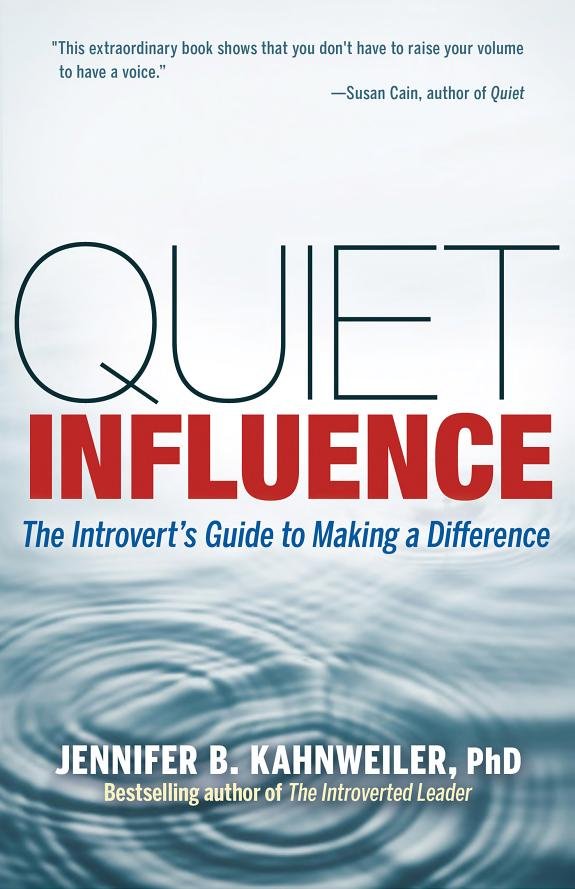
Quiet Influence: The Introvert’s Guide to Making a Difference
5. Quiet Influence: The Introvert’s Guide to Making a Difference by Jennifer B. Kahnweiler
Jennifer Kahnweiler is a leadership consultant and speaker, and her book is aimed squarely at introverts who want to have real impact in professional settings without pretending to be someone they are not. The premise is straightforward: introverts have a distinct set of strengths that translate directly into effective leadership and influence, and the trick is learning to leverage those strengths rather than constantly trying to compensate for not being more extroverted. It is a practical, career-focused book, and it delivers on that promise with reasonable consistency.
Kahnweiler identifies six specific strengths she associates with introvert influence: taking time to think, preparation, focused conversations, writing, using social media strategically, and what she calls “recharging.” For each strength, she provides examples drawn from real introverts in leadership roles, along with suggestions for how to develop and apply that strength more deliberately. The case studies are varied and genuinely interesting, covering people in fields from education to business to social activism.
The book is shorter and more focused than most others on this list, which is either a feature or a limitation depending on what you are looking for. It does not spend much time on the inner life or the emotional experience of introversion. It is almost entirely forward-facing and practical. If you want to understand introversion more deeply, look elsewhere. If you want specific, actionable ideas for making your introvert tendencies work for you in a professional context, this delivers those without a lot of padding.
Kahnweiler makes a straightforward and useful argument: introverts do not need to become more extroverted to lead well. They need to understand what they already do well and do more of it on purpose.
This is perfect for introverts navigating leadership roles, career transitions, or workplaces where visibility and influence matter. It is not the right book for anyone looking for a deeper exploration of introversion as a personality type or a lived experience.
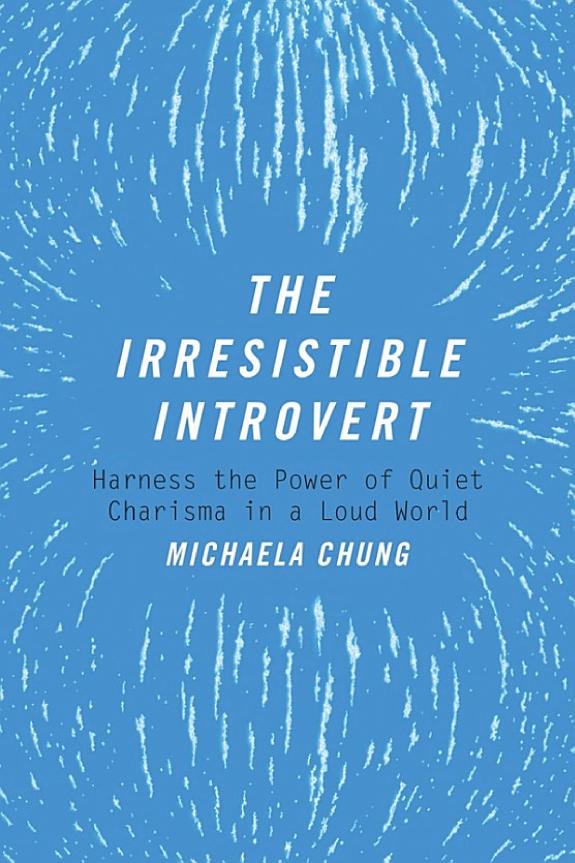
The Irresistible Introvert: Harness the Power of Quiet Charisma in a Loud World
6. The Irresistible Introvert: Harness the Power of Quiet Charisma in a Loud World by Michaela Chung
Michaela Chung runs a popular blog and community for introverts, and her book has the feel of someone who has spent years listening carefully to what introverts actually struggle with and want. The central argument is that introverts do not need to fake extroversion to be charismatic, engaging, or socially successful. They can develop a kind of quiet charisma that is entirely their own, rooted in presence, depth, and genuine connection rather than high energy and constant performance. It is a reassuring premise, and Chung makes it feel plausible rather than wishful.
The book covers social confidence, romantic relationships, self-expression, and the specific challenge of navigating small talk and networking without wanting to disappear into the nearest bookshop. Chung writes with warmth and occasional humor, and she is honest about the fact that some of what she describes requires real effort, even for introverts who have made peace with their personality. She does not promise that everything will suddenly feel effortless. She just argues that it can feel more authentic.
Some sections of the book feel more polished than others, and readers who prefer a tightly structured argument might find the flow a little loose in places. But the book has a genuine quality that comes through consistently: Chung clearly likes introverts and believes in their capacity to live fully and connect meaningfully without performing extroversion. That belief is infectious in the best possible way, and it makes the book genuinely enjoyable to read even when the advice is fairly familiar.
The idea of quiet charisma is not just a comforting reframe. Chung makes a real case for why depth, attentiveness, and calm presence can be more compelling than volume, and why introverts are often better positioned to offer those things than they realize.
This is perfect for introverts who struggle with social confidence and want to develop a style of connecting with people that feels genuinely like themselves. It is less suited to readers who want rigorous research or a highly structured self-help framework.
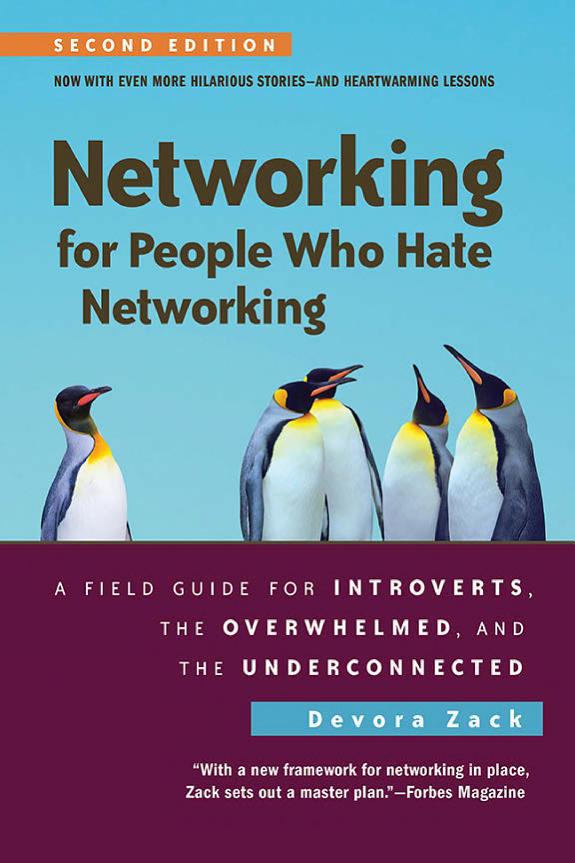
Networking for People Who Hate Networking: A Field Guide for Introverts, the Overwhelmed, and the Underconnected
7. Networking for People Who Hate Networking: A Field Guide for Introverts, the Overwhelmed, and the Underconnected by Devora Zack
The title alone will resonate with a significant portion of the introvert population. Networking is one of those words that can make an introvert’s stomach drop slightly, conjuring images of rooms full of strangers exchanging business cards and performing enthusiasm at each other for hours. Devora Zack, who is herself an introvert and a professional speaker, has written a book that takes the concept of networking and essentially rebuilds it from scratch around the way introverts actually operate. The result is surprisingly funny and more useful than you might expect from a book with this kind of title.
Zack’s approach rejects the idea that effective networking means working a room, collecting contacts, and following up relentlessly. Instead, she argues for a model built around fewer, deeper connections, genuine conversation, and the introvert’s natural capacity for listening and focused attention. She is refreshingly honest that introverts and extroverts are simply different, not that one approach is better than the other, but that introverts waste enormous energy trying to network like extroverts when they have a perfectly functional alternative available to them.
The writing is lively and self-aware, which keeps the book from feeling like a generic career guide with the word “introvert” added to the title. Zack pokes fun at networking culture with enough affection that it never becomes mean-spirited, and she grounds her advice in real scenarios that feel recognizable. This is not a deep philosophical exploration of introversion. It is a practical, good-humored guide to one specific challenge, and it handles that challenge well.
Zack’s core insight is simple but worth stating plainly: introverts do not need to network less, they need to network differently. And differently, it turns out, can work quite well.
This is perfect for introverts who need to build professional connections but find conventional networking advice either useless or actively miserable to follow. It is not the book for anyone looking for a broader exploration of introversion beyond the professional context.
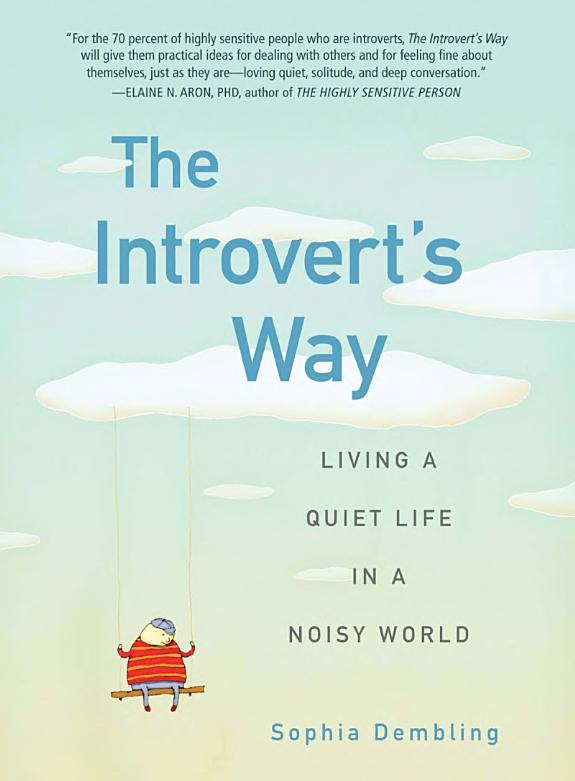
The Introvert’s Way: Living a Quiet Life in a Noisy World
8. The Introvert’s Way: Living a Quiet Life in a Noisy World by Sophia Dembling
Sophia Dembling writes about introversion with a lightness and clarity that sets this book apart from many of its peers. She is a journalist, and her prose has the clean, direct quality of someone who has spent years learning to say exactly what she means without unnecessary fuss. The book is less a self-help manual and more a thoughtful, essay-style exploration of what it actually feels like to be an introvert moving through daily life, including the small pleasures, the recurring frustrations, and the ongoing negotiation between what you want and what the world expects of you.
Dembling covers familiar territory, including solitude, social energy, small talk, and the particular introvert experience of being told you are too quiet or too serious. But she covers it with enough specificity and genuine reflection that it does not feel recycled. She is also refreshingly willing to complicate the picture. She does not treat introversion as an all-purpose explanation for every social difficulty, and she acknowledges that introverts can be their own worst enemies sometimes, avoiding things not because they genuinely need to recharge but because anxiety or habit has made avoidance feel easier.
The book is also one of the most honest on this list about the fact that living as an introvert requires ongoing choices, not a single moment of self-acceptance followed by smooth sailing. Dembling writes about the quiet life not as a destination but as a practice, something you keep figuring out as you go. That honest, unresolved quality makes the book feel more true to life than many of its more prescriptive counterparts. It is, in the best sense, a book for people who like to think carefully about how they live.
Dembling does not try to fix introversion or sell it as a superpower. She simply writes about it honestly, which turns out to be exactly what a lot of introverts need to read.
This is perfect for introverts who want thoughtful, well-written reflection on the everyday experience of living quietly in a loud world, rather than strategies, science, or structured advice. Readers who prefer action-oriented self-help may find the essay format too meandering for their tastes.
What strikes you after reading across this collection is how many different ways there are to be an introvert, and how many different ways there are to write about it usefully. Some of these books will feel like they were written specifically for you. Others might feel slightly off, aimed at an introvert who is not quite the introvert you are. That is fine. Reading around a subject you care about is rarely a waste of time, even when a particular book does not land the way you hoped.
If you are new to thinking about introversion, Susan Cain’s book is the obvious place to start. If you already know the basics and want something more personal, Jenn Granneman or Sophia Dembling might suit you better. If you have a specific challenge to solve, whether it is networking, leadership, or social confidence, the more focused books in this list will serve you well. The point is not to read all eight in some dutiful order. The point is to find the ones that make you feel a little more at home in your own head. There are worse things to spend a quiet afternoon doing.