5 Best Books for Highly Sensitive People
If you have ever left a crowded party feeling like you needed three days alone to recover, or cried at a television commercial about paper towels, you are probably familiar with the particular exhaustion of being a highly sensitive person. The world is loud. It moves fast. And for people who process everything a little more deeply than average, that can feel like a lot to carry around.
The good news is that sensitivity is not a flaw in need of fixing. A growing body of research and a genuinely rich shelf of books have started to reframe what it means to feel everything so intensely. The five books below cover different angles of the sensitive experience, from foundational science to practical daily survival to parenting while overwhelmed. Whether you are newly discovering this trait in yourself or have known about it for years, there is something here worth reading.
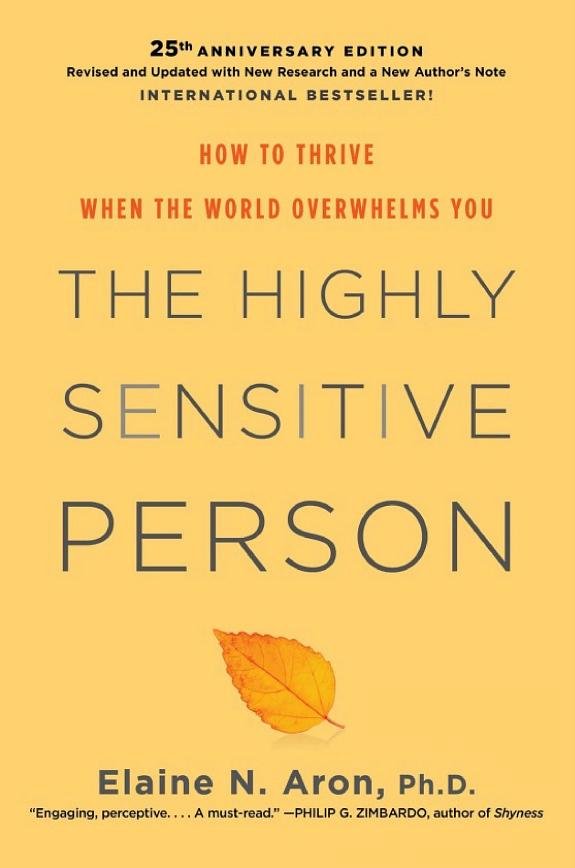
The Highly Sensitive Person: How to Thrive When the World Overwhelms You
1. The Highly Sensitive Person: How to Thrive When the World Overwhelms You by Elaine N. Aron
This is the book that started it all. Elaine Aron, a psychologist and highly sensitive person herself, published this in 1996 and essentially gave a name to something millions of people had been quietly experiencing without any framework to understand it. Her writing is warm and clinical in equal measure, which is a harder balance to strike than it sounds. She draws on her own research into what she calls the Highly Sensitive Person trait, or HSP, and walks readers through the biology, the history, and the very real social costs of living in a culture that rewards boldness over depth.
Aron’s central argument is that high sensitivity is not a disorder or a personality defect. It is a trait found in roughly fifteen to twenty percent of the population, and it comes with genuine advantages alongside the challenges. She covers how sensitivity shows up in relationships, work, and childhood, and she is honest about the ways early experiences can shape how a sensitive person navigates adulthood. The self-assessment quiz near the beginning is something readers tend to remember for a long time after finishing the book.
The prose is accessible without being dumbed down, and Aron avoids the cheerful oversimplification that plagues a lot of self-help writing. She does not promise that sensitivity will feel easy once you understand it. She just offers tools and, perhaps more valuably, a sense of recognition. For many readers, this book is the first time they have felt genuinely seen by a page.
That said, if you are looking for something fast-paced or heavily practical, this might feel a little slow in places. Aron spends considerable time on theory and inner reflection, which is exactly right for some readers and less satisfying for others who want a quick checklist of coping strategies.
Aron does not ask you to become less sensitive. She asks you to stop apologizing for it, and that turns out to be quite a different kind of work.
This is perfect for anyone who is just beginning to explore the HSP trait and wants a thorough, research-grounded introduction written by the person who defined the concept.
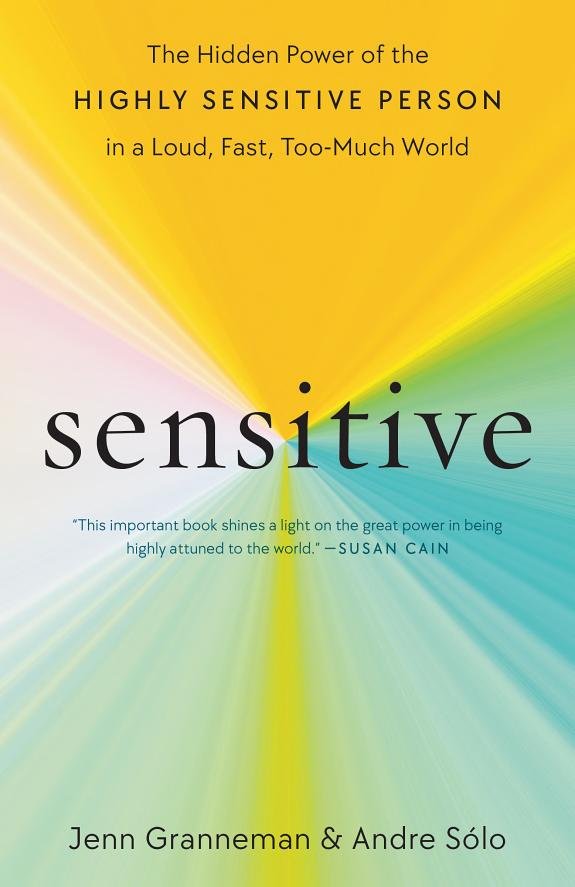
Sensitive: The Hidden Power of the Highly Sensitive Person in a Loud, Fast, Too-Much World
2. Sensitive: The Hidden Power of the Highly Sensitive Person in a Loud, Fast, Too-Much World by Jenn Granneman and Andre Sólo
Jenn Granneman is the founder of Introvert, Dear, and she brings that same community-minded, relatable voice to this collaboration with writer and researcher Andre Sólo. Together they have written something that feels less like a textbook and more like a very smart conversation with two people who have actually thought hard about what sensitivity means in modern life. The book is grounded in recent science, including studies on sensory processing sensitivity that have emerged in the years since Aron’s foundational work, and it weaves that research into stories and examples that feel genuinely human.
One of the things Granneman and Sólo do particularly well is push back against the narrative that sensitivity is purely a private, internal matter. They argue that sensitive people have historically shaped culture, driven innovation, and led with empathy in ways that benefit everyone around them. This is not wishful thinking dressed up as science. They back it up. The book also takes seriously the social and structural barriers that make sensitivity harder to navigate, including workplaces built for extroverts and a media landscape designed to overstimulate.
The writing is engaging and the pacing moves well. Chapters are focused enough that you can read one at a sitting without losing the thread. Granneman and Sólo also do a good job of acknowledging that sensitivity looks different across gender, culture, and neurodivergent experiences, which gives the book a breadth that some earlier HSP writing lacks.
If you are skeptical of anything that sounds vaguely like a self-help manifesto, the tone here might occasionally feel a touch enthusiastic. But the substance is solid, and the enthusiasm is at least earned.
Sensitivity is reframed here not as something to manage quietly in private, but as a trait with real social value, which is a perspective that lands differently than you might expect.
This is perfect for HSPs who want a contemporary, research-backed take on the trait that also speaks to how sensitivity intersects with creativity, culture, and community.
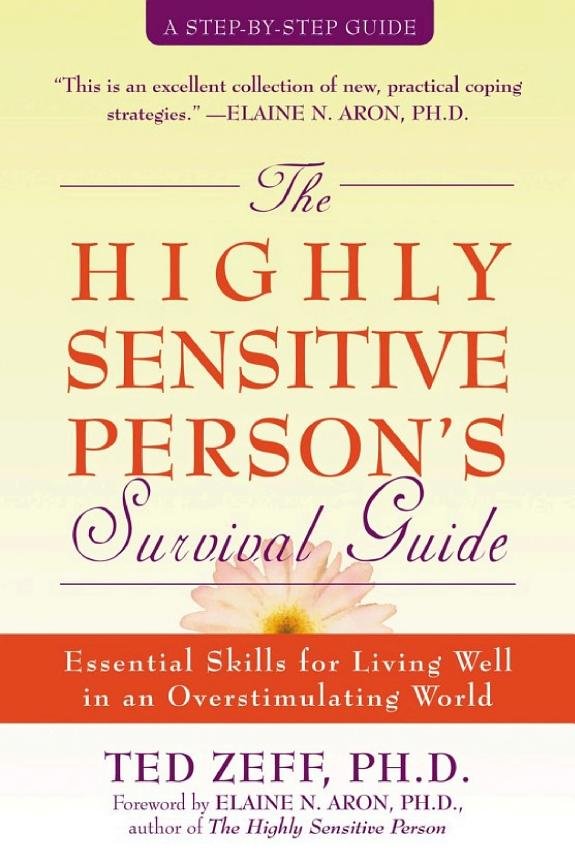
The Highly Sensitive Person’s Survival Guide: Essential Skills for Living Well in an Overstimulating World
3. The Highly Sensitive Person’s Survival Guide: Essential Skills for Living Well in an Overstimulating World by Ted Zeff
Ted Zeff takes a different approach than Aron or Granneman and Sólo. He is less interested in the theory of sensitivity and more interested in what you are supposed to do on a Tuesday afternoon when you have already hit your limit and still have four hours of obligations ahead of you. This is a practical book, unambiguously so, and it delivers on that promise with concrete techniques drawn from psychology, wellness practices, and Zeff’s own experience as both a researcher and a highly sensitive person.
The book covers a wide range of situations where sensitivity tends to create friction: noisy environments, difficult social obligations, workplace stress, travel, and the challenge of getting enough sleep when your nervous system seems to have opinions about every small sound in the building. Zeff writes with a calm, steady tone that suits the subject well. He is not trying to excite you. He is trying to help you feel less frazzled, and that quieter ambition turns out to be quite useful.
Zeff also draws on spiritual and holistic practices more than some readers might expect. Meditation, yoga, and diet come up regularly as part of his toolkit. For readers who are open to that, the advice feels integrated and thoughtful. For readers who prefer strictly evidence-based recommendations, some sections may feel like a detour. It is worth knowing that going in.
What the book does consistently well is meet the reader where they are. Zeff does not assume you have unlimited time or energy to overhaul your lifestyle. He offers small, manageable adjustments, which is exactly the kind of help a depleted sensitive person can actually use.
Zeff is not trying to change who you are. He is trying to make the practical mechanics of daily life a little less exhausting, and sometimes that is exactly what you need most.
This is perfect for HSPs who already understand the trait and are looking for hands-on, day-to-day strategies rather than more theory or validation.
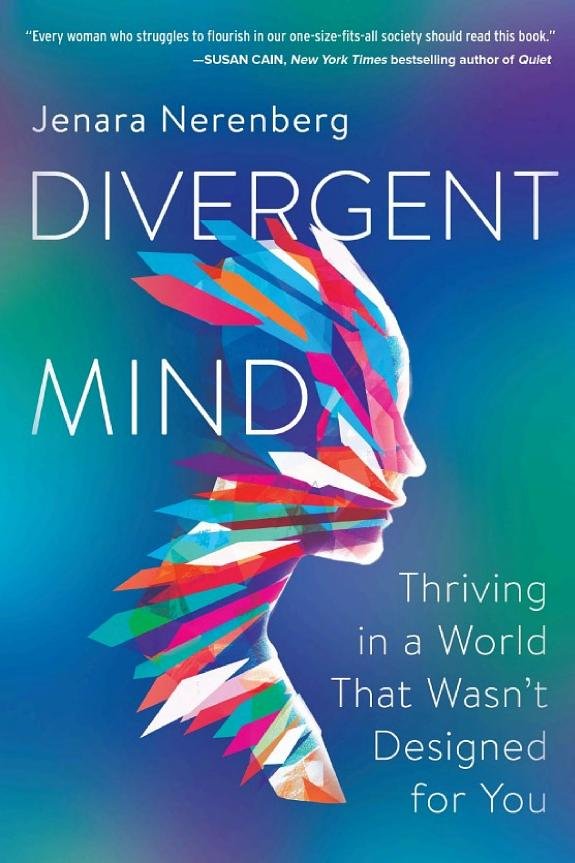
Divergent Mind: Thriving in a World That Wasn’t Designed for You
4. Divergent Mind: Thriving in a World That Wasn’t Designed for You by Jenara Nerenberg
Jenara Nerenberg’s book belongs on this list because it asks a question that the HSP conversation does not always get around to asking: what happens when sensitivity overlaps with other forms of neurological difference? Nerenberg, a journalist and researcher who received her own late diagnoses of ADHD and autism as an adult, explores how sensory processing sensitivity connects to a broader spectrum of divergent minds, including those with ADHD, autism, anxiety, and synesthesia. The result is a book that expands the frame considerably.
Nerenberg writes with the clarity and curiosity of a good journalist. She interviews researchers, clinicians, and people with lived experience, and she synthesizes that material without oversimplifying it. One of her core arguments is that many women in particular go undiagnosed or misdiagnosed for years because their neurodivergence presents differently than the profiles medicine has historically studied, which were largely built around male subjects. That argument is made carefully and with evidence, not as a polemic.
The book does not position itself as a replacement for clinical guidance, and Nerenberg is careful to acknowledge the limits of what a general-audience book can do. But it opens doors. Readers who have always felt that the HSP label captured something real but not quite everything about their experience may find that this book fills in some of the gaps.
This one is not for readers who want a tidy, linear self-help structure. Nerenberg moves across topics and disciplines, which is intellectually satisfying but requires a bit of patience. If you like ideas and do not mind following them through some winding corridors, you will find it rewarding.
Nerenberg makes a compelling case that sensitivity and neurodivergence are not separate conversations, and that treating them as such has left a lot of people without the understanding they needed much earlier in life.
This is perfect for highly sensitive people who suspect their experience also involves ADHD, autism, or other neurological differences, and for anyone interested in how gender shapes the way these traits are recognized and treated.
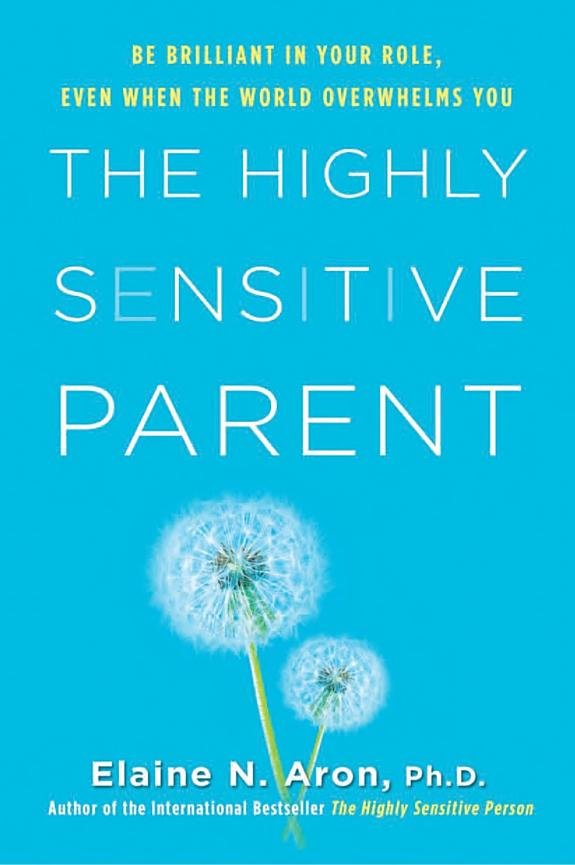
The Highly Sensitive Parent: Be Brilliant in Your Role, Even When the World Overwhelms You
5. The Highly Sensitive Parent: Be Brilliant in Your Role, Even When the World Overwhelms You by Elaine N. Aron
Parenting is hard for everyone. Parenting while being a highly sensitive person is its own particular category of experience, and Elaine Aron, returning decades after her foundational work, addresses it directly here. This book is specific in the best way. It does not try to be a general parenting guide with a few HSP footnotes. It genuinely grapples with what it means to be deeply empathetic, easily overstimulated, and responsible for small humans who have neither volume controls nor a sense of timing.
Aron writes with the same grounded warmth that made her first book resonate so widely. She draws on research and on the stories of HSP parents she has worked with and spoken to over the years. She addresses the guilt that sensitive parents often feel when they need to step away and recover, the particular challenge of parenting children who are themselves highly sensitive or, conversely, not sensitive at all, and the ways that HSP parents can use their depth of processing as a genuine asset in raising children.
One of the more honest sections of the book addresses the reality that sensitive parents can sometimes over-identify with their children’s distress in ways that are not helpful to either party. Aron does not moralize about this. She just names it and offers ways to recognize when it is happening. That kind of practical self-awareness is harder to find in parenting books than it should be.
This book is not for parents who are looking for a broad parenting philosophy or a method. Aron stays focused on the HSP parent’s inner experience and how it shapes interactions with children. If you need advice on sleep schedules or discipline strategies, you will need to look elsewhere. But if you have ever wondered whether your sensitivity is helping or hindering your parenting, this book will give you a lot to think about.
Aron understands that for a sensitive parent, the hardest part is often not the child’s behavior but the internal weather it stirs up, and she takes that seriously without making it precious.
This is perfect for highly sensitive people who are raising children and want thoughtful, specific guidance on how to manage their own needs while showing up fully for their kids.
What these five books share is a refusal to treat sensitivity as a problem to be solved. They approach it as a real, documented trait with its own costs and its own considerable rewards, and they offer different kinds of help depending on where you are in understanding it. Some readers will want to start with Aron’s foundational work and move forward from there. Others will find that Nerenberg’s broader lens or Zeff’s practical focus is exactly what they needed first. There is no wrong order.
If you have spent years feeling like you were simply too much for the world around you, these books offer something quieter and more lasting than a quick fix. They offer a different way of understanding yourself. That turns out to be worth quite a lot.