
8 Books That Feel Like Years of Therapy
Some books you finish and immediately want to lend to everyone you know. Not because they are breezy or fun, though a few of these actually are, but because they shift something inside you. They make you see a pattern you have been living inside for years without naming it. They hand you a vocabulary for the thing you have been trying to explain to people who just stare back blankly.
Therapy is genuinely irreplaceable. A good therapist in a quiet room, listening without judgment, is one of the better things a human being can access. But not everyone can afford it, not everyone is ready for it, and some of us are still on a waiting list that seems to stretch into the next decade. Books, it turns out, can do some of that heavy lifting. Not all of it. But enough to get you moving in the right direction, or at least to understand why you keep standing still.
These eight books were chosen because they do more than explain psychology in plain language. They hold something up to the light. They ask uncomfortable questions and then actually sit with you while you answer them. A few might make you cry on public transport, so consider yourself warned.
Man’s Search for Meaning
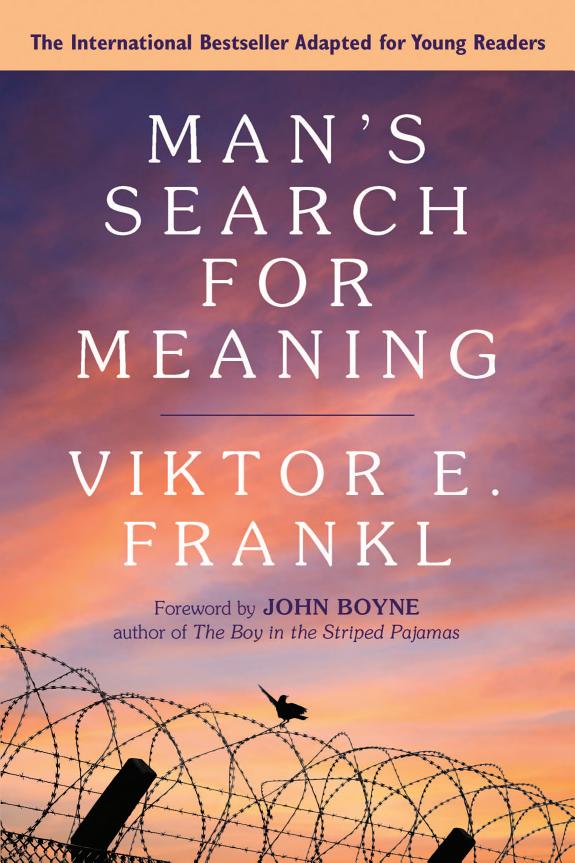
1. Man’s Search for Meaning by Viktor E. Frankl
Viktor Frankl was a psychiatrist in Vienna when the Nazis sent him to Auschwitz. He survived. He also, remarkably, spent his time there observing the psychological conditions under which people either endured or collapsed. The first half of this book is his memoir of those years. The second half introduces logotherapy, his school of thought built on the idea that the primary human drive is not pleasure or power but the search for meaning. It is a slim book. You can read it in an afternoon. You will think about it for considerably longer than that.
Frankl’s voice is precise without being cold. He does not wallow, which is almost more affecting than if he had. His clinical observations sit alongside deeply personal grief in a way that feels honest rather than performed. The central argument, that we can choose our attitude toward any given set of circumstances even when we cannot choose the circumstances themselves, could easily sound like toxic positivity in someone else’s hands. In Frankl’s, it sounds like something he earned the right to say.
This is not a comfortable book, and it should not be. If you are looking for gentle encouragement, look elsewhere. But if you are asking yourself what any of this is actually for, Frankl offers a framework that has held up remarkably well across seventy years and countless readers who came to it in very different kinds of pain.
“Everything can be taken from a man but one thing: the last of the human freedoms, to choose one’s attitude in any given set of circumstances.” Frankl wrote this from experience, and that is exactly what makes it land.
This is perfect for anyone in the middle of a crisis who needs something more substantial than reassurance, readers interested in the intersection of philosophy and psychology, and anyone who has ever asked “what is the point” and genuinely wanted an answer.
Maybe You Should Talk to Someone: A Therapist, HER Therapist, and Our Lives Revealed
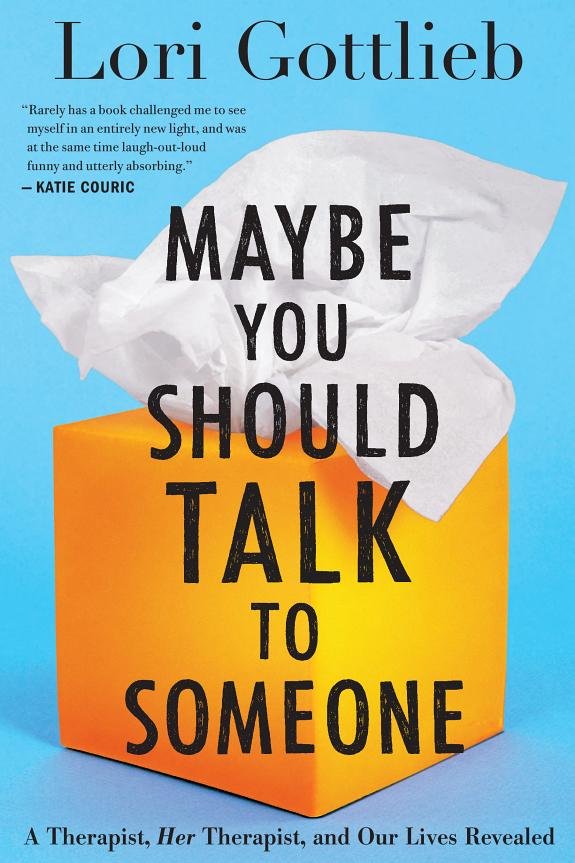
2. Maybe You Should Talk to Someone: A Therapist, HER Therapist, and Our Lives Revealed by Lori Gottlieb
Lori Gottlieb is a therapist who, after a painful breakup, finds herself sitting on the other side of the couch. The book weaves between her sessions with her own therapist and the sessions she conducts with four very different patients. It sounds like it could get confusing. It does not. Gottlieb is a natural storyteller with a sharp sense of humor, and she has a gift for making clinical concepts feel like things that are happening to real people, because they are.
What sets this apart from other therapy memoirs is how unsparingly Gottlieb includes herself in the analysis. She is not the wise guide looking down at her patients. She is right there in the mess alongside them, avoiding the same things she tells her clients to face, making the same kinds of excuses. There is something genuinely refreshing about a mental health professional who is willing to be that honest in print. It makes the whole book feel less like a lesson and more like a conversation.
The patients she writes about, a self-important television writer, a young woman with a terminal diagnosis, a newlywed who keeps sabotaging her own happiness, are composites with identifying details changed. But they feel completely real. You will probably see yourself in at least one of them, possibly in the most unflattering one, which is part of the point.
Gottlieb shows that therapy is not about being broken and getting fixed. It is about being human and learning to look at yourself without flinching. The therapist needing a therapist is not irony. It is just honesty.
This is perfect for people who are curious about therapy but have not tried it yet, readers who enjoy narrative nonfiction with genuine emotional depth, and anyone who has ever caught themselves doing the exact thing they promised themselves they would stop doing.
The Body Keeps the Score: Brain, Mind, and Body in the Healing of Trauma
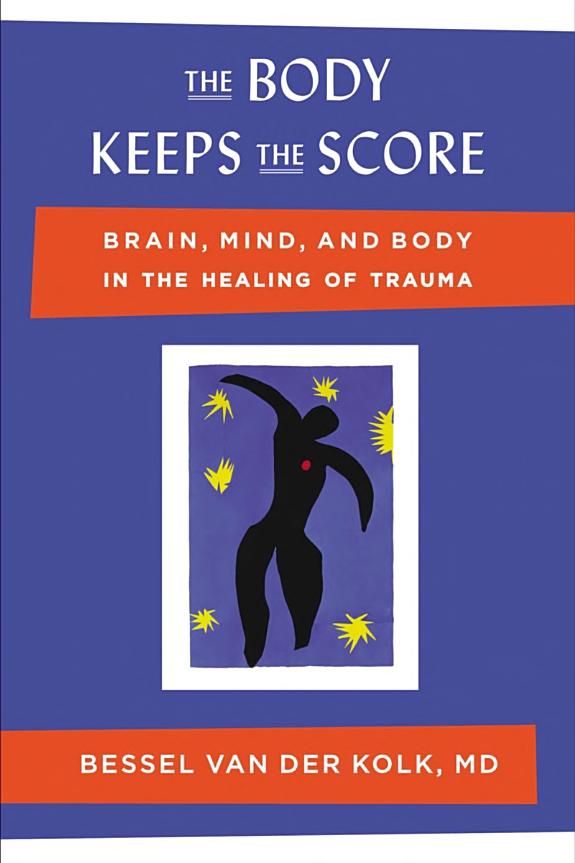
3. The Body Keeps the Score: Brain, Mind, and Body in the Healing of Trauma by Bessel van der Kolk
Bessel van der Kolk has spent decades working with trauma survivors, and this book is the culmination of that work. The central argument is right there in the title: trauma is not just a psychological event. It lives in the body. It reshapes the nervous system, changes the way the brain processes ordinary experience, and shows up in physical symptoms that can seem completely unrelated to whatever happened. This is a book that explains why people who have been through terrible things sometimes cannot simply talk their way out of the aftermath.
Van der Kolk writes with authority but not arrogance. He is clearly someone who has sat with a lot of suffering and taken it seriously. He covers a wide range of therapeutic approaches, from EMDR to yoga to theater, and he is admirably willing to follow the evidence wherever it leads, even when it challenges more conventional psychiatric thinking. Some sections are dense with neuroscience. Others read almost like case studies. The combination works better than it has any right to.
A word of caution: this book can be genuinely difficult to read if you are in the middle of processing your own trauma. It names things with great precision, which is valuable, but precision can also be a lot to absorb. It is not a book that holds your hand through the harder sections. It trusts you to pace yourself, which is either considerate or optimistic, depending on the day.
The book’s most useful contribution might be this: it gives readers permission to stop blaming themselves for not being able to simply move on. The body has its own timeline, and understanding that changes everything about how you approach healing.
This is perfect for trauma survivors trying to understand their own responses, therapists and mental health professionals looking for a comprehensive overview of trauma treatment, and anyone who has ever been told to just get over something and felt, correctly, that the advice was missing the point entirely.
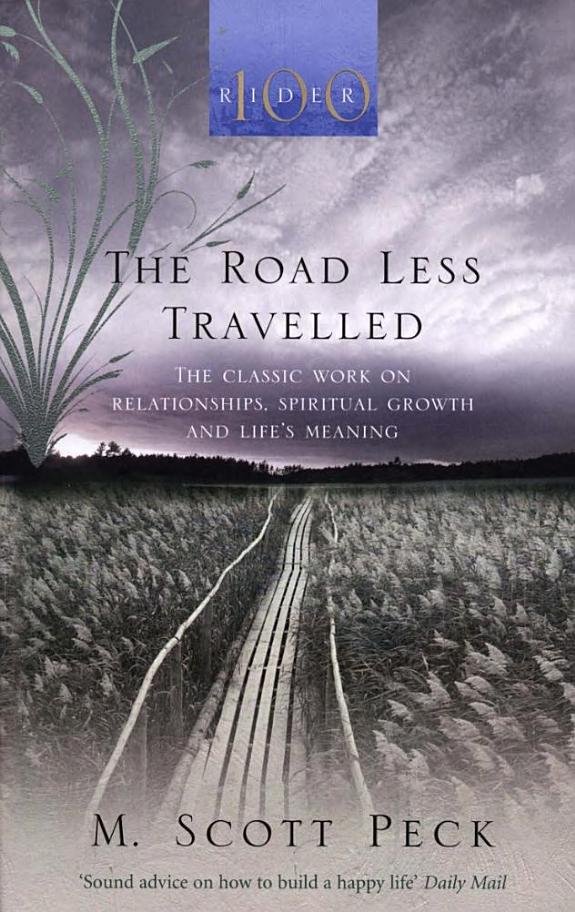
The Road Less Traveled: A New Psychology of Love, Traditional Values, and Spiritual Growth
4. The Road Less Traveled: A New Psychology of Love, Traditional Values, and Spiritual Growth by M. Scott Peck
M. Scott Peck opens with three words that have become something of a cultural touchstone: “Life is difficult.” He then spends the rest of the book arguing that accepting this fact, rather than spending your energy resisting or resenting it, is the foundation of genuine psychological and spiritual maturity. Published in 1978, this book spent years on the bestseller list, which is unusual for something this willing to challenge its reader.
Peck draws on his background as a psychiatrist and his Christian faith in roughly equal measure. The spiritual dimension is woven throughout, which is worth knowing before you pick it up. If that combination appeals to you, the book has a coherence and depth that is hard to find elsewhere. If you are firmly secular, some sections will require a kind of patient translation, though the core psychological ideas hold up independently of the religious framing.
His chapter on love is particularly worth reading slowly. He makes a careful distinction between genuine love, which he defines as the will to extend yourself for the growth of another, and the various things we commonly mistake for it, including dependency, infatuation, and the comfortable feeling of being with someone who does not challenge you. It is the kind of distinction that can reorganize how you think about your closest relationships. Not always comfortably.
Peck’s insistence that discipline, not talent or luck, is the foundation of a meaningful life is unfashionable in the best possible way. He is asking something genuinely hard of his reader, and he does not pretend otherwise.
This is perfect for readers who are open to a book that integrates psychology with spirituality, people working through questions about love and commitment, and anyone who suspects they have been avoiding difficulty in ways that are quietly making their life smaller.
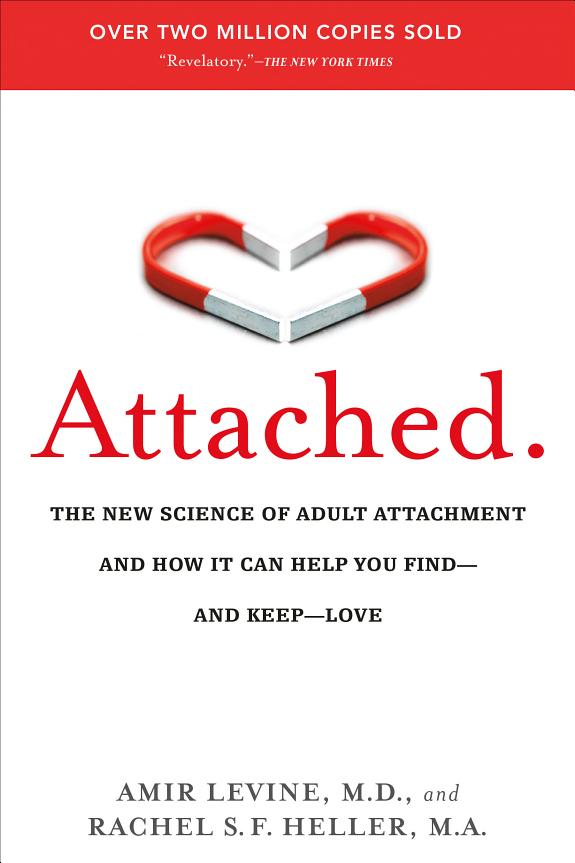
Attached: The New Science of Adult Attachment and How It Can Help You Find – and Keep – Love
5. Attached: The New Science of Adult Attachment and How It Can Help You Find and Keep Love by Amir Levine and Rachel Heller
Attachment theory was originally developed to describe how infants bond with their caregivers. Amir Levine and Rachel Heller take that framework and apply it to adult romantic relationships, arguing that the same basic patterns, secure, anxious, and avoidant, show up in how we behave with our partners. The result is a book that a startling number of people have described as the moment their entire dating history suddenly made sense. That is not an exaggeration. The pattern recognition this book enables is almost uncomfortable in how accurate it can be.
Levine is a neuroscientist and psychiatrist. Heller has a background in psychology. Together they write clearly and without condescension, and they are careful to treat all three attachment styles as understandable adaptations rather than character flaws. The anxious person is not weak. The avoidant person is not a villain. The book is genuinely interested in helping you understand yourself and the people you have loved, not in giving you a new way to categorize people as problems.
The practical sections, which offer specific language and strategies for navigating relationships based on attachment styles, are hit or miss. Some feel genuinely useful. Others veer toward the kind of scripted advice that works better in theory than in an actual conversation with a real person who has not read the book. Still, the conceptual foundation is strong enough that the occasional clunky exercise can be forgiven.
Understanding your attachment style will not fix your relationships on its own. But it might be the first time you have looked at your own patterns with curiosity instead of shame, and that is worth quite a lot.
This is perfect for people who keep finding themselves in the same kinds of relationships and cannot figure out why, anyone who has been called “too needy” or “emotionally unavailable” and wants to understand what that actually means, and readers who appreciate psychology grounded in research rather than anecdote.
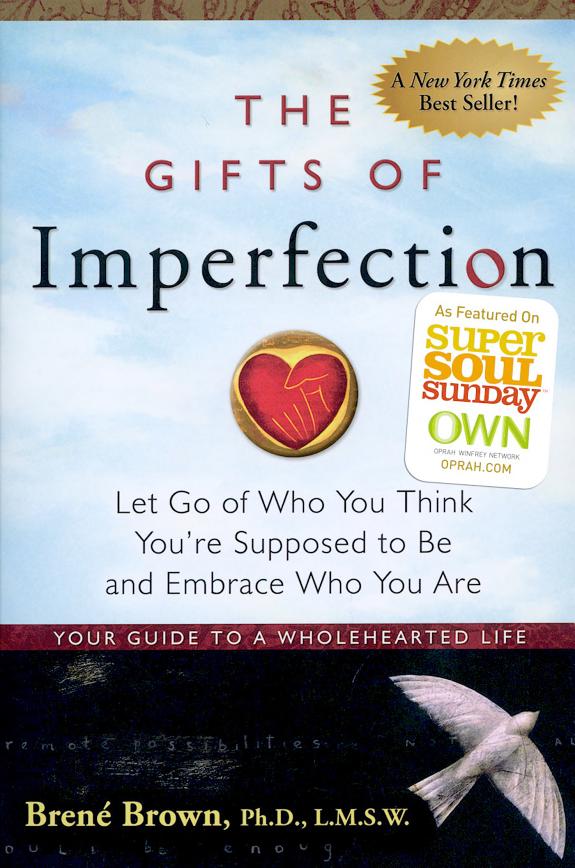
The Gifts of Imperfection: Let Go of Who You Think You’re Supposed to Be and Embrace Who You Are
6. The Gifts of Imperfection: Let Go of Who You Think You’re Supposed to Be and Embrace Who You Are by Brené Brown
Brené Brown spent years as a shame researcher before she became a household name, and this book sits at the heart of that work. The central idea is that wholehearted living, her term for a life built on genuine connection and self-worth, requires letting go of the exhausting performance of having everything together. She is not the first person to say this. She might be the person who says it most convincingly, partly because she is clearly still figuring it out herself as she writes.
Brown’s style is warm and conversational. She uses stories from her own life liberally, including ones that do not reflect particularly well on her, and she has a way of making research findings feel like something that happened to a person rather than a statistic in a study. Some readers find this approach a little too casual. If you prefer your psychology delivered with more academic gravity, this might not be the right fit. But if you want something that reads like a very honest friend who happens to have a PhD, Brown delivers that reliably.
The book is organized around ten guideposts, practices Brown identifies as central to wholehearted living, things like cultivating gratitude, developing creativity, and letting go of perfectionism. Some of these chapters are stronger than others. The one on rest and play, which makes the case that doing nothing productive is not laziness but necessity, tends to hit people particularly hard. Possibly because most of us are very bad at it.
Brown’s research finding that the people with the strongest sense of belonging were also the ones most willing to be vulnerable is one of those ideas that sounds simple until you actually try to live it.
This is perfect for high achievers who have built their self-worth entirely on external validation, people who know intellectually that perfectionism is a problem but need help understanding why they cannot seem to stop, and readers who want accessible psychology without a lot of clinical distance.
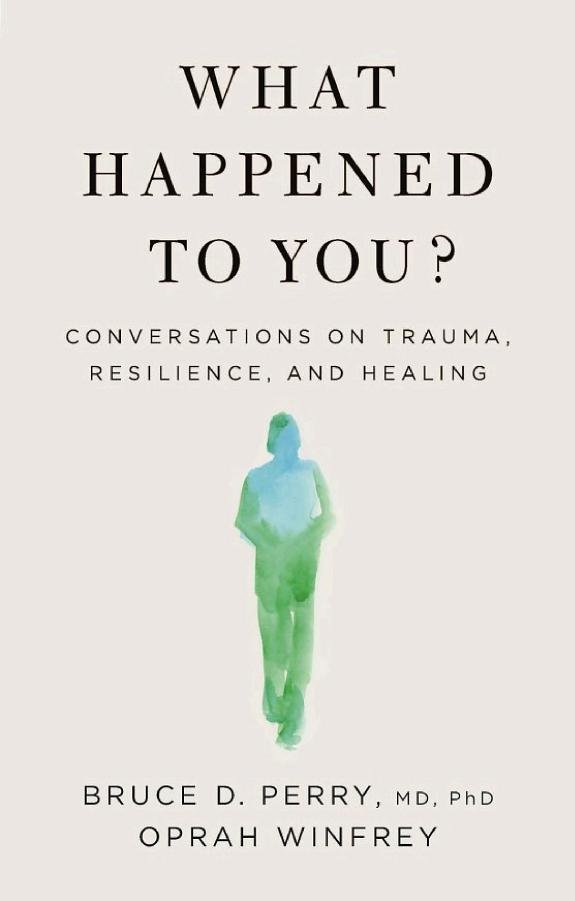
What Happened to You?: Conversations on Trauma, Resilience, and Healing
7. What Happened to You?: Conversations on Trauma, Resilience, and Healing by Bruce D. Perry and Oprah Winfrey
The title of this book is doing a lot of work, and intentionally so. Bruce Perry, a leading trauma researcher, and Oprah Winfrey, who has spoken publicly about her own difficult childhood for decades, structure the book around a simple but significant shift in framing. Instead of asking “what is wrong with you,” which is how trauma and its behavioral aftermath are often treated, they ask “what happened to you.” It sounds like a small change. It is not.
The format is a genuine back-and-forth conversation, and it works because both participants are bringing something real to the table. Perry brings decades of neuroscience and clinical work with children who have experienced severe trauma. Winfrey brings her own story, told with more openness than you might expect even from someone who has spent her career in public life. The combination makes the science feel accessible and the personal narrative feel grounded rather than merely confessional.
Where the book is strongest is in its explanation of how early childhood experiences shape the developing brain, and how that shaping can look like behavioral problems, emotional dysregulation, or relationship difficulties in adults who have no conscious memory of what caused it. Where it is slightly weaker is in the healing sections, which are somewhat general. Perry and Winfrey are better at explaining the wound than prescribing the cure, though they are honest about the complexity of that limitation.
The shift from “what is wrong with you” to “what happened to you” is not just therapeutic language. It is a fundamentally different way of treating human beings, including yourself.
This is perfect for people who grew up in difficult or chaotic households and are still feeling the effects without fully understanding why, readers who want trauma science explained without a lot of jargon, and anyone who responds better to conversation than to traditional nonfiction structure.
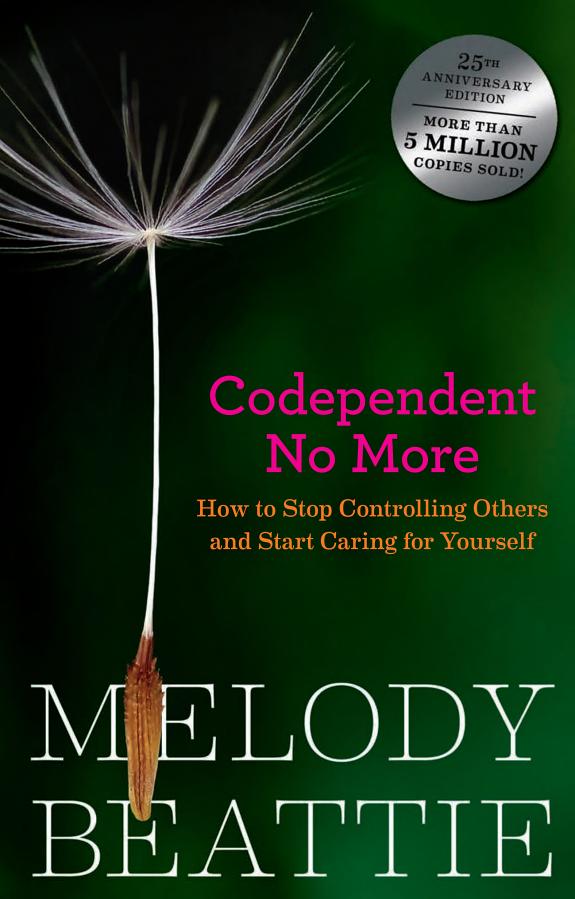
Codependent No More: How to Stop Controlling Others and Start Caring for Yourself
8. Codependent No More: How to Stop Controlling Others and Start Caring for Yourself by Melody Beattie
Melody Beattie wrote this book in 1986, originally for people in relationships with addicts, and it became one of the best-selling self-help books of all time. The reason it has lasted is that codependency, the pattern of organizing your life around another person’s needs and moods to the point of losing track of your own, turns out to be far more widespread than the addiction community it was initially written for. If you have ever found yourself more concerned with managing someone else’s feelings than attending to your own, this book is probably going to recognize you.
Beattie’s writing is direct and sometimes blunt, which is either its greatest strength or the thing that will make you put it down, depending on your tolerance for being told something you already half-know. She draws on her own experience with addiction and recovery, and that personal history gives the book a credibility that purely clinical writing sometimes lacks. She is not theorizing about these patterns from a distance. She lived them.
The book is not without its limitations. Some of the language and framing is dated, and the twelve-step influence is present throughout, which will resonate deeply with some readers and feel less relevant to others. It is also, by design, more focused on naming the problem than on providing a nuanced psychological explanation for why it develops. For the latter, pairing it with something like Attached or The Body Keeps the Score gives a fuller picture. On its own, though, it remains one of the most effective books ever written for people who need permission to stop making themselves small for the sake of someone else.
Beattie’s central message is almost embarrassingly simple: you are allowed to have needs. You are allowed to meet them. The fact that this feels radical to so many people is exactly why the book still matters.
This is perfect for people who grew up as caretakers in their families and carried that role into adulthood, anyone in a relationship with a person struggling with addiction or mental illness, and readers who have a nagging sense that they have been putting everyone else first for so long they have forgotten what they actually want.
None of these books will replace a good therapist. That is worth saying plainly. But they can do something that therapy sometimes cannot, which is meet you at two in the morning when you cannot sleep and something is finally ready to surface. They can give you language for experiences you have been carrying wordlessly. They can show you that the thing you thought was uniquely wrong with you is, in fact, a very human pattern with a name and a history and a path through it.
If you are new to this kind of reading, start with Lori Gottlieb or Brené Brown, both of whom are warm and accessible without being shallow. If you are ready to go deeper, Frankl and van der Kolk will ask more of you and give more back. If you are in the middle of a relationship that is confusing you, Levine and Heller or Beattie might be the most immediately useful. There is no wrong place to start. The point is just to start.
Books like these do not fix you. They help you see yourself more clearly, and that turns out to be most of the work.