

7 Books That Will Make You Mentally Stronger
There is a particular kind of tired that has nothing to do with sleep. It is the exhaustion that comes from carrying anxiety, self-doubt, or grief around for so long that it starts to feel like furniture. You stop noticing it is even there. And then one day you read something, a sentence or a paragraph, and something shifts just slightly. That is what the right book can do.
This list is not about toxic positivity or weekend motivation that evaporates by Tuesday. These seven books deal honestly with what it means to build genuine mental strength, the kind that holds up when things get hard. Some are grounded in neuroscience, some in philosophy, some in raw personal experience. They do not all agree with each other, which is actually part of what makes reading them worthwhile. You get to decide what fits your life.
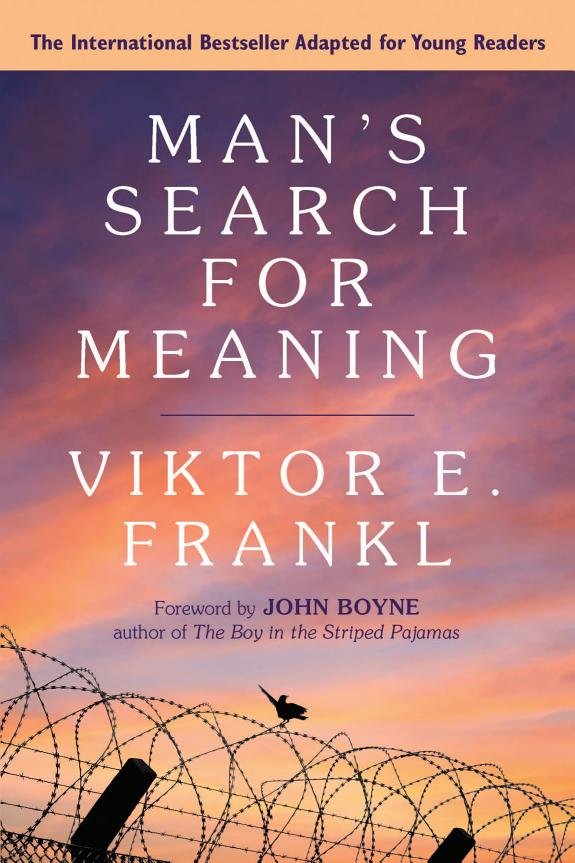
Man’s Search for Meaning
1. Man’s Search for Meaning by Viktor E. Frankl
Viktor Frankl was a psychiatrist who survived four Nazi concentration camps, including Auschwitz. He wrote this book in nine days after liberation, and the fact that it has never gone out of print since 1946 tells you something about how deeply it continues to land. The first half is a memoir of his time in the camps, written with a clinical precision that somehow makes it more devastating, not less. The second half outlines his therapeutic approach, logotherapy, which is built on the idea that human beings can endure almost anything if they have a reason to endure it.
Frankl’s central argument is that meaning, not happiness, is the foundation of psychological health. He observed in the camps that the prisoners most likely to survive were not always the physically strongest. They were often the ones who had something to live for, a person, a purpose, an unfinished work. He noticed this in himself too, holding onto the image of his wife, reconstructing his manuscript in his head, finding small pockets of interior freedom even when every exterior freedom had been stripped away.
The writing is spare and unsentimental, which suits the subject perfectly. Frankl does not dramatize his suffering for effect, and he does not offer easy comfort. What he offers instead is a framework for understanding your own suffering in a way that does not make it meaningless. That is a genuinely useful thing. If you come to this book expecting a self-help manual with steps and worksheets, you will be disappointed. It is a philosophical and autobiographical text that asks more of you than it promises to give you.
“Everything can be taken from a man but one thing: the last of the human freedoms, to choose one’s attitude in any given set of circumstances.” This sentence has been quoted so many times it risks sounding like a poster, but reading it in context, after everything Frankl has described, it carries a weight that is hard to shake.
This is perfect for anyone who has faced serious loss or hardship and is looking for a framework that takes suffering seriously rather than trying to paper over it, though readers who want practical daily strategies may want to pair it with something more applied.
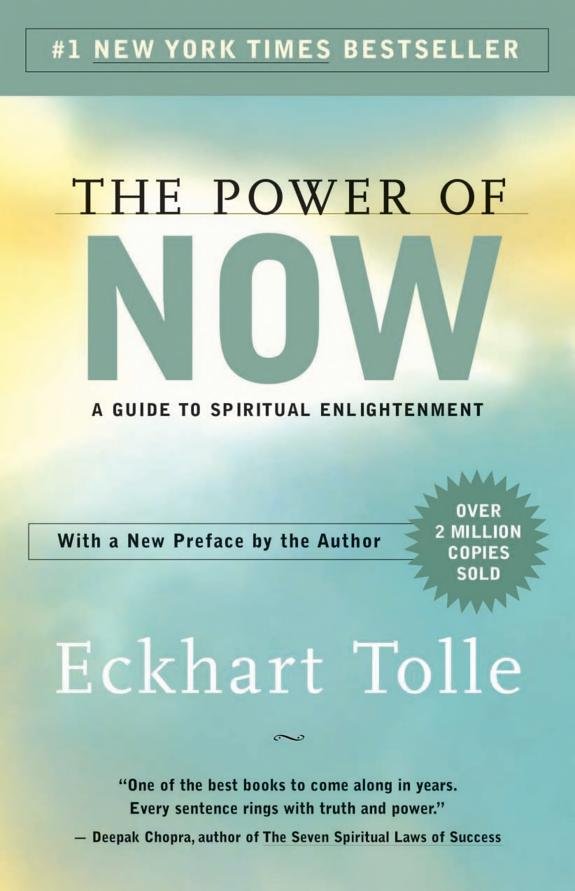
The Power of Now
2. The Power of Now by Eckhart Tolle
Eckhart Tolle is a spiritual teacher, and this book reads like one long conversation with him, which is either deeply soothing or mildly exasperating depending on your temperament and your current caffeine level. The core idea is straightforward enough: most human suffering is generated by the mind’s obsession with the past and the future, and the only place where peace is actually available is the present moment. The difficulty is that Tolle does not just state this idea and move on. He circles it, approaches it from different angles, and asks you to actually feel it rather than just understand it intellectually.
Where this book earns its place on a mental strength list is in its treatment of what Tolle calls the “pain body,” the accumulated emotional residue from past wounds that can hijack your reactions and keep you stuck in patterns you genuinely want to leave behind. His suggestion is not to fight it or analyze it to death, but to observe it with a kind of compassionate detachment. That sounds simple. It is not. But for readers who have tried thinking their way out of anxiety and found that it only makes things worse, this approach offers a genuinely different angle.
The language is occasionally abstract in ways that can feel frustrating, and Tolle has a habit of presenting his ideas as self-evident truths that some readers will find either reassuring or a little irritating. He is also not particularly interested in neuroscience or empirical research, so if you need that kind of grounding, this book will feel slippery. But if you are open to a more contemplative approach and willing to sit with ideas rather than just collect them, there is real substance here.
The book’s most useful insight may be the distinction between the situation and the story you tell about the situation. One is real. The other is constructed, and it is usually the constructed version that causes the most damage.
This is perfect for readers drawn to mindfulness and spiritual approaches to mental wellbeing, though those who prefer science-backed frameworks or find spiritual language grating should probably look elsewhere on this list first.
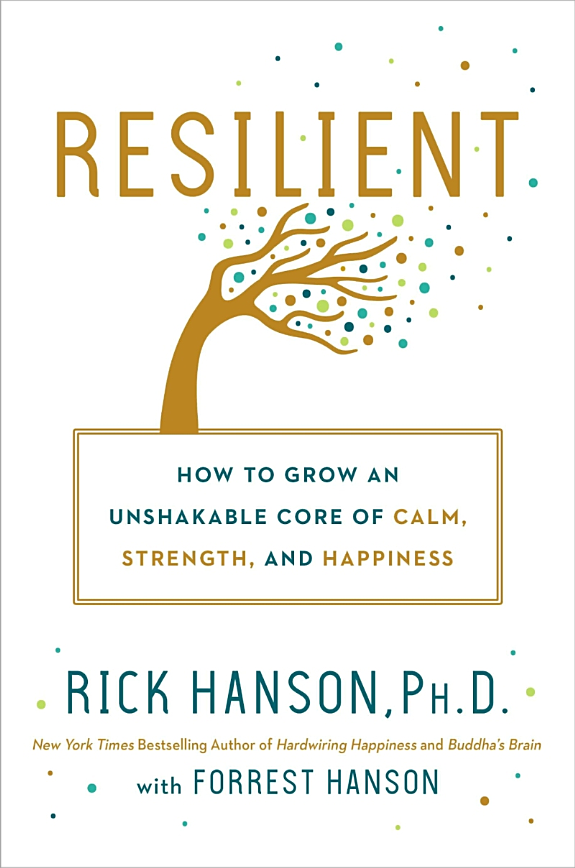
Resilient: How to Grow an Unshakable Core of Calm, Strength, and Happiness
3. Resilient: How to Grow an Unshakable Core of Calm, Strength, and Happiness by Rick Hanson
Rick Hanson is a neuropsychologist, and this book is essentially his attempt to translate what neuroscience knows about the brain into practical habits that build resilience over time. His starting point is a concept he has written about before: the brain has a negativity bias, meaning it is wired to register threats and bad experiences more strongly than positive ones. This was useful for survival on the savanna. It is considerably less useful when you are lying awake at 2am replaying a mildly awkward conversation from three years ago.
The book is organized around twelve qualities that Hanson argues form the foundation of psychological resilience, things like safety, satisfaction, connection, equanimity, and courage. For each quality, he explains the underlying neuroscience and then offers concrete practices for cultivating it. The practices are small and genuinely doable, which is not always the case with books in this space. He is also honest that the brain changes slowly, and that these practices work through repetition rather than revelation. There is no single exercise that will rewire you by Thursday.
What sets Hanson apart from a lot of writers in this genre is his warmth. The book does not feel clinical despite its scientific grounding. He writes like someone who has genuinely struggled with anxiety himself and found these tools helpful, not like someone lecturing from a position of serene enlightenment. If you are a skeptic about mindfulness, his neurological framing may be the bridge that makes these practices feel credible rather than fluffy. If you are already a convert, the science adds useful depth without overwhelming the practical content.
Hanson’s phrase “taking in the good” refers to the deliberate practice of letting positive experiences actually register in your nervous system rather than sliding off it. It sounds almost embarrassingly simple, and then you realize how rarely you actually do it.
This is perfect for people who want a science-grounded, practical approach to building resilience gradually, though those looking for dramatic personal transformation stories or philosophical depth may find it a little methodical.
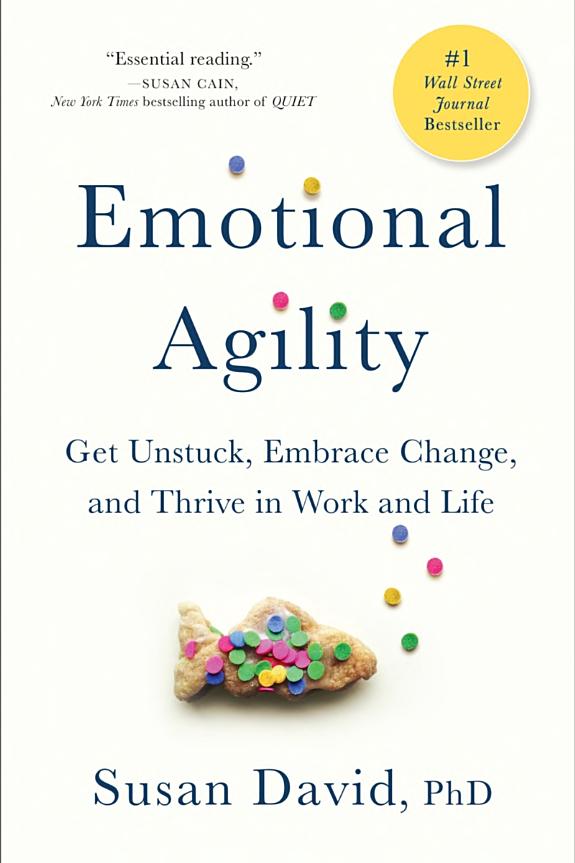
Emotional Agility: Get Unstuck, Embrace Change, and Thrive in Work and Life
4. Emotional Agility: Get Unstuck, Embrace Change, and Thrive in Work and Life by Susan David
Susan David is a Harvard psychologist who lost her father to cancer at fifteen, and the experience of writing her feelings in a journal and having a perceptive teacher respond to them became, she says, a turning point in how she related to her own inner life. That personal origin gives Emotional Agility a grounding that purely academic books sometimes lack. The central argument is that the way most of us handle difficult emotions, either by suppressing them or by being completely swept away by them, is not working, and there is a better way.
David calls this better way emotional agility, and it involves four key moves: showing up to your emotions rather than avoiding them, stepping out of the narrative your mind constructs around them, walking your values rather than your impulses, and moving on with intention. This might sound like standard psychological advice, but David’s execution is sharper than most. Her distinction between “bottlers” and “brooders,” people who suppress emotions versus people who get lost in them, is immediately recognizable. Most readers will see themselves clearly in one category or the other, possibly both on alternating Wednesdays.
The book is well-researched and draws on a wide range of studies, but David never lets the research overwhelm the human story. She uses case studies from her clinical practice throughout, and they are specific enough to feel real rather than illustrative. Where the book is less strong is in its later sections, which move into career and workplace applications in ways that feel slightly generic compared to the earlier, more personal material. But the core ideas are solid and the writing is clear and direct without being oversimplified.
David’s observation that “discomfort is the price of admission to a meaningful life” is one of those lines that is easy to read and genuinely hard to sit with. It reframes avoidance not as self-protection but as a cost you are paying without realizing it.
This is perfect for people who feel stuck in patterns of emotional avoidance or rumination and want a psychologically rigorous but accessible guide to changing that, though those already well-versed in acceptance and commitment therapy may find much of this familiar ground.
Atomic Habits
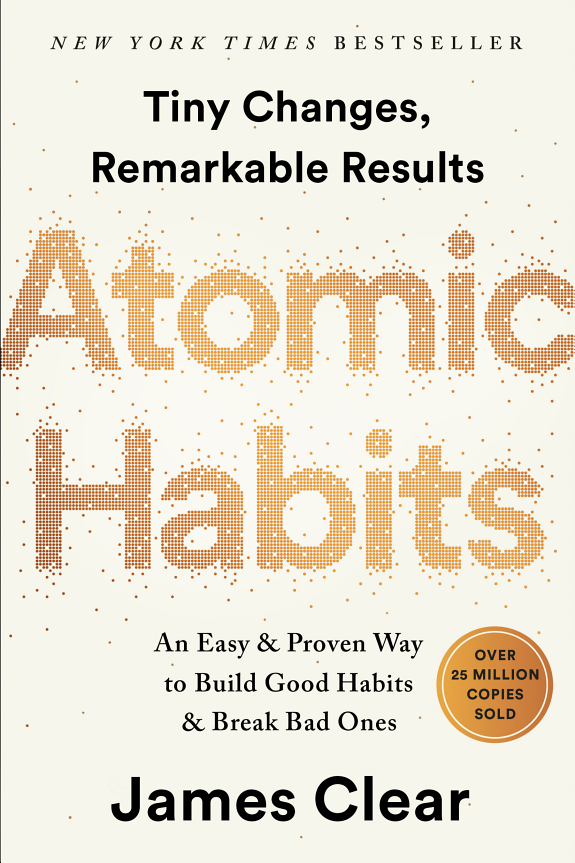
5. Atomic Habits by James Clear
James Clear’s book on habits has sold tens of millions of copies, which means it has also generated a fair amount of backlash from people who feel it is overhyped. Having read it carefully, the honest assessment is that the hype is mostly deserved, not because it contains revolutionary ideas, but because it synthesizes existing research on habit formation into a framework that is genuinely easy to apply. Mental strength is not just about mindset. It is also about the daily structures that either support or undermine the person you are trying to become, and that is where this book earns its place on this list.
Clear’s central insight is that habits are not primarily about goals. They are about systems, and more fundamentally, about identity. He argues that the most durable behavior change happens when you stop asking “what do I want to achieve” and start asking “who do I want to be.” A person who wants to run a marathon and a person who thinks of themselves as a runner make different decisions in small moments throughout the day, and those small moments compound over time in ways that are hard to overstate. This identity-based framing is not entirely original, but Clear articulates it more clearly and practically than most.
The book’s four laws of behavior change (make it obvious, make it attractive, make it easy, make it satisfying) are memorable without being gimmicky, and Clear does a good job of showing how each law can be inverted to break bad habits as well as build good ones. The weakness is that the book is almost relentlessly optimistic about what habits can accomplish, and it does not spend much time on the role of structural or circumstantial factors that make habit change harder for some people than others. If your life circumstances are genuinely difficult, the book’s cheerful incrementalism can occasionally feel a little tone-deaf.
“You do not rise to the level of your goals. You fall to the level of your systems.” It is the kind of sentence that sounds clever until you think about it for a moment and realize it is also just true.
This is perfect for readers who want a practical, structured approach to building better daily habits and understand that mental strength is partly a product of consistent small actions, though those dealing with serious mental health challenges should treat this as a complement to professional support rather than a substitute.
The Obstacle Is the Way: The Timeless Art of Turning Trials into Triumph
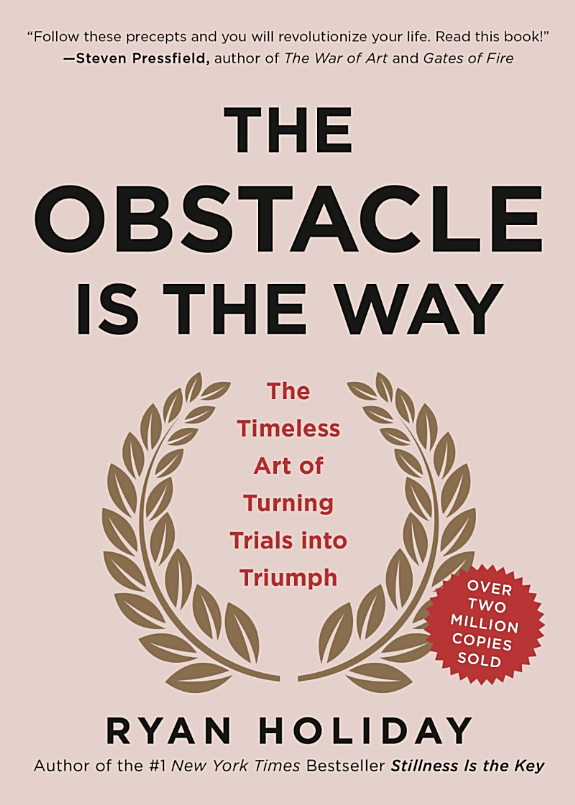
6. The Obstacle Is the Way: The Timeless Art of Turning Trials into Triumph by Ryan Holiday
Ryan Holiday is one of the more interesting figures in contemporary popular philosophy, in that he has done more than almost anyone to bring Stoic ideas to a general audience without dumbing them down beyond recognition. This book takes its title from a line by Marcus Aurelius and builds an entire framework around the Stoic practice of using obstacles as fuel rather than treating them as reasons to stop. Holiday is a good writer with a journalist’s instinct for story, and he illustrates each principle with historical examples ranging from Ulysses S. Grant to Amelia Earhart to Thomas Edison.
The book is organized around three disciplines from Stoic philosophy: perception, action, and will. Perception is about how you see obstacles, action is about how you respond to them, and will is about the inner resources you develop for when you genuinely cannot change your circumstances. This last section is often the most overlooked in summaries of the book, but it is arguably the most important. Holiday is not just saying that obstacles are opportunities in disguise. He is also saying that some things cannot be turned into opportunities, and you need a different kind of strength for those situations.
The historical examples are the book’s greatest strength and occasionally its limitation. Holiday picks his examples well, but the format of short, punchy chapters can sometimes feel like it is forcing complex historical situations into neat illustrations of a predetermined point. This is a minor complaint. The overall effect is a book that is bracing and useful, the kind of thing you can read in a weekend and return to in pieces when you need a particular idea. It is not a deep philosophical treatise, and it does not pretend to be.
Holiday’s distinction between what is “up to us” and what is not, borrowed directly from Epictetus, is perhaps the most practically useful idea in Stoic philosophy. Figuring out which category your current problem falls into saves an enormous amount of wasted energy.
This is perfect for readers who respond well to historical examples and want a clear, direct introduction to Stoic thinking applied to modern challenges, though those looking for emotional depth or nuanced psychological exploration may find the book’s confident tone a bit one-note.
Can’t Hurt Me: Master Your Mind and Defy the Odds
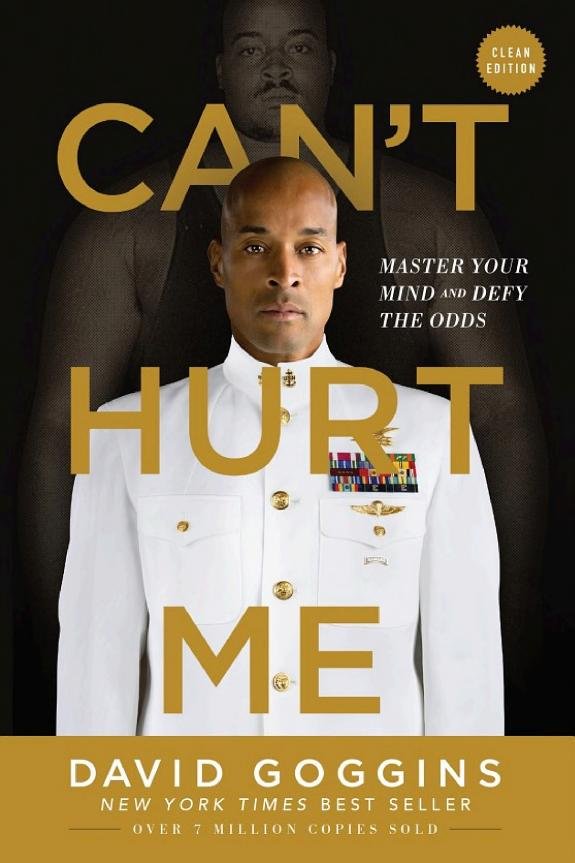
7. Can’t Hurt Me: Master Your Mind and Defy the Odds by David Goggins
David Goggins is a former Navy SEAL, ultramarathon runner, and holder of the world record for pull-ups, and his memoir is the most intense book on this list by a considerable margin. His childhood was genuinely brutal, marked by an abusive father, poverty, and racism, and the book does not soften any of it. What Goggins documents is how he used that suffering not as an excuse but as material, building a mental toughness that most people will find either deeply inspiring or completely exhausting to read about. Possibly both. Sometimes in the same chapter.
The book’s central concept is what Goggins calls the “40% rule,” his belief that when your mind tells you that you are done, you are actually only at about forty percent of your actual capacity. He came to this conclusion through extreme physical testing, running ultramarathons on broken feet, completing Hell Week multiple times, pushing himself past points that any reasonable person would have identified as stopping points. Whether or not you accept the specific percentage, the underlying idea that the mind quits long before the body has to is well-supported by research on human performance and is worth taking seriously.
This is not a book for everyone, and it would be dishonest not to say so clearly. Goggins’s approach to suffering is to embrace it, seek it out, and use it as a tool. That philosophy is useful in certain contexts and potentially harmful in others. The book has almost no interest in self-compassion, rest, or the kind of gentle habit-building that Hanson or Clear advocate. It is also structured as a memoir with challenge sections at the end of each chapter, which works well if you engage with it actively and feels slightly gimmicky if you just read straight through. But as a portrait of what the human mind can endure and adapt to, it is genuinely striking.
Goggins’s concept of the “accountability mirror,” the practice of being brutally honest with yourself about your excuses and your actual choices, is uncomfortable reading. It is also, for the right person at the right moment, exactly what is needed.
This is perfect for readers who want an uncompromising, experience-based account of extreme mental resilience and respond well to challenge-oriented motivation, though those who need gentleness, nuance, or a balanced view of self-care will likely find this book more alienating than useful.
These seven books do not form a tidy system. They come from different traditions, make different assumptions about human nature, and sometimes point in genuinely different directions. Frankl and Goggins both believe that suffering can be used, but they would probably have very different conversations about how. Tolle and Clear are both interested in the present moment, but one wants you to sit with it and the other wants you to build a habit inside it. That tension is not a problem with the list. It is the point.
Mental strength is not a single thing you acquire once and then possess forever. It is more like a collection of tools, and different tools are useful at different times. The book that helps you most right now might be the one you would have dismissed a year ago. If you are not sure where to start, start with the one whose description made you feel slightly uncomfortable. That is usually a good sign.