

6 Books That Help You Get Your Life Together
There comes a point, usually sometime around the third consecutive evening of staring at a to-do list you haven’t touched, when you decide something has to change. Maybe your schedule feels like a pile of laundry that keeps growing. Maybe you’ve started seventeen projects and finished none of them. Maybe you just want to feel like a person who has things under control, at least occasionally.
Books about getting your life together have a bit of a reputation. They can feel preachy, or they promise a complete personality overhaul by chapter three. But the best ones in this category are genuinely useful. They ask good questions, offer concrete frameworks, and respect the fact that you are a real human with a complicated life, not a productivity robot in need of reprogramming. The six books below cover a wide range of approaches, from rethinking your career to reorganizing your sock drawer. Between them, there is almost certainly something that will help.
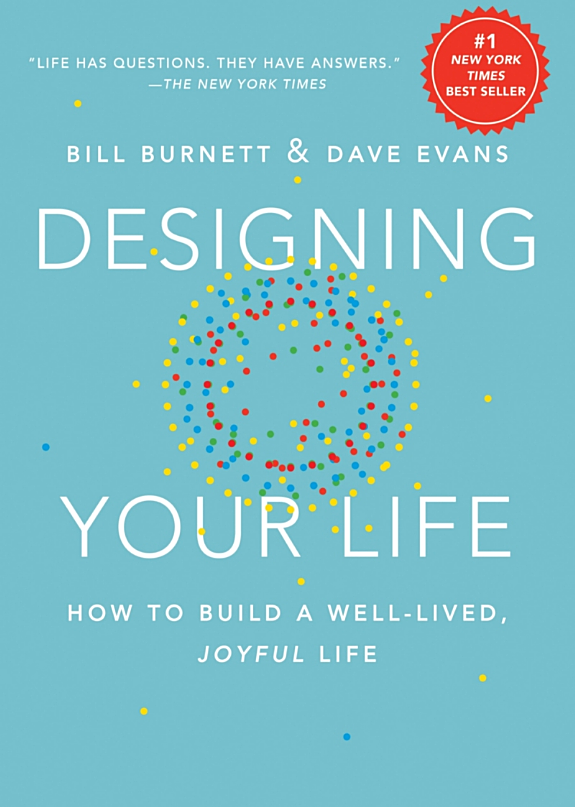
Designing Your Life
1. Designing Your Life by Bill Burnett and Dave Evans
Bill Burnett and Dave Evans are both Stanford design professors, and this book grew directly out of a course they taught there. The central premise is that you can apply design thinking, the kind used to build products and solve engineering problems, to the project of building a life. That sounds a little clinical on paper, but in practice the book is warm, curious, and genuinely encouraging without ever tipping into hollow cheerfulness.
The authors introduce tools like the “workview” and “lifeview” exercises, which ask you to articulate what you believe work is for and what you think life is about. They push back hard against the idea that there is one perfect life waiting for you if you just find the right answer. Instead, they suggest prototyping multiple possible futures, testing ideas in small ways before committing to them wholesale. It is a refreshingly low-pressure approach to what can otherwise feel like an enormous, terrifying question.
The writing is conversational and the examples are drawn from real students and clients, which keeps things grounded. Burnett and Evans are not asking you to quit your job and move to Bali. They are asking you to pay closer attention to what is actually working in your life and to get curious about what is not. That feels like a reasonable place to start.
If you are someone who already has a clear sense of direction and just needs tactical help executing on it, this book may feel too philosophical. It spends a lot of time on reflection before it gets to action. But for anyone who feels genuinely stuck or uncertain about what they want, the slow pace is the point.
“Getting your life together” sometimes starts not with a planner or a system, but with admitting you have been solving the wrong problem entirely.
This is perfect for people in career transitions, recent graduates, or anyone who feels vaguely dissatisfied but cannot quite name why.
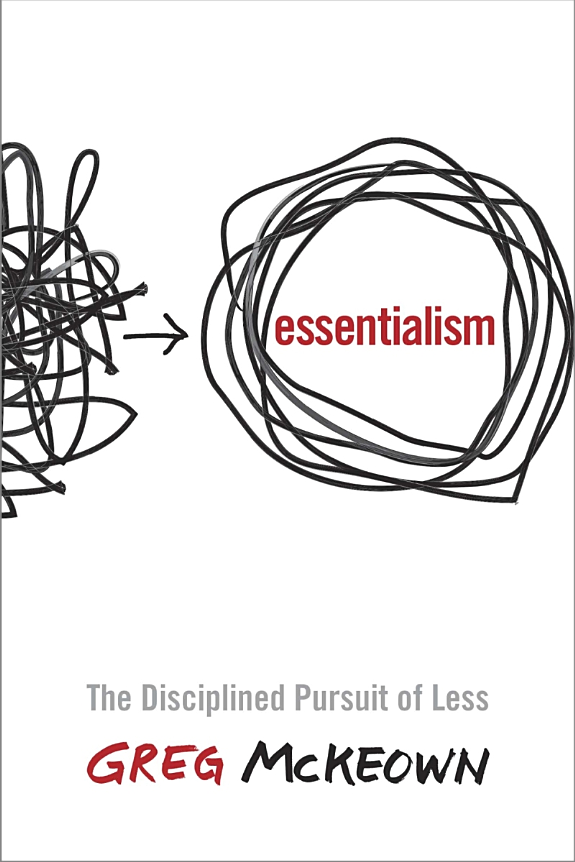
Essentialism
2. Essentialism by Greg McKeown
Greg McKeown has one argument, and he makes it with considerable conviction: almost everything on your plate right now does not matter as much as you think it does. Essentialism is about the disciplined pursuit of less, which sounds simple until you actually try to do it and realize how much of your life has been quietly colonized by other people’s priorities.
McKeown is a clean, persuasive writer. He builds his case through a mix of research, anecdote, and direct challenge. The book is organized around the essentialist’s process of exploring what matters, eliminating what does not, and executing on what remains without friction. Each section is short enough to read in a single sitting, which suits the subject matter nicely. A book about doing less probably should not overstay its welcome.
Some readers find McKeown’s tone a bit relentless. He is very confident that his way is correct, and he does not spend much time acknowledging that saying no to everything non-essential is a luxury not everyone can afford. If you are in a job where you genuinely cannot set limits on your workload, or if family obligations fill most of your time without negotiation, parts of this book will feel disconnected from your reality. He writes largely from the perspective of someone with a good deal of professional autonomy.
That said, the core idea is genuinely useful, and even readers who can only apply it in small ways tend to find the shift in thinking worthwhile. The question McKeown keeps returning to, “Is this the most important thing I could be doing right now?”, is annoying precisely because it is so hard to say yes to honestly.
The book’s most useful contribution is not a system. It is permission, or at least a strong argument, to stop pretending that doing more is always better.
This is perfect for chronic overcommitters, people who struggle to say no, and anyone who ends every week exhausted but unsure what they actually accomplished.
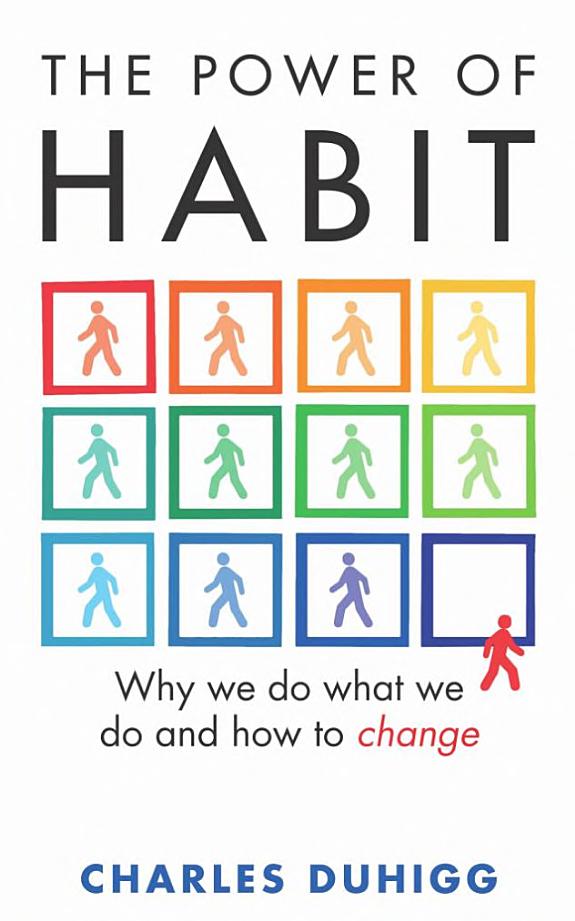
The Power of Habit
3. The Power of Habit by Charles Duhigg
Charles Duhigg is a journalist, and it shows in the best possible way. The Power of Habit reads like a series of well-reported features that happen to build on each other. He covers the neuroscience of habit formation, the stories of individuals who changed entrenched behaviors, and the ways organizations and societies are shaped by collective habits. It is a broad book, but it holds together because Duhigg is a skilled storyteller who keeps the science accessible without dumbing it down.
The central framework is the habit loop: cue, routine, reward. Once you understand how this cycle works, you start seeing it everywhere, in your morning coffee ritual, in the way you reach for your phone the second you feel bored, in the reason certain bad patterns are so sticky. Duhigg argues that you cannot really eliminate a habit, but you can replace the routine while keeping the cue and reward structure intact. That distinction turns out to be practically very useful.
The book is longer than it strictly needs to be. The sections on organizational and societal habits are interesting but feel somewhat separate from the personal application most readers come for. If you are primarily looking for help changing your own behavior, the first third of the book does the heaviest lifting. The rest is context, which is valuable but not urgent.
What Duhigg does particularly well is make you feel like behavior change is actually possible, not through willpower alone, but through understanding the mechanics of why you do what you do. That reframing is worth a lot when you are stuck in a loop you cannot seem to break on your own.
Willpower is not the whole story. Understanding the structure of a habit is what gives you something to actually work with.
This is perfect for readers who want to understand the science behind their behavior before attempting to change it, and for anyone who has tried and failed to break the same habit more than once.
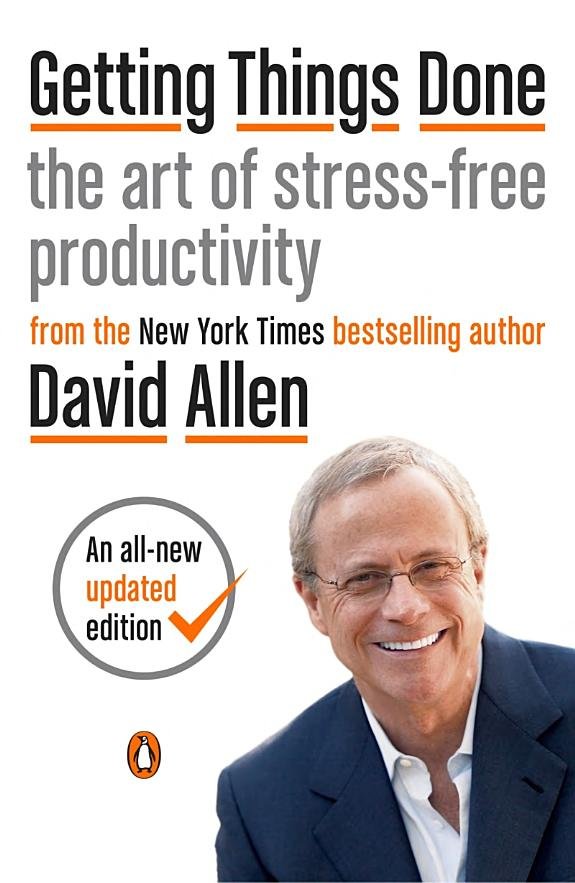
Getting Things Done
4. Getting Things Done by David Allen
Getting Things Done, often referred to simply as GTD by its devoted following, is one of the most influential productivity books ever written. David Allen’s system has been around since 2001, has been updated since, and still has people building entire workflows around it decades later. That kind of staying power is not accidental. The core insight, that your brain is for having ideas, not for holding them, is both obvious in retrospect and quietly radical in its implications.
Allen’s system is built around capturing everything that has your attention, clarifying what each item actually means and what the next action is, organizing the results into a trusted system, and reviewing regularly. The goal is what he calls “mind like water,” a state of clear, calm responsiveness rather than constant low-grade anxiety about what you might be forgetting. If you have ever lain awake at 2 a.m. mentally rehearsing your to-do list, you understand exactly what problem he is trying to solve.
Here is the honest part: GTD is a lot. The full system, with its contexts and weekly reviews and project lists and reference files, can feel overwhelming to set up and maintain. Many readers adopt a simplified version of it and find that works just fine. Allen himself acknowledges that the system needs to be adapted to individual circumstances, but the book is detailed enough that newcomers sometimes feel like they need to implement everything at once or it will not work. It will. Start small.
The writing is functional rather than elegant, and some of the examples feel dated. But the underlying logic is sound and the system has proven durable across wildly different jobs, lifestyles, and decades. There is a reason people still recommend this book at every productivity forum on the internet.
The system works best not as a rigid set of rules but as a philosophy about what it means to actually trust yourself to follow through.
This is perfect for people with complex, multi-project workloads, anyone who feels perpetually overwhelmed by open loops, and readers who want a thorough, tested system rather than a quick fix.
The Bullet Journal Method
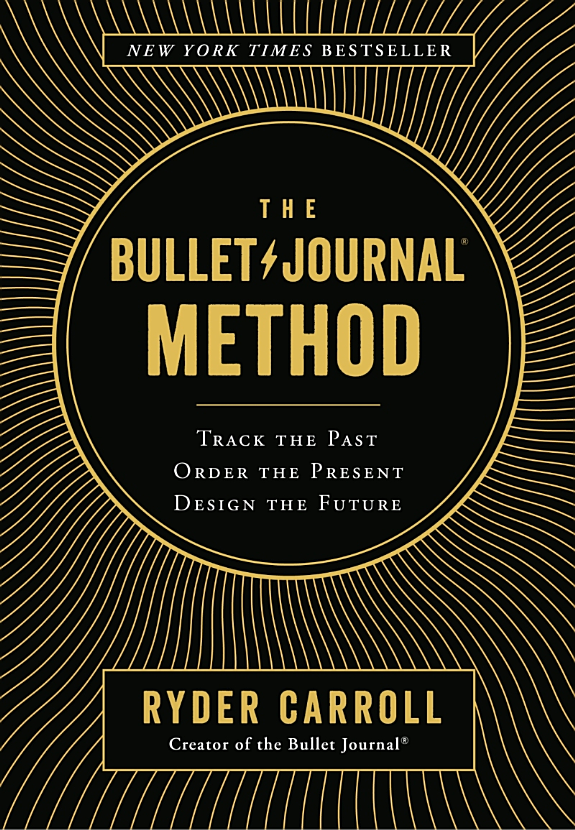
5. The Bullet Journal Method by Ryder Carroll
Ryder Carroll created the bullet journal system partly out of personal necessity. He has ADHD and needed a way to organize his thoughts and tasks that actually worked with how his brain operates. What he developed became an internet phenomenon, with millions of people adapting it into everything from minimal functional notebooks to elaborate hand-lettered works of art. The book is his attempt to explain not just the mechanics of the system, but the thinking behind it.
The method itself is analog, built around a paper notebook, a small set of symbols, and a few core collections: the daily log, the monthly log, the future log, and the index. What makes it flexible is that it is entirely customizable. You add what you need and leave out what you do not. Carroll is also careful to explain that the point is not the notebook itself but the practice of intentional reflection that keeping it encourages. The act of writing things down by hand, he argues, forces a kind of engagement that typing does not.
The book is more philosophical than many readers expect. Carroll spends considerable time on questions of meaning, intention, and what it actually means to live a good life. Some people find this depth welcome and enriching. Others came for a tutorial on rapid logging and find the extended meditation on purpose a bit much. If you already have a strong sense of your values and just want the system explained, you could honestly get the basics from the bullet journal website for free. The book earns its place by giving you the why alongside the how.
It is worth noting that this system requires consistent upkeep. If you are someone who starts journals with great enthusiasm and abandons them by February, the bullet journal will not magically solve that. Carroll addresses this directly, which is honest of him, but it is still something to go in knowing.
A notebook cannot organize your life for you. But the habit of sitting down with one regularly might be the closest thing to a shortcut that actually exists.
This is perfect for analog thinkers, people who have tried digital productivity apps and found them unsatisfying, and anyone who wants a flexible system they can genuinely make their own.
The Life-Changing Magic of Tidying Up
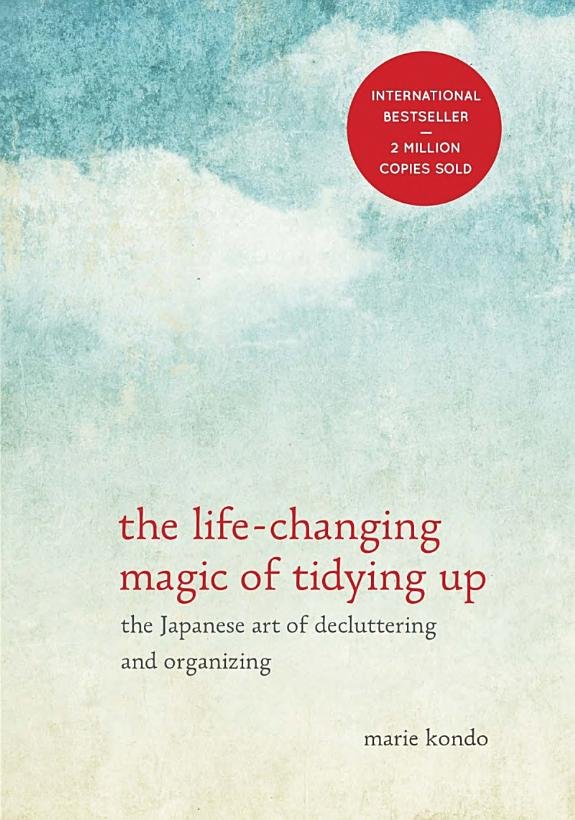
6. The Magic of Tidying Up by Marie Kondo
Marie Kondo’s approach to tidying is specific, methodical, and deeply personal in a way that sets it apart from the average decluttering guide. Her KonMari method asks you to go through your belongings by category rather than by room, and to keep only those items that, in her now-famous phrase, spark joy. The philosophy is rooted in her Japanese upbringing and a genuine reverence for the objects we choose to keep in our lives.
Kondo’s voice is one of the most distinctive in this list. She is earnest to a degree that some readers find charming and others find slightly baffling. She talks to her own belongings. She thanks her socks. She describes the moment a client’s house transforms as something close to spiritual. If you approach this with complete literalism it can feel strange. If you read it as a useful metaphor for paying attention to what you actually value, it is quite effective.
The method has real limitations. It assumes you have enough space, time, and financial stability to get rid of things without anxiety, and it assumes that the problem is too much stuff rather than too little. The book was written for a Japanese apartment context and does not always translate smoothly to other living situations. It also does not address the question of how clutter accumulates again after the initial purge, which is, for most people, the harder problem.
What the book does well is reframe tidying as a one-time event rather than an ongoing chore, and it gives you a clear, repeatable process for making decisions about objects. Even skeptical readers often find that the “does this spark joy” question, annoying as it can feel, actually helps cut through the paralysis that comes with trying to decide what to keep.
The real argument of the book is not about tidiness. It is about learning to make deliberate choices about what you want in your space and, by extension, your life.
This is perfect for people who feel weighed down by clutter, anyone who has tried to declutter before and stalled out, and readers who respond well to a clear, opinionated system with a strong point of view.
None of these books will sort everything out for you overnight, and honestly, be suspicious of any book that claims it will. What they can do is offer a new frame, a better question, or a concrete tool that makes the next step a little clearer. Getting your life together is not a destination you arrive at and then stay at forever. It is more like a practice, something you return to, adjust, and keep working on.
The best approach is probably to start with whichever of these books speaks most directly to the specific thing that is bothering you right now. Overwhelmed by choices? Start with Essentialism. Drowning in tasks? Try Getting Things Done. Not sure what you even want? Designing Your Life might be the right first move. You do not need to read all six. You just need to read one and actually do something with it. That, more than any system or method, is the whole trick.