

8 Books That Help You Build Healthy Relationships
Most of us were never actually taught how to be in a relationship. We picked up habits from our parents, absorbed a few lessons from heartbreak, and figured the rest would sort itself out. Sometimes it does. Often, though, we find ourselves repeating the same arguments, feeling unheard, or wondering why something that started so well has gotten so complicated.
The good news is that relationships are skills, not just feelings. And like any skill, they can be studied, practiced, and improved. The eight books gathered here cover a wide range of relationship territory, from communication and attachment to desire and long-term partnership. Some are rooted in decades of clinical research. Others are more philosophical. A few will make you rethink things you assumed were just “the way you are.” All of them are worth your time, depending on where you are and what you need.
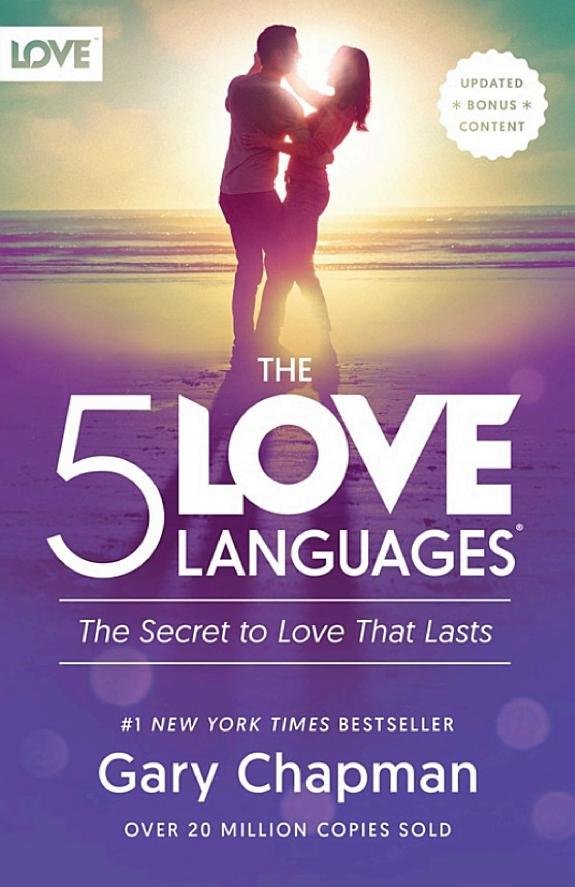
The 5 Love Languages: The Secret to Love that Lasts
1. The 5 Love Languages: The Secret to Love that Lasts by Gary Chapman
Gary Chapman spent years as a marriage counselor before he noticed a pattern: couples who genuinely loved each other were still leaving each other feeling unloved. His explanation, which became one of the most widely read relationship books of the past few decades, is that people express and receive love in fundamentally different ways. He identifies five of them: words of affirmation, acts of service, receiving gifts, quality time, and physical touch. The central idea is that if you are speaking a different love language than your partner, your efforts, however sincere, may simply not be landing.
Chapman writes in a warm, pastoral tone that some readers will find comforting and others will find a bit too tidy. The framework is simple, which is both its strength and its limitation. It gives couples a shared vocabulary for conversations that can otherwise spiral into hurt feelings and defensiveness. Knowing that your partner’s primary language is acts of service, for instance, can shift how you interpret their behavior and how you choose to show up for them.
Where the book is less useful is in its assumption that the framework applies universally and neatly. Real people are more complicated than five categories, and some readers will feel the model oversimplifies what is actually going on in their relationship. Chapman also writes from a Christian perspective, which is woven lightly into the text but is worth knowing going in.
“The emotional need for love is real. If it goes unmet, the results can be devastating, not because anyone stopped caring, but because they were speaking the wrong language all along.”
This is perfect for couples who feel like they keep trying but something is still getting lost in translation, and for anyone who wants a simple, accessible starting point for thinking about how love is expressed and received.
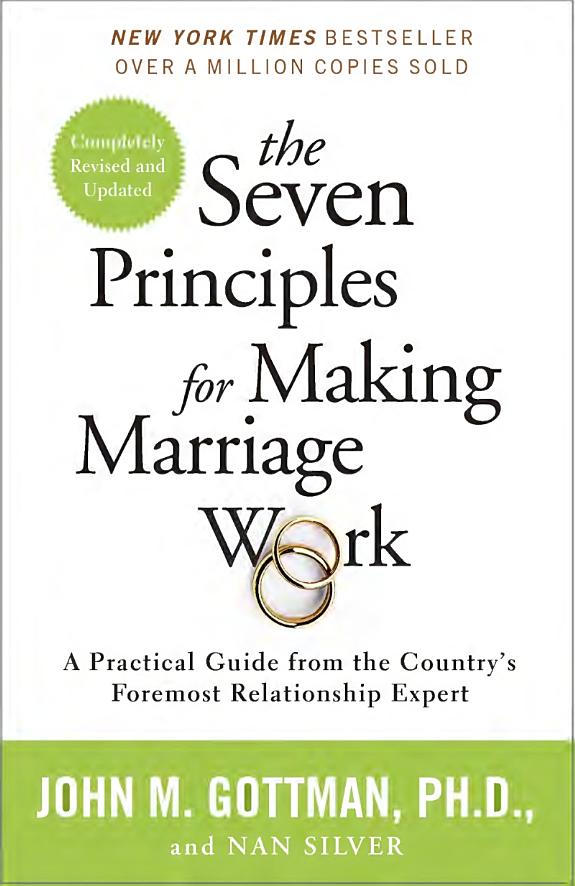
The Seven Principles for Making Marriage Work
2. The Seven Principles for Making Marriage Work by John Gottman
John Gottman has spent over four decades studying couples in his research lab at the University of Washington, and what he found is that he can predict with startling accuracy whether a couple will stay together or divorce. His method involves watching how couples argue, noting the presence of what he calls the “Four Horsemen” (criticism, contempt, defensiveness, and stonewalling), and tracking the ratio of positive to negative interactions. The Seven Principles is the book where he translates all of that research into practical guidance that real couples can actually use.
What makes this book stand out is the evidence behind it. Gottman is not offering intuition or anecdote. He is offering data, and the conclusions he draws from that data are often counterintuitive. For example, he argues that trying to solve perpetual problems in a relationship is largely a waste of energy, because most relationship conflicts are never fully resolved. The goal is not resolution but management, understanding, and dialogue. That reframe alone is worth the price of the book.
The writing is clear and practical, with exercises and questionnaires woven throughout. Some readers find the workbook-style sections a bit clinical, and the book is clearly aimed at married or long-term committed couples rather than those in early relationships. If you are not in a serious partnership, much of it will feel hypothetical. But if you are, this is one of the most grounded and research-backed resources available.
“Happy marriages are not ones without conflict. They are ones where both people feel known, respected, and fundamentally on the same team.”
This is perfect for committed couples who want to understand the science behind what keeps relationships strong, particularly those who are navigating recurring conflicts and want tools that go beyond generic advice.
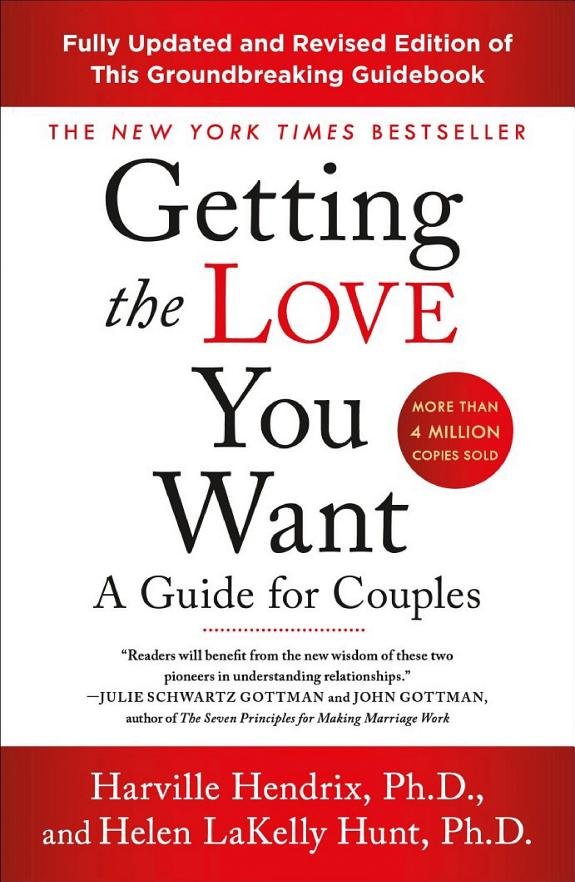
Getting the Love You Want: A Guide for Couples
3. Getting the Love You Want: A Guide for Couples by Harville Hendrix
Harville Hendrix opens with a premise that is a little unsettling: we are unconsciously drawn to partners who recreate the emotional wounds of our childhood. Not because we are masochists, but because the psyche is always trying to finish unfinished business. The person who frustrates you most in your relationship is probably doing so in ways that echo something much older than the two of you. It is a Jungian idea dressed in accessible language, and Hendrix develops it with genuine care and therapeutic depth.
The concept of the “Imago” is at the heart of the book. Hendrix describes it as a composite image of the people who raised us, carrying both their positive and negative traits. We are, he argues, looking for someone who matches that image so we can heal old wounds through new love. This is not a comforting idea at first glance, but Hendrix handles it thoughtfully, and the exercises he offers are designed to help couples turn that dynamic into something healing rather than destructive.
The therapeutic framework here is more psychoanalytic than the Gottman approach, and readers who are skeptical of that tradition may find some of the concepts a stretch. The exercises can also feel intense, particularly the “Couples Dialogue” technique, which asks partners to mirror each other’s words back in a structured way. Some couples will find it revelatory. Others will find it awkward and stilted, at least at first.
“The person you fell in love with is not a mistake. They are a map to the parts of yourself that still need healing.”
This is perfect for couples who sense that their conflicts run deeper than the surface issues they argue about, and for individuals who want to understand the psychological patterns they bring into their relationships.
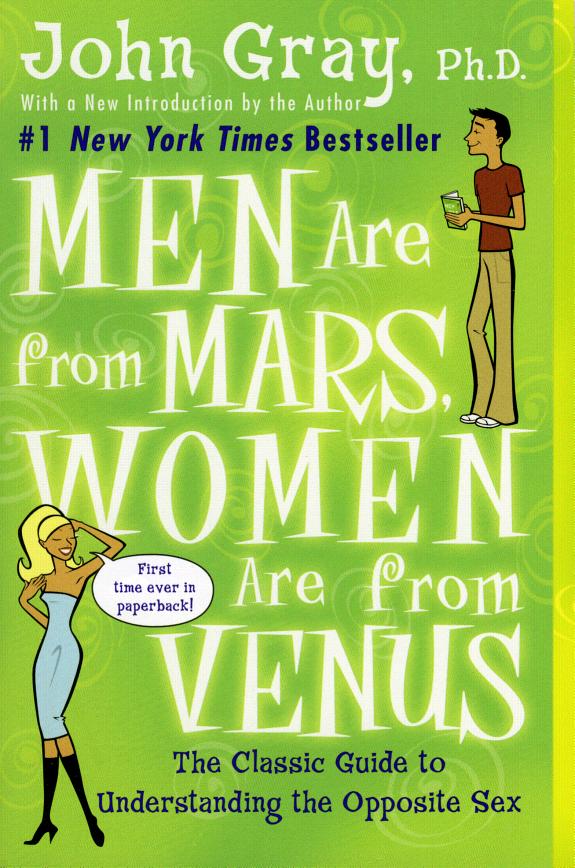
Men Are from Mars, Women Are from Venus
4. Men Are from Mars, Women Are from Venus by John Gray
Few books in the relationship genre have sold more copies or generated more debate than this one. John Gray’s core argument is that men and women are so fundamentally different in their emotional needs and communication styles that they might as well be from different planets. He uses the Mars and Venus metaphor to walk through those differences in practical terms, covering everything from how men withdraw under stress (retreating to their “cave”) to how women process emotions through conversation rather than solitude.
There is something genuinely useful here, particularly for readers who have felt confused or hurt by a partner’s behavior and found no satisfying explanation. Gray gives names to patterns that many people recognize, and for some couples, the book has opened up conversations that felt impossible before. The writing is warm and the examples are plentiful, which makes it an easy read.
That said, this book has aged in ways that are hard to ignore. The gender generalizations are sweeping, and they leave little room for people whose experiences do not fit the heterosexual, binary framework Gray assumes throughout. Many of the “differences” he describes are better explained by socialization than by anything innate, and researchers have since challenged much of the science the book implies. Read it as a starting point for reflection, not as a definitive map of how people work. If rigid gender categories frustrate you, this one is not your book.
“Understanding that your partner is not wrong, just different, can be the beginning of a much more patient kind of love.”
This is perfect for readers in heterosexual relationships who feel genuinely baffled by their partner’s emotional responses and want a readable, conversational introduction to thinking about communication differences.
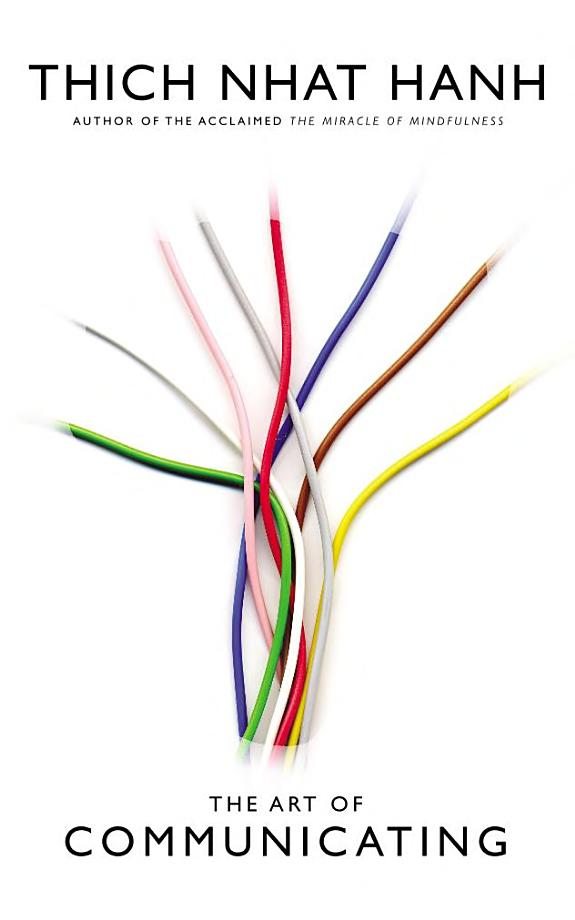
The Art of Communicating
5. The Art of Communicating by Thich Nhat Hanh
Thich Nhat Hanh approaches communication not as a skill to be optimized but as a spiritual practice. This slim, quietly written book argues that most of the damage we do in relationships, and in the world, comes from our inability to truly listen and speak with compassion. He draws on Buddhist teachings about mindfulness and interconnection, but the book never feels like a lecture. It feels like a conversation with someone who has thought very carefully about what it means to be present with another person.
The central idea is that deep listening, what Hanh calls “compassionate listening,” is one of the most generous things we can offer anyone. He distinguishes between listening to respond and listening to understand, and he makes a compelling case that most of us are doing the former far more than the latter. The chapters are short and the prose is spare, which gives the book a meditative quality that is either calming or frustrating depending on what you came for.
This is not a book with exercises, questionnaires, or research data. There are no case studies or clinical frameworks. If you are looking for structured tools to work through a specific relationship problem, this will feel too abstract. But if you are open to slowing down and rethinking how you show up in conversations, it offers something that the more research-heavy books do not: a reminder that communication is ultimately about love, not technique.
“The most precious gift we can offer anyone is our attention. When mindfulness embraces those we love, they will bloom like flowers.”
This is perfect for readers who feel that their relationship problems are less about specific conflicts and more about a general drift away from presence and genuine connection, and for those who appreciate a contemplative approach to self-improvement.
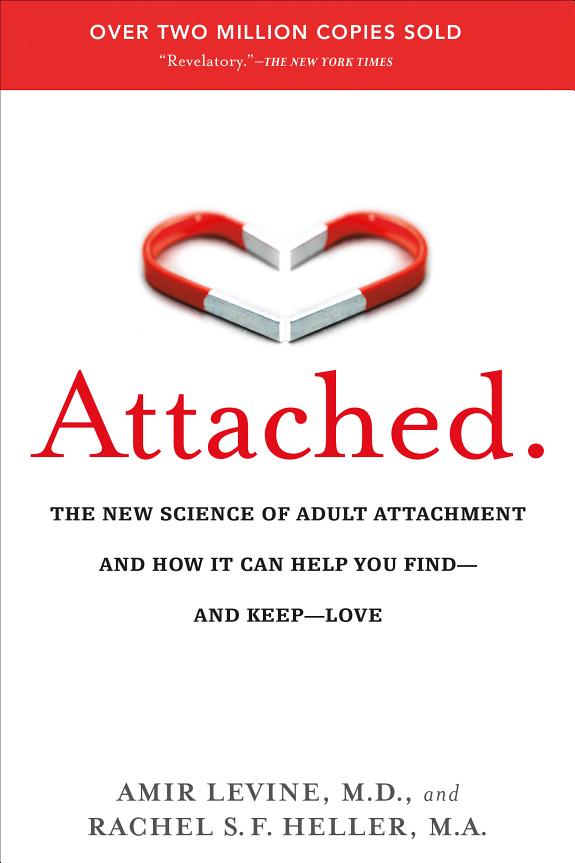
Attached: The New Science of Adult Attachment and How It Can Help You Find—and Keep—Love
6. Attached: The New Science of Adult Attachment and How It Can Help You Find and Keep Love by Amir Levine and Rachel Heller
Attachment theory began with children and their caregivers, but Amir Levine and Rachel Heller make a persuasive case that the same fundamental patterns, secure, anxious, and avoidant, show up in our adult romantic relationships with remarkable consistency. Levine, a psychiatrist and neuroscientist, brings genuine research credibility to the subject, and the book does an excellent job of translating attachment science into something that feels immediately recognizable and personally relevant.
The descriptions of each attachment style are detailed enough to be genuinely illuminating. Anxious types monitor their partners closely and can spiral into worry when reassurance is not forthcoming. Avoidant types value independence to the point where closeness starts to feel threatening. Secure types are comfortable with intimacy and relatively undisturbed by conflict. Most people will recognize themselves in one of these descriptions fairly quickly, and the book is honest about the fact that anxious and avoidant partners are disproportionately drawn to each other, which creates a predictable and often painful dynamic.
Where the book is most useful is in helping readers understand that their reactions in relationships are not character flaws. They are patterns, often formed early, that can be understood and worked with. The practical sections on identifying your own style and communicating your needs are some of the most actionable in any relationship book. It is less useful if you are already familiar with attachment theory, since it covers the core concepts thoroughly but does not break much new ground beyond them.
“Your need for closeness is not neediness. Your discomfort with intimacy is not coldness. They are attachment strategies, and understanding them changes everything.”
This is perfect for anyone who notices recurring patterns in their relationships and wants a research-grounded explanation for why those patterns exist, especially readers who identify as anxious or avoidant in love.
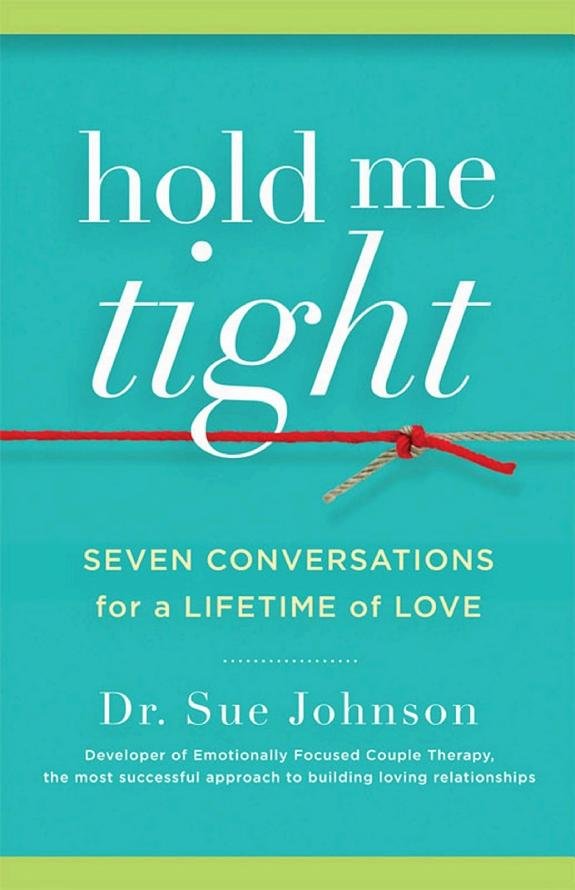
Hold Me Tight: Seven Conversations for a Lifetime of Love
7. Hold Me Tight: Seven Conversations for a Lifetime of Love by Dr. Sue Johnson
Sue Johnson is the developer of Emotionally Focused Therapy, one of the most well-researched couples therapy approaches in existence, and Hold Me Tight is her attempt to bring that work directly to couples without a therapist in the room. The book is organized around seven specific conversations that she argues are at the heart of secure, lasting love. These are not conversations in the literal sense but rather emotional exchanges, moments of reaching out, being heard, and finding safety in each other.
Johnson’s central argument is that most relationship conflict is really about attachment, about the fear of losing connection with the person who matters most to you. When she reframes a couple’s argument about dishes or finances as an underlying cry of “Are you there for me? Do I matter to you?” it can feel startlingly accurate. The clinical examples throughout the book are vivid and honest, and they give the theoretical framework real emotional weight.
The writing is warmer than you might expect from a clinical psychologist, and Johnson is clearly someone who has sat with a lot of human pain and come away with genuine compassion for how hard love can be. The book is not a quick fix, and it works best when both partners read it together and are willing to be vulnerable with each other. If one person is doing all the work, the seven conversations will be hard to have. But for couples who are both willing to engage, this is one of the most emotionally honest relationship books available.
“Love is not the icing on the cake of life. It is a basic need, as fundamental as food or shelter. When we lose it, or fear losing it, we do not simply feel sad. We panic.”
This is perfect for couples who feel emotionally disconnected and want to understand the deeper emotional needs driving their conflicts, particularly those who are open to vulnerability and willing to do the work together.
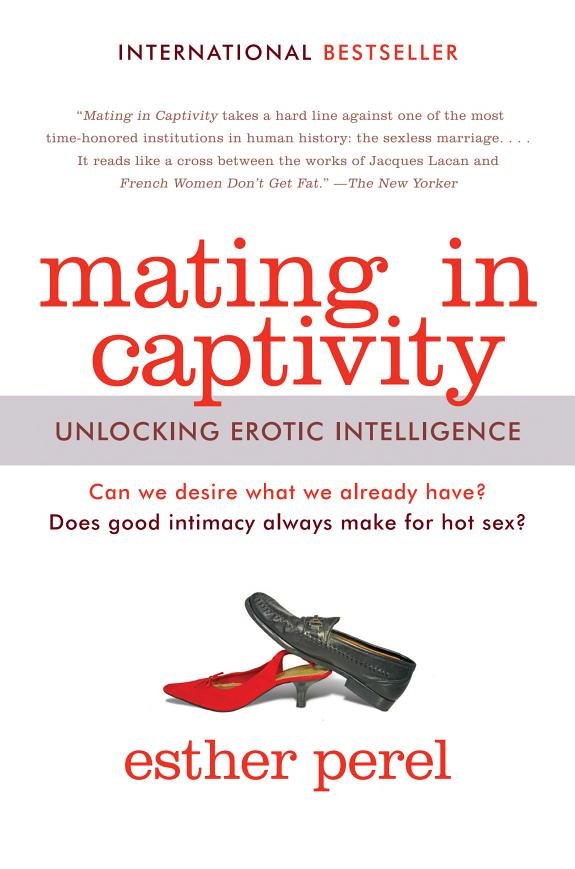
Mating in Captivity: Unlocking Erotic Intelligence
8. Mating in Captivity: Unlocking Erotic Intelligence by Esther Perel
Esther Perel opens this book with a question that most relationship books are too polite to ask: why does desire so often fade in long-term relationships, and what, if anything, can be done about it? Perel is a Belgian psychotherapist who works in multiple languages and draws on a genuinely international perspective, which gives the book a cultural richness that sets it apart from most American self-help titles. She is also a wonderfully precise writer, which makes the book a pleasure to read even when the subject matter is uncomfortable.
Her central thesis is that the things that make a relationship feel safe, familiarity, security, predictability, are often the very things that erode desire. Eroticism, she argues, thrives on mystery, distance, and a certain degree of otherness. We want to feel close to our partners and we want to desire them, but closeness and desire do not always pull in the same direction. It is a tension that Perel refuses to resolve neatly, because she believes the tension itself is the point.
This is not a book of exercises or frameworks. It is a book of ideas, and Perel does not offer simple solutions because she does not believe simple solutions exist. Some readers will find that frustrating. Others will find it refreshing after years of being told that communication is the answer to everything. The book is also frank about sex in ways that some readers may not expect, so if that is not a conversation you are ready for, it might be worth waiting until you are. For couples who feel the spark has dimmed and want to think seriously about why, this is one of the most thoughtful books on the subject.
“Fire needs air. Long-term love needs space, not just togetherness. The challenge is not to choose between love and desire, but to understand how to cultivate both.”
This is perfect for couples in long-term relationships who are grappling with the tension between intimacy and desire, and for anyone who wants a sophisticated, culturally nuanced perspective on what keeps relationships alive over time.
No single book is going to fix a relationship. Anyone who tells you otherwise is selling something. What these eight books can do is give you a clearer picture of what is actually happening between you and the people you love, and offer you better tools for navigating it. Some of them will resonate immediately. Others might sit on your shelf for a year before the right moment arrives. That is fine. Good books are patient.
If you are not sure where to start, let your gut guide you. If you and your partner keep having the same argument and neither of you knows why, Gottman or Johnson might be your entry point. If you feel like something from your past is showing up in your present relationship, Hendrix or Levine and Heller are worth your time. If you just want to slow down and think more carefully about how you communicate with the people who matter to you, Thich Nhat Hanh is always a good companion for that.
Relationships are some of the most demanding and most rewarding work we do as human beings. It seems worth reading a few books about them.