7 Books for Burned-Out Women Who Need a Real Break
There is a particular kind of tired that sleep does not fix. You wake up already depleted, move through your day on autopilot, and fall into bed wondering where you went. If that sounds familiar, you are not broken. You are burned out, and you are very much not alone.
The books on this list were chosen because they take that exhaustion seriously. None of them will tell you to drink more green smoothies or wake up at 5 a.m. to journal. They go deeper than that, asking harder questions about why so many women end up running on empty and what it actually takes to come back to yourself. Some are rooted in science, some in memoir, some in therapy and mindfulness. All of them are worth your time, which, if you are burned out, feels like a precious and finite resource. So let’s not waste it.

Untamed
1. Untamed by Glennon Doyle
Glennon Doyle writes the way a very honest friend talks, the kind who will say the thing everyone else is tiptoeing around. Untamed is part memoir, part manifesto, and entirely the story of a woman who spent decades being what everyone else needed her to be until she simply stopped. It is not a quiet book. Doyle is loud and certain and occasionally overwrought, which is either exactly what you need or a bit much depending on the day.
The central idea is that women are conditioned from childhood to ignore their own instincts in favor of keeping the peace, pleasing others, and fitting into roles that were never designed with their actual wellbeing in mind. Doyle calls this being “caged” and she is not subtle about the metaphor. What she offers instead is not a tidy program or a set of steps. It is more of a permission slip to start listening to yourself again, even when that feels terrifying and inconvenient for everyone around you.
The writing is propulsive and personal. Doyle does not pretend her choices were easy or universally applicable. She blew up her life in ways most people cannot or would not, and she knows it. But the emotional truth underneath the specific details, that feeling of having lost yourself inside someone else’s idea of who you should be, lands hard for a lot of women regardless of their circumstances.
Burnout often begins with a long, slow forgetting of what you actually want. Doyle is less interested in helping you recover than in helping you remember.
This is perfect for women who feel like they have been performing a version of themselves for so long they have lost track of the original, and who are ready for a book that is more fire than footnotes.
Burnout: The Secret to Unlocking the Stress Cycle
2. Burnout: The Secret to Unlocking the Stress Cycle by Emily Nagoski and Amelia Nagoski
Sisters Emily and Amelia Nagoski bring something genuinely useful to this conversation: an explanation of what burnout is actually doing to your body, not just your mood. The book is grounded in stress physiology, and the core insight is that stress is a biological cycle with a beginning, middle, and end. The problem is that modern life, particularly for women, is very good at triggering the stress response and very bad at letting it complete. You deal with the stressor but never finish processing the stress itself.
This sounds technical, and in places it is, but the Nagoskis write with warmth and a dry wit that keeps things from feeling like a textbook. They cover the specific ways women are set up to burn out at higher rates, including what they call “Human Giver Syndrome,” the deeply internalized belief that women exist to give their time, attention, and energy to others without remainder. Recognizing that pattern in yourself is, it turns out, half the battle.
The practical sections are genuinely helpful. Exercise, creative expression, laughter, physical affection, these are not presented as luxuries but as biological necessities for completing the stress cycle. The book does not ask you to eliminate stress from your life, which would be impossible. It asks you to stop leaving it unfinished inside your nervous system, which is actually doable.
You can handle the email, the meeting, the argument, and still feel wrecked afterward because handling the stressor and completing the stress response are two entirely different things.
This is perfect for women who want to understand the science behind their exhaustion and who respond better to biology than to inspirational anecdotes.
Set Boundaries, Find Peace: A Guide to Reclaiming Yourself
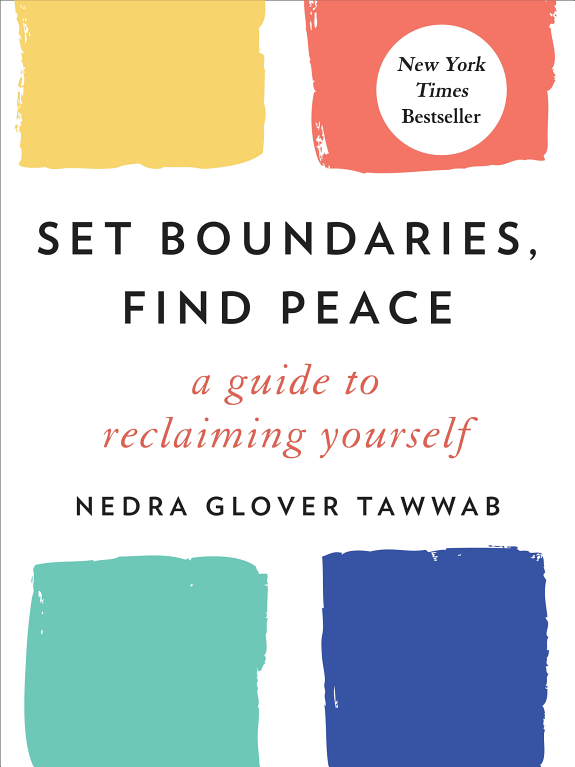
3. Set Boundaries, Find Peace: A Guide to Reclaiming Yourself by Nedra Glover Tawwab
Nedra Glover Tawwab is a therapist, and this book reads like a very clear, very patient session with someone who has heard every excuse for why setting limits feels impossible. Her voice is calm and direct without being cold. She is not here to shame you for struggling with this. She is here to explain why you struggle with it and what to do instead.
The book covers the full range of limit-setting territory: with family, romantic partners, friends, coworkers, and even yourself. Tawwab is particularly good on the ways that growing up in chaotic or emotionally unpredictable households can make healthy limits feel dangerous or selfish well into adulthood. She normalizes the discomfort of change without pretending it is easy. The scripts she provides for difficult conversations are specific enough to be useful without feeling robotic.
Where this book shines is in its honesty about what limits actually are. They are not walls. They are not punishments. They are the conditions under which you can show up well for both yourself and the people you care about. That reframe alone is worth the read. If you have spent years confusing selflessness with virtue, this book will gently and firmly suggest you reconsider.
Limits are not about keeping people out. They are about deciding what you can genuinely offer without hollowing yourself out to do it.
This is perfect for women who know intellectually that they need to say no more often but find themselves saying yes anyway, and who want practical, therapist-grounded tools to change that pattern.
Real Self-Care: A Transformative Program for Redefining Wellness (Crystals, Cleanses, and Bubble Baths Not Included)
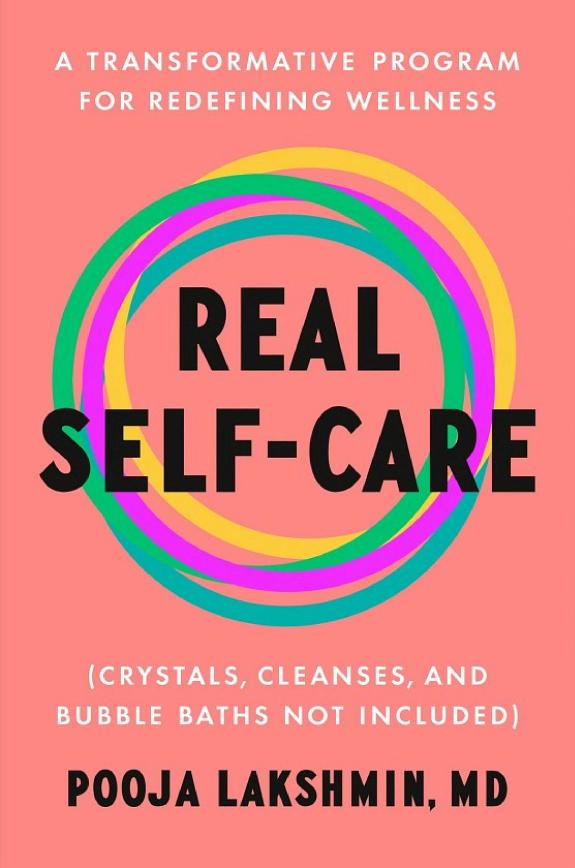
4. Real Self-Care: A Program for Redefining Wellness (Crystals, Cleanses, and Bubble Baths Not Included) by Pooja Lakshmin, MD
The subtitle alone earns points for honesty. Pooja Lakshmin is a psychiatrist who became frustrated watching her patients, mostly women, being sold a version of self-care that was really just another item on the to-do list. Face mask on Sunday, still burned out by Tuesday. She wanted to write something that addressed the actual problem, which is structural and internal, not something a lavender candle can fix.
Lakshmin’s argument is that the wellness industry has co-opted the language of self-care and turned it into a consumer product. Real self-care, she argues, is not about what you buy or consume. It is about four internal practices: setting limits, self-compassion, values clarification, and asserting your own needs. None of these are glamorous. All of them require ongoing work. That is rather the point.
The book is clinical in its structure but human in its tone. Lakshmin draws on patient stories (anonymized, of course) and her own experience of burning out during her psychiatric training. She is not writing from a place of having figured it all out. She is writing from a place of having been in the wreckage herself and found a way through that did not involve buying a new journal. This is a book that respects your intelligence while also being genuinely kind.
When self-care becomes another performance, another way to optimize yourself for other people’s benefit, it has already failed at its only real job.
This is perfect for women who have tried all the wellness trends and still feel depleted, and who want a clinically informed, skepticism-friendly take on what recovery actually requires.
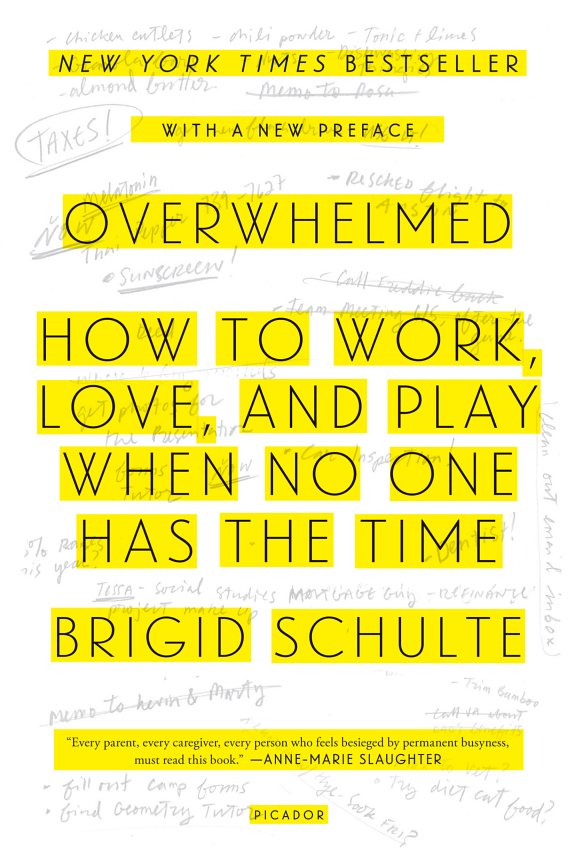
Overwhelmed: How to Work, Love, and Play When No One Has the Time
5. Overwhelmed: How to Work, Love, and Play When No One Has the Time by Brigid Schulte
Brigid Schulte is a journalist, and this book has the texture of deeply reported nonfiction. She started writing it after a time-use researcher told her she had thirty hours of leisure per week and she laughed out loud at him. The mismatch between what the data said and what her life felt like sent her on a years-long investigation into why modern Americans, and women in particular, feel so chronically pressed for time.
What she finds is both structural and cultural. The United States has no federally mandated paid leave, inadequate childcare infrastructure, and a workplace culture that still measures commitment in hours logged rather than work actually done. Women, meanwhile, carry a disproportionate share of domestic and emotional labor regardless of their employment status. This is not a personal failing. It is a system doing exactly what it was built to do.
Schulte travels to Denmark, meets neuroscientists, talks to sociologists, and interviews everyone from stay-at-home parents to Fortune 500 executives. The book is wide-ranging and occasionally sprawling, which is either a feature or a bug depending on how you read. If you like your nonfiction tight and focused, this one might test your patience. But if you want to understand the full landscape of why overwhelm feels so inescapable, the breadth here is the point.
Overwhelm is not a character flaw. It is the entirely predictable result of asking people to function inside systems that were never designed with their humanity in mind.
This is perfect for women who suspect their exhaustion has less to do with personal choices and more to do with larger structural forces, and who want the research to back that up.
The Self-Care Prescription: Powerful Solutions to Manage Stress, Reduce Anxiety, and Increase Well-Being
6. The Self-Care Prescription: Practical Solutions to Manage Stress, Reduce Anxiety, and Increase Well-Being by Robyn L. Gobin, PhD
Robyn Gobin is a licensed psychologist, and this book is the most practically structured of the bunch. It is organized around eight dimensions of wellbeing, physical, emotional, social, intellectual, spiritual, occupational, environmental, and financial, and for each one it offers concrete practices rooted in psychological research. If you are someone who needs a framework, this book provides one without being rigid about it.
The tone is warm and encouraging without being saccharine. Gobin acknowledges that self-care looks different depending on your life circumstances, your resources, and your history. She does not assume everyone has the same access to time, money, or support, which is a refreshing departure from wellness content that quietly assumes its audience is already fairly comfortable. There is genuine attention paid here to the ways stress and burnout intersect with identity, including race and socioeconomic status.
This is not a book that will shake you to your core or reframe your entire worldview. It is more like a very good, very thorough workbook with a compassionate guide walking you through it. The exercises are manageable and the advice is evidence-based. For someone in the thick of burnout who needs something actionable rather than philosophical, this is a solid choice. It is the book equivalent of a steady hand.
Recovery from burnout is not a single insight. It is a series of small, consistent choices made in the direction of your own wellbeing, even when that feels counterintuitive.
This is perfect for women who want a structured, research-backed approach to rebuilding their wellbeing and who prefer practical exercises over narrative memoir.
Radical Acceptance: Embracing Your Life With the Heart of a Buddha
7. Radical Acceptance: Embracing Your Life With the Heart of a Buddha by Tara Brach
Tara Brach is a psychologist and Buddhist meditation teacher, and this book operates at a different register than the others on this list. It is slower, more contemplative, and more interested in the interior landscape of suffering than in fixing the external conditions that cause it. That is either exactly what you need or not quite the right fit, and it is worth knowing that going in.
The central concept is what Brach calls the “trance of unworthiness,” the deep, often unconscious belief that something is fundamentally wrong with us, that we are not enough, that we must earn our right to rest, to joy, to simply exist without producing. For many burned-out women, this belief is not peripheral. It is the engine. Radical acceptance, in Brach’s framing, means meeting your experience, including your pain and your imperfection, with presence and compassion rather than resistance and judgment.
The book weaves together Buddhist teachings, psychological insight, and client stories (Brach is also a therapist) in a way that is accessible even if you have no background in meditation or Buddhism. It is not asking you to become a monk. It is asking you to consider that the war you are waging against yourself might be the most exhausting thing you are doing. For readers who have addressed the practical dimensions of burnout and still feel a persistent inner ache, this book reaches somewhere the others do not.
A lot of burnout is not just doing too much. It is the relentless inner commentary that says you are still not doing enough, being enough, becoming enough. That voice needs attention, not a better planner.
This is perfect for women whose exhaustion has a spiritual or emotional depth to it, who feel a persistent sense of unworthiness beneath the busyness, and who are open to a meditative, compassion-based approach to healing.
Burnout is not a personal failure. It is what happens when the demands placed on you, by your job, your relationships, your culture, and sometimes your own inner critic, consistently outpace what you have to give. These seven books will not solve that overnight, and none of them promise to. What they offer is something more durable: clarity, language for what you are experiencing, and a range of honest, grounded paths back toward yourself.
You do not have to read all seven. Start with the one that sounds most like where you are right now. Maybe that is the science of stress cycles, or the permission to stop people-pleasing, or the quiet invitation to stop fighting your own existence. Any of these is a reasonable place to begin. The point is not to optimize your recovery. The point is to rest, to understand, and eventually to find your way back to a life that actually feels like yours.