
6 Books That Help Break Toxic Relationship Patterns
Most of us do not walk into a difficult relationship thinking, “Yes, this is exactly the chaos I was hoping for.” It tends to creep up gradually, a slow erosion of trust or self-worth that you barely notice until one day you are standing in your kitchen wondering how things got so complicated. If that sounds familiar, you are in good company.
The books on this list are not quick fixes or cheerful affirmations. They are honest, sometimes uncomfortable reads that ask you to look at your patterns, your history, and the stories you have been telling yourself about love. Some are rooted in psychology, some in lived experience, and a couple are the kind of books that people quietly pass between friends with a knowing look. All six have helped real readers understand why they keep ending up in the same place, and more importantly, how to start doing something different.
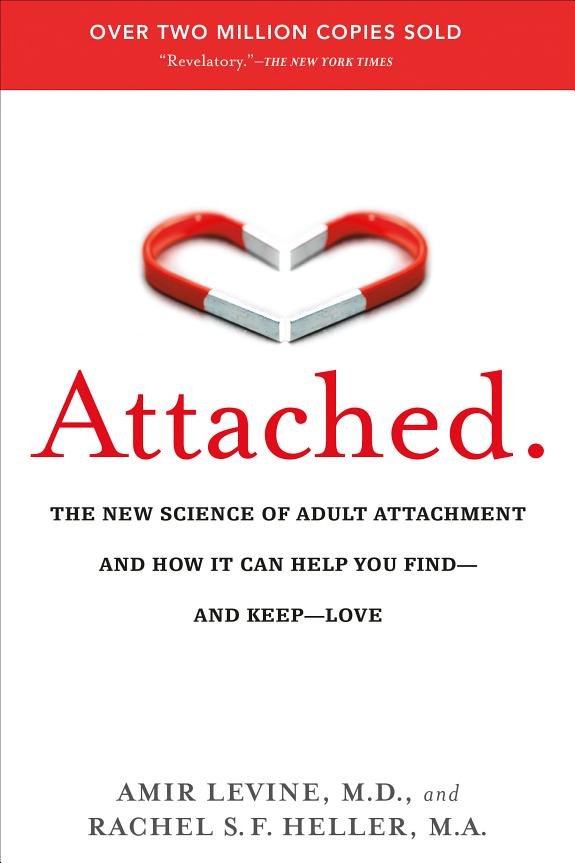
Attached: The New Science of Adult Attachment and How It Can Help You Find—and Keep—Love
1. Attached: The New Science of Adult Attachment and How It Can Help You Find and Keep Love by Amir Levine and Rachel Heller
Amir Levine is a neuroscientist and psychiatrist, and Rachel Heller is a researcher, and together they have written one of the clearest explanations of why we behave the way we do in romantic relationships. The central framework is attachment theory, originally developed by John Bowlby and later expanded by Mary Ainsworth. Levine and Heller translate decades of research into something genuinely readable, organizing adult attachment into three main styles: secure, anxious, and avoidant. The writing is accessible without being dumbed down, which is a harder balance to strike than it sounds.
What makes this book particularly useful is that it does not just describe the styles in abstract terms. It walks you through how each style shows up in real relationship dynamics, why an anxious person and an avoidant person so often end up together, and what happens to both of them when they do. If you have ever felt like you were chasing someone who kept pulling away, or alternatively felt smothered by a partner who seemed to need constant reassurance, this book will likely make several lightbulbs go on at once. It is the kind of reading experience where you keep stopping to text a friend saying, “I think I finally understand what happened.”
The book also offers practical guidance, not just theory. There are quizzes to help you identify your own attachment style, and chapters dedicated to how to move toward more secure functioning. It is honest about the fact that change takes time and effort, but it does not leave you without a roadmap. The tone is warm and non-judgmental, which matters when the subject matter hits close to home.
If you are someone who prefers pure memoir or narrative nonfiction, the research-heavy sections might slow you down. And if you are already deeply familiar with attachment theory from a clinical background, this may cover ground you know well. But for most readers coming to this topic fresh, it is an excellent starting point.
Understanding your attachment style does not excuse the patterns, but it does make them far less mysterious, and mystery is what keeps most people stuck.
This is perfect for anyone who keeps repeating the same relationship dynamics and wants a science-backed framework to understand why, especially those who are new to the concept of attachment styles.
Codependent No More: How to Stop Controlling Others and Start Caring for Yourself
2. Codependent No More: How to Stop Controlling Others and Start Caring for Yourself by Melody Beattie
Melody Beattie wrote this book in 1986, and the fact that it is still widely read and recommended nearly four decades later says something significant. Beattie draws on her own experiences with addiction and dysfunctional relationships, as well as her work with others in recovery, to define codependency in a way that is both clinical and deeply human. Her voice is direct and unpretentious, the kind of writer who does not waste your time with unnecessary hedging. She says what she means, and what she means tends to land.
The core argument of the book is that codependency, which Beattie broadly defines as excessive emotional reliance on another person combined with a compulsive need to control or fix them, is its own problem separate from whatever the other person is struggling with. This was a somewhat radical idea when the book was published, particularly in the context of addiction, where the focus had almost entirely been on the person with the substance problem. Beattie insisted that the people around them needed their own healing. She was right, and that insight extends far beyond addiction into all kinds of relationships where one person has lost themselves in the other.
The book includes practical exercises and reflective questions throughout, and it leans into a twelve-step influenced framework, which is worth knowing going in. Beattie is open about that influence, and for readers who find that approach meaningful, it adds depth. For readers who are resistant to anything adjacent to twelve-step culture, it may create some friction. The writing occasionally feels dated in its language, though the underlying ideas remain sound.
This is not a book that will appeal to everyone. If you are looking for something more clinically rigorous or more contemporary in its framing, you might want to supplement it with newer titles. But as a foundational text on the experience of losing yourself in someone else’s problems, it remains one of the most honest accounts available.
Beattie makes a quiet but firm case that taking care of yourself is not selfishness. It is, in fact, the only sustainable way to be genuinely present for anyone else.
This is perfect for people who have spent years focused on managing or rescuing a partner, family member, or friend, and who are only beginning to realize that their own needs have quietly disappeared in the process.
Set Boundaries, Find Peace: A Guide to Reclaiming Yourself
3. Set Boundaries, Find Peace: A Guide to Reclaiming Yourself by Nedra Glover Tawwab
Nedra Glover Tawwab is a therapist with a large following on social media, where she has spent years distilling mental health concepts into clear, digestible language. This book is an extension of that work, and it shows. The writing is clean and direct, the examples are grounded in situations most readers will recognize, and there is no jargon for jargon’s sake. Tawwab takes the concept of boundaries, which has become one of the most overused and least understood words in the wellness space, and actually explains what it means in practice.
The book covers different types of boundaries, physical, emotional, sexual, workplace, digital, and financial, and it addresses the guilt and discomfort that almost always come with setting them. Tawwab is particularly good on why boundaries feel so hard for people who grew up in families where their needs were dismissed or where keeping the peace was prized above honesty. She does not let readers off the hook by pretending this is simple, but she also does not catastrophize it. The tone throughout is calm and encouraging without veering into false cheerfulness.
What distinguishes this book from some others in the genre is its attention to the relational context of boundaries. Tawwab is clear that boundaries are not walls or punishments. They are communication, a way of telling people what you need and what you will not accept. That reframe is genuinely useful for anyone who has avoided setting limits because they feared being seen as cold or difficult. She also addresses how to handle it when people push back, which they often do, and that section alone is worth the price of the book.
Readers who are already well-versed in boundary-setting or who have done significant therapy may find the material familiar. And if you are looking for deep clinical theory, this is more of a practical guide than an academic text. But as a practical, readable resource for people who are just starting to understand why they feel so drained in their relationships, it is genuinely solid.
Tawwab reminds us that the discomfort of setting a boundary is almost always smaller than the resentment that builds when you do not.
This is perfect for people who chronically overextend themselves, struggle to say no, or feel responsible for managing everyone else’s emotions while their own go unaddressed.
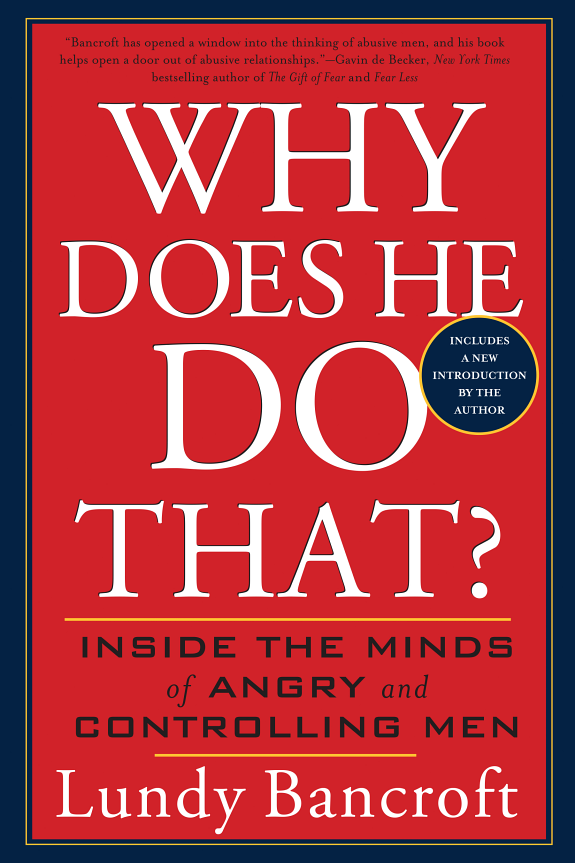
Why Does He Do That?: Inside the Minds of Angry and Controlling Men
4. Why Does He Do That?: Inside the Minds of Angry and Controlling Men by Lundy Bancroft
Lundy Bancroft spent years working directly with abusive men in intervention programs, and this book is the product of that experience. It is not a comfortable read, but it is one of the most clarifying books you can find on the subject of controlling and abusive behavior in relationships. Bancroft’s central argument is that abuse is not primarily about anger management or childhood trauma or substance use. It is about attitudes, specifically the belief that the abuser is entitled to control their partner. That shift in framing changes everything about how you understand the behavior and what, realistically, can be done about it.
The book is written for people who are in or have been in relationships with controlling men, though the dynamics he describes are not exclusive to heterosexual relationships and many readers have found it applicable to other configurations as well. Bancroft writes with remarkable clarity about the tactics abusers use, the way they minimize and deny, the way they shift blame, the way they can be charming to the outside world while being cruel behind closed doors. For anyone who has been gaslit into doubting their own perception of events, reading this book can feel like someone finally turning on the lights.
He is also unflinching about the limits of change. Bancroft does not tell readers what they want to hear. He explains, based on his direct work with abusive men, how rarely genuine change occurs and what it actually requires. That honesty is uncomfortable, but it is also a form of respect for the reader. He trusts people to handle the truth, and he gives them the information they need to make real decisions about their lives.
This book is not for readers who are not ready to examine whether their relationship might involve controlling behavior, and it is not a gentle or reassuring read. It is also specifically focused on male abusers, which is a real limitation. But for the audience it is written for, it is among the most direct and useful resources available.
Bancroft does something rare: he explains abusive behavior without excusing it, and he makes clear that understanding the pattern is not the same as accepting it.
This is perfect for anyone who has spent time trying to understand or explain away a partner’s controlling behavior, and who needs an honest, experience-based account of what that behavior actually means.
Women Who Love Too Much: When You Keep Wishing and Hoping He’ll Change
5. Women Who Love Too Much: When You Keep Wishing and Hoping He’ll Change by Robin Norwood
Robin Norwood published this book in 1985, and like Codependent No More, it has outlasted most of its contemporaries. Norwood, a therapist, wrote it after noticing consistent patterns among her female clients who were in painful relationships. The book is structured around those patterns, exploring how early family experiences shape the kinds of partners we are drawn to as adults, and why women who grew up in chaotic or emotionally unavailable households so often find themselves in relationships that replicate that chaos. The writing is warm and narrative-driven, grounded in composite case studies that feel real without being voyeuristic.
The title is a bit misleading if you take it at face value. Norwood is not saying that loving deeply is a problem. She is describing a specific dynamic where love becomes a compulsive project, where one person is so invested in fixing or changing the other that they stop attending to their own life entirely. The women she writes about are not weak or foolish. They are often highly capable people who have redirected enormous energy into relationships that cannot give them what they need. That distinction matters, and Norwood handles it with care.
The book is also honest about recovery, framing it as a process rather than a destination. Norwood recommends therapy and support groups, and she is clear that insight alone, however useful, does not automatically change behavior. The self-awareness chapter is one of the more honest treatments of that gap between knowing what you are doing and actually stopping that you will find in this genre. It acknowledges that understanding the pattern can coexist with continuing it for a while, which anyone who has tried to change a deep habit will recognize as true.
The book’s age shows in places. The language is occasionally dated, the framing is almost entirely heterosexual, and some of the cultural assumptions reflect the era in which it was written. Readers looking for something more inclusive in its scope will want to supplement it. But as a portrait of a particular kind of relational suffering, it remains vivid and honest.
Norwood captures something that many self-help books miss: the difference between loving someone and being addicted to the idea of saving them.
This is perfect for women who find themselves repeatedly drawn to emotionally unavailable or troubled partners, and who sense that the pattern has roots deeper than bad luck in dating.
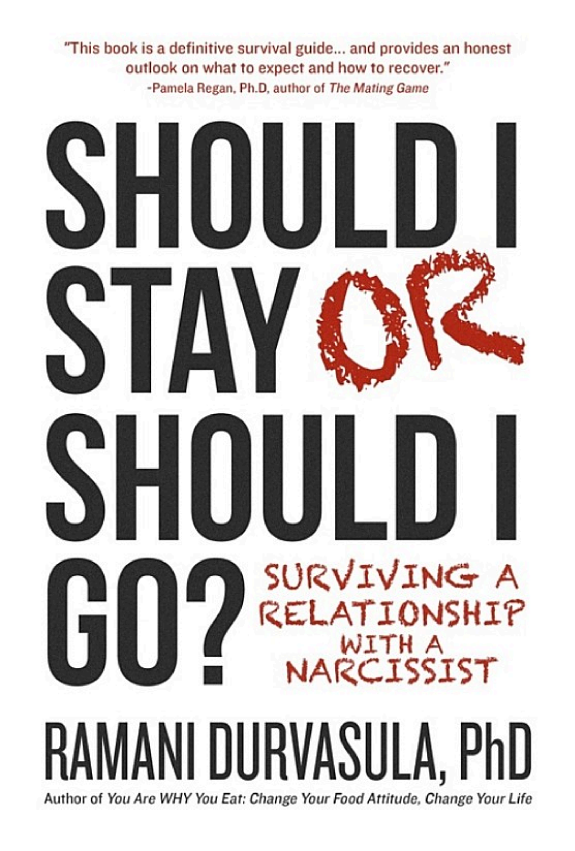
Should I Stay or Should I Go: Surviving a Relationship with a Narcissist
6. Should I Stay or Should I Go: Surviving a Relationship with a Narcissist by Ramani Durvasula
Dr. Ramani Durvasula is a clinical psychologist who has become one of the most recognized voices on narcissistic personality and its effects on relationships. This book is aimed specifically at people who are currently in or recently out of a relationship with someone who exhibits narcissistic patterns, and it does not pretend the situation is simple. Durvasula’s tone is direct and pragmatic. She is not here to tell you what to do, but she is very good at helping you see your situation clearly, which turns out to be most of what people need.
The book covers the full range of narcissistic behavior in relationships, from the more obvious forms of cruelty and control to the subtler patterns of dismissiveness, entitlement, and emotional unavailability that can be harder to name. Durvasula is particularly good at describing the experience of being in these relationships from the inside, the confusion, the self-doubt, the way you end up spending enormous energy trying to manage someone else’s fragility while your own sense of self quietly erodes. For readers who have wondered whether they were imagining things or being too sensitive, that validation is not a small thing.
She addresses both the decision to leave and the decision to stay with equal seriousness, which is unusual and useful. Many books in this space assume that leaving is obviously the right answer, but Durvasula acknowledges the complexity of real lives, children, finances, long histories, genuine love alongside real harm, and she helps readers think through their options with clarity rather than pressure. The chapter on what healing actually looks like after these relationships is one of the more realistic treatments of that subject available.
If you are looking for a deep clinical dive into narcissistic personality disorder as a diagnosis, this is more of a relational and practical guide than a theoretical one. And readers who want something warmer in tone may find Durvasula’s directness a little brisk at times. But for someone in the middle of a confusing and painful relationship, that directness is often exactly what is needed.
Durvasula makes it clear that you cannot love someone into treating you well, and that understanding this is not giving up. It is, finally, being honest with yourself.
This is perfect for anyone currently navigating or recovering from a relationship with a narcissistic partner, especially those who are still trying to figure out whether what they experienced was actually as harmful as it felt.
None of these books will fix a difficult relationship on their own, and none of them promise to. What they do, collectively, is help you understand yourself better: why you are drawn to certain people, what you are willing to accept, and where the line between love and self-abandonment actually falls. That kind of clarity is slow to build and sometimes uncomfortable to sit with, but it tends to stick in a way that quick advice never does.
You do not have to read all six at once. Start with whichever title spoke most directly to your situation. Read it slowly. Put it down when you need to. Come back to it. The goal is not to finish a reading list. It is to understand something true about yourself and, from that understanding, make better choices. That is worth taking your time over.