

5 Books That Rebuild Your Self-Worth
Most of us have a complicated relationship with ourselves. Not the dramatic, movie-worthy kind of complicated. Just the quiet, everyday kind where you catch your reflection and your first thought is critical, or where you replay a conversation from three days ago and cringe. Self-worth is one of those things that feels like it should come naturally, and yet somehow, for a lot of people, it does not.
The books on this list are not about fake confidence or repeating affirmations until you believe them through sheer force of will. They are about something slower and more honest than that. Each one approaches the question of self-worth from a slightly different angle, whether through psychology, mindfulness, research, or one person’s raw personal experience. Some will resonate immediately. Others might take a little longer to settle in. But all five are worth your time if you are ready to stop being your own worst critic.

Love Yourself Like Your Life Depends On It
1. Love Yourself Like Your Life Depends On It by Kamal Ravikant
This is a short book. Genuinely short. You could read it in a single sitting, and Kamal Ravikant would probably be fine with that. What makes it interesting is not its length but its origin. Ravikant wrote it after hitting what he describes as rock bottom, a period of personal and professional collapse that left him barely functional. The practice he developed to pull himself out was almost embarrassingly simple: repeat the phrase “I love myself” until something in him started to believe it.
Now, before you roll your eyes completely, it is worth noting that Ravikant is not selling magic thinking. He is describing a neurological argument, that the mind follows repeated patterns, and that consciously redirecting that pattern can shift how you experience yourself over time. The writing is direct and unadorned. He is not trying to be a guru. He is sharing something that worked for him with a kind of quiet urgency that feels genuine rather than performative.
Where the book falls short is in its depth. If you are looking for research, clinical frameworks, or nuanced discussion of why self-worth erodes in the first place, you will not find it here. This is a personal essay dressed up as a self-help book, and that is both its charm and its limitation. For readers who are already in the thick of something hard and need something they can actually finish, it delivers. For readers who want intellectual substance alongside the inspiration, it will feel thin.
“The mind, left to itself, repeats the same stories. Feed it a better one.” This is the quiet argument at the heart of Ravikant’s book, and it is more grounded than it first appears.
This is perfect for readers who are going through a rough patch and need something they can actually finish in one evening, people who respond to personal narrative over theory, and anyone who finds overly clinical self-help books exhausting.
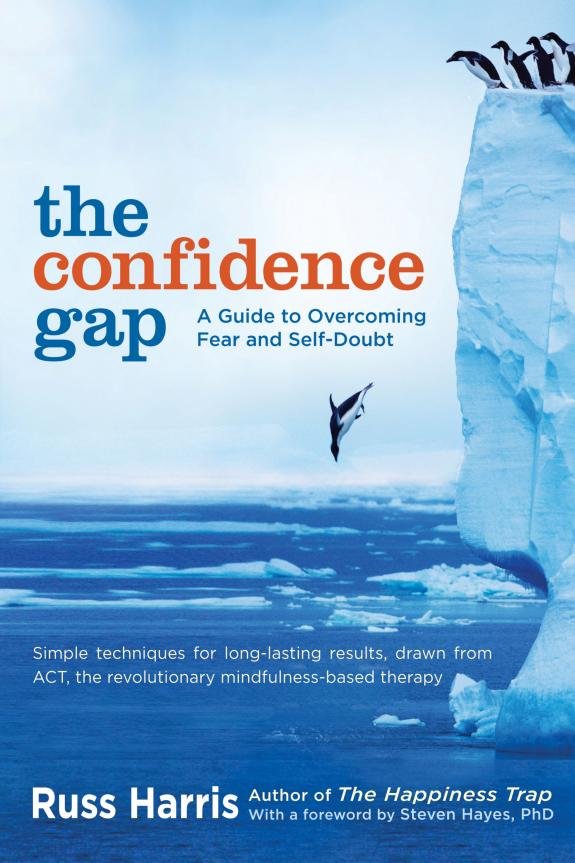
The Confidence Gap
2. The Confidence Gap by Russ Harris
Russ Harris has a gift for taking the principles of Acceptance and Commitment Therapy and making them feel approachable without dumbing them down. The central argument of this book is one that tends to catch people off guard: waiting to feel confident before you act is the wrong strategy. Confidence, Harris argues, is not a feeling you cultivate first and then use. It is something that grows as a byproduct of doing things that matter to you, even when you feel uncertain or afraid.
This reframe is genuinely useful. So much of what passes for self-help advice tells you to work on your mindset until you feel ready, which can become a very comfortable form of procrastination. Harris cuts through that by focusing on values and committed action. He asks not “how do you feel?” but “what matters to you, and are you moving toward it?” The exercises throughout the book are practical and grounded in real ACT methodology, not just motivational filler.
The writing style is clear and occasionally a little dry, which is not a criticism so much as a heads-up. Harris is a therapist, and the book reads like one. It is warm but measured. It does not have the confessional intimacy of Ravikant or the storytelling richness of Brené Brown. If you prefer your self-help books to feel like a conversation with a knowledgeable friend rather than a structured workbook, you might find the pacing a little clinical. That said, the substance more than compensates.
The confidence gap is the space between where you are and where you want to be, and Harris’s argument is that action, not attitude, is what closes it.
This is perfect for people who feel stuck in a cycle of waiting to feel ready, readers who appreciate a structured, evidence-based approach, and anyone who has tried positive thinking and found it did not quite stick.
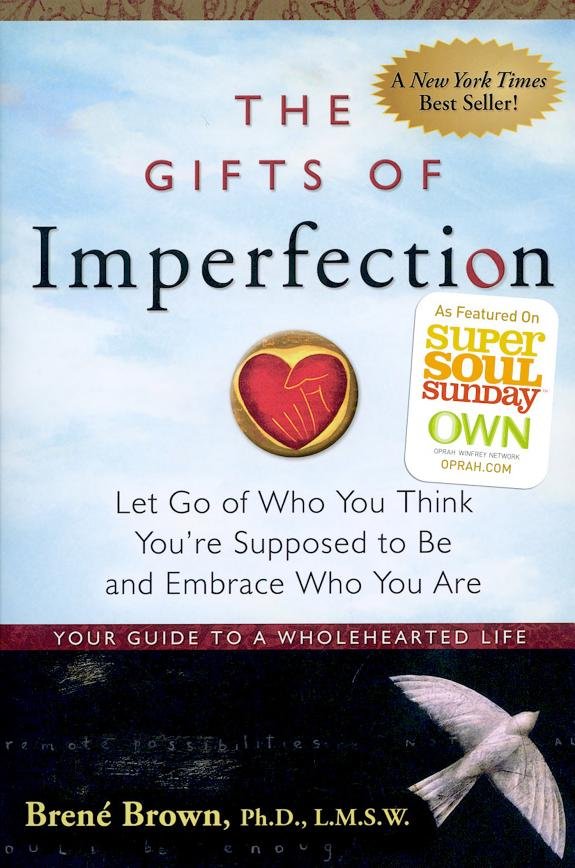
The Gifts of Imperfection
3. The Gifts of Imperfection by Brené Brown
Brené Brown spent years as a shame researcher before she became a household name, and that background shows in everything she writes. The Gifts of Imperfection is built around the concept of “wholehearted living,” which sounds a little vague until she unpacks it. What she is really talking about is the decision to stop organizing your life around what other people think of you, and to start building it around your own sense of worth, which she argues must be unconditional rather than earned.
The book is structured around ten guideposts, each one addressing a specific habit or belief that gets in the way of wholehearted living. Things like perfectionism, numbing, and the comparison trap. Brown writes with warmth and self-deprecating humor, and she draws heavily on her own experiences as well as her research. She is not presenting herself as someone who has figured it all out. She is presenting herself as someone who is doing the work alongside you, which makes the book feel companionable rather than preachy.
Some readers find Brown’s style a little too conversational or find that her ideas, while compelling, could have been expressed more concisely. The book is not particularly long, but it does repeat certain themes, and if you have already read Daring Greatly or Braving the Wilderness, some of the ground will feel familiar. That said, for readers coming to her work for the first time, this is an excellent entry point. It is accessible, honest, and grounded in actual research without being academic.
Brown’s core argument is that worthiness is not something you earn through achievement or approval. It is something you practice claiming, imperfections and all.
This is perfect for readers who struggle with perfectionism or people-pleasing, anyone who wants research-backed ideas delivered in a warm and readable voice, and people who are new to Brené Brown’s work.
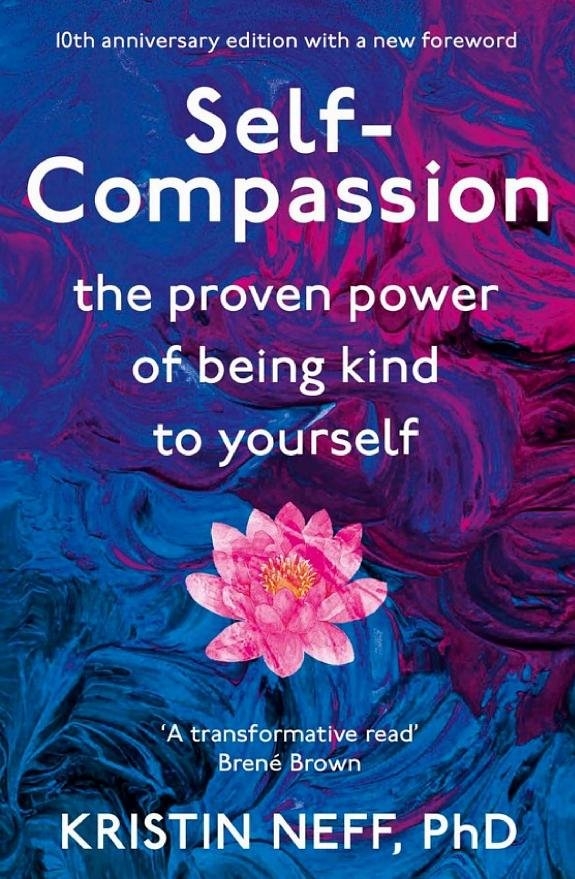
Self-Compassion: The Proven Power of Being Kind to Yourself
4. Self-Compassion: The Proven Power of Being Kind to Yourself by Kristin Neff
Kristin Neff is a researcher, and this book shows it in the best possible way. She was one of the first academics to study self-compassion as a measurable psychological construct, and the result is a book that is both rigorously supported and surprisingly personal. Neff weaves her own story, including a difficult marriage, her son’s autism diagnosis, and her own struggles with self-criticism, throughout the research in a way that keeps the book grounded and human.
Her central argument is that self-compassion is not the same as self-pity or self-indulgence, and she spends considerable time dismantling that misconception. The three components she identifies are self-kindness, common humanity, and mindfulness, and she makes a convincing case that all three are necessary. The chapter on self-compassion versus self-esteem is particularly worth reading. She argues that the relentless cultural pursuit of high self-esteem has actually made people more fragile, not less, because it ties worth to performance and comparison.
The exercises throughout the book are drawn from mindfulness and compassion-based practices, and some readers will find them genuinely useful while others will find them a little uncomfortable, which is probably the point. This is not a book for people who want to feel better without doing anything differently. It asks you to turn toward your own pain with curiosity rather than judgment, and that takes some getting used to. If you are someone who finds self-help books too soft or insufficiently rigorous, Neff’s work is likely to change your mind about the genre.
Neff makes a quiet but firm argument: treating yourself with the same basic decency you would offer a struggling friend is not weakness. It is the foundation everything else is built on.
This is perfect for readers who want science alongside the self-help, people who have always found self-compassion concepts a little slippery or unconvincing, and anyone who tends to be significantly harder on themselves than they are on others.
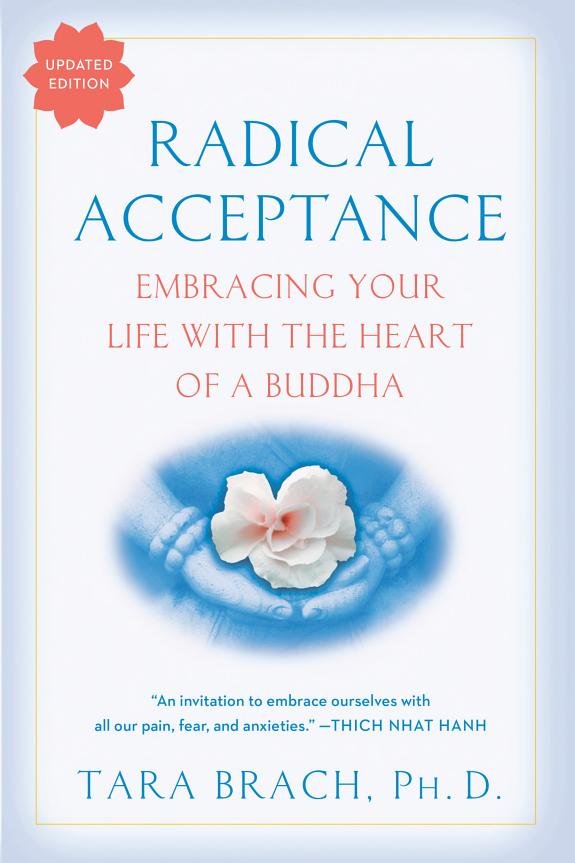
Radical Acceptance
5. Radical Acceptance by Tara Brach
Tara Brach opens this book with a concept she calls the “trance of unworthiness,” the persistent background feeling that something is fundamentally wrong with you. If that phrase lands with any recognition at all, you are probably the right reader for this book. Brach is a psychologist and a Buddhist meditation teacher, and Radical Acceptance sits at the intersection of those two worlds in a way that feels organic rather than forced.
The book is built around the idea that most of our suffering comes not from circumstances but from our resistance to them, and that the path through that resistance is a combination of clear seeing and genuine compassion. Brach uses the word “radical” not for emphasis but quite literally. She is talking about acceptance that goes all the way down, that includes the parts of yourself you have been managing, hiding, or trying to improve away for years. It is a bigger ask than it sounds.
What makes this book stand apart from others in the genre is its texture. Brach is a gifted storyteller, and she draws on decades of clinical work as well as Buddhist teachings to illustrate her points. The client stories she shares are specific and moving without feeling exploitative. The meditations woven throughout the chapters are optional but worth trying. This is not a quick read, and it is not meant to be. Some chapters will require sitting with. If you are looking for a brisk, practical guide with action steps, this is probably not your book. If you are willing to slow down and let something sink in, it might be one of the more quietly significant things you read this year.
Radical acceptance does not mean approval. It means seeing clearly what is true, right now, without adding a layer of self-condemnation on top of it.
This is perfect for readers drawn to mindfulness or Buddhist psychology, people who feel like they have been at war with themselves for a long time, and anyone who wants a book that takes the inner life seriously without being either clinical or superficial.
None of these five books will fix anything overnight, and none of them claim to. What they offer instead is something more durable: a set of ideas, practices, and perspectives that can gradually shift how you relate to yourself. Some of them will resonate immediately. Others might sit on your nightstand for a while before they click. That is fine. The right book at the right moment can do a lot, and the wrong book at the wrong moment can just feel like homework.
If you are not sure where to start, consider what you actually need right now. If you want something short and personal, begin with Ravikant. If you want research and rigor, go to Neff. If you want warmth and storytelling, Brown is your person. And if you are ready to slow down and sit with something, Brach is waiting. Any of these is a reasonable place to begin treating yourself a little better, which, it turns out, is not a small thing at all.