

5 Books That Changed My Mindset Forever
There are books you read and forget by Tuesday. Then there are the ones that quietly rearrange something inside you, and you find yourself thinking about them months later while doing the dishes or staring out a train window. This list is about the second kind.
I want to be upfront: “mindset” has become one of those words that gets slapped onto everything from self-help podcasts to protein powder marketing. So when I say these five books changed mine, I mean it in the most unglamorous way possible. They made me sit with uncomfortable ideas, question habits I had defended for years, and occasionally made me put the book down just to stare at the ceiling for a while. That is the kind of reading I find worth recommending.
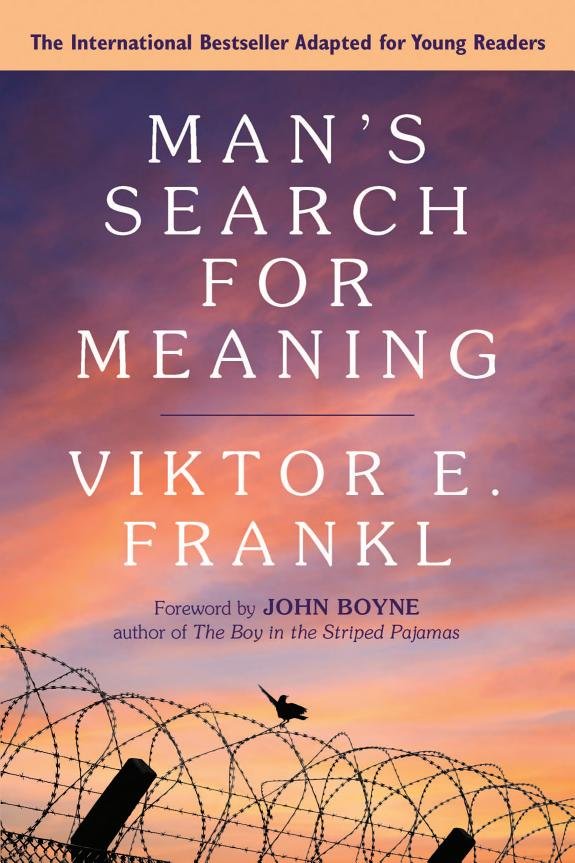
Man’s Search for Meaning
1. Man’s Search for Meaning by Viktor E. Frankl
Viktor Frankl was a psychiatrist and Holocaust survivor who spent years in Nazi concentration camps, including Auschwitz. That context alone would be enough to make most readers approach this book with a certain reverence. But what sets it apart from a purely historical account is that Frankl was actively observing human psychology even in the most brutal conditions imaginable. He noticed which prisoners gave up and which held on, and he began to develop a theory around what kept people going when everything else had been stripped away.
The central idea is deceptively simple: meaning is not something you find, it is something you choose. Frankl argues that between any stimulus and any response, there is a space, and in that space lies your freedom. He built an entire therapeutic framework around this idea called logotherapy, and while the clinical sections of the book are denser than the memoir portions, they reward careful reading. The first half of the book, the autobiographical account of his time in the camps, reads with a quiet, almost clinical clarity that somehow makes it more affecting, not less.
Frankl’s voice is measured and precise. He is not trying to inspire you in the conventional sense. He is reporting, analyzing, and occasionally making an argument with the confidence of someone who has tested his ideas under conditions most of us will never face. That restraint is what gives the book its weight. It does not ask for your admiration. It just lays out what he saw and what he concluded.
If you are looking for a breezy afternoon read, this is not it. The subject matter is heavy and Frankl does not soften it. People who prefer their nonfiction to have a faster pace or more narrative momentum may find the second half, which focuses on logotherapy as a theory, a bit slow. But for anyone willing to sit with difficulty, this book offers something that very few others do.
“Everything can be taken from a man but one thing: the last of the human freedoms, to choose one’s attitude in any given set of circumstances.”
This is perfect for readers who are grappling with loss, purposelessness, or a sense that life has handed them something unfair, and who want a framework for moving forward that does not require pretending things are fine.

Can’t Hurt Me: Master Your Mind and Defy the Odds
2. Can’t Hurt Me: Master Your Mind and Defy the Odds by David Goggins
David Goggins is a retired Navy SEAL, ultramarathon runner, and holder of a pull-up world record. He is also someone who grew up in a deeply abusive household, struggled with obesity, and failed his first attempt at SEAL training before going back and completing it. His story is the kind that sounds almost too extreme to be real, and yet the specificity with which he tells it makes it difficult to dismiss. This is not a man who tidied up his past for public consumption. He lays it out in full, including the parts that reflect poorly on him.
The core argument of the book is that most people are operating at a fraction of their actual capacity, and that the only way to access the rest is to systematically confront the things you would rather avoid. Goggins calls this “callousing the mind,” which is not the most elegant metaphor but is an accurate one. He is not interested in positive thinking. He is interested in doing hard things repeatedly until hard things stop feeling quite so hard. The book alternates between his memoir and what he calls “challenges,” practical exercises the reader can apply to their own life.
The writing is blunt, sometimes profane, and occasionally repetitive. Goggins is not a literary stylist, and the book does not pretend otherwise. What it has instead is an almost uncomfortable honesty and a relentless internal logic. Even when you find yourself slightly exhausted by his intensity, which will happen, it is hard to argue with the underlying principle that discomfort avoided tends to compound over time.
This book is genuinely not for everyone, and I say that without any judgment attached. Readers who are sensitive to aggressive language or who find the military ethos alienating will likely bounce off it quickly. It can also veer into a kind of macho suffering-as-virtue territory that not every reader will find useful or appealing. But if you have been soft-pedaling your own potential and you know it, this book will not let you pretend otherwise.
Goggins does not offer comfort. He offers a mirror, and he holds it at an angle that most other books politely avoid.
This is perfect for people who suspect they have been making excuses, who want a no-nonsense account of what mental toughness actually looks like in practice, and who do not mind being challenged in a fairly direct manner.
The Untethered Soul: The Journey Beyond Yourself
3. The Untethered Soul: The Journey Beyond Yourself by Michael A. Singer
Michael A. Singer’s book begins with a question that sounds almost absurdly simple: who is the one who is aware of your thoughts? Not the thoughts themselves, but the observer behind them. From that starting point, Singer builds a sustained and surprisingly accessible exploration of consciousness, inner experience, and what it might mean to stop being completely at the mercy of your own mental noise. For a book rooted in contemplative and yogic traditions, it manages to avoid most of the jargon that tends to make that territory feel either intimidating or faintly ridiculous.
The central idea is that most of us have identified so completely with our internal monologue and our emotional reactions that we have forgotten we are the awareness behind all of it. Singer calls this inner voice the “roommate in your head,” and once you have that image, it is genuinely hard to unhear it. He argues that the goal is not to silence this voice or to fix it, but to stop treating it as the final word on reality. The book moves through increasingly subtle territory, touching on how we block and store energy, how we use the external world to manage internal discomfort, and what it might feel like to simply let things pass through rather than clinging to them or pushing them away.
Singer’s voice is calm, patient, and occasionally a little repetitive in a way that feels deliberate rather than careless. He is circling the same ideas from different angles because the ideas resist being grasped in one pass. Some readers will find this meditative. Others will find it maddening. The book does not offer a step-by-step program or a set of actionable goals, which is either its greatest strength or its most significant limitation depending on what you are looking for.
If you are someone who prefers concrete frameworks and measurable outcomes, this book will likely frustrate you. It operates in a register that is more experiential than analytical, and it asks you to sit with ideas rather than immediately apply them. But for readers who have tried every productivity system and still feel like something is fundamentally off underneath all the doing, this book offers a genuinely different kind of answer.
Singer’s great contribution is making the idea of inner freedom feel less like a spiritual achievement and more like a practical possibility, one that does not require you to become a different person, only a slightly less reactive one.
This is perfect for readers who feel perpetually overwhelmed by their own thoughts and emotions, who are curious about contemplative ideas but skeptical of overly mystical language, and who are ready to look inward rather than outward for relief.
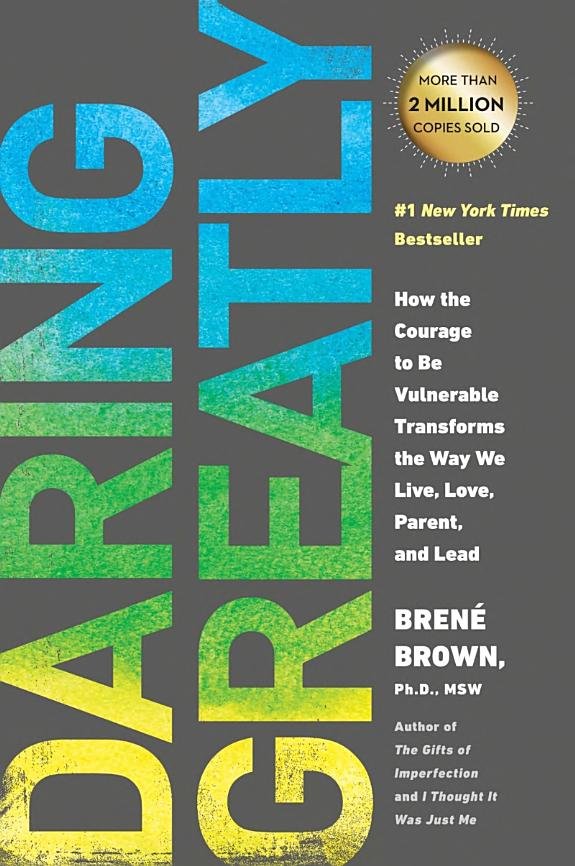
Daring Greatly: How the Courage to Be Vulnerable Transforms the Way We Live, Love, Parent, and Lead
4. Daring Greatly: How the Courage to Be Vulnerable Transforms the Way We Live, Love, Parent, and Lead by Brené Brown
Brené Brown spent years as a shame researcher before she became a household name, and that background shows in the way she writes. This is not a book built on anecdote and intuition. It is built on qualitative research, thousands of interviews, and a framework she developed over time and tested against real data. The subtitle is a little unwieldy, covering living, loving, parenting, and leading all in one breath, but the book earns its ambition by keeping vulnerability as the consistent thread throughout all of those contexts.
The central argument is that vulnerability is not weakness. It is, in fact, the birthplace of connection, creativity, and belonging. Brown distinguishes carefully between vulnerability and oversharing, between genuine openness and performing openness for social approval. She also spends considerable time on shame, which she defines as the fear of being unworthy of connection, and she makes a compelling case that most of our defensive behaviors, perfectionism, numbing, cynicism, are really just strategies for avoiding the discomfort of being seen fully by other people.
Brown’s voice is warm, direct, and occasionally self-deprecating in a way that feels earned rather than performed. She includes her own struggles with vulnerability, which keeps the book from feeling like advice handed down from someone who has already solved the problem. She has not solved it. She is working on it alongside the reader, which makes a significant difference in how the material lands. The research grounding also helps. When she makes a claim about human behavior, she can point to the work behind it.
This book is not for people who find the language of emotional vulnerability cloying or who are deeply skeptical of anything that sounds like therapy-adjacent self-help. It is also possible to feel, at certain points, that Brown is covering familiar ground from her TED talk for extended stretches. But for readers who have been operating on the assumption that keeping people at arm’s length is a form of strength, this book makes a careful and well-supported argument that the math on that strategy does not quite add up.
Brown reframes vulnerability not as something to be managed or minimized, but as the actual mechanism through which meaningful human experience becomes possible.
This is perfect for people who struggle with perfectionism, who find genuine connection difficult, or who are in leadership or parenting roles and sense that their default mode of self-protection is costing them something important.
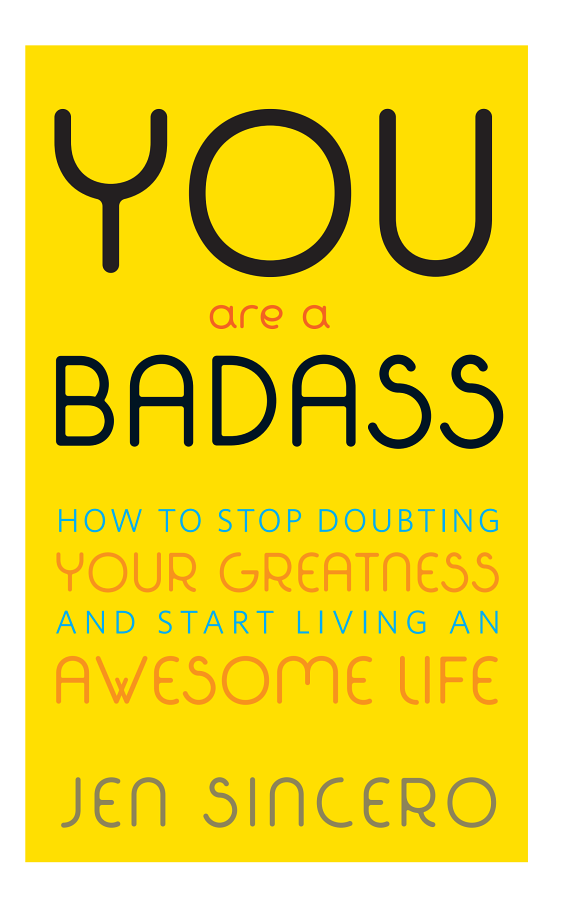
You Are a Badass: How to Stop Doubting Your Greatness and Start Living an Awesome Life
5. You Are a Badass: How to Stop Doubting Your Greatness and Start Living an Awesome Life by Jen Sincero
Full disclosure: I came to this book slightly skeptically. The title is the kind that makes a certain type of reader wince a little, and the cover does not exactly whisper “serious intellectual inquiry.” But Jen Sincero has a genuine voice, and that turns out to matter more than the packaging. She is funny, self-aware, and refreshingly willing to admit that she spent a long time being her own worst obstacle before she figured out a different way to operate. The book reads less like a lecture and more like a very candid conversation with a friend who has recently gotten their act together and wants to tell you exactly how.
The core of the book is about identifying and dismantling the subconscious beliefs that keep people stuck. Sincero draws on a mix of psychology, metaphysics, and practical advice, and she does not always draw those threads together with perfect consistency. She is a believer in the law of attraction, which will be a dealbreaker for some readers. But even if you set aside the more metaphysical elements, the underlying argument, that most self-sabotage is rooted in beliefs we inherited rather than chose, holds up on its own terms.
Sincero’s humor is one of the book’s genuine assets. She is not trying to be profound on every page, and that lightness keeps the material from becoming oppressive. She also has a talent for putting her finger on the specific flavor of low-grade self-contempt that a lot of people carry around without ever quite naming it. There is something useful about having that named clearly, even if the naming comes with a slightly breezy delivery.
If you are looking for rigorous research or a carefully footnoted argument, this is not that book. It is also possible to find the relentless positivity a bit much after a while. Readers who are in the middle of genuine hardship may find the tone a little too cheerful to be useful. But for someone who is stuck in a pattern of self-doubt and needs a nudge that does not feel like homework, this book delivers that nudge with considerable energy and without taking itself too seriously.
Sincero’s great skill is making the work of changing your own thinking feel less like a solemn undertaking and more like something you could actually start today, possibly while laughing at yourself a little.
This is perfect for readers who know they are getting in their own way but need a lighter, more irreverent entry point into that conversation, and who respond better to humor and directness than to clinical frameworks or heavy theory.
Looking back at these five books as a group, what strikes me is how different they are from each other. Frankl writes from the ruins of the worst humanity has produced. Goggins writes from a place of almost ferocious physical and mental discipline. Singer asks you to sit quietly and watch your own mind. Brown brings research and emotional honesty in equal measure. Sincero brings a laugh and a shove in the right direction. They are not saying the same thing. But they are all, in their own way, arguing that the version of yourself you are currently running is not the only available version.
None of these books will do the work for you. That is probably worth saying plainly, because it is easy to finish a book feeling genuinely moved and then find yourself doing everything exactly the same way a week later. The reading is the beginning, not the destination. But beginnings matter. If even one of these books starts a conversation in your head that you keep returning to, that is not nothing. That is, in fact, quite a lot.