

7 Books About Emotional Availability Worth Reading
There is a particular kind of loneliness that comes not from being alone, but from being with someone who is not quite there. You know the feeling. A conversation that stays on the surface. A hug that feels like a formality. A relationship where everything looks fine from the outside and something is quietly missing on the inside. Emotional availability, or the lack of it, shapes nearly every relationship we have, and most of us never got a clear map for navigating it.
The books collected here approach that territory from different angles. Some are rooted in attachment theory and neuroscience. Others lean into personal narrative, therapeutic practice, or communication frameworks. A few will ask you to look honestly at yourself, which is never entirely comfortable. But if you have ever wondered why closeness feels difficult, why certain patterns keep repeating, or simply how to be more present for the people you love, these seven books offer something genuinely useful. No guarantees, no miracles, just good thinking and a lot of human honesty.
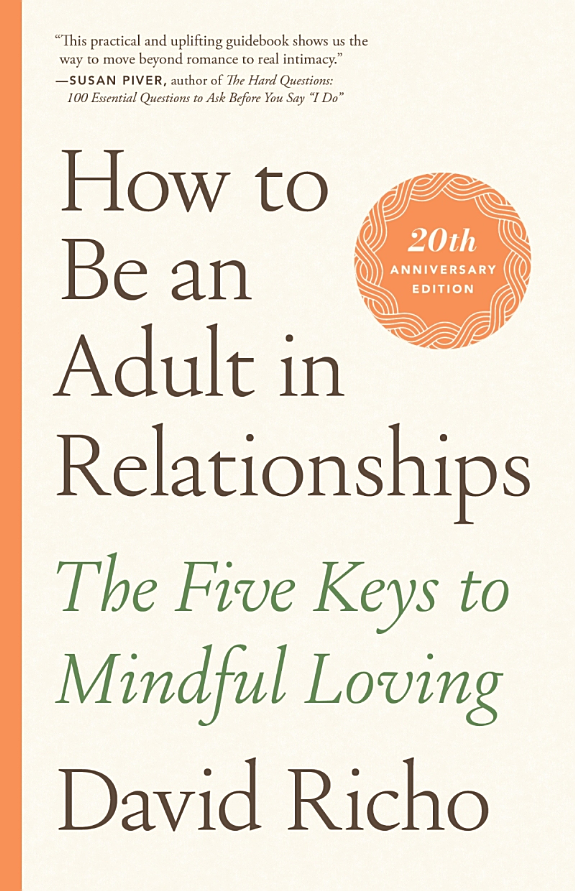
How to Be an Adult in Relationships: The Five Keys to Mindful Loving
1. How to Be an Adult in Relationships: The Five Keys to Mindful Loving by David Richo
David Richo is a psychotherapist and teacher with a background in both Buddhist practice and Western psychology, and that combination gives this book a particular texture. It is warm but not soft. Demanding but not harsh. Richo organizes his framework around five qualities he calls the five A’s: attention, acceptance, appreciation, affection, and allowing. These are not just nice ideas. He treats them as the actual substance of loving someone well, and he traces how the absence of these qualities in childhood shapes what we look for and what we fear in adult relationships.
What sets this book apart from similar titles is its refusal to flatten complexity. Richo does not pretend that becoming emotionally available is simply a matter of deciding to be. He acknowledges grief, fear, and the very human tendency to recreate familiar pain. He also spends real time on the difference between ego-driven love and what he calls mindful loving, which is less about getting needs met and more about genuine presence with another person. That distinction sounds simple and turns out to be surprisingly difficult to sit with.
The writing is accessible without being breezy. Richo occasionally dips into territory that feels more spiritual than clinical, which will suit some readers and feel a bit abstract to others. If you are looking for step-by-step exercises and concrete worksheets, this is not quite that book. It is more meditative, more philosophical, and richer for it.
Richo makes a compelling case that emotional availability is not a personality trait you either have or lack. It is a set of practices, and practices can be learned.
This is perfect for readers who want a thoughtful, spiritually inflected take on love and presence, particularly those drawn to mindfulness and who are comfortable sitting with ideas rather than just checking off action steps.
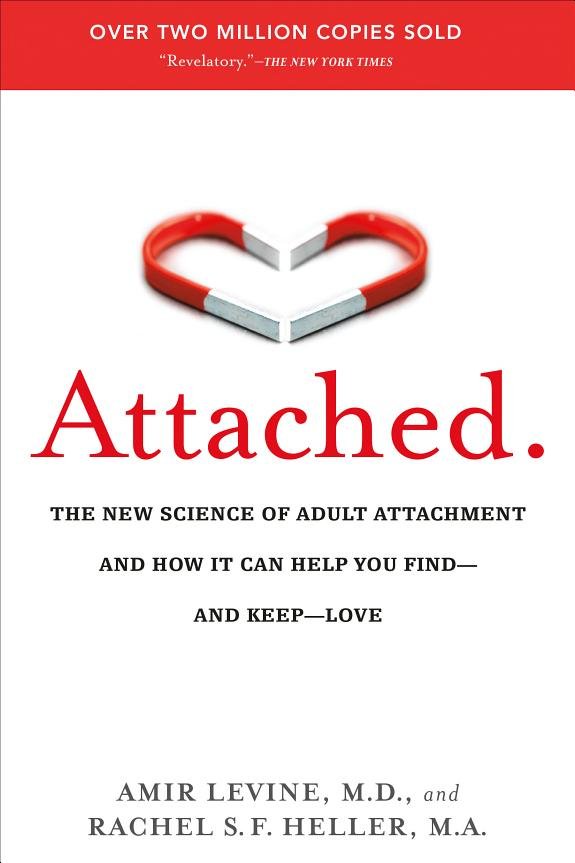
Attached: The New Science of Adult Attachment and How It Can Help You Find—and Keep—Love
2. Attached: The New Science of Adult Attachment and How It Can Help You Find and Keep Love by Amir Levine and Rachel Heller
If you have spent any time in therapy or in certain corners of the internet, you have probably heard the terms anxious, avoidant, and secure used to describe attachment styles. A lot of that popular conversation traces back to this book. Levine, a psychiatrist and neuroscientist, and Heller, a psychologist, took decades of academic attachment research and translated it into something genuinely readable. That is harder than it sounds, and they pull it off.
The central argument is that our attachment system, which evolved to keep us close to caregivers in infancy, does not simply switch off in adulthood. It keeps running, influencing how we respond to closeness, conflict, and perceived rejection in romantic relationships. Levine and Heller walk through the three main attachment styles with clarity and without making any of them sound like a life sentence. Crucially, they spend real time on the secure attachment style not as some unattainable ideal but as a learnable, achievable way of relating.
The book is practical in a way that some readers will love and others might find a little clinical. There are quizzes, checklists, and fairly direct advice about partner selection that occasionally reads more like a decision matrix than a meditation on love. That said, for someone who has spent years wondering why they keep choosing unavailable partners or why they themselves shut down when things get close, the framework here can feel like finally having language for something previously wordless.
Understanding your attachment style will not fix your relationships on its own, but it can stop you from blaming yourself or your partner for patterns that are far older than either of you.
This is perfect for people who want a science-backed framework for understanding their relationship patterns, especially those who have noticed the same dynamic playing out across multiple relationships and want to understand why.
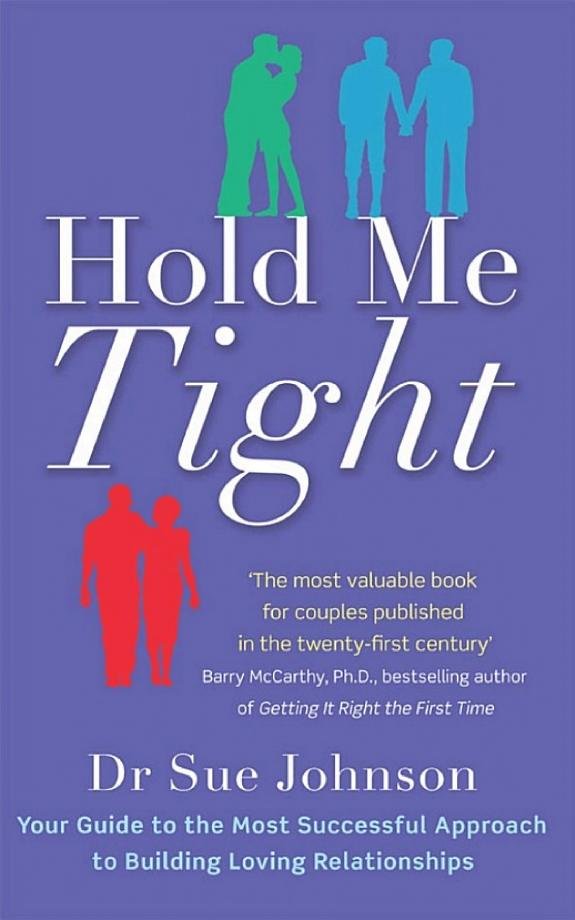
Hold Me Tight: Seven Conversations for a Lifetime of Love
3. Hold Me Tight: Seven Conversations for a Lifetime of Love by Sue Johnson
Sue Johnson is the developer of Emotionally Focused Therapy, one of the most well-researched couples therapy approaches in existence, and this book is her attempt to bring that work to a general audience. She is also a genuinely engaging writer, which helps. Hold Me Tight is structured around seven specific conversations that couples can have to move from disconnection toward genuine emotional closeness. Each conversation addresses a different layer of the problem, from recognizing destructive patterns to expressing deeper needs to healing past hurts.
What Johnson does particularly well is explain why couples fight the way they do without making either partner the villain. She draws on attachment theory to show that most relationship conflict is not really about dishes or money or who forgot to call. It is about the deeper question underneath: are you there for me? Can I count on you? That reframe is not new to therapists, but Johnson articulates it in a way that lands even for readers who have never set foot in a therapy office.
The book includes real case studies from Johnson’s clinical work, which ground the ideas in recognizable human experience. Some readers find the seven-conversation structure slightly rigid, and a few of the examples lean heavily toward heterosexual couples, which is worth noting. But the emotional core of the work is broadly applicable. Johnson is not interested in communication tricks. She is interested in what it actually means to reach for someone and have them reach back.
Johnson reframes couples conflict not as a battle of wills but as a protest against disconnection, and that single shift changes everything about how you hear an argument.
This is perfect for couples who feel stuck in repetitive conflict and want a structured, research-backed way to understand what is really happening between them, as well as for individuals who want to understand relationship dynamics before they are in crisis.
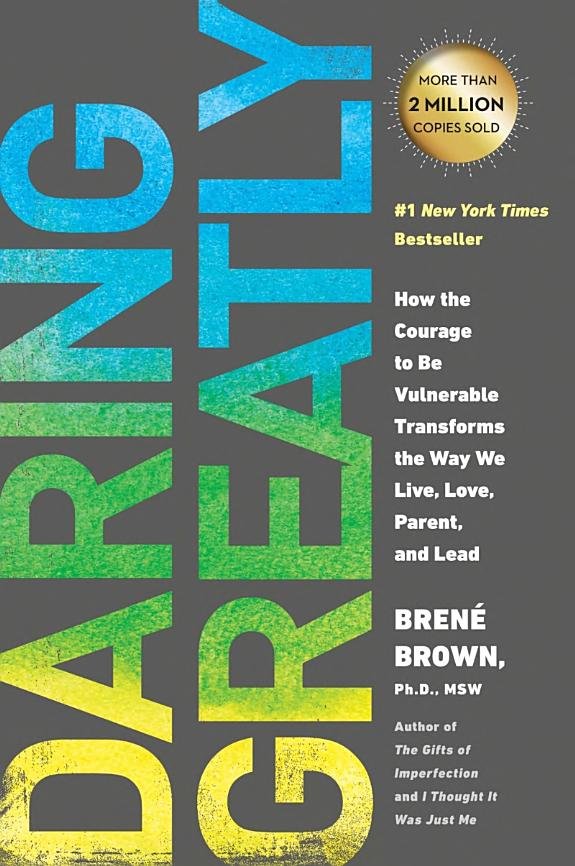
Daring Greatly: How the Courage to Be Vulnerable Transforms the Way We Live, Love, Parent, and Lead
4. Daring Greatly: How the Courage to Be Vulnerable Transforms the Way We Live, Love, Parent, and Lead by Brené Brown
Brené Brown spent years as a shame researcher before her 2010 TED Talk made her a household name, and Daring Greatly is the book that captures the fullest version of her thinking up to that point. The central argument is that vulnerability, the willingness to show up without guarantees, is not weakness. It is the precondition for genuine connection, creativity, and belonging. Brown is a storyteller as much as a researcher, and the book moves between personal narrative, research findings, and practical observation in a way that keeps things moving.
Brown is particularly good on shame, which she distinguishes carefully from guilt. Shame is the feeling that we are fundamentally bad or defective. Guilt is the feeling that we did something bad. That distinction matters enormously for emotional availability, because shame is what makes people shut down and disappear just when closeness is most needed. Her analysis of how shame operates differently for men and women is one of the sharper sections of the book.
It would be dishonest not to mention that Brown’s work has its critics, and some of the research claims in this book have been questioned over the years. The prose can also tip into the inspirational-keynote register more than some readers will enjoy. If you prefer your psychology delivered in a dry, academic tone, Brown is probably not your person. But if you want a readable, emotionally honest exploration of why we guard ourselves and what it costs us, Daring Greatly delivers that.
Brown’s core insight is uncomfortable in the best way: the armor we build to protect ourselves from hurt is the same armor that keeps connection out.
This is perfect for readers who intellectually understand the value of openness but struggle to practice it, and for anyone who wants to think seriously about how shame shapes their relationships without wading through dense academic language.
The Emotionally Unavailable Man: A Blueprint for Healing
5. The Emotionally Unavailable Man: A Blueprint for Healing by Patti Henry
Patti Henry is a therapist who wrote this book specifically for women in relationships with emotionally unavailable men, and she does not spend a lot of time softening that focus. The book is direct, sometimes bluntly so, and it covers the full terrain: how to recognize emotional unavailability, why women are drawn to unavailable partners, what keeps them in those relationships, and how to begin healing whether they stay or leave. Henry brings clinical experience and personal candor to the subject, which gives the book a grounded quality that more theoretical texts sometimes lack.
One of the book’s genuine strengths is its refusal to frame emotionally unavailable men as simply villains. Henry explores the roots of emotional unavailability with some empathy, tracing it through childhood experiences, cultural conditioning, and fear. That does not mean she encourages women to endlessly excuse the behavior. She is quite clear about what is and is not acceptable. But the nuance makes the book more useful than a simple list of red flags would be.
The title and framing do limit the audience somewhat. Men who are themselves emotionally unavailable and want to understand that about themselves will find less here than they might hope. And readers who prefer gender-neutral or LGBTQ-inclusive framing may find the book’s assumptions a bit narrow. Within its stated scope, though, it is honest and practical in ways that count.
Henry makes the useful point that recognizing an emotionally unavailable partner is only half the work. The more important question is why that dynamic felt familiar and safe to begin with.
This is perfect for women who have found themselves repeatedly drawn to partners who cannot or will not show up emotionally, and who want both validation and a clear-eyed path toward something different.
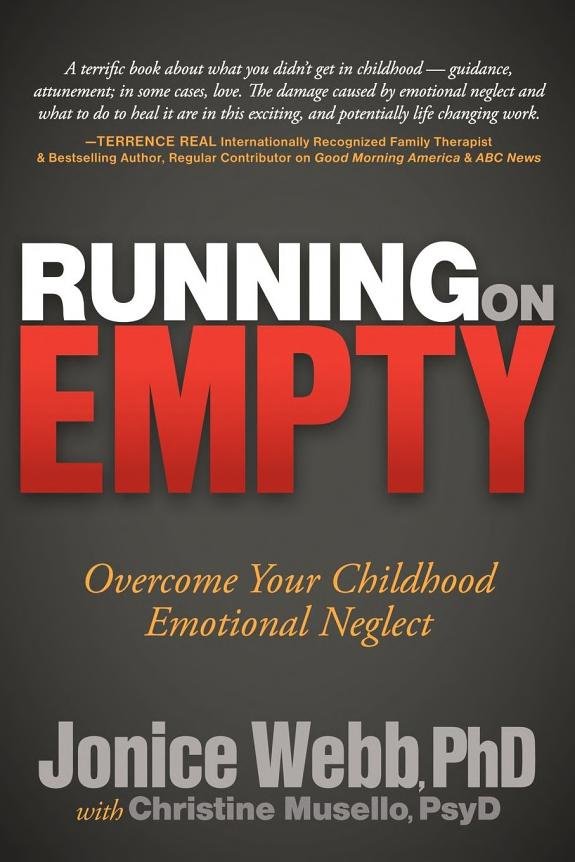
Running on Empty: Overcome Your Childhood Emotional Neglect
6. Running on Empty: Overcome Your Childhood Emotional Neglect by Jonice Webb
Jonice Webb’s book addresses something that is genuinely difficult to talk about: the harm caused not by what parents did, but by what they failed to do. Childhood emotional neglect, as Webb defines it, is the consistent failure of parents to respond adequately to a child’s emotional needs. It leaves no obvious marks. There are no dramatic events to point to. Many people who experienced it describe their childhoods as fine, even good, while carrying a persistent sense of emptiness or disconnection they cannot explain. Webb gives that experience a name and a framework, which for many readers is itself a relief.
The book is organized to help readers first recognize whether emotional neglect was part of their upbringing, then understand how it shows up in adult life, and finally begin to address it. Webb writes with clarity and genuine compassion, and she is careful not to blame parents wholesale. Many emotionally neglectful parents were themselves neglected and had no model for emotional attunement. That context does not erase the impact, but it complicates the easy narrative of blame.
Some readers will find the self-assessment sections a little repetitive, and the later chapters on healing can feel somewhat general compared to the precision of the earlier diagnostic work. But as an introduction to a concept that is underrepresented in popular psychology, Running on Empty fills a real gap. It is the kind of book that people pass to friends with a quiet note that says this might explain some things.
Webb’s most valuable contribution is making emotional neglect visible. You cannot begin to address something you have never been able to name or see.
This is perfect for adults who feel emotionally cut off from themselves or others without knowing why, particularly those whose childhoods looked functional from the outside but left them feeling somehow hollow or disconnected inside.
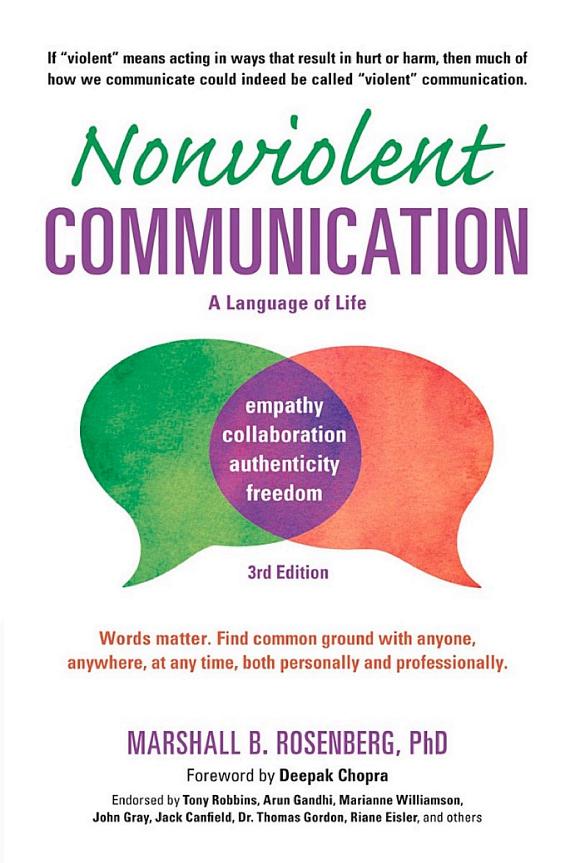
Nonviolent Communication: A Language of Life
7. Nonviolent Communication: A Language of Life by Marshall B. Rosenberg
Marshall Rosenberg was a clinical psychologist who spent decades working in conflict resolution, and this book distills his Nonviolent Communication framework into something teachable. The core idea is that most human conflict, from arguments between partners to disputes between nations, stems from a failure to connect needs to communication. We say things that sound like observations but are actually judgments. We make demands when we mean to make requests. We react to behavior without ever reaching the need underneath it. Rosenberg offers a four-step process for doing this differently, and the process sounds almost comically simple until you try to use it under pressure.
The connection to emotional availability is direct. Being emotionally available to someone requires being able to hear what they actually need rather than reacting to how they expressed it. It also requires being able to express your own needs without turning them into accusations. Rosenberg’s framework is a practical tool for both of those things. The book includes extensive dialogue examples, which are helpful even when they occasionally read as a little too tidy to be entirely believable. Real conversations are messier, and Rosenberg knows this.
The book is not for everyone. Readers who find the language of needs and feelings overly clinical, or who bristle at the slightly earnest tone, may struggle to engage with the material. And some of the political examples Rosenberg uses to illustrate the framework feel dated. But the underlying ideas have held up well, and the framework has been used effectively in therapy, education, and conflict mediation for good reason. As a tool for becoming more emotionally present in conversation, it is hard to argue with.
Rosenberg’s framework asks you to slow down long enough to find the human need behind the difficult behavior, including your own, and that pause is where genuine connection becomes possible.
This is perfect for people who want concrete communication tools to support deeper emotional connection, especially those who find themselves frequently misunderstood or who tend to react to conflict before they have fully heard what the other person is actually saying.
Emotional availability is one of those things that sounds straightforward until you try to practice it consistently, especially when you are tired, scared, or in the middle of an argument about something that is not really about what it appears to be about. These seven books do not promise to solve that. What they offer is better understanding, of yourself, of the people close to you, and of the patterns that make presence so difficult sometimes.
You do not need to read all seven. Pick the one that addresses what feels most urgent right now. Maybe that is understanding your attachment style, or finally naming something from your childhood, or simply learning to listen differently. Any one of these books, read honestly and with some willingness to sit with discomfort, can shift something. And that is enough to start with.