

6 Books That Teach Assertive Communication
Most of us were never actually taught how to speak up. We were taught to be polite, to keep the peace, to not make things awkward. And somewhere along the way, a lot of people ended up swallowing their opinions at meetings, agreeing to things they didn’t want to do, and rehearsing conversations in the shower that they never actually had in real life. Sound familiar?
Assertive communication is one of those skills that sounds simple until you try to use it with your overbearing coworker or your parent who still treats you like you’re twelve. The books on this list approach the subject from different angles, some clinical and structured, some philosophical, some rooted in negotiation theory. None of them will fix everything overnight, but each one offers something genuinely useful. Whether you are trying to say no without a guilt spiral or navigate a conversation that could go sideways fast, there is something here for you.
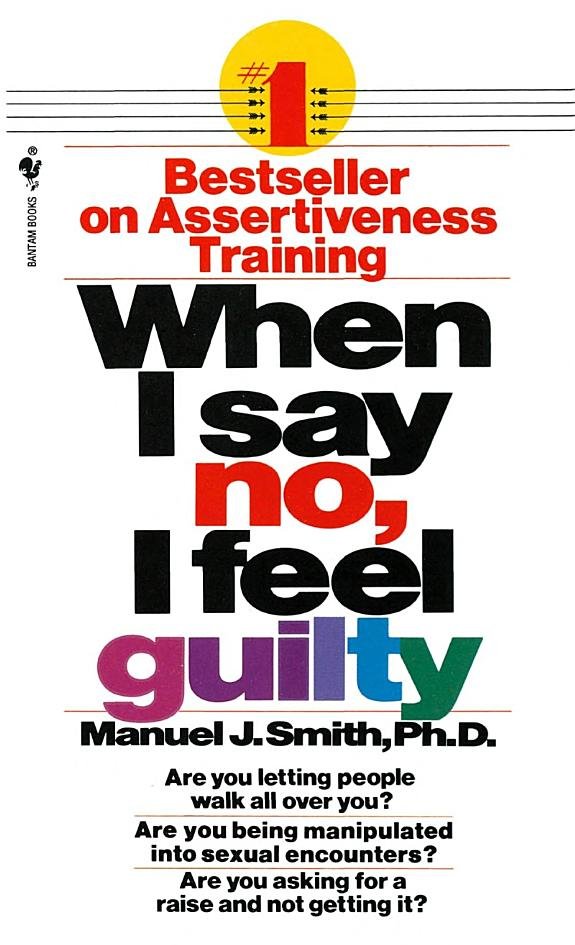
When I Say No, I Feel Guilty: How to Cope – Using the Skills of Systematic Assertive Therapy
1. When I Say No, I Feel Guilty: How to Cope – Using the Skills of Systematic Assertive Therapy by Manuel J. Smith
Published in 1975, this book has aged better than most communication guides from that era, which is either a testament to how good it is or a reminder that people have been struggling to say no for a very long time. Manuel J. Smith was a clinical psychologist, and his writing reflects that background. The tone is measured, methodical, and occasionally a little dry, but it is never condescending. He treats the reader like an adult who simply hasn’t been given the right tools yet.
The centerpiece of the book is Smith’s “Bill of Assertive Rights,” a list of personal rights that many readers find genuinely surprising, things like the right to change your mind, the right to make mistakes, and the right to not justify yourself to others. From there, he introduces a set of verbal techniques, the most famous being “broken record,” which involves calmly repeating your position without escalating or apologizing. These techniques have been criticized over the years for feeling a bit robotic, and that criticism is fair. If you use them word for word in real conversations, you might come across as strange.
That said, the underlying philosophy is solid. Smith’s core argument is that guilt and anxiety around assertiveness are learned responses, not personality flaws, and that they can be unlearned with practice. The book gives you a framework for understanding why you freeze up or cave in, which is often more useful than any script. It is also surprisingly funny in places, with examples drawn from everyday situations that feel genuinely recognizable.
The techniques can feel stiff on the page, but the ideas behind them are worth sitting with. Understanding why you feel guilty when you set a boundary is half the work.
This is perfect for people who grew up in households where saying no felt dangerous, or for anyone who wants a structured, psychology-backed approach to assertiveness rather than motivational advice.
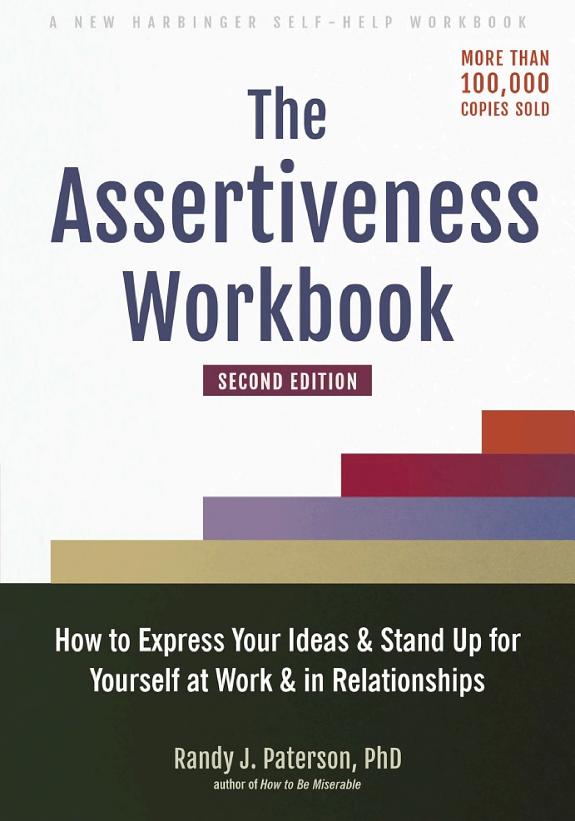
The Assertiveness Workbook: How to Express Your Ideas and Stand Up for Yourself at Work and in Relationships
2. The Assertiveness Workbook: How to Express Your Ideas and Stand Up for Yourself at Work and in Relationships by Randy J. Paterson
Randy J. Paterson is a clinical psychologist who writes with the kind of clarity that makes you wonder why all self-help books aren’t this well organized. This is a workbook in the truest sense. It has exercises, reflection prompts, and structured activities designed to move you from reading about assertiveness to actually practicing it. If you are the kind of person who underlines things and then never revisits them, this format will push you a little harder.
What sets this book apart is how carefully Paterson distinguishes between assertiveness, aggression, and passivity. A lot of people conflate assertiveness with being pushy or confrontational, and Paterson dismantles that misconception early and thoroughly. He also spends time on the internal side of things, specifically the beliefs and thought patterns that make assertiveness feel threatening. There are sections on body language, tone of voice, and how to handle it when someone responds to your assertiveness with anger or manipulation.
The workbook format won’t suit everyone. If you prefer to read straight through and absorb ideas at your own pace, stopping to fill in prompts might feel like an interruption. And some of the exercises are genuinely uncomfortable, which is probably the point, but worth knowing going in. Paterson doesn’t let you stay theoretical. He wants you to apply things to your actual life, which is both the book’s greatest strength and the reason some readers put it down halfway through.
Paterson understands that knowing what assertiveness looks like and actually doing it are two very different things. The exercises exist to close that gap.
This is perfect for readers who learn by doing, or for anyone who has read about assertiveness before but hasn’t managed to translate that knowledge into real behavioral change.
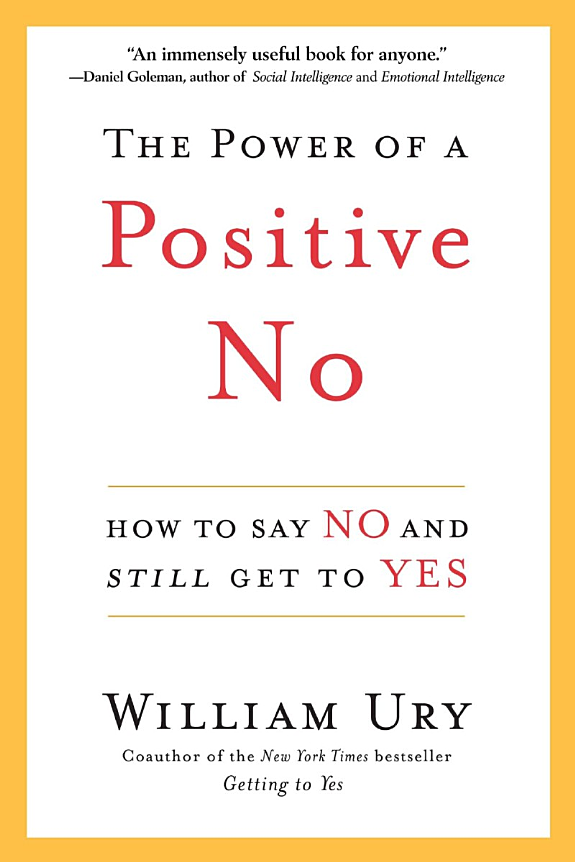
The Power of a Positive No: How to Say No and Still Get to Yes
3. The Power of a Positive No: How to Say No and Still Get to Yes by William Ury
William Ury co-wrote “Getting to Yes,” one of the most widely read negotiation books ever published, so he brings serious credentials to the subject of saying no. This book is built around a counterintuitive idea: that a well-constructed no is not the end of a conversation but the beginning of a better one. Ury calls this the “Yes, No, Yes” framework, where your no is sandwiched between an affirmation of your own values and an offer to find a workable alternative.
The writing is clear and the examples are drawn from a wide range of contexts, including business negotiations, family dynamics, and international diplomacy. Ury is good at showing how the same principles apply whether you are declining a project at work or setting a boundary with a difficult family member. The book is also refreshingly honest about the emotional difficulty of saying no, acknowledging that fear, guilt, and conflict aversion are real obstacles rather than things to simply push through.
Where the book is less useful is for readers who are dealing with genuinely unreasonable people. Ury’s framework assumes a baseline of good faith on both sides, and that assumption doesn’t always hold. If the person you need to say no to is manipulative or simply not interested in a mutually respectful outcome, some of this advice will feel a bit optimistic. That’s not a flaw exactly, just a limitation worth knowing about before you dive in.
Ury reframes saying no as an act of integrity rather than rejection. That shift in perspective alone is worth the read.
This is perfect for professionals, negotiators, or anyone who wants to decline requests without damaging relationships, particularly in contexts where maintaining goodwill matters.
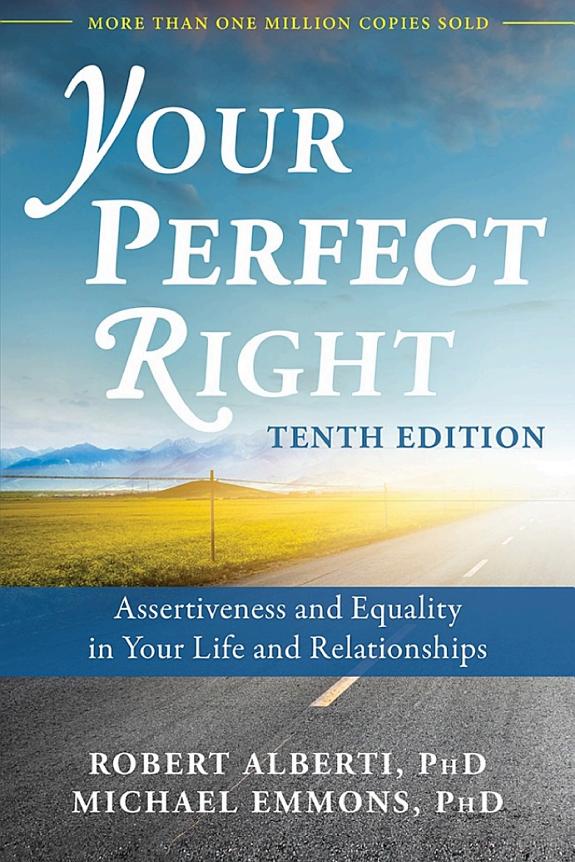
Your Perfect Right: Assertiveness and Equality in Your Life and Relationships
4. Your Perfect Right: Assertiveness and Equality in Your Life and Relationships by Robert Alberti and Michael Emmons
This book has been around since 1970 and has gone through more than ten editions, which tells you something about its staying power. Robert Alberti and Michael Emmons are widely credited with bringing assertiveness training into mainstream psychology, and this is essentially the foundational text of that movement. Reading it, you can see where a lot of later books got their ideas. It covers the distinction between assertive, aggressive, and passive behavior, the role of self-esteem in communication, and practical strategies for a wide range of situations.
One of the things that makes this book hold up is its emphasis on equality. Alberti and Emmons are clear that assertiveness is not about getting your way or dominating conversations. It is about treating yourself and others as equals, which means your needs matter and so do theirs. That framing feels more humane than a lot of communication advice, which can tip into territory that feels manipulative or self-serving. The authors also address cultural and gender differences in assertiveness, which was progressive for its time and remains relevant.
The book is thorough to the point of being a little dense in places, and some sections feel more like a textbook than a conversation. Readers who want something breezy and quick will probably find it slow going. There is also a chapter on seeking professional help for assertiveness issues that some readers find unnecessary, though it reflects the authors’ clinical backgrounds. On the whole, though, this is one of the most complete and thoughtful books on the subject.
Fifty years of editions don’t happen by accident. This book earns its reputation by treating assertiveness as a matter of human dignity rather than a set of tricks.
This is perfect for readers who want a comprehensive, research-grounded foundation in assertiveness, or for therapists and counselors looking for a resource to recommend to clients.
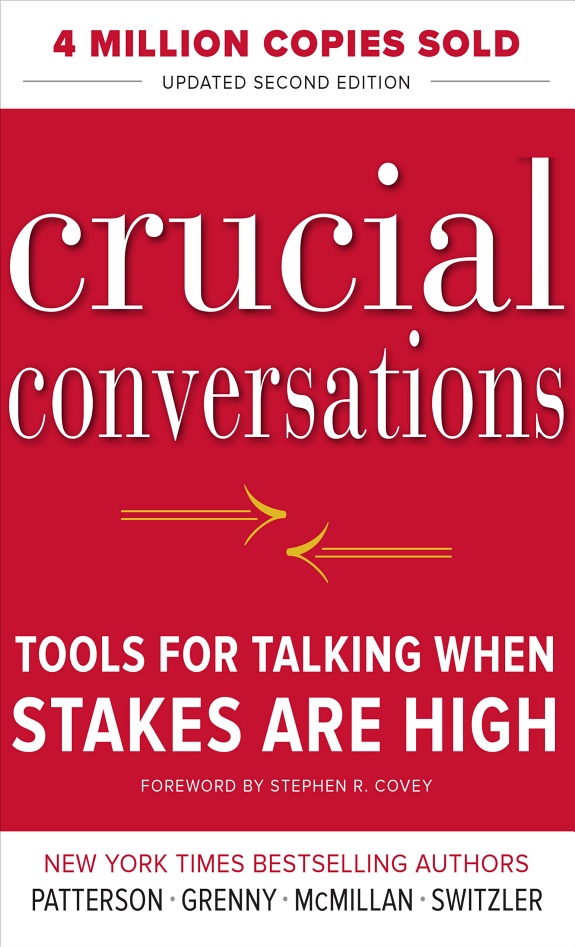
Crucial Conversations: Tools for Talking When Stakes Are High
5. Crucial Conversations: Tools for Talking When Stakes Are High by Kerry Patterson, Joseph Grenny, Ron McMillan, and Al Switzler
Four authors is a lot, and occasionally this book reads like it was written by committee, because it was. But the ideas are cohesive and the framework they’ve built is genuinely useful. A “crucial conversation,” as defined here, is any discussion where the stakes are high, opinions differ, and emotions run strong. Think performance reviews, relationship conflicts, or any conversation you’ve been avoiding for three weeks. The authors argue that most people handle these conversations badly, either by going silent or going aggressive, and that there is a better way.
The book’s central concept is “psychological safety,” the idea that people only share honestly when they feel safe doing so, and that your job in a difficult conversation is to maintain that safety even when you disagree strongly. There’s practical guidance on how to notice when a conversation is going off the rails, how to step out of the content to address the process, and how to share your perspective without triggering defensiveness. The writing is peppered with examples and the occasional workplace anecdote that will feel very familiar to anyone who has sat through a tense team meeting.
The book leans heavily on professional and organizational contexts, so readers who are primarily interested in personal relationships might find some sections less applicable. The tone is also fairly corporate in places, which won’t bother everyone but is worth noting. And while the framework is useful, it does require a fair amount of self-awareness and presence of mind to apply in the heat of an actual difficult conversation. It’s one of those books that rewards rereading.
The insight that silence is not the same as peace, and that avoiding hard conversations usually makes things worse, is obvious in retrospect but genuinely clarifying when you encounter it here.
This is perfect for managers, team leaders, or anyone who regularly has to navigate high-stakes conversations at work and wants a structured approach that holds up under pressure.
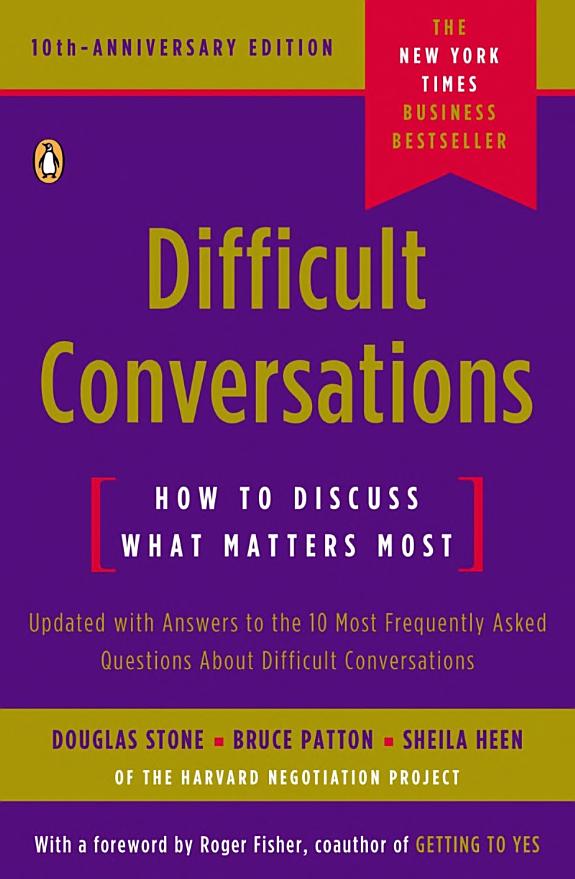
Difficult Conversations: How to Discuss What Matters Most
6. Difficult Conversations: How to Discuss What Matters Most by Douglas Stone, Bruce Patton, and Sheila Heen
This book came out of the Harvard Negotiation Project, the same research group that produced “Getting to Yes,” and it shows in the best way. Stone, Patton, and Heen have a gift for making complex psychological dynamics feel accessible and immediately recognizable. The book’s central argument is that every difficult conversation is actually three conversations happening at once: what happened, how each person feels about it, and what the conversation means for each person’s sense of identity. Most of us only address the first layer and wonder why things still feel unresolved.
The “identity conversation” section is particularly good. The authors explain how difficult conversations feel threatening partly because they touch on our self-image, and that this is why people get defensive or shut down even when the actual content of the conversation isn’t that dramatic. Understanding this dynamic doesn’t make conversations easy, but it makes them less mysterious. You start to see why the other person is reacting the way they are, and why you are too, which creates a little more room to work with.
The book is oriented more toward understanding than toward scripts or techniques, which some readers will love and others will find frustrating. If you want step-by-step instructions for exactly what to say, this isn’t quite that. It’s more about developing a different way of thinking about conflict and communication. The examples are drawn from a wide range of situations, including workplace disputes, family tensions, and friendships, which makes it broadly applicable. It’s also one of the more compassionate books on this list, treating both parties in a difficult conversation as people trying to navigate something genuinely hard.
Most conflict advice focuses on what to say. This book focuses on how to think, which turns out to be where the real work is.
This is perfect for readers who want to understand the psychology underneath difficult conversations, or for anyone who keeps having the same argument and can’t figure out why it never gets resolved.
Assertive communication is one of those things that sounds like it should come naturally but almost never does, at least not without some deliberate practice. The books on this list won’t hand you a magic script that makes every hard conversation go smoothly. What they will do is help you understand why those conversations are hard, what you tend to do when they get uncomfortable, and what a better approach might look like.
Start with whichever book matches where you are right now. If you’re mostly dealing with guilt around saying no, Smith or Paterson might be the place to begin. If you’re navigating high-stakes conversations at work, Patterson and colleagues or the Harvard team might be more immediately useful. And if you want the historical foundation of the whole assertiveness movement, Alberti and Emmons have been the go-to for more than five decades for a reason. Any one of these will give you something worth thinking about, and probably a few things worth practicing.