5 Books to Read When You’re Emotionally Exhausted
There is a particular kind of tired that sleep does not fix. You wake up already worn down, move through your day on autopilot, and wonder quietly when you started feeling so far from yourself. Emotional exhaustion is not a personal failing. It is what happens when the demands placed on you, by work, by relationships, by the relentless pace of ordinary life, consistently outpace your ability to recover.
Books will not solve burnout. Let us be honest about that upfront. But the right book at the right moment can feel like sitting down with someone who genuinely understands. It can name what you have been carrying without the words to describe it. The five books gathered here do exactly that. They come from different angles, science, philosophy, theology, personal essay, and activism, but they share a common thread: the belief that you deserve care, and that rest is not something you have to earn.
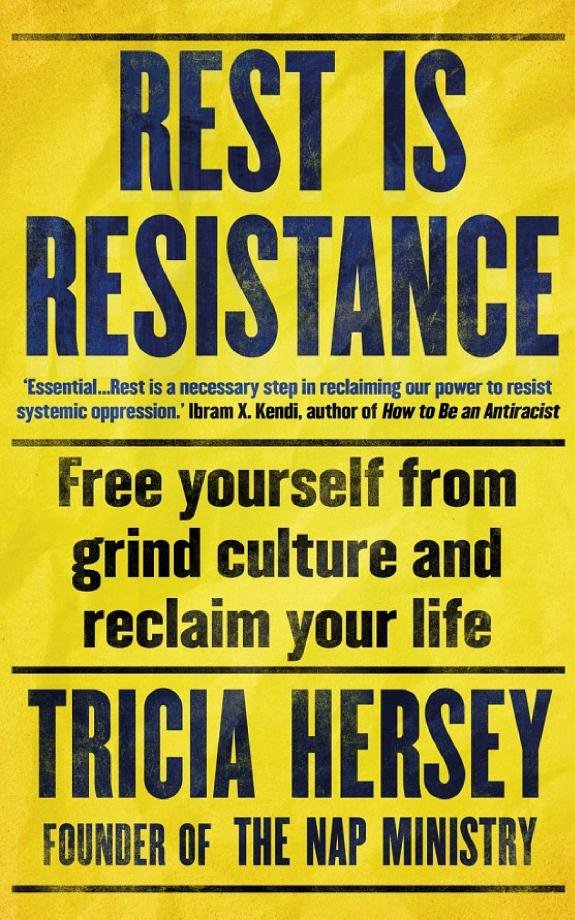
Rest Is Resistance: A Manifesto
1. Rest Is Resistance: A Manifesto by Tricia Hersey
Tricia Hersey is the founder of The Nap Ministry, which is exactly the kind of institution more of us wish existed. Her book is not a gentle self-help guide. It is a direct, urgent argument that rest is a form of resistance against a culture that has decided your worth is measured entirely by your productivity. Hersey writes with conviction and a preacher’s rhythm, drawing on Black liberation theology, Afrofuturism, and her own experience of collapsing under the weight of grind culture. The voice is distinctive, sometimes sermonic, always deeply felt.
The central idea is this: the pressure to produce without pause is not natural or inevitable. It is a system, one built on exploitation, and choosing rest is a way of refusing to participate in that system. Hersey is not talking about bubble baths or self-care Sundays marketed to you by a wellness brand. She is talking about something more radical, the reclaiming of your body and your time as genuinely your own.
If you are someone who feels guilty every time you sit still, this book will challenge that guilt at the root rather than just reassuring you it is okay to take a break. It asks bigger questions about why you feel that way in the first place. That said, readers looking for practical techniques or clinical frameworks will find this book more philosophical than instructional. It is a call to rethink, not a step-by-step plan.
“Rest is not laziness. It is not a reward for finished work. It is a birthright, and reclaiming it is an act of resistance against everything that has told you otherwise.”
This is perfect for anyone who has internalized the idea that their value is tied to their output, particularly those drawn to social justice frameworks and big-picture thinking about why we are all so exhausted.
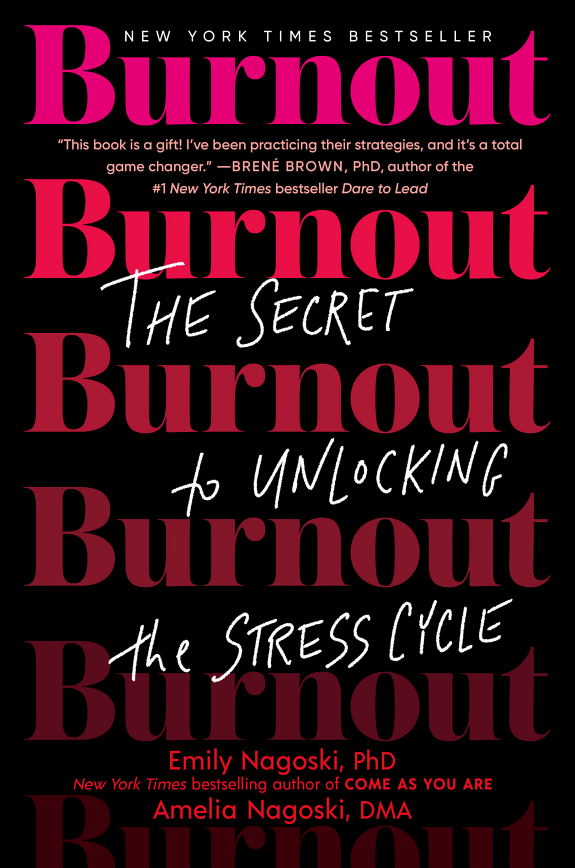
Burnout: The Secret to Unlocking the Stress Cycle
2. Burnout: The Secret to Unlocking the Stress Cycle by Emily Nagoski, Amelia Nagoski
Emily and Amelia Nagoski bring a refreshing combination of scientific rigor and genuine warmth to a topic that too often gets either clinical or preachy. The core insight of this book is deceptively simple: stress and the stressor are two different things. You can remove the source of stress, finish the project, end the bad relationship, quit the terrible job, and still have all that unprocessed stress sitting in your body, waiting. The book explains why, and more usefully, what to do about it.
The writing is accessible without being dumbed down. The sisters draw on research in biology, psychology, and neuroscience to explain how the stress response cycle works and why modern life so rarely allows us to complete it. There are practical suggestions throughout, things like physical movement, creative expression, and social connection, not as vague lifestyle advice but as biologically grounded tools. The book also addresses the specific pressures placed on women, including the “Human Giver Syndrome” concept, which describes the cultural expectation that certain people exist primarily to give their time, attention, and energy to others.
The tone is warm and occasionally funny, which helps. A book about burnout that makes you laugh once or twice is doing something right. It is worth noting that readers who find pop-science writing frustrating, or who want a deeper academic treatment, may wish the footnotes were doing more heavy lifting. But for most people in the thick of exhaustion, the balance here is just about right.
“You are not broken. Your body is doing exactly what it was designed to do. The problem is that the world was not designed with your body in mind.”
This is perfect for people who want a science-backed explanation for why they feel the way they do, and practical, grounded strategies for actually moving through stress rather than just managing it.
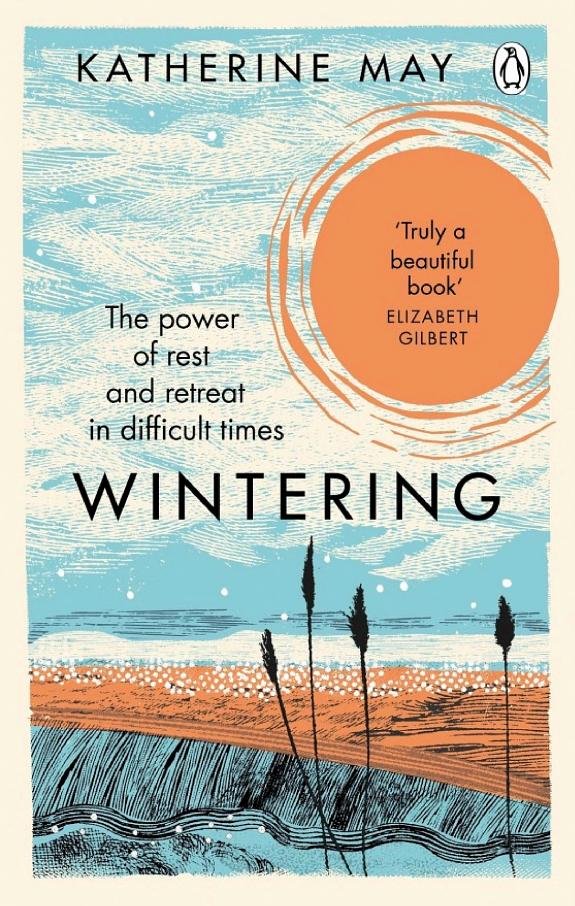
Wintering: The Power of Rest and Retreat in Difficult Times
3. Wintering: The Power of Rest and Retreat in Difficult Times by Katherine May
Katherine May wrote this book during a period when her life quietly fell apart. Her husband became seriously ill, she pulled her son from school, and she stepped back from her own career. Rather than framing this as a crisis to be overcome as quickly as possible, she began to think of it as a wintering, a necessary fallow period that living things require in order to survive. The book that emerged is part memoir, part meditation, and entirely beautiful.
May moves between her own story and observations about the natural world, about how animals, plants, and whole ecosystems depend on periods of dormancy. She travels to cold places, swims in icy water, reads myths and folklore, and slowly builds a case that human beings are not supposed to be relentlessly productive and cheerful. We are seasonal creatures who have been told to behave as though we are not. The prose is quiet and precise, the kind of writing that makes you slow down just by reading it.
This is not a book that will tell you how to fix your burnout or optimize your recovery. If that is what you need right now, one of the other books on this list will serve you better. What Wintering offers instead is permission, and a kind of companionship in the dark. It is for the reader who does not want to be fixed, but simply wants to feel less alone in a hard season.
“We are in the habit of imagining our lives as linear, a long march from birth to death. But life is not a march. It cycles, and sometimes it goes quiet, and that quiet is not failure.”
This is perfect for readers who love lyrical, reflective nonfiction and who are in a period of life that feels more like withdrawal than breakdown, where what is needed is not solutions but a gentler understanding of what rest actually means.
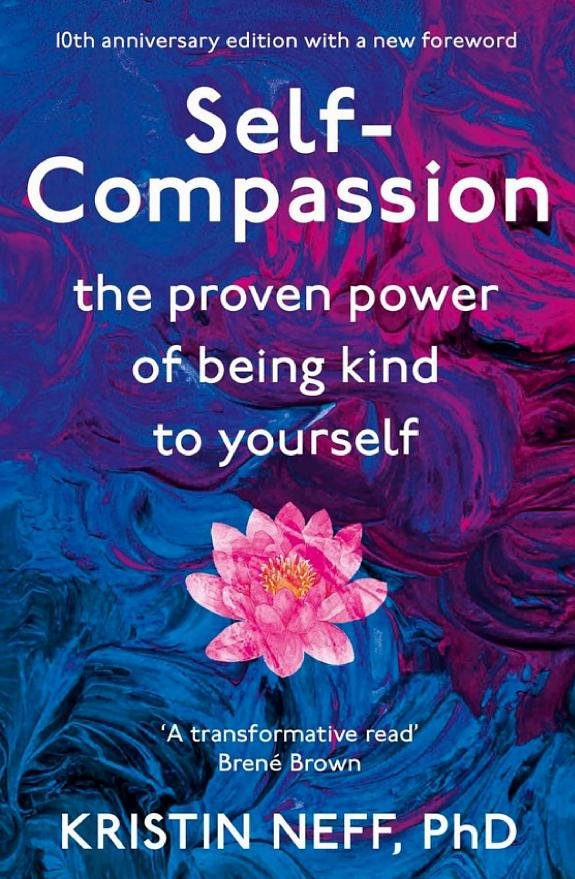
Self-Compassion: The Proven Power of Being Kind to Yourself
4. Self-Compassion: The Proven Power of Being Kind to Yourself by Kristin Neff
Kristin Neff is a researcher at the University of Texas who has spent her career studying self-compassion, which she defines not as self-pity or self-indulgence, but as treating yourself with the same basic kindness you would offer a good friend. It sounds straightforward. For most people, it is surprisingly difficult. This book explains both the research behind why self-compassion matters and the deeply ingrained reasons so many of us resist it.
Neff breaks self-compassion into three components: self-kindness rather than self-judgment, a sense of common humanity rather than isolation, and mindfulness rather than over-identification with painful thoughts. Each element is explored with care, and the book includes exercises throughout that are genuinely useful rather than perfunctory. The research Neff cites is her own and her colleagues’, and she is honest about both what the evidence supports and where questions remain.
One of the most useful things this book does is dismantle the idea that being hard on yourself is what keeps you motivated and responsible. The evidence actually points in the other direction, that self-criticism tends to increase anxiety and decrease the motivation to change. For anyone who has ever berated themselves into exhaustion, that reframing can be quietly significant. The book is not for readers who find psychological frameworks cold or overly clinical, and some of the exercises will feel awkward at first. Neff acknowledges this. Do them anyway, she suggests, which is probably the right advice.
“The harsh inner critic is not your conscience. It is your fear, wearing a very convincing disguise.”
This is perfect for people who are emotionally exhausted partly because they hold themselves to impossible standards, and who want a research-grounded, practice-based approach to learning how to be less brutal with themselves.
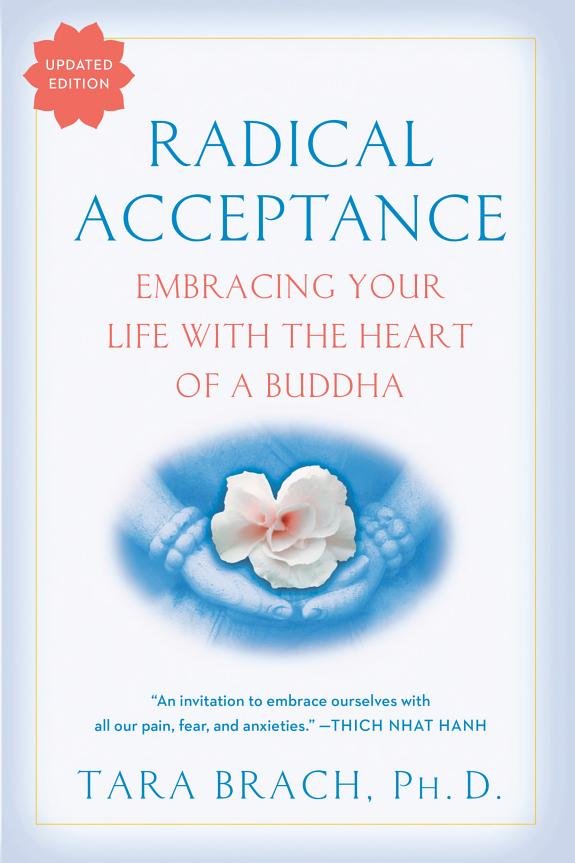
Radical Acceptance: Embracing Your Life With the Heart of a Buddha
5. Radical Acceptance: Embracing Your Life With the Heart of a Buddha by Tara Brach
Tara Brach is a psychologist and Buddhist meditation teacher, and this book sits comfortably at the intersection of both. The central concept, radical acceptance, is the practice of fully acknowledging your present experience without the layer of judgment and resistance that most of us add automatically. It is not about approving of everything that happens to you. It is about stopping the exhausting war against reality that so many of us wage without even realizing it.
Brach writes with a great deal of compassion and tells many stories, both from Buddhist tradition and from her clinical work with patients. The stories are the heart of the book. They make abstract ideas concrete and often quietly moving. She describes the “trance of unworthiness,” the pervasive background feeling that you are somehow not enough, as one of the primary sources of human suffering. For readers who recognize that feeling, the book can be a relief simply because it names the thing so precisely.
The book draws heavily on Buddhist philosophy and meditation practice, so readers who have a strong aversion to spiritual or contemplative frameworks may find it harder to connect with. It is not preachy, and Brach is careful to present these ideas in accessible, secular terms alongside their traditional context. But the orientation is unmistakably toward the interior life, toward sitting with difficulty rather than solving it. That is exactly what makes it valuable for emotional exhaustion, and exactly what makes it the wrong book for someone who wants action steps and a recovery timeline.
“The boundary to what we can accept is the boundary to our freedom. When we stop fighting what is, we find that we have more room than we thought.”
This is perfect for readers open to mindfulness and Buddhist-influenced psychology who want to understand the deeper patterns of self-rejection driving their exhaustion, and who are ready to approach their inner life with more curiosity and less combat.
Emotional exhaustion rarely arrives with a clear cause or a clear cure. It accumulates. It settles in. And the path out of it tends to be slower and stranger than anyone warns you it will be. These five books will not hand you a quick fix, and honestly, you should be suspicious of anything that promises one. What they offer instead is something more durable: language for what you are experiencing, company in the difficulty, and a few different frameworks for understanding why rest and self-compassion are not luxuries but necessities.
You do not have to read all five at once. Pick the one that sounds most like where you are right now. Let it take its time. That, in itself, is a small act of resistance against the pace that wore you out in the first place.