

8 Books for Becoming More Confident at Work
Most of us have sat in a meeting, had something worth saying, and said absolutely nothing. Or we have nodded along to feedback we disagreed with, smiled through a conversation that made us feel small, or spent an entire Sunday dreading Monday for reasons we could not quite name. Confidence at work is one of those things that looks effortless in other people and feels completely out of reach in ourselves.
The good news is that confidence is not a personality trait you either have or do not have. It is a skill, a practice, and sometimes just a matter of understanding what is actually going on inside your own head. The eight books below approach that challenge from different angles, covering everything from how you communicate with your team to how you silence the voice that tells you that you do not belong. Some are research-backed, some are deeply personal, and a couple are both. None of them promise overnight results, because that would be dishonest. But all of them offer something genuinely useful for anyone trying to feel a little more like themselves at work.
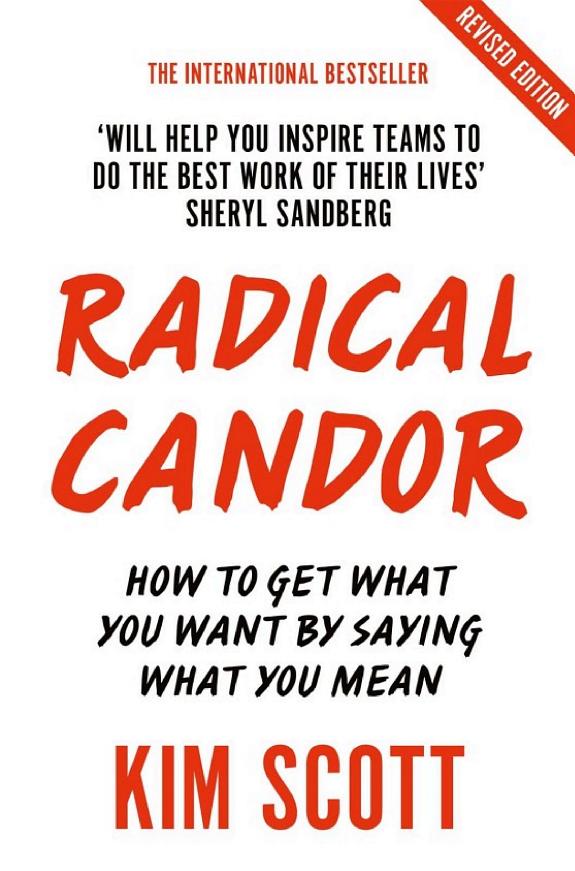
Radical Candor: Be a Kick-Ass Boss Without Losing Your Humanity
1. Radical Candor: Be a Kick-Ass Boss Without Losing Your Humanity by Kim Scott
Kim Scott spent years working at Google and Apple before distilling her experience into a framework that is, at its core, about having honest conversations without being a jerk about it. Radical Candor is built on two axes: caring personally and challenging directly. The sweet spot between them is where real communication happens, and where most of us are not spending nearly enough time.
Scott’s voice is warm and practical. She is not lecturing you from a podium. She is telling you about the times she got it wrong, the feedback she failed to give, the moments she was too harsh or too vague and watched a relationship or a project suffer for it. That honesty makes the book feel like advice from someone who has actually been in the trenches rather than someone who has only studied them from a distance.
For workplace confidence specifically, this book is useful because so much of our anxiety at work comes from avoiding difficult conversations. We second-guess ourselves, soften our words until they mean nothing, or stay quiet entirely. Scott gives you a concrete way to think about why that happens and how to do better. The framework is simple enough to remember in the moment, which is rarer than it sounds.
If you are not in a management role and have no interest in being one, some sections will feel less relevant. The book is clearly written with leaders and aspiring leaders in mind, though the communication principles apply broadly.
“Radical candor is what happens when you put caring personally and challenging directly together. It is not just about being honest. It is about being honest because you genuinely care what happens to the person in front of you.”
This is perfect for managers, team leads, or anyone who finds themselves avoiding difficult conversations at work and wants a practical framework for speaking more honestly without burning bridges.
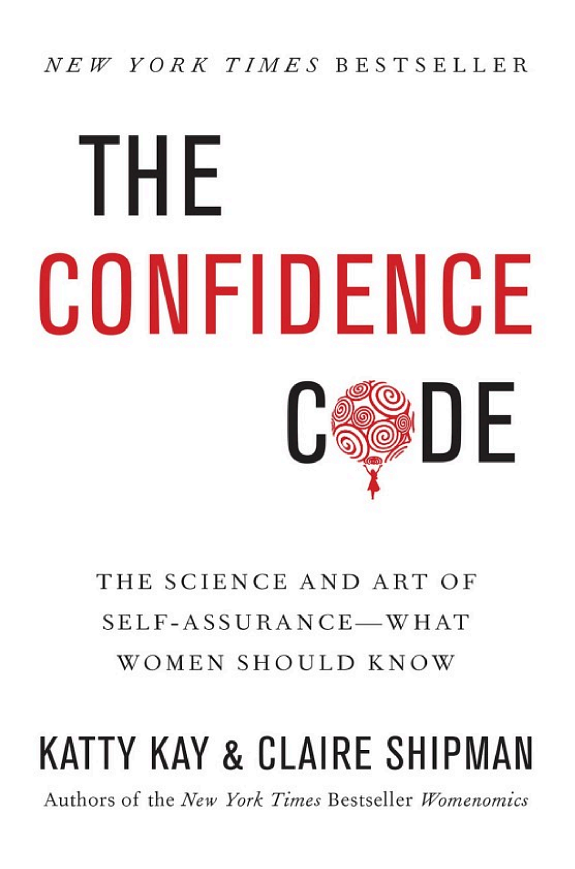
The Confidence Code: The Science and Art of Self-Assurance—What Women Should Know
2. The Confidence Code: The Science and Art of Self-Assurance What Women Should Know by Katty Kay and Claire Shipman
Katty Kay and Claire Shipman are two journalists who, despite impressive careers, found themselves wrestling with self-doubt in ways their male colleagues did not seem to. That observation became the seed of this book, which digs into the research on why confidence gaps exist, particularly for women, and what can actually be done about them.
The science here is genuinely interesting. They explore genetics, brain chemistry, and behavioral research without turning the book into a textbook. There are interviews with psychologists, athletes, and executives, and the authors are refreshingly candid about their own insecurities. It never feels like a lecture. It feels like a long, honest conversation with two people who have thought carefully about something that matters.
One of the book’s most useful arguments is that confidence is not the same as competence, and that many women conflate the two. The tendency to over-prepare, to wait until you are absolutely certain before speaking up, to attribute success to luck rather than ability, these patterns have real costs. The book names them clearly and offers a way to start interrupting them.
Readers who are skeptical of gender-based generalizations may find some of the framing frustrating, and a few of the studies cited have faced scrutiny since publication. Men will also find value here, though the book is written for women.
“Confidence is not some fixed asset that you either have or you don’t. It grows with action, with risk, with the willingness to fail and keep going anyway.”
This is perfect for women who feel chronically under-confident at work despite strong performance reviews, or anyone curious about the research behind why self-assurance can be so stubbornly elusive.
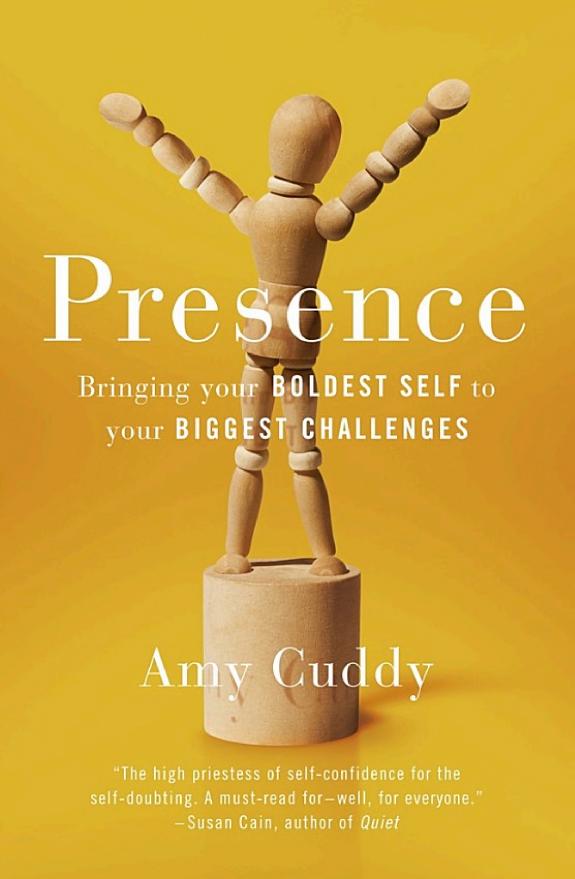
Presence: Bringing Your Boldest Self to Your Biggest Challenges
3. Presence: Bringing Your Boldest Self to Your Biggest Challenges by Amy Cuddy
Amy Cuddy’s TED Talk on body language became one of the most watched in the history of the platform, and this book is the fuller version of that conversation. But Presence is not really about power poses, despite what the headlines suggested. It is about the gap between who you are and who you feel like when the stakes are high, and how to close it.
Cuddy is a social psychologist at Harvard, and she brings genuine research to the table. But she also brings her own story, including a serious brain injury in her early twenties that made her doubt whether she would ever recover her intellectual abilities. That personal thread runs through the book and gives it a weight that pure self-help rarely achieves. She is not telling you to fake it until you make it. She is telling you to connect with what is actually true about yourself until you believe it.
The concept of presence she describes is about being fully in the moment during high-pressure situations, not performing confidence but actually accessing it. The practical techniques she offers are grounded in research on how the body and mind influence each other, and they are specific enough to be genuinely useful before a job interview, a difficult conversation, or a presentation you have been dreading.
Some of the research Cuddy cites, particularly around hormonal changes from posture, has been challenged in subsequent studies, and it is worth knowing that going in. The core ideas about presence and authenticity hold up well, even where the physiology is contested.
“Presence is not about pretending to feel confident. It is about stopping the internal noise long enough to actually show up as yourself.”
This is perfect for anyone who tends to freeze or shrink during high-stakes moments at work and wants both the science and the practical tools to stay grounded under pressure.

Daring Greatly: How the Courage to Be Vulnerable Transforms the Way We Live, Love, Parent, and Lead
4. Daring Greatly: How the Courage to Be Vulnerable Transforms the Way We Live, Love, Parent, and Lead by Brené Brown
Brené Brown has been studying shame and vulnerability for decades, and Daring Greatly is probably her most complete argument for why letting yourself be seen, really seen, is not weakness but the foundation of meaningful work and leadership. The title comes from a Theodore Roosevelt quote about the person in the arena, and that framing captures the spirit of the book well.
Brown’s writing is conversational and story-driven. She is good at taking abstract concepts like shame and vulnerability and making them feel immediate and recognizable. The workplace chapters are particularly sharp. She talks about how organizations create cultures of scarcity, where people are never enough, and how that environment breeds disengagement, blame, and exactly the kind of defensive behavior that kills collaboration.
The confidence connection here is less about assertiveness and more about the willingness to take risks, share ideas, ask for help, or admit uncertainty without collapsing under the weight of other people’s judgment. For many readers, that reframe is genuinely useful. It shifts the question from how do I appear more confident to what am I actually afraid of, which tends to be the more honest question anyway.
If you prefer data-heavy, strategy-focused books, Brown’s narrative style and emphasis on emotional experience may not be your thing. The book also covers parenting and relationships alongside work, so it is broader in scope than the others on this list.
“Vulnerability is not winning or losing. It is having the courage to show up when you cannot control the outcome.”
This is perfect for people whose lack of confidence at work is rooted in fear of judgment or failure, and who want to understand the emotional landscape underneath their professional anxiety.
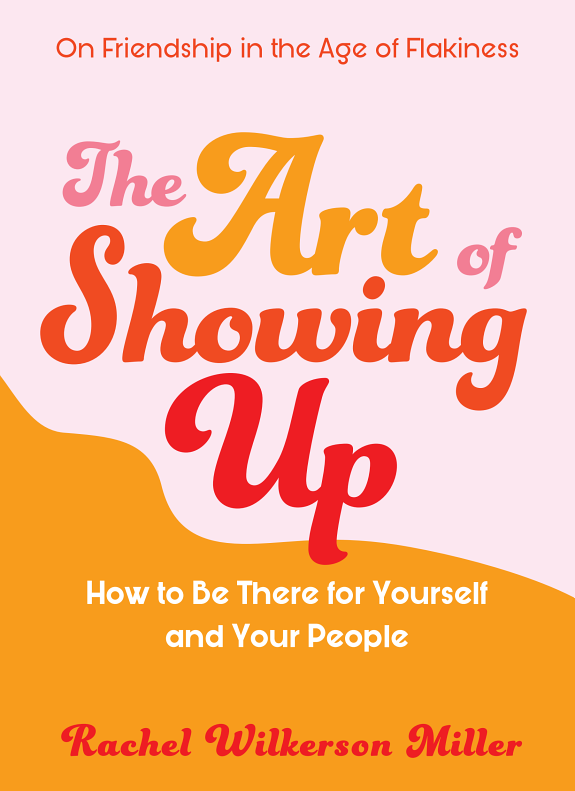
The Art of Showing Up: How to Be There for Yourself and Your People
5. The Art of Showing Up: How to Be There for Yourself and Your People by Rachel Wilkerson Miller
This one might surprise you on a list about workplace confidence, but stick with it. Rachel Wilkerson Miller’s book is about the practice of showing up, for yourself and for the people around you, and that practice turns out to be deeply connected to how grounded and capable we feel in professional settings. You cannot project confidence at work if you are running on empty and have no idea what you actually need.
Miller’s writing is accessible and warm without being saccharine. She covers self-care without making it feel like a luxury, and she is honest about how hard it can be to show up consistently, especially when you are dealing with your own struggles. The book is organized around different types of relationships and situations, and the workplace context appears throughout, particularly in discussions about boundaries, communication, and knowing when to ask for support.
What makes this book valuable in this context is its focus on the internal work that makes external confidence possible. A lot of books about confidence focus on behavior, how to speak, how to stand, how to ask for a raise. This one focuses on the foundation beneath that behavior, whether you actually know yourself, trust yourself, and treat yourself with enough respect to advocate for your own needs.
Readers looking for tactical career advice will not find it here. This is not a book about negotiating salaries or navigating office politics. It is quieter than that, and some people will find it too soft for what they are looking for.
“Showing up for yourself is not a reward you earn after you have sorted everything out. It is the practice that makes sorting things out possible.”
This is perfect for people who feel depleted and disconnected at work and suspect that the confidence problem is actually a self-knowledge problem, one that starts long before they walk into the office.
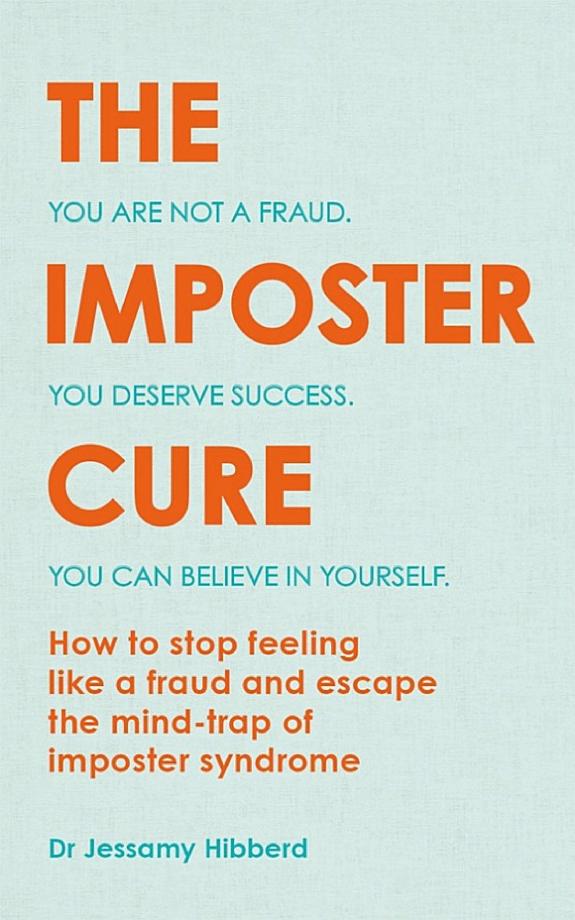
The Imposter Cure: How to Stop Feeling Like a Fraud and Escape the Mind-Trap of Imposter Syndrome
6. The Imposter Cure: How to Stop Feeling Like a Fraud and Escape the Mind-Trap of Imposter Syndrome by Dr. Jessamy Hibberd
If you have ever sat in a meeting thinking everyone else belongs there except you, or deflected a compliment because you were certain the other person had not seen enough of your work yet, this book was written for you. Dr. Jessamy Hibberd is a clinical psychologist, and she approaches imposter syndrome not as a quirky personality trait but as a genuine psychological pattern with identifiable causes and workable solutions.
The book is methodical without being dry. Hibberd explains how imposter syndrome develops, why it tends to persist even as people become more successful, and why achievement alone does not fix it. That last point is important. A lot of people assume that once they get the promotion or the credential or the praise, the feeling will go away. It rarely does, and understanding why is half the battle.
The practical exercises throughout the book are drawn from cognitive behavioral therapy, and they are specific enough to actually use. She asks you to examine the evidence for and against your beliefs about yourself, to notice the patterns in when imposter feelings spike, and to start building a more accurate internal narrative. It is not magic, and Hibberd does not pretend it is. But it is honest and grounded work.
People who have never experienced imposter syndrome will not get much from this one. It is also worth noting that the book covers the topic thoroughly rather than quickly, so if you want a fast read with a few punchy takeaways, you might find the pacing slow.
“Imposter syndrome does not mean you are a fraud. It means you have a thinking pattern that is working very hard to convince you that you are, despite all the evidence to the contrary.”
This is perfect for high achievers who chronically feel undeserving of their success and want a psychologically grounded approach to dismantling that belief rather than just pushing through it.
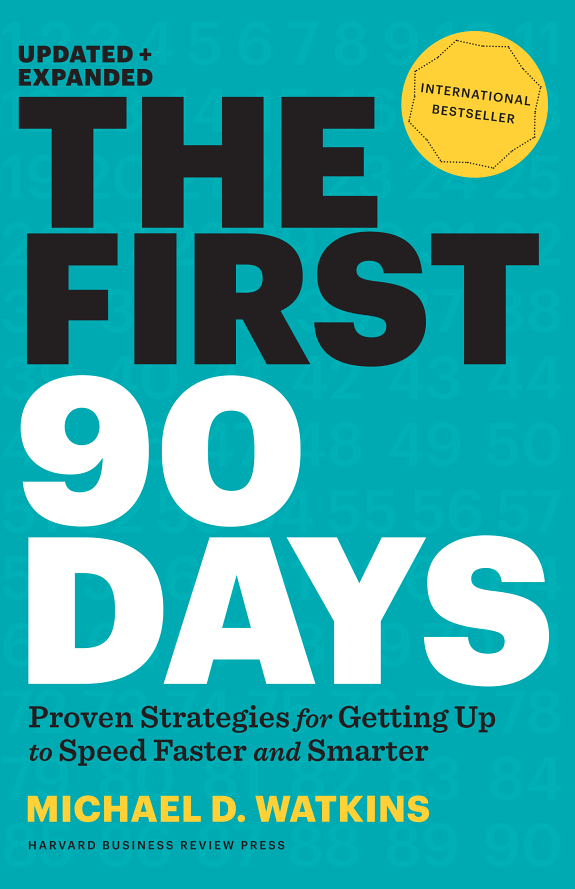
The First 90 Days: Proven Strategies for Getting Up to Speed Faster and Smarter
7. The First 90 Days: Proven Strategies for Getting Up to Speed Faster and Smarter by Michael D. Watkins
There are few moments more destabilizing to professional confidence than starting a new role. Everything you built in your last job, your reputation, your relationships, your sense of how things work, resets to zero. Michael Watkins wrote this book specifically for that transition period, and it has become something of a standard text in leadership development circles for good reason.
Watkins is a business school professor, and the book has the structured, strategic feel that implies. He breaks the first ninety days into clear phases with specific goals for each, covering how to learn a new organization, how to build relationships with key stakeholders, how to secure early wins, and how to avoid the most common mistakes new leaders make. It is thorough in a way that feels reassuring rather than overwhelming.
The confidence angle here is practical and direct. A lot of workplace insecurity comes from not knowing what you do not know, from walking into a new environment without a map. This book provides the map. It will not make you feel emotionally braver, but it will make you feel genuinely more prepared, and preparation is one of the most reliable paths to confidence that actually holds up under pressure.
This book is firmly aimed at managers and executives moving into new leadership positions. Individual contributors changing roles will find some useful ideas but will also wade through a fair amount of content that does not apply to them. It is also quite dense, so casual readers looking for something lighter should look elsewhere on this list.
“The biggest risk in a new role is not that you will fail to impress people. It is that you will act before you have understood enough to act well.”
This is perfect for managers and leaders stepping into new roles who want a clear, strategic framework for building credibility quickly and avoiding the early mistakes that undermine long-term confidence.
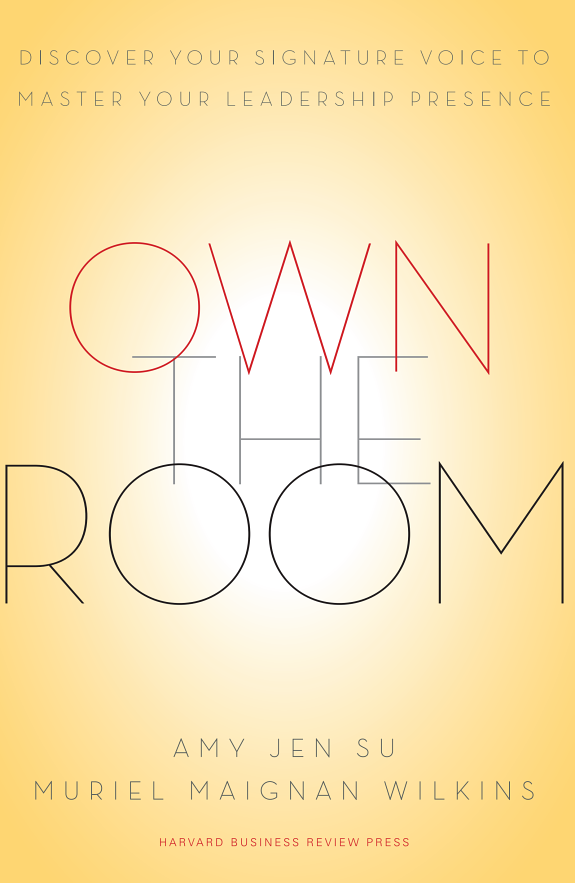
Own the Room: Discover Your Signature Voice to Master Your Leadership Presence
8. Own the Room: Discover Your Signature Voice to Master Your Leadership Presence by Amy Jen Su and Muriel Maignan Wilkins
Amy Jen Su and Muriel Maignan Wilkins are executive coaches, and this book reads like the distilled wisdom of thousands of hours spent helping leaders figure out why they are not landing the way they want to. The central idea is that leadership presence is not about adopting someone else’s style. It is about understanding your own voice and learning to use it with intention.
The book introduces six different leadership archetypes, not as boxes to put yourself in, but as a way of understanding the tendencies and blind spots that come with different styles. That framing is more nuanced than most books in this space, and it makes the advice feel tailored rather than generic. The authors are also refreshingly honest about the fact that presence is not just about how you come across in the room. It is about the clarity of your thinking, the quality of your relationships, and the alignment between your values and your actions.
The writing is clean and professional without being stiff. There are real client examples throughout, anonymized but specific enough to be useful. If you have ever been told you need to work on your executive presence without being given any useful guidance on what that actually means, this book fills that gap more effectively than almost anything else out there.
If you are early in your career and not yet thinking about leadership, this may feel premature. The book is also more focused on presence in formal settings, meetings, presentations, high-stakes conversations, than on everyday workplace confidence, so it is most useful for people who already have some professional experience to work with.
“Your signature voice is not something you invent. It is something you uncover. And when you find it, the room feels different, because you do.”
This is perfect for mid-career professionals and leaders who want to develop a more authentic and consistent presence at work, especially those who have been told their communication style needs work but have never been given a clear path forward.
Building confidence at work is rarely a straight line. You read something that clicks, try it out, get it wrong, try again, and slowly the gap between who you are and how you show up starts to close a little. These eight books will not do the work for you, but they will give you better tools, sharper language for what you are experiencing, and the reassuring knowledge that the struggle is far more common than it looks from the outside.
Start with whichever one speaks to where you actually are right now. If imposter syndrome is the loudest voice in the room, begin with Hibberd. If you are stepping into a new role, start with Watkins. If you cannot quite figure out what is holding you back, Brown or Cuddy might help you find the thread. There is no wrong entry point. The point is just to start.