

5 Books for Introverts Who Overthink Everything
If you have ever replayed a conversation from three years ago while trying to fall asleep, congratulations, you have found your people. Overthinking is practically a hobby for many introverts, and while the rest of the world seems to move fast and loud, some of us are still quietly dissecting the meaning behind a two-word text message we received on a Tuesday afternoon in 2019.
The good news is that a lot of genuinely useful books exist for exactly this kind of mind. Not the relentlessly cheerful self-help variety that tells you to just breathe and think positive thoughts, but the kind written by researchers, therapists, and thinkers who actually understand what it feels like to have a brain that never quite shuts up. The five books below cover everything from the neuroscience of anxiety to the quiet strengths that introverts bring to a world that rarely stops to listen. Whether you are looking to understand yourself better, calm the mental noise, or simply feel less alone in how you experience things, there is something here worth sitting with.
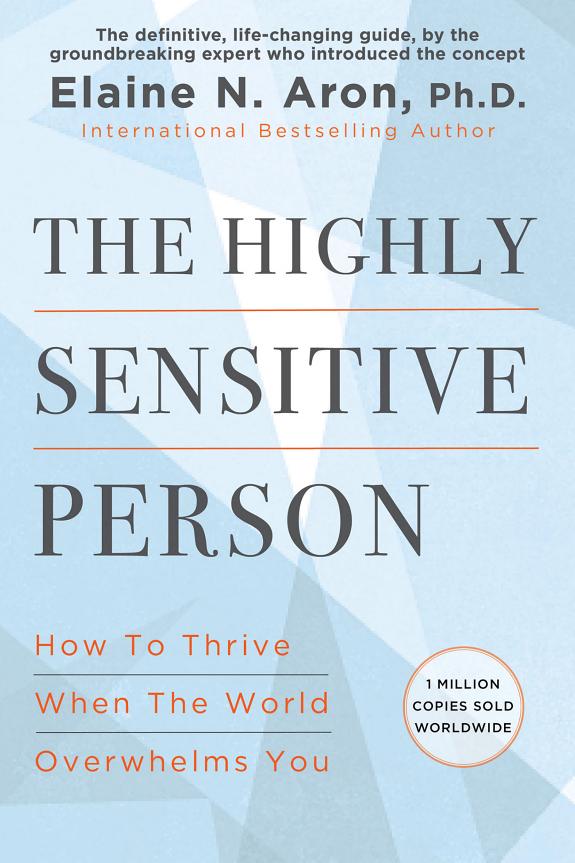
The Highly Sensitive Person
1. The Highly Sensitive Person by Elaine N. Aron
Elaine Aron is a psychologist who has spent decades researching a trait she calls high sensitivity, and this book is essentially the foundational text for anyone who has ever been told they are “too sensitive” as if that were a character flaw rather than a neurological reality. Aron writes with warmth and clinical precision at the same time, which is a rare combination. She does not talk down to her readers, and she does not catastrophize the experience of being a highly sensitive person either. What she does is explain, clearly and with genuine empathy, why some people process the world more deeply than others.
The central idea is that roughly fifteen to twenty percent of the population has a nervous system that picks up on subtleties others miss, processes information more thoroughly, and gets overstimulated more easily. Aron connects this to overthinking in a way that actually makes sense rather than just labeling it as anxiety or introversion. She covers relationships, work, childhood experiences, and the particular exhaustion that comes from living in a culture that rewards boldness and speed. There are self-assessment tools throughout, which some readers will find genuinely useful and others will find a bit clinical, depending on their taste.
The writing style is accessible without being dumbed down. Aron draws on real case studies and her own research, which gives the book a grounded quality. It does not feel like she is selling you an identity so much as offering a framework that might finally explain why crowded parties feel like a sensory assault and why you need a full day of solitude after a week of social obligations. That said, if you are someone who prefers hard data and peer-reviewed citations over narrative and personal testimony, you may find yourself wanting more rigor in places.
Understanding why your brain works the way it does is not the same as fixing it. Sometimes it just means you can stop fighting yourself quite so hard.
This is perfect for people who have long suspected their sensitivity is an actual trait rather than a weakness, and who want a thoughtful, research-informed explanation of what that means for their daily life and relationships.
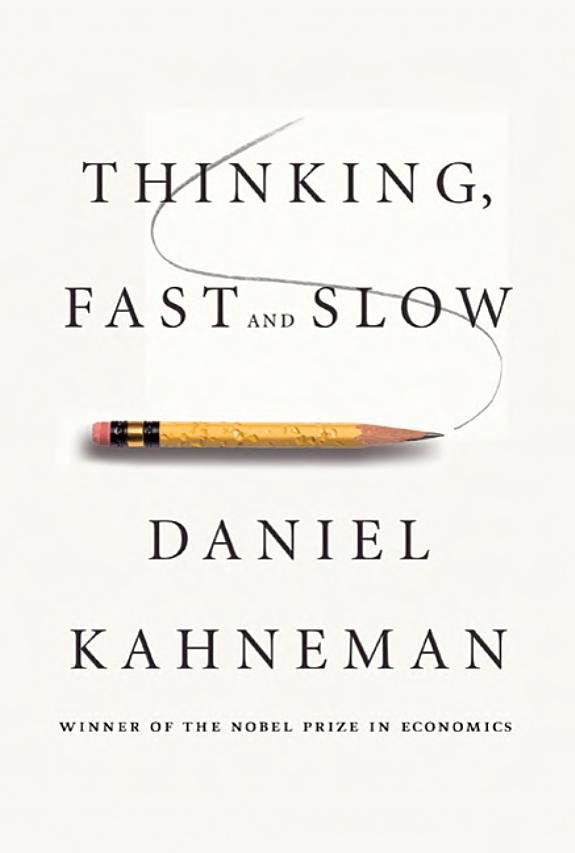
Thinking, Fast and Slow
2. Thinking, Fast and Slow by Daniel Kahneman
Daniel Kahneman is a Nobel Prize-winning psychologist, and this book is his attempt to explain the two systems the brain uses to process information. System One is fast, automatic, and largely unconscious. System Two is slow, deliberate, and effortful. If you are an overthinker, you are probably on intimate terms with System Two, the part of your brain that wants to analyze every possible outcome before making even a minor decision. Kahneman does not write this as a self-help book. It is closer to popular science, and it is genuinely fascinating.
What makes this relevant for introverts who overthink is not that Kahneman is writing about them specifically, but that he is explaining the machinery behind the kind of thinking they do most. He covers cognitive biases, the errors both systems make, and the ways our confidence in our own reasoning is frequently misplaced. For someone who spends a lot of mental energy second-guessing themselves, reading about the actual mechanics of human judgment can be both humbling and oddly reassuring. At least now you know why your brain does what it does.
The book is long. That is worth saying plainly. It runs to nearly five hundred pages, and some sections are denser than others. Kahneman is a careful writer but not always a breezy one, and a few chapters in the middle could have been shorter without losing much. Readers who want a quick practical guide to calming their thoughts will find this a strange fit. But readers who genuinely want to understand how thinking works, including why overthinking happens and what it costs, will find it one of the most rewarding reads of their life. It is the kind of book you find yourself quoting at dinner parties, assuming you go to dinner parties, which, if you are reading this list, you probably do not.
Knowing that your brain is prone to certain errors does not make you immune to them. But it does give you a fighting chance of catching yourself in the act.
This is perfect for intellectually curious introverts who want to understand the science behind their own thought patterns and are happy to commit to a substantial, research-heavy read.
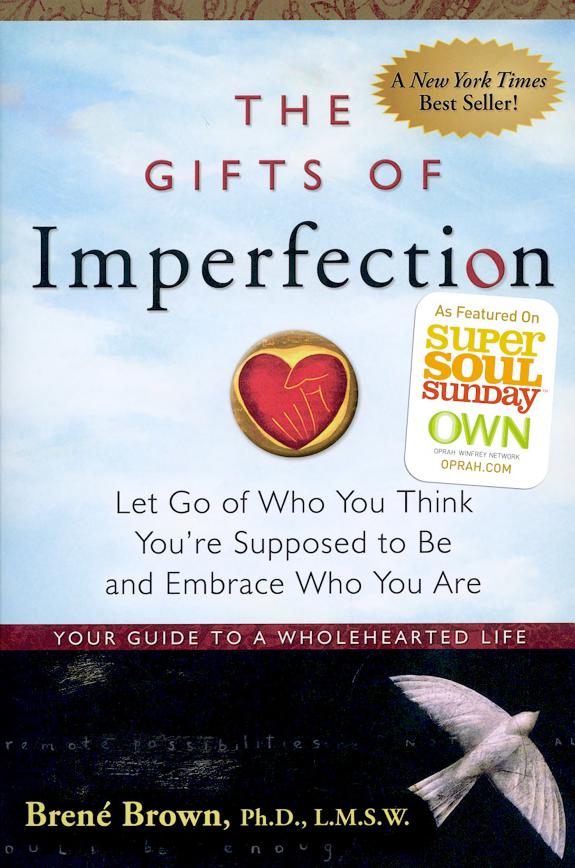
The Gifts of Imperfection
3. The Gifts of Imperfection by Brené Brown
Brené Brown is a researcher who studies shame and vulnerability, and this book is her argument that wholehearted living requires letting go of who you think you should be and embracing who you actually are. For overthinkers, that premise lands somewhere between deeply appealing and mildly terrifying. Brown writes in a conversational, personal style that feels like talking to a very honest friend who also happens to have a PhD and has done a lot of fieldwork on human suffering. She is warm but not saccharine, and she does not pretend that self-acceptance is easy or that it happens once and then you are done.
The book is structured around ten guideposts, each focused on a specific practice, things like cultivating authenticity, letting go of perfectionism, and developing a resilient spirit. For overthinkers, the chapters on perfectionism and numbing are particularly worth reading slowly. Brown makes a clear and useful distinction between healthy striving and perfectionism, and she explains why perfectionism is not about high standards but about fear. That reframe alone is worth the price of the book for a lot of readers.
Where some readers may find friction is in Brown’s heavy reliance on personal anecdote and her tendency toward a certain kind of earnest, motivational language that can tip into territory that feels a little too much like a workshop handout. If you are the sort of reader who prefers a more detached, analytical voice, her style may occasionally grate. And the book does not engage deeply with the neuroscience or psychology research behind its claims, so if you want citations and data, you will need to look elsewhere. But for what it is, which is a genuinely compassionate guide to quieting the inner critic, it does its job well.
Perfectionism is not the same as trying to do your best. It is the belief that if you look perfect and do everything perfectly, you can avoid the pain of blame, judgment, and shame. It never works.
This is perfect for introverts who overthink because of perfectionism or fear of judgment, and who are ready for a warm, accessible read that challenges them to be gentler with themselves.
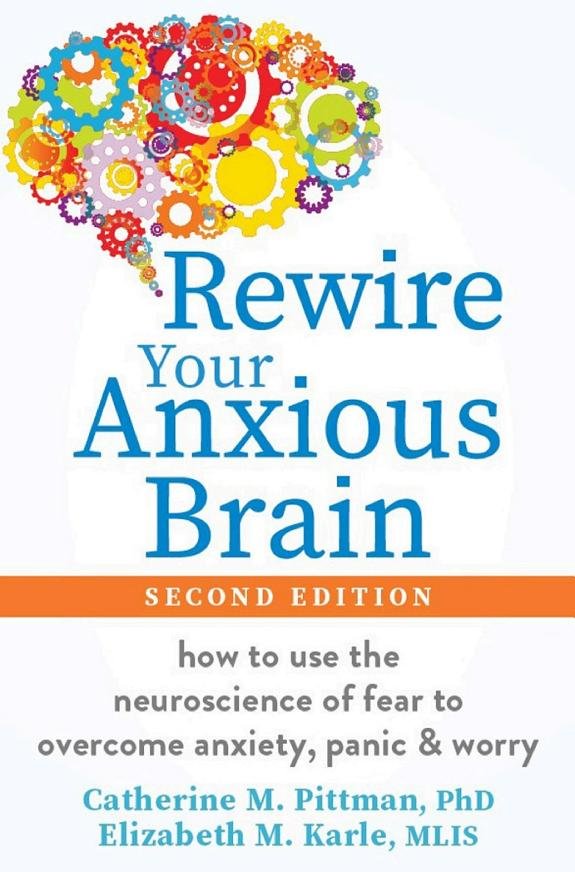
Rewire Your Anxious Brain
4. Rewire Your Anxious Brain by Catherine M. Pittman and Elizabeth M. Karle
Catherine Pittman is a clinical psychologist and professor, and Elizabeth Karle is a librarian and patient who worked with Pittman on her anxiety. That collaboration gives this book an interesting dual perspective, part clinical explanation, part lived experience. The central aim is to explain how anxiety is generated in the brain and to offer practical, neuroscience-based strategies for reducing it. For overthinkers who have tried meditation apps and breathing exercises and found them helpful but incomplete, this book offers something more structural.
The key distinction Pittman and Karle make is between two different anxiety pathways in the brain: the amygdala, which produces fast, automatic fear responses, and the cortex, which produces the slower, thought-driven anxiety that overthinkers know so well. This matters because the strategies that work for one pathway are different from the strategies that work for the other. Understanding which kind of anxiety you are dealing with at any given moment is genuinely useful, and the book does a good job of making that distinction clear without requiring a neuroscience background to follow along.
The writing is clear and practical rather than literary. This is not a book you read for the prose. It is a book you read because you want to understand your own nervous system and do something about it, and on that front it delivers. Some readers may find the tone a little clinical and wish for more warmth or narrative texture. And while the strategies offered are evidence-based, the book does not replace therapy for people dealing with serious anxiety disorders. But as a companion text to therapy, or as an entry point for someone trying to understand why their brain keeps spiraling, it is among the more honest and useful options available.
Anxiety is not a character flaw. It is a brain process. And brain processes can be understood, worked with, and over time, changed.
This is perfect for introverts whose overthinking tips into anxiety and who want a clear, science-based explanation of what is happening in their brain along with concrete strategies for addressing it.
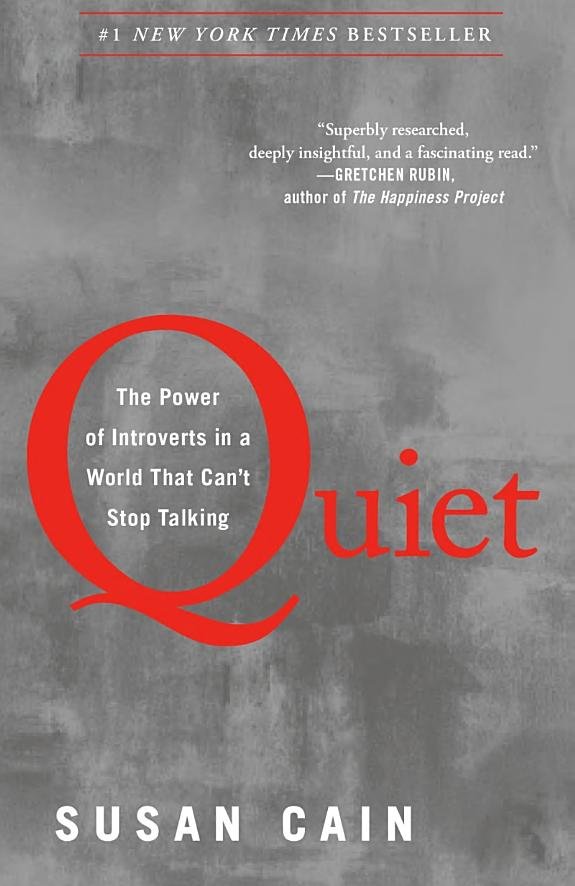
Quiet: The Power of Introverts in a World That Can’t Stop Talking
5. Quiet: The Power of Introverts in a World That Can’t Stop Talking by Susan Cain
Susan Cain spent years as a lawyer and negotiator before writing this book, and that background shows. She builds her argument carefully, drawing on psychology research, historical examples, and interviews with scientists, executives, and artists. The central thesis is that Western culture, particularly American culture, has developed what she calls an Extrovert Ideal, a set of assumptions that prizes sociability, assertiveness, and constant stimulation over reflection, depth, and quiet. Introverts, she argues, have been systematically undervalued as a result, and that is a loss for everyone.
What sets this book apart from the many introvert-positive books that followed it is the quality of the research and the nuance of the argument. Cain does not simply say introverts are great and extroverts are overrated. She explores the genuine strengths and limitations of both orientations, looks at how introversion and extroversion interact with culture and upbringing, and examines the specific contexts where introverts tend to thrive or struggle. For overthinkers, the sections on solitude, deep focus, and the relationship between introversion and sensitivity are particularly resonant.
The book is also simply a pleasure to read. Cain is a skilled writer who knows how to make research feel alive without distorting it, and her own voice comes through clearly without overwhelming the material. The one caveat worth noting is that the book leans heavily on American and Western contexts, so readers from other cultural backgrounds may find some of the cultural analysis less directly applicable. And if you are already deeply familiar with introversion research, parts of the book may cover familiar ground. But for most readers, especially those who have spent years wondering why they find the world exhausting in ways others do not seem to, this book offers something that feels genuinely validating without being self-congratulatory.
There is no such thing as a pure introvert or a pure extrovert. Such a person would be in a lunatic asylum, as Carl Jung once noted. But where you fall on the spectrum shapes your world in ways worth understanding.
This is perfect for introverts who want a well-researched, beautifully written exploration of what introversion actually means and why the world needs people who think deeply before they speak.
None of these books will rewire your brain overnight or turn you into someone who enjoys small talk. But they do something arguably more useful: they help you understand the mind you actually have, rather than the one you have been told you should want. Whether you come away with a new framework for your sensitivity, a clearer picture of how your thinking goes wrong, or simply the relief of feeling seen on the page, that is worth something real.
The best reading for overthinkers is probably the kind that slows you down rather than speeds you up. These five books reward patience and reflection, which, as it turns out, are two things overthinkers tend to be very good at when they are not busy worrying about whether they are doing it right.