
6 Books for People Who Feel Everyone’s Emotions
You leave a party exhausted even though you barely talked to anyone. A friend vents about their bad day and somehow, an hour later, it is your bad day too. You cry at commercials, feel uneasy in hospitals, and have been told more times than you can count that you are “too sensitive.” If any of that sounds familiar, you are probably not broken. You might just be someone who absorbs the emotional world around you like a sponge left out in the rain.
There is a growing body of writing dedicated to exactly this experience, ranging from clinical psychology to spiritual memoir to practical workbooks. Some of it is wonderfully grounded. Some of it leans heavily into crystals and energy fields, which is either your thing or it is not. The six books below cover a fair range of that spectrum, and for each one, we will be honest about who it will genuinely help and who might want to look elsewhere. Because the last thing a person who already absorbs too much needs is a book that drains them further.
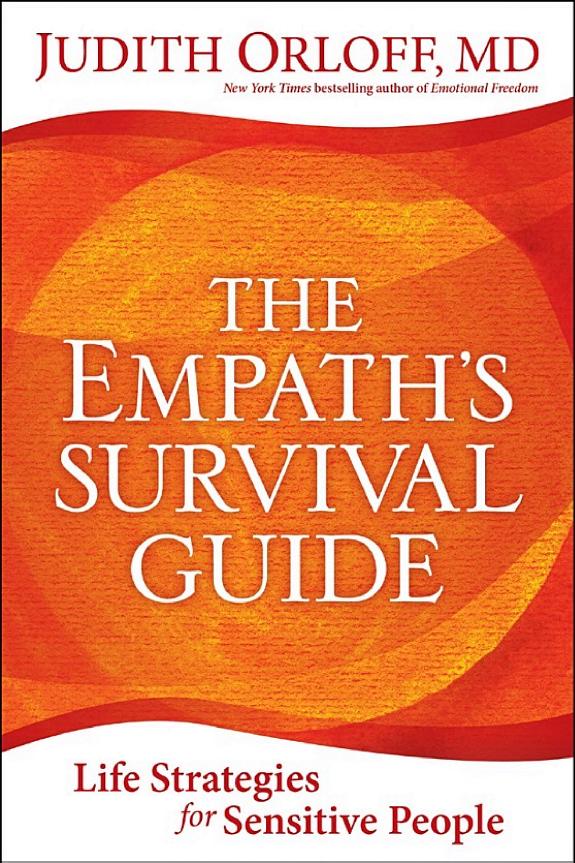
The Empath’s Survival Guide: Life Strategies for Sensitive People
1. The Empath’s Survival Guide: Life Strategies for Sensitive People by Judith Orloff
Judith Orloff is a psychiatrist who identifies as an empath herself, which gives this book a slightly unusual quality. It sits at the crossroads of clinical training and personal experience, and Orloff seems genuinely comfortable in both territories. She writes with warmth and without condescension, which matters a great deal when the subject is something as easily dismissed as emotional sensitivity. The book does not treat you as a problem to be fixed. It treats you as someone with a particular kind of wiring who deserves practical tools.
The central argument is straightforward: empaths are not simply shy or anxious people. They are wired to take in more sensory and emotional data than most, and without conscious strategies, that wiring leads to exhaustion, boundary collapse, and chronic overwhelm. Orloff walks through different empath types, discusses relationships with narcissists, and offers concrete techniques for shielding yourself without shutting down entirely. Some of the techniques are grounded in psychology. Others borrow from meditation and energy practices, so readers who are strictly secular may find certain passages a bit floaty.
The writing is accessible without being dumbed down. Orloff includes case studies from her psychiatric practice, which adds texture and keeps the book from feeling like a self-help pamphlet. She is also refreshingly honest that being an empath has genuine gifts alongside the difficulties, and she does not spend the whole book treating sensitivity as a wound to be managed.
“Orloff makes a compelling case that the exhaustion so many sensitive people feel is not a character flaw. It is a predictable result of absorbing more than anyone told you how to process.”
This is perfect for empaths who want a blend of psychological framework and practical daily strategies, especially those who are open to some spiritual language alongside the science.
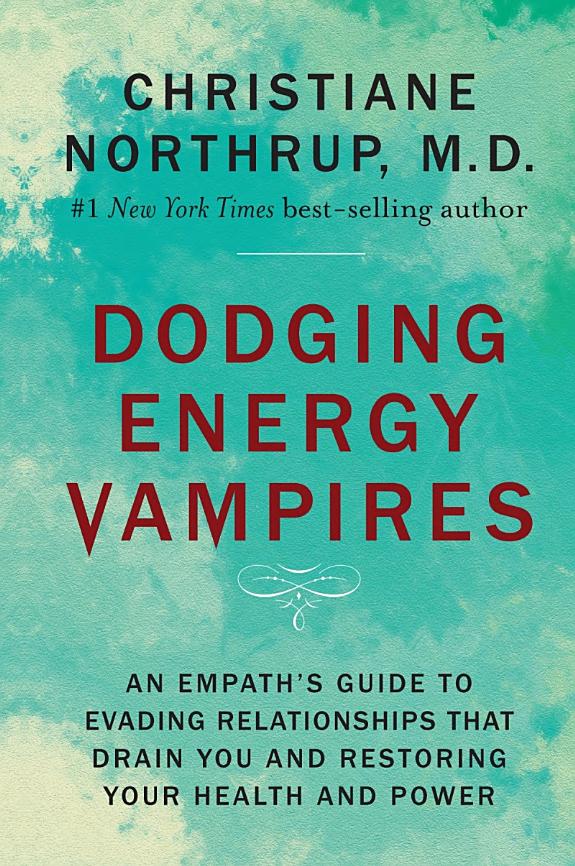
Dodging Energy Vampires: An Empath’s Guide to Evading Relationships That Drain You and Restoring Your Health and Power
2. Dodging Energy Vampires: An Empath’s Guide to Evading Relationships That Drain You and Restoring Your Health and Power by Christiane Northrup
The title is doing a lot of work here, and Christiane Northrup leans fully into the metaphor. This is a book about recognizing the people in your life who consistently leave you feeling hollowed out, and it is written with a kind of righteous energy that some readers will find validating and others may find a little intense. Northrup is a physician and bestselling author, and she brings genuine medical knowledge to the table, particularly around how chronic emotional stress affects physical health. That grounding is one of the book’s real strengths.
The core idea is that empaths, because of their natural tendency to feel deeply and give generously, are particularly attractive to people with narcissistic or manipulative tendencies. Northrup calls these people energy vampires, and she is not subtle about it. She walks through the patterns these relationships follow, the ways empaths rationalize staying in them, and the physical toll that prolonged exposure takes. There is real value in having these patterns named clearly, especially for people who have spent years wondering why certain relationships always leave them feeling worse, not better.
Where the book gets complicated is in its broader worldview. Northrup includes material on topics well outside mainstream medicine, and readers who prefer their health advice tightly evidence-based may find themselves raising an eyebrow more than once. This is not a book for skeptics, and that is worth knowing going in. But for readers who are already comfortable with a more holistic framework, the relationship dynamics she describes are genuinely insightful and often uncomfortably accurate.
“Northrup is at her best when she is simply naming the patterns. The moment you recognize your own relationship history in her descriptions, the book earns its place on your shelf.”
This is perfect for empaths who suspect they keep attracting the same type of draining person and want a framework, however unconventional, for understanding why and how to stop.
Sensitive Is the New Strong: The Power of Empaths in an Increasingly Harsh World
3. Sensitive Is the New Strong: The Power of Empaths in an Increasingly Harsh World by Anita Moorjani
Anita Moorjani is best known for her previous book about a near-death experience, and she brings that spiritual foundation directly into this one. If you are not already familiar with her work, it is worth knowing upfront that this is a deeply spiritually oriented book. It is not trying to be anything else, and that clarity is actually one of its virtues. Moorjani writes with genuine conviction and a kind of fearless openness that makes the book feel intimate rather than preachy.
The central reframe she offers is a significant one. Rather than treating sensitivity as a liability to be managed, Moorjani argues it is a capacity to be celebrated and eventually wielded. She draws on her own history of people-pleasing, illness, and eventual spiritual awakening to make the case that empaths who are always shrinking themselves to accommodate others are not just unhappy, they are operating against their own nature. The book is part memoir, part manifesto, and it has a warmth that is hard to resist even when the metaphysics get elaborate.
That said, this is probably the most spiritually specific book on this list. Readers who are not drawn to discussions of the soul, universal energy, or spiritual purpose will find large sections of the book difficult to connect with. It is also lighter on practical tools than some of the other titles here, leaning more toward perspective shift than step-by-step strategy. For the right reader, that is exactly what they need. For someone in crisis looking for concrete techniques, it may feel a little like being handed a poem when you asked for a map.
“Moorjani’s gift is making you feel, at least for the length of a chapter, that your sensitivity is not a burden you were handed but a language you were born speaking.”
This is perfect for empaths who are already spiritually inclined and want a book that helps them see their sensitivity as a source of strength rather than a source of suffering.
Thriving as an Empath: 365 Days of Self-Care for Sensitive People
4. Thriving as an Empath: 365 Days of Self-Care for Sensitive People by Judith Orloff
Judith Orloff returns here with a very different kind of book. Where the Survival Guide is a cover-to-cover read, this one is structured as a daily companion, offering a short reflection, practice, or meditation for each day of the year. It is the kind of book you keep on a nightstand rather than a bookshelf, and it works best if you actually use it that way rather than reading it straight through in a weekend, which, yes, some of us are tempted to do.
The daily format suits the subject matter well. One of the recurring themes in writing about emotional sensitivity is that managing it is not a one-time fix but an ongoing practice. A single insight, however good, does not rewire a lifetime of absorbing other people’s feelings. The repetition built into this format is part of the point. Orloff covers breathwork, journaling prompts, boundary-setting reminders, meditations, and gentle reframes, and she keeps each entry short enough that even on a difficult day, engaging with it feels doable rather than like homework.
The book is not designed to replace the Survival Guide. It assumes some familiarity with the concepts Orloff covers in her longer work, so readers who are completely new to the topic might want to start there. As a daily maintenance tool for someone already doing the work, though, it is genuinely useful. Think of it less as a book and more as a very patient, very brief daily check-in with someone who actually understands what your days feel like.
“A daily practice book only works if you actually return to it. Orloff writes each entry with enough warmth that returning to it feels less like discipline and more like habit.”
This is perfect for empaths who already have some self-awareness about their sensitivity and want a structured, low-pressure daily practice to help them sustain that awareness over time.
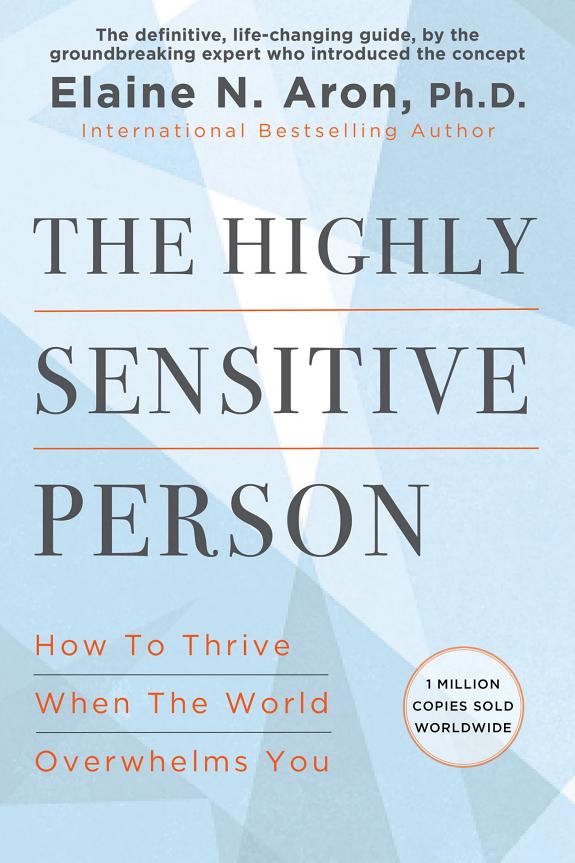
The Highly Sensitive Person: How to Thrive When the World Overwhelms You
5. The Highly Sensitive Person: How to Thrive When the World Overwhelms You by Elaine N. Aron
Elaine Aron is the psychologist who coined the term “highly sensitive person” in the 1990s, and this is the book that started it all. It is worth noting that Aron’s framework is distinct from the empath concept used by Orloff and others. High sensitivity, in Aron’s research, refers to a nervous system trait characterized by deeper processing of sensory and emotional information. It is empirically studied, measurable, and found in roughly fifteen to twenty percent of the population. For readers who want their self-understanding grounded in peer-reviewed research rather than spiritual frameworks, this is almost certainly the place to start.
The book covers the origins of the trait, its relationship to introversion (they overlap but are not the same thing, Aron is careful to point out), how it shows up in childhood, relationships, and work, and how highly sensitive people can build lives that work with their nature rather than against it. Aron writes clearly and with obvious care for her subject. She spent years studying this trait partly because she recognized it in herself, and that personal stake gives the writing a quality of attention that pure academic writing sometimes lacks.
The tone is more measured and clinical than the other books on this list, which is either a feature or a drawback depending on what you are looking for. It does not have the confessional warmth of Moorjani or the urgent practicality of Orloff. Some sections, particularly the earlier chapters, can feel a little dense. But the research foundation here is solid in a way that gives the self-recognition it offers a particular kind of weight. When Aron describes the trait, you are not just nodding along to a relatable anecdote. You are reading about something that has been studied, documented, and confirmed across cultures.
“There is something quietly settling about reading a book that treats your experience not as a spiritual category or a personality quirk but as a documented, researched aspect of human neurology.”
This is perfect for empaths and sensitive people who want a research-backed framework for understanding themselves, particularly those who are skeptical of more spiritually oriented approaches.
The Empowered Empath: A Simple Guide on Setting Boundaries, Controlling Your Emotions, and Making Life Easier
6. The Empowered Empath: A Simple Guide on Setting Boundaries, Controlling Your Emotions, and Making Life Easier by Sylvia Edwards
Sylvia Edwards takes a no-frills approach that stands out a bit in a genre that tends toward the lyrical and expansive. This is a practical book, clearly written, without a great deal of spiritual scaffolding or extended personal narrative. If you have read a few of the other titles on this list and found yourself thinking, “Yes, but what do I actually do on Tuesday morning when my coworker starts crying in the break room,” this book is probably the most direct answer available.
Edwards covers the basics of what empathy overload looks like, how it differs from simple introversion, and then moves quickly into strategies. Boundary-setting gets substantial attention, which is appropriate because it is where most empaths struggle most. She addresses the guilt that often accompanies boundary-setting for sensitive people, the difference between empathy and responsibility, and the specific language and habits that help create sustainable limits without requiring you to become a colder person. The emotional regulation material is similarly practical, drawing on approaches that will be familiar to anyone with a background in cognitive behavioral therapy.
The book is shorter and less dense than some of the others here, which some readers will appreciate and others may find a little thin. Edwards is not breaking new theoretical ground. What she is doing is synthesizing useful ideas and presenting them accessibly, and there is genuine value in that. It is the kind of book you can read in an afternoon and come away from with three or four things you can actually try this week. For someone in the middle of a difficult situation, that immediacy is worth a lot.
“Edwards skips the preamble and goes straight to the work, which is exactly what some people need after spending years reading books that beautifully describe the problem without quite solving it.”
This is perfect for empaths who are past the stage of needing to understand themselves and are ready for concrete, actionable tools to manage their sensitivity in daily life.
If you have read this far, you probably already know that being someone who absorbs the emotional world around you is not always comfortable. But it is also not something to be cured. The books on this list, taken together, make a pretty strong case that sensitivity handled well is a genuinely useful quality, both for the people who have it and for the people around them. The challenge is the “handled well” part, and that is what most of these books are trying to help with.
Not every book here will be right for every reader, and that is fine. If you are drawn to the research-backed end of the spectrum, start with Aron. If you want warmth and daily structure, Orloff’s daily companion is hard to beat. If you need something practical and fast, Edwards will get you there. The goal is not to read all six but to find the one or two that actually meet you where you are. Your reading list, like your emotional life, does not need to absorb everything at once.