5 Books for Women Who Feel Stuck in Life
There is a particular kind of frustration that comes from feeling stuck when nothing is technically wrong. The job is fine. The relationships are fine. Life, by most measures, looks fine. And yet something sits quietly underneath all of it, a restlessness you cannot quite name. If that sounds familiar, you are not alone, and you are not broken.
The books on this list were chosen because they speak to that specific feeling honestly. Not with hollow cheerleading, but with real reflection, personal honesty, and the kind of writing that makes you feel less strange for feeling the way you do. Some of these authors have been through serious upheaval. Others write from quieter, slower reckonings. All of them have something worth sitting with.
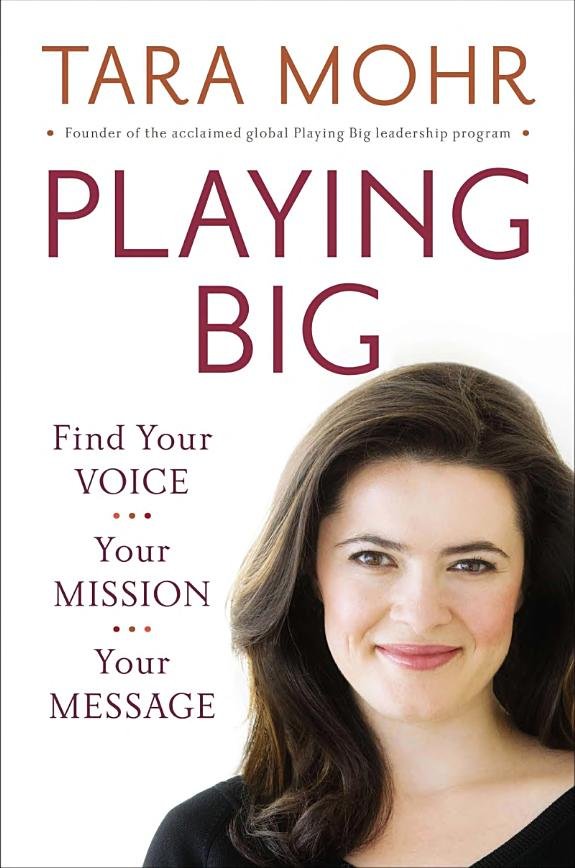
Playing Big
1. Playing Big by Tara Mohr
Tara Mohr is a women’s leadership coach, and this book grew out of the patterns she kept seeing in the women she worked with: smart, capable women who were consistently holding themselves back. Not because they lacked talent, but because they had internalized a particular kind of fear, what Mohr calls the inner critic, and had mistaken it for wisdom. Her writing is calm and precise, never preachy, and she backs her ideas with both research and genuine warmth.
The central idea is that “playing big” is not about ambition in the traditional sense. It is about acting from your own inner knowing rather than from fear of what others think. Mohr walks through practical concepts like “unhooking” from praise and criticism, identifying your calling, and learning to distinguish between fear that protects you and fear that simply keeps you small. It reads more like a thoughtful conversation than a self-help manual, which is a relief.
Where this book earns its place on the shelf is in its specificity. Mohr is not writing about women in general. She is writing about the very particular ways women are socialized to second-guess themselves, to over-qualify, to wait until they feel ready. Readers who have never noticed themselves doing these things might find it less revelatory. But for anyone who has ever rewritten an email six times before sending it, this book will feel uncomfortably accurate.
“Playing big” is not about being louder or more aggressive. It is about trusting yourself enough to stop waiting for permission.
This is perfect for women who feel capable but chronically hesitant, especially those in professional settings who suspect they are their own biggest obstacle.
The Gifts of Imperfection
2. The Gifts of Imperfection by Brené Brown
Brené Brown spent years as a shame researcher before she became a household name, and this book, one of her earlier ones, still holds up as her most quietly useful. The premise is straightforward: the things we tend to see as weaknesses, imperfection, vulnerability, uncertainty, are not obstacles to a wholehearted life. They are the actual ingredients of one. Brown writes with a lot of personal anecdote, including plenty of moments where she was clearly not practicing what she was researching, which makes her easy to trust.
The book is structured around ten guideposts for what Brown calls “wholehearted living,” things like cultivating gratitude, creativity, and rest, while letting go of perfectionism, comparison, and the need to be certain. None of these ideas are new on their own. What Brown does well is connect them to the underlying emotional mechanics, specifically shame and fear, in a way that makes the whole framework feel coherent rather than like a list of nice suggestions.
It is worth noting that Brown’s style is warm and conversational but also fairly repetitive. Readers who prefer lean, dense writing may find it slow. And if you have already read “Daring Greatly” or “Braving the Wilderness,” some of this will feel like familiar territory. But for someone encountering her work for the first time, this is a good place to start, and the chapter on rest alone is worth the price of the book. (We are all apparently terrible at resting. Brown has data.)
Perfectionism is not the same as trying to do your best. It is the belief that if you look perfect and do everything perfectly, you can avoid the pain of judgment.
This is perfect for women who are exhausted by their own standards and suspect that perfectionism might be part of why they feel so stuck.
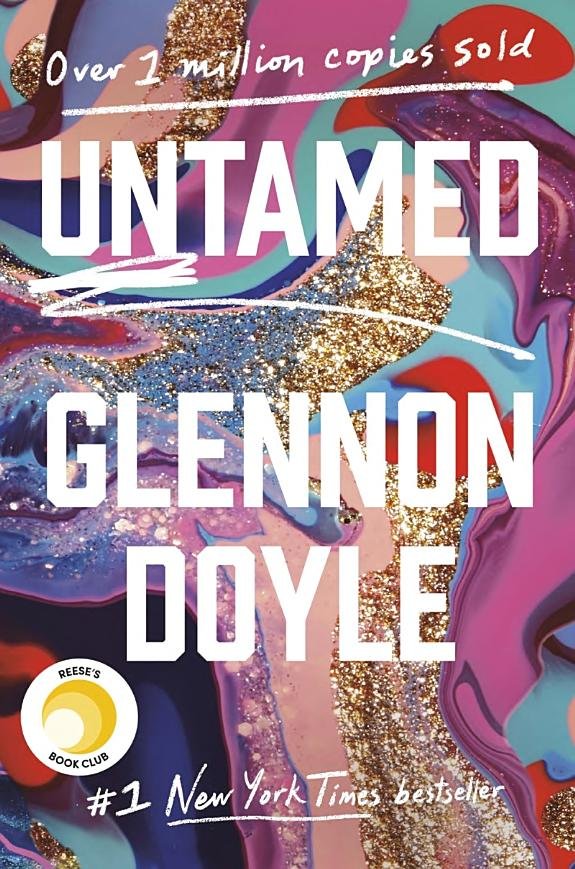
Untamed
3. Untamed by Glennon Doyle
Glennon Doyle’s memoir is not a gentle book. It is honest to the point of being uncomfortable at times, which is precisely what makes it worth reading. Doyle writes about dismantling the life she had built, a marriage, a public identity, a carefully maintained version of herself, after falling in love with soccer player Abby Wambach. But the book is less about that specific story and more about the broader question of what it costs women to keep performing the version of themselves that everyone else finds acceptable.
Her voice is sharp and funny and occasionally exhausting in the way that very intense people can be. She has a gift for the arresting sentence, the kind that makes you stop and stare at the wall for a moment. The central metaphor of the book, women as cheetahs who have been domesticated into something smaller and more manageable, is one she returns to throughout, and it lands differently depending on where you are in your own life. For some readers it will feel like a mirror. For others it might feel a bit overextended.
This book is not for everyone, and Doyle would probably be fine with that. Readers who are happy with their lives and not particularly interested in questioning the structures around them may find her intensity a bit much. It is also a very particular kind of story, rooted in her specific experiences with faith, addiction, and marriage, and those elements are woven throughout rather than set aside. But for a woman who has been quietly suffocating inside a life that looks right from the outside, this book has a way of cracking something open.
The truest, most beautiful life never promises to be an easy one. We need to let go of the life we planned so as to have the life that is waiting for us.
This is perfect for women at a genuine crossroads who are ready to question the stories they have been told about who they are supposed to be.
Present Over Perfect
4. Present Over Perfect by Shauna Niequist
Shauna Niequist writes about the slower, quieter version of feeling stuck: the kind that comes from being relentlessly busy. This memoir is about the years she spent saying yes to everything, performing productivity, and running herself into the ground in the name of a life that looked full but felt hollow. Her prose is warm and unhurried, and it reads like a letter from someone who has been exactly where you are and came out the other side with something real to say about it.
The book does not offer a system or a framework. There are no steps. What Niequist offers instead is a sustained reflection on what it felt like to choose presence over performance, and why that choice was harder than it sounds. She writes about her faith, her family, her love of cooking and gathering people around a table, and the way she had slowly allowed all of those things to become obligations rather than joys. It is a gentle book, but not a soft one. There is real grief in it.
Readers who are looking for practical strategies will likely find this frustrating. It is a book you read slowly, not one you mine for action items. It is also deeply rooted in Niequist’s Christian faith, which is woven naturally into the text rather than kept separate, so readers who are not interested in that dimension may find it less resonant. But for anyone who has ever looked at their own packed calendar and felt a strange, specific loneliness, this book is a quiet and honest companion.
I want a life that is rich and full, but I have confused full with good. Busy is not the same as alive.
This is perfect for women who feel depleted rather than directionless, those who have too much on their plate and have forgotten what they actually enjoy.
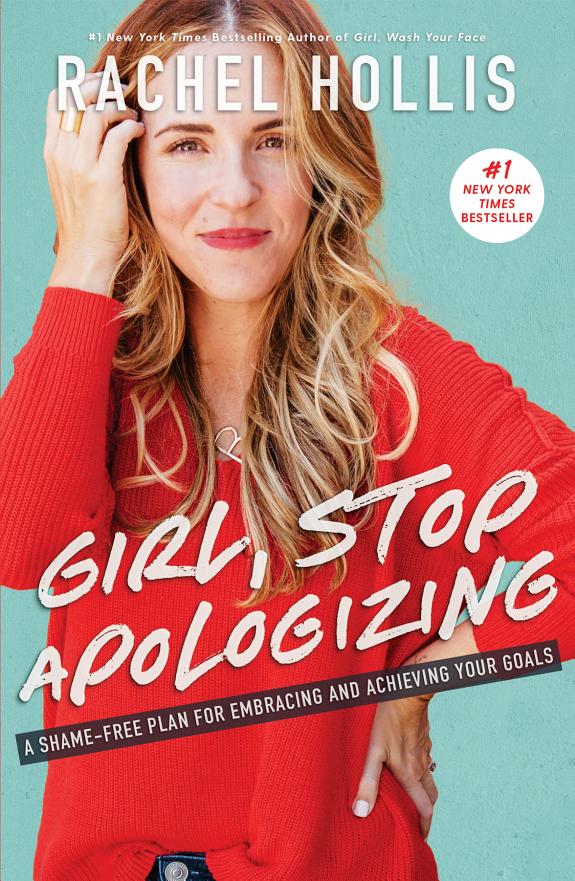
Girl, Stop Apologizing
5. Girl, Stop Apologizing by Rachel Hollis
Rachel Hollis is a polarizing figure in the self-help space, and it is worth being upfront about that. Her style is high-energy, direct, and unapologetically motivational. If you find that kind of voice grating, this book will not win you over. But if you respond to someone who is clearly excited about what they are telling you and not particularly interested in hedging, Hollis delivers that energy consistently and with genuine conviction.
The book is structured around excuses women make to avoid pursuing their goals, behaviors worth adopting, and skills worth building. Hollis draws heavily on her own story, building a business from nothing while raising children, and she is not shy about using herself as the primary example of what is possible. The central argument is simple: stop waiting for permission, stop apologizing for wanting things, and start taking concrete action. It is not a nuanced philosophical argument. It is a push.
The limitations here are real. Hollis’s approach assumes a level of privilege and circumstance that not every reader shares, and she does not spend much time acknowledging structural barriers. The tone can veer into relentless positivity in a way that some readers will find reductive. And the advice, while solid, is not particularly original. Where the book earns its place is in its energy. Sometimes you do not need a new idea. You need someone to tell you loudly and clearly to stop waiting. For that specific purpose, Hollis is effective.
You are not too much. You have never been too much. You are not asking for too much. You have simply never been given enough room to be yourself.
This is perfect for women who already know what they want but keep talking themselves out of it and need a firm, no-nonsense push to start moving.
Feeling stuck is not a character flaw. It is usually a sign that something needs to shift, whether that is a belief you have been carrying too long, a habit of saying yes when you mean no, or simply the pace at which you have been living. These five books approach that feeling from different angles, and not all of them will speak to every reader. That is fine. The right book at the right moment can do a lot. The wrong book at the wrong moment is just something you finish out of stubbornness.
If you are not sure where to start, think about what kind of stuck you are. Overwhelmed and depleted? Try Niequist. Hesitant and second-guessing? Mohr is waiting for you. Ready to blow up the whole carefully constructed thing? Doyle. There is no single map for this, but there are a lot of honest guides. Pick one and begin.