

7 Books That Genuinely Improve Self-Esteem
Self-esteem is one of those topics that gets buried under a mountain of motivational posters and vague advice about loving yourself. It can feel almost embarrassing to admit you want to work on it, like you are confessing to something shameful. But here is the thing: nearly everyone has moments, or entire seasons of life, where the voice inside their head is not exactly their biggest fan.
The books on this list take the subject seriously without turning it into a self-help circus. Some are rooted in psychology, some are deeply personal, and at least one is loud and cheerful enough to make you laugh on a Tuesday morning when you really needed it. They do not promise overnight fixes. What they offer instead is something more useful: a clearer picture of where low self-esteem actually comes from, and honest, grounded ways to start shifting it. Whether you are rebuilding after a rough stretch or just quietly tired of being your own worst critic, there is something here for you.
The Six Pillars of Self-Esteem
1. The Six Pillars of Self-Esteem by Nathaniel Branden
Nathaniel Branden spent decades as a psychotherapist and philosopher focused almost entirely on the question of self-esteem, and this book is the fullest expression of that life’s work. He argues that self-esteem is not a feeling you stumble into, but a practice, something built through consistent patterns of thought and behavior. The six pillars he identifies are living consciously, self-acceptance, self-responsibility, self-assertiveness, living purposefully, and personal integrity. Each one gets its own thorough treatment, and Branden writes with the kind of precision that makes you feel like you are actually learning something rather than just being reassured.
The tone is more formal than most modern self-help. Branden was a philosopher first, and it shows. He traces the roots of low self-esteem through childhood, culture, and the stories we absorb without realizing it. He is also refreshingly honest that external validation, therapy included, can only do so much. The real work, he insists, is internal and ongoing. That might sound daunting, but the way he frames it actually makes it feel achievable.
This is not a light read. Some chapters are dense and ask you to sit with uncomfortable questions about how honestly you are actually living. But the depth is the point. If you want a surface-level pep talk, this is not your book. If you want to genuinely understand the architecture of self-esteem, Branden is one of the most thoughtful guides available.
“The first act of self-esteem is the practice of living consciously, of seeing what we see and knowing what we know.”
This is perfect for readers who want a rigorous, psychologically grounded framework for understanding self-esteem, and who are willing to do some serious self-reflection along the way.
The Gifts of Imperfection
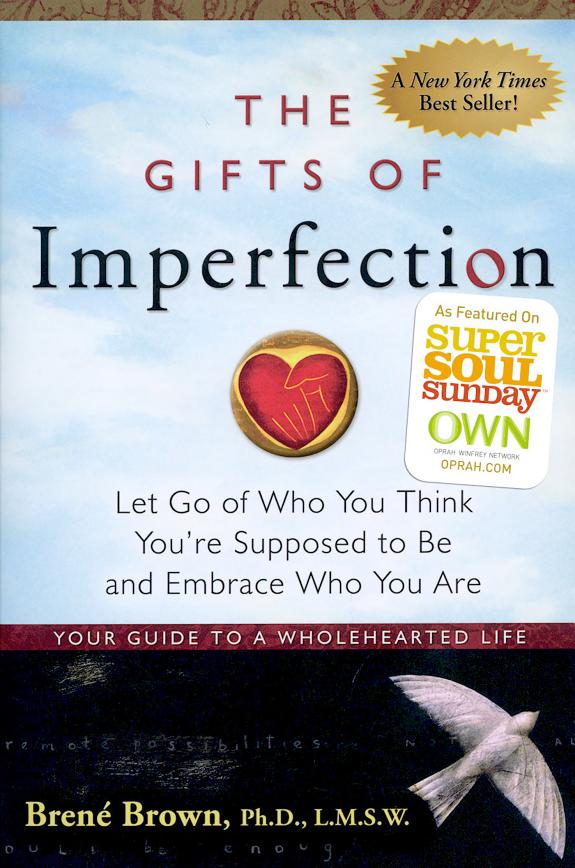
2. The Gifts of Imperfection by Brené Brown
Brené Brown is a researcher who spent years studying shame and vulnerability, and somewhere along the way she became one of the most widely read voices on the subject of self-worth. The Gifts of Imperfection is built around the idea of wholehearted living, a way of engaging with the world that does not require you to earn your place in it first. Brown draws on years of qualitative research, but she writes like a friend who happens to have read a great deal and thought about it very carefully.
The book is organized around what she calls guideposts, qualities like cultivating gratitude, letting go of perfectionism, and practicing play. Each section feels personal because Brown shares her own struggles openly, including her resistance to some of the very things she is recommending. That honesty keeps the book from feeling preachy. She is not writing from a position of having figured everything out. She is writing as someone still in the middle of it.
Where some self-help books ask you to think your way to confidence, Brown focuses more on the emotional and relational dimensions of self-worth. She makes a compelling case that belonging starts with belonging to yourself, which sounds simple until you realize how rarely most people actually do it. If you tend to people-please, over-explain, or feel like you are never quite enough, this book will feel uncomfortably familiar in the best possible way.
“Owning our story and loving ourselves through that process is the bravest thing that we will ever do.”
This is perfect for people who struggle with perfectionism, chronic self-criticism, or the feeling that their worth is always conditional on what they achieve or how others see them.
You Are a Badass
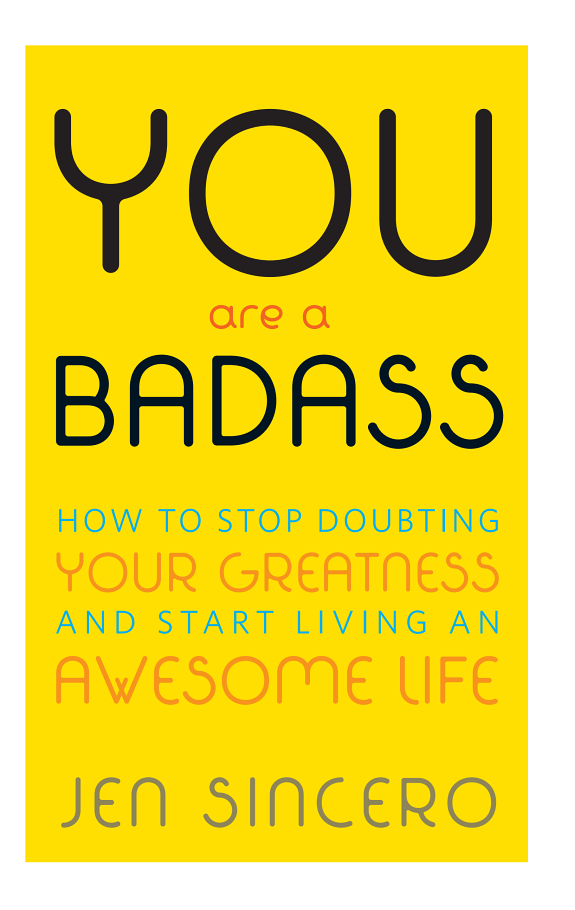
3. You Are a Badass by Jen Sincero
Jen Sincero writes like she is sitting across from you at a diner, slightly caffeinated, and deeply committed to the idea that you are letting your own nonsense get in your way. You Are a Badass is energetic, funny, and unapologetically enthusiastic in a way that either clicks immediately or makes you want to put it down. The humor is genuine rather than performative, and Sincero has a gift for making self-sabotage feel recognizable without making you feel bad about it.
The book covers a lot of ground, from understanding the subconscious beliefs that drive behavior to taking practical steps toward the life you actually want. Sincero borrows from a range of traditions, including some law-of-attraction territory that more skeptical readers may find hard to swallow. She is not a psychologist, and the book does not pretend to be a clinical resource. What it is, is a very effective kick in the direction of action when you have been standing still for too long.
The writing style alone is worth mentioning because it is genuinely distinct. Short chapters, casual language, and a consistent voice that never lets the energy drop. For readers who find dense or academic writing a barrier to finishing self-help books, this one is structured in a way that makes it easy to keep going. It is also one of the more entertaining books on this list, which is not nothing when you are trying to get through a topic that can feel heavy.
“You are responsible for what you say and do. You are not responsible for whether people freak out about it.”
This is perfect for readers who respond well to humor and high energy, and who need a push toward action more than a deep psychological framework.
What to Say When You Talk to Your Self
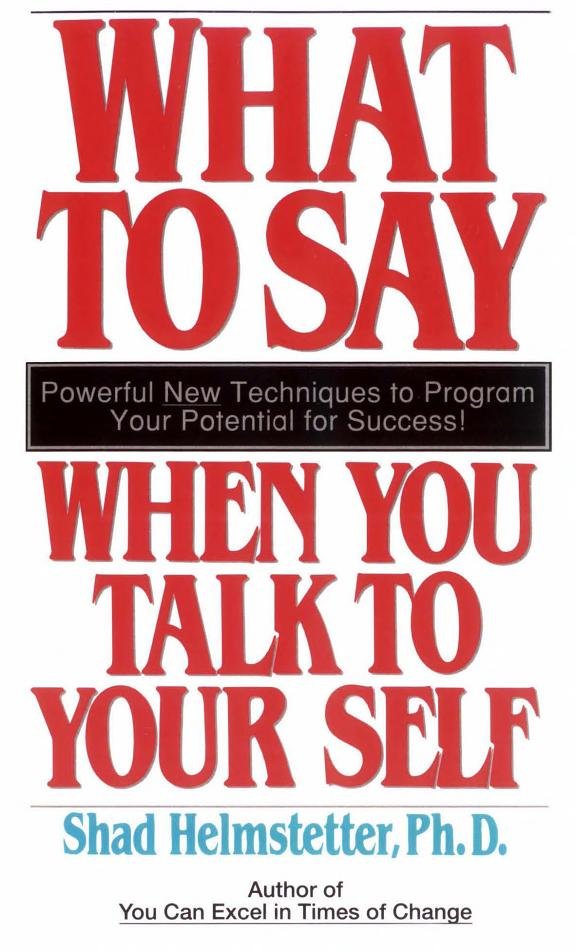
4. What to Say When You Talk to Your Self by Shad Helmstetter
Shad Helmstetter published this book in 1986, and the core idea has aged remarkably well: the way you talk to yourself, the constant internal commentary running in the background of your mind, has a direct and measurable effect on your confidence, your choices, and your sense of self-worth. Helmstetter draws on behavioral research to argue that most of us were programmed with negative self-talk from an early age, not through malice but simply because the people around us were operating from their own limitations.
The book is structured around the concept of self-talk as a practical tool. Helmstetter provides specific scripts and phrases designed to replace negative internal patterns with more constructive ones. Some readers find this approach a little mechanical at first, and honestly, reading a list of affirmations out loud to yourself does feel slightly absurd until it starts working. The author anticipates this skepticism and addresses it directly, which helps. The underlying neuroscience he references, while simplified, points to something real about how repetition shapes belief.
What sets this book apart from the more abstract entries on this list is its focus on the practical and the daily. Helmstetter is not asking you to overhaul your worldview in one sitting. He is asking you to pay attention to what you are already saying to yourself, and to start saying something different. It is a small shift in framing, but the cumulative effect is the whole point. Not everyone will connect with the scripted approach, but for readers who like concrete tools, this is one of the more immediately applicable books in the self-esteem space.
“The brain simply believes what you tell it most. And what you tell it about you, it will create.”
This is perfect for people who want a practical, day-to-day method for reshaping negative self-talk, and who prefer actionable techniques over philosophical exploration.
Feel the Fear and Do It Anyway
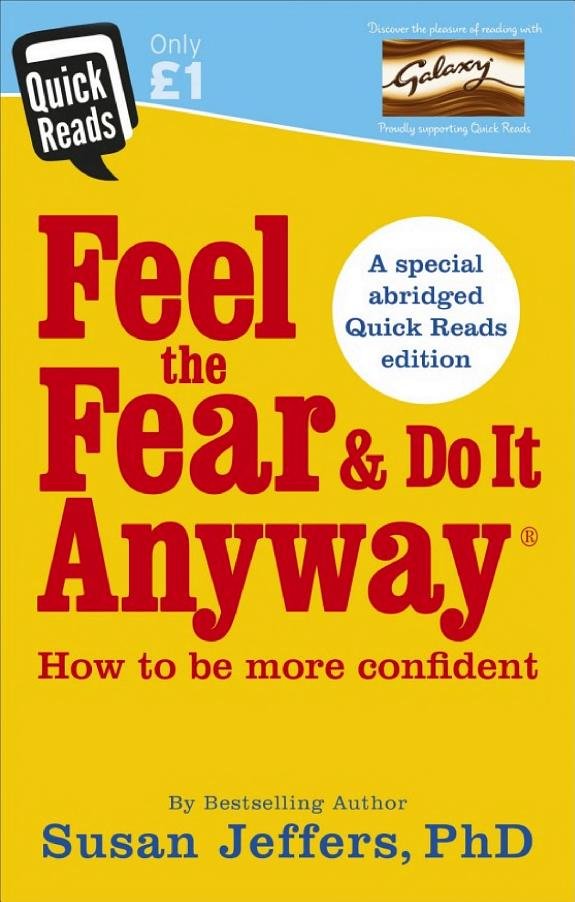
5. Feel the Fear and Do It Anyway by Susan Jeffers
Susan Jeffers opens with a premise that is both obvious and oddly liberating: everyone is afraid. The people who seem confident are not operating without fear. They have simply learned to move forward in spite of it. Feel the Fear and Do It Anyway is built on that foundation, and it connects fear directly to self-esteem in a way that feels immediately logical. When you avoid the things that scare you, your confidence shrinks. When you act despite the fear, it grows. Simple in theory, harder in practice, and Jeffers is honest about that gap.
The book covers a range of fears, from the practical, like making decisions or handling conflict, to the deeper existential fear of not being enough. Jeffers writes with warmth and without condescension, and she includes exercises throughout that are actually worth doing rather than skimming past. Her five truths about fear, particularly the idea that the fear will never fully go away and that you can handle whatever happens, form the emotional backbone of the book.
It is worth noting that this book is more motivational in tone than clinical. Readers looking for a deep psychological examination of fear’s origins may find it too surface-level. But for someone who knows they are holding themselves back and needs both permission and practical encouragement to move, Jeffers delivers something genuinely useful. The title has become almost a cliche at this point, which is a shame, because the actual content is more nuanced than the phrase suggests.
“Every time you take a step into the unknown, you experience fear. There is no point in saying, ‘When I am no longer afraid, then I will do it.'”
This is perfect for people who recognize that fear is actively limiting their life and who want a warm, encouraging framework for building confidence through action rather than waiting for it to arrive on its own.

Love Yourself Like Your Life Depends On It
6. Love Yourself Like Your Life Depends On It by Kamal Ravikant
This is the shortest book on the list, barely more than a long essay, and it is also the most personal. Kamal Ravikant wrote it after a period of serious illness and depression, when he made a deliberate decision to repeat one simple practice: telling himself, over and over, that he loved himself. The book documents what happened when he committed to that practice with genuine intention rather than casual optimism. It sounds almost embarrassingly simple, and Ravikant knows that. He addresses the skepticism head-on and writes with enough vulnerability that the idea stops feeling silly fairly quickly.
The writing is spare and direct. There is no padding here, no filler chapters designed to justify a longer page count. Ravikant is not a psychologist or a researcher. He is a person who was in a dark place and found something that helped, and he wrote it down with honesty. The practice he describes, which centers on a mental loop of self-love repeated throughout the day, is not unlike the approach in Helmstetter’s book, but the emotional register is entirely different. This one feels more intimate, almost confessional.
Because it is so brief, this is a book you can read in an afternoon and return to when you need it. Some readers will find the simplicity refreshing. Others may wish for more depth or nuance. It is not a comprehensive guide to self-esteem, and it does not try to be. What it offers is one very specific practice and a quiet, earnest argument for why it is worth trying. For a book this small, it leaves a surprisingly lasting impression.
“The truth is to love yourself with the same intensity you would use to pull yourself up if you were hanging off a cliff with your fingers.”
This is perfect for readers going through a difficult period who want something brief, honest, and immediately applicable, without the commitment of a longer book.
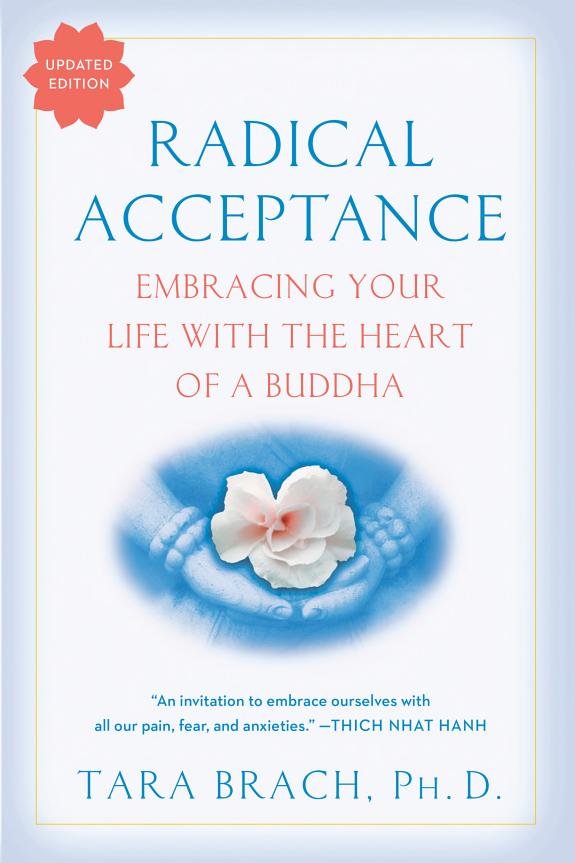
Radical Acceptance
7. Radical Acceptance by Tara Brach
Tara Brach is a psychologist and meditation teacher, and Radical Acceptance draws on both traditions in a way that feels genuinely integrated rather than awkward. The central idea is that much of human suffering, including low self-esteem, stems from what she calls the trance of unworthiness, a pervasive background sense that we are somehow not enough, that there is something fundamentally wrong with us. Brach argues that the antidote is not to fix ourselves but to meet ourselves with full acceptance, which is a harder and more interesting proposition than it sounds.
The book is full of stories drawn from her work with clients and her own meditation practice. These stories are one of its greatest strengths. Abstract concepts about self-compassion become concrete and recognizable when you see them playing out in a real person’s experience. Brach writes with genuine warmth, and the Buddhist framework she works within is presented accessibly enough that readers with no background in meditation will not feel lost. That said, readers who are allergic to spiritual language may find certain sections harder to engage with.
What makes this book stand out among the others on this list is its emphasis on presence. Most self-esteem work focuses on changing thoughts or behaviors. Brach is more interested in the quality of attention you bring to your own experience, the capacity to feel what you feel without immediately judging it or running from it. That is a different kind of work, and for many people it is the missing piece. This is a book that asks you to slow down, which is either exactly what you need or completely the wrong prescription depending on where you are right now.
“The boundary to what we can accept is the boundary to our freedom.”
This is perfect for readers drawn to mindfulness or Buddhist psychology who want to explore self-esteem through the lens of compassion and presence rather than productivity or positive thinking.
Every book on this list approaches self-esteem from a slightly different angle, which is part of the point. There is no single method that works for everyone, and the fact that Nathaniel Branden’s philosophical rigor sits alongside Jen Sincero’s cheerful irreverence is not a contradiction. It is a reflection of how varied the work of building self-worth actually is. Some people need a framework. Some need permission. Some need to sit quietly and stop running from themselves for a while.
If you are not sure where to start, pick the one that made you feel the most resistance when you read the description. That is usually a sign. And if you finish one and it does not quite land, try another. The fact that you are looking is already something worth noting.