
5 Books for Letting Go of the Past
There is a particular kind of exhaustion that comes from carrying something you know you should put down. Old grief, old anger, old versions of yourself that no longer fit. Most of us have tried the obvious things: staying busy, talking it to death, or simply waiting for time to do its job. Sometimes those work. Often they do not.
Books cannot do the work for you, but the right ones can hand you a vocabulary for what you are feeling, or shine a light on a door you did not know was there. The five books gathered here approach the idea of releasing the past from very different angles: psychology, neuroscience, Buddhist philosophy, forgiveness research, and self-compassion practice. None of them promise a quick fix, which is honestly part of why they are worth reading. Real change tends to be slower and stranger than any book jacket suggests, and these authors are honest enough to say so.
Letting Go
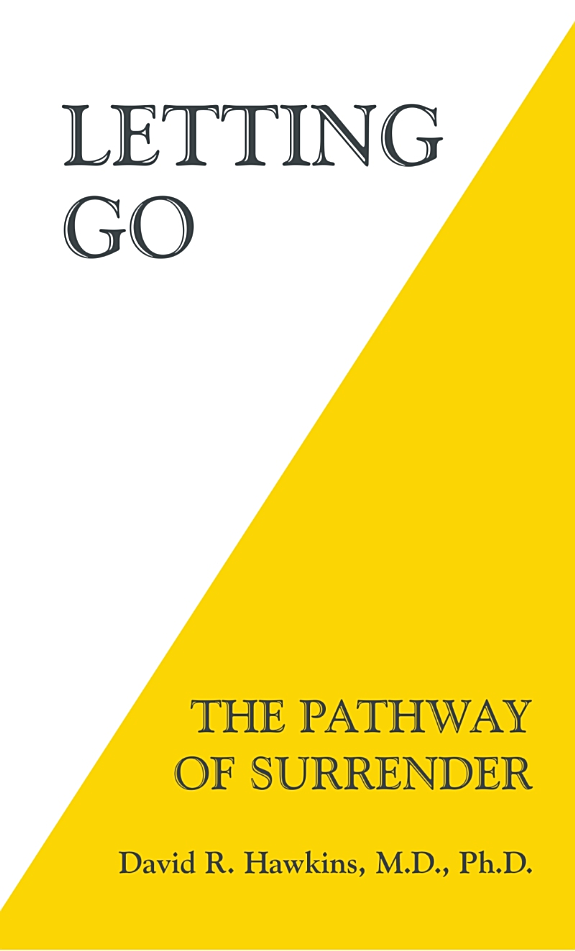
1. Letting Go by David R. Hawkins
David R. Hawkins was a psychiatrist and spiritual teacher, and this book reflects both sides of that identity. The central premise is straightforward: most of us suppress or express our feelings rather than actually releasing them, and that unprocessed emotional energy accumulates over time in ways that quietly shape our health, our relationships, and our sense of what is possible. Hawkins offers what he calls the “letting go technique,” which is less a formal exercise and more a continuous practice of noticing a feeling and allowing it to be fully present without judgment until it naturally dissolves.
The writing is dense in places and the theoretical framework draws heavily on Hawkins’s own consciousness research, which some readers will find compelling and others will find hard to take on faith. He maps emotions onto a scale of energetic levels, and if that kind of spiritual scaffolding is not your thing, parts of the book may feel frustrating. But the core instruction, which is simply to stop fighting your feelings and let them move through you, is genuinely useful and surprisingly difficult to practice.
What makes this book stand out is its insistence that you do not need to analyze a feeling to release it. For people who have spent years in therapy turning their pain over and over without feeling lighter, that idea alone can be a revelation. Hawkins is not dismissing insight or understanding, but he is suggesting that understanding is not always the gateway to freedom that we assume it is.
“The willingness to let go of the feeling, rather than the feeling itself, is what actually opens the door.”
This is perfect for readers who feel stuck despite years of self-reflection, and who are open to a spiritually inflected framework for emotional release. It is not the right fit for readers who want strictly evidence-based methods or who find consciousness-level frameworks unconvincing.
It Didn’t Start with You
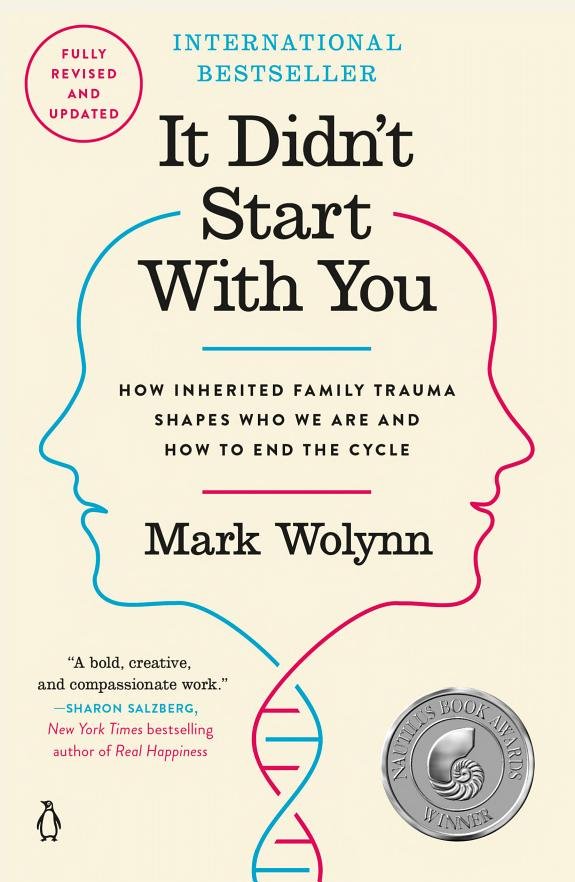
2. It Didn’t Start with You by Mark Wolynn
Mark Wolynn runs the Family Constellation Institute in San Francisco, and this book is built around a genuinely unsettling idea: some of the pain you carry may not have originated with you. Drawing on research into epigenetics and the clinical work of figures like Bert Hellinger and Ivan Boszormenyi-Nagy, Wolynn argues that trauma can be transmitted across generations, showing up in descendants as anxiety, depression, phobias, or self-destructive patterns that seem to have no clear personal origin.
The science here is presented accessibly but not shallowly. Wolynn walks through studies on the children and grandchildren of Holocaust survivors, famine survivors, and war veterans, showing how biological and psychological inheritance can carry the weight of experiences we never personally lived through. He then offers practical tools, including what he calls the Core Language Approach, to help readers identify the inherited threads running through their own symptoms and begin to untangle them.
The case studies throughout the book are striking, and more than a few readers have reported finishing a chapter and suddenly understanding a fear or compulsion they had carried their whole lives without explanation. That said, the methodology sits in territory that mainstream psychology has not fully validated, and readers who need rigorous clinical trials before trusting a framework may find themselves skeptical. Wolynn is careful not to overclaim, but the field of epigenetic trauma transmission is still young and contested.
“The story that lives in your body may have begun long before you were born, which means the healing can extend further than you imagined too.”
This is perfect for people who have done significant personal work but still feel haunted by pain that does not seem to belong to their own history. It is less suited to readers who want a conventional self-help structure or who are uncomfortable with concepts that blend psychology and family systems theory.
When Things Fall Apart
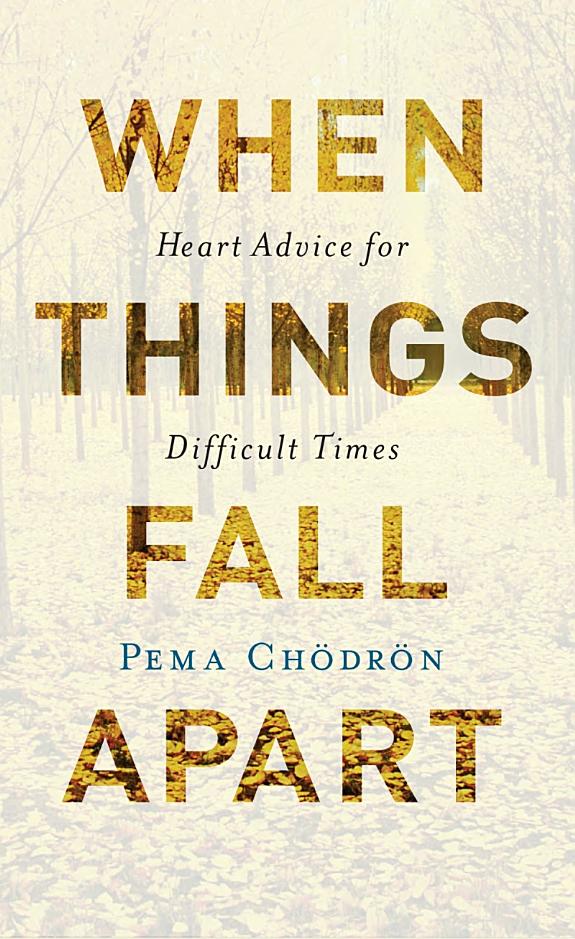
3. When Things Fall Apart by Pema Chödrön
Pema Chödrön is an American Buddhist nun, and this is probably her most beloved book, which is saying something given how widely she is read. It grew out of talks she gave during a period of genuine personal crisis, and that origin shows. There is nothing polished or distant about the writing. She is talking to you the way a wise friend talks, which means she is not always comforting and she is occasionally blunt in ways that catch you off guard.
The central argument, if you can call it that, is that the ground falling away beneath you is not a problem to be solved. It is the nature of things. Chödrön draws on Tibetan Buddhist teachings, particularly the concept of groundlessness, to suggest that our desperate attempts to create stability and certainty are themselves a source of suffering. Letting go of the past, in her framing, is less about processing old wounds and more about loosening our grip on the idea that we need solid ground at all.
This is not a book full of techniques. There are some meditation practices introduced, including tonglen, which involves breathing in pain rather than pushing it away, a practice that sounds masochistic until you try it. Mostly, though, this is a book of perspective. It asks you to sit with discomfort rather than escape it, and to find in that willingness a kind of unexpected freedom. Readers looking for structured exercises or a step-by-step program will likely feel a little adrift here, which is, one suspects, entirely intentional on Chödrön’s part.
“Things falling apart is a kind of testing, and also a kind of healing. We think the point is to pass the test or to overcome the problem, but the truth is that things don’t really get solved. They come together and they fall apart.”
This is perfect for readers going through acute loss or upheaval who want something that meets them in the difficulty rather than rushing them out of it. It is not well suited to readers who want practical, action-oriented tools or who have little patience for Buddhist philosophy.
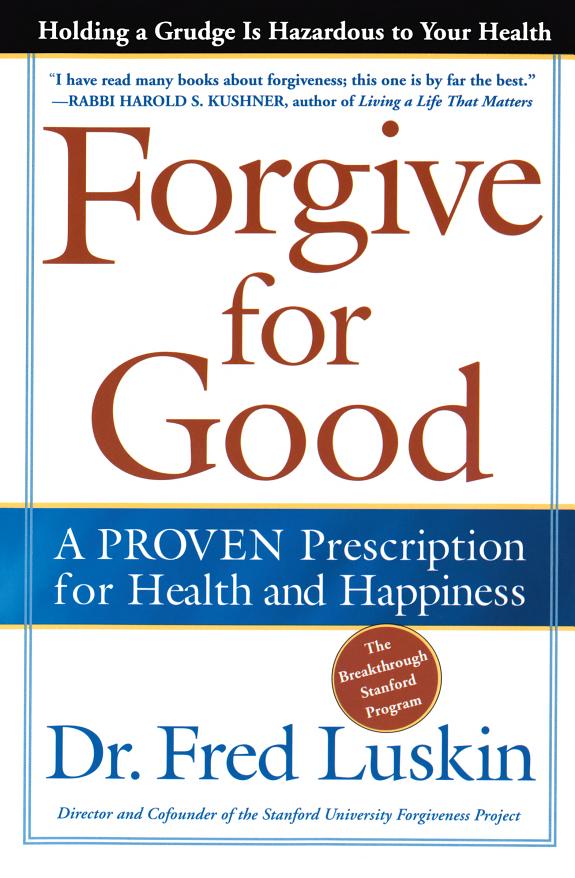
Forgive for Good
4. Forgive for Good by Frederic Luskin
Frederic Luskin directs the Stanford Forgiveness Projects, and this book is the most research-grounded entry on this list. Luskin has spent years running controlled studies on forgiveness with groups ranging from college students to mothers who lost children in the Northern Ireland conflict, and the results are consistent enough to be striking: people who practice forgiveness report significant reductions in stress, anger, and physical symptoms like headaches and back pain. He is not making spiritual claims here. He is talking about measurable outcomes.
What Luskin is careful to clarify, and this matters, is that forgiveness does not mean condoning what happened, reconciling with the person who hurt you, or pretending the harm was not real. His definition is narrower and more practical: forgiveness is the decision to stop letting someone else’s behavior dictate your emotional state. That reframe alone shifts the conversation considerably. Suddenly forgiveness is not a gift you give to the person who wronged you. It is something you do for yourself.
The nine steps he outlines are concrete and teachable, which makes this book genuinely useful in a way that more philosophical treatments of forgiveness sometimes are not. The writing is clear without being dumbed down, and Luskin has a talent for anticipating the objections readers will raise before they raise them. The one limitation is that the book can feel somewhat clinical in its approach to experiences that are, for most people, anything but clinical. If you are in raw grief or shock, this may not be the right moment for it. Come back to it when you are ready to think.
“The practice of forgiveness has been shown to reduce the power of past hurts to dictate your present life, and that reduction is not a small thing.”
This is perfect for readers who want a secular, evidence-based approach to releasing resentment and who appreciate structured, step-by-step guidance. It is not the right fit for readers in acute emotional crisis or those who want a more contemplative, less clinical tone.
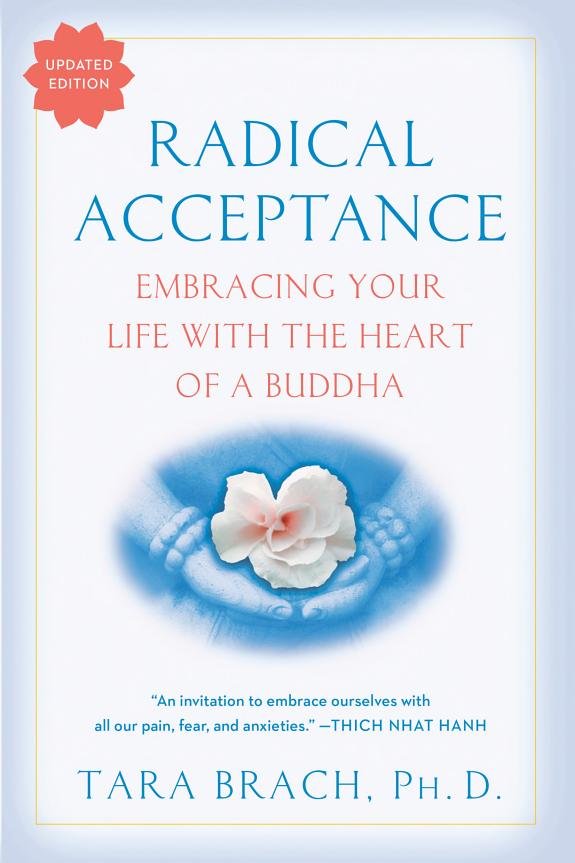
Radical Acceptance
5. Radical Acceptance by Tara Brach
Tara Brach is a psychologist and Buddhist meditation teacher, and this book sits comfortably at the intersection of both disciplines. The concept at its heart is what she calls the trance of unworthiness, the persistent, low-level conviction that something is fundamentally wrong with us, a conviction so familiar that most of us have stopped noticing it is there. Brach argues that this belief is one of the primary reasons we cannot let go of the past: we keep returning to old wounds and old failures not because we are weak but because we are trying to fix a self we have already decided is broken.
Radical acceptance, in her framework, means meeting your experience, including your pain, your shame, and your history, with clear seeing and genuine compassion rather than judgment or avoidance. She draws on both mindfulness practice and Western psychological research, weaving them together in a way that feels natural rather than forced. The stories she tells, drawn from her own life and from her work with students and therapy clients, are among the most affecting in any book on this list. She has a gift for illustration that makes abstract ideas feel immediately real.
The meditation practices she offers are accessible even for readers with no prior experience, and unlike some meditation-focused books, this one does not assume you have hours a day to sit quietly. The RAIN practice she introduces, a four-step process of Recognizing, Allowing, Investigating, and Nurturing, has become widely used in therapeutic settings since the book’s publication, which says something about its practical value. Readers who are allergic to anything that sounds like self-help affirmations may occasionally wince at the warmth of the language, but the substance beneath it is solid.
“The boundary to what we can accept is the boundary to our freedom. Wherever we draw the line and say ‘not this,’ we limit the life that can move through us.”
This is perfect for readers who struggle with self-criticism and shame, particularly those who sense that their inability to let go of the past is connected to a deeper feeling of unworthiness. It is less suited to readers who want a purely secular, clinical approach and have little interest in meditation practice.
None of these five books will do the work for you, and any of them that promised to would not be worth reading. What they offer instead is something more honest: different ways of understanding why the past holds on so tightly, and different practices for loosening that grip over time. Some of these approaches will resonate with you immediately. Others might not land until years from now, when you are in a different place and ready to hear them differently. That is fine. Good books wait.
If you are not sure where to start, let your instincts guide you. The book that makes you slightly uncomfortable is often the one with something to offer. And if you find yourself reading one of these and thinking, “this is not for me,” that is useful information too. Knowing what does not fit is part of figuring out what does.