
6 Books to Stop Comparing Yourself to Others
It usually starts small. You scroll through someone’s photos, glance at a colleague’s LinkedIn update, or hear about an old friend’s promotion, and suddenly your perfectly decent life feels like a consolation prize. Comparison is one of those habits that sneaks up quietly and then sits in your chest like a stone.
The good news is that a lot of thoughtful writers have spent serious time wrestling with this exact problem. Not with fluffy reassurances, but with real ideas about identity, belonging, fear, and what it actually means to live your own life instead of a pale imitation of someone else’s. The six books below approach the comparison trap from different angles, which means there is something here for almost anyone who has ever felt like they were falling behind in a race they never agreed to run.
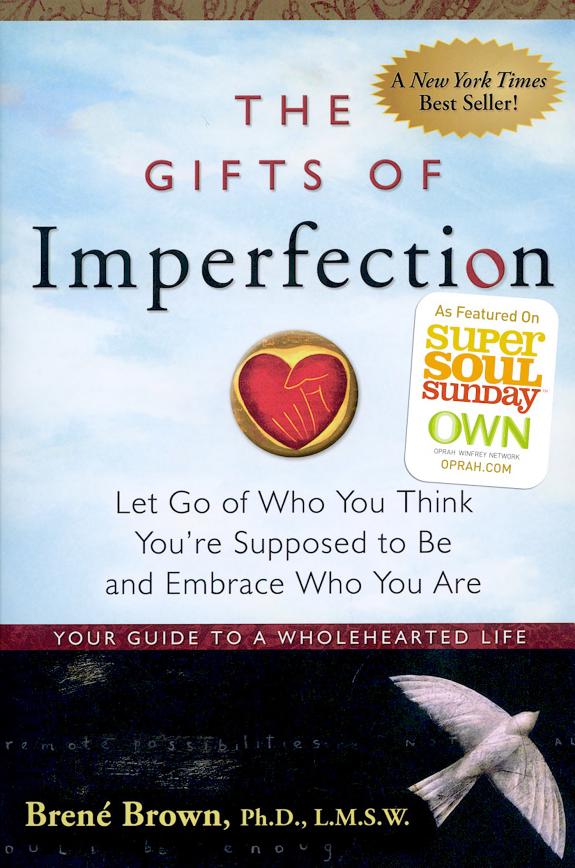
The Gifts of Imperfection
1. The Gifts of Imperfection by Brené Brown
Brené Brown is a research professor who spent years studying shame, vulnerability, and what she calls Wholehearted living. Her voice is warm and direct, the kind that feels like a conversation rather than a lecture. In this book she makes a case that the relentless pursuit of perfection, which sits at the very root of comparison, is not a standard worth chasing. It is, in her words, a twenty-ton shield that keeps us from being seen.
The central idea is both simple and genuinely difficult to put into practice: worthiness is not something you earn by outperforming others. It is something you claim by showing up honestly, even when that is uncomfortable. Brown draws on her own research and her own stumbles to illustrate what letting go of comparison actually looks like in everyday life, from parenting to creativity to the way we talk to ourselves at two in the morning.
Where this book shines is in its specificity. Brown does not just tell you to love yourself more. She identifies the ten guideposts that show up consistently in the lives of people who have managed to stop tying their self-worth to external measures. Cultivating gratitude, setting boundaries, embracing rest without guilt, these are concrete and they are harder than they sound, which is exactly why the book feels honest rather than hollow.
If you find self-help writing too breezy or too heavy on anecdote without substance, you might find some sections here a little repetitive. Brown circles back to her core ideas often, which works for some readers and frustrates others. But if you are willing to sit with the material, there is real depth here.
“Perfectionism is not the same thing as striving to be your best. Perfectionism is the belief that if we live perfect, look perfect, and act perfect, we can minimize or avoid the pain of blame, judgment, and shame.” – Brené Brown
This is perfect for readers who suspect their comparison habit is tied to a deeper fear of not being enough, and who want a research-grounded but readable starting point for changing that.
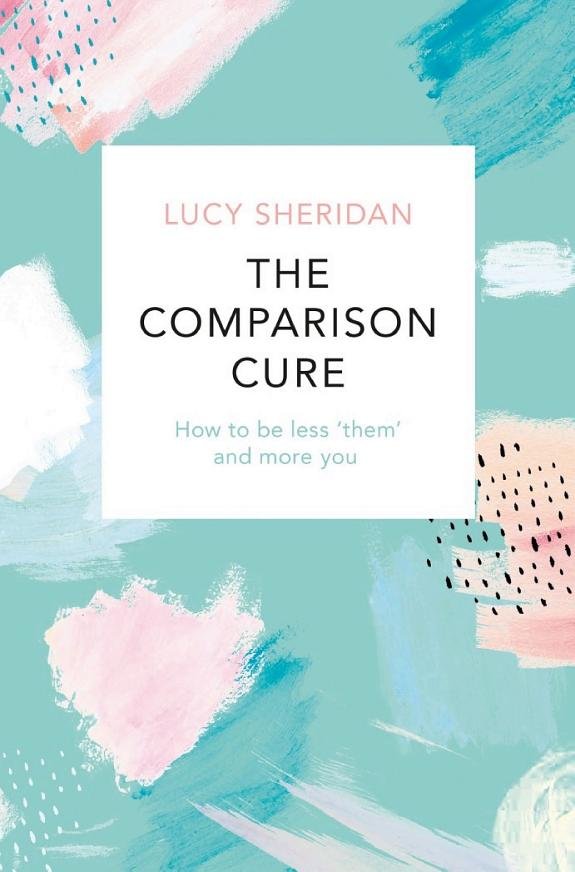
The Comparison Cure
2. The Comparison Cure by Lucy Sheridan
Lucy Sheridan bills herself as the world’s only comparison coach, which is either a very niche market or a sign that she spotted a real gap before anyone else did. Probably both. Her book is less academic than Brown’s and more practical in a hands-on, workbook-adjacent kind of way. She writes with a lightness that does not undercut the seriousness of the topic, and she is refreshingly upfront about the fact that she spent years trapped in comparison herself before figuring a way out.
The book’s central argument is that comparison is not just a bad habit but a symptom. Beneath it, Sheridan finds things like unmet needs, unclear values, and a fuzzy sense of personal identity. When you do not know what you actually want from your own life, it is very easy to borrow someone else’s version of success as a measuring stick. The cure, as she frames it, is not to stop noticing other people but to get so grounded in your own direction that their path stops feeling like a verdict on yours.
Sheridan includes exercises throughout the book, which makes it interactive in a way that suits certain readers very well. She asks you to examine your triggers, to look at who you compare yourself to and why, and to start building what she calls a comparison-proof life. The exercises are not complicated, but they require honesty, and that is where most of the real work happens.
If you prefer books that stay purely in the realm of ideas rather than asking you to pick up a pen, this one might feel more like homework than reading. It also skews toward people navigating social media comparison specifically, so if your comparison habit lives more in professional settings, some sections will feel less directly applicable.
“When you know who you are and what you want, other people’s choices stop feeling like a commentary on your own.” – Lucy Sheridan
This is perfect for anyone who finds themselves falling into comparison spirals on social media and wants a structured, practical approach to breaking the cycle.
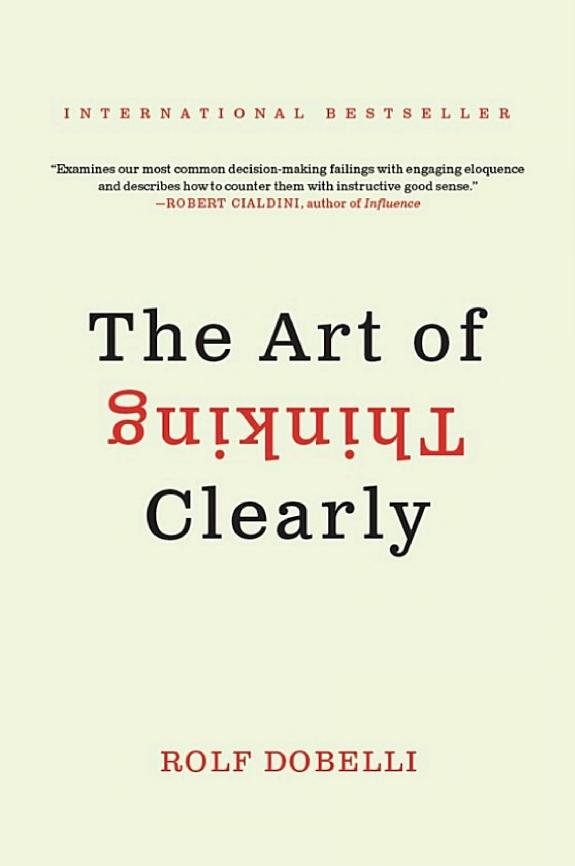
The Art of Thinking Clearly
3. The Art of Thinking Clearly by Rolf Dobelli
Rolf Dobelli is a Swiss author and entrepreneur who spent years cataloguing the ways human beings consistently think badly. The result is a book that covers ninety-nine cognitive biases and logical errors, written in short, punchy chapters that are easy to pick up and put down. The connection to comparison might not be obvious from the title, but it runs through the book like a thread. Understanding why your brain defaults to measuring yourself against others is, it turns out, the first step in loosening that grip.
Several of the biases Dobelli covers are directly relevant here. Social comparison theory gets its own treatment, as does the tendency to overweight what others are doing when making decisions about our own lives, a bias sometimes called social proof. There is also sharp coverage of the spotlight effect, the hedonic treadmill, and the way we systematically misjudge what will actually make us happy. Read together, these chapters paint a clear picture of why comparison feels so natural and why it almost never produces the outcomes we hope for.
Dobelli’s tone is dry and precise, which is refreshing if you are tired of motivational warmth. He is not trying to make you feel better. He is trying to make you think more accurately, which is a different project entirely and, arguably, a more lasting one. The book does not offer a hug. It offers a flashlight.
This is not a book for readers who want emotional support or personal narrative. Dobelli keeps himself largely out of the text and the writing can feel clinical. If you need to feel seen before you can absorb ideas, you will probably want to pair this one with something warmer from this list.
“We are not thinking machines that feel. We are feeling machines that think. Understanding the difference changes how you respond to your own mental noise.” – Rolf Dobelli
This is perfect for analytically minded readers who want to understand the cognitive mechanics behind comparison rather than simply being encouraged to stop doing it.
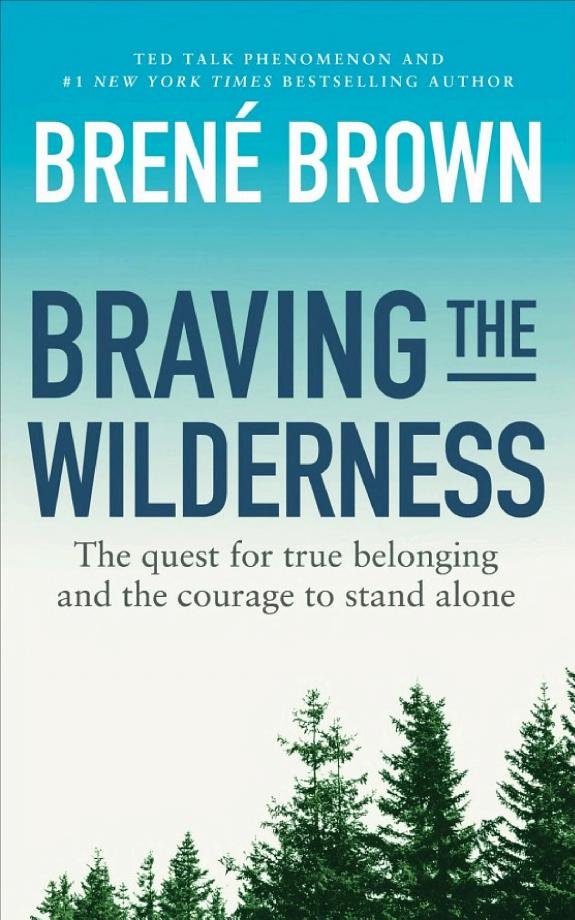
Braving the Wilderness: The Quest for True Belonging and the Courage to Stand Alone
4. Braving the Wilderness by Brené Brown
Brown returns here with a book that takes a slightly different angle on the same territory. Where The Gifts of Imperfection focuses on personal worthiness, Braving the Wilderness zooms out to look at belonging, specifically the difference between belonging and fitting in. That distinction matters more than it might initially seem. Fitting in, Brown argues, requires you to constantly audit yourself against the group. True belonging requires the exact opposite: the willingness to stand alone when necessary.
The book is built around the idea that we have become so desperate to belong somewhere that we have given up our individuality to earn group membership. We adopt the opinions, aesthetics, and ambitions of whatever tribe we are trying to impress, and then wonder why we feel hollow even when the approval arrives. Comparison is the engine running underneath all of this. We measure ourselves against the group to figure out how much of ourselves to hide.
Brown writes with the same research-backed warmth that characterises her earlier work, but this book has a sharper political and social edge. She looks at how polarisation and tribalism feed the belonging crisis, and she argues that the people who are most free from comparison are often those who have made peace with being misunderstood. That is a harder sell than it sounds, and Brown does not pretend otherwise.
If you have already read The Gifts of Imperfection and felt like you absorbed its lessons fully, some of this book will cover familiar ground. Brown’s core ideas do not change dramatically between her books, which is either a sign of consistency or repetition depending on your patience level.
“True belonging doesn’t require you to change who you are. It requires you to be who you are.” – Brené Brown
This is perfect for readers who feel like they are always performing for an audience and want to understand the deeper connection between belonging, identity, and the urge to measure themselves against others.
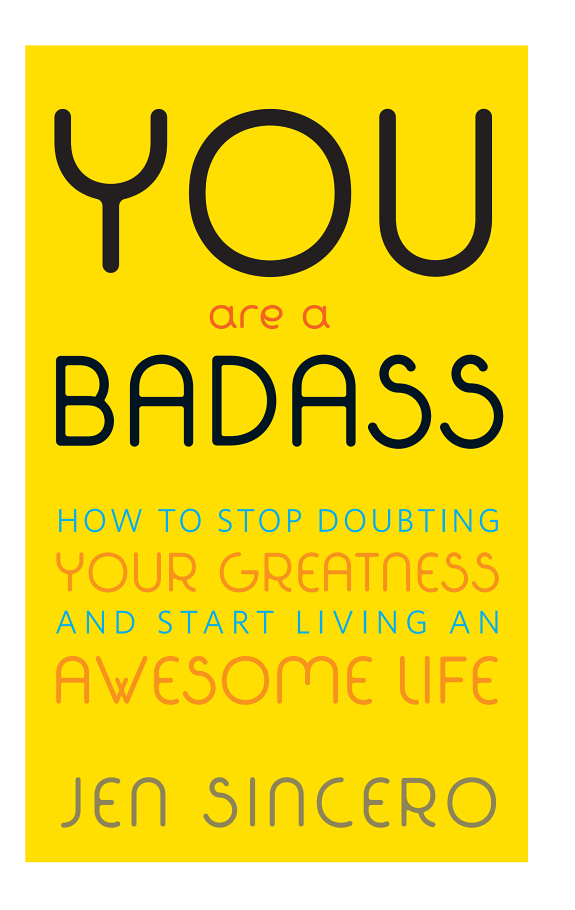
You Are a Badass: How to Stop Doubting Your Greatness and Start Living an Awesome Life
5. You Are a Badass by Jen Sincero
Let us be honest about what this book is. It is loud, it is enthusiastic, and Jen Sincero is not shy about her own voice. You Are a Badass is the kind of book that uses the word awesome without irony and means it. If that sounds like too much, this is probably not your book. But if you have ever needed someone to grab you by the shoulders and remind you that you are not actually the supporting character in everyone else’s story, Sincero does that job with real conviction.
The book’s argument about comparison is embedded in a broader case about self-sabotage. Sincero writes that most of us carry a subconscious story about who we are and what we deserve, and that story was largely written by other people’s opinions. Comparison keeps that story running. Every time you look at someone else’s life and decide yours falls short, you are reinforcing a belief system that was never really yours to begin with. The solution, in Sincero’s view, is to get aggressively interested in your own life and considerably less interested in everyone else’s.
The writing is conversational to the point of being chatty, which is part of its appeal and also its limitation. Sincero is funny and she knows it, which keeps the pages turning. The practical advice is not always groundbreaking, but it is delivered with enough energy that it tends to stick. Think of it as a pep talk in book form, which is occasionally exactly what a person needs.
Readers who are skeptical of affirmations, who prefer nuance over enthusiasm, or who find cheerful self-help grating will not enjoy this one. There is also a chapter on the law of attraction that veers into territory some readers will find unconvincing. You are allowed to skip it.
“Stop spending your time comparing yourself to other people and start spending it becoming the most badass version of yourself.” – Jen Sincero
This is perfect for readers who are stuck in their own heads, need a motivational jolt rather than a quiet reflection, and do not mind a book that occasionally makes them laugh out loud.
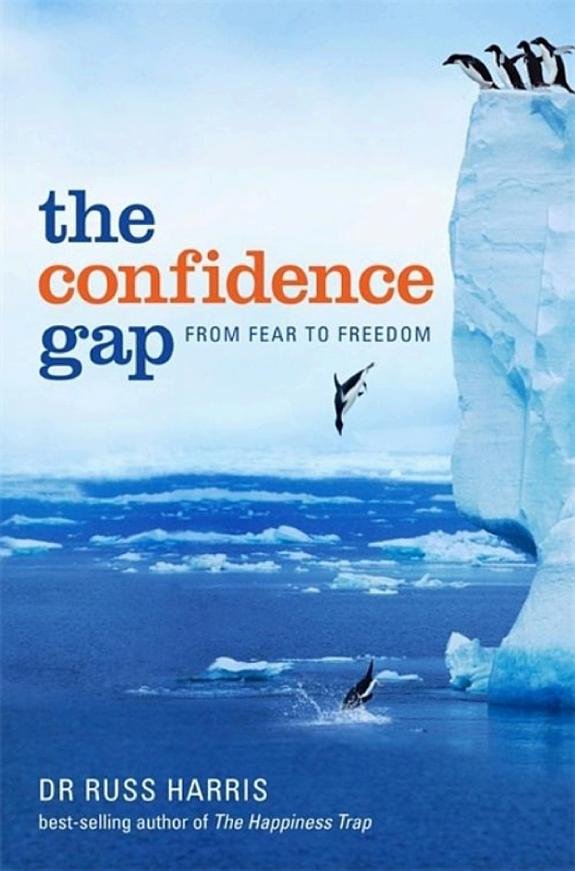
The Confidence Gap: A Guide to Overcoming Fear and Self-Doubt
6. The Confidence Gap by Russ Harris
Russ Harris is a physician and therapist who works with Acceptance and Commitment Therapy, a branch of psychology that takes a notably different approach to negative thoughts than most self-help books do. Where many books tell you to challenge your inner critic or replace bad thoughts with good ones, Harris suggests something more counterintuitive: stop fighting your thoughts altogether. Notice them, name them, and then act according to your values anyway.
The confidence gap in the title refers to the space between where you are and where you want to be, a space that comparison loves to fill with anxiety. Harris argues that waiting to feel confident before you act is the trap. Confidence, in his framework, is not a feeling you generate in advance. It is something that follows action, and action requires learning to carry your doubts without being paralysed by them. For anyone who compares themselves to people who seem effortlessly assured, this reframe is genuinely useful.
The book draws heavily on mindfulness principles but applies them in a practical, non-mystical way. Harris walks you through specific techniques for defusing from unhelpful thoughts, clarifying your values, and committing to behaviour that aligns with those values regardless of how you feel in the moment. It is methodical without being dry, and the case studies throughout make the abstract concepts concrete.
If you are looking for something emotionally warm or narrative-driven, this book will feel more like a workbook than a read. Harris is a clinician first and a storyteller second. That is not a criticism, but it is worth knowing before you sit down with it.
“The actions of a confident person are not born from the absence of fear or doubt. They are born from a willingness to move forward in spite of them.” – Russ Harris
This is perfect for readers who understand intellectually that comparison is unhelpful but still find themselves frozen by self-doubt, and who want a psychology-backed method for moving forward anyway.
None of these books will flip a switch and make comparison disappear overnight. That would be a nice promise but it would not be an honest one. What they can do, each in their own way, is give you a clearer picture of why the habit forms, what it is actually costing you, and what a more grounded relationship with your own life might look like.
Some readers will find their book on this list immediately. Others might need two. If you are not sure where to start, The Gifts of Imperfection is the most accessible entry point, and The Art of Thinking Clearly is the best choice if you want to understand the wiring before you try to rewire it. Either way, the fact that you are asking the question is already a step in the right direction. Your lane is waiting.