

8 Books That Teach You How to Say No
At some point, most of us have said yes to something we desperately wanted to say no to. A favor we resented. A commitment we dreaded. A conversation we smiled through while internally screaming. The ability to say no clearly, kindly, and without a week of guilt afterward is one of those skills nobody really teaches you, and yet it touches almost every relationship and decision in your life.
The good news is that it is absolutely a skill, not a personality trait reserved for confident extroverts or people who simply do not care what others think. These eight books approach the topic from different angles, ranging from behavioral psychology to spiritual reflection to practical frameworks you can use tomorrow morning. Some are blunt. Some are gentle. All of them have something real to offer if you are tired of overcommitting, overextending, and waking up resentful on a Tuesday.
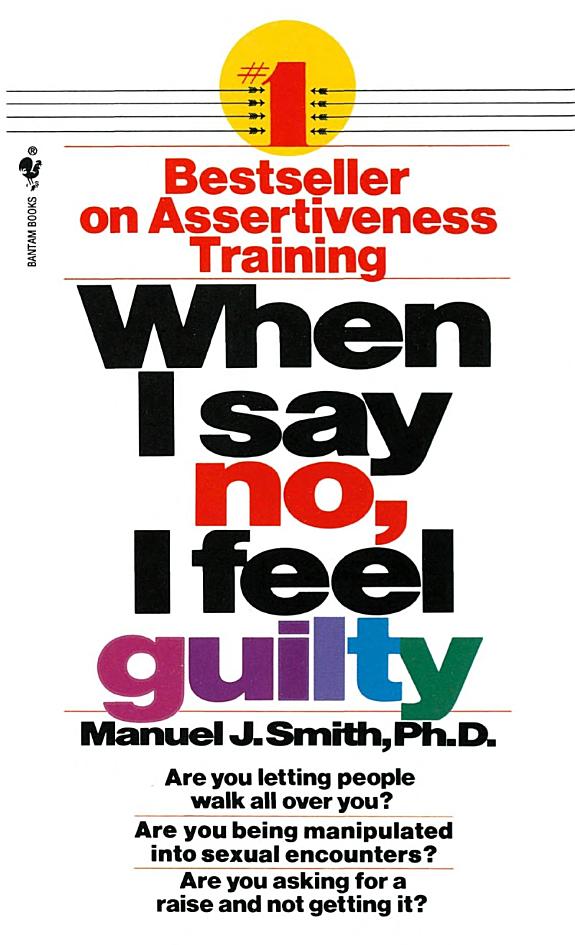
When I Say No, I Feel Guilty
1. When I Say No, I Feel Guilty by Manuel J. Smith
Published in 1975, this book has quietly outlasted most of its contemporaries, and for good reason. Manuel J. Smith was a clinical psychologist who believed that most people had been conditioned, often from childhood, to accept manipulative social pressure as normal. His response was to lay out a set of assertiveness techniques that were, for their time, genuinely radical. The most famous is the “Broken Record” method, which involves calmly repeating your position without escalating or apologizing. It sounds almost too simple, but anyone who has tried to hold a boundary with a persistent family member knows exactly why repetition matters.
Smith’s writing is direct and clinical in a way that some readers find refreshing and others find a little cold. He treats social manipulation as a kind of game with rules, and he wants you to understand those rules well enough to stop losing. The book is packed with scripted dialogues that model how assertiveness actually sounds in practice, which is genuinely useful. Reading about boundaries in theory is one thing. Seeing the exact words laid out on the page is another.
The dated language and some of the cultural assumptions are worth noting. This is a book from the 1970s, and it reads like one. The examples occasionally feel stiff, and the framing can be quite transactional. But the core insight, that you have the right to say no without justifying yourself to anyone, remains as relevant as ever. It is foundational reading for a reason.
“You have the right to judge your own behavior, thoughts, and emotions, and to take the responsibility for their initiation and consequences upon yourself.” Smith’s entire philosophy rests on this single idea, and it is worth sitting with.
This is perfect for readers who want a structured, psychology-based approach to assertiveness and do not mind a slightly textbook-style presentation. It is not the right fit for anyone looking for warmth, storytelling, or a modern conversational tone.
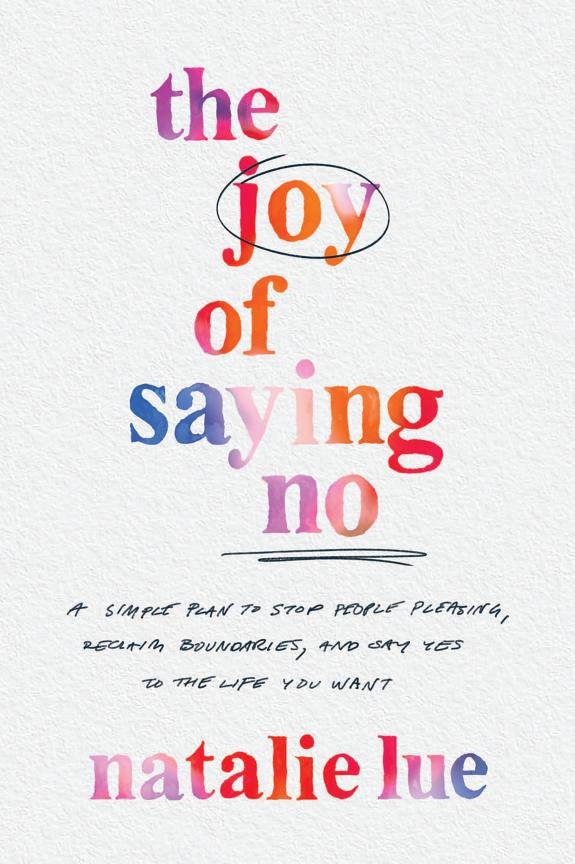
The Joy of Saying No: A Simple Plan to Stop People Pleasing, Reclaim Boundaries, and Say Yes to the Life You Want
2. The Joy of Saying No by Natalie Lue
Natalie Lue writes with the kind of directness that feels like a conversation with a very honest friend, one who will not let you off the hook but also genuinely wants things to go well for you. Her central argument is that people pleasing is not really about being nice. It is a coping mechanism, often rooted in fear of conflict, rejection, or loss of love, and it quietly costs you your sense of self over time. The title promises joy, and she actually delivers on that, framing the ability to say no not as an act of aggression but as an act of self-respect.
What sets this book apart is how seriously Lue takes the emotional and psychological roots of the problem. She is not just handing you scripts or telling you to be more assertive. She is asking you to look at why saying no feels so dangerous in the first place, and she does that work with real care. The chapters move through patterns of thinking, the stories we tell ourselves about what will happen if we disappoint someone, and how those stories were often written long before we were adults.
The writing is warm but never soft. Lue has a way of naming things plainly that can feel uncomfortably accurate. Some readers will find her approach slightly repetitive in the middle sections, and if you are looking for quick tactical advice, this is not the place to start. But if you want to understand the deeper pattern and actually shift it, this book earns its place on the shelf.
People pleasing is not generosity. It is often a quiet form of self-abandonment dressed up as helpfulness, and Lue makes that distinction with clarity and without cruelty.
This is perfect for anyone who suspects their difficulty saying no goes deeper than just needing better scripts, particularly people who grew up in households where keeping the peace came at a personal cost.
The Art of Saying No: How to Stand Your Ground, Reclaim Your Time and Energy, and Refuse to Be Taken for Granted
3. The Art of Saying No by Damon Zahariades
Damon Zahariades writes productivity and self-improvement books with a practical, no-frills approach, and this one is exactly what it advertises. If you want a short, actionable read that gives you concrete strategies for declining requests without damaging relationships, this delivers. Zahariades is not trying to rewrite your psychology. He is trying to give you a reliable toolkit for a specific, recurring problem, and he does it efficiently.
The book covers a range of scenarios, from saying no to a boss to turning down a friend’s favor request to handling the guilt that tends to follow. He writes in a conversational style that moves quickly, and the chapters are short enough that you could read the whole thing in an afternoon. There are specific phrases, reframes, and approaches for different types of requests, which makes it genuinely useful as a reference rather than just a one-time read.
The trade-off is depth. Zahariades stays at the surface level by design, and readers looking for a more thorough exploration of why boundaries feel so difficult will need to look elsewhere. The book also leans heavily on productivity framing, treating your time and energy as resources to be protected, which is a useful lens but not the only one. If you are more interested in the relational or emotional dimensions of this topic, other books on this list will serve you better.
Protecting your time is not selfishness. Zahariades frames the act of saying no as a form of integrity, a way of honoring the commitments you have already made rather than abandoning them for whoever asked most recently.
This is perfect for busy professionals who want fast, practical strategies they can apply immediately and are less interested in the psychological backstory behind their people pleasing habits.
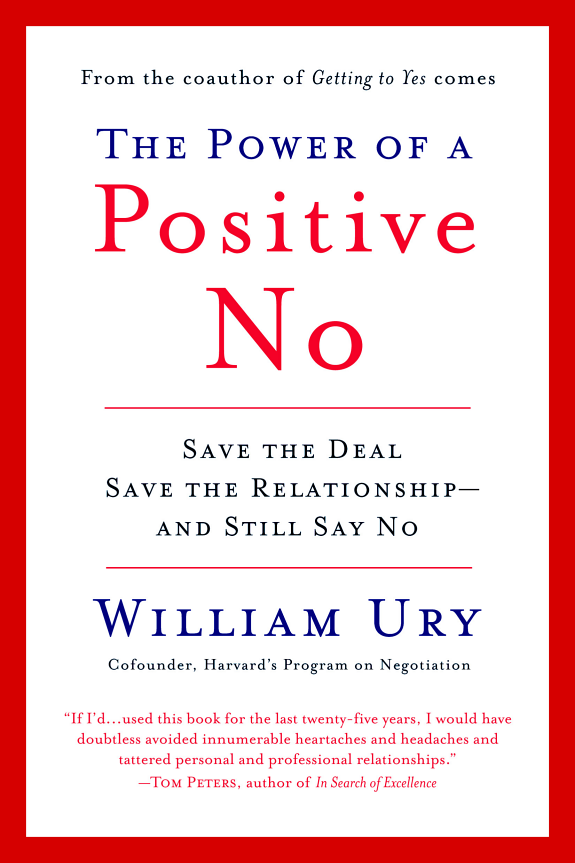
The Power of a Positive No: How to Say No and Still Get to Yes
4. The Power of a Positive No by William Ury
William Ury co-wrote “Getting to Yes,” one of the most widely read negotiation books ever published, so it is fitting that he eventually turned his attention to the other side of that conversation. This book makes a genuinely interesting argument: that the most effective no is not a refusal but a redirection, a way of saying no to one thing in order to say yes to something that matters more. It is a reframe that sounds simple but has real practical weight.
Ury structures the book around what he calls the Yes-No-Yes sandwich. You start by identifying what you are saying yes to, your values, your priorities, your actual needs. Then you deliver the no clearly and without apology. Then you end by offering a yes of some kind, an alternative, a relationship preserved, a door left open. It is a framework that works particularly well in professional and negotiation contexts, and Ury draws on his extensive background in conflict resolution to illustrate it with compelling examples.
The tone is measured and thoughtful, which suits the subject well. Ury is not trying to make you combative. He is trying to make you clear. The book is a little more formal than some others on this list, and readers who want something warmer or more personal may find it a touch dry. But for anyone who needs to say difficult things in high-stakes situations, this is one of the most sophisticated approaches available.
A no rooted in a deeper yes is far more sustainable than a no rooted in fear or resentment. Ury’s framework shifts the entire conversation from conflict to clarity.
This is perfect for professionals, managers, and anyone who regularly navigates negotiations or difficult conversations and wants a principled, structured approach to declining without burning bridges.
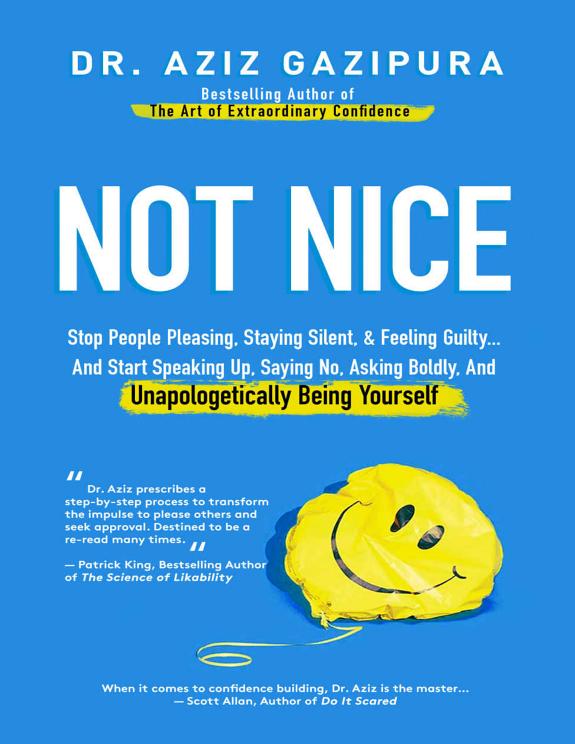
Not Nice: Stop People Pleasing, Staying Silent, & Feeling Guilty… And Start Speaking Up, Saying No, Asking Boldly, And Unapologetically Being Yourself
5. Not Nice by Aziz Gazipura
Aziz Gazipura is a psychologist who spent years struggling with social anxiety and people pleasing before doing the work to change it, and that personal history gives this book a texture that purely clinical texts often lack. “Not Nice” is direct and sometimes provocative, arguing that the relentless drive to be liked and approved of is not a virtue but a kind of social conditioning that keeps people small, anxious, and perpetually exhausted. He is not interested in polite reframes. He wants you to see the pattern clearly enough to actually want to change it.
The book covers a wide range of territory, from speaking up in groups to ending conversations to asking for what you want without hedging. Gazipura writes with energy and conviction, and his examples draw from both his clinical practice and his own life, which makes the book feel grounded rather than abstract. He also addresses the fear of rejection directly, which is often the real obstacle underneath the surface difficulty of saying no.
Some readers find his tone a little intense, and the book is longer than it strictly needs to be. There are also moments where the advice leans toward the confrontational end of the spectrum in ways that may not suit every personality or context. But for readers who have tried gentler approaches and found them insufficient, Gazipura’s directness can be exactly what cuts through the noise.
The desire to be liked is not the same as the desire to be loved or respected. Gazipura draws that distinction carefully, and it has a way of reordering your priorities in uncomfortable but useful ways.
This is perfect for people who have read other books on assertiveness and still find themselves stuck, particularly those whose people pleasing is tangled up with social anxiety or deep fear of disapproval.
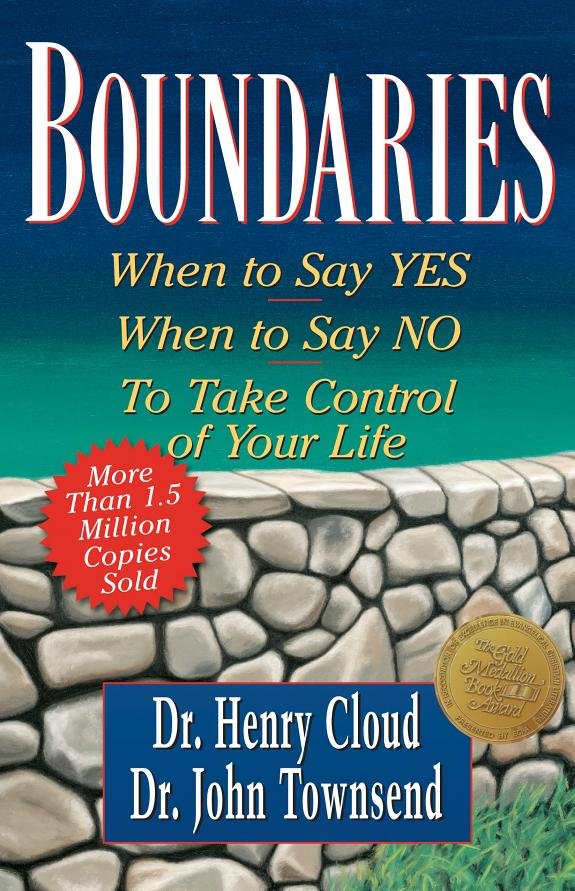
Boundaries: When to Say Yes, How to Say No to Take Control of Your Life
6. Boundaries by Henry Cloud and John Townsend
First published in 1992, this book has sold millions of copies and remains one of the most referenced texts on the subject of personal limits. Cloud and Townsend are both Christian psychologists, and the book is written explicitly from within a faith framework, drawing on scripture and Christian theology throughout. That context matters, because it shapes both the strengths and the limitations of the book depending on who is reading it.
For readers who share that framework, or who are at least comfortable with it, the book offers something genuinely distinctive: a treatment of boundaries not as self-protective strategies but as spiritually grounded expressions of how human beings are designed to relate to one another. The authors argue that healthy limits are not selfish but are in fact necessary for genuine love, and they make that case with both warmth and rigor. The book covers family relationships, friendships, marriage, and work, and it does so with a depth that many more secular treatments of the topic do not reach.
Readers who are not religious, or who find faith-based framing alienating, will likely struggle here. The theological scaffolding is not incidental. It is load-bearing. There is also a level of directness about certain relational dynamics, particularly around enabling and codependency, that some readers find bracing. But for its intended audience, this book has clearly provided a vocabulary and a framework that changed how they understood their own relationships.
Cloud and Townsend argue that the inability to say no is not just a communication problem. It is a reflection of how clearly you understand where you end and someone else begins, and that clarity is worth pursuing for its own sake.
This is perfect for readers who approach personal growth from within a Christian faith tradition and want a thorough, theologically grounded exploration of why limits in relationships are not just acceptable but necessary.
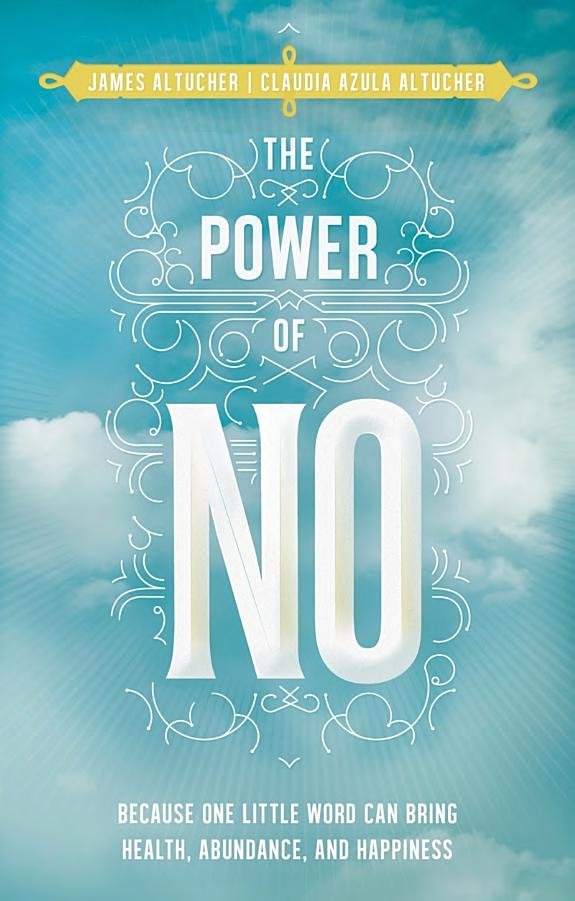
The Power of No: Because One Little Word Can Bring Health, Abundance, and Happiness
7. The Power of No by James Altucher and Claudia Azula Altucher
James Altucher is a writer who built a following by being unusually honest about failure, and this book carries that sensibility throughout. Written with his wife Claudia Azula Altucher, it takes a broader and more philosophical view of saying no than most of the other books on this list. The argument is that saying no to the things that drain you, the obligations, the relationships, the commitments that feel wrong, is what creates space for the things that actually matter. It is less a how-to manual and more a meditation on what you are really agreeing to when you say yes to everything.
The book is structured around different types of no, from saying no to anxiety to saying no to people who diminish you, and the chapters alternate between James and Claudia’s voices, which gives it an unusual rhythm. Some sections are practical. Others are almost lyrical. The Altuchers write with genuine personality, and even when the book wanders, it wanders in interesting directions. There is a warmth here that is hard to manufacture.
This is not a book for readers who want a systematic framework or step-by-step instructions. The approach is more impressionistic, and the structure is loose enough that some readers will find it frustrating. It also has a tendency to drift into broader life philosophy in ways that occasionally lose sight of the original subject. But as an invitation to reconsider what you are actually spending your life on, it is quietly persuasive.
Every yes is a trade. The Altuchers keep returning to that idea, and it has a way of making you look differently at your calendar, your obligations, and your sense of what is actually optional.
This is perfect for readers who enjoy personal, essayistic writing and want to think about boundaries in a broader life-philosophy context rather than through a structured self-help framework.
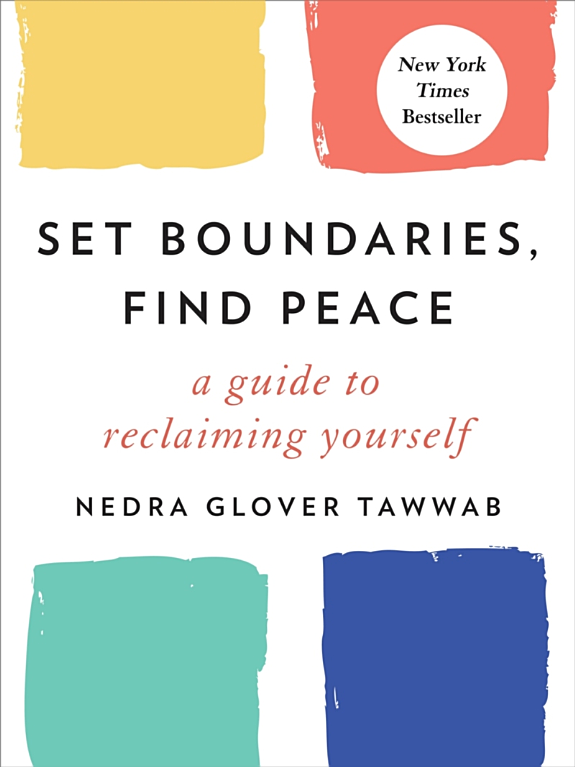
Set Boundaries, Find Peace: A Guide to Reclaiming Yourself
8. Set Boundaries, Find Peace by Nedra Glover Tawwab
Nedra Glover Tawwab is a therapist who became widely known on social media for making boundary-setting concepts accessible and practical, and this book extends that work into a full, carefully organized guide. It is one of the most comprehensive treatments of the subject available, covering not just what to say but how to identify where your limits are in the first place, which turns out to be the harder question for many people. Tawwab writes with clarity and without condescension, which is rarer than it should be in this genre.
The book moves through different relationship contexts, family, friendships, romantic partnerships, the workplace, and social media, with specific attention to what healthy and unhealthy patterns look like in each. Tawwab also addresses the particular challenges that come with cultural and family dynamics where direct communication about limits may be unfamiliar or even frowned upon. That kind of specificity makes the book feel genuinely useful rather than generic.
The tone is calm and clinical in a way that works well for the subject. Tawwab is not trying to rile you up or convince you that everyone in your life is a villain. She is trying to help you see clearly and make deliberate choices. The book includes reflection questions throughout, which some readers will find valuable and others will skip entirely. Either approach works. The core content stands on its own without the exercises.
Tawwab makes the point that boundaries are not walls. They are the terms under which you are willing to be in relationship with someone, and communicating them clearly is an act of honesty, not hostility.
This is perfect for readers who want a thorough, therapist-guided exploration of boundaries across all major life relationships, especially those who have struggled to even identify what their own limits are before trying to communicate them.
What strikes me about this collection of books is how many different angles there are into the same basic problem. Some of these writers come at it through psychology, some through negotiation theory, some through faith, some through personal experience. And yet they keep arriving at variations of the same conclusion: that the difficulty of saying no is almost never about the word itself. It is about what you believe will happen if you say it, and whether you think your needs are worth protecting in the first place.
You do not need to read all eight of these. Pick the one that matches where you are right now. If you want something practical and fast, start with Zahariades. If you want to go deeper into the emotional roots of people pleasing, Lue or Gazipura will serve you better. If you are working through this from within a faith tradition, Cloud and Townsend have been a touchstone for millions of readers for good reason. And if you want to think about the whole shape of your life and what you are actually saying yes to, the Altuchers will give you plenty to sit with.
The goal is not to become someone who says no to everything. It is to become someone who means it when they say yes.