
8 Books for Emotional Healing That Actually Help
Some books find you at exactly the right moment. You pick one up thinking you are just going to skim a few pages before bed, and an hour later you are sitting there with a highlighted passage and a very complicated feeling in your chest. That is what the best books about emotional healing tend to do. They do not fix you, because you are not broken. But they do help you understand yourself a little better, and sometimes that is everything.
The eight books collected here cover a wide range of approaches, from neuroscience and attachment theory to Buddhist philosophy and personal memoir. Some are dense and require a slow read. Others move quickly and feel almost like a conversation with a thoughtful friend. What they share is an honest engagement with the messiness of being human. None of them promise a quick fix, and that is precisely why they are worth your time.
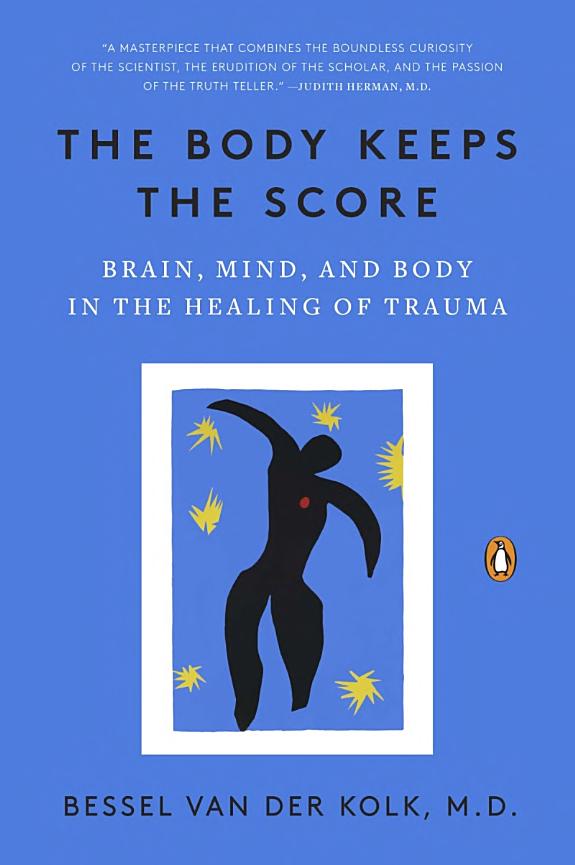
The Body Keeps the Score
1. The Body Keeps the Score by Bessel van der Kolk
Bessel van der Kolk spent decades working with trauma survivors, and this book is the result of all that clinical experience distilled into something genuinely readable. The central argument is that trauma is not just a psychological event. It lives in the body, reshaping the nervous system, altering the way we breathe and move and respond to the world around us. Van der Kolk writes with the authority of a researcher and the warmth of someone who has actually sat with people in pain.
The book moves through different therapeutic approaches, including EMDR, yoga, theater, and neurofeedback, explaining why talk therapy alone is often not enough. It can feel overwhelming at times, and a few sections read more like a medical textbook than a popular science book. That is not necessarily a flaw, but it is worth knowing before you dive in. If you have experienced significant trauma, some chapters may be difficult to read without taking breaks.
What makes this book stand out is its refusal to reduce trauma to a single cause or a single cure. Van der Kolk treats the subject with the complexity it deserves. He also writes about the social and political dimensions of trauma, including how systems fail survivors, which gives the book a scope that goes well beyond individual therapy.
“Trauma is not just an event that took place sometime in the past; it is also the imprint left by that experience on mind, brain, and body.”
This is perfect for anyone who has ever felt that their body holds onto stress or pain in ways they cannot fully explain, and for therapists, caregivers, and curious readers who want a thorough grounding in how trauma actually works.
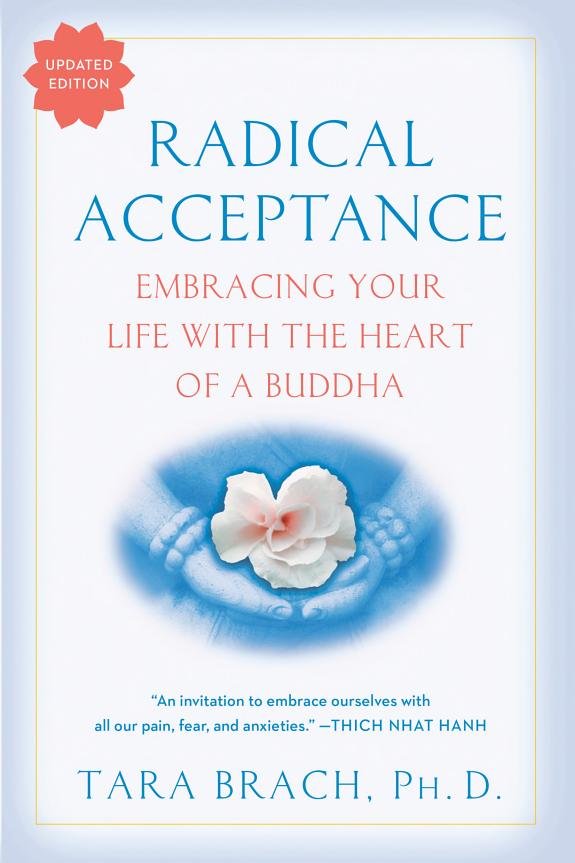
Radical Acceptance
2. Radical Acceptance by Tara Brach
Tara Brach is a psychologist and Buddhist meditation teacher, and this book sits comfortably at the intersection of those two worlds. The core idea is disarmingly simple: much of our suffering comes from a deep, often unconscious belief that we are fundamentally flawed. Radical acceptance, in Brach’s framing, is the practice of meeting that belief with honesty and compassion rather than continued struggle.
The writing is gentle without being saccharine. Brach draws on her own experiences with self-judgment, on stories from her therapy clients, and on Buddhist teachings to build a case for a different relationship with our inner lives. The meditations woven throughout the book are practical and genuinely useful, not just decorative. They are short enough to try without any prior meditation experience, which is a nice touch.
If you are deeply skeptical of anything that sounds spiritual, this book might test your patience in a few places. The Buddhist framework is central rather than incidental, and Brach does not shy away from it. Readers who are open to that framework, or at least willing to engage with it, will find a great deal of warmth and wisdom here. Those who need everything grounded in clinical research may want to pair this with something more empirically focused.
“The boundary to what we can accept is the boundary to our freedom.”
This is perfect for people who are hard on themselves, who carry a quiet but persistent sense of not being enough, and who are open to a meditation-based approach to self-compassion.
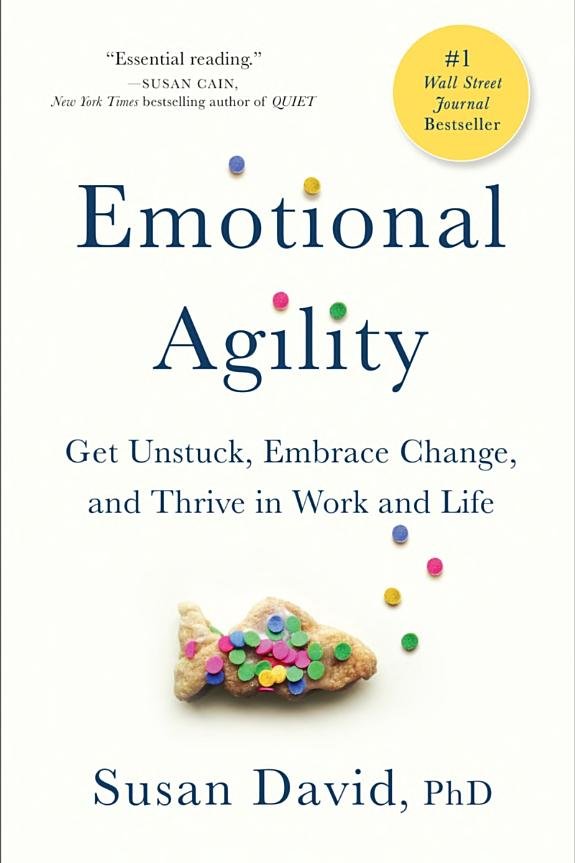
Emotional Agility
3. Emotional Agility by Susan David
Susan David is a psychologist at Harvard Medical School, and she opens this book with a story about a journal she kept as a grieving teenager after her father died. A teacher read it and wrote back two words: “You’re coping.” That small moment of being seen became the seed of a career spent studying how people navigate difficult emotions. The book that grew from that work is sharp, practical, and surprisingly funny in places.
The central concept is that emotional agility is not about feeling good all the time. It is about developing a flexible, open relationship with your own inner experience rather than getting hooked by difficult thoughts or pushing them away. David is particularly good on the problem of toxic positivity, the way that relentless cheerfulness can actually make emotional processing harder. It is a relief to read a self-help book that does not tell you to just think positive.
The book is well structured and moves at a good pace. Some readers may find the corporate examples a bit heavy, since David does a lot of work with organizations and that context shows up frequently. If you are not particularly interested in workplace dynamics, you might skim a few sections. The underlying ideas, though, translate easily to any area of life.
“Discomfort is the price of admission to a meaningful life.”
This is perfect for people who feel stuck in unhelpful thought patterns, who tend to either suppress their emotions or get completely swept away by them, and who appreciate a research-backed but accessible writing style.
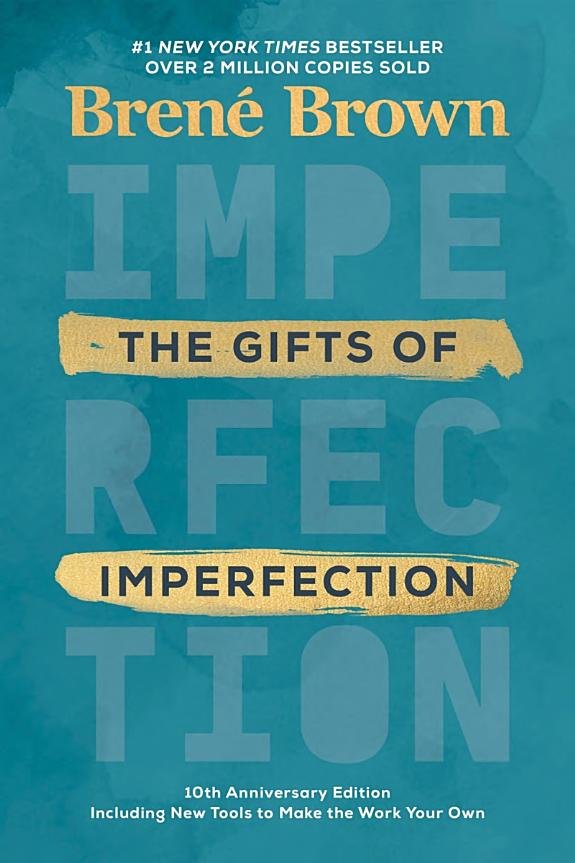
The Gifts of Imperfection
4. The Gifts of Imperfection by Brené Brown
Brené Brown has become such a cultural fixture that it is easy to approach her books with a certain amount of skepticism, the way you might feel about a restaurant that always has a line around the block. But this book, one of her earlier and more focused works, holds up well. It is organized around ten guideposts for what Brown calls wholehearted living, each one exploring a different aspect of letting go of who you think you should be in order to embrace who you actually are.
Brown’s voice is conversational and self-deprecating in a way that feels genuine rather than performed. She shares her own struggles with perfectionism and people-pleasing openly, and that honesty gives the book a grounded quality. The research underpinning her ideas is qualitative, based on years of interviews, and she is transparent about that. If you need randomized controlled trials, you will need to look elsewhere. But if you are open to the idea that collected human stories can also be a form of evidence, you will find plenty here.
The book is relatively short and easy to read in a weekend. Some chapters land harder than others, and a few of the guideposts cover fairly familiar ground if you have read widely in this area. But the chapter on rest and play, and the one on creativity, feel genuinely fresh and are worth the price of admission on their own.
“Owning our story and loving ourselves through that process is the bravest thing that we will ever do.”
This is perfect for perfectionists, chronic people-pleasers, and anyone who has spent a significant amount of energy trying to appear like they have everything together.
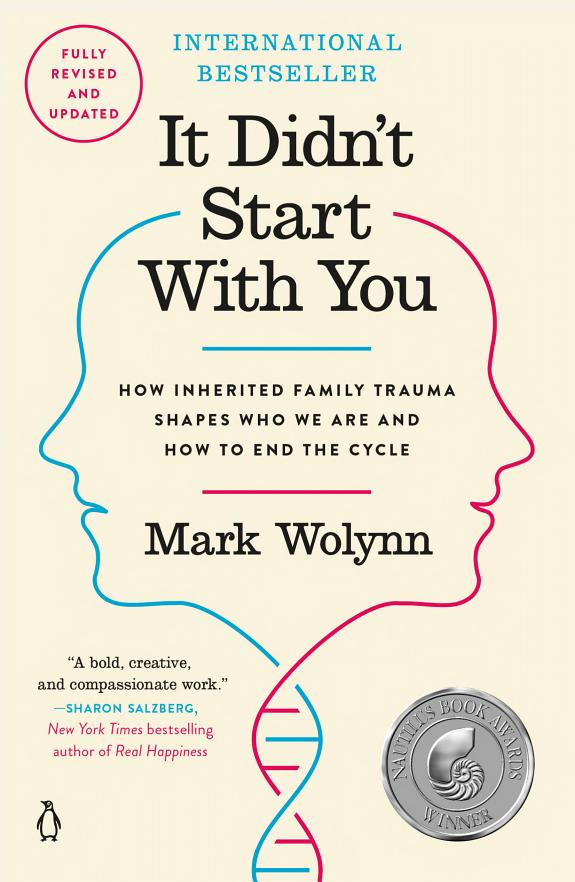
It Didn’t Start with You
5. It Didn’t Start with You by Mark Wolynn
This is the most unusual book on the list, and probably the one that will divide readers most sharply. Mark Wolynn works with inherited family trauma, drawing on research in epigenetics and family systems therapy to argue that some of our deepest fears and emotional patterns may have roots in the unresolved experiences of our parents, grandparents, or even earlier ancestors. If that sounds like a stretch, Wolynn makes a careful, well-sourced case for it.
The epigenetic research he cites is real and genuinely interesting. Studies on the descendants of Holocaust survivors and on children of people who experienced famine have shown measurable biological effects across generations. Wolynn builds on this science to develop a therapeutic approach that involves mapping family history and identifying what he calls core language, the specific words and phrases that carry emotional weight from one generation to the next. It is a strange and compelling method.
This book is not for everyone, and it is worth being honest about that. If you find the idea of inherited trauma either scientifically implausible or emotionally destabilizing, this is not the right starting point. It works best as a complement to active therapy rather than a standalone resource. But for readers who have done a lot of personal work and still feel stuck in patterns they cannot trace to their own direct experience, it offers a genuinely different lens.
“The most important language we speak is often not the language we were taught, but the language our bodies learned before we could speak at all.”
This is perfect for people who feel haunted by fears or grief that do not seem to belong entirely to their own life story, and for those with a strong interest in family systems and intergenerational psychology.
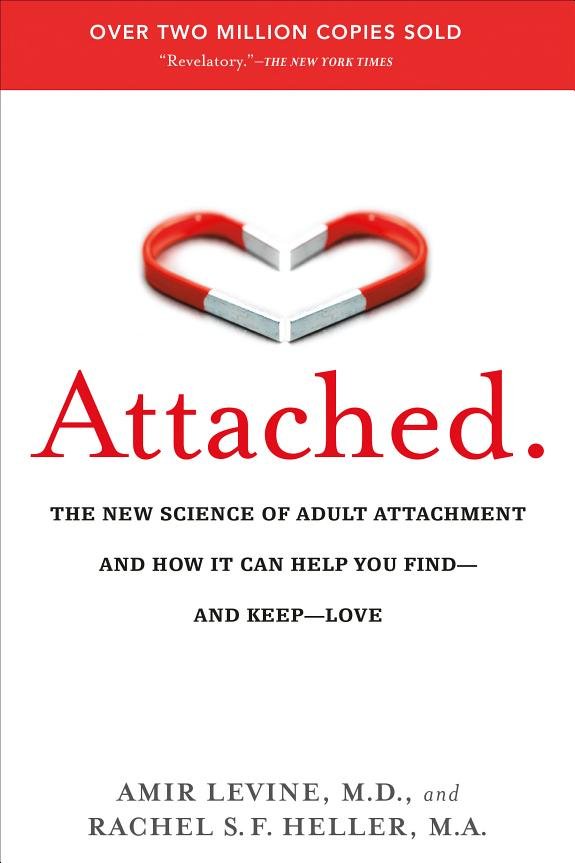
Attached
6. Attached by Amir Levine
Amir Levine is a psychiatrist and neuroscientist, and he co-wrote this book with Rachel Heller to bring attachment theory out of the academic literature and into everyday life. The basic premise is that adults, like infants, have distinct attachment styles, broadly categorized as secure, anxious, or avoidant, and that understanding your own style and your partner’s can clarify an enormous amount of relational confusion. It sounds simple. The implications are not.
The book is written in a clear, engaging style that makes the science feel approachable without dumbing it down. Levine and Heller are particularly good at explaining why anxious and avoidant partners so often end up together, and why that combination tends to be so destabilizing for both people. Reading those chapters can feel a bit like being handed a map of a place you have been wandering for years. Uncomfortable, but useful.
The book focuses primarily on romantic relationships, so if you are looking for a broader exploration of attachment in friendships or family dynamics, you may want to supplement it with other reading. Some readers also find the categorization of people into three types a little too neat, and that is a fair critique. Human beings are more complicated than any taxonomy. But as a starting framework, the attachment model is genuinely clarifying.
“Dependency is not a character flaw. It is a biological reality.”
This is perfect for anyone who has ever felt chronically anxious in relationships, who tends to pull away when things get close, or who keeps ending up in the same confusing relationship dynamics without understanding why.
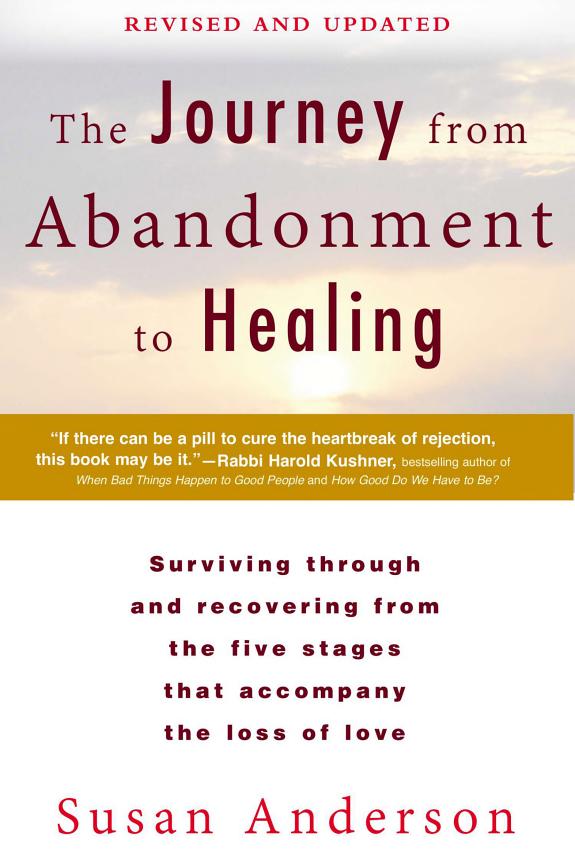
The Journey from Abandonment to Healing
7. The Journey from Abandonment to Healing by Susan Anderson
Susan Anderson spent years working as a psychotherapist with people navigating heartbreak and loss, and this book grew out of that clinical experience. It focuses specifically on the wound of abandonment, whether from a romantic breakup, the loss of a parent, or the chronic experience of emotional unavailability in childhood. Anderson argues that abandonment is one of the most universal and least discussed sources of emotional pain, and she is probably right.
The book walks through five stages of abandonment grief, which Anderson names shattering, withdrawal, internalizing, rage, and lifting. The framework is not meant to be a tidy linear progression but rather a map of the emotional terrain that most people move through in some form. Anderson writes with real empathy and without condescension, which matters a great deal in a book covering this kind of raw material.
The exercises throughout the book are concrete and worth doing rather than skipping. Anderson includes guided imagery and journaling prompts that are more thoughtfully constructed than what you find in most self-help books. The writing style is warm but occasionally a bit clinical, and the book does not have the literary polish of some others on this list. That is a small complaint. What it offers in clarity and compassion more than compensates.
“Abandonment is a wound that does not announce itself clearly. It hides inside other feelings, making them harder to name and harder to heal.”
This is perfect for people recovering from a significant loss or breakup, those who carry deep fear of being left or rejected, and anyone who wants a structured, compassionate guide through grief.
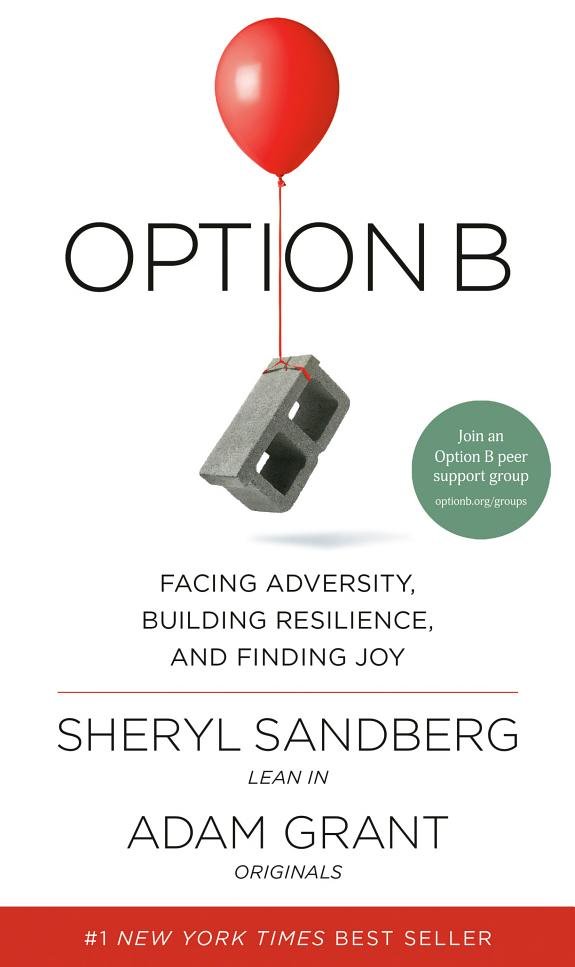
Option B
8. Option B by Sheryl Sandberg
Sheryl Sandberg wrote this book after the sudden death of her husband Dave Goldberg, and she co-wrote it with psychologist Adam Grant, which gives it an interesting dual register. Sandberg brings raw personal grief. Grant brings research on resilience and post-traumatic growth. The combination works better than you might expect, and the book manages to be both emotionally honest and practically grounded without feeling cold or self-helpy in a hollow way.
The title comes from a moment when Sandberg told a friend she wanted Dave to take her son to a father-child event at school, and the friend gently said that was not possible anymore. Another friend stepped in and said he would take the boy. “Option A is not available,” Sandberg writes. “So let’s just kick the s out of Option B.” That spirit runs through the entire book, a refusal to pretend that loss is not loss, combined with a genuine belief in the human capacity to find meaning and even joy again.
Some readers have noted that Sandberg’s privilege, her resources, her network, her platform, shapes her experience of grief in ways the book does not always fully reckon with. That is a fair observation, and it is worth holding in mind. But the emotional core of the book is genuine, and the sections on how friends and colleagues can better support grieving people are some of the most practically useful writing on that subject I have encountered.
“We plant the seeds of resilience in the ways we process negative events.”
This is perfect for people navigating grief or significant loss, for those who want to support a grieving friend more thoughtfully, and for readers who appreciate personal narrative woven together with psychological research.
None of these books will do the work for you. That is worth saying plainly. Healing is not something that happens to you while you read; it happens through the slow, often unglamorous process of showing up for yourself over time. But books can be companions along the way. They can name things you have not been able to name, offer frameworks that make sense of confusion, and remind you that whatever you are going through, someone else has been there too and found a way through.
If you are not sure where to start, let the subject matter guide you. If trauma is the central thread, begin with van der Kolk. If relationships are the source of pain, Levine or Anderson might be the more immediate fit. If you are in the thick of grief, Sandberg’s honesty might be exactly what you need. There is no wrong door into this material. Pick the book that feels most relevant right now, and trust that the others will still be there when you are ready for them.