7 Books for Creating a Life You Actually Want
At some point, most of us look up from the busyness and wonder whether we are actually living the life we chose or just the one that happened to us. It is a strange, unsettling moment. Not a crisis exactly, more like a quiet question that refuses to go away.
The books on this list are for that moment. They are not about hacking your mornings or becoming a productivity robot. They are about the slower, more honest work of figuring out what you actually want, clearing away what you do not, and building something that feels real. Some are practical, some are philosophical, and one is frankly a little unhinged in the best possible way. All of them are worth your time.
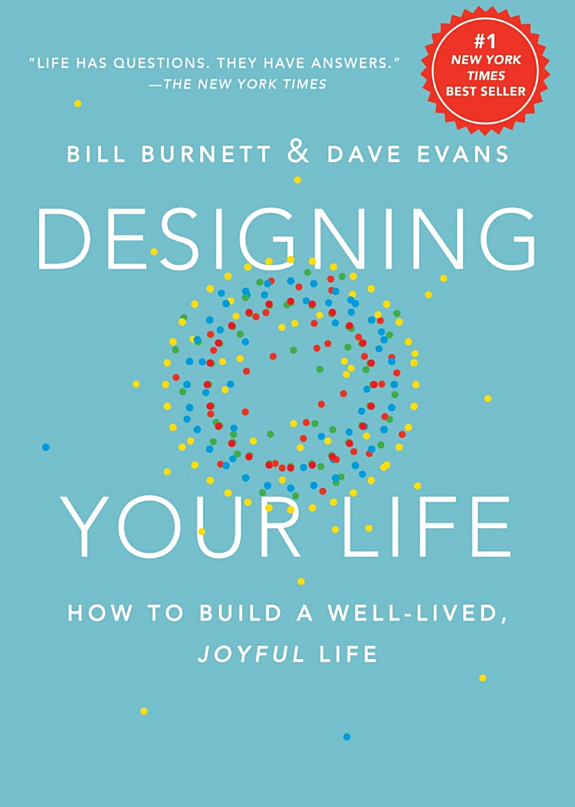
Designing Your Life: How to Build a Well-Lived, Joyful Life
1. Designing Your Life: How to Build a Well-Lived, Joyful Life by Bill Burnett and Dave Evans
Bill Burnett and Dave Evans are Stanford design professors who got tired of watching students freeze up when asked what they wanted to do with their lives. So they turned their design thinking curriculum into a framework for building a life. The result is a book that feels less like a self-help title and more like a thoughtful workshop you can do at your own pace, in your pajamas, without anyone judging your handwriting.
The central idea is that life, like a product, can be prototyped. You do not have to commit to a single vision of your future before you have tested any of it. Burnett and Evans introduce tools like the Work/Play/Love/Health dashboard, the Good Time Journal, and the concept of “odyssey plans,” which are essentially three different versions of the next five years of your life. It sounds a bit corporate at first, but the exercises are genuinely clarifying. They push you to notice what actually energizes you versus what you think should energize you, which turns out to be a very different question.
The writing is warm and approachable without being saccharine. Burnett and Evans are not selling you a fantasy. They are explicit that designing your life does not mean getting everything you want. It means making intentional choices with the materials you actually have. That honesty is refreshing in a genre that can sometimes feel like a relentless sales pitch for optimism.
“A well-designed life is a life that makes sense. It’s a life in which who you are, what you believe, and what you do all line up together.”
This is perfect for anyone feeling stuck at a career crossroads, recent graduates overwhelmed by options, or people in their thirties and forties quietly wondering if there is still time to change direction. It is less suited to readers who want purely philosophical reflection with no exercises involved.
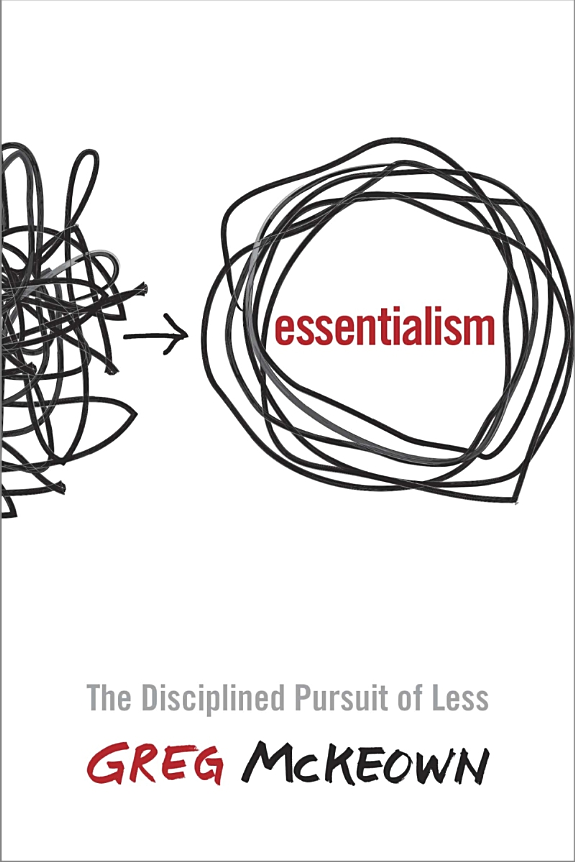
Essentialism: The Disciplined Pursuit of Less
2. Essentialism: The Disciplined Pursuit of Less by Greg McKeown
Greg McKeown has one argument and he makes it with the focus of someone who has clearly practiced what he preaches. The argument is this: almost everything is not essential, and until you ruthlessly identify what is, you will spend your life making tiny amounts of progress in a hundred directions instead of meaningful progress in one. It is the kind of thesis that sounds obvious until you actually try to live it.
Essentialism is not minimalism, though the two share some DNA. McKeown is not telling you to own fewer things or live in a white room. He is talking about attention, commitments, and the relentless social pressure to say yes to things that dilute your time and energy. He is particularly sharp on the way busyness has become a status symbol, something people wear with pride even as it quietly hollows them out. The book is full of case studies and the writing is crisp, though it does occasionally repeat itself in a way that feels like a business book habit McKeown could not quite shake.
What makes this book genuinely useful is its insistence that saying no is not a failure of generosity. It is a prerequisite for doing anything well. McKeown frames the essentialist not as someone who does less out of laziness but as someone who does less in order to do what matters far better. For people who are overcommitted and exhausted but cannot figure out how to stop, that reframe is worth the price of the book alone.
“If you don’t prioritize your life, someone else will.”
This is perfect for high achievers who are succeeding by most external measures but feel scattered and depleted, and for anyone who finds themselves saying yes to things they immediately regret. It is probably not the right fit for people who already have clear boundaries and feel comfortable saying no.
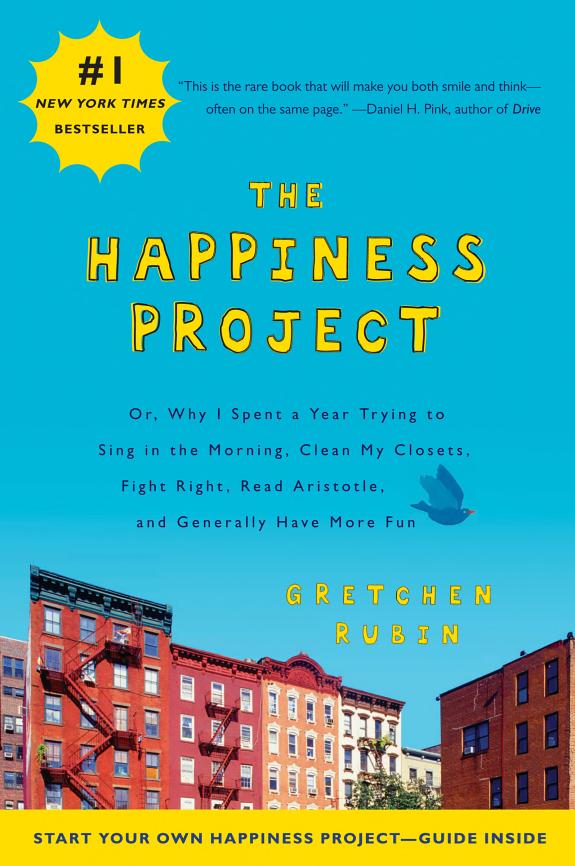
The Happiness Project: Or, Why I Spent a Year Trying to Sing in the Morning, Clean My Closets, Fight Right, Read Aristotle, and Generally Have More Fun
3. The Happiness Project by Gretchen Rubin
Gretchen Rubin did not write this book because she was miserable. She wrote it because she was standing on a city bus one afternoon, realized her life was genuinely good, and felt a sudden panic that she was not appreciating any of it. That is a more interesting premise than most happiness books offer, and it shapes everything that follows. Rubin is not recovering from disaster. She is trying to pay closer attention to an ordinary life, which turns out to be both harder and more interesting than it sounds.
The structure is month by month across a year, with each month dedicated to a different theme: boosting energy, remembering love, aiming higher, and so on. Rubin tests various strategies drawn from psychology research, philosophy, and her own instincts, and reports back with the candor of someone who is not trying to sell you on her results. Some things worked. Some did not. She is funny about both. Her chapter on marriage is particularly honest, the kind of honest that makes you feel slightly seen and slightly uncomfortable in a productive way.
The book has a warm, conversational voice that makes it easy to read quickly, though some readers find its relentlessly cheerful energy a bit much over several hundred pages. Rubin is also upfront that her happiness project is hers specifically. She is not prescribing her resolutions to anyone else, which is a more mature stance than most books in this space manage to take.
“The days are long, but the years are short.”
This is perfect for readers who feel vaguely dissatisfied without knowing why, people who enjoy memoir-style nonfiction, and anyone who likes the idea of a structured personal experiment. It is less suited to readers who want hard science or who find chirpy self-reflection grating after a while.
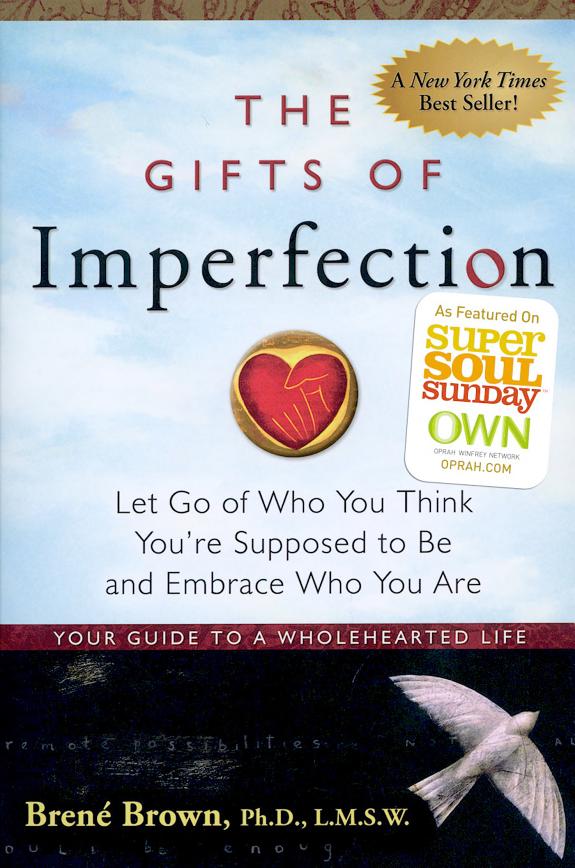
The Gifts of Imperfection: Let Go of Who You Think You’re Supposed to Be and Embrace Who You Are
4. The Gifts of Imperfection by Brené Brown
Brené Brown is a researcher who studies shame and vulnerability, which means she has spent years listening to people talk about the gap between who they are and who they feel they are supposed to be. The Gifts of Imperfection is her attempt to translate that research into something practical and readable, organized around what she calls guideposts for wholehearted living. It is a smaller, quieter book than her later work, and in some ways the better for it.
The core argument is that worthiness is not something you earn by achieving or perfecting or pleasing. It is something you either claim or you do not, and most of us spend enormous energy not claiming it. Brown writes about cultivating authenticity, letting go of what other people think, and the strange courage it takes to rest when the culture insists you should be hustling. She is particularly good on the way perfectionism masquerades as a high standard when it is actually a form of fear dressed up in respectable clothes.
Brown’s voice is warm and direct, and she draws on her own struggles rather than just her research subjects, which gives the book a texture that pure self-help often lacks. Some readers find her framework a bit repetitive across chapters, and the “guidepost” structure can feel slightly formulaic by the end. But the central ideas land, and they land in a way that tends to stay with you.
“Owning our story and loving ourselves through that process is the bravest thing that we will ever do.”
This is perfect for people who are hard on themselves, chronic people-pleasers, and anyone who suspects that the version of themselves they present to the world is exhausting to maintain. It is less suited to readers who prefer data-heavy approaches or who have already done significant work in this area and want something more advanced.
You Are a Badass: How to Stop Doubting Your Greatness and Start Living an Awesome Life
5. You Are a Badass by Jen Sincero
Full disclosure: You Are a Badass is the loudest book on this list. Jen Sincero writes with the energy of someone who has had several espressos and is genuinely excited to tell you that you are getting in your own way. If that sounds like too much, it might be. But if you are someone who needs a book to grab you by the shoulders and shake, this one will do it with considerable enthusiasm.
Sincero draws on a mix of cognitive behavioral ideas, Law of Attraction thinking, and her own story of being broke and directionless in her thirties before eventually turning things around. The Law of Attraction material will not land for everyone, and she is upfront enough that skeptical readers can take what is useful and leave the rest. What works regardless of your metaphysical preferences is her clarity on self-sabotage, the subconscious stories we tell ourselves about what we deserve, and the specific, unglamorous work of changing them.
The writing is irreverent and funny, with chapter titles like “Your Brain Is Your Bitch” and a general refusal to be solemn about any of this. It is not a subtle book. But it is an honest one in its own way, and for readers who have bounced off more measured self-help titles because they felt too polite, Sincero’s bluntness can be exactly the right register. Just go in knowing what you are getting.
“You are responsible for what you put out into the world.”
This is perfect for people who are stuck in a rut and need a loud, irreverent kick to get moving, and for readers who find traditional self-help too earnest or dry. It is not the right fit for skeptics of motivational language, readers who prefer nuance over enthusiasm, or anyone who finds profanity in nonfiction distracting.
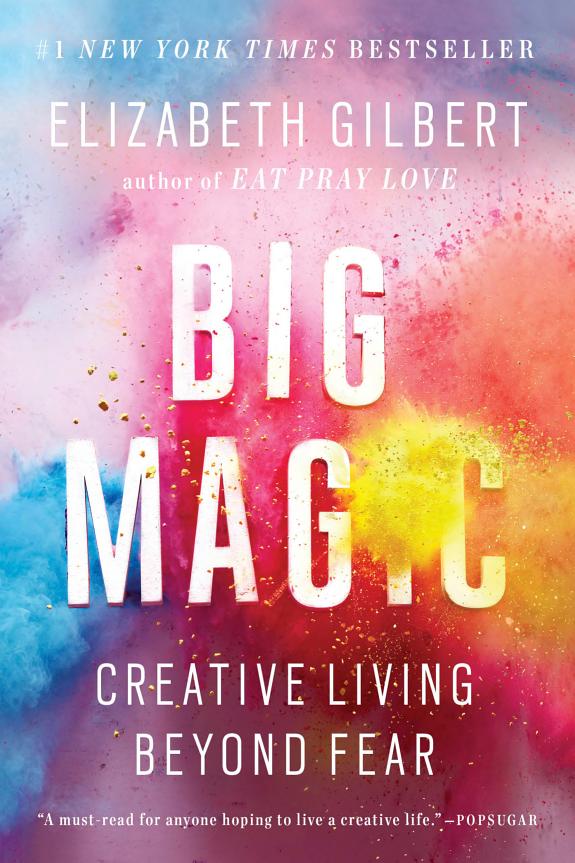
Big Magic: Creative Living Beyond Fear
6. Big Magic: Creative Living Beyond Fear by Elizabeth Gilbert
Elizabeth Gilbert believes that ideas are alive and that they travel around looking for humans willing to bring them into existence. She says this with complete sincerity and zero apology. Whether you take it literally or as an extended metaphor, it is a genuinely interesting way to think about creativity, and Big Magic is full of ideas like it: strange, specific, and oddly freeing.
The book is not really about being an artist in the professional sense. It is about living creatively in the broader sense, pursuing curiosity, making things for the pleasure of making them, and refusing to let fear be the final word on what you attempt. Gilbert is particularly sharp on the difference between living for your creativity versus demanding that your creativity pay the bills. She argues that the moment you require your creative work to support you financially, you have placed a burden on it that tends to crush the joy out of it. It is a counterintuitive argument in a culture that romanticizes quitting your day job, and it is worth sitting with.
Gilbert writes with the confidence of someone who has thought about these things for a long time and is not particularly interested in hedging. Some readers find her certainty energizing. Others find it a little breezy about the real obstacles people face. She is also, it must be said, a genuinely gifted prose stylist, and reading her is pleasurable in a way that not all nonfiction manages.
“The universe buries strange jewels deep within us all, and then stands back to see if we can find them.”
This is perfect for people who have a creative itch they have been ignoring for years, recovering perfectionists who have stopped making things because they fear they will not be good enough, and anyone who needs permission to pursue something just because it delights them. It is less suited to readers who want concrete techniques or who find mystical framings frustrating.
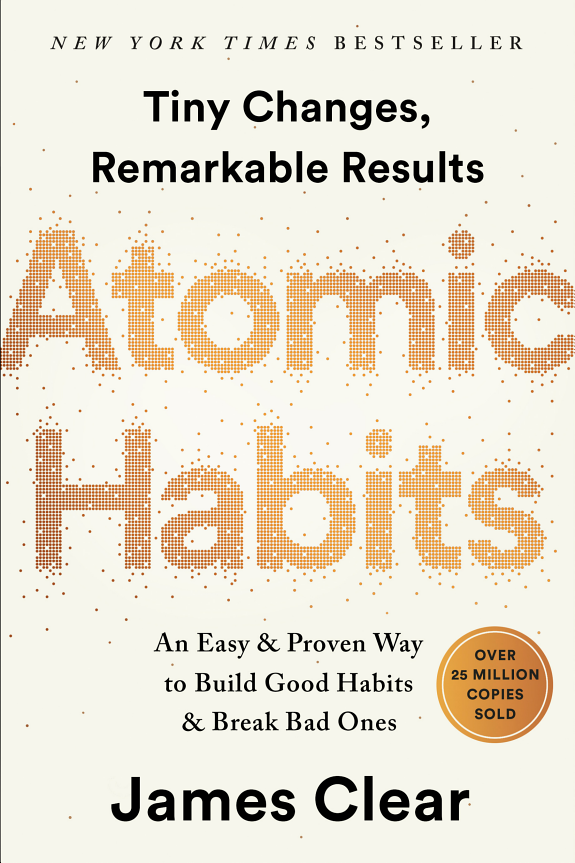
Atomic Habits: An Easy & Proven Way to Build Good Habits & Break Bad Ones
7. Atomic Habits by James Clear
James Clear spent years writing about habits and behavior change before distilling it all into Atomic Habits, a book that manages to be both rigorously researched and immediately applicable. The central insight is deceptively simple: you do not rise to the level of your goals, you fall to the level of your systems. Which means that if you want a different life, the place to start is not ambition but the small, repeatable behaviors that quietly shape who you become.
Clear builds his framework around four laws of behavior change, making habits obvious, attractive, easy, and satisfying, and the corresponding inverses for breaking bad ones. It sounds mechanical, but the book is surprisingly thoughtful about identity. Clear argues that the most durable habits are the ones rooted in who you want to be rather than what you want to achieve. Saying “I am a person who exercises” is a different internal posture than “I am trying to lose weight,” and that difference turns out to matter quite a lot over time.
The writing is clean and the examples are well chosen, drawing from sports, medicine, business, and everyday life without feeling like a greatest hits reel of TED Talk anecdotes. Clear is also honest that habits are not magic. They compound slowly, and the early stages involve doing something that does not feel like it is working yet. That is not a very exciting promise, but it is a true one, and the book is better for making it.
“Every action you take is a vote for the type of person you wish to become.”
This is perfect for people who know what they want to change but cannot seem to make the changes stick, readers who respond well to systems and frameworks, and anyone who has set the same goal three years in a row without progress. It is less suited to readers who are already well-versed in habit literature and looking for something new, as much of the territory will feel familiar.
None of these books will do the work for you. That is worth saying plainly, because the self-help genre sometimes implies otherwise. What they can do is give you better questions, clearer frameworks, and the occasional reminder that the life you want is not waiting behind some dramatic revelation. It is mostly built in small, unglamorous increments over a long time.
Pick the one that speaks to where you actually are right now, not where you think you should be. Read it slowly enough to think about it. And if a particular idea makes you slightly uncomfortable, that is probably the one worth sitting with longest.