

7 Books for Morning Motivation That Actually Work
There is something quietly hopeful about the early morning. The house is still, the coffee is hot, and for a few minutes at least, the day belongs entirely to you. A lot of us want to do something meaningful with that time. The problem is that wanting and actually doing are two very different things, and most of us know that gap all too well.
Books about morning routines and motivation get a bad reputation, and honestly, some of them deserve it. The genre has its fair share of breathless promises and suspiciously perfect author anecdotes. But buried in the pile are books that are genuinely useful, the kind that give you a framework you can actually use on a Tuesday when you slept badly and your alarm feels like a personal attack. The seven books below range from practical habit science to straight-up motivational fuel. Some are gentle. Some will push back at you a little. All of them are worth your early morning hours.
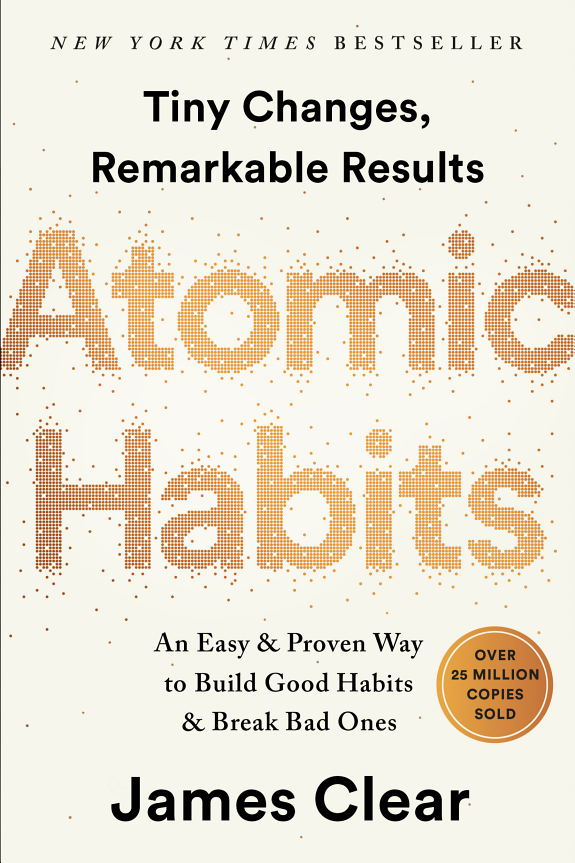
Atomic Habits
1. Atomic Habits by James Clear
James Clear is not the most flamboyant writer in the self-help space, and that is precisely what makes this book so effective. His voice is measured, clear, and refreshingly free of the kind of motivational theater that makes you feel fired up for exactly forty minutes before nothing changes. Atomic Habits is built on a simple but deeply researched premise: that the systems you build matter far more than the goals you set. It is less about willpower and more about design.
The central idea is that habits are the compound interest of self-improvement. Small changes, repeated consistently, accumulate into results that look almost unreasonable from the outside. Clear walks you through the four laws of behavior change, how to make good habits obvious, attractive, easy, and satisfying, and how to dismantle the bad ones using the same logic in reverse. For anyone trying to establish a morning routine, this is probably the most structurally useful book on the list.
Where Clear really earns his place is in the specificity. He is not asking you to believe in yourself harder. He is asking you to look at your environment, your cues, your rewards, and redesign them deliberately. The book is full of concrete examples and the kind of research citations that make you feel like you are learning something rather than just being cheered at. It does not assume you have unlimited discipline, which is a relief.
You do not rise to the level of your goals. You fall to the level of your systems. That sentence alone is worth the price of the book.
This is perfect for readers who are skeptical of motivational fluff and want a practical, evidence-backed approach to building lasting morning habits. If you have tried and failed to stick to routines before, this is where to start. It is probably not the book for you if you are looking for emotional inspiration or a narrative-driven read.
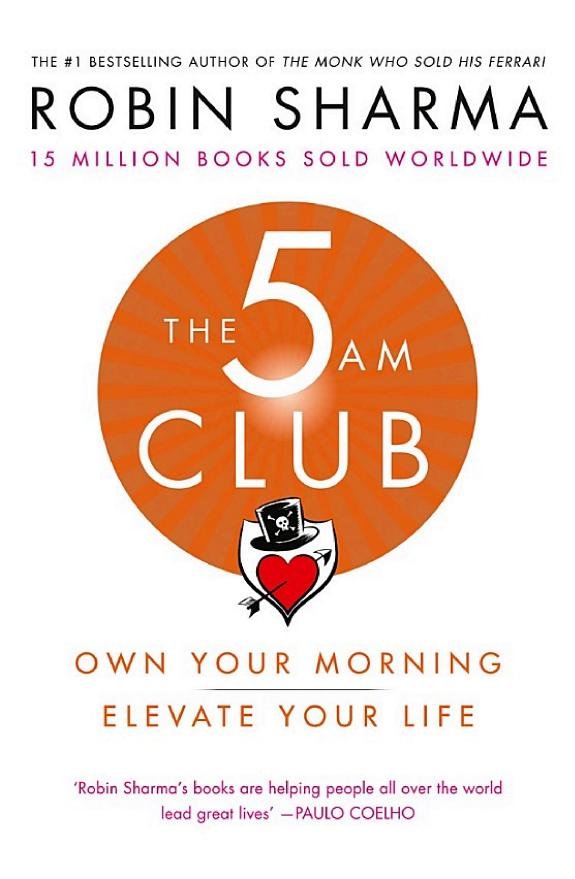
The 5 AM Club
2. The 5 AM Club by Robin Sharma
Robin Sharma has been writing about personal mastery for decades, and The 5 AM Club is his most complete argument for the early morning as a sacred window for growth. The book is structured as a parable, following a struggling entrepreneur and a grieving artist who meet a mysterious billionaire who teaches them the secrets of his early morning practice. If that sounds a little theatrical, it is, and that is worth knowing upfront. Sharma is not trying to write a business textbook. He is trying to move you.
The core framework Sharma introduces is the 20/20/20 rule: the first hour after waking divided into twenty minutes of exercise, twenty minutes of reflection, and twenty minutes of learning. It is a tidy structure, and the reasoning behind it draws on neuroscience, philosophy, and a generous helping of Sharma’s own experience coaching executives and athletes. The parable format means the ideas are delivered through dialogue and story rather than chapters of dense instruction, which some readers will love and others will find frustrating.
Sharma writes with genuine conviction, and it shows. He clearly believes in what he is teaching, and that enthusiasm is contagious even when the prose tips into the ornate. The book is at its best when it stops to explain the science behind why mornings matter, the cortisol curves, the neuroplasticity windows, the value of protecting the first hour from screens and noise. At its weakest, it leans on aphorisms where specifics would serve better.
The quality of your mornings determines the quality of your life. Sharma says this in a dozen different ways, but the repetition is almost the point. He wants it to stick.
This is perfect for readers who enjoy learning through story and respond well to inspirational prose. It suits people who want a complete morning philosophy rather than just a checklist. If you dislike parable-style business books or find motivational language exhausting, this one will test your patience.
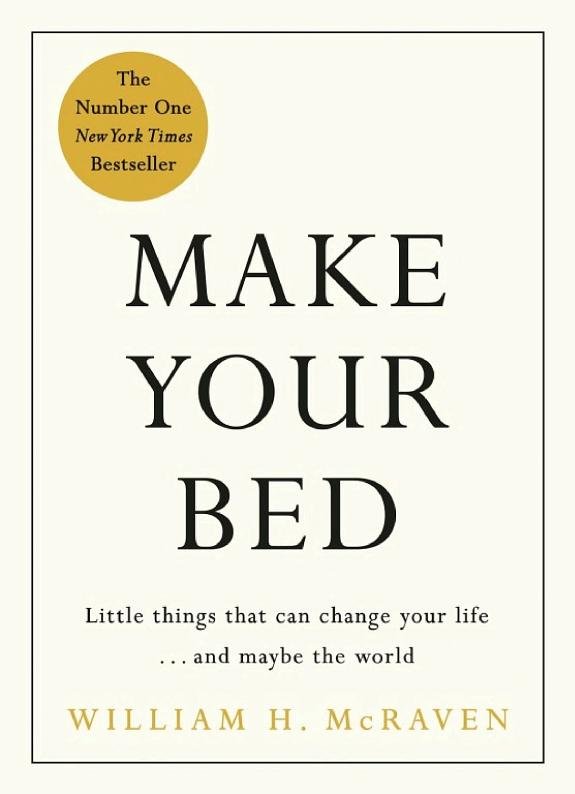
Make Your Bed
3. Make Your Bed by William H. McRaven
Admiral William McRaven delivered a commencement address at the University of Texas in 2014 that went quietly viral because it said something true in a way that felt both simple and earned. Make Your Bed grew out of that speech, and it carries the same quality: wisdom that does not perform its own wisdom. McRaven draws on his experience as a Navy SEAL and a career in military leadership to offer ten lessons for starting the day and, by extension, living a life of purpose and resilience.
The book is short. Genuinely short. You can read it in a single sitting, which might make some people suspicious that it cannot possibly contain much of value. They would be wrong. McRaven writes with the economy of someone who has had to communicate clearly under pressure for most of his professional life. Every lesson is grounded in a specific experience, a training exercise, a mission, a moment of failure or unexpected grace. The writing is clean and the stories are vivid without being self-congratulatory.
The central argument is that small acts of discipline, beginning with making your bed each morning, create a chain of order and intention that carries through the day. It sounds almost comically simple, and McRaven knows that. He leans into it. The point is not the bed. The point is the choice to do something well before the day has asked anything of you. That reframe is more useful than it has any right to be.
If you want to change the world, start off by making your bed. It is the kind of advice that sounds like a joke until you try it for a week.
This is perfect for readers who want a brief, grounded read with real-world credibility behind it. It suits people who respond to military or leadership frameworks and appreciate brevity. It is probably not the right fit for readers looking for detailed habit science or extended motivational content.
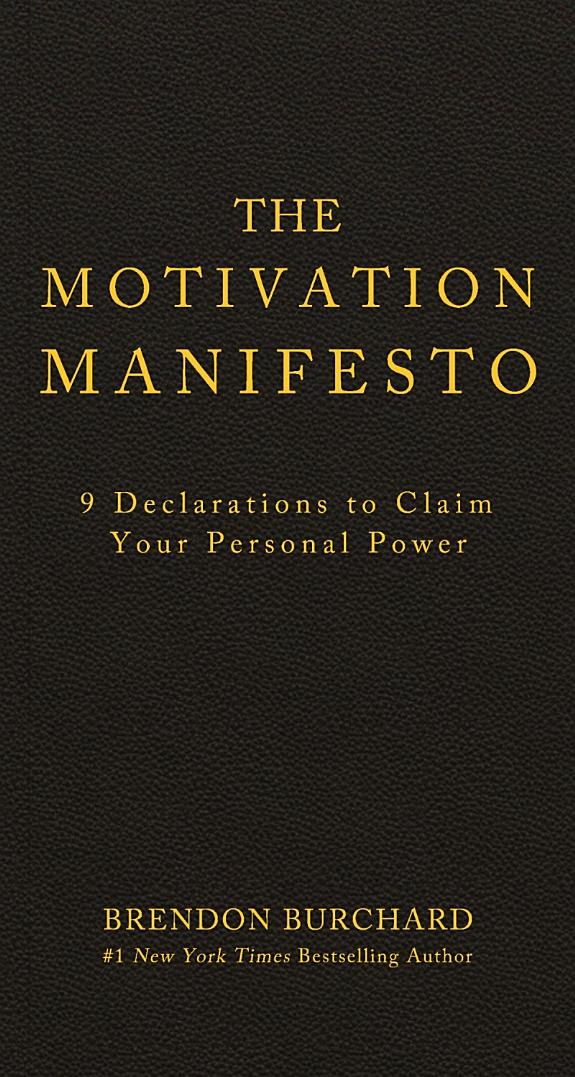
The Motivation Manifesto
4. The Motivation Manifesto by Brendon Burchard
Brendon Burchard writes like someone who genuinely cannot believe more people are not living at full volume, and The Motivation Manifesto is his most unfiltered expression of that frustration and that hope. The book is written in a declarative, almost oratorical style that owes something to the great speeches and manifestos of history. It is bold, occasionally grandiose, and entirely sincere. Burchard is not hedging. He wants you to wake up and mean it.
The book’s central argument is that most people live in a state of what Burchard calls “motivational slavery,” allowing fear, social pressure, and distraction to dictate their days. The nine declarations that structure the book are calls to reclaim personal freedom, to choose ambition over comfort, and to treat each morning as a deliberate act of self-determination. This is not a subtle book. It does not want to be.
What keeps The Motivation Manifesto from collapsing under its own intensity is that Burchard is a sharp thinker underneath the rhetoric. He understands psychology, and the chapters on fear, distraction, and the social forces that drain motivation are more nuanced than the book’s cover might suggest. The prose style will not suit everyone, but for readers who need a genuine jolt of conviction rather than a framework, this delivers it honestly.
We shall meet the world with full presence. It reads like a battle cry, and Burchard intends it that way. Whether that resonates with you will tell you a lot about whether this book is for you.
This is perfect for readers who respond to high-energy, declarative writing and want to feel genuinely stirred rather than instructed. It suits people going through a period of stagnation who need a push rather than a plan. If measured, research-heavy writing is what you are after, this will feel like too much.
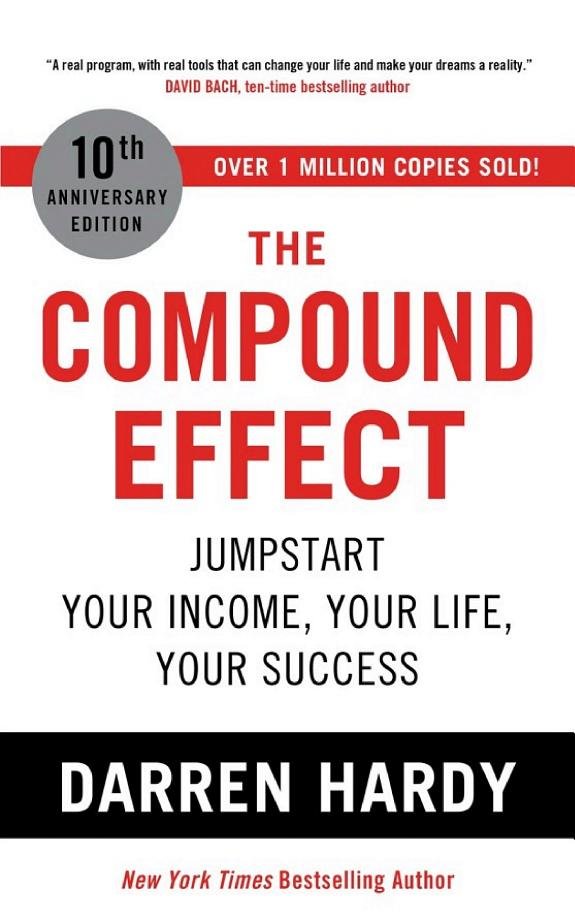
The Compound Effect
5. The Compound Effect by Darren Hardy
Darren Hardy spent years as the publisher of Success magazine, which means he has interviewed more high performers than most people will ever meet and has had a long time to think about what separates the ones who get results from the ones who stay stuck. The Compound Effect is his distillation of those observations, and it is one of the more grounded books in the morning motivation genre, focused less on inspiration and more on the mathematics of daily behavior.
The core principle is straightforward: small, consistent actions compound over time in ways that are genuinely disproportionate to their apparent size. Hardy illustrates this with examples from business, health, and relationships, tracing how tiny daily choices diverge dramatically over months and years. The book is practical in the best sense. It asks you to track your habits, examine your influences, and take ownership of your daily choices without any mysticism attached.
Hardy’s voice is direct and confident without being overbearing. He writes like someone who has earned his opinions through observation rather than theory, and that gives the book a grounded quality that distinguishes it from more abstract motivational titles. The morning connection is implicit rather than explicit: Hardy is less concerned with your 6 AM routine specifically and more with the aggregate of every small decision you make from the moment you wake up.
You alone are responsible for what you do, do not do, or how you respond to what is done to you. Hardy does not soften this. He thinks accountability is a gift, and by the end of the book, you might agree.
This is perfect for readers who want a no-nonsense look at how daily choices accumulate into results and who are ready to take honest stock of their habits. It suits entrepreneurs, professionals, and anyone who finds pure inspiration insufficient without a practical framework. It is not the book for you if you are looking for warmth, storytelling, or emotional support.
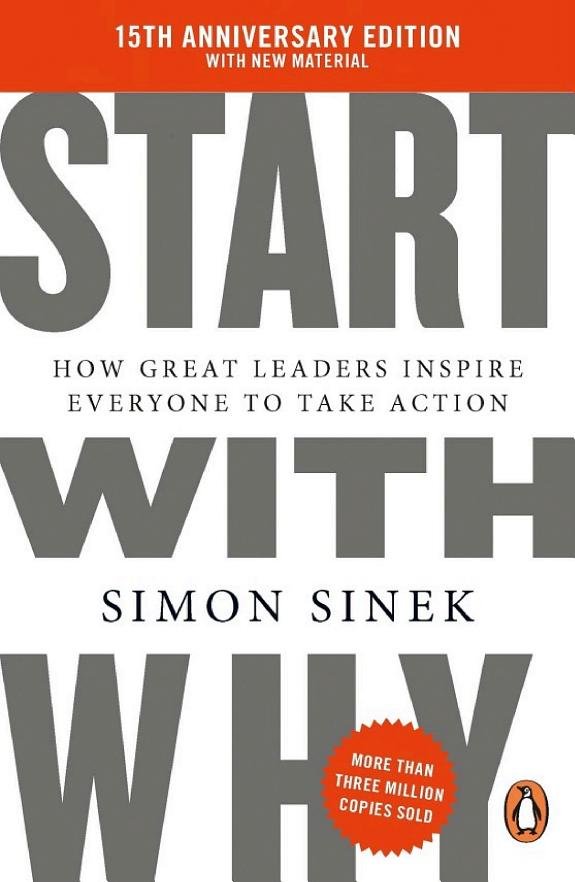
Start with Why
6. Start with Why by Simon Sinek
Simon Sinek built his reputation on a TED Talk that asked a question so obvious it had somehow been overlooked: why do some people and organizations inspire while others do not? Start with Why is the full expansion of that question, and while it is not a morning routine book in any traditional sense, it belongs on this list because it addresses something that no alarm clock or habit tracker can fix. If you do not know why you are getting up, the how becomes almost irrelevant.
Sinek’s central framework, the Golden Circle, places why at the center, surrounded by how and what. His argument is that most people and companies communicate from the outside in, leading with what they do rather than why they do it. The ones who inspire loyalty and drive real change communicate from the inside out, starting with purpose. Applied to a morning routine, this reframe is genuinely useful. Motivation that comes from a clear sense of purpose is far more durable than motivation that comes from discipline alone.
The book draws heavily on examples from business and leadership, including Apple, Martin Luther King Jr., and the Wright Brothers, and Sinek is a compelling storyteller. Some critics have noted that the framework is occasionally applied too broadly, and there are moments where the argument feels stretched. But the core insight holds up, and for anyone struggling to sustain morning motivation over the long term, understanding your own why is probably the most important work you can do.
People do not buy what you do; they buy why you do it. Swap “people” for “you” and “buy” for “believe in” and you have the real morning motivation lesson hiding in this book.
This is perfect for readers who feel motivated in bursts but cannot seem to sustain it, and who suspect the problem might be deeper than their habits. It suits professionals, leaders, and anyone building something who wants their daily effort to feel connected to a larger purpose. It is less useful if you are looking for tactical morning routine advice.
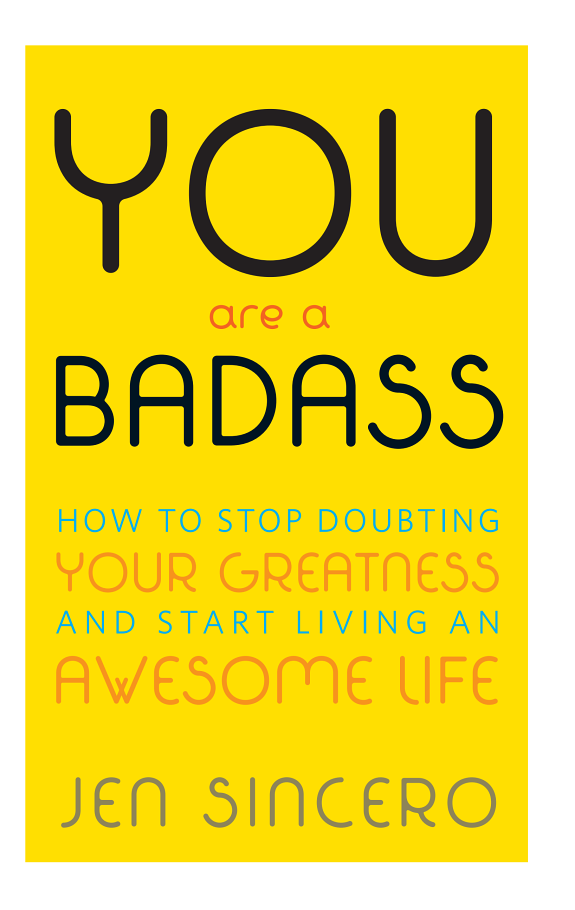
You Are a Badass
7. You Are a Badass by Jen Sincero
Jen Sincero wrote You Are a Badass in the voice of a very funny, very direct friend who has run out of patience for your excuses and loves you enough to say so. It is irreverent, occasionally profane, and completely uninterested in being polite about the ways people sabotage themselves. If the other books on this list are the sensible breakfast, this one is the espresso shot you take standing at the kitchen counter because you are already running late and need something to work fast.
The book covers a wide range of territory, from the subconscious beliefs that drive self-defeating behavior to the practical mechanics of setting goals and staying accountable. Sincero draws on her own story of financial struggle and personal reinvention, and the candor with which she describes her own failures gives the book a credibility that pure cheerleading would lack. She has actually been stuck. She knows what it feels like, and she is not pretending the way out was easy.
The tone is the thing that will make or break this book for any given reader. Sincero is enthusiastic in a way that some people will find energizing and others will find exhausting after about forty pages. The self-help concepts she covers are not new, she draws on universal principles around mindset, gratitude, and action, but she presents them with enough personality and humor that they feel fresh. For morning reading especially, the short chapters and punchy prose make it easy to pick up and put down without losing the thread.
We only get to be in our bodies for a limited time. Why not celebrate the hell out of it? Sincero asks this without irony, and somehow it lands.
This is perfect for readers who need a confidence boost more than a system, and who enjoy a conversational, humorous voice that does not take itself too seriously. It suits people in their twenties and thirties especially, though the message has no age limit. If you find casual profanity grating or prefer your self-help delivered with academic gravity, this will not be your favorite morning companion.
Seven books is a lot to read before breakfast, obviously. The point is not to consume all of them at once but to find the one or two that match where you actually are right now. If you need structure, start with James Clear. If you need purpose, start with Simon Sinek. If you need someone to tell you to stop waiting for the perfect moment, Jen Sincero will do that with considerable enthusiasm.
The best morning motivation book is the one that meets you honestly and gives you something you can use by 8 AM. All seven of these do that in different ways, for different kinds of readers. Pick one, read it slowly, and see what sticks. That is more than enough to start.