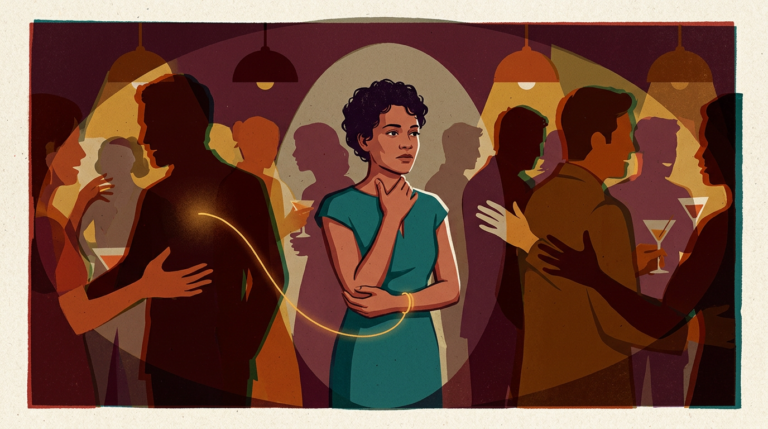

7 Books for Overcoming Loneliness
Loneliness is one of those feelings that sneaks up on you. You can be surrounded by people at a party, scrolling through a full inbox, or living in a city of millions, and still feel like no one really sees you. It is more common than most of us admit out loud, and it has been quietly growing for decades.
The books on this list do not promise to fix everything. What they do offer is something rarer: genuine understanding. Some are grounded in neuroscience, some in sociology, some in the practical work of building friendships as an adult (which, let us be honest, nobody warned us would be this hard). Together, they make a compelling case that connection is not a luxury. It is something close to a biological need. Whether you are working through your own isolation or simply trying to understand the world a little better, these seven books are worth your time.
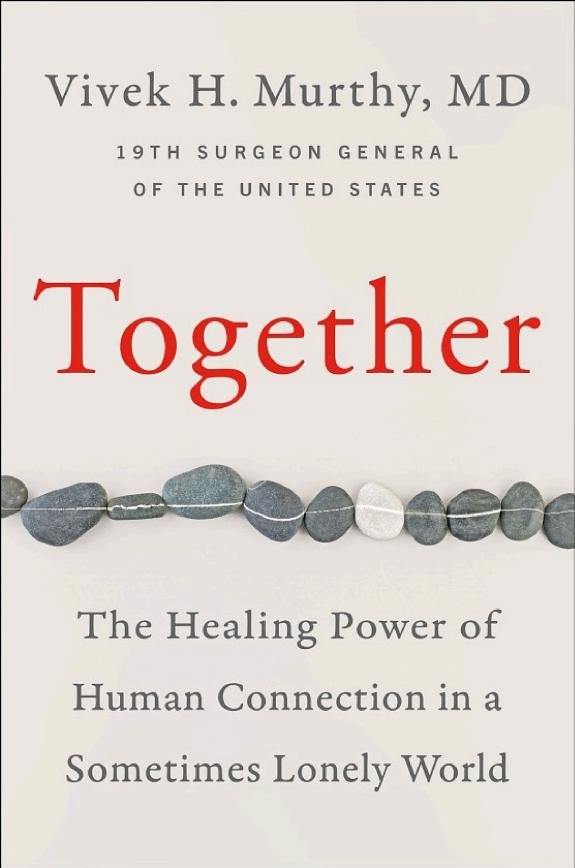
Together: The Healing Power of Human Connection in a Sometimes Lonely World
1. Together: The Healing Power of Human Connection in a Sometimes Lonely World by Vivek H. Murthy
Vivek Murthy served as the United States Surgeon General twice, and during his first term he made a somewhat surprising declaration: loneliness was a public health crisis. This book is the extended argument behind that claim. Murthy writes with warmth and clinical clarity, drawing on his own experiences as a doctor who noticed that beneath many of his patients’ physical complaints was a deeper ache for belonging.
The book moves between personal stories, medical research, and broader cultural observation. Murthy is particularly good at describing the three dimensions of loneliness, intimate, relational, and collective, and explaining why each requires a different kind of attention. He is not preachy about it. The tone throughout feels more like a thoughtful conversation than a lecture, which suits the subject perfectly.
Where the book shines brightest is in its insistence that connection is something we can actively cultivate. Murthy offers practical ideas without reducing the subject to a self-help checklist. He takes the emotional weight of loneliness seriously while still leaving readers with a sense of genuine possibility.
Murthy makes a quietly persuasive case that investing in human relationships is not soft or sentimental. It is, in the most literal sense, medicine.
This is perfect for anyone who wants a compassionate, medically informed entry point into the loneliness conversation, especially readers who appreciate personal storytelling woven through research.
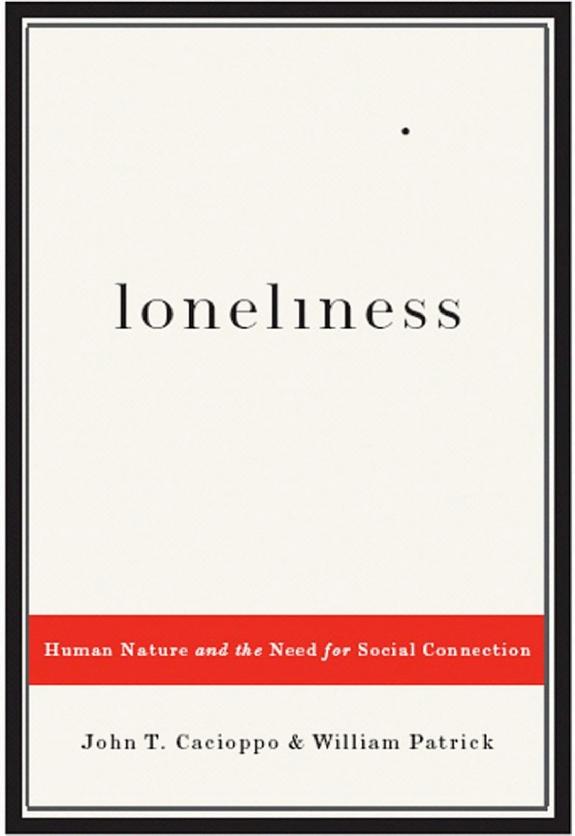
Loneliness: Human Nature and the Need for Social Connection
2. Loneliness: Human Nature and the Need for Social Connection by John T. Cacioppo and William Patrick
If Murthy’s book is the warm conversation, Cacioppo and Patrick’s is the rigorous science behind it. John Cacioppo was one of the foremost researchers on loneliness in the world before his death in 2018, and this book represents the core of his life’s work. It is dense in the best possible way, full of studies, evolutionary biology, and neuroscience that explain why social pain registers in the brain much like physical pain.
The central argument is both simple and striking: loneliness is not a personal failing or a mood. It is an evolved signal, like hunger or thirst, that tells us we need something essential. When that signal goes unheeded for too long, the consequences ripple through our immune systems, our sleep, our cognition, and our overall health. Cacioppo’s research on the physiological effects of chronic loneliness is genuinely sobering.
The writing is accessible for a science book, though it does require some patience. Cacioppo and Patrick take care to distinguish between solitude, which can be restorative, and loneliness, which is defined not by the number of people around you but by the quality of connection you feel. That distinction alone is worth the read.
This book reframes loneliness as a biological signal rather than a character flaw, which turns out to be one of the more compassionate things science has ever said about human suffering.
This is perfect for readers who want the scientific foundation of loneliness research and are comfortable with a more academic pace, particularly those in psychology, medicine, or social science.
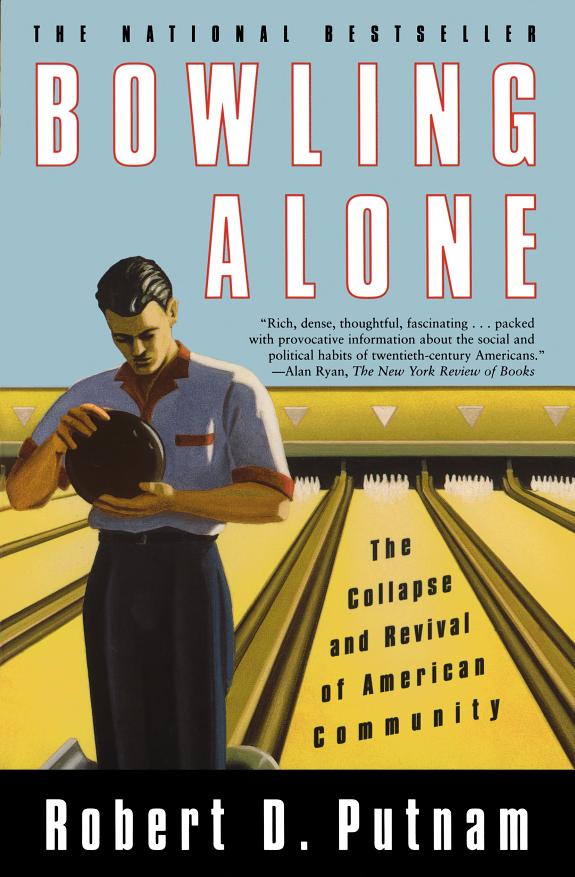
Bowling Alone: The Collapse and Revival of American Community
3. Bowling Alone: The Collapse and Revival of American Community by Robert D. Putnam
The title comes from a single, quietly devastating observation: more Americans were bowling than ever before, but bowling leagues were collapsing. People were bowling alone. Robert Putnam, a Harvard political scientist, uses that image as a launching pad for one of the most comprehensive examinations of social decline in American life ever written. Published in 2000, it has aged in ways that feel almost uncomfortably prescient.
Putnam’s concept of social capital, the networks, norms, and trust that allow communities to function, is the book’s central framework. He documents with meticulous data how civic participation, neighborly trust, voluntary association, and informal socializing all declined sharply in the second half of the twentieth century. The causes he identifies include suburban sprawl, television, generational change, and the pressures of two-income households, none of which have exactly reversed since publication.
This is not a quick read. It is a long, data-rich argument, and some sections feel more like policy documents than narrative prose. But for readers willing to sit with it, the picture Putnam assembles is illuminating. He also spends considerable time on revival, exploring the conditions under which communities have rebuilt social trust, which keeps the book from becoming entirely gloomy.
Putnam shows that loneliness is not just a private feeling but a structural problem, one that gets built into the design of cities, workplaces, and daily life over generations.
This is perfect for readers interested in the sociological and political roots of disconnection, particularly those who like data-driven arguments and are curious about community building at a civic scale.
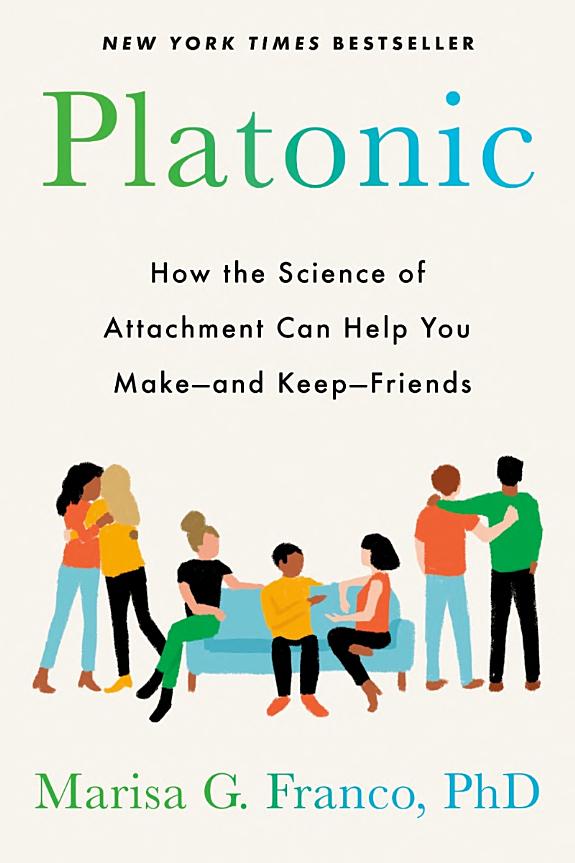
Platonic: How the Science of Attachment Can Help You Make–and Keep–Friends
4. Platonic: How the Science of Attachment Can Help You Make and Keep Friends by Marisa G. Franco
Making friends as an adult is one of those things everyone finds harder than expected and almost no one talks about openly. Marisa Franco, a psychologist and researcher, talks about it openly, and with a refreshing lack of condescension. Platonic draws on attachment theory, the same framework used to understand romantic and parent-child bonds, and applies it to adult friendship in ways that feel both novel and immediately useful.
Franco’s voice is warm and direct. She writes like someone who has genuinely thought through these questions in her own life, not just in a lab. The book covers the different attachment styles, anxious, avoidant, secure, and explains how they shape the way we approach friendship, often without our realizing it. There is real insight here about why some people struggle to initiate connection, why others pull away when things get close, and how those patterns can shift.
The practical sections are some of the strongest in any book on this list. Franco offers concrete, research-backed strategies for deepening friendships that do not feel like social skills drills. She takes seriously the vulnerability involved in adult friendship and does not minimize how much courage it can take to simply ask someone to hang out again. If you have ever felt embarrassed by how much you wanted a closer friend group, this book will make you feel considerably less alone in that feeling.
Franco argues that friendship is not something that just happens to lucky people. It is a skill, and like most skills, it responds to practice and intention.
This is perfect for adults who feel stuck in surface-level friendships and want practical, psychologically grounded guidance for building deeper connections.
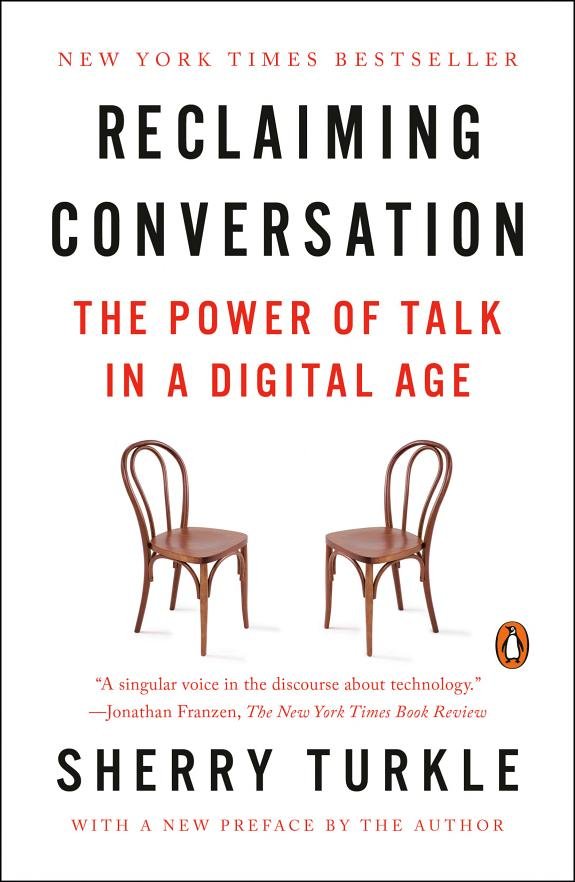
Reclaiming Conversation: The Power of Talk in a Digital Age
5. Reclaiming Conversation: The Power of Talk in a Digital Age by Sherry Turkle
Sherry Turkle is an MIT researcher who has spent decades studying how technology shapes human relationships, and she is not simply anti-phone. That distinction matters. Reclaiming Conversation is a nuanced, carefully observed book about what gets lost when we replace face-to-face conversation with digital communication, and what it costs us in terms of empathy, self-reflection, and genuine intimacy.
Turkle draws on hundreds of interviews with teenagers, college students, parents, and professionals. The patterns she finds are consistent and a little unsettling. People report feeling more comfortable texting than talking. Parents confess to checking their phones during meals with their children. Students describe choosing to text friends in the same room rather than speak to them. Turkle does not moralize about this. She observes it, documents it, and asks what it means.
The book can feel repetitive in places, and readers who are already skeptical of smartphone culture may feel they are being preached to the choir. But Turkle’s deeper argument, that conversation is where we develop the capacity to understand other people and ourselves, is worth sitting with regardless of where you stand on screen time debates. Her chapters on solitude are particularly good, making the case that being comfortable alone is actually a prerequisite for being genuinely present with others.
Turkle is not asking us to throw our phones into the sea. She is asking us to notice what disappears from a relationship when we stop looking at each other.
This is perfect for readers who sense that technology is affecting their relationships but want a thoughtful, research-based examination rather than a blanket tech critique.
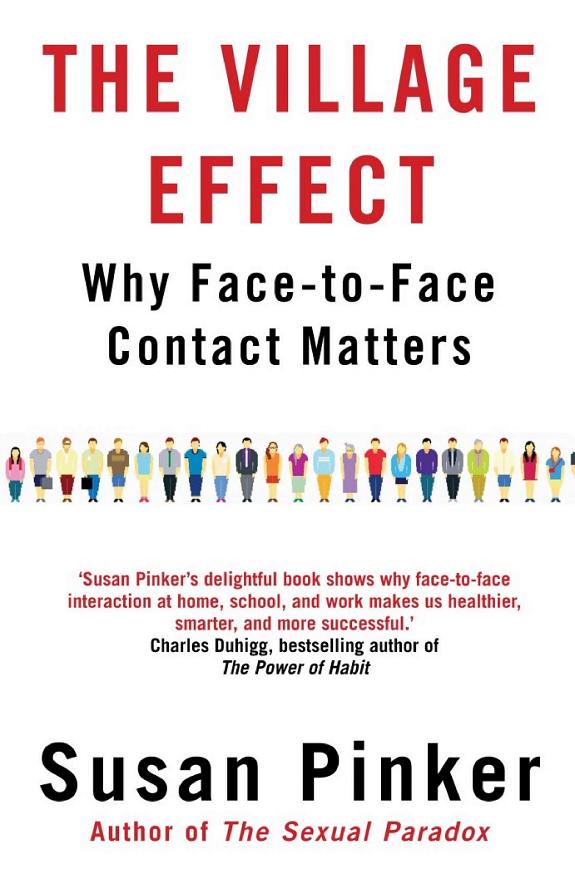
The Village Effect: How Face-to-Face Contact Can Make Us Healthier, Happier, and Smarter
6. The Village Effect: How Face-to-Face Contact Can Make Us Healthier, Happier, and Smarter by Susan Pinker
Susan Pinker opens this book with an investigation into a village in Sardinia where an unusual number of people live past one hundred. What is their secret? It is not a special diet or a rigorous exercise routine. It is the density and frequency of their face-to-face social contact. From that starting point, Pinker builds a wide-ranging argument about why in-person connection has effects on human health and cognition that no amount of digital communication can replicate.
Pinker is a developmental psychologist and a confident, engaging writer. She covers oxytocin, touch, the neuroscience of social bonding, and the specific ways that physical presence affects our biology in ways that a phone call or video chat simply does not. The research she draws on is robust, and she presents it without drowning the reader in jargon. There is also a welcome thread of humor running through the book, something the loneliness genre occasionally forgets to include.
Some readers may find the book’s argument a bit single-minded. Pinker is firmly in the camp that face-to-face contact is irreplaceable, and she does not spend much time on the genuine benefits that online communities can offer to isolated people. But as a corrective to the assumption that staying digitally connected is the same as staying socially connected, the book is persuasive and well worth reading.
Pinker’s Sardinian villagers are a quiet rebuke to every productivity guru who has ever suggested that optimizing your schedule is more important than lingering over coffee with a friend.
This is perfect for readers who want a biology-focused argument for prioritizing in-person relationships, especially those interested in longevity, health, and the physical science of social bonding.
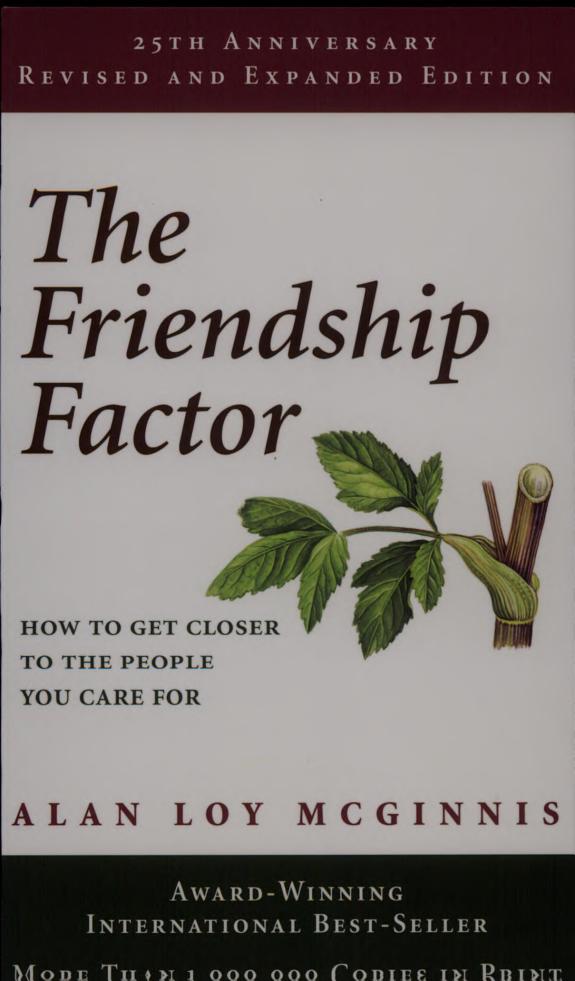
The Friendship Factor: How to Get Closer to the People You Care for
7. The Friendship Factor: How to Get Closer to the People You Care for by Alan Loy McGinnis
Alan Loy McGinnis wrote this book in 1979, and it shows in some of the cultural references and the occasional turn of phrase. But the core of it has held up remarkably well, which says something about how little the fundamentals of human connection have actually changed. McGinnis was a therapist, and this book reads like the distilled wisdom of someone who spent years watching people struggle to get close to one another and gradually learning why.
The book is shorter and more conversational than most others on this list, which makes it feel approachable in a different way. McGinnis writes about vulnerability, loyalty, the art of listening, and the specific habits that either build or erode closeness over time. He draws on literature, psychology, and real case studies from his practice, weaving them together without ever becoming dry or clinical.
Readers looking for cutting-edge neuroscience will not find it here. This is an older book with an older sensibility, and its Christian undertones may not resonate with every reader. But for those who want something practical, readable, and grounded in genuine human observation rather than data sets, The Friendship Factor offers a kind of quiet wisdom that the newer books sometimes lack. It is the sort of book you might give to a friend who is going through a lonely stretch and needs something to hold onto.
McGinnis understood something that gets lost in more clinical treatments of loneliness: that friendship is ultimately an act of will, a choice to show up and keep showing up even when it is inconvenient.
This is perfect for readers who want warm, practical, and accessible guidance on deepening existing relationships, particularly those who appreciate a more classic, humanistic approach over a scientific one.
Loneliness does not have a single cure, and none of these books pretend otherwise. What they offer, collectively, is a much fuller picture of why disconnection happens, what it costs us, and what genuine connection actually requires. Some of these books will speak to you more than others, and that is fine. The right book at the right moment can do something quietly significant: it can make you feel understood, which is, in a small way, the very thing you were looking for in the first place.
Start wherever the subject pulls you. If you want the science, begin with Cacioppo. If you want something practical and personal, Franco or McGinnis might be the better entry point. If you are trying to understand the bigger picture of how modern life has made connection harder, Putnam and Turkle are waiting. Whichever you choose, the act of reading seriously about loneliness is itself a kind of reaching out toward something better.