

5 Books for Learning to Trust People Again
Trust is a strange thing to lose. You do not always notice it going. One day you are open, willing, letting people in without much thought. Then something happens, or maybe several somethings happen over a long stretch of time, and you realize you have been holding your breath around almost everyone. You second-guess kindness. You wait for the other shoe to drop. You tell yourself you are just being careful, but careful starts to feel a lot like lonely.
The books on this list are not about becoming naive again. None of them will ask you to pretend that people never disappoint each other, because of course they do. What they offer instead is something more useful: a clearer understanding of why trust breaks down, what it actually looks like when it is working, and how to slowly, imperfectly build it back up. Some of these are rooted in decades of research. Some are more personal and practical. All of them take the subject seriously, which is exactly what it deserves.
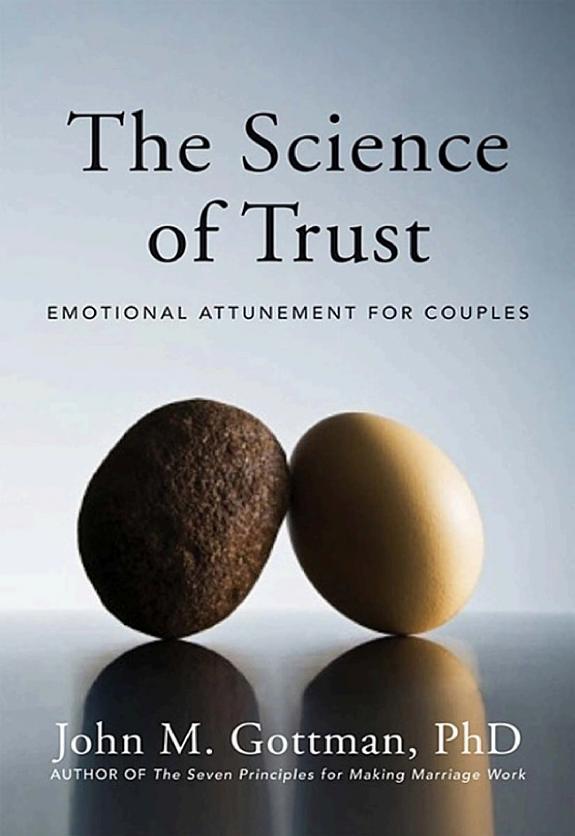
The Science of Trust
1. The Science of Trust by John Gottman
John Gottman has spent more than four decades studying what makes relationships work and what quietly destroys them. In this book, he turns his attention specifically to trust, examining it not as a feeling but as something that is built or eroded through thousands of small moments. His research is dense in places, drawing on data from his famous “Love Lab,” but he writes with enough warmth and clarity that you never feel like a research subject reading about yourself.
The central argument here is that trust is not a decision you make once. It is something you either build or chip away at through daily interactions, the way you respond when your partner turns toward you, the way you handle conflict, the way you repair things when they go wrong. Gottman calls these moments “sliding door moments,” and once you understand the concept, you will start seeing them everywhere in your own relationships.
This is a book that rewards slow reading. Some sections are technical, particularly the chapters that dig into his research methodology, and readers who are not especially interested in the science behind the conclusions may find those stretches a bit slow. But the payoff is a genuinely grounded understanding of trust that is hard to find elsewhere.
“Trust is built in very small moments, which I call ‘sliding door moments,’ after the movie Sliding Doors. In any interaction, there is a possibility of connecting with your partner or turning away from your partner.”
This is perfect for people who want to understand trust from a research-backed angle, particularly those in long-term relationships who sense something has been quietly eroding and want to know why.
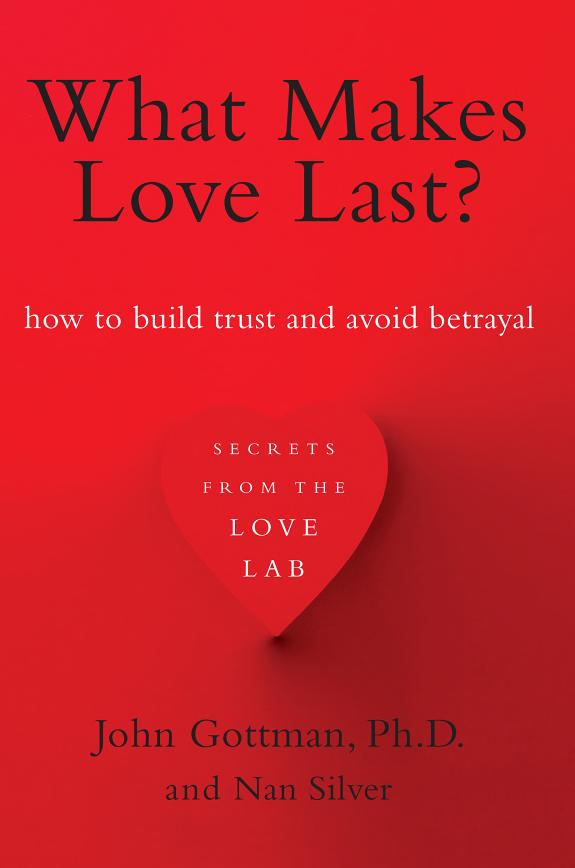
What Makes Love Last?
2. What Makes Love Last? by John Gottman and Nan Silver
If “The Science of Trust” is the deep dive, this book is the more accessible companion. Co-written with Nan Silver, who also collaborated with Gottman on “The Seven Principles for Making Marriage Work,” this one takes the same foundational research and makes it feel immediately applicable to real life. The prose is warmer, the examples are more narrative, and the whole thing moves at a faster pace.
What Gottman and Silver argue here is that betrayal in relationships is rarely just about the big dramatic moments. Infidelity, lying, broken promises, these are often symptoms of a longer pattern of what they call “sliding door moments” gone wrong, small bids for connection that were ignored or dismissed over years. That reframing is quietly significant, because it shifts the focus away from catastrophe and toward the everyday texture of how two people treat each other.
The book also spends meaningful time on what recovery from betrayal actually looks like, which is not something many relationship books bother to address honestly. It does not promise quick fixes. It does acknowledge that some relationships cannot or should not be repaired, which is a braver thing to say than most authors in this space are willing to admit. That honesty is part of what makes this worth reading. If you are someone who prefers a more clinical, less anecdote-driven approach, you might find some sections a bit soft, but for most readers the balance works well.
“Betrayal doesn’t always arrive as a thunderclap. More often it seeps in through the cracks of neglect, of turning away, of small dishonesties that accumulate over time.”
This is perfect for couples or individuals who have experienced a breakdown in trust and want a compassionate, research-informed guide to understanding what went wrong and what rebuilding might look like.
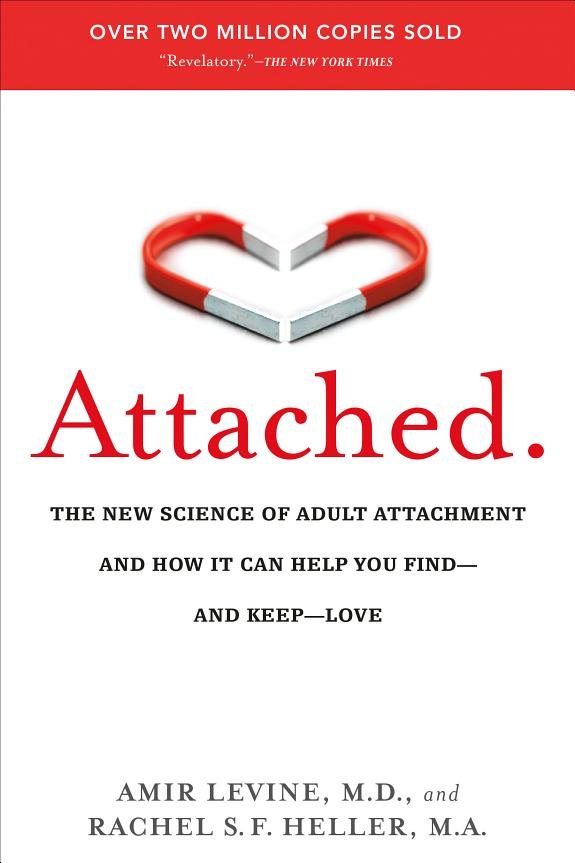
Attached
3. Attached by Amir Levine and Rachel Heller
Here is the book that has quietly changed how a lot of people think about why they behave the way they do in relationships. Levine, a neuroscientist and psychiatrist, and Heller, a social psychologist, take attachment theory, which was originally developed to describe the bonds between infants and caregivers, and apply it to adult romantic relationships. The result is one of those books that makes you feel slightly embarrassed by how much it explains about your past.
The core idea is that most people fall into one of three attachment styles: secure, anxious, or avoidant. Secure people are generally comfortable with intimacy and interdependence. Anxious people crave closeness but worry constantly about whether it will last. Avoidant people value independence to the point where genuine closeness starts to feel threatening. The book is careful to point out that these are not fixed personality flaws but patterns that developed for understandable reasons, and that they can shift over time with the right relationships and self-awareness.
For someone who has struggled to trust, the chapter on anxious and avoidant pairings is particularly illuminating. It explains with uncomfortable precision why certain relationship dynamics feel so compelling and so exhausting at the same time. The writing is clear and the self-assessment sections are genuinely useful rather than gimmicky. That said, if you are already well-versed in attachment theory from other reading, you may find this covers familiar ground without adding much new depth. It is an introduction, a very good one, but still an introduction.
“Being dependent on a romantic partner is not a weakness or a flaw. It is a biological fact. The question is whether your attachment system is working for you or against you.”
This is perfect for anyone who has noticed recurring patterns in their relationships, particularly people who either push others away or hold on too tightly, and want to understand where those patterns come from.
The Courage to Trust
4. The Courage to Trust by Cynthia Wall
Cynthia Wall is a licensed psychotherapist, and this book reads like a thoughtful session with someone who has heard a lot of stories about trust and betrayal and has genuinely thought about what helps. It is quieter and more introspective than the other books on this list, less concerned with research data and more interested in the internal work of becoming someone who can trust again without abandoning good judgment in the process.
Wall makes an important distinction early on between trust and blind faith. Trusting people does not mean assuming everyone is safe or that you will never be hurt again. It means developing enough self-knowledge and self-trust to navigate relationships without shutting down entirely or handing your wellbeing over to someone else completely. That distinction sounds simple but it takes the whole book to fully unpack, and Wall does it with patience and care.
The exercises throughout the book are worth doing rather than skipping, which is not always true of self-help workbook elements. They ask you to look honestly at where your distrust comes from, which relationships shaped it, and what stories you are still carrying that may no longer be serving you. This is not a book for people who want to read passively. It asks something of you. Readers looking purely for theory or research will probably find it too soft, but for anyone willing to sit with the questions it raises, it offers something genuinely useful.
“The goal is not to trust everyone blindly. The goal is to trust yourself enough to know when to open, when to wait, and when to walk away.”
This is perfect for people doing active personal work around trust, particularly those in therapy or considering it, who want a reflective, practice-oriented companion to that process.
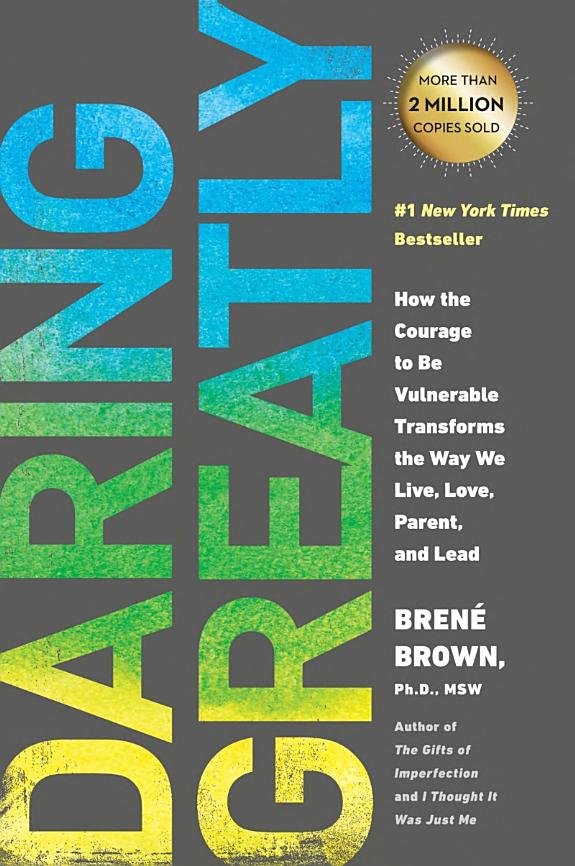
Daring Greatly
5. Daring Greatly by Brené Brown
Brené Brown spent years researching shame and vulnerability before writing this book, and the accumulated weight of that research gives it a solidity that a lot of popular psychology books lack. The central argument is that vulnerability, the willingness to be seen without guarantees, is not a weakness but the actual foundation of meaningful connection. Which sounds like a bumper sticker until she starts laying out the evidence, and then it starts to feel true in a way that is slightly inconvenient if you have spent years building walls.
The connection to trust is direct. Brown argues that you cannot have real trust without vulnerability, and you cannot have real vulnerability without accepting that things might go wrong. The people who struggle most with trust, she suggests, are often the ones who have learned that being open leads to being hurt, and have quietly decided that the solution is to need less, feel less, and let fewer people in. She is sympathetic to that logic while also being honest about where it leads.
Brown is a compelling writer with a gift for making research feel personal, and her own stories woven through the book keep it from feeling like a lecture. Some readers find her style a bit too warm and affirming, and if you are deeply skeptical of anything that edges toward self-help territory, you may roll your eyes once or twice. That is fair. But the ideas underneath the delivery are genuinely worth engaging with, and for anyone who has armored up after being hurt, this book has a way of naming what that costs you that is hard to dismiss.
“Vulnerability is not winning or losing. It is having the courage to show up when you cannot control the outcome.”
This is perfect for people who have become emotionally guarded after difficult experiences and are starting to wonder whether the protection they built is costing them more than it is saving them.
None of these books will hand you back the easy openness you might have had before something broke it. That is not really how it works, and any book that promised otherwise would not be worth your time. What these five offer is something more honest: a way of understanding trust well enough to rebuild it on sturdier ground than it may have been on before.
The best place to start depends on what you need right now. If you want research and rigour, Gottman is your entry point. If you want to understand your own patterns, start with Levine and Heller. If you are ready to do the quieter internal work, Wall and Brown are waiting. There is no wrong door. The fact that you are asking the question at all is already something.