

8 Books That Will Shift How You Think Forever
Some books you finish and promptly forget. Others stick around in a quieter way, showing up in how you react to a bad day or how you talk to yourself when things go sideways. The books on this list belong to the second category. They are not quick fixes or motivational pep talks dressed up in hardcover. They are the kind of reads that ask something of you.
This collection spans philosophy, psychology, neuroscience, and raw personal memoir. Some of these authors have survived unimaginable circumstances. Others have spent decades in research labs or therapy offices. What they share is a commitment to understanding how the human mind works and, more importantly, how it can work better. Whether you are in a season of real struggle or simply curious about what is holding you back, there is something here worth your time.
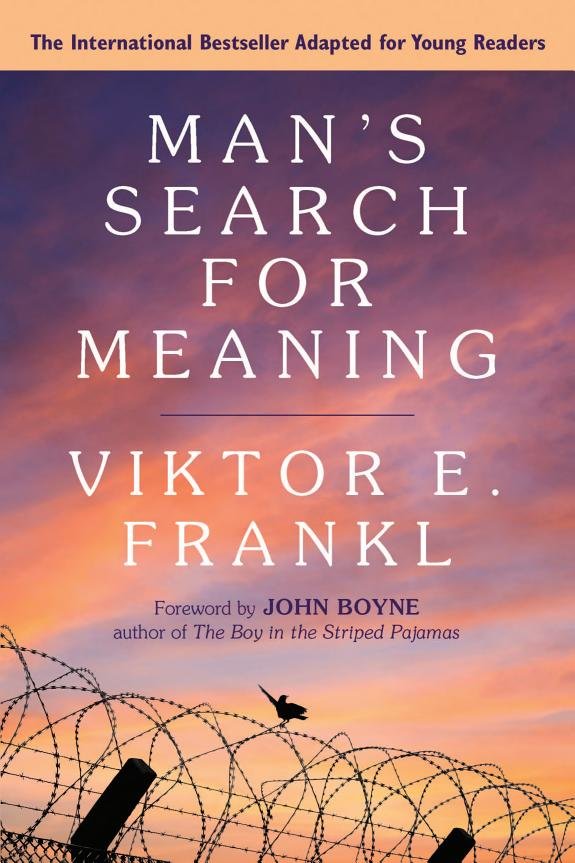
Man’s Search for Meaning
1. Man’s Search for Meaning by Viktor E. Frankl
Viktor Frankl was a psychiatrist in Vienna before the Second World War took nearly everything from him. He survived four Nazi concentration camps, including Auschwitz, and this book is both a memoir of that experience and a clear-eyed introduction to logotherapy, the therapeutic framework he developed around the idea that the primary human drive is not pleasure or power but meaning. It is a short book, under two hundred pages, but it carries more weight per sentence than most books three times its length.
What makes Frankl’s voice so distinctive is its lack of self-pity. He is not writing to shock you or to earn your sympathy. He is writing to make an argument, and the argument is this: that even in conditions of total suffering, a person retains the freedom to choose their attitude. That is either deeply comforting or deeply confronting depending on where you are in life, and possibly both at once.
The second half of the book, where Frankl outlines logotherapy as a formal approach, is drier than the memoir section. Some readers find it a bit clinical after the intensity of part one. That is a fair observation. But the core ideas about meaning, choice, and suffering are ones that tend to resurface in your thinking long after you have put the book down.
“When we are no longer able to change a situation, we are challenged to change ourselves.” Frankl’s entire book is an argument for that sentence, and he earns every word of it.
This is perfect for anyone going through a difficult period and looking for something that takes their struggle seriously without offering false comfort, as well as readers interested in existential psychology or the history of twentieth-century thought.
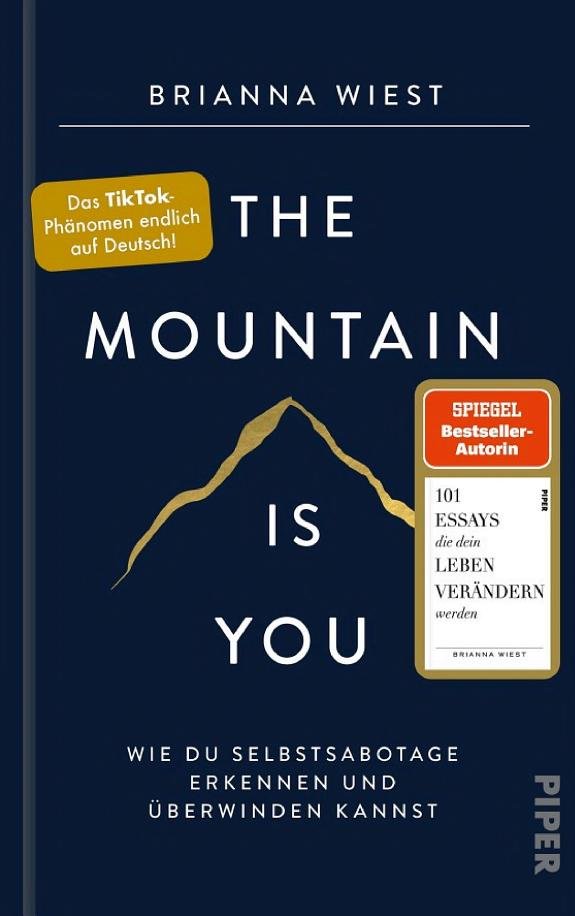
The Mountain Is You: Transforming Self-Sabotage Into Self-Mastery
2. The Mountain Is You by Brianna Wiest
Brianna Wiest writes about self-sabotage with a clarity that is almost unsettling. The central premise of this book is that the obstacles we keep running into are rarely external. The mountain in the title is you, specifically the parts of you that are unconsciously working against the things you say you want. That sounds like a harsh accusation until Wiest starts explaining why it happens, and then it starts to feel more like a relief than a criticism.
Wiest’s writing style is warm and direct. She draws on psychology without being academic about it, and she has a gift for articulating feelings that most people experience but struggle to name. The chapters on emotional intelligence and unmet needs are particularly well done. She is not interested in blame, either at yourself or at your past. She is interested in understanding, and she treats her reader as someone capable of doing that work.
This is not a book for people who want to be told that everything is fine and that the world is simply unfair to them. Wiest is sympathetic but honest, and the honesty sometimes stings a little. That is rather the point. If you have found yourself repeating the same patterns in relationships, work, or creative pursuits and genuinely cannot figure out why, this book offers some useful mirrors.
Wiest’s sharpest insight is that self-sabotage is not weakness or stupidity. It is often a deeply rational response to fear, one that made sense once and simply never got updated.
This is perfect for readers who feel stuck in repeating patterns and are ready to look honestly at their own role in that, particularly those in their twenties and thirties navigating identity and ambition.
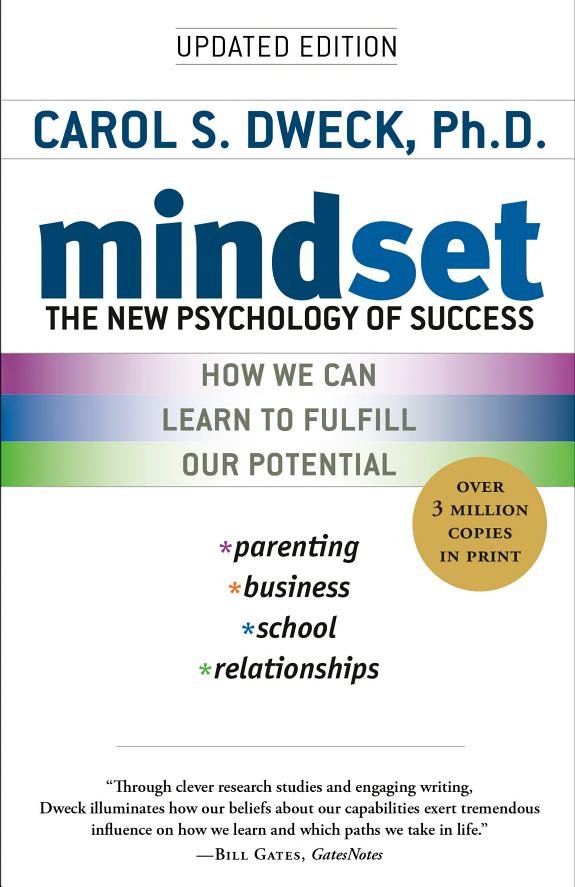
Mindset: The New Psychology of Success
3. Mindset: The New Psychology of Success by Carol S. Dweck
Carol Dweck is a Stanford psychologist who has spent decades studying how people think about their own abilities. The core finding of her research is deceptively simple: people who believe their qualities are fixed tend to avoid challenges, while people who believe they can grow through effort tend to embrace them. She calls these the fixed mindset and the growth mindset, and by the time you finish this book, you will be catching both in yourself on a fairly regular basis.
What separates this from a lot of pop psychology is the research behind it. Dweck does not just assert things. She shows you the studies, including some genuinely fascinating work done with children and praise, that demonstrate how much our beliefs about ability shape our behavior. The chapter on parenting and education is one of the most practically useful sections, even if you are not a parent. It illuminates how early these patterns get set.
The book does repeat its central thesis quite a lot, and some readers find the later chapters on business and sports less compelling than the earlier psychological material. That is a reasonable critique. But the foundational idea is solid enough that even if the examples start to feel familiar, the concept itself keeps earning its place on the page.
Dweck’s most useful contribution is showing that praising effort rather than intelligence is not just a feel-good parenting choice. It is, according to her data, the difference between a child who tries harder when they fail and one who gives up.
This is perfect for educators, parents, coaches, and anyone who has ever told themselves they are simply not a math person or not a creative type and accepted that as permanent fact.
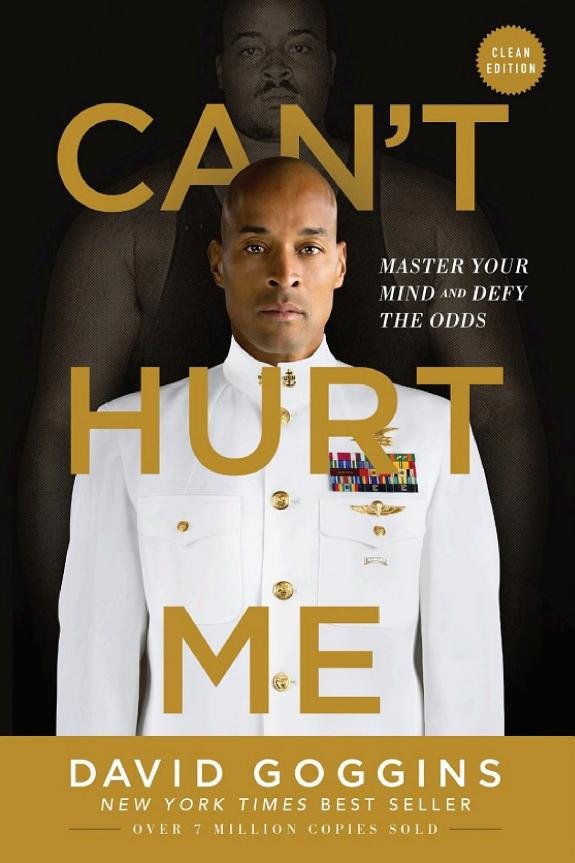
Can’t Hurt Me: Master Your Mind and Defy the Odds
4. Can’t Hurt Me: Master Your Mind and Defy the Odds by David Goggins
David Goggins is not for everyone, and he would probably be the first to tell you that. A former Navy SEAL and endurance athlete who grew up in poverty and abuse, Goggins writes with a bluntness that borders on aggressive. He is not interested in making you comfortable. He is interested in showing you that the limits you have accepted about yourself are largely invented, and he does this by detailing, in considerable and sometimes brutal detail, exactly what he put his own body and mind through to prove the same point to himself.
The book is structured as a memoir with what Goggins calls challenges interspersed throughout, practical exercises designed to push you to examine where you are coasting. Some readers find this format genuinely motivating. Others find the self-help scaffolding a bit awkward around what is otherwise a gripping personal story. Both reactions are valid. The memoir sections, particularly his childhood and his path through military training, are compelling regardless of whether you buy into the broader philosophy.
Where Goggins is most interesting is in his concept of the forty percent rule, the idea that when your mind tells you that you are done, you are actually only about forty percent of the way to your real limit. Whether or not that number is scientifically precise is almost beside the point. As a mental framework for pushing through discomfort, it is surprisingly sticky. You will think about it the next time you want to quit something.
Goggins does not romanticize suffering. He is clear that the work is miserable. His argument is simply that miserable and impossible are not the same thing, and most people treat them as if they are.
This is perfect for readers who respond to raw, unvarnished personal stories and want a perspective on mental toughness that does not soften the edges, though those sensitive to graphic descriptions of physical and emotional hardship should approach with that in mind.
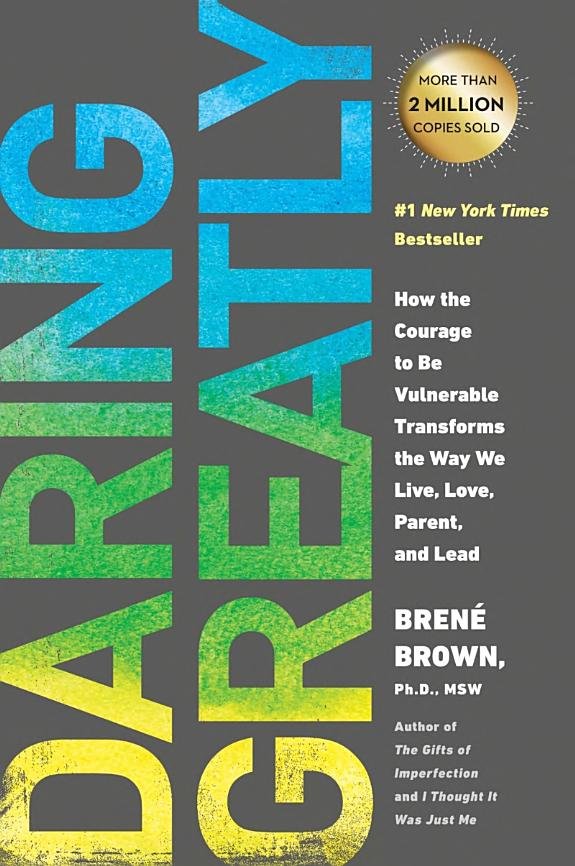
Daring Greatly: How the Courage to Be Vulnerable Transforms the Way We Live, Love, Parent, and Lead
5. Daring Greatly by Brené Brown
Brené Brown is a researcher who spent years studying shame and vulnerability and then, somewhat reluctantly, became one of the most recognized voices on those subjects in popular culture. Daring Greatly is built around a single idea borrowed from a Theodore Roosevelt speech: that the person in the arena, the one who is actually trying and failing and trying again, is more worthy of our attention than the critic in the stands. Brown applies this to every domain of life, from parenting to leadership to creative work.
Her writing is conversational and warm, and she is unusually good at making academic research feel personal without distorting it. She draws heavily on her own interviews and data, and she is honest about the moments when her findings challenged her own assumptions. The sections on shame resilience are among the most practically useful in the book. She makes a careful distinction between shame, which is about who you are, and guilt, which is about what you did, and that distinction turns out to matter quite a lot.
Readers who find emotional vocabulary uncomfortable or who are skeptical of vulnerability as a concept may find this book frustrating. Brown is not unaware of that resistance. She addresses it directly and with some humor. But if the word vulnerability makes you want to close the book, this is probably not the right read for you right now, and that is fine. It will be here when you are ready.
Brown’s research finding that vulnerability is not weakness but rather the birthplace of creativity, belonging, and love sounds like a bumper sticker until she shows you the data behind it. Then it sounds like something you probably knew and kept ignoring.
This is perfect for people in leadership roles, those working through perfectionism or fear of failure, and anyone who has noticed that keeping their guard up is costing them more than it is protecting them.
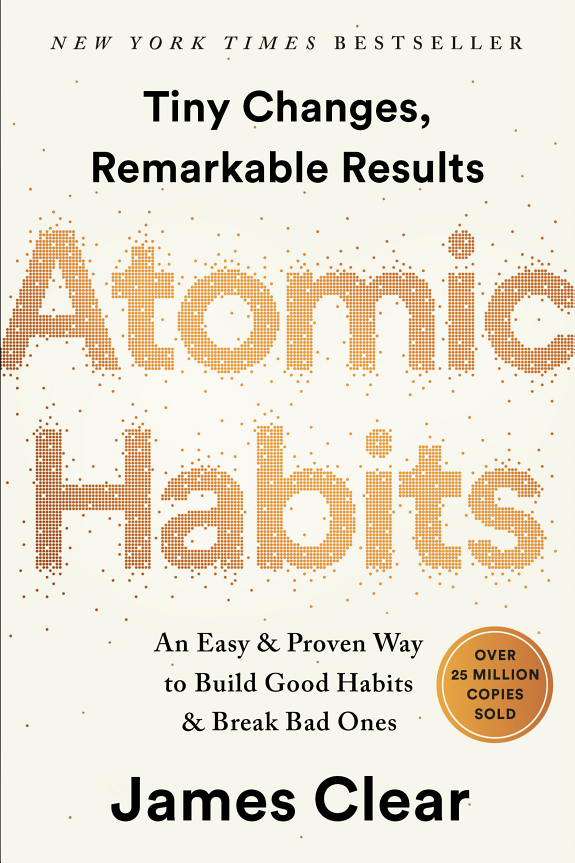
Atomic Habits
6. Atomic Habits by James Clear
James Clear wrote the book that people who want to change their behavior actually finish. That is not a small thing. Atomic Habits is practical in a way that a lot of self-improvement writing fails to be, because Clear is not asking you to overhaul your motivation or your personality. He is asking you to look very carefully at the systems around you and make small, specific adjustments. The title is deliberate. Atomic means both tiny and fundamental, and Clear argues that tiny changes, compounded over time, produce results that dramatic gestures rarely do.
The framework Clear builds, around cues, cravings, responses, and rewards, is drawn from existing behavioral science, but he synthesizes it clearly and applies it in ways that feel genuinely usable rather than theoretical. His concept of identity-based habits is particularly worth sitting with. The idea is that lasting change comes not from deciding to do something differently but from deciding to be someone different, and then letting the habits follow from that identity. It reframes the whole project of self-improvement in a way that actually makes it feel more achievable, not less.
If you are looking for deep psychological exploration or philosophical inquiry, this is not that book. It is a practical manual, and it is honest about being one. Some readers want more of the why and find the how a bit relentless after a while. That is a fair point. But for people who have read plenty of inspiring books and still cannot seem to make anything stick, the specificity here is exactly what has been missing.
Clear’s most clarifying point is that you do not rise to the level of your goals. You fall to the level of your systems. It is the kind of sentence that makes you want to go reorganize your entire life, which is probably the intended effect.
This is perfect for readers who already understand what they want to change but keep struggling with the execution, and for anyone who finds abstract motivation less useful than concrete, repeatable strategies.
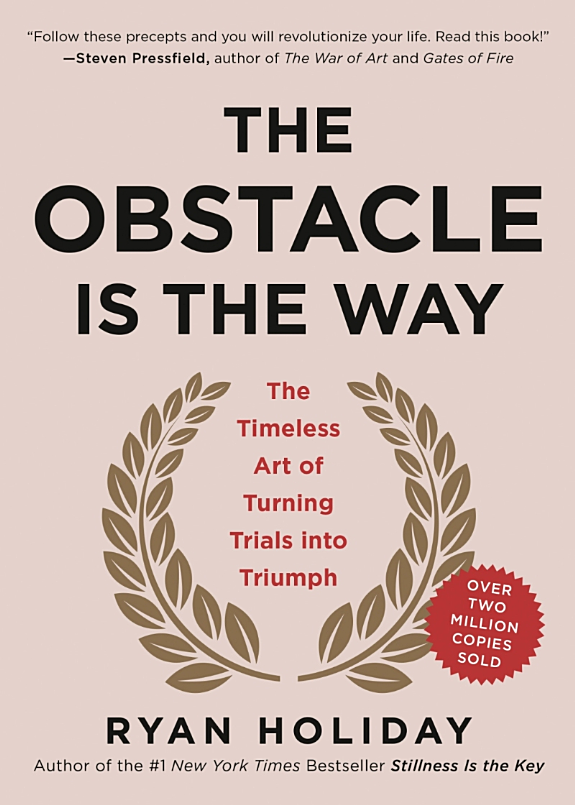
The Obstacle Is the Way: The Timeless Art of Turning Trials into Triumph
7. The Obstacle Is the Way by Ryan Holiday
Ryan Holiday came to Stoic philosophy as a young man working in an industry, Hollywood publicity, that is not typically associated with ancient wisdom, and that background gives his writing an interesting practical edge. The Obstacle Is the Way draws on Marcus Aurelius, Epictetus, and Seneca, but it is not a philosophy lecture. It is a series of historical examples, from Amelia Earhart to Ulysses S. Grant to Thomas Edison, organized around the Stoic idea that the impediment to action becomes the action itself. In other words, the obstacle is not in the way. It is the way.
Holiday’s prose is crisp and punchy. He writes in short chapters that feel almost like individual essays, which makes the book easy to read in pieces without losing the thread. The historical anecdotes are well chosen and genuinely interesting. He has a talent for finding the specific moment in a person’s life where everything looked impossible and then showing exactly how they turned that into forward motion.
This is not a book that dwells in nuance or complexity. It makes a clear argument and illustrates it repeatedly. For some readers, that directness is exactly what they need. For others, particularly those who want to sit with philosophical ideas rather than be marched through them, the pace might feel a little relentless. It is also worth noting that the book skews heavily toward stories of historical men in high-stakes public arenas. That framing works, but it does reflect a particular vision of what struggle and triumph look like.
Holiday distills the Stoic position on adversity into something genuinely usable: perception shapes reality, action shapes outcomes, and will determines how you carry both. Simple, yes. Easy, not remotely.
This is perfect for readers drawn to history and philosophy who want those ideas applied to real challenges, and for anyone currently facing a setback that feels more like a wall than a door.
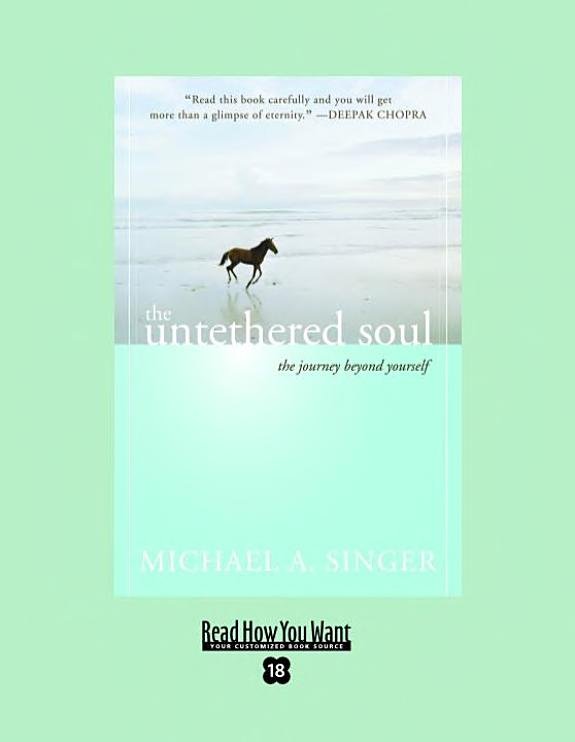
The Untethered Soul: The Journey Beyond Yourself
8. The Untethered Soul by Michael A. Singer
Michael Singer asks a question in the opening pages of this book that sounds simple and turns out not to be at all: who is the one who is aware of your thoughts? Not the thoughts themselves, but the awareness behind them. That question is the engine of everything that follows. The Untethered Soul is a book about consciousness, about the difference between the voice in your head and the self that notices that voice, and about what it might mean to stop identifying so completely with your own mental chatter.
Singer writes with a calm, almost meditative quality that either draws you in immediately or leaves you cold. He is drawing on contemplative traditions, both Eastern and Western, but he does not require any particular background or belief system from the reader. The book is more experiential than academic. He is not trying to convince you of anything so much as point your attention in a particular direction and let you see what you find there.
This is, without question, the most abstract book on this list. Readers who want practical strategies or empirical research will not find much of either here. Singer is operating in a different register entirely, one concerned with the nature of awareness itself rather than with habits or productivity or resilience. For the right reader, that is exactly what makes it so valuable. For others, it will feel like it never quite lands anywhere concrete. Both experiences are completely understandable.
Singer’s central invitation is to notice that you are not your thoughts or your emotions or your reactions. You are the one watching all of that happen. It sounds abstract until a moment of genuine stress arrives, and then it becomes one of the most useful ideas you have ever encountered.
This is perfect for readers with some interest in meditation, mindfulness, or contemplative practice who want a clear and accessible articulation of those ideas, and for anyone who has noticed that their own mind seems to be working against them in ways they cannot quite explain.
Eight books, eight very different approaches to the same broad territory. What connects them is not a single philosophy or a unified method. It is a shared conviction that the way you think about yourself and your circumstances is not fixed, and that examining it honestly is worth the effort. Some of these books will resonate with you immediately. Others might need to wait for the right moment in your life, which is fine. The best reading often works that way.
If you are not sure where to start, Frankl and Dweck are the two I would suggest first. Between them, they cover the philosophical and the scientific foundations that most of the other books build on in one way or another. From there, let your own instincts guide you. The book that feels slightly uncomfortable is usually the one worth picking up next.