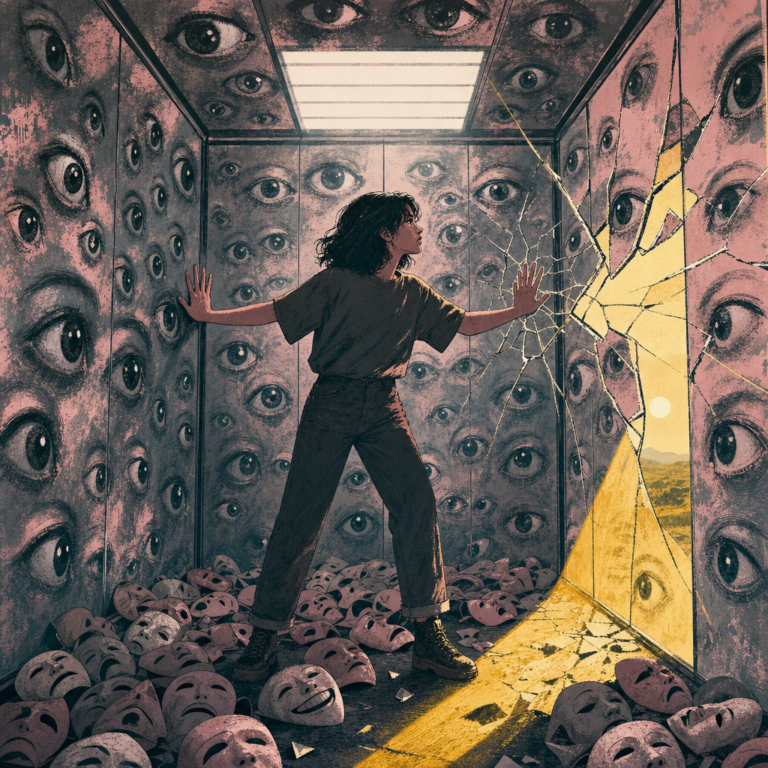

5 Books That Could Change Your Life This Year
Every January, someone compiles a list of books that will supposedly fix everything wrong with your life by February. This is not that list. What follows are five books that genuinely deserve your time, not because they promise miracles, but because each one offers a way of thinking that tends to stick around long after you close the cover.
Some of these titles you have probably heard of. A couple may feel like old friends you keep meaning to revisit. Either way, there is something worth saying about each of them that goes beyond the usual summary. So here is an honest, unhurried look at five books that have a real shot at reshaping how you approach your days, your relationships, and your own mind.
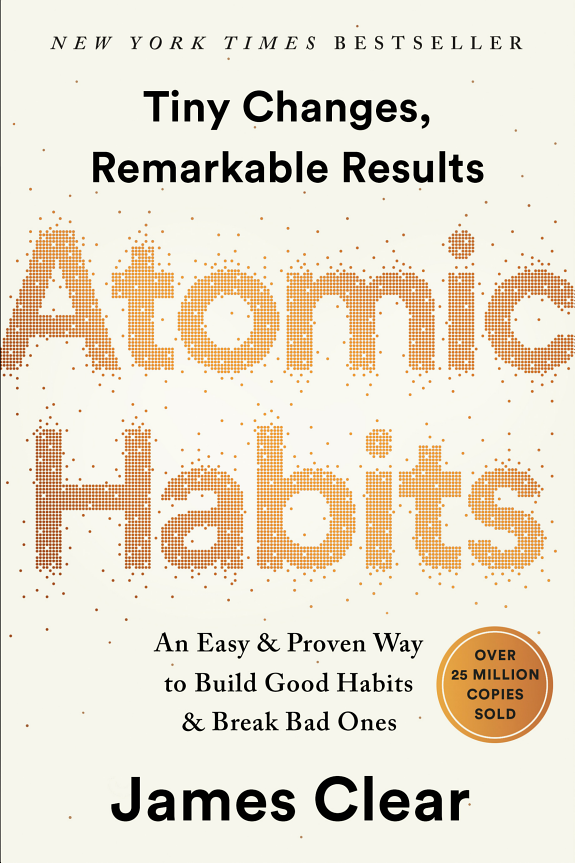
Atomic Habits
1. Atomic Habits by James Clear
James Clear writes the way a good coach talks: directly, without condescension, and with the kind of patience that suggests he actually believes you can do this. Atomic Habits is built around one central idea that sounds almost too simple to be useful, which is that small, consistent changes compound into significant results over time. The genius is in how Clear unpacks that idea. He does not just tell you to build better habits. He explains the mechanics behind why habits form, why they break, and how your environment shapes your behavior far more than your willpower ever will.
The framework he introduces, identity-based habit formation, is where the book earns its reputation. Instead of asking what you want to achieve, Clear asks who you want to become. That reframe is subtle but it changes everything about how you approach daily decisions. He backs this up with research, but never in a way that feels like a lecture. The book reads more like a conversation than a textbook, which is why so many people actually finish it.
That said, if you are already deep into behavioral psychology or have read extensively in the self-improvement space, some of this material will feel familiar. Clear synthesizes well-established ideas rather than breaking entirely new ground. There is nothing wrong with that, but it is worth knowing going in. The value here is in the clarity and the practical application, not in radical novelty.
“You do not rise to the level of your goals. You fall to the level of your systems.” This single line from the book has a way of quietly dismantling every excuse you have ever made about motivation.
This is perfect for anyone who has started and abandoned the same habit roughly fourteen times and genuinely wants to understand why, without being made to feel bad about it.
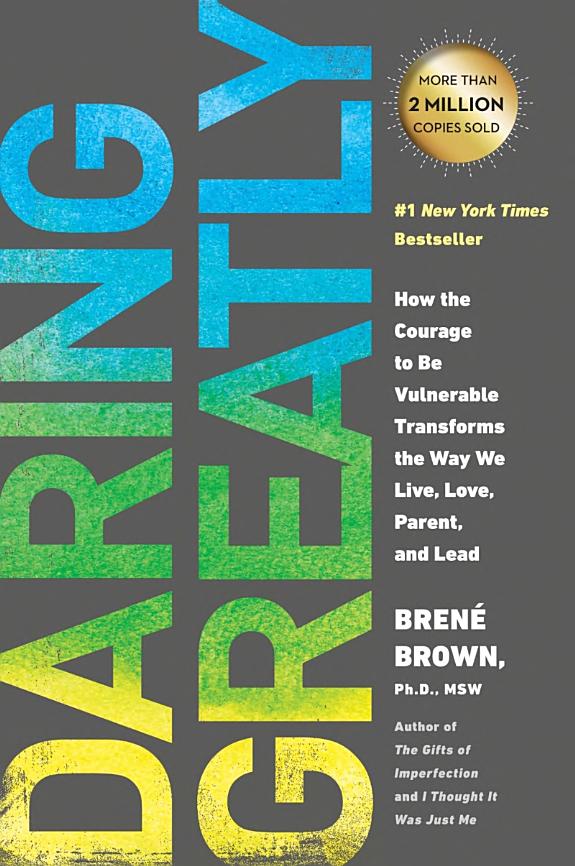
Daring Greatly
2. Daring Greatly by Brené Brown
Brené Brown spent years as a researcher studying shame and vulnerability before she became a household name, and that academic foundation gives Daring Greatly a weight that a lot of books in this space lack. The title comes from a Theodore Roosevelt speech about the man in the arena, and the core argument is that vulnerability, the willingness to show up and be seen even when there are no guarantees, is not weakness. It is the only real path to connection, creativity, and a life that feels meaningful rather than just managed.
Brown’s voice is warm and self-deprecating in the best way. She does not position herself as someone who has figured everything out. She shares her own struggles with shame and the armor she built around herself, and that honesty makes the harder ideas in the book easier to sit with. She also addresses specific contexts: parenting, leadership, schools, and relationships, which keeps the book from feeling too abstract. You can see yourself and the people around you in her examples.
Where the book can lose some readers is in its repetition. Brown circles back to certain concepts several times, and if you are a faster reader who picks things up quickly, you may feel like she is covering the same ground more than necessary. The research citations are also fairly light compared to a strictly academic text, which might frustrate readers who want deeper sourcing. But for most people, the accessibility is a feature, not a flaw.
Brown argues that we cannot selectively numb emotions. When we numb the difficult ones, we numb joy, gratitude, and belonging right along with them. That observation has a way of landing differently depending on where you are in your life.
This is perfect for anyone who suspects that their tendency to stay guarded and self-sufficient might be costing them more than it is protecting them.
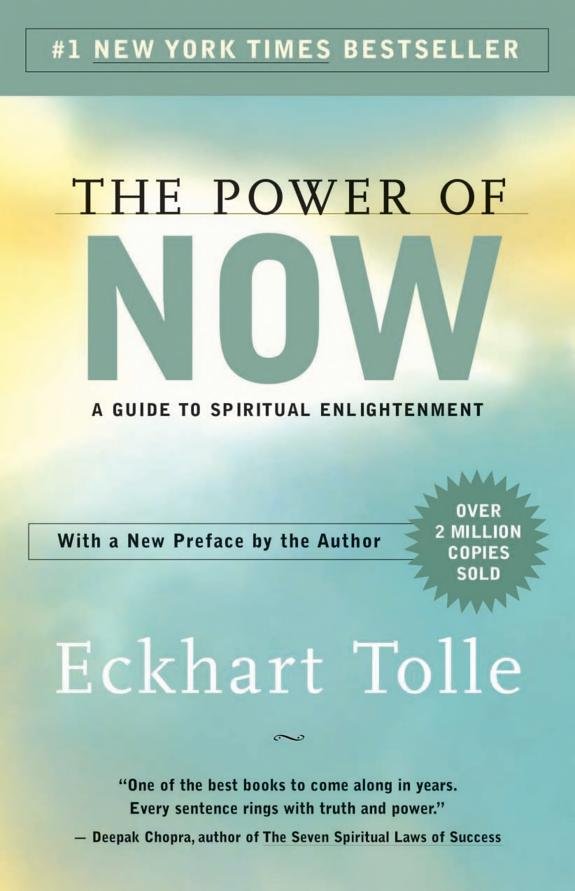
The Power of Now
3. The Power of Now by Eckhart Tolle
Eckhart Tolle writes in a style that is either deeply calming or mildly maddening depending on your temperament, and it is worth being upfront about that. The Power of Now is structured as a series of questions and answers, and Tolle’s prose has a slow, deliberate quality that mirrors his central message: stop living in your head and start inhabiting the present moment. The book draws from Buddhist philosophy, Christianity, and various spiritual traditions without fully belonging to any of them, which is either refreshing or vague depending on what you bring to it.
The core idea is that most human suffering comes from mental time travel, obsessing over the past or anxious about the future, rather than from what is actually happening right now. Tolle argues, with considerable patience, that the thinking mind is not the same as the aware presence behind it, and that learning to observe your thoughts rather than identify with them is the beginning of genuine peace. It sounds abstract, but the book offers practical invitations to try this in real time as you read.
This is not a book for readers who need linear arguments and empirical evidence. Tolle does not cite studies. He does not build a case in the traditional sense. He points at something and asks you to look. If that approach resonates with you, the book can feel quietly revelatory. If it does not, you may spend most of it waiting for him to get to the point, which, to be fair, is kind of the point.
“Realize deeply that the present moment is all you ever have.” Easy to read, genuinely difficult to live, and probably worth attempting anyway.
This is perfect for someone who has noticed that their mind is rarely where their body is, and who is open to a more contemplative, spiritually inflected approach to that problem.
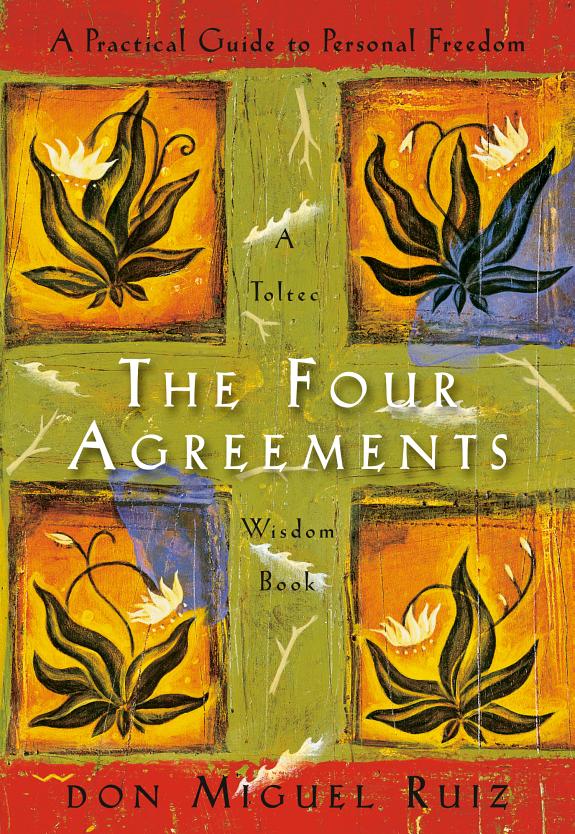
The Four Agreements
4. The Four Agreements by Don Miguel Ruiz
Don Miguel Ruiz draws on Toltec wisdom to offer what is, on the surface, an almost disarmingly simple framework for living. The four agreements are: be impeccable with your word, do not take anything personally, do not make assumptions, and always do your best. You can read that list and think, yes, fine, sensible enough, and then spend the next several years realizing how thoroughly you violate all four of them on a daily basis. That gap between understanding an idea and actually practicing it is where this book lives.
Ruiz writes with genuine warmth and a kind of quiet urgency. He frames the human condition as a kind of domestication, a process by which we absorb other people’s beliefs, fears, and judgments until we can no longer distinguish them from our own. The four agreements are offered as a way to reclaim your own mind, not through force or discipline exactly, but through awareness and a willingness to keep returning to the practice even when you fall short. And you will fall short. He is honest about that.
The book is short, which is either a relief or a concern depending on what you paid for it. Some readers find the brevity refreshing. Others wish Ruiz had gone deeper into each agreement with more nuance and complexity. The spiritual framing, rooted in Toltec tradition, will feel natural to some and unfamiliar to others. It is not a demanding read intellectually, but it asks something of you emotionally and practically that is harder than it looks.
The second agreement, do not take anything personally, sounds reasonable until someone criticizes your work, your parenting, or your parking, and then it becomes the hardest thing in the world.
This is perfect for anyone who finds themselves exhausted by other people’s opinions and would like a clear, grounded framework for caring less about them without becoming indifferent to the world.
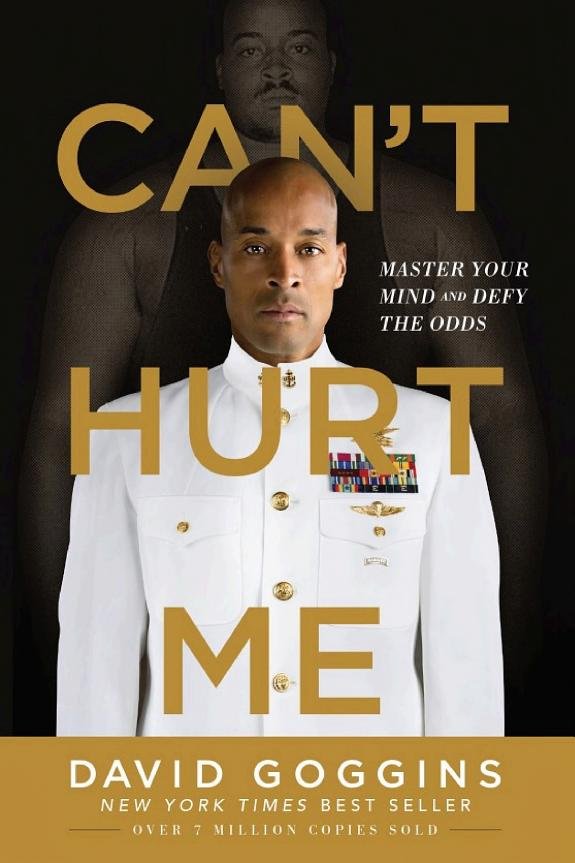
Can’t Hurt Me
5. Can’t Hurt Me by David Goggins
David Goggins is not subtle, and Can’t Hurt Me is not a gentle book. Goggins grew up in a genuinely brutal environment, faced racism, poverty, and abuse, and went on to become a Navy SEAL, an ultra-endurance athlete, and one of the more singular human beings you are likely to read about. The book is part memoir, part motivational manual, and it is written with a raw, unfiltered energy that either grabs you immediately or feels like a lot. There is no middle ground with Goggins, which is sort of his whole thing.
The central concept he introduces is what he calls the forty percent rule, the idea that when your mind tells you that you are done, you are actually only at about forty percent of your true capacity. Whether or not you accept that specific figure, the underlying argument is worth sitting with. We do quit earlier than we have to. We do negotiate with ourselves in ways that protect our comfort at the expense of our potential. Goggins pushes on that in a way that is difficult to dismiss, partly because his own story is so extreme that you cannot accuse him of not knowing what he is talking about.
This book is not for everyone, and it would be dishonest to pretend otherwise. If you are going through something genuinely difficult right now and need compassion more than challenge, this is probably not the right read for this moment. Goggins has limited patience for self-pity, including his own, and that tone can feel harsh depending on where you are. The book also has a very specific kind of masculine, military energy that some readers will connect with and others will find alienating. Know yourself before you pick this one up.
Goggins asks a question that is uncomfortable in the best way: what if the story you tell yourself about your limits is the only thing actually limiting you?
This is perfect for someone who suspects they have been playing it safe for too long and wants a genuinely uncompromising kick in the direction of their own potential.
None of these five books will do the work for you. That is the honest truth that every reading list eventually has to admit. What they can do is offer a new angle, a useful question, or a framework that makes the work feel more possible. Some of them will land immediately. Others might sit on your shelf for a year before you pick them up at exactly the right moment and wonder how you waited so long.
The best reading is never really about finishing books. It is about finding the ideas that change how you move through your days, even slightly. If one of these five does that for you, that is more than enough.