

8 Books That Genuinely Improve Communication Skills
Most of us spend years learning to read and write, and almost no time learning how to actually talk to each other. Then we wonder why conversations go sideways, why our point never lands the way we intended, or why we leave important meetings feeling like we said everything except the thing that mattered. Communication is one of those skills that everyone assumes they already have, right up until the moment they realize they don’t.
The books on this list approach the problem from very different angles. Some are research-backed and practical, full of frameworks you can apply the next morning. Others are quieter and more philosophical, asking you to slow down before you open your mouth. A few are genuinely fun to read. Together, they cover the full range of human conversation, from high-stakes confrontations at work to the small talk you make waiting for your coffee. If even one of these changes the way you listen or speak, that is time very well spent.
Crucial Conversations: Tools for Talking When Stakes Are High
1. Crucial Conversations: Tools for Talking When Stakes Are High by Kerry Patterson, Joseph Grenny, Ron McMillan, Al Switzler
There is a particular kind of conversation that most people will do almost anything to avoid. The one where the stakes are real, emotions are running high, and saying the wrong thing could damage a relationship or derail a career. Kerry Patterson and his co-authors wrote this book specifically for those moments, and they clearly understand just how badly those conversations can go when we walk in unprepared.
The central idea here is that when conversations become crucial, most people either go silent or go aggressive, and neither works. The authors offer a third path built around creating psychological safety, staying focused on shared goals, and learning to separate facts from the stories we tell ourselves about those facts. The writing is clear and fairly brisk, and the authors back their advice with research drawn from decades of organizational consulting. It reads like something written by people who have watched a lot of meetings go horribly wrong.
The book is strongest when it addresses the internal work that happens before you say a single word. There is a whole section on noticing when you are about to lose the plot emotionally, which is honestly more useful than any scripted phrase the book could offer. The examples lean heavily toward workplace scenarios, which is worth knowing going in.
The authors argue that the quality of your relationships and your career is largely determined by how you handle the handful of conversations that feel too risky to have. That framing alone is worth sitting with.
This is perfect for managers, couples navigating recurring conflicts, and anyone who has ever rehearsed a difficult conversation in the shower and then completely chickened out in real life.
Nonviolent Communication: A Language of Life
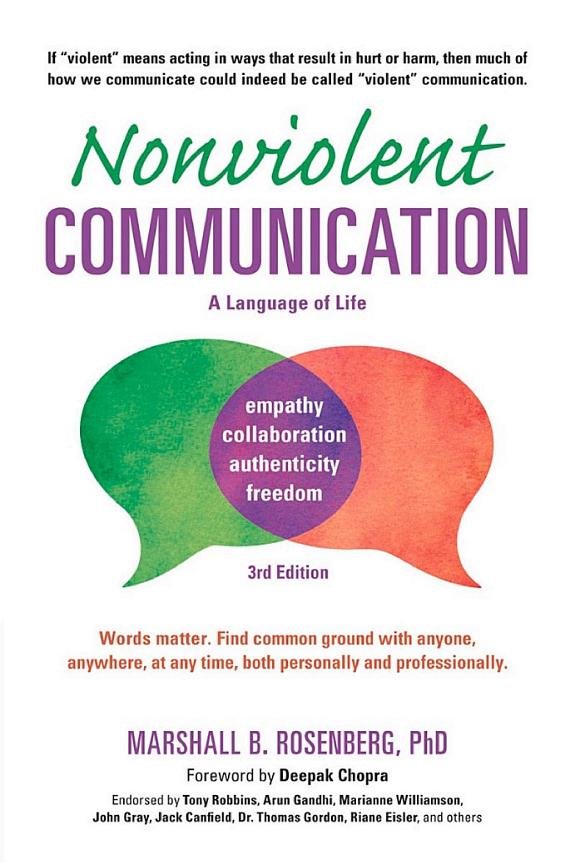
2. Nonviolent Communication: A Language of Life by Marshall B. Rosenberg
Marshall Rosenberg spent decades working as a mediator in some of the most conflict-ridden environments imaginable, from schools in racially divided American cities to war zones in the Middle East. Nonviolent Communication is his attempt to distill what he learned into a framework that ordinary people can use in ordinary life. The title sounds a little clinical, but the ideas inside are genuinely interesting.
The core of NVC, as it is commonly abbreviated, is a four-part process: observe without evaluating, identify feelings, connect those feelings to underlying needs, and make a clear request. That sounds simple written out in a sentence, but Rosenberg spends the whole book unpacking how rarely we actually do any of those four things. Most of us, he argues, communicate in ways that are subtly coercive or judgmental without even realizing it. Reading this book is a bit like being shown a habit you didn’t know you had.
The writing style is warm but occasionally repetitive, and some readers find the examples a little idealized. Rosenberg tends to demonstrate NVC conversations in which both parties are remarkably willing to be vulnerable, which is not always how things go in real life. Still, the underlying model is genuinely useful and the book has earned its devoted following for good reason.
Rosenberg’s central insight is that most conflict is not really about the surface issue at all. It is about unmet needs that neither person has found a way to name out loud.
This is perfect for therapists, teachers, parents of teenagers, and anyone who has noticed that their arguments tend to escalate in ways they cannot quite explain.
Difficult Conversations: How to Discuss What Matters Most
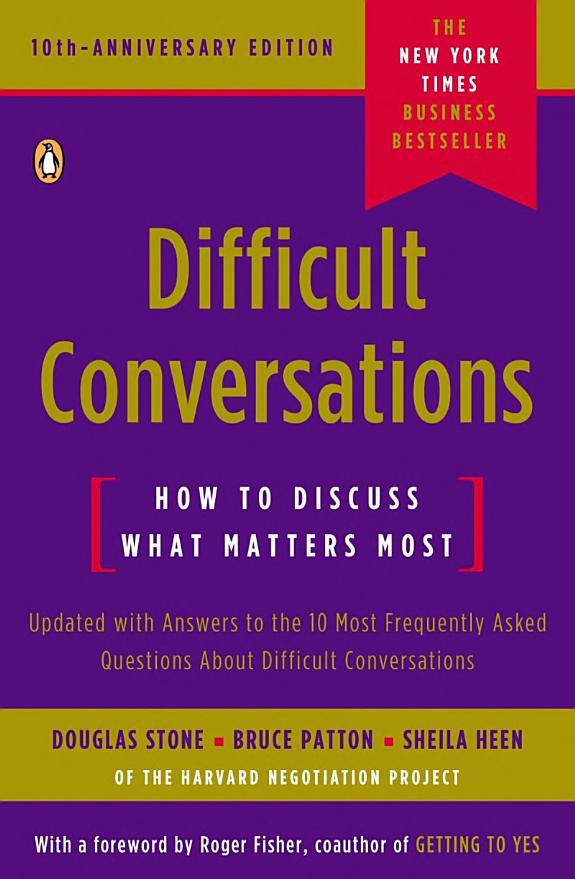
3. Difficult Conversations: How to Discuss What Matters Most by Douglas Stone, Bruce Patton, Sheila Heen
This one comes out of the Harvard Negotiation Project, which also produced the negotiation classic Getting to Yes. Douglas Stone, Bruce Patton, and Sheila Heen spent years studying why certain conversations are so hard to have, and their findings are laid out here with a level of psychological nuance that sets this book apart from most communication guides. It is rigorous without being dry, which is a harder balance to strike than it looks.
The authors argue that every difficult conversation is actually three conversations happening at once. There is the factual conversation about what happened, the feelings conversation about the emotions involved, and what they call the identity conversation, which is the internal debate about what this situation says about who you are. That third layer is the one most books miss entirely, and it is often the one doing the most damage. When a conversation threatens your sense of yourself as competent or fair or good, you stop listening and start defending.
The practical advice here is solid, but the real value of this book is the way it reframes the whole enterprise. Instead of trying to win a difficult conversation or even to resolve it cleanly, the authors suggest aiming for something more modest: genuine understanding of each other’s perspective. That shift in goal changes everything about how you show up.
The book makes a quietly radical point: in most difficult conversations, both people have a piece of the truth, and the goal is not to establish who is right but to understand how two people could see the same situation so differently.
This is perfect for anyone navigating a conversation they have been putting off for weeks, particularly in relationships where the history between two people makes everything feel loaded.
Talk Like TED: The 9 Public-Speaking Secrets of the World’s Top Minds
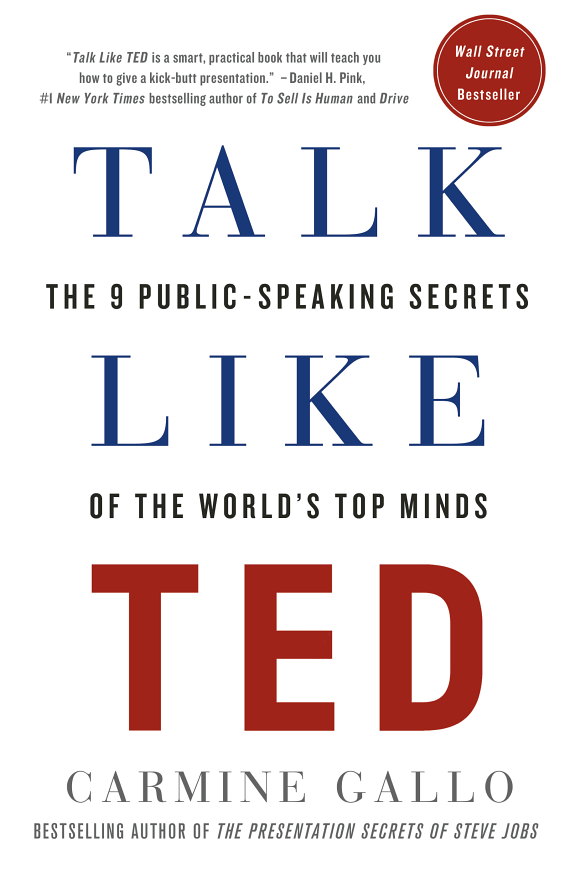
4. Talk Like TED: The 9 Public-Speaking Secrets of the World’s Top Minds by Carmine Gallo
Carmine Gallo watched hundreds of TED talks and then interviewed the people who gave them, looking for patterns. What he found became this book, which is essentially a breakdown of what separates a presentation that people remember from one they forget before they reach the parking lot. If the premise sounds a little formulaic, the execution is better than you might expect.
Gallo identifies nine principles, covering things like the importance of telling stories, the value of genuine passion, the role of novelty in keeping an audience’s brain engaged, and the surprisingly specific advice to keep presentations under eighteen minutes. He illustrates each principle with examples drawn from actual TED talks, which gives the book a grounded, concrete feel. You can watch the talks he references and see exactly what he is describing, which is a nice touch.
The book is unambiguously aimed at public speaking rather than one-on-one conversation, so if you are looking for help with interpersonal communication specifically, this is not your starting point. It also leans heavily on the TED format, which has its own conventions and quirks that do not always translate to a boardroom or a classroom. But for anyone who has to present ideas to an audience, whether that is ten people or ten thousand, the advice here is practical and well-supported.
Gallo’s most useful observation is that the best TED speakers are not the most polished or the most technically skilled. They are the ones who clearly cannot wait to share what they know.
This is perfect for professionals who present regularly, academics who want their research to reach beyond their field, and anyone who has ever given a talk that felt flat even though the content was good.
How to Win Friends and Influence People
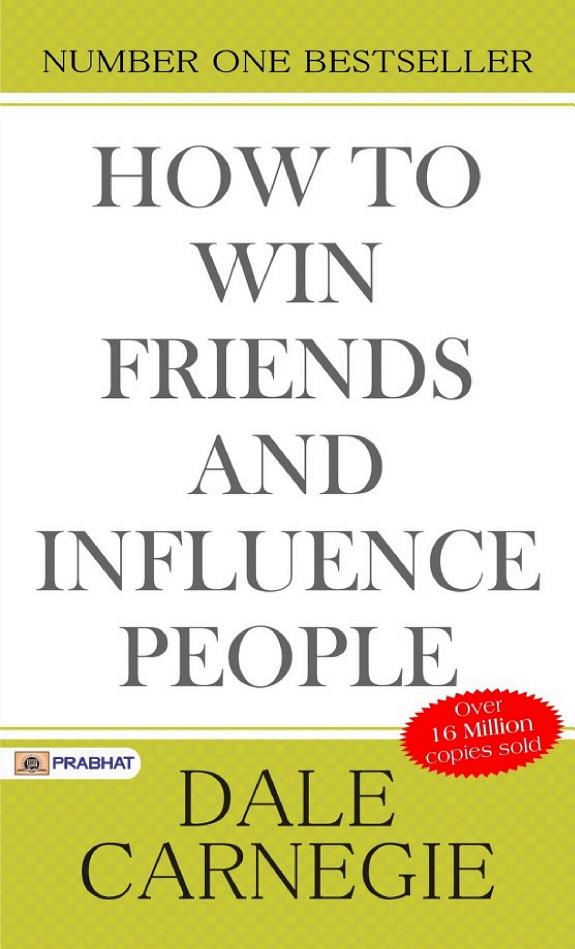
5. How to Win Friends and Influence People by Dale Carnegie
Published in 1936, this book has sold over thirty million copies, which either means it contains genuine wisdom or that people have been buying it as a gift for relatives they find difficult. Probably both. Dale Carnegie wrote it during the Great Depression for people trying to get ahead in a brutal economy, and while the cultural context has shifted considerably, the core observations about human nature hold up with uncomfortable reliability.
Carnegie’s central argument is disarmingly simple: people want to feel important, understood, and appreciated, and if you make them feel that way, they will respond to you warmly. The book is full of principles like remembering people’s names, listening more than you talk, and finding something you genuinely admire in the person you are speaking to. None of this is rocket science. The reason the book still works is that Carnegie is very good at illustrating how rarely we actually do these things, and how much difference it makes when we do.
The book is not without its critics, and fair enough. Some readers find the approach manipulative, the idea being that you are performing interest in people rather than actually feeling it. Others find the examples dated and the tone occasionally patronizing. These are legitimate concerns. But Carnegie’s deeper point, that most communication failures are really failures of attention and ego, is hard to argue with.
Carnegie understood something that most communication books dance around: the biggest obstacle to connecting with another person is usually your own need to be heard first.
This is perfect for people early in their careers, anyone who finds networking genuinely uncomfortable, and readers who want a short, readable book that has actually been tested by several generations of human beings.
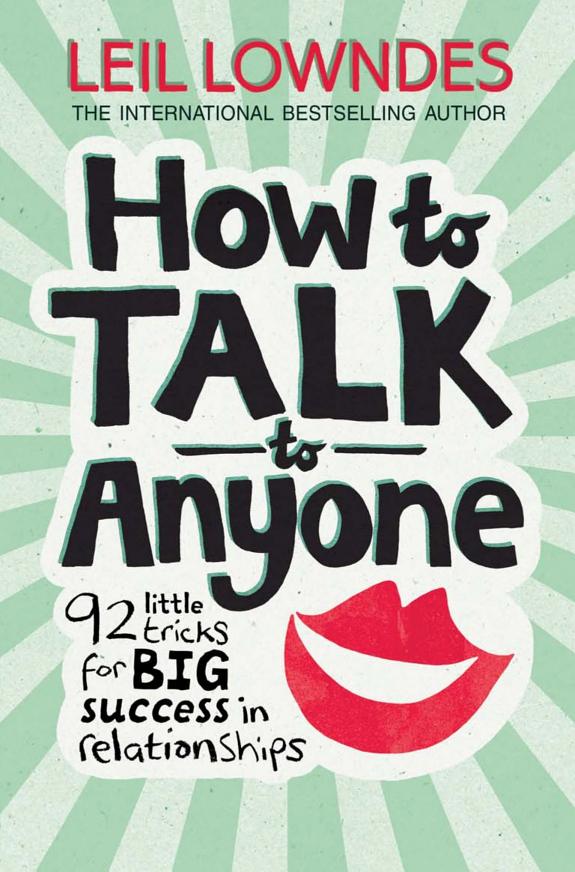
How to Talk to Anyone: 92 Little Tricks for Big Success in Relationships
6. How to Talk to Anyone: 92 Little Tricks for Big Success in Relationships by Leil Lowndes
Leil Lowndes is not trying to write a philosophical treatise on human connection. She is trying to give you specific, actionable techniques you can use tonight at a party where you do not know anyone. The result is a book that feels more like a collection of social hacks than a unified theory of communication, and that is more or less exactly what it advertises itself to be.
The ninety-two tricks cover a wide range of situations, from how to make eye contact in a way that feels warm rather than unsettling, to how to use someone’s name effectively, to how to exit a conversation gracefully without making the other person feel dismissed. Lowndes writes in a breezy, upbeat style that makes the book fast to read. Some of the techniques are genuinely clever. Others feel a bit mechanical, as though you are following a recipe rather than having a real conversation.
This book will not suit everyone. Readers who prefer to think about communication in terms of authenticity and emotional depth may find the tricks-based approach a little hollow. And some of the advice, particularly around body language and eye contact, is presented with a confidence that outpaces the actual evidence behind it. But for someone who feels genuinely lost in social situations and wants concrete starting points, this book delivers exactly what it promises.
Lowndes makes the useful point that social confidence is largely a set of learned behaviors, not a personality trait you either have or you don’t. That reframe alone is worth the price of entry for some readers.
This is perfect for introverts who want practical scripts and techniques, people returning to the workforce after a long break, and anyone who finds social situations exhausting mainly because they feel unprepared.
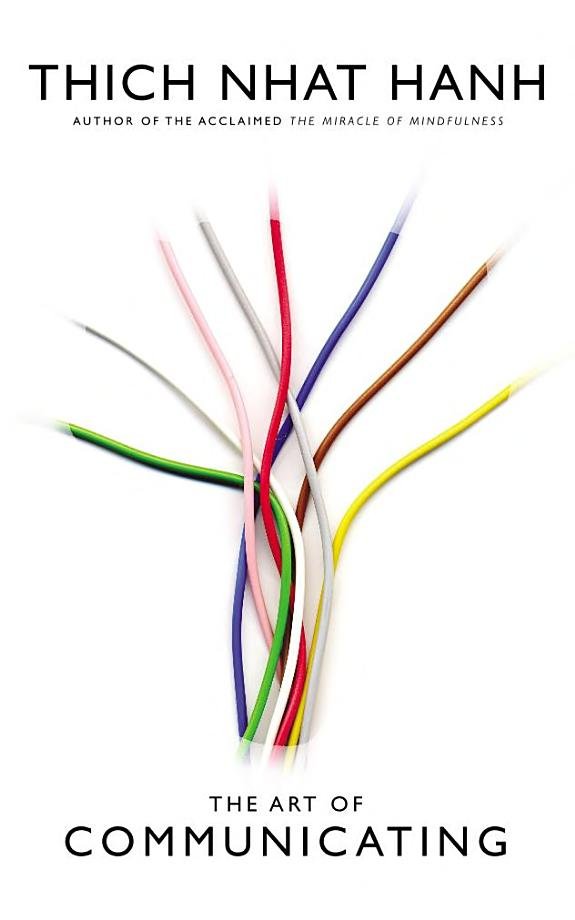
The Art of Communicating
7. The Art of Communicating by Thich Nhat Hanh
This is the quietest book on the list by a considerable margin. Thich Nhat Hanh was a Vietnamese Buddhist monk, poet, and peace activist who spent decades writing about mindfulness and compassion. The Art of Communicating applies those ideas to the specific problem of how we talk and listen to each other, and the result is something quite different from every other book here.
Where most communication books focus on technique, Nhat Hanh focuses on presence. His argument is that real communication requires you to be fully there with another person, not planning your response, not half-distracted by your phone, not filtering everything through your own fears and assumptions. He writes about listening as a form of compassion and about the way our words carry the energy of our inner state, whether we intend them to or not. It is gentle writing, but it asks something serious of the reader.
The book is short and meditative, and it will frustrate readers who want a checklist or a framework. There are no steps here, no acronyms, no scripts. Nhat Hanh is not interested in helping you win an argument or ace a presentation. He is interested in helping you actually hear another human being, which turns out to be much harder and much more important than most of us want to admit.
Nhat Hanh writes that the most important thing we can offer another person is our full attention. In a world designed to fragment attention at every turn, that observation lands with some weight.
This is perfect for readers who feel burned out on productivity-style advice, people in helping professions who want to reconnect with the relational side of their work, and anyone who suspects their communication problems run deeper than technique.
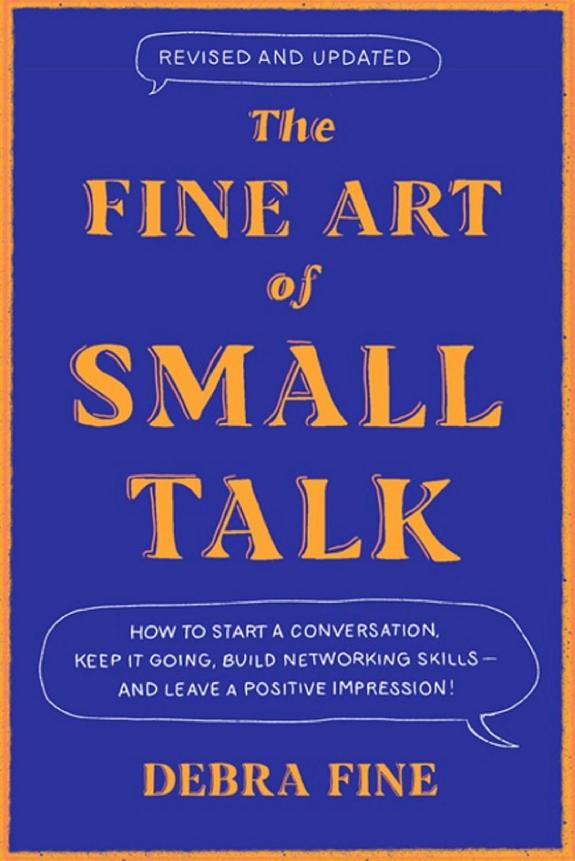
The Fine Art of Small Talk: How To Start a Conversation, Keep It Going, Build Networking Skills – and Leave a Positive Impression!
8. The Fine Art of Small Talk: How To Start a Conversation, Keep It Going, Build Networking Skills and Leave a Positive Impression by Debra Fine
Small talk gets a bad reputation, mostly from people who are secretly terrified of it. Debra Fine was one of those people. She is a former engineer who describes herself as having been painfully shy, and she wrote this book after spending years studying and practicing the social skills that did not come naturally to her. That personal history gives the book a warmth and credibility that a lot of social skills guides lack.
Fine’s core argument is that small talk is not trivial. It is the foundation on which all larger conversations are built, and people who dismiss it usually do so because they find it hard, not because they have transcended it. The book covers how to start conversations, how to keep them going when they stall, how to remember names, how to exit gracefully, and how to make the kind of impression that leads to genuine connection rather than just a forgettable exchange.
The advice is practical and specific without being robotic. Fine is good at explaining not just what to do but why it works, which makes the techniques easier to adapt to your own style. The book is not trying to turn you into a social butterfly. It is trying to give you enough confidence and skill to stop dreading the cocktail party, the networking event, or the work conference where you do not know a soul.
Fine’s most honest observation is that most people are just as uncomfortable with small talk as you are, and that knowing this should make you more willing to be the one who breaks the ice.
This is perfect for introverts who want to get better at networking without feeling like they are performing, new graduates entering professional environments, and anyone who has ever stood alone at a party pretending to be very interested in their drink.
Communication is one of those things that improves slowly and unevenly. You read a book, you try something, it works once and fails the next time, and you gradually build a sense of what actually helps. No single book on this list will fix everything, and anyone who tells you otherwise is selling something. But each of these books offers a genuinely different perspective on the same essential problem: how do we say what we mean, hear what others are saying, and actually connect with the people in front of us.
If you are not sure where to start, pick the book that addresses the specific situation giving you the most trouble right now. If difficult workplace conversations are the issue, start with Crucial Conversations or Difficult Conversations. If it is public speaking, Gallo’s book is the most practical entry point. If you feel like the problem runs deeper than any technique can fix, Thich Nhat Hanh might be the right place to begin. The books will still be here when you are ready for the next one.