7 Books for Recovering From Toxic Relationships
There is a particular kind of exhaustion that comes after leaving a toxic relationship. It is not just tiredness. It is the bone-deep confusion of wondering how you got there, why you stayed, and whether you can trust yourself again. Books do not fix that overnight, but the right ones can make you feel significantly less alone in the middle of it.
The seven books gathered here cover a wide range of experiences, from codependency and narcissistic abuse to trauma stored in the body and the attachment patterns that shape every relationship we form. Some are clinical and research-backed. Some are raw and personal. All of them have found their way into the hands of people who needed them badly. Whether you are freshly out of something painful or still untangling the aftermath years later, there is something here for you.
Codependent No More
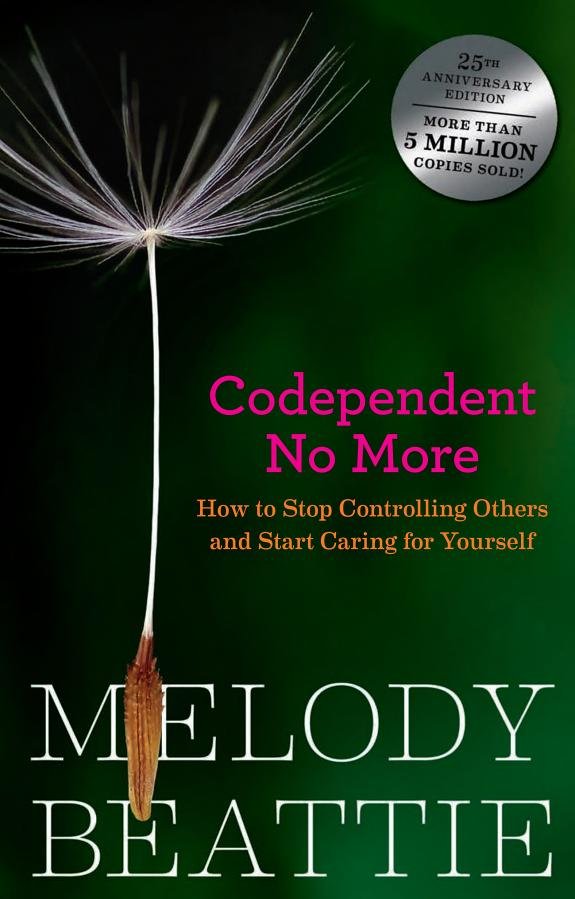
1. Codependent No More by Melody Beattie
Published in 1986, this book has quietly become one of the most enduring resources in the recovery space, and for good reason. Melody Beattie writes from personal experience, having lived through addiction, loss, and the particular trap of organizing your entire life around someone else’s chaos. Her voice is direct without being harsh, and she has a way of naming things that readers often feel but cannot articulate, especially the sneaking guilt of realizing you have been trying to control everyone around you while calling it love.
The central idea is that codependency is not a character flaw but a learned pattern, usually developed in environments where someone else’s needs always came first. Beattie walks through what that looks like in practice, how it shows up in relationships, in caretaking, in the inability to say no, and in the strange grief that comes when you finally stop rescuing someone who never asked to be saved. She also offers practical exercises and reflections drawn from twelve-step traditions, which gives the book a structured, workbook-like quality alongside its narrative sections.
The writing style is warm but no-nonsense. Beattie does not spend much time softening difficult truths, which some readers will appreciate and others may find a bit blunt. The book also leans on spiritual language at times, which fits naturally if you have any background with recovery programs and may feel slightly foreign if you do not. That is worth knowing going in.
“Detachment is not about being cold or uncaring. It is about releasing your grip on outcomes you were never meant to control in the first place.”
This is perfect for anyone who has spent years prioritizing other people’s feelings over their own and is ready to understand why, though readers who are put off by spiritual framing may want to approach with that in mind.
Psychopath Free
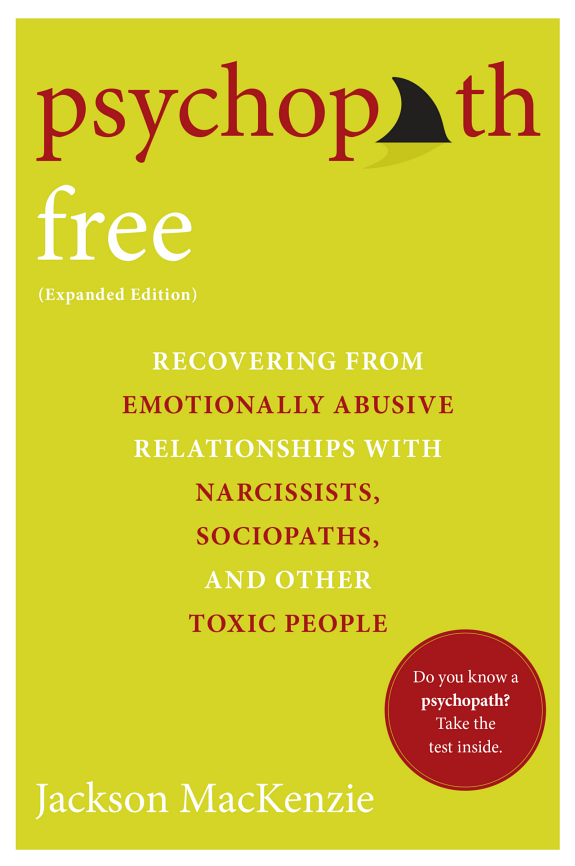
2. Psychopath Free by Jackson MacKenzie
Jackson MacKenzie wrote this book after his own experience with a manipulative relationship, and that firsthand perspective shapes everything about it. The tone is conversational, sometimes urgent, and deeply validating in a way that feels less like reading a psychology textbook and more like talking to someone who genuinely understands what you went through. MacKenzie focuses specifically on relationships with people who lack empathy, whether they carry a clinical label or not, and he is careful to explain that the label matters far less than the patterns.
The book covers the cycle of idealization, devaluation, and discard in clear terms, describing each phase in a way that helps readers recognize their own experience. One of its most useful contributions is the section on recovery, particularly the concept of “no contact” and why the pull to reconnect is so strong even after genuinely harmful relationships. MacKenzie does not moralize about this. He explains the psychological mechanics, which is far more helpful than being told you should simply know better.
Where the book has limitations is in its occasional tendency to paint certain personality types in very broad strokes. Some readers, particularly those with a clinical background, may find the characterizations a little simplified. It is also worth noting that the book focuses almost exclusively on romantic relationships, so those navigating toxic family dynamics or friendships may find other titles more directly applicable.
“The confusion you feel is not weakness. It was engineered. Understanding that is the first step toward trusting yourself again.”
This is perfect for someone who has recently left a relationship that left them questioning their own reality and needs a clear, accessible explanation of what happened to them.
Whole Again
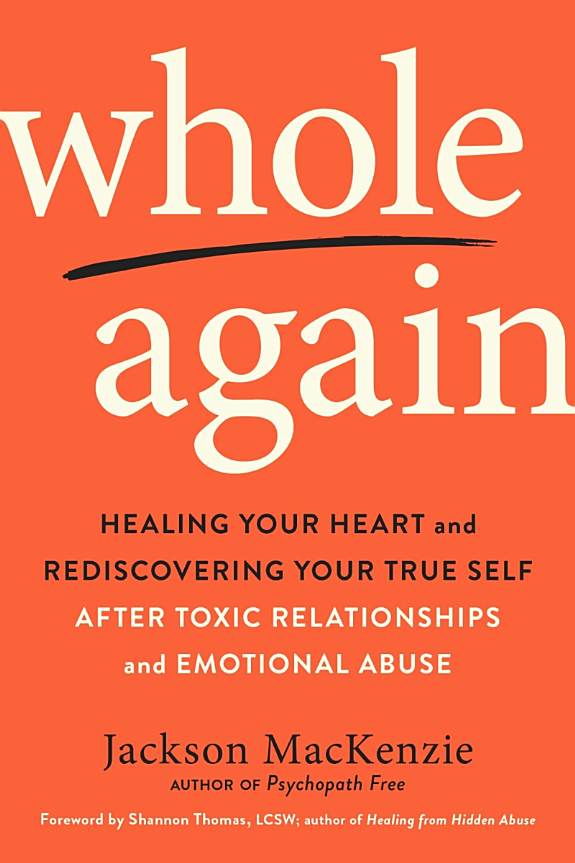
3. Whole Again by Jackson MacKenzie
Where “Psychopath Free” focuses on identifying and escaping toxic relationships, “Whole Again” picks up the harder, quieter work that comes after. MacKenzie wrote this as a follow-up because he recognized that many survivors leave the relationship but carry the damage forward, showing up anxious and hypervigilant in new situations, unable to fully trust themselves or others. This book is specifically about that phase, the long middle stretch of recovery that does not get talked about as much as the dramatic exit.
The central framework involves what MacKenzie calls “protective self,” the identity that forms in response to prolonged emotional harm. He argues that many people in recovery are not actually healing their true self but reinforcing a defended, armored version of themselves, and that genuine healing requires something more vulnerable and more patient. It is a nuanced idea and he develops it carefully over the course of the book, drawing on both his personal experience and reader correspondence from the community he built around his first book.
The writing here is noticeably more introspective than in his debut. Some readers will find that depth exactly what they needed. Others who are still in the early stages of processing may find it a bit abstract. This is not really a book for someone still in crisis mode. It rewards readers who have some distance from the relationship and are genuinely ready to look inward rather than outward.
“Healing is not about becoming someone new. It is about remembering who you were before you learned to disappear.”
This is perfect for survivors who have already done some initial recovery work and are now grappling with why they still feel stuck, shut down, or unable to fully open up again.
Out of the Fog
4. Out of the Fog by Dana Morningstar
Dana Morningstar is a former therapist who also survived a relationship with a narcissistic partner, and that combination of professional knowledge and lived experience gives this book a distinctive credibility. “Out of the Fog” is essentially a comprehensive guide to understanding manipulative behavior, written in plain language that makes it accessible to anyone regardless of their background in psychology. Morningstar covers a wide range of tactics, including gaslighting, triangulation, love bombing, and hoovering, with clear definitions and real-world examples for each.
What sets this book apart from others in the genre is its emphasis on helping readers understand the fog itself. That disoriented, doubting state that many survivors describe is not just a metaphor here. Morningstar breaks down exactly why our minds struggle to process what happened, how manipulation works on a psychological level, and why leaving is so much harder than it looks from the outside. She is not judgmental about any of it, which matters enormously when you are already dealing with a significant amount of self-blame.
The book is thorough, sometimes to the point of being dense. Readers looking for a quick, emotionally engaging read may find the reference-style sections a bit dry. But for someone who wants to genuinely understand what they experienced and build a solid vocabulary around it, the depth is a feature rather than a flaw. Think of it less as a narrative and more as a very well-organized field guide.
“Naming what happened to you is not about assigning blame. It is about seeing clearly so you can finally start making sense of your own experience.”
This is perfect for survivors who are in the research phase of recovery, wanting detailed, well-explained information about manipulation tactics and why they work so effectively.
Why Does He Do That?
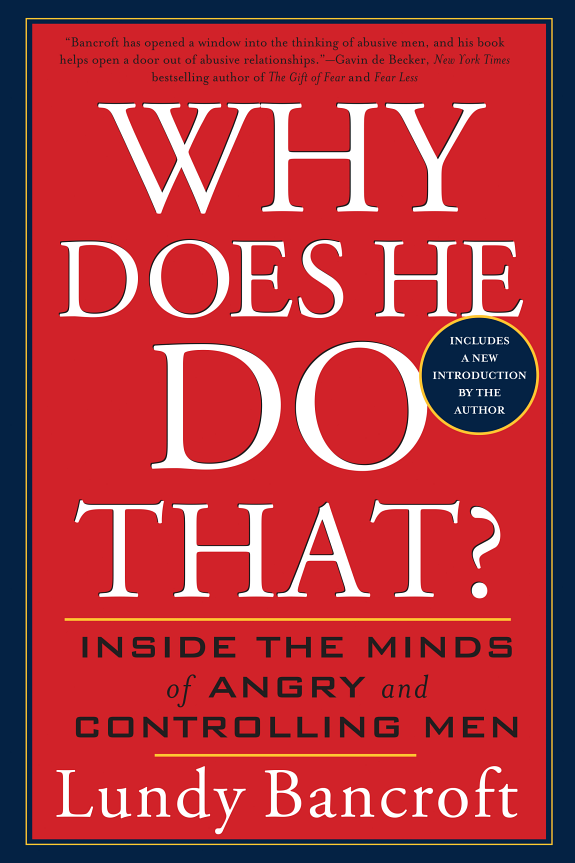
5. Why Does He Do That? by Lundy Bancroft
Lundy Bancroft spent years working directly with abusive men in court-mandated programs, and that experience gives this book an authority that is genuinely rare. Rather than speculating about what drives controlling behavior, he is reporting back from the inside. The result is one of the most clarifying books ever written on the subject of intimate partner abuse, and it has been recommended by therapists, advocates, and survivors for decades.
The core argument is that abusive behavior is not primarily about anger, mental illness, or childhood trauma, though those things may coexist with it. It is about entitlement and control. Bancroft dismantles a long list of common explanations and excuses with patient precision, showing why each one shifts focus away from the abuser’s choices and onto everything else. For readers who have spent years trying to understand a partner’s behavior by fixing their own, this reframing can be genuinely disorienting in the best possible way.
It is worth being clear that this book is written specifically about male abusers in heterosexual relationships. That framing reflects Bancroft’s professional experience but does mean that readers in other relationship configurations may need to do some translation as they read. The insights are broadly applicable, but the language is specific. Also, given the subject matter, this is a book that can bring up a lot. Reading it in small doses with support available is not a bad idea.
“An abuser’s behavior makes perfect sense once you understand what he actually wants. The problem is not that he loses control. The problem is that he uses control.”
This is perfect for anyone who has been in a controlling or abusive relationship and is still trying to understand the logic behind it, particularly those who have been told the relationship problems were mutual or their fault.
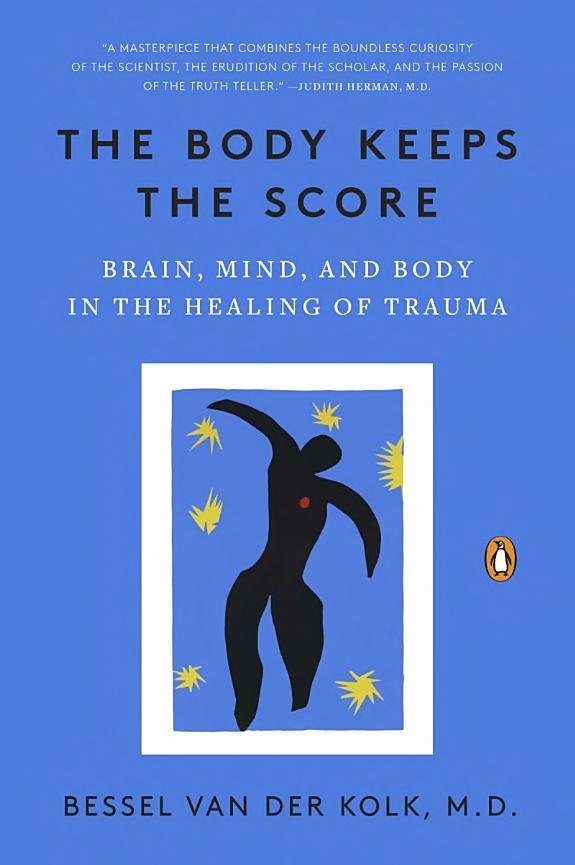
The Body Keeps the Score
6. The Body Keeps the Score by Bessel van der Kolk
Bessel van der Kolk is a psychiatrist and researcher who has spent decades studying trauma, and this book represents his attempt to bring that work to a general audience. It is, by some distance, the most scientifically dense book on this list. Van der Kolk draws on neuroscience, developmental psychology, and clinical case studies to build an argument that trauma is not just a mental experience. It is a physical one. The body records what the mind cannot fully process, and healing requires working with that physical reality rather than simply talking around it.
For survivors of toxic relationships, particularly those involving prolonged emotional abuse, the book offers something genuinely valuable: an explanation for why they feel the way they feel in their bodies long after the relationship has ended. The hypervigilance, the startled responses, the numbness, the difficulty sleeping, the way certain sounds or smells can send the nervous system into a tailspin. Van der Kolk explains the neuroscience behind all of it without making readers feel broken or permanently damaged.
This is not a light read. Some sections are quite clinical and the case studies, while illuminating, occasionally describe severe trauma that may be difficult for readers still in early recovery. The book also covers a wide range of trauma types beyond relationship abuse, so it is broader in scope than the other titles here. Readers who want focused guidance specifically on toxic relationships may find the other books on this list more directly applicable. But for understanding the body’s role in healing, nothing else comes close.
“Trauma is not what happens to you. It is what happens inside you as a result of what happens to you, and the body holds that story long after the mind has tried to move on.”
This is perfect for survivors who are puzzled by physical symptoms of stress or anxiety that persist after leaving a toxic relationship and want a research-grounded explanation of what is happening and why.
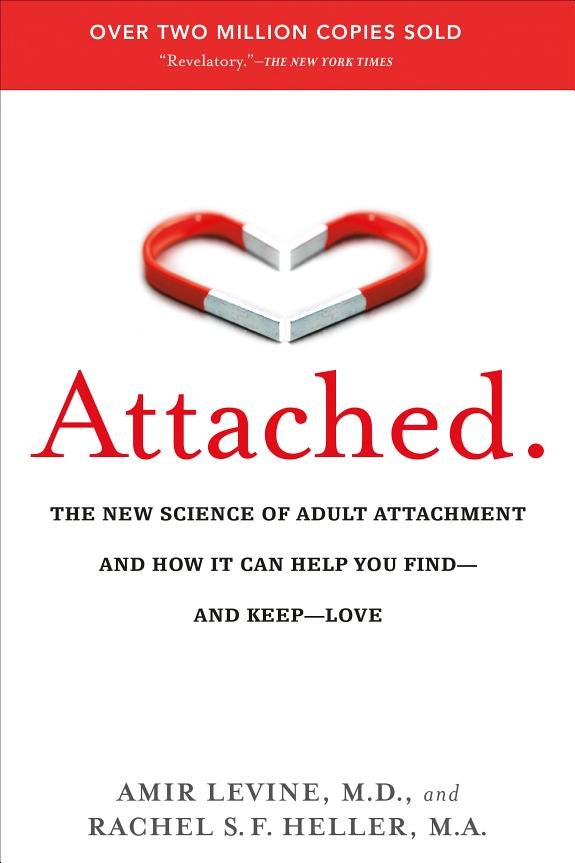
Attached
7. Attached by Amir Levine and Rachel Heller
Amir Levine is a neuroscientist and psychiatrist and Rachel Heller is a social psychologist, and together they wrote what is probably the most readable introduction to attachment theory available to general readers. The book is built around a framework developed by researchers John Bowlby and Mary Ainsworth and updated with decades of subsequent study. The basic idea is that adults, like children, fall into one of three broad attachment styles, secure, anxious, or avoidant, and that those styles shape how we behave in relationships in deeply predictable ways.
For someone recovering from a toxic relationship, this book can be revelatory. Many survivors find that their relationship history follows a pattern they could not previously name, drawn repeatedly to unavailable partners, tolerating treatment they know is harmful, unable to leave even when they want to. Attachment theory does not excuse any of that behavior but it does explain the underlying mechanics, and understanding the mechanics is the first step toward changing them. Levine and Heller are good at making the science feel practical rather than academic, and the book includes quizzes and examples that help readers identify their own style with reasonable accuracy.
The book is occasionally a bit optimistic in tone, presenting secure attachment as fairly achievable with the right awareness and the right partner. Readers dealing with complex trauma may find that framing a little breezy compared to the reality of their experience. It also focuses primarily on romantic relationships rather than family systems, which is a limitation worth noting. But as a foundation for understanding why you relate to others the way you do, it is hard to beat. Think of it as the “why” that makes the rest of the recovery work make more sense.
“Your need for closeness is not a flaw. It is biology. The goal is not to need less. It is to find relationships where your needs are not treated as a burden.”
This is perfect for readers who keep finding themselves in the same kinds of painful relationship patterns and want a science-backed framework for understanding why, though those seeking deep trauma processing may need to pair it with a more clinically focused resource.
Recovery from a toxic relationship rarely follows a straight line. Some days you will feel clear and grounded. Other days something small will pull you back into confusion or grief, and that is completely normal. The books on this list are not a cure and they are not a substitute for therapy, community, or time. But they can be companions in the process, helping you name what happened, understand your own responses, and gradually rebuild trust in yourself.
Start wherever feels right. If you are still in the disoriented early phase, something like “Psychopath Free” or “Out of the Fog” might give you the grounding you need first. If you are further along and trying to understand deeper patterns, “Attached” or “Whole Again” might be where you find the most traction. There is no wrong order. The fact that you are looking for answers at all says something good about you.