

8 Books to Help You Stop Feeling Like an Impostor
You got the job. You earned the promotion. People keep telling you that you did a great thing. And yet, somewhere in the back of your head, a small and deeply annoying voice keeps insisting it is only a matter of time before everyone figures out you have no idea what you are doing. Welcome to impostor syndrome, the psychological gift that keeps on taking.
The good news is that you are not alone, and you are not broken. Some of the most accomplished people in the world describe feeling exactly this way. The better news is that there are books written by researchers, therapists, and coaches who have spent years untangling why this happens and what you can actually do about it. Not every book on this list will speak to every reader, so we have tried to be honest about who each one is really for. Somewhere in here, there is probably the right voice for you.
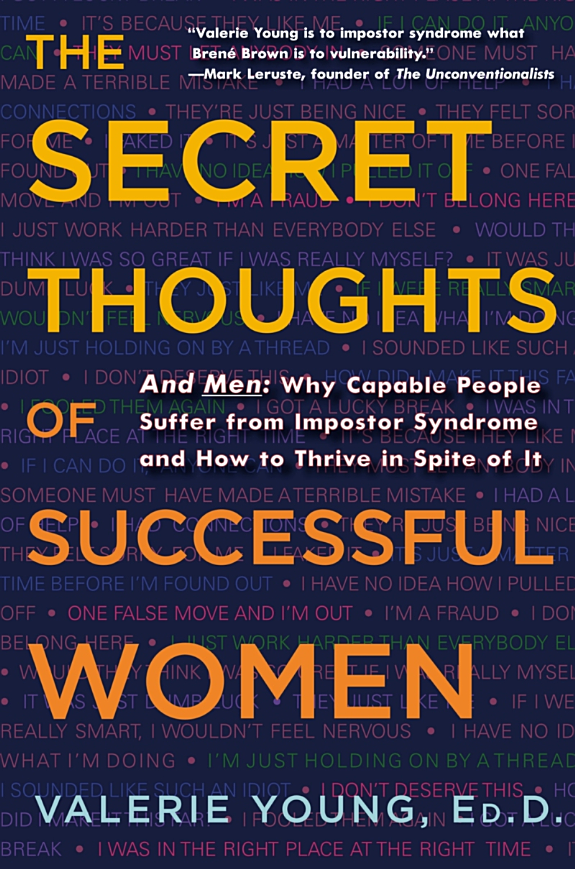
The Secret Thoughts of Successful Women
1. The Secret Thoughts of Successful Women by Valerie Young
Valerie Young spent decades researching impostor syndrome before it was the cultural conversation it is today, and this book is the result of that long, careful work. Her central contribution is the idea that impostor syndrome is not one single experience but a cluster of different patterns. She identifies five distinct types, including the Perfectionist, the Soloist, and the Expert, and she explains how each one shapes the way a person interprets their own success and failure. It is the kind of framework that makes you stop reading and stare at the ceiling for a moment.
Young writes with warmth and without condescension. She draws on real stories from women across professions, and while the book is aimed primarily at women, the core ideas translate broadly. What makes this book stand out is that it does not just tell you to believe in yourself more. It actually explains the internal rules you have been living by without realizing it, and it shows you how to start rewriting them.
The tone is part academic, part conversational, and the research is woven in naturally rather than dumped on you in footnotes. Young is clearly someone who has talked to thousands of people about this topic and knows exactly which examples will land. If you have ever deflected a compliment by saying you just got lucky, this book will feel uncomfortably accurate.
Impostor syndrome is not about competence. It is about the rules you have set for what counts as proof that you are competent, and those rules are often impossible to meet.
This is perfect for women who have been quietly dismissing their own achievements for years and want a research-backed explanation for why, not just a motivational nudge.
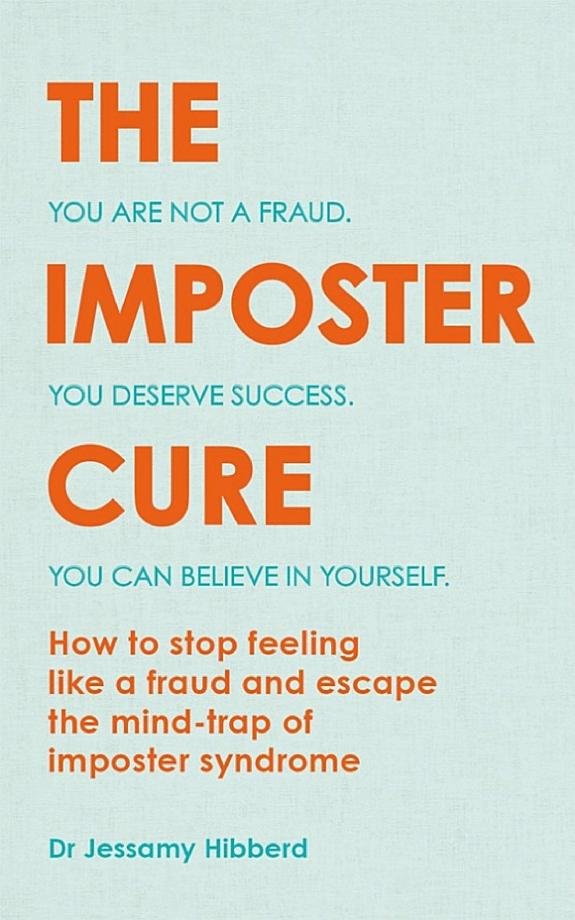
The Imposter Cure
2. The Imposter Cure by Dr. Jessamy Hibberd
Dr. Jessamy Hibberd is a clinical psychologist, and it shows in the best possible way. This book approaches impostor syndrome through a clinical lens without ever feeling cold or clinical in tone. She is interested in the roots of the problem, specifically how early experiences, family dynamics, and the stories we absorb about ourselves in childhood shape the way we interpret our adult achievements. It is a more therapeutic approach than some of the other books on this list, and that makes it genuinely useful for people who want to understand the why before they can work on the what.
Hibberd walks readers through cognitive patterns that keep impostor feelings locked in place, and she offers practical exercises throughout the book. These are not the kind of exercises you skip because they feel too vague. They are specific, grounded, and clearly designed by someone who has worked with real patients. The book also does an honest job of acknowledging that this is not a quick fix. Changing deeply held beliefs about yourself takes time, and Hibberd respects that reality.
The writing is clear and accessible without being oversimplified. Hibberd does not talk down to the reader, and she does not pretend the process is easy. What she offers instead is a structured, compassionate way of understanding what is happening inside your head and a reasonable path toward something better. It is a book that feels like a good therapist, which is high praise.
Understanding where your impostor feelings came from is not about assigning blame. It is about recognizing that these beliefs were learned, and that means they can be unlearned.
This is perfect for readers who suspect their impostor syndrome has deep roots and want a thoughtful, psychologically informed approach rather than surface-level confidence tips.
Own Your Greatness
3. Own Your Greatness by Lisa Orbé-Austin and Richard Orbé-Austin
Lisa and Richard Orbé-Austin are both psychologists and executive coaches, and their collaboration here produces something genuinely practical. Where some books spend the majority of their pages diagnosing the problem, this one moves relatively quickly into action. The Orbé-Austins have worked with clients in high-pressure professional environments, and that experience gives the book a grounded, real-world quality that readers in demanding careers will appreciate.
The book introduces what the authors call the Impostor Syndrome Cycle, a loop of self-doubt, overwork, and avoidance that keeps people stuck. Once you can see the cycle clearly, the authors argue, you can start to interrupt it. They offer specific strategies for doing exactly that, organized around the idea of taking ownership of your accomplishments in a way that feels authentic rather than performative. The distinction matters, because a lot of impostor syndrome sufferers have tried affirmations and found them hollow.
The writing style is direct and professional without being dry. This is not a book that will make you laugh out loud, but it is one that will make you feel like you are getting genuinely useful guidance from people who understand the professional pressures you are navigating. It is particularly attentive to how impostor syndrome intersects with race, gender, and other identity factors, which gives it a depth that many books in this space lack.
Owning your greatness is not about arrogance. It is about accurately accounting for your own contributions instead of systematically discounting them.
This is perfect for professionals in competitive or corporate environments who want practical tools and appreciate a framework that acknowledges how identity shapes the impostor experience.
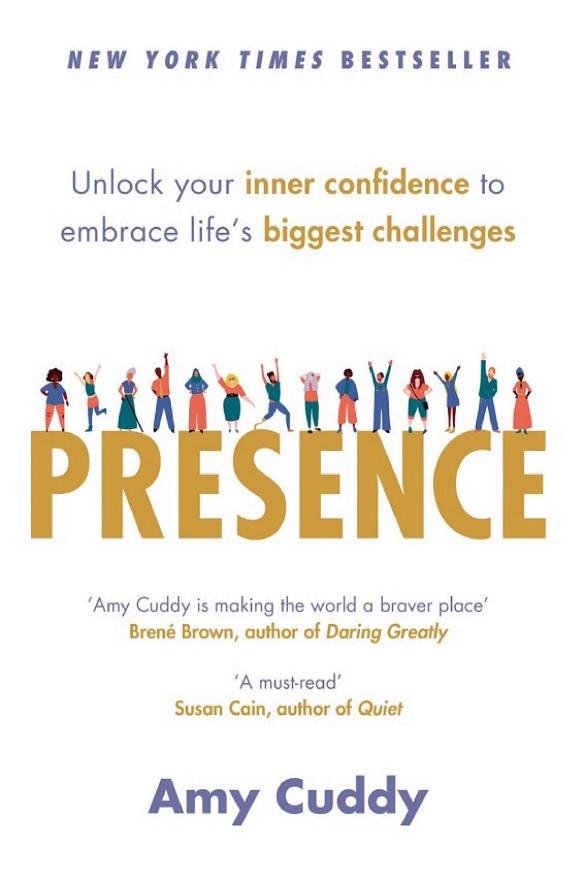
Presence
4. Presence by Amy Cuddy
Amy Cuddy became widely known for her TED talk on body language and confidence, and this book is the fuller, more nuanced version of those ideas. Presence is not really a book about impostor syndrome by name, but it addresses the experience so directly that leaving it off this list would be a mistake. Cuddy’s central argument is that presence, the feeling of being fully yourself in a high-stakes moment, is something you can cultivate, and that your body plays a larger role in that process than most people realize.
Cuddy is a Harvard social psychologist, and she brings a researcher’s rigor to ideas that could easily tip into self-help cliché. She is also unusually candid about her own experience with impostor syndrome, including a serious brain injury in her early twenties that left her questioning her own intelligence. That personal thread running through the book gives it an emotional honesty that the research alone could not provide. She is not writing from a position of having always had it together.
The book is not without its controversies. Some of the power posing research has been debated in the scientific community since publication, and Cuddy addresses this directly in later editions. The broader ideas about presence and self-perception, however, hold up well. If you are someone who freezes in job interviews, presentations, or any moment where you feel observed and evaluated, this book has something real to offer. It will not solve everything, but it might change how you walk into a room.
You do not need to feel confident before you act. Sometimes acting is what creates the feeling, and your body is part of that conversation.
This is perfect for people who struggle specifically with high-pressure performance situations and want a science-informed approach to showing up as themselves when it matters most.
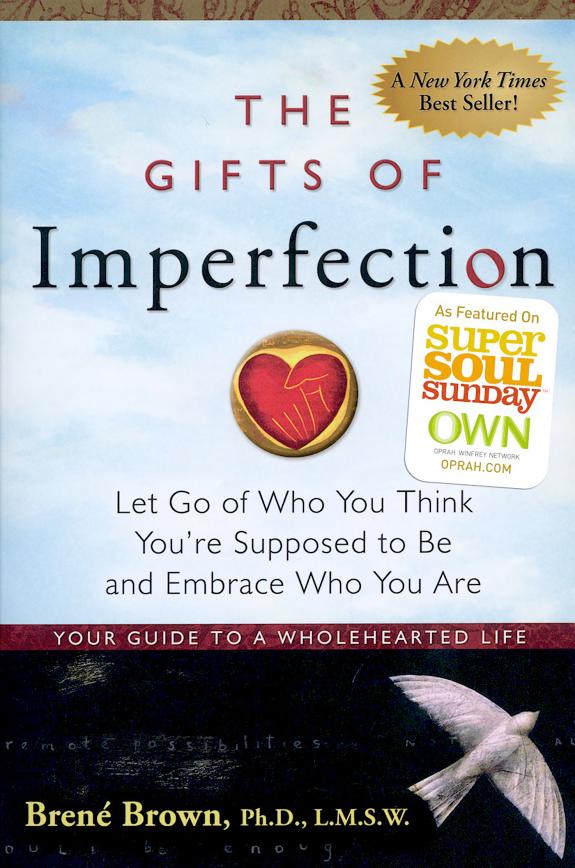
The Gifts of Imperfection
5. The Gifts of Imperfection by Brené Brown
Brené Brown has written several books that touch on shame, vulnerability, and self-worth, and this one is arguably the most personal and the most quietly radical. The premise is that the relentless pursuit of perfection is not a high standard, it is a defense mechanism. Perfectionism, Brown argues, is about avoiding judgment and shame, not about actually doing good work. For anyone whose impostor syndrome is tangled up with perfectionism, which is most people, this reframe is worth the entire book.
Brown is a research professor, but she writes like someone who has sat across from a lot of real human beings and genuinely cared about what they said. Her style is warm, sometimes funny, and occasionally a little earnest in ways that will not work for every reader. She draws heavily on her own life, including her struggles with anxiety and her complicated relationship with vulnerability, and that willingness to be honest about her own imperfections makes the message considerably more believable.
The book is organized around ten guideposts for what Brown calls wholehearted living. Some of these will resonate immediately and some will feel like they need more unpacking, but the overall effect is of a book that takes your inner life seriously without turning it into a problem to be solved. This is not a productivity book wearing a feelings costume. It is genuinely interested in helping you let go of the exhausting idea that you have to earn your place everywhere you go.
Perfectionism is not the same as striving to do your best. It is the belief that if you look perfect and do everything perfectly, you can avoid the pain of judgment. But it does not work that way.
This is perfect for readers whose impostor syndrome is closely linked to perfectionism and people-pleasing, and who are open to a values-based, emotionally honest approach to change.
You Are a Badass
6. You Are a Badass by Jen Sincero
Let us be honest upfront: this is the most polarizing book on the list. Jen Sincero writes with a loud, irreverent energy that some readers will find completely refreshing and others will find exhausting by chapter three. She is not a researcher or a therapist. She is a coach who figured some things out about her own self-sabotage and wrote about it with considerable enthusiasm. If you are looking for footnotes and clinical frameworks, this is not your book. If you are looking for someone to shake you gently by the shoulders and tell you to stop getting in your own way, she is quite good at that.
The core message is about identifying and dismantling the unconscious beliefs that keep you small, which maps directly onto the impostor syndrome experience even if Sincero does not always use that language. She is particularly good on the subject of how we inherit limiting beliefs from the people around us without ever consciously choosing them. Her writing is breezy and punchy, with the occasional sharp observation buried inside a joke, and the book moves quickly enough that you rarely get stuck.
Where the book loses some readers is in its more sweeping claims about the universe and manifestation, which veer into territory that will not sit well with more skeptical personalities. Take those sections with the grain of salt they deserve, and the practical core of the book remains genuinely useful. Sincero is at her best when she is simply asking you to notice the story you keep telling about yourself and consider whether it is actually true.
The story you tell about why you cannot do something is almost always more fictional than you realize, and you wrote it yourself.
This is perfect for readers who respond well to humor and directness, are not put off by a casual tone, and need someone to call them out on their own self-sabotage without a lot of ceremony.
Daring Greatly
7. Daring Greatly by Brené Brown
Yes, Brené Brown appears twice on this list. That is because she has written two genuinely distinct books that address different aspects of the impostor experience, and leaving either one out would mean shortchanging the reader. Where The Gifts of Imperfection is focused on personal wholeness, Daring Greatly is more concerned with how vulnerability operates in relationships, workplaces, and culture. The title comes from a Theodore Roosevelt quote about showing up and being seen, and that is essentially what the book is about.
Brown’s argument is that vulnerability is not weakness but the foundation of courage, and that the shame and fear of not being enough are what keep people hiding behind performance and perfectionism. For impostor syndrome sufferers, this lands with particular force, because so much of the impostor experience is about hiding. Hiding your uncertainty, hiding your questions, hiding the fact that you do not always know what you are doing. Brown makes a compelling case that this hiding is both exhausting and counterproductive.
The sections on shame resilience are some of the most practically useful in Brown’s entire body of work. She distinguishes between shame and guilt in a way that is genuinely clarifying, and she gives readers concrete language for recognizing shame spirals when they are in one. The book is also unusually good on how impostor syndrome and self-doubt operate differently in organizational cultures, which makes it relevant reading for anyone in a leadership role or aspiring to one.
Vulnerability is not about winning or losing. It is about having the courage to show up even when you cannot control the outcome, which is almost always.
This is perfect for readers who want to understand the deeper connection between shame, vulnerability, and the fear of being found out, especially in professional or leadership contexts.
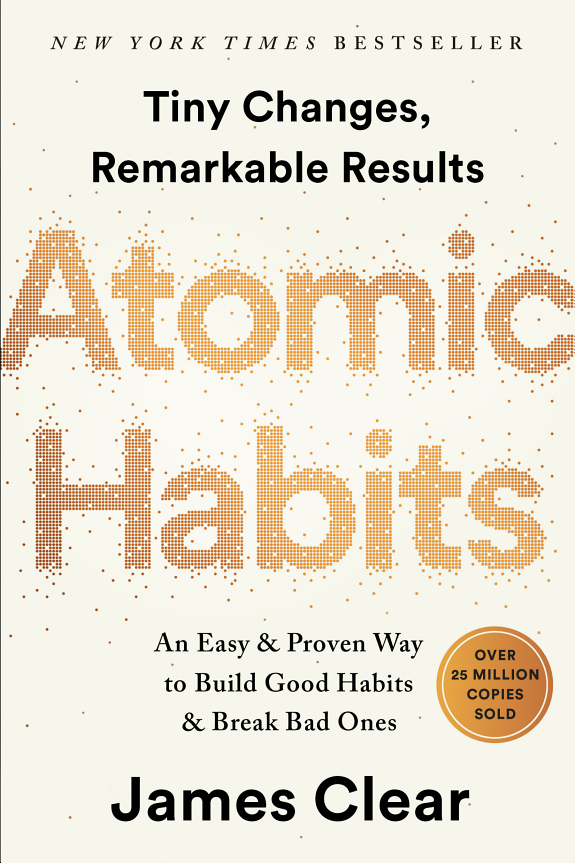
Atomic Habits
8. Atomic Habits by James Clear
Atomic Habits is primarily known as a productivity and habit formation book, and it is a very good one. But it earns a place on this list because of something Clear does that most habit books do not: he centers identity as the foundation of lasting change. His argument is that real behavioral change comes from shifting how you see yourself, not just what you do. You do not rise to the level of your goals, he writes. You fall to the level of your systems. For impostor syndrome sufferers, who often set enormous goals while quietly believing they do not deserve to reach them, this reframe is quietly significant.
Clear writes with admirable clarity, which is appropriate given his name. The book is organized logically, moves at a good pace, and never feels padded. He draws on research from psychology and neuroscience, but he translates it into plain language without losing the substance. The practical framework he offers, built around four laws of behavior change, is genuinely applicable to the work of building a more confident self-perception over time.
This is not a book that will hold your hand through the emotional complexity of impostor syndrome. It does not go deep on shame or childhood patterns or the psychological roots of self-doubt. What it offers instead is a rigorous, practical system for becoming the kind of person you want to be, one small action at a time. Used alongside some of the more emotionally focused books on this list, it provides the behavioral scaffolding that those books sometimes lack. Think of it as the implementation manual for the internal work you are doing elsewhere.
Every action you take is a vote for the kind of person you believe yourself to be. The goal is not perfection. It is casting enough votes in the right direction that the story starts to change.
This is perfect for readers who have done some emotional work on their self-doubt and now want a concrete, systems-based approach to building habits that reinforce a more confident identity over time.
Impostor syndrome is one of those experiences that thrives in silence. The less you talk about it, the more convinced you become that everyone else has something figured out that you have somehow missed. Books like these are useful partly because of their content and partly because reading them reminds you that this is a widely shared, thoroughly documented human experience, not a personal character flaw.
Not every book on this list will be the right fit for every reader, and that is fine. Some people need the clinical precision of Hibberd or the research grounding of Young. Others need the warm directness of Brown or the irreverent nudge of Sincero. A few might find that Clear’s habit framework is what finally makes the other ideas stick. The point is not to read all eight at once, which would be its own form of overachieving. Pick the one that sounds most like the conversation you need right now, and start there.
You probably belong exactly where you are. These books might help you start to believe that.