

7 Books for Women Who Struggle With Decisions
There is a particular kind of exhaustion that comes from standing in a grocery store aisle for ten minutes debating between two nearly identical jars of pasta sauce. If you know, you know. But for a lot of women, that low-stakes paralysis is just a preview of what happens when the decisions actually matter: career pivots, relationships, saying no to things that sound good but feel wrong. The mental load gets heavy fast.
What follows is a collection of seven books that approach the problem of decision-making from genuinely different angles. Some are rooted in psychology and behavioral science. Others are more personal and practical. A few will make you rethink assumptions you did not even know you were carrying. None of them promise to make every choice easy, because anyone selling that is lying to you. But together, they offer something more useful: a clearer picture of how your mind works, why decisions feel so hard, and what you can actually do about it.
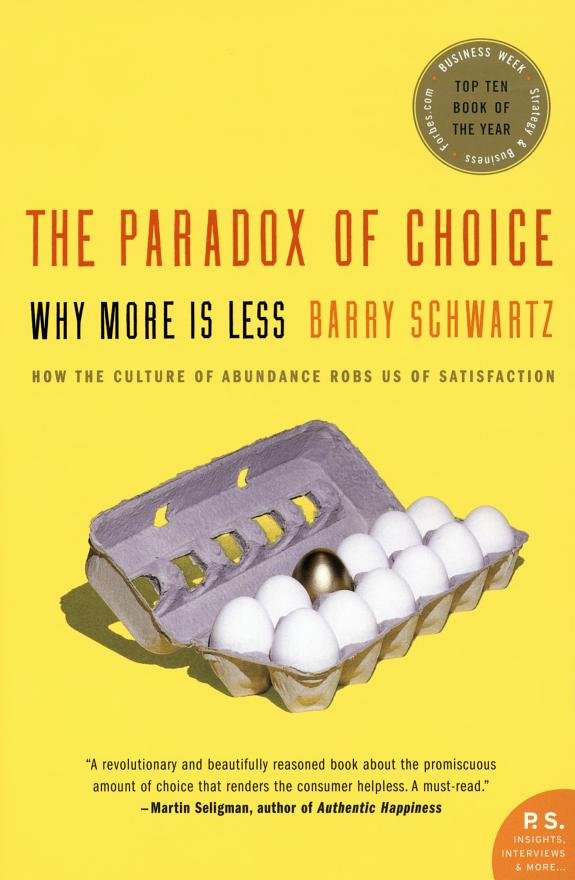
The Paradox of Choice: Why More Is Less
1. The Paradox of Choice: Why More Is Less by Barry Schwartz
Barry Schwartz opens with a deceptively simple observation: having more options does not make us happier. It makes us more anxious, more prone to regret, and less satisfied with whatever we eventually pick. He spent years studying consumer behavior and decision psychology, and what he found is both deeply validating and a little unsettling. The abundance that modern life promises us is, in many ways, a trap.
The book introduces a useful distinction between “maximizers” and “satisficers.” Maximizers need to know they have found the absolute best option before they can commit. Satisficers are willing to settle for something that is good enough. Schwartz makes a compelling case that satisficers are, on the whole, significantly happier people. This is not an argument for lowering your standards. It is an argument for recognizing when the pursuit of perfection is costing you more than it is giving you.
The writing is accessible and occasionally dry in a way that works well. Schwartz is an academic, and the book does lean into research and data, but it never feels like a textbook. Some readers find the middle section a bit repetitive, and if you are already familiar with behavioral economics, parts of it will feel like familiar territory. Still, the core argument lands cleanly and stays with you.
The secret to happiness is low expectations, Schwartz suggests, and while that sounds bleak on the surface, his actual point is far more nuanced: learning to want what you already have is a skill, not a consolation prize.
This is perfect for women who feel overwhelmed by options and find themselves second-guessing every choice long after it has been made, especially if they suspect their own high standards might be part of the problem.
How Women Decide: What’s True, What’s Not, and What Strategies Spark the Best Choices
2. How Women Decide: What’s True, What’s Not, and What Strategies Spark the Best Choices by Therese Huston
Therese Huston is a cognitive psychologist who was tired of watching the same myths about women and decision-making get recycled without anyone actually checking the evidence. So she checked it. The result is a book that is both a myth-buster and a genuinely practical guide, written with the kind of warmth that makes research feel like a conversation rather than a lecture.
One of the book’s central arguments is that women are often held to a different standard when they make decisions, particularly in professional settings. Huston digs into the research on how identical decisions get evaluated differently depending on who makes them, and she does not let that finding sit as mere frustration. She pivots toward strategies: how to frame your reasoning, how to handle the particular pressures women face in high-stakes moments, and how to stop internalizing biased feedback as personal failure.
The book is specific in a way that feels rare. Huston distinguishes between different kinds of decisions and different kinds of contexts, which means the advice does not blur into generic self-help platitudes. She also writes honestly about the limits of what individual strategies can fix, acknowledging that some of the obstacles women face are structural, not personal. That honesty earns a lot of trust. This is not the book for someone looking for a quick motivational boost. It rewards careful reading.
Huston makes the point that confidence and competence are not the same thing, and that women are often penalized for displaying exactly the kind of decisive behavior that gets praised in men. Naming that clearly is, in itself, useful.
This is perfect for women who want research-backed insight into how gender shapes the decision-making process, particularly those navigating professional environments where their judgment is frequently questioned.
Women Who Think Too Much: How to Break Free of Overthinking and Reclaim Your Life
3. Women Who Think Too Much: How to Break Free of Overthinking and Reclaim Your Life by Susan Nolen-Hoeksema
Susan Nolen-Hoeksema spent decades researching rumination, which is the clinical term for the kind of circular, repetitive thinking that keeps you up at night replaying conversations from three years ago. Her research consistently found that women are more prone to it than men, not because of some inherent flaw, but because of a complicated mix of social conditioning, stress, and the way women are often taught to process emotion. This book is her attempt to explain that research to the people it affects most.
The tone is compassionate without being soft. Nolen-Hoeksema does not pretend that overthinking is simply a bad habit you can snap out of with the right morning routine. She takes it seriously as a psychological pattern with real roots, and she offers concrete strategies for interrupting it. Some of those strategies are cognitive, some are behavioral, and some involve changing the conditions in your life that feed the cycle in the first place.
It is worth noting that this book was first published in 2003, and some of the cultural references show their age. The core psychology, however, holds up well. Readers who are already in therapy or familiar with cognitive behavioral approaches may find some sections cover ground they know. But for someone who has never had a name for the mental loop they cannot seem to exit, this book can feel like a revelation. Nolen-Hoeksema passed away in 2013, and this remains one of her most accessible works.
The difference between reflection and rumination, she writes, is whether your thinking is moving you toward clarity or just moving in circles. That distinction alone is worth sitting with.
This is perfect for women who find themselves stuck in mental loops before and after making decisions, and who want both an explanation for why that happens and practical tools for getting unstuck.
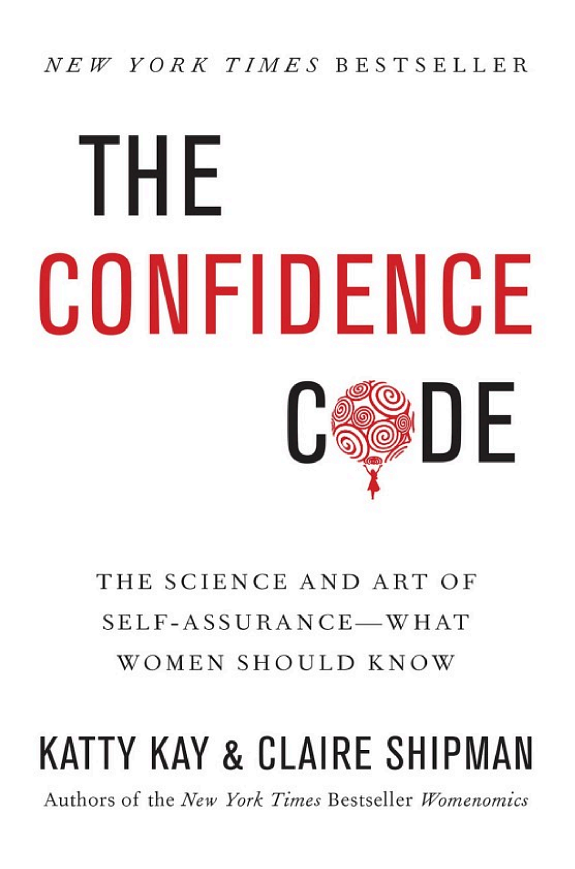
The Confidence Code: The Science and Art of Self-Assurance—What Women Should Know
4. The Confidence Code: The Science and Art of Self-Assurance, What Women Should Know by Katty Kay and Claire Shipman
Katty Kay and Claire Shipman are both accomplished journalists, and it shows. The Confidence Code moves quickly, weaves together interviews and research with ease, and never loses sight of the reader. They set out to answer a question that had nagged at both of them personally: why do so many capable, intelligent women hesitate to act on their own judgment? What they found is that confidence is not just a feeling. It has biological, psychological, and social components, and it is more learnable than most people assume.
The book covers neuroscience, genetics, and social conditioning without ever becoming a dense academic read. Kay and Shipman interviewed scientists, psychologists, and a wide range of accomplished women, and they are refreshingly honest about their own struggles with self-doubt. That personal thread keeps the book grounded. You never feel like you are being lectured by people who have it all figured out.
Some readers take issue with the book’s framing, arguing that it places too much responsibility on individual women to fix a problem that is partly systemic. That is a fair critique, and worth holding in mind as you read. The book does acknowledge structural barriers, but it spends more energy on what individuals can do within those constraints. If you go in knowing that, you can take what is useful without expecting it to be a complete picture. It is also worth noting that confidence and decision-making are closely linked: the book’s central argument is that action, even imperfect action, builds confidence more reliably than waiting until you feel ready.
“Confidence,” they write, “is not some fixed attribute we either have or don’t. It’s a choice to act.” That reframe is simple, but it shifts something.
This is perfect for women who know what they want to do but keep waiting for a feeling of certainty that never quite arrives, and who are ready to understand the science behind that hesitation.
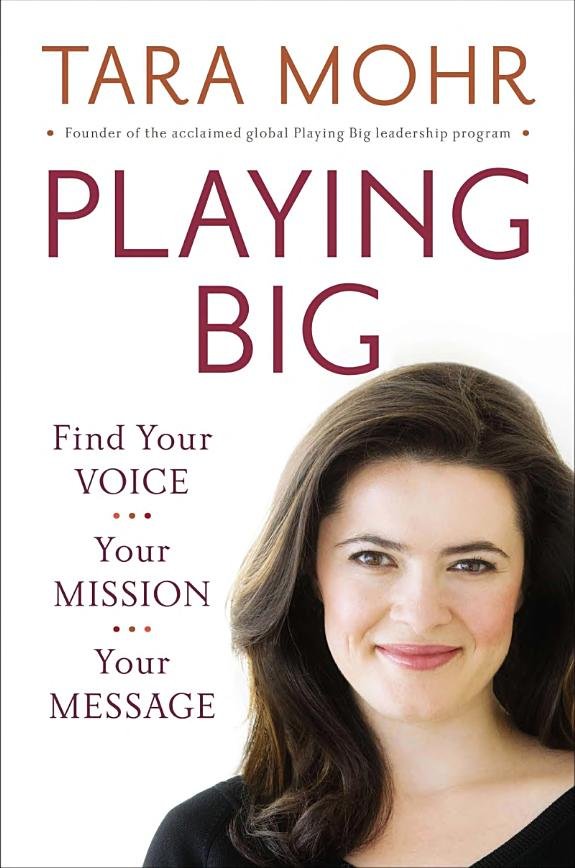
Playing Big: Practical Wisdom for Women Who Want to Speak Up, Create, and Lead
5. Playing Big: Practical Wisdom for Women Who Want to Speak Up, Create, and Lead by Tara Mohr
Tara Mohr is a coach and writer who noticed a pattern among the women she worked with: they were not lacking in talent or ideas, but they kept making themselves smaller. Waiting for more credentials. Softening their language. Deferring to the room. Playing Big is her attempt to name those patterns clearly and offer something more useful than generic encouragement to “just believe in yourself.” The book is warmer and more personal than most in this genre, and it reads like a conversation with someone who genuinely wants things to go well for you.
One of the book’s most useful concepts is the distinction between what Mohr calls the “inner critic” and the “inner mentor.” The inner critic is the voice that catalogues everything that could go wrong. The inner mentor is something else entirely, a wiser, more grounded version of yourself that you can learn to access. The exercise she offers for connecting with that voice sounds a little unusual on paper, but readers consistently report that it works. It is the kind of thing that is easy to dismiss and harder to argue with once you have actually tried it.
The book is explicitly written for women, and it takes seriously the particular ways women are socialized to shrink. Some readers who prefer a more research-heavy approach may find the tone a bit soft, and the coaching-book conventions do show up here and there. But for readers who are tired of advice that ignores gender entirely, the specificity is a relief. Mohr writes about decision-making not just as a cognitive skill but as an act of self-trust, and that framing opens up something that pure strategy often misses.
Mohr argues that “playing small” is not humility. It is a habit, often one that was handed to us before we were old enough to question it. Recognizing the difference matters more than most of us realize.
This is perfect for women who consistently underestimate their own readiness and find themselves holding back from decisions and opportunities until some imaginary future moment when they feel more qualified.
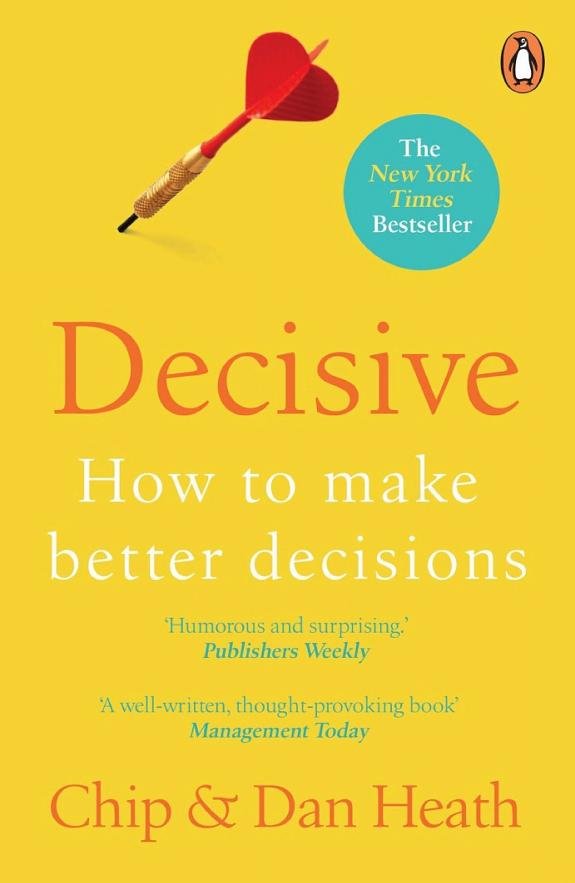
Decisive: How to Make Better Choices in Life and Work
6. Decisive: How to Make Better Choices in Life and Work by Chip Heath and Dan Heath
Chip and Dan Heath have a gift for making behavioral science feel immediately usable, and Decisive is one of their best efforts. The book is built around what they call the four villains of decision-making: narrow framing, confirmation bias, short-term emotion, and overconfidence. Each villain gets its own section, along with a set of practical tools for countering it. The structure is tidy, the examples are well-chosen, and the writing moves at a pace that respects your time.
The Heath brothers are not writing specifically for women, and it is worth being upfront about that. The book is gender-neutral in its approach, which means it does not address the particular social pressures that shape how women make and communicate decisions. What it does offer is a rigorous, well-tested framework for improving decision quality across the board. The “WRAP” process they introduce, which stands for Widen your options, Reality-test your assumptions, Attain distance before deciding, and Prepare to be wrong, is genuinely practical and not difficult to remember.
Some readers find the book a bit formulaic, and if you have read a lot of behavioral economics already, parts of it will feel familiar. But the synthesis is clean, and the real-world examples are varied enough to stay engaging. There is a chapter on how to handle decisions under uncertainty that is particularly good, and the section on “ooch,” their term for running small experiments before committing fully, is the kind of advice that is easy to apply immediately. This is a book you can actually use, which is not as common as it should be.
The Heaths point out that most of us treat decision-making as a binary: do this or do that. Widening the frame to ask “what else could I do?” sounds obvious, but most of us forget to do it under pressure.
This is perfect for women who want a concrete, step-by-step framework for improving their decisions and are less interested in the emotional or gender-specific dimensions than in practical tools they can start using right away.
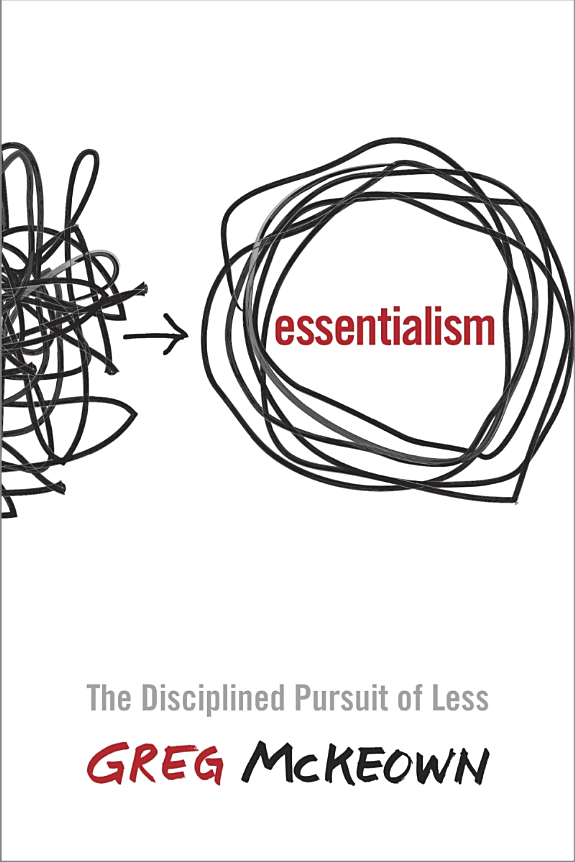
Essentialism: The Disciplined Pursuit of Less
7. Essentialism: The Disciplined Pursuit of Less by Greg McKeown
Greg McKeown’s central argument is deceptively simple: most of us are trying to do everything, and that is why nothing feels like it matters. Essentialism is not a book about productivity in the conventional sense. It is a book about ruthless prioritization, about learning to ask “what is the most important thing?” and then having the discipline to actually organize your life around the answer. For anyone who struggles to make decisions because every option feels equally urgent, this book offers a different way of seeing.
McKeown writes with a quiet intensity that suits the subject. He is not interested in helping you do more things faster. He wants to help you do fewer things better, and to feel less guilty about the things you choose not to do. The book is full of examples from business and leadership, which reflects McKeown’s background as a consultant and speaker. Some of those examples feel a little rarefied, and readers whose lives do not involve boardrooms or startup culture may need to do some translation. But the underlying logic applies broadly.
It is worth being honest about what this book is not. It does not engage with the structural reasons why women in particular are expected to say yes to everything, to take on the invisible labor, to be available and accommodating at all times. McKeown treats essentialism as a personal choice, and for some readers that framing will feel incomplete. If you go in knowing that, you can take the framework on its own terms and apply it to your actual life. As a tool for clarifying what you actually value before you make a decision, it is hard to beat.
“If you don’t prioritize your life,” McKeown writes, “someone else will.” It is the kind of sentence that sounds like a motivational poster but lands differently when you are three weeks into saying yes to things you did not actually want to do.
This is perfect for women who feel chronically overwhelmed by competing demands and want a philosophical framework for deciding what actually deserves their time and energy before the smaller decisions even come up.
Decision fatigue is real, and the particular version of it that many women experience, shaped by social expectations, the pressure to please, and the fear of getting it wrong, deserves books that take it seriously. The seven on this list do that in different ways. Some are rigorous and research-driven. Some are warm and practical. A few are both. None of them will eliminate the difficulty of making hard choices, because hard choices are hard for reasons that go beyond strategy or mindset.
What they can do is give you better tools, a clearer sense of your own patterns, and maybe a little more trust in your own judgment. Start with whichever one speaks most directly to where you are right now. You can always come back for the others.