8 Books to Read When You Feel Emotionally Drained
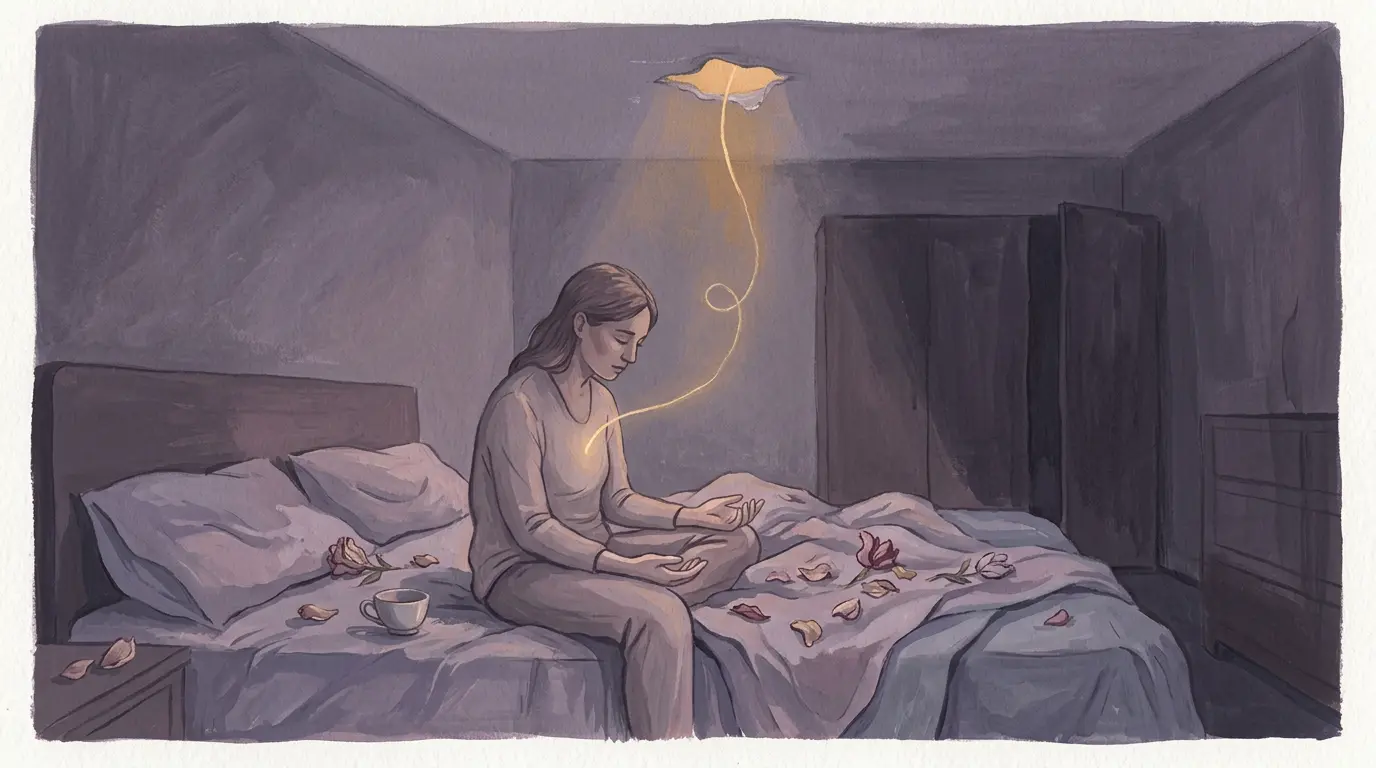
There is a particular kind of tired that sleep does not fix. You wake up already exhausted, move through your day on fumes, and wonder somewhere around mid-afternoon whether you have simply forgotten how to be a person. Emotional depletion is not dramatic. It is quiet and persistent, and it has a way of convincing you that this is just how life feels now.
It is not. And while no book will single-handedly restore you, the right one at the right time can feel like a long exhale. It can name something you have been carrying without words, or offer a small shift in perspective that loosens the grip just enough. The eight books below were chosen because they are honest, grounded, and genuinely useful for people who are running low. They are not cheerful fix-it guides. They are the kind of company that actually helps.
The Gifts of Imperfection
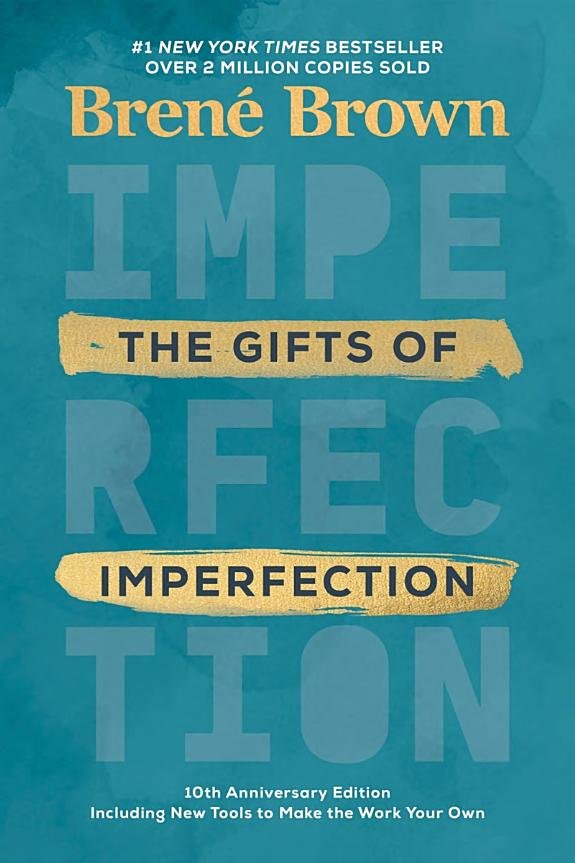
1. The Gifts of Imperfection by Brené Brown
Brené Brown spent years as a shame researcher before she became a household name, and that background matters. This book does not feel like a motivational poster. It feels like someone who has done serious academic work sitting down and telling you what she actually found, including the parts that surprised her. Her writing is warm but not saccharine, and she has a talent for making research feel personal without losing its rigor.
The central argument is that wholehearted living, the kind where you feel genuinely connected and at ease with yourself, requires letting go of who you think you should be. That sounds simple. It is not. Brown walks through the specific things that get in the way: perfectionism, numbing, the need for certainty, the exhausting performance of having it all together. For people who are emotionally drained partly because they have been trying so hard to meet impossible standards, this book lands with real weight.
The chapters are short and readable, which matters when your attention span is already stretched thin. Brown draws on her own struggles as much as her research, and she does it without making the book about her. The tone throughout is one of genuine encouragement rather than pressure, which is a harder balance to strike than it sounds.
“Perfectionism is not the same thing as striving to be your best. Perfectionism is the belief that if we live perfect, look perfect, and act perfect, we can minimize or avoid the pain of blame, judgment, and shame.”
This is perfect for anyone who suspects their exhaustion is connected to the relentless effort of trying to be enough, and who wants something research-backed but still readable on a tired Tuesday night.
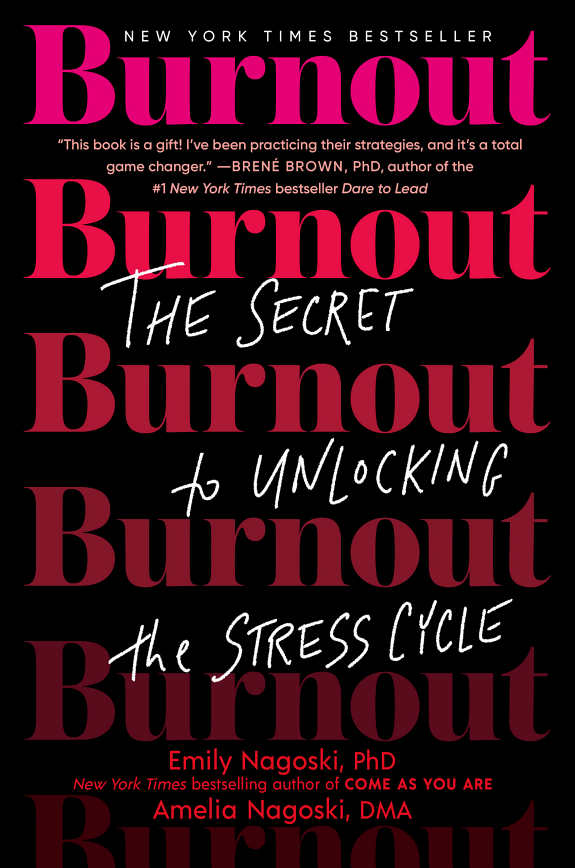
Burnout: The Secret to Unlocking the Stress Cycle
2. Burnout: The Secret to Unlocking the Stress Cycle by Emily Nagoski and Amelia Nagoski
Emily and Amelia Nagoski are sisters, and their collaboration on this book gives it an unusual warmth. Emily is a health educator and researcher, Amelia is a conductor and music teacher, and together they wrote something that is both scientifically grounded and deeply human. The book is aimed primarily at women, which is worth knowing upfront, though much of what it covers applies more broadly.
The key insight, and it is a genuinely useful one, is the distinction between the stressor and the stress itself. Getting rid of the thing causing your stress does not automatically complete the biological stress cycle that your body has already started. You can leave a terrible job and still feel terrible, because your nervous system is still waiting for the all-clear signal. The Nagoskis explain what actually completes the cycle, things like physical movement, creative expression, and human connection, and why so many of us skip those steps entirely.
The book is funny in places, which helps. There is a chapter involving a metaphor about a tunnel that is a little on-the-nose but also genuinely clarifying. The sections on Human Giver Syndrome, the cultural conditioning that tells certain people their entire purpose is to give their wellbeing away to others, are among the most useful pages in the book. It is not light reading, but it is engaging, and it offers a framework for understanding burnout that feels both new and immediately recognizable.
“You are not a problem to be solved. You are a human being to be loved.”
This is perfect for people who have addressed the external sources of their stress but still cannot seem to recover, and for anyone who wants a science-based explanation for why rest alone is not always enough.
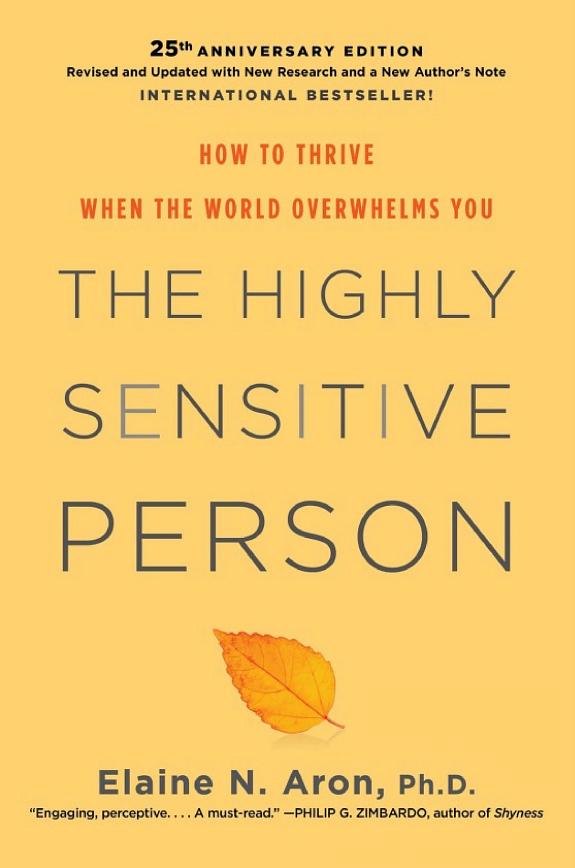
The Highly Sensitive Person: How to Thrive When the World Overwhelms You
3. The Highly Sensitive Person: How to Thrive When the World Overwhelms You by Elaine N. Aron
Elaine Aron coined the term “highly sensitive person” in the 1990s and has spent decades researching the trait, which affects roughly fifteen to twenty percent of the population. If you have spent your life being told you are too sensitive, too intense, or too easily overwhelmed, this book may be the first time someone offers a different interpretation: that your nervous system is simply wired to process things more deeply, and that this is a trait, not a flaw.
The writing is careful and methodical, which reflects Aron’s background as a psychologist. She covers the biological basis of the trait, how it shows up in childhood and relationships, and the specific challenges highly sensitive people face in a culture that tends to reward a very different kind of temperament. There are self-assessments throughout, and while they can feel a little clinical, they are also genuinely illuminating.
This is not the most stylistically dazzling book on this list. Aron writes clearly and thoughtfully, but her priority is accuracy over flair. What she offers instead is something many sensitive people have never had before: a framework that validates their experience without pathologizing it. For someone who has spent years wondering why everything affects them so deeply, that validation alone can be quietly profound. It is worth noting that this book is less useful for people who are drained for reasons unrelated to sensory or emotional overwhelm.
“To be sensitive is to be alive. Sensitivity is not weakness; it is a sign of a finely tuned instrument.”
This is perfect for people who have always felt overwhelmed by stimulation, crowds, conflict, or other people’s emotions, and who want to understand why rather than simply push through.
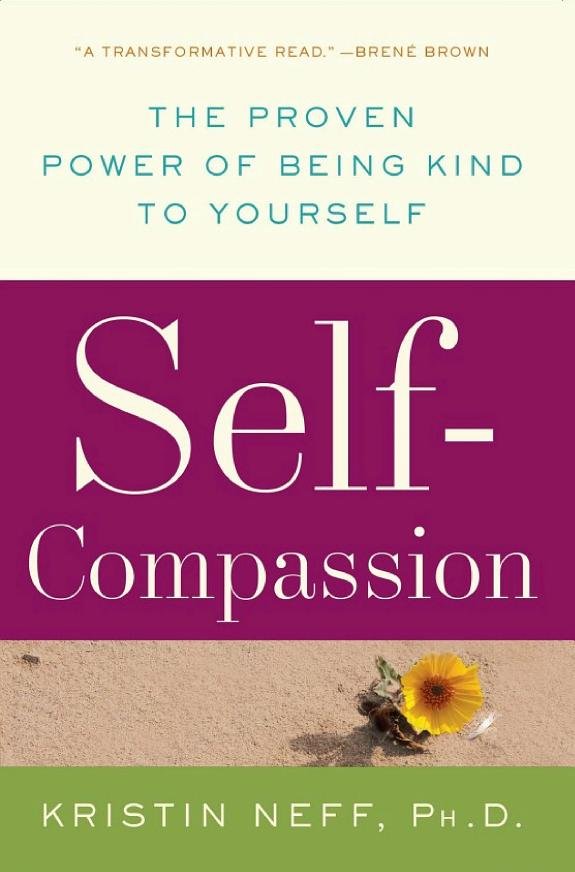
Self-Compassion: The Proven Power of Being Kind to Yourself
4. Self-Compassion: The Proven Power of Being Kind to Yourself by Kristin Neff
Kristin Neff is a psychology researcher at the University of Texas, and she was studying self-compassion before it became a wellness industry staple. That matters because this book is not a collection of affirmations. It is a rigorous, research-supported argument for why treating yourself with the same basic kindness you would extend to a friend is not self-indulgent, it is actually more effective than self-criticism for almost every outcome you care about.
Neff breaks self-compassion into three components: self-kindness, common humanity, and mindfulness. The common humanity piece is the one that tends to surprise people. The idea is that suffering and imperfection are not personal failures but shared human experiences, and recognizing that can loosen the isolation that makes emotional depletion so much worse. When you stop feeling like you are the only one who cannot hold it together, the weight shifts a little.
The book includes exercises and guided practices throughout, which make it more interactive than a typical nonfiction read. Some readers will find the exercises genuinely helpful; others will skip them and still get a lot from the text itself. Neff is honest about her own struggles with self-compassion, including difficult periods in her personal life, and that honesty gives the book a credibility that purely academic writing would lack. If you have ever found self-help advice on being kinder to yourself irritatingly vague, this book is the antidote.
“Self-compassion is simply giving the same kindness to ourselves that we would give to others.”
This is perfect for people who are their own harshest critics and who have tried self-improvement approaches that rely on discipline and pressure, only to find themselves more depleted than before.
Radical Acceptance: Embracing Your Life With the Heart of a Buddha
5. Radical Acceptance: Embracing Your Life With the Heart of a Buddha by Tara Brach
Tara Brach is a psychologist and Buddhist meditation teacher, and Radical Acceptance draws on both traditions in a way that feels integrated rather than awkward. The book opens with the concept of the trance of unworthiness, the low-grade but persistent sense that something is fundamentally wrong with you. If that phrase landed somewhere specific in your chest, this book is probably worth your time.
Brach’s writing is gentle and unhurried. She tells a lot of stories, both from her own life and from the lives of her therapy clients, and she uses them to illustrate ideas that could otherwise feel abstract. The core practice she describes, pausing to acknowledge what is actually happening in your body and mind without immediately trying to fix or escape it, is simple to describe and genuinely difficult to do. She does not pretend otherwise.
The Buddhist framework is present throughout, but Brach is careful to make it accessible to readers who have no background in meditation or Eastern philosophy. You do not need to believe anything in particular to find this book useful. What you do need is some willingness to sit with discomfort rather than immediately strategizing your way out of it. For people who are emotionally exhausted partly from years of relentless self-improvement efforts, the invitation to simply accept what is, even temporarily, can feel like putting down a very heavy bag. This book is less suited to readers looking for practical action steps or structured programs.
“The boundary to what we can accept is the boundary to our freedom.”
This is perfect for people who have tried thinking their way out of emotional pain and found it does not work, and who are open to a more contemplative, acceptance-based approach.
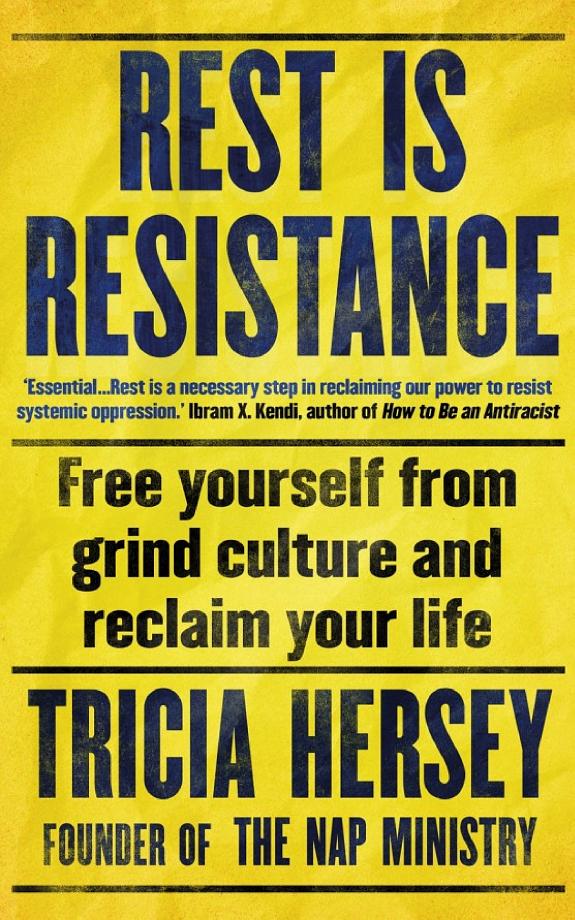
Rest Is Resistance: A Manifesto
6. Rest Is Resistance: A Manifesto by Tricia Hersey
Tricia Hersey is the founder of The Nap Ministry, which is exactly what it sounds like, and her book is one of the more genuinely unusual entries on this list. Rest Is Resistance is not a wellness guide. It is a political and spiritual argument that rest is an act of resistance against a culture that has decided human worth is measured by productivity. Hersey writes from a Black liberationist and theological perspective, and her voice is unlike anything else in this genre.
The book is deliberately repetitive in places, which is a stylistic choice that some readers will find meditative and others will find frustrating. Hersey is not trying to give you a program. She is trying to shift something in how you understand the exhaustion you feel, to help you see it not as a personal failing but as the predictable result of a system designed to extract as much labor as possible from human beings. That reframing is the work of the book.
The writing is passionate and at times poetic. Hersey draws on her own experience with burnout and on the history of enslaved people in America, whose bodies and rest were controlled and denied as a matter of policy. That historical grounding gives the book a weight and seriousness that distinguishes it from more conventional wellness writing. It will not resonate with everyone, and readers looking for practical techniques or clinical frameworks may find it frustrating. But for people who feel something is structurally wrong with how our culture treats rest, this book names it directly and without apology.
“Rest is a form of resistance because it disrupts and pushes back against capitalism and white supremacy.”
This is perfect for people who feel guilty resting even when they are completely depleted, and who want a framework that addresses the cultural and systemic roots of that guilt rather than just the personal ones.
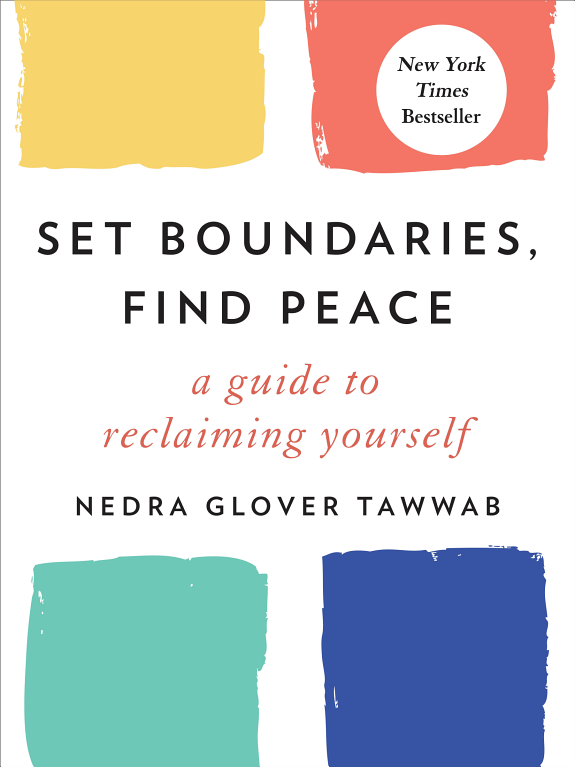
Set Boundaries, Find Peace: A Guide to Reclaiming Yourself
7. Set Boundaries, Find Peace: A Guide to Reclaiming Yourself by Nedra Glover Tawwab
Nedra Glover Tawwab is a therapist who built a substantial following on Instagram by writing clearly and practically about boundaries, and this book is the full version of that work. It is one of the more immediately actionable books on this list, which makes it a good complement to some of the more reflective titles here. If you have ever known intellectually that you need better boundaries but had no idea how to actually create them, this is the book that fills that gap.
Tawwab covers what boundaries are, why they are so hard to set and maintain, and how they show up differently in different kinds of relationships: romantic partnerships, friendships, family, work, and even your relationship with social media and technology. She is direct without being harsh, and she is honest about the fact that setting boundaries often feels worse before it feels better. People push back. Relationships shift. That discomfort is part of the process, and she does not skip over it.
The book includes reflection questions and practical scripts, which some readers will find enormously helpful and others will find a little too structured. The writing is clear and accessible rather than literary, and Tawwab moves through topics efficiently. For people who are emotionally drained because they consistently give more than they receive, say yes when they mean no, or absorb other people’s problems as their own, this book offers a concrete path forward. It is not particularly useful for people whose depletion comes primarily from grief, trauma, or circumstances outside their control.
“Boundaries are not walls. They are the gates and fences that allow you to enjoy the beauty of your own garden.”
This is perfect for chronic people-pleasers, over-givers, and anyone who regularly leaves interactions feeling worse than when they started and cannot quite explain why.
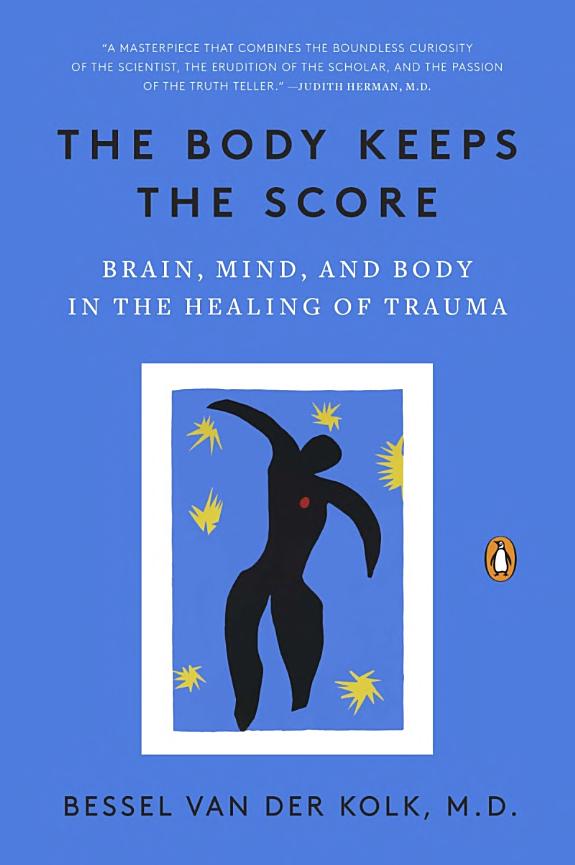
The Body Keeps the Score
8. The Body Keeps the Score by Bessel van der Kolk
Bessel van der Kolk is a psychiatrist who has spent decades working with trauma survivors, and this book is the result of that work. It is the most clinically detailed book on this list, and also in some ways the most important one for understanding why emotional exhaustion can feel so physical, so lodged in the body, so resistant to purely cognitive approaches. Van der Kolk’s central argument is that trauma is not just a psychological event. It reshapes the brain and the body, and healing requires working with both.
The writing is accessible given the complexity of the material, though it is denser than most of the other books here. Van der Kolk draws on neuroscience, attachment theory, and decades of clinical experience to explain how the nervous system responds to overwhelming experiences and why those responses can persist long after the original threat is gone. For people who have ever wondered why they cannot simply think their way out of anxiety, hypervigilance, or emotional numbness, this book offers a genuinely clarifying answer.
The second half of the book covers various approaches to healing, including EMDR, yoga, theater, and neurofeedback, and van der Kolk is admirably honest about what works for some people and not others. He does not oversell any single method. It is worth being clear that this book engages directly with trauma, including childhood abuse, combat, and sexual violence, and readers who are currently in a fragile place may find it overwhelming rather than comforting. It is best approached as an educational text rather than a self-help guide, ideally alongside professional support. For the right reader at the right time, though, it can be genuinely clarifying in a way that very few books are.
“As long as you keep secrets and suppress information, you are fundamentally at war with yourself.”
This is perfect for people who suspect their emotional depletion has roots in past trauma, and who want to understand the science of why healing feels so slow and so physical before they can move forward.
If you made it through this list while running on empty, that is already something. None of these books will fix everything, and none of them promise to. What they offer is something quieter and more durable: the sense that your exhaustion makes sense, that you are not alone in it, and that there are real ways, not quick fixes but actual paths, toward feeling more like yourself again.
You do not have to read all eight. Pick the one that felt most like it was written for you and start there. The others will still be here when you are ready. And if you need to put the book down halfway through and take a nap instead, Tricia Hersey would probably consider that a win.