
5 Books That Build Real Mental Resilience
There is a particular kind of exhaustion that comes not from doing too much, but from feeling like you keep getting knocked down and running out of reasons to get back up. Most of us know that feeling, even if we would not describe it in those terms. We just know that something needs to shift.
Books cannot fix a hard life. But the right book, read at the right moment, can reframe how you see what you are carrying. The five books below approach mental resilience from genuinely different angles: philosophy, psychology, neuroscience, memoir, and economics. None of them promise an easy path. All of them are worth your time.
Man’s Search for Meaning
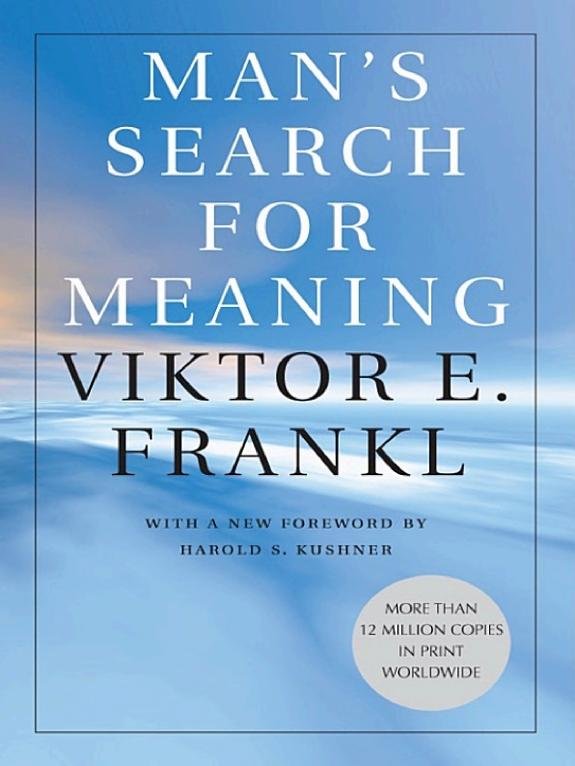
1. Man’s Search for Meaning by Viktor E. Frankl
Viktor Frankl was a psychiatrist in Vienna before he was taken to Auschwitz. He lost nearly everything, including his wife and his manuscript. What he did not lose, and what this book is essentially about, is the human capacity to choose one’s response to suffering. That sounds like an abstract idea until you are reading his account of life in the camps, and then it becomes one of the most concrete things you have ever encountered.
The first half of the book is memoir, and it is written with a restraint that somehow makes it more affecting than dramatic prose would. Frankl is not performing grief. He is observing, with clinical precision and genuine humanity, what kept people alive and what caused them to give up. The second half introduces logotherapy, his school of psychotherapy built on the premise that the primary human drive is not pleasure or power but the search for meaning. It is dense in places, but never inaccessible.
This is not a comfortable read, and it is not meant to be. If you are looking for something warm and encouraging, this is probably not your entry point. Frankl does not tell you that things will be fine. He tells you that even when they are not fine, you still have a choice about who you are in the middle of it. That is a harder and more honest kind of reassurance.
“When we are no longer able to change a situation, we are challenged to change ourselves.” Frankl wrote that sentence based on evidence gathered in the worst possible laboratory. It is worth sitting with for a while.
This is perfect for readers who are going through something genuinely difficult and want a book that does not flinch, or for anyone drawn to the philosophical roots of resilience rather than its practical techniques.
The Resilience Factor: 7 Keys to Finding Your Inner Strength and Overcoming Life’s Hurdles
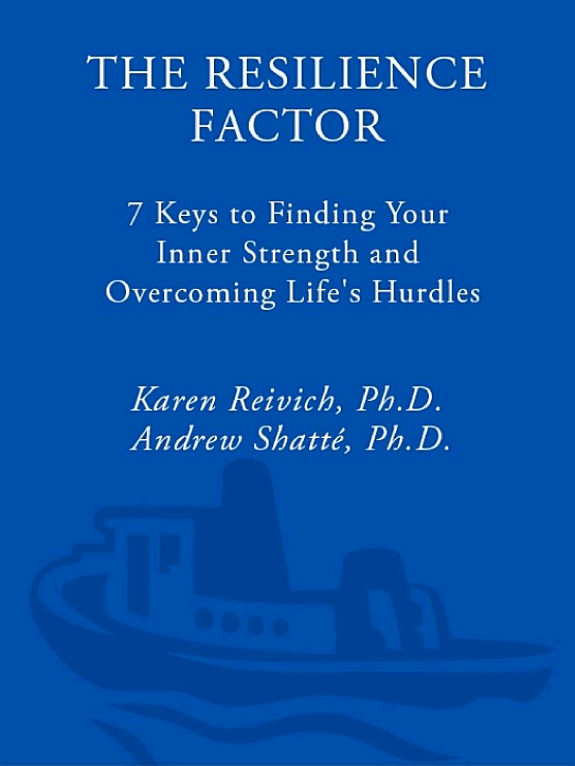
2. The Resilience Factor: 7 Keys to Finding Your Inner Strength and Overcoming Life’s Hurdles by Karen Reivich and Andrew Shatté
Karen Reivich and Andrew Shatté are researchers at the University of Pennsylvania, and this book reads like it was written by people who have spent a long time studying what actually works rather than what sounds good in a keynote speech. The central argument is that resilience is not a fixed trait you either have or do not have. It is a set of learnable skills, and this book teaches them in a structured, evidence-based way.
The seven keys they identify include things like emotion regulation, impulse control, and what they call “optimistic thinking,” which they are careful to distinguish from naive positivity. There is a lot of cognitive behavioral therapy woven through here, which means the exercises are practical and the explanations are grounded in decades of research. You will find yourself taking notes, or at least underlining sentences and then feeling slightly embarrassed about how applicable they are to your own thought patterns.
The writing is clear but not particularly stylish. This is a workbook in spirit, even if it reads like a book. Some readers will find that refreshing. Others will want more narrative and less framework. It is also worth noting that the research base, while solid, leans heavily on Western, educated populations, so the universality of some claims is worth questioning.
The book’s most useful contribution might be its insistence that resilience requires accurate thinking, not just positive thinking. Getting the story you tell yourself right matters more than making it cheerful.
This is perfect for readers who want concrete tools and exercises rather than philosophy, especially those who appreciate a research-backed approach and do not mind a more clinical writing style.
Resilient: How to Grow an Unshakable Core of Calm, Strength, and Happiness
3. Resilient: How to Grow an Unshakable Core of Calm, Strength, and Happiness by Rick Hanson and Forrest Hanson
Rick Hanson is a neuropsychologist, and his previous book “Hardwiring Happiness” introduced a lot of readers to the idea that the brain has a negativity bias, that it is, as he puts it, like Velcro for bad experiences and Teflon for good ones. “Resilient,” written with his son Forrest, builds on that foundation and offers a more comprehensive map of what psychological resilience actually requires at the level of the brain and the body.
The book is organized around twelve qualities that Hanson argues form the inner resources we need to handle life well: safety, satisfaction, connection, steadiness, learning, confidence, and others. Each chapter explains the neuroscience behind the quality, why it matters, and how to deliberately cultivate it through small, repeatable practices. The tone is warm without being saccharine, which is harder to pull off than it sounds.
Where this book shines is in its accessibility. Hanson translates neuroscience into everyday language without dumbing it down, and the practices he suggests are genuinely low-effort, which matters when you are already depleted. Where it occasionally stumbles is in a slight tendency toward reassurance that can feel a little soft if you are in a particularly dark place. It is a book for building reserves, not necessarily for surviving a crisis in real time.
The idea that you can deliberately “install” positive experiences in your nervous system by lingering on them for even twenty or thirty seconds is small in theory and surprisingly significant in practice.
This is perfect for readers interested in the neuroscience side of resilience, or anyone who wants a gentle, practice-oriented book they can return to regularly rather than read once and shelve.
Option B: Facing Adversity, Building Resilience, and Finding Joy
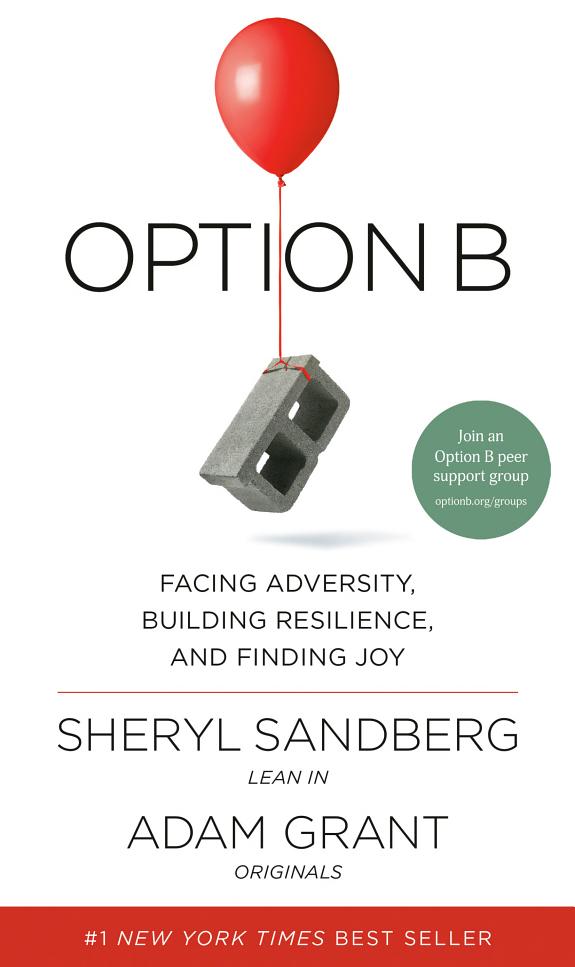
4. Option B: Facing Adversity, Building Resilience, and Finding Joy by Sheryl Sandberg and Adam Grant
Sheryl Sandberg’s husband Dave Goldberg died suddenly in 2015, and this book grew out of her attempt to understand her own grief and figure out how to keep functioning as a parent, a professional, and a person. She collaborated with Adam Grant, a psychologist at Wharton, who brings the research scaffolding while Sandberg provides the raw, honest personal narrative. It is an unusual pairing, and it works better than you might expect.
The title comes from a moment when Sandberg, wanting to have her late husband present for a father-child activity at her children’s school, was told by a friend that Option A was no longer available. “So let’s kick the s out of Option B,” her friend said. That sentence became the book’s emotional spine. The research Grant weaves in covers topics like post-traumatic growth, the three P’s that derail recovery (personalization, pervasiveness, and permanence), and how communities can better support people through loss.
The book is not without its limitations. Sandberg’s privilege is evident throughout, and some readers will find it hard to connect with resilience advice filtered through the experience of someone with enormous financial resources and a global support network. That is a fair criticism. But the grief itself is real, and the sections on parenting through loss are particularly honest and useful. Grant’s research sections are well-chosen and never feel like padding.
The concept of “leaning in to sorrow” rather than bypassing it sits at the heart of the book, and it is a more nuanced message than the title’s upbeat framing might suggest.
This is perfect for readers processing grief or sudden loss, or those supporting someone who is, and for anyone who wants memoir and research blended together in roughly equal measure.
Antifragile: Things That Gain from Disorder
5. Antifragile: Things That Gain from Disorder by Nassim Nicholas Taleb
Nassim Nicholas Taleb is not for everyone, and he would probably agree with that assessment while also being a bit smug about it. He is abrasive, digressive, and prone to extended tangents about people he considers intellectually dishonest. He is also genuinely original, and “Antifragile” introduces a concept that is, once you grasp it, almost impossible to stop applying to everything.
The core idea is this: the opposite of fragile is not robust. Something robust simply resists shocks and stays the same. Antifragile things actually get better from volatility, stress, and disorder. Bones that are slightly stressed become denser. Businesses that survive crises often emerge leaner. Taleb argues that much of modern life, from over-medicating minor symptoms to removing all risk from childhood, is actually creating fragility by eliminating the stressors that would otherwise build strength. It is a genuinely counterintuitive argument, and he makes it with a lot of force.
Applied to mental resilience, the implications are significant. Taleb is not telling you to seek out suffering, but he is arguing that protecting yourself from every difficulty is not the path to strength. Some exposure to difficulty, some skin in the game, some tolerance for uncertainty, these are not just acceptable but necessary. This is not a self-help book in any conventional sense, and readers looking for warmth or practical exercises will find neither. But readers who want their assumptions rattled in a useful direction will find plenty here.
“Wind extinguishes a candle and energizes fire.” Taleb’s point is that you want to be the fire, which means figuring out what kind of stressor you need rather than avoiding all of them.
This is perfect for readers who are comfortable with dense, challenging nonfiction and want a philosophical framework for resilience that comes from economics and probability theory rather than psychology or self-help.
These five books do not agree with each other on everything, and that is part of what makes them worth reading together. Frankl finds meaning in suffering. Taleb says suffering can make you stronger if you are built right. Hanson says you can rewire your brain toward steadiness. Reivich and Shatte say you can learn the skills. Sandberg says you can keep going even when Option A is gone. All of them are pointing at something real.
Pick the one that meets you where you are. If you are in the middle of something hard, Frankl or Sandberg might be the right companion. If you are in a quieter moment and want to build something durable before the next storm, Hanson or Reivich and Shatte might serve you better. And if you want to be genuinely challenged and do not mind a bit of intellectual turbulence along the way, Taleb is waiting.
None of these books will hand you resilience. But they might help you find it in yourself, which is where it was all along.