

8 Books That Help You Become Your Best Self
Self-improvement books have a reputation problem. Walk into any bookstore and you will find shelves groaning under the weight of titles promising to rewire your brain in thirty days or help you unlock your hidden potential before breakfast. Most of them blur together. A few, though, actually say something worth sitting with.
This list is an attempt to separate the worthwhile from the forgettable. These eight books were chosen because they each bring a distinct perspective, a real author voice, and ideas that hold up past the first chapter. Some are rigorous and research-backed. Some are more personal and philosophical. None of them will fix your life while you sleep, but all of them might give you something genuinely useful to think about.
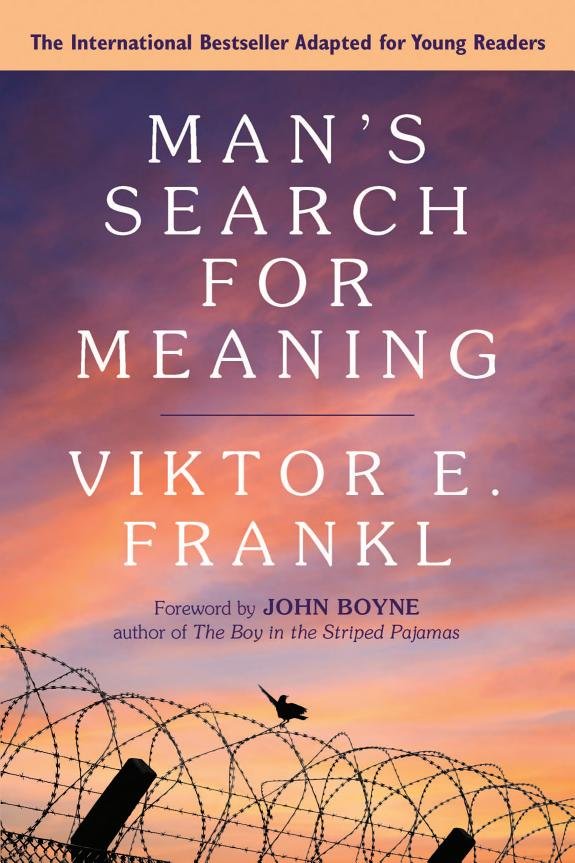
Man’s Search for Meaning
1. Man’s Search for Meaning by Viktor E. Frankl
Viktor Frankl was a psychiatrist and Holocaust survivor, and this book is his account of enduring the Nazi concentration camps alongside a framework he developed for understanding human suffering. It is not an easy read. It is not meant to be. Frankl writes with a clinical precision that somehow makes the emotional weight heavier, not lighter, and that tension is exactly what makes the book so enduring.
The central idea is logotherapy, Frankl’s theory that the primary human drive is not pleasure or power but the search for meaning. He observed, in the most extreme conditions imaginable, that people who could find a reason to survive were more likely to do so. The book is split into two parts: his memoir of the camps, and a more structured explanation of logotherapy. The memoir section is the one most people remember.
Frankl’s voice is measured and careful, never melodramatic. He is not asking for sympathy. He is asking you to think seriously about what your life is for. That is a question most people prefer to defer indefinitely, which is probably why this book has stayed in print for decades.
“Everything can be taken from a man but one thing: the last of the human freedoms, to choose one’s attitude in any given set of circumstances.”
This is perfect for readers who want philosophical depth alongside personal narrative, and who are willing to sit with discomfort in exchange for genuine insight. It is not for anyone looking for quick, actionable tips or a cheerful pep talk.
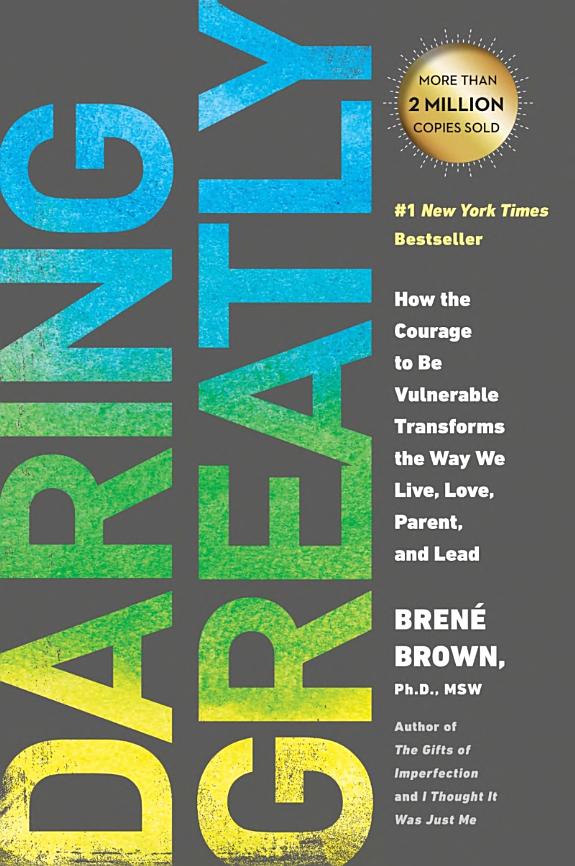
Daring Greatly
2. Daring Greatly by Brené Brown
Brené Brown spent years as a shame researcher before she became a household name, and that background shows throughout this book. Daring Greatly is built on the argument that vulnerability is not weakness but the birthplace of connection, creativity, and courage. Brown draws on her own qualitative research, which involved thousands of interviews, and she writes in a warm, direct voice that feels like a conversation rather than a lecture.
The title comes from a Theodore Roosevelt speech, and Brown uses it to frame a broader argument about what happens when we armor ourselves against vulnerability. She looks at how shame operates differently in men and women, how it shows up in workplaces and families, and what it actually takes to engage with life more openly. The chapters on parenting and on organizational culture are particularly strong.
Some readers find Brown’s style a little too personal, with frequent anecdotes from her own life and therapy sessions. That is fair. If you prefer your nonfiction to stay at arm’s length, this one may feel overly intimate. But for many people, that intimacy is precisely the point. Brown is modeling the vulnerability she is writing about, which takes a certain consistency of nerve.
Vulnerability is not about winning or losing. It is about showing up when you cannot control the outcome.
This is perfect for people who feel chronically disconnected or who recognize a pattern of self-protection that is costing them more than it is saving them. It is less suited to readers who want hard data and peer-reviewed studies rather than qualitative research and personal narrative.
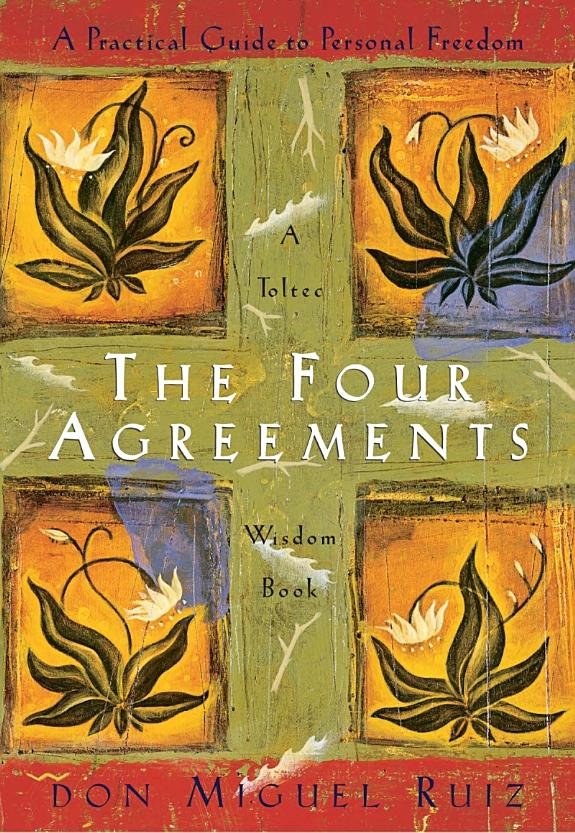
The Four Agreements
3. The Four Agreements by Don Miguel Ruiz
Don Miguel Ruiz draws on Toltec wisdom to lay out four simple principles for living: be impeccable with your word, do not take anything personally, do not make assumptions, and always do your best. That is the whole book, essentially. The brevity is intentional and, depending on your temperament, either refreshing or maddening.
Ruiz writes with a gentle, almost hypnotic quality. The prose is not dense or academic. He is not trying to impress you with citations. What he is doing is returning again and again to the same core ideas from slightly different angles, hoping that one of those angles lands. For many readers, it does. The second agreement, about not taking things personally, has a way of sticking in the mind long after you have closed the book.
This is one of the more spiritually oriented books on this list, rooted in a specific indigenous tradition and framed in language that leans toward the mystical. Readers who prefer secular frameworks or scientific grounding may find it thin. The ideas themselves are not complicated, and some critics argue the book could have been a long essay. That is probably true. But sometimes a short book that you actually finish and absorb is worth more than a thorough one you abandon at chapter four.
Most of our suffering comes from trying to defend a version of ourselves that we adopted without ever choosing it.
This is perfect for readers who are drawn to spiritual or philosophical frameworks and want something short, accessible, and reflective. It is not ideal for people who need empirical evidence or structured methodology to find a book credible.
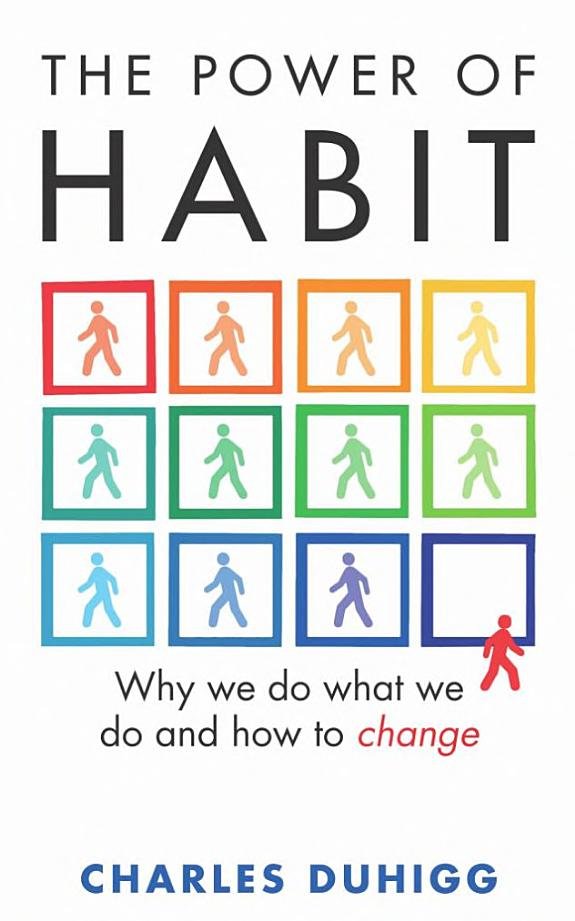
The Power of Habit
4. The Power of Habit by Charles Duhigg
Charles Duhigg is a journalist, and it shows in the best possible way. The Power of Habit is built around a simple neurological framework, the habit loop of cue, routine, and reward, and then illustrated through a series of deeply reported case studies. You get stories about Alcoa’s CEO transforming a company through safety habits, about how Target predicts customer behavior, and about the civil rights movement as a study in social habit change. Duhigg is genuinely good at this kind of narrative nonfiction.
The science here is real and reasonably well explained. The basal ganglia, the role of the prefrontal cortex, the golden rule of habit change: Duhigg translates neuroscience into plain language without dumbing it down too severely. Where the book is strongest is in showing that habits are not just personal quirks but structural forces that operate in organizations and communities as well as in individual brains.
The practical sections at the end of each chapter can feel a little tacked on, as though the publisher wanted something actionable to justify the cover copy. The real value is in the reporting, not the self-help scaffolding. If you go in expecting a well-written piece of science journalism rather than a step-by-step manual, you will enjoy it considerably more.
You cannot extinguish a bad habit. You can only replace the routine while keeping the cue and the reward intact.
This is perfect for people who like narrative nonfiction with a scientific backbone and real-world case studies. It is less suited to readers who want a strict how-to guide with daily exercises and worksheets.
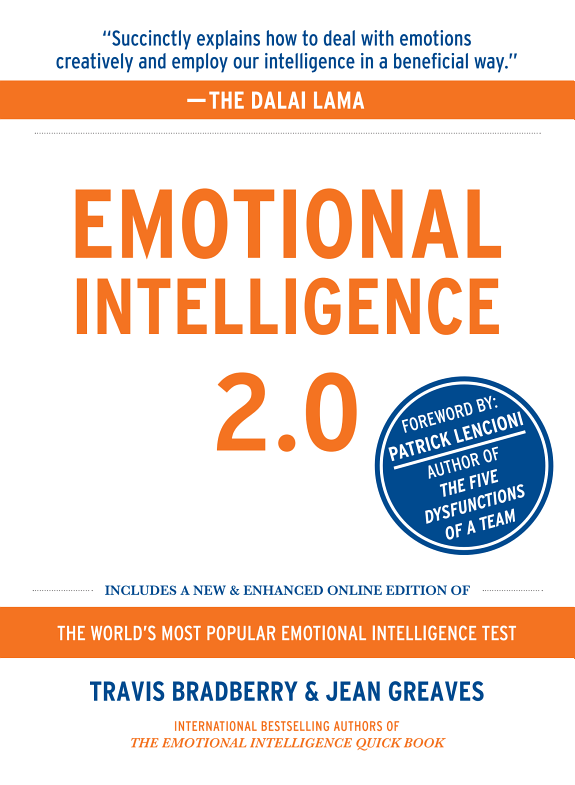
Emotional Intelligence 2.0
5. Emotional Intelligence 2.0 by Travis Bradberry and Jean Greaves
Travis Bradberry and Jean Greaves wrote this book as a practical companion to the concept of emotional intelligence, which was popularized by Daniel Goleman in the 1990s. The book is organized around four core skills: self-awareness, self-management, social awareness, and relationship management. Each section includes a set of specific strategies, and the book comes with access to an online assessment that gives you a baseline EQ score to work from.
The tone here is professional and direct. This is not a book that spends much time on philosophy or narrative. It wants to give you tools. That focus makes it particularly useful in workplace contexts, and it is widely used in corporate training programs for exactly that reason. The writing is clear if not especially memorable, and the strategies are concrete enough to actually try.
Literary readers may find the prose a little flat. The book reads more like a well-organized professional development resource than a piece of writing you would recommend for its sentences. And the online assessment, while useful, has been criticized for being more of a marketing tool than a rigorous psychometric instrument. Take the score as a rough starting point rather than a definitive measure. Still, as a structured introduction to emotional intelligence with practical application, it does its job.
Self-awareness is the foundation of emotional intelligence, and without it, the other skills are nearly impossible to develop consistently.
This is perfect for professionals who want a structured, workplace-applicable framework for understanding and improving how they manage emotions and relationships. It is not for readers who prioritize literary quality or want a deeply researched academic treatment of the subject.
The 5 Second Rule
6. The 5 Second Rule by Mel Robbins
The premise of this book is almost aggressively simple: when you feel the impulse to act on a goal, count backward from five and move before your brain talks you out of it. That is the rule. Mel Robbins discovered it accidentally on a morning when she could not make herself get out of bed, and she has spent this entire book explaining why it works, where it applies, and how to use it across different areas of life.
Robbins is a high-energy writer. Her voice is enthusiastic, conversational, and occasionally repetitive, which you may find either motivating or exhausting depending on your tolerance for that style. She draws on neuroscience to explain why the countdown interrupts the habit of hesitation, and while the science is not presented with great depth, it is not entirely without foundation either. The concept of the prefrontal cortex being activated by counting is a reasonable, if simplified, explanation.
The book is longer than it needs to be. The core idea could be communicated in a chapter, and Robbins knows this, which is probably why she spends so much time on reader testimonials and extended examples. If you are the kind of person who finds repetition reinforcing rather than tedious, that structure may actually help the idea sink in. If you are not, you might read the first third and consider yourself well served.
You will never feel ready. Readiness is a feeling your brain manufactures to keep you comfortable, not to help you grow.
This is perfect for people who struggle with chronic procrastination or hesitation and want a simple, low-friction technique to interrupt that pattern. It is not for readers who want nuanced psychological theory or who find motivational writing styles grating.
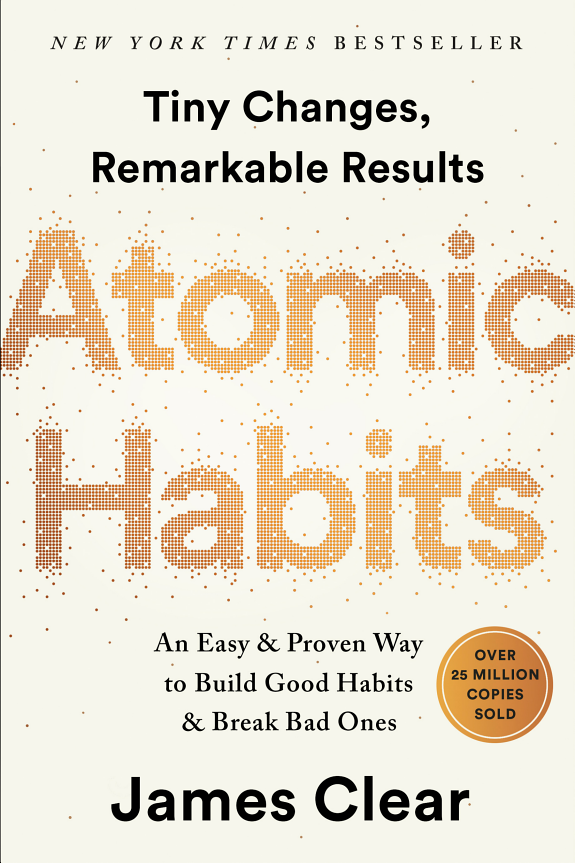
Atomic Habits
7. Atomic Habits by James Clear
James Clear spent years writing about habits on his website before this book arrived, and that background shows in the precision of the writing. Atomic Habits is one of the more carefully constructed books in this genre. Clear builds his framework methodically, introducing the four laws of behavior change, make it obvious, make it attractive, make it easy, and make it satisfying, and then spending real time on each one. Nothing feels rushed or padded.
What separates this book from a lot of habit literature is Clear’s emphasis on identity. He argues that the most durable habit changes come not from setting goals but from deciding what kind of person you want to be and then casting votes for that identity through small, consistent actions. It is a subtle reframe, but it has a way of making the whole project feel less like a chore and more like a coherent project of self-definition. The two-minute rule, the idea of habit stacking, and the concept of environment design are all explained with enough clarity and specificity to actually be usable.
Some readers find the book a little too tidy, the framework a little too neat. Human behavior is messy and context-dependent in ways that a four-law model cannot fully capture. Clear acknowledges this, more or less, but the book’s strength is also its limitation: it is very good at the mechanics of habit formation and less interested in the emotional or psychological complexity underneath. If you want the mechanics, this is one of the best books available on the subject. If you want the psychology, you may need to read it alongside something else.
Every action you take is a vote for the type of person you wish to become. You do not rise to the level of your goals. You fall to the level of your systems.
This is perfect for readers who want a practical, well-organized system for building better habits, backed by clear reasoning and concrete strategies. It is not the right fit for people looking for emotional depth or a more philosophical treatment of personal change.
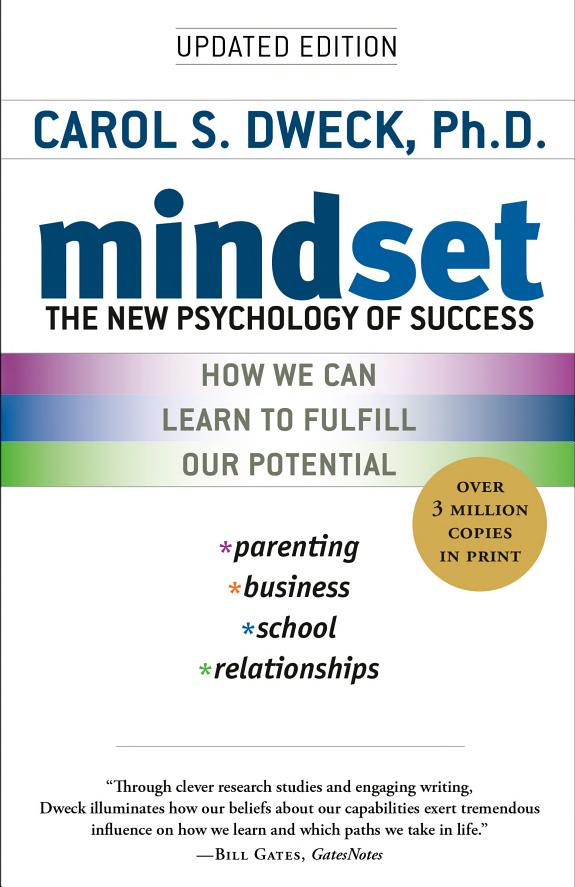
Mindset: The New Psychology of Success
8. Mindset: The New Psychology of Success by Carol S. Dweck
Carol Dweck is a Stanford psychologist who has spent decades studying how people respond to challenge and failure. The central distinction in this book is between a fixed mindset, the belief that your abilities are essentially set at birth, and a growth mindset, the belief that they can be developed through effort and learning. It sounds simple. The research behind it is not.
Dweck’s writing is clear and accessible without being condescending. She moves through examples from sports, business, education, and relationships, showing how mindset plays out across very different contexts. The sections on parenting and teaching are particularly well done, examining how the specific language adults use with children can quietly shape whether those children come to see effort as worthwhile or as evidence of inadequacy. The chapter on how to praise children, specifically the difference between praising effort and praising intelligence, has influenced education practice in a measurable way.
The book does have a tendency to sort people into the two mindset categories a little too cleanly. In practice, most people operate with a growth mindset in some areas and a fixed mindset in others, and Dweck does acknowledge this, though the framing throughout the book leans toward the binary. There is also the question of how to actually shift your mindset, which the book addresses but perhaps not with as much practical detail as some readers want. That said, as an argument for why your beliefs about your own abilities matter enormously, the book makes its case with real evidence and genuine care.
In a fixed mindset, you spend your time documenting your intelligence or talent instead of developing them. In a growth mindset, failure is not the defining moment. How you respond to it is.
This is perfect for educators, parents, coaches, and anyone who has ever let a fear of looking foolish stop them from trying something new. It is less suited to readers who want a purely practical toolkit and are not interested in the research context behind the ideas.
None of these books will do the work for you. That is worth saying plainly, because the self-improvement genre sometimes implies otherwise. What they can do is give you a framework, a question, or a small shift in perspective that turns out to matter more than you expected. Frankl gives you a reason to keep going. Clear gives you a system. Dweck gives you permission to be a beginner. Brown gives you a reason to stop hiding. Together they cover a lot of ground.
The best way to use a list like this is not to read all eight books in a month and call it personal development. Pick the one that speaks to where you actually are right now. Read it slowly. Put it down when something lands and give it time to settle. A single good idea, genuinely absorbed, is worth more than eight books skimmed for highlights. Start there.