
6 Books to Read Instead of Scrolling Social Media
We have all done it. You pick up your phone to check one thing, and forty minutes later you are deep in a stranger’s vacation photos from 2019, mildly annoyed and unsure how you got there. Social media is genuinely good at one thing, and that thing is keeping you on social media. The rest of your life, meanwhile, waits patiently in the corner.
The books on this list are not here to lecture you or make you feel guilty for owning a smartphone. They are here because the writers behind them spent serious time researching what constant connectivity actually does to your brain, your relationships, and your ability to think clearly. Some are practical guides. Some are deeper investigations into technology and culture. All of them are more interesting than your feed. That is a promise.
How to Break Up with Your Phone
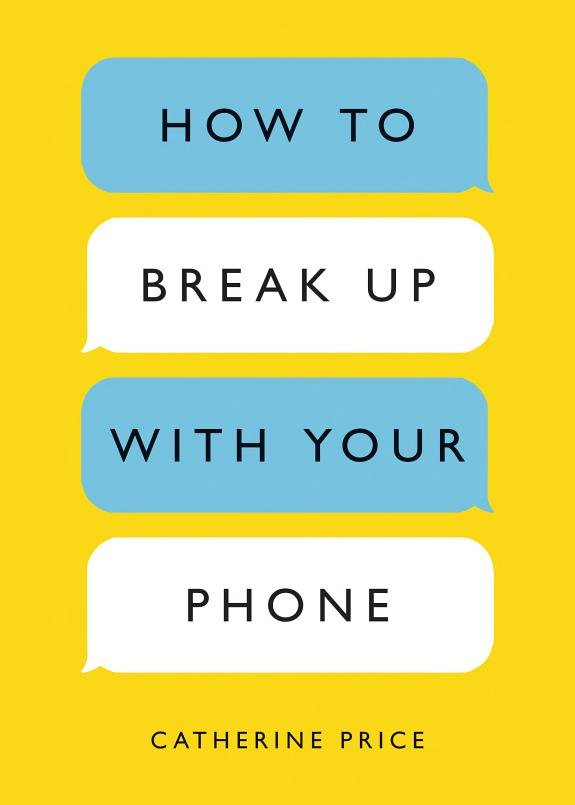
1. How to Break Up with Your Phone by Catherine Price
Catherine Price is a science journalist, which means she brings both rigor and readability to what could easily have been a preachy self-help book. Instead, this reads like advice from a smart friend who has already done the research so you do not have to. Price herself was a heavy phone user before writing this, and that honesty gives the whole thing a grounded, non-judgmental quality that is genuinely refreshing.
The book is split into two parts. The first explains the science behind why phones are so hard to put down, covering dopamine, variable reward schedules, and the way apps are deliberately engineered to feel urgent. The second part is a practical thirty-day plan for restructuring your relationship with your device. It is not about going cold turkey. It is about being intentional, which is a much more sustainable goal.
Price writes with warmth and a dry wit that keeps the pages turning. She is not asking you to throw your phone into a river. She is asking you to notice how you feel when you use it and whether those feelings are actually good. That question alone is worth sitting with for a while.
“The goal isn’t to spend less time on your phone. It’s to spend more time on your life.”
This is perfect for anyone who has caught themselves reaching for their phone the moment they feel even slightly bored, and wants a structured, science-backed way to build better habits without giving up their device entirely.
Digital Minimalism
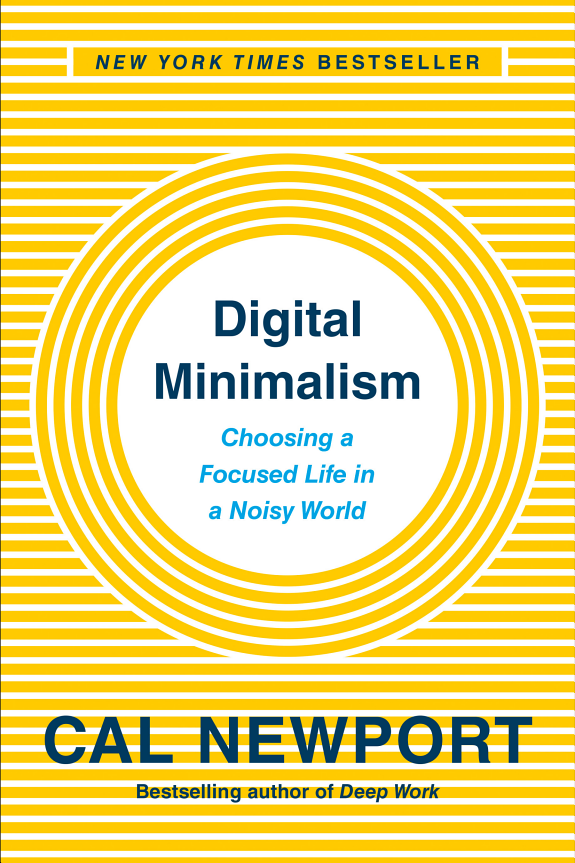
2. Digital Minimalism by Cal Newport
Cal Newport does not have social media accounts, which either makes him the perfect person to write this book or a deeply suspicious one, depending on your perspective. His argument is not simply that social media is bad. It is that we adopted these tools without ever seriously asking whether they were worth the cost, and that we deserve a more deliberate framework for deciding what technology actually belongs in our lives.
Newport builds his case around the idea of digital minimalism, a philosophy that says you should only use technology that serves your deeply held values, and that you should use it in ways you intentionally choose rather than ways the platforms choose for you. It sounds simple. It is not easy. The book walks through why that gap exists and how to close it, including a proposed thirty-day digital declutter that has become something of a cultural touchstone among readers who have tried it.
Where Newport really earns his keep is in the second half of the book, where he talks about what to do with the time and attention you recover. He makes a compelling case for solitude, for analog leisure, for conversation that does not happen through a screen. If you find yourself skeptical of the premise, his arguments are careful enough to at least make you pause. If you are already on board, this is the roadmap you have been looking for.
“The tycoons of social media have to stop pretending that they’re friendly nerd gods building a better world and admit they’re just tobacco farmers in T-shirts selling an addictive product to children.”
This is perfect for people who already sense that their digital habits are costing them something important but want a coherent philosophy rather than a simple list of tips.
Stolen Focus
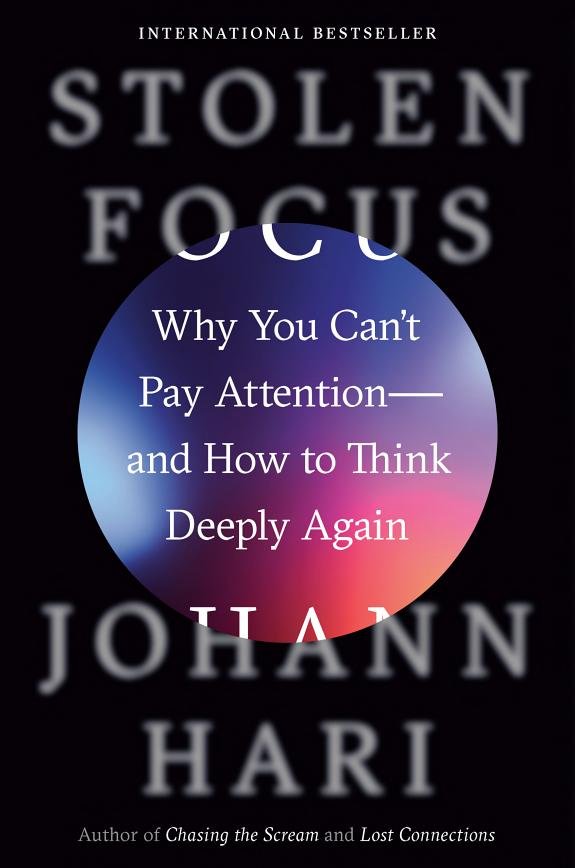
3. Stolen Focus by Johann Hari
Johann Hari spent three years researching why so many people feel like they cannot concentrate anymore, traveling to meet scientists, psychologists, and thinkers across multiple countries. The result is a book that is part investigation, part memoir, and part call to action. Hari is a confessional writer, and he is upfront about his own struggles with distraction, which makes the book feel like a shared problem rather than a diagnosis handed down from on high.
What sets this apart from other books on attention is its scope. Hari does not just look at smartphones and social media. He examines diet, sleep deprivation, the collapse of reading culture, childhood development, and the way modern work structures systematically destroy our capacity for deep focus. The argument is that our attention crisis has many causes, and blaming yourself for not being able to concentrate is like blaming yourself for being tired in a building with no windows.
Some readers find Hari’s sweeping approach a little overwhelming, and it is fair to say the book takes on a lot. But that breadth is also what makes it valuable. He is not selling you a productivity hack. He is asking a much bigger question about what kind of world we have built and whether it is one that allows human beings to actually think. That question does not have a tidy answer, but it is one worth asking.
“You are not broken. Your phone is not the whole problem. The environment we have all been placed in is the problem.”
This is perfect for readers who want to understand the full picture of why attention is so hard to sustain today, and who are open to a book that connects personal experience to larger social and political forces.
The Shallows: What the Internet Is Doing to Our Brains
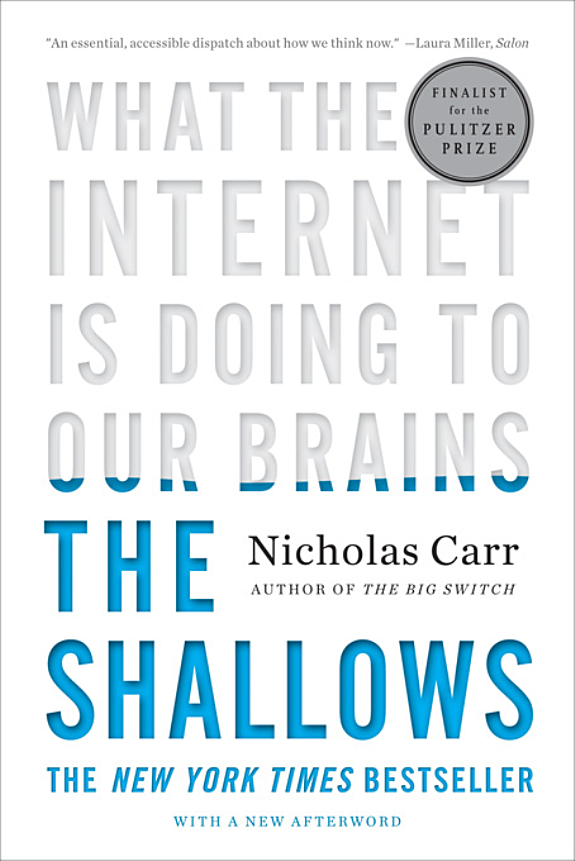
4. The Shallows: What the Internet Is Doing to Our Brains by Nicholas Carr
Nicholas Carr published this book in 2010, which means it arrived before the smartphone became the dominant cultural object it is today. Reading it now is a slightly eerie experience, because so much of what he predicted has quietly come true. Carr’s central concern is neuroplasticity, the brain’s ability to rewire itself based on how we use it, and his argument is that the internet is rewiring us toward shallowness, toward skimming, toward an inability to sustain the kind of deep reading that long-form thought requires.
Carr is a graceful writer with a serious intellectual background, and he draws on a wide range of sources, from cognitive science to the history of communication technologies. He traces the way each new medium, from the printing press to the typewriter to the internet, has changed how people think. His point is not that change is always bad, but that we should be honest about what we gain and what we lose with each shift.
The chapter on how Google has shaped the way we read and process information is worth the price of the book on its own. Carr is not a technophobe. He uses the internet. But he writes with genuine grief about what sustained, immersive reading used to feel like, and his description of losing that capacity will resonate with anyone who has noticed that novels feel harder to finish than they used to. If you are reading this and nodding, this book was written for you.
“The Net is making us smarter, you might argue. That is true, in a narrow sense. But it is also making us shallower.”
This is perfect for readers who miss the feeling of being truly absorbed in a long book and want to understand, on a neurological level, why that feeling has become harder to find.
Irresistible
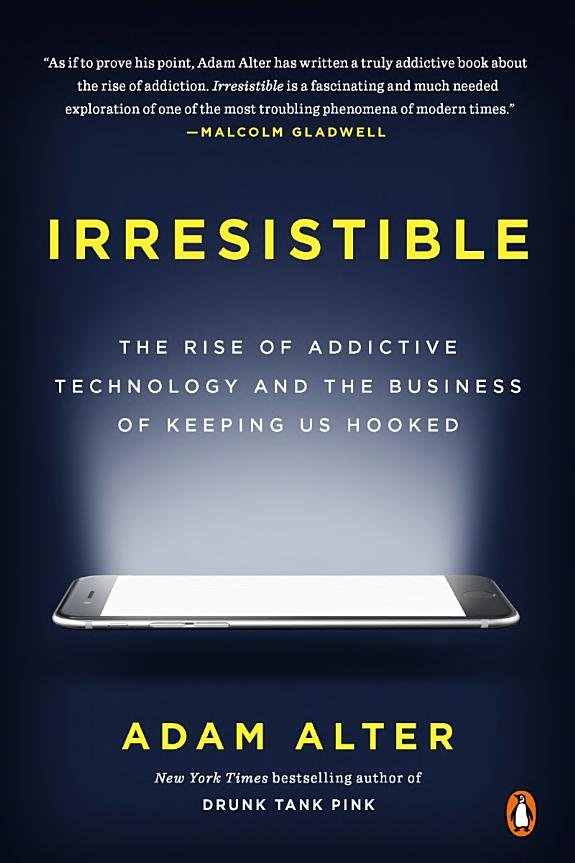
5. Irresistible by Adam Alter
Adam Alter is a professor of psychology and marketing at NYU, which means he understands persuasion from both the academic and commercial sides. Irresistible is his investigation into behavioral addiction, specifically the kind that does not involve substances but still manages to consume enormous amounts of human time and energy. He is talking about social media, yes, but also video games, fitness trackers, email, and the many other digital loops that are designed to keep us engaged indefinitely.
What makes Alter’s approach particularly interesting is his focus on design. He is less interested in blaming users for weak willpower than in examining the specific mechanics that make certain products compulsive. He looks at things like social feedback, the absence of stopping cues, and the way progress metrics tap into our deep need for achievement. Reading this, you start to see the apps on your phone as the products of very deliberate psychological engineering, which is uncomfortable but clarifying.
Alter also spends time on the human cost, interviewing people whose relationships, careers, and health have been genuinely damaged by behavioral addictions. He is careful not to be sensationalist about this, and he acknowledges the spectrum between healthy use and serious harm. But the cumulative portrait is sobering. He is not saying everyone is addicted. He is saying the line is blurrier than we like to admit, and that the people who built these products know exactly where that line is.
“The difference between a habit and an addiction is whether it improves or hinders your life. Many of our digital habits are failing that test.”
This is perfect for readers who are curious about the psychology and design behind addictive technology and want to understand why willpower alone is such a poor defense against it.
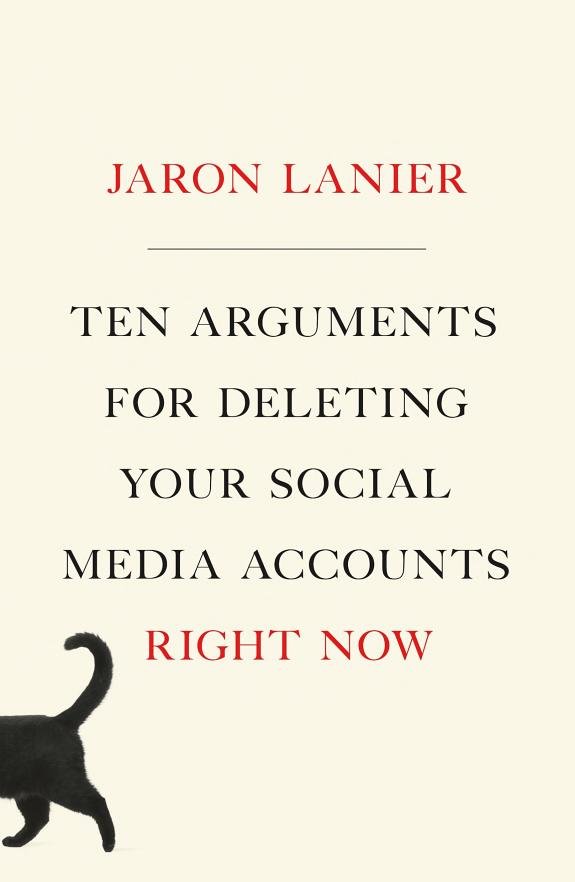
Ten Arguments for Deleting Your Social Media Accounts Right Now
6. Ten Arguments for Deleting Your Social Media Accounts Right Now by Jaron Lanier
Jaron Lanier is one of the founding figures of virtual reality and has been working in Silicon Valley since before most people knew what Silicon Valley was. He is not an outsider critic. He is someone who helped build the digital world and has spent years watching it go in a direction he did not intend. That background gives this short, punchy book a credibility that is hard to dismiss. When someone who helped create the internet tells you to get off social media, you at least owe them ten minutes of your attention.
The ten arguments range across territory that is economic, psychological, political, and deeply personal. Lanier argues that social media platforms degrade your capacity for empathy, that they make political discourse worse by design, that they undermine your ability to form a coherent sense of self, and that they treat you not as a customer but as a raw material to be processed and sold. He coins the term BUMMER, which stands for Behaviors of Users Modified and Made into an Empire for Rent, and it is the kind of acronym that is annoying to read once and impossible to forget afterward.
This is the most polemical book on the list, and it is not trying to be balanced. Lanier has a thesis and he argues it hard. If you are looking for a nuanced weighing of pros and cons, this is not that book. But if you want someone to make the strongest possible case for why these platforms are structurally harmful, regardless of the intentions of the people who use them, Lanier makes it with clarity and conviction. It is also the shortest book here, which feels appropriate given the subject matter.
“I’m not saying you’re a bad person for using social media. I’m saying the system is set up to bring out the worst in you, and that is not an accident.”
This is perfect for readers who want a sharp, opinionated argument from a genuine technology insider and are open to having their assumptions about social media challenged from an unexpected direction.
None of these books are asking you to become a hermit or to renounce technology and move into the woods. What they are asking, collectively, is a simpler and more honest question: is the way you are currently spending your attention actually making your life better? That question is worth sitting with, preferably without your phone nearby.
If even one of these books makes you pause before opening an app you did not consciously decide to open, or helps you reclaim an hour you would otherwise have lost to scrolling, then it has done its job. The feed will always be there. These books are a better use of the next few hours. Start with whichever one sounds most like you.