5 Books for Quietly Starting Over
Sometimes starting over does not look like a dramatic reinvention. There is no montage, no sudden epiphany, no moment where everything clicks into place at once. More often it looks like getting out of bed on a Tuesday, making coffee, and deciding in some small, private way to try again. It is quiet work, and it is hard work, and most of the world does not notice you doing it.
The books on this list understand that. Each one follows a character who is, in one way or another, piecing themselves back together after loss, isolation, grief, or simply the slow accumulation of a life lived without much tenderness. They are not loud stories. They do not rush their characters toward resolution. But they are deeply, genuinely hopeful, and that hope feels earned rather than handed out for free. If you are in the middle of your own quiet starting over, or if you just love reading about people who find their way back to themselves, these five novels are worth your time.
Eleanor Oliphant Is Completely Fine
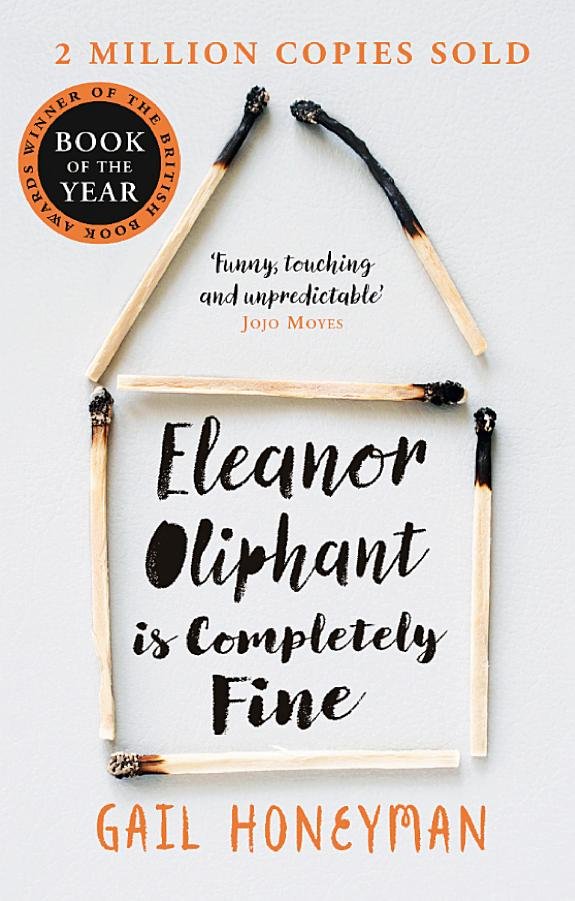
1. Eleanor Oliphant Is Completely Fine by Gail Honeyman
Eleanor Oliphant is, on the surface, an extremely efficient office worker who eats the same lunch every day, has no friends, and considers a phone call with her mother every Wednesday to be a sufficient social life. She is also one of the most quietly devastating narrators in recent fiction. Gail Honeyman writes Eleanor with a voice that is precise, a little formal, and occasionally very funny in the driest possible way. The humor is never mean. It is the humor of someone who has learned to observe the world from a careful distance because getting close to it has always hurt.
What makes this novel work so well is that Honeyman does not rush Eleanor’s unraveling or her healing. The story moves at the pace of real recovery, which is to say it is uneven and sometimes two steps back for every one forward. Eleanor’s friendship with a coworker named Raymond begins almost accidentally and grows in the most ordinary way imaginable, through small kindnesses and shared takeaway containers. It is not a romance, though readers sometimes wish it were. It is something more valuable: the story of someone learning that they are allowed to be cared for.
The novel does carry some dark subject matter, including trauma and mental health, and it does not look away from that. Readers who prefer their fiction to stay light should know that going in. But Honeyman handles the difficult material with real care, and the payoff is a story that feels genuinely honest about what survival costs and what connection can offer in return.
If you have ever kept people at arm’s length because it felt safer, Eleanor’s story will feel uncomfortably familiar in the best possible way. This is not a book about being fixed. It is a book about being found.
“Starting over” in this novel is not a choice Eleanor makes all at once. It is a series of very small decisions, most of which she does not even recognize as courage while she is making them.
This is perfect for readers who appreciate dark humor alongside emotional depth, anyone who has ever felt like an outsider in their own life, and those who find comfort in watching a character slowly, imperfectly learn to accept kindness.
A Man Called Ove
2. A Man Called Ove by Fredrik Backman
Ove is fifty-nine years old, recently widowed, recently forced into retirement, and absolutely furious about all of it. He has opinions about the correct way to park a car, the correct way to sort recycling, and the correct way to live, and he is surrounded entirely by people who are doing all of it wrong. Fredrik Backman writes him with such affectionate precision that Ove becomes one of those characters you feel you have actually met, probably at a neighborhood association meeting, probably while he was correcting someone about something.
What Backman does brilliantly is reveal, in carefully timed flashbacks, the tenderness underneath Ove’s rigid exterior. We learn how he became who he is, and we learn what he lost when his wife Sonja died, and by the time we understand him fully we are already entirely on his side. The new neighbors who crash their trailer into his mailbox and then keep showing up at his door are an intrusion he absolutely does not want and cannot seem to get rid of. They are also, quietly, the thing that saves him.
This is a book about grief and community and the stubborn human capacity for connection even when someone is doing everything in their power to avoid it. Ove does not want to start over. He is, in fact, actively trying not to. The novel is partly about what happens when life refuses to cooperate with that plan. It is also, it must be said, frequently very funny, which makes the emotional moments land even harder when they arrive.
Readers who prefer a faster plot or more action-oriented storytelling may find the gentle, episodic structure a little slow. But for anyone who has ever grieved something so thoroughly that they could not imagine rebuilding around the absence, Ove’s story offers something rare: proof that it is possible, even when you do not want it to be.
Ove is not a man who asks for help or accepts it gracefully. His starting over happens entirely against his will, which is perhaps the most honest version of how starting over usually works.
This is perfect for readers who loved the grumpy-but-secretly-tender character archetype, anyone processing grief who needs to laugh a little while they cry, and those who believe that community can be annoying and essential at the same time.
The Unlikely Pilgrimage of Harold Fry
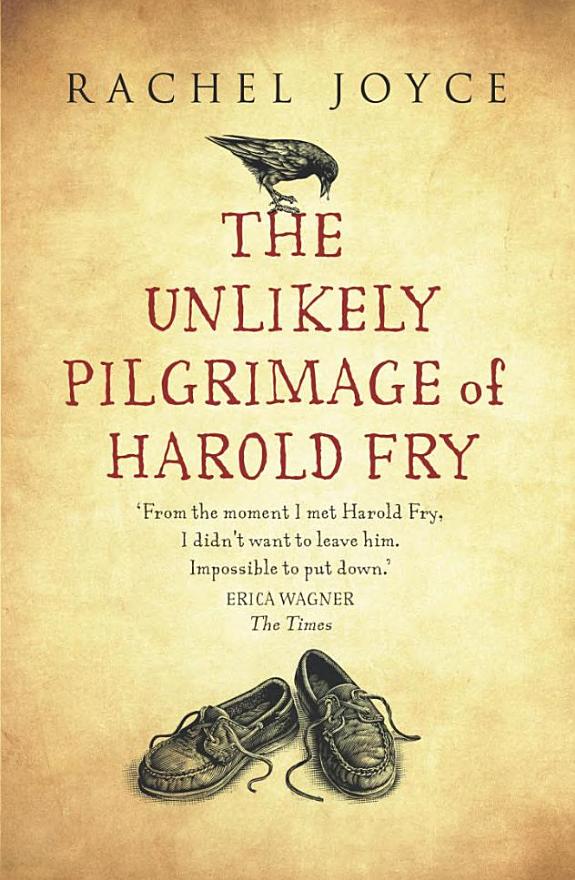
3. The Unlikely Pilgrimage of Harold Fry by Rachel Joyce
Harold Fry is a retired man in England who receives a letter from an old friend named Queenie, who is dying of cancer in a hospice six hundred miles away. He sits down to write a reply, walks to the postbox, and then just keeps walking. He has no equipment, no plan, and no particular reason to believe that walking the length of England will do anything useful. He walks anyway. Rachel Joyce’s novel is about what happens over the course of that walk, both on the road and in Harold’s memory.
Joyce writes with a quiet, steady grace that suits her subject perfectly. Harold is not an exciting man. He is someone who spent most of his life making himself small, keeping out of the way, and failing the people he loved through absence rather than cruelty. The walk becomes a kind of reckoning with all of that. Each mile covers not just physical ground but emotional territory that Harold has been avoiding for decades. It is meditative and sometimes melancholy, and it is also surprisingly funny in places, particularly when other people begin to follow Harold’s pilgrimage and turn it into something he never intended.
This is not a fast book, and it is not meant to be. The pace mirrors Harold’s own slow, deliberate movement through the landscape. Readers who want narrative momentum and plot-driven tension will probably find it frustrating. But readers who are willing to walk alongside Harold and let the story unfold at its own speed will find something genuinely moving waiting at the end, not a tidy resolution exactly, but an honest one.
There is something in Harold’s journey that speaks directly to anyone who has ever felt they left things too long, said too little, and wondered whether it was too late to do anything about it. Joyce’s answer is not simple, but it is hopeful.
Harold does not set out to start over. He sets out to do one small thing, and the small thing becomes everything. That is, in the end, how most real change begins.
This is perfect for readers who love quiet, introspective journeys, anyone who has ever carried regret about a relationship left unrepaired, and those who find that walking or movement helps them process difficult emotions.
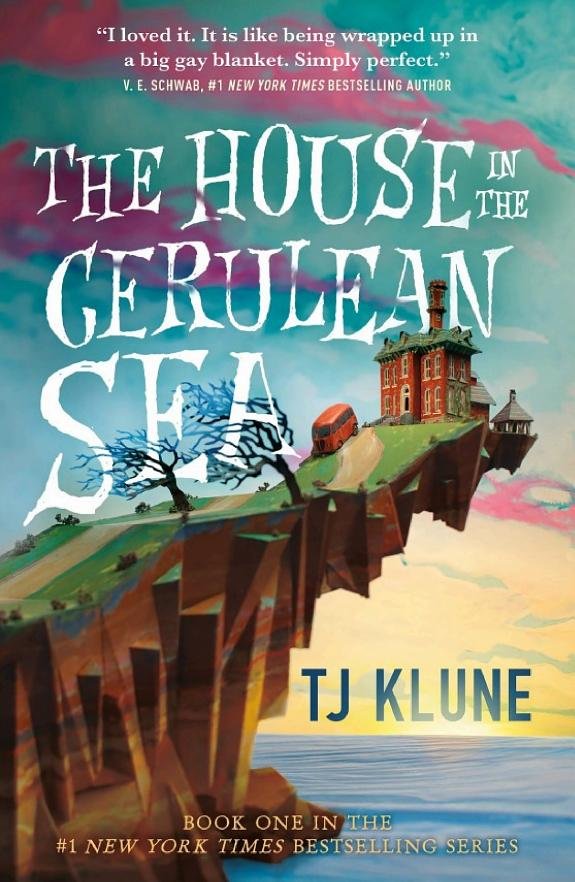
The House in the Cerulean Sea
4. The House in the Cerulean Sea by T.J. Klune
Linus Baker is a caseworker for the Department in Charge of Magical Youth. He is also deeply lonely, thoroughly overlooked, and so accustomed to following the rules that he has forgotten to ask whether the rules are any good. When he is sent on a secret assignment to a peculiar orphanage on a remote island, populated by children who happen to be among the most dangerous magical beings in existence, he arrives with his clipboard and his regulations and absolutely no idea what is about to happen to him. T.J. Klune’s novel is warm and whimsical and occasionally quite sharp about bureaucracy and fear and how institutions can make ordinary people complicit in cruelty without ever asking them to do anything obviously wrong.
The book is often described as cozy, which is accurate but undersells it a little. Yes, there is a charming house and a found family and a romance that develops with genuine sweetness. But underneath all of that is a story about a man who has spent his entire life being careful and invisible and who slowly, in the company of a gnome and a wyvern and the child of the Antichrist, learns what it feels like to matter. Klune writes the magical children with real affection and gives each of them a distinct personality. The island master, Arthur Parnassus, is one of the more quietly compelling love interests in recent fantasy fiction.
Readers who prefer their fantasy grounded in harder stakes or more complex world-building may find the tone a little too gentle. This is, unabashedly, a comfort read. It is the kind of book that wraps around you like a blanket. But it earns its warmth by taking its characters’ pain seriously before it offers them any relief.
For anyone who has ever felt like they were just going through the motions of a life rather than actually living one, Linus Baker’s slow awakening to possibility is a genuinely lovely thing to witness.
Linus does not start over dramatically. He starts over by allowing himself to want something, which turns out to be the harder and more important step.
This is perfect for readers who love cozy fantasy with emotional substance, anyone who needs a gentle story that still has something real to say about belonging and fear, and those who appreciate a slow-burn romance built on genuine respect.
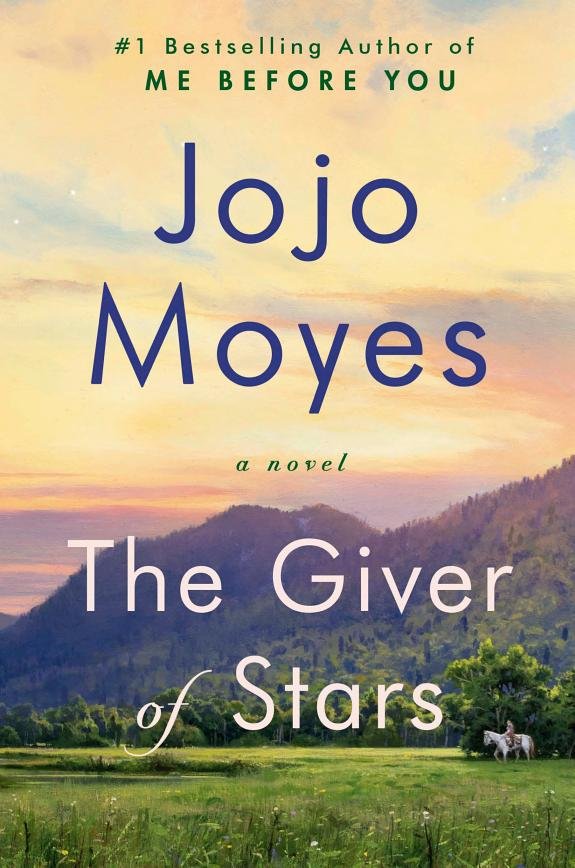
The Giver of Stars
5. The Giver of Stars by Jojo Moyes
Alice Wright moves from England to a small town in Depression-era Kentucky, married to a man she barely knows, and finds herself almost immediately suffocating in a life that does not fit her. When she joins a group of women who ride through the Appalachian mountains delivering library books to remote communities, she finds something she did not know she was looking for: purpose, friendship, and the slow discovery of who she actually is when nobody is watching her perform a role. Jojo Moyes writes with warmth and a strong sense of place, and the Kentucky landscape becomes almost a character in its own right.
The novel is based on the real Pack Horse Library Project of the 1930s, which gives it an interesting historical grounding. Moyes uses that history to explore questions about women’s freedom and autonomy that feel entirely relevant without ever becoming heavy-handed about it. The group of women at the center of the story are distinct and fully realized, each carrying their own version of a life that has not gone the way they planned. Their friendships are the heart of the book, and Moyes writes female friendship with real honesty, including the friction and the loyalty in equal measure.
The romance plots are present and satisfying, but readers who come for the historical setting and the female friendship may find those elements more compelling than the love stories. There is also a thread of injustice and community conflict that Moyes handles with varying degrees of subtlety. Readers looking for a purely light read should know the novel goes to some genuinely difficult places before it finds its resolution.
What lingers after finishing this book is the image of those women on horseback, carrying books through difficult terrain to people who need them, and choosing that work over the smaller, safer lives they were handed. It is a story about choosing yourself, and doing it alongside other people who are doing the same.
Starting over, for these women, means claiming something they were never supposed to want. The books they carry are almost beside the point. It is the riding that matters.
This is perfect for readers who love historical fiction with strong female characters, anyone who finds comfort in stories about women building their own lives on their own terms, and those who believe that friendship can be as sustaining as any romance.
Every book on this list is about someone who did not plan to start over. They were pushed into it by grief, by loneliness, by a life that stopped fitting, or by a letter that arrived on an ordinary morning. That feels true to how it usually goes. Starting over is rarely something we choose cleanly and with confidence. More often we stumble into it, one small decision at a time, not entirely sure we are doing it right.
What these novels offer is not a roadmap or a prescription. They offer company. Reading about Eleanor learning to accept kindness, or Harold walking six hundred miles for a friend, or Linus Baker discovering that he is allowed to want things, does not tell you how to rebuild your own life. But it does remind you that the rebuilding is possible, and that it tends to happen in the quietest, most ordinary moments. Sometimes that reminder is exactly what you need.