

7 Books That Help You Break Bad Patterns for Good
Most of us have that one thing we keep doing even though we know better. Maybe it is the late-night scrolling, the reflexive self-criticism, the relationship dynamic that plays out the same way every single time. You see the pattern clearly. You have probably seen it for years. And yet, here you are again.
The good news is that understanding why patterns stick is half the battle. These seven books approach the problem from different angles, some through neuroscience, some through psychology, some through philosophy that is older than any lab study. None of them promise overnight miracles, and honestly, any book that does should stay on the shelf. What they do offer is something more useful: a clearer picture of how you got here and what it might actually take to go somewhere different.
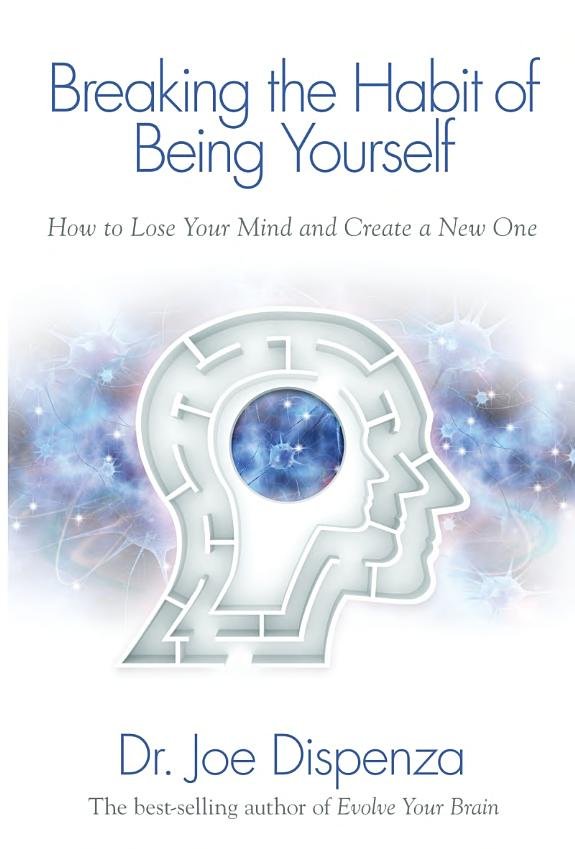
Breaking the Habit of Being Yourself
1. Breaking the Habit of Being Yourself by Joe Dispenza
Joe Dispenza sits somewhere between neuroscience and spirituality, which is either exactly your thing or very much not your thing. His central argument is that most people are running on autopilot, not because they are lazy or weak, but because the brain has literally wired itself around repeated thoughts and emotions. The person you think of as “yourself” is, in large part, just a very practiced set of neural habits. That is a strange and slightly unsettling idea, and Dispenza leans into it fully.
The book draws on quantum physics, epigenetics, and meditation research to suggest that changing your inner world can reshape your outer reality. He is not shy about making bold claims, and readers with a strict scientific bent may find some of the interpretations of physics a stretch. But the core message, that habitual thought patterns create habitual emotional states which then drive habitual behavior, is grounded in real neuroscience, even if the wrapping sometimes feels more like a wellness retreat than a textbook.
Where the book genuinely earns its place on this list is in its meditation practices. Dispenza provides structured exercises designed to interrupt the automatic loops of thought and feeling that keep people anchored to old versions of themselves. For readers who have tried conventional habit advice and found it too surface-level, this offers something deeper, a framework for changing not just what you do, but how you feel about who you are.
“You cannot think your way into a new life if your body is still emotionally living in the old one.”
This is perfect for readers who are drawn to the intersection of mind-body science and personal growth, and who are open to meditation as a serious practice rather than a casual suggestion.
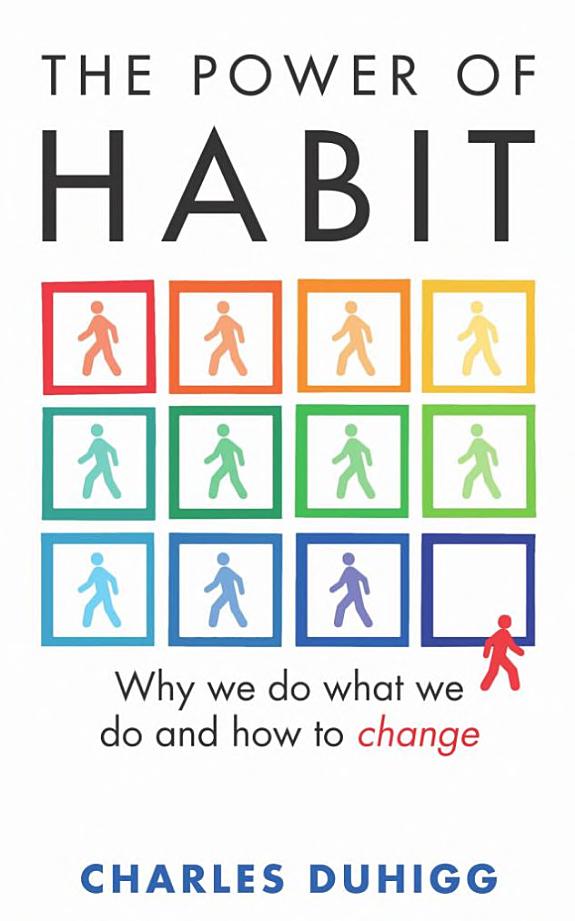
The Power of Habit
2. The Power of Habit by Charles Duhigg
Charles Duhigg is a journalist, and it shows in the best way. The Power of Habit is full of stories, real ones, about how habits shaped the fortunes of companies, social movements, and ordinary people trying to stop biting their nails. He writes with the kind of clarity that makes you feel like you are learning something important without having to work very hard for it. That is a rare skill.
The book’s backbone is the habit loop: cue, routine, reward. Duhigg did not invent this framework, but he popularized it in a way that made it genuinely usable for a general audience. He explains how every habit, no matter how complex it seems from the outside, can be broken down into these three components, and how changing the routine while keeping the cue and reward intact is often the most reliable path to lasting change. It sounds simple. It is not always simple in practice, but having the map helps.
The corporate and sociological case studies are fascinating, though some readers find the pivot between personal habits and organizational behavior a little abrupt. If you are here purely for self-improvement, the chapters on Alcoa and Starbucks may feel like a detour. Still, those sections do illuminate something important: habits are not just personal quirks, they are structural, and changing them requires understanding the structure.
“The Golden Rule of habit change: you can’t extinguish a bad habit, you can only change it.”
This is perfect for readers who like their psychology delivered through narrative and real-world examples, and who want a solid conceptual foundation before trying to change specific behaviors.
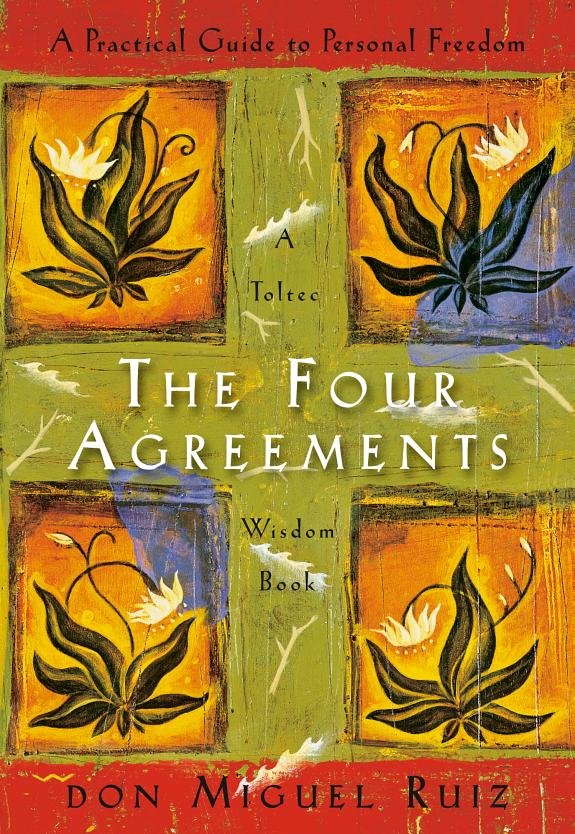
The Four Agreements
3. The Four Agreements by Don Miguel Ruiz
Don Miguel Ruiz draws from Toltec wisdom, an ancient Mesoamerican tradition, to offer four deceptively simple principles for living. The book is short, almost startlingly so, and the writing has a quiet, almost hypnotic quality. Ruiz is not interested in systems or step-by-step programs. He is interested in the stories we tell ourselves, and how those stories become the invisible architecture of everything we do.
The four agreements are: be impeccable with your word, do not take anything personally, do not make assumptions, and always do your best. Written out like that, they sound like something you would find on a motivational poster in a dentist’s waiting room. But Ruiz unpacks each one in a way that reveals how deeply most of us violate these principles every single day, not out of malice, but out of conditioning. The concept of “the dream” we have been domesticated into is particularly striking and worth sitting with.
This book is not for skeptics of spiritual frameworks, and it is not for people looking for research citations. Ruiz is not presenting a clinical model. He is presenting a philosophy, and the value of it depends almost entirely on whether you are willing to engage with it on those terms. For readers who are, it has a way of quietly dismantling the mental patterns that make self-sabotage feel inevitable.
“Every human is an artist. The dream of your life is to make beautiful art.”
This is perfect for readers who are open to spiritual or philosophical frameworks and who sense that their bad patterns are rooted in deep-seated beliefs rather than surface-level behaviors.
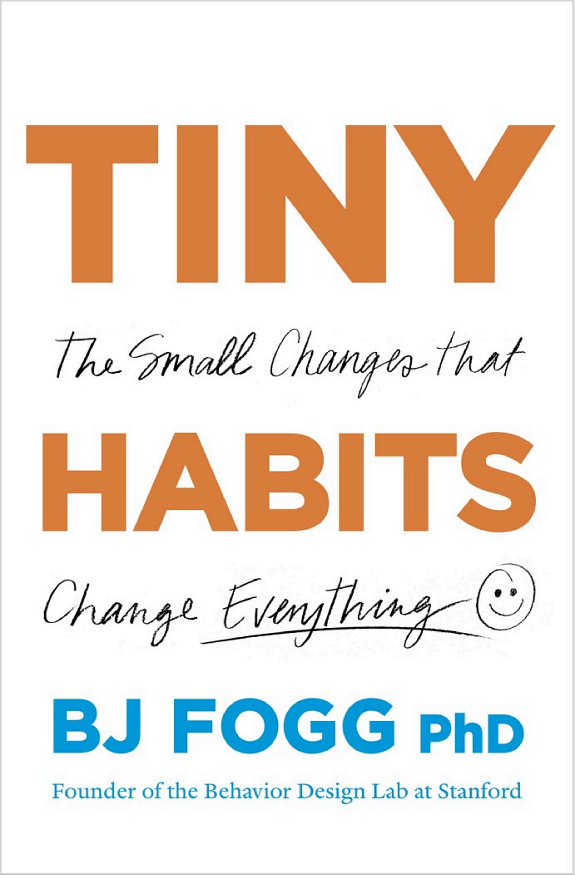
Tiny Habits
4. Tiny Habits by BJ Fogg
BJ Fogg has spent decades running the Behavior Design Lab at Stanford, and Tiny Habits is the distillation of that research into something anyone can use on a Tuesday morning. His core premise is a direct challenge to the dominant narrative around habit change: motivation is unreliable, willpower is a finite resource, and if you have been failing to build good habits, the design of the habit is the problem, not your character. That reframe alone is worth the price of the book.
Fogg’s method centers on starting absurdly small. Not “exercise for thirty minutes,” but “do two push-ups after you brush your teeth.” Not “meditate daily,” but “take three deep breaths after you sit down at your desk.” The idea is that tiny actions, attached to existing routines and followed by genuine celebration, grow naturally over time. The celebration piece is not a gimmick. Fogg makes a compelling case that the emotional signal you send yourself immediately after a behavior is what wires it into your brain.
The writing is warm and accessible, though occasionally the relentless positivity tips into something that feels a little like a motivational workshop. Readers who are dealing with deeply entrenched patterns rooted in trauma or anxiety may find this approach necessary but not sufficient on its own. As a companion to more psychologically oriented books on this list, though, it is invaluable.
“Motivation is what gets you started. Design is what keeps you going.”
This is perfect for readers who have tried and failed at big habit overhauls and need a practical, low-pressure system that actually accounts for how human beings work under stress.
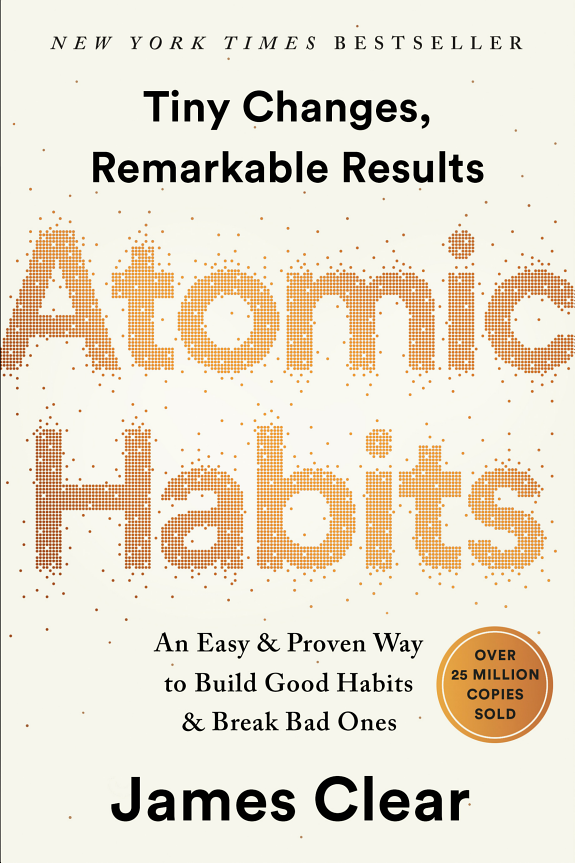
Atomic Habits
5. Atomic Habits by James Clear
James Clear is meticulous in a way that is genuinely satisfying. Atomic Habits is one of those books that manages to be both comprehensive and readable, which is harder to pull off than it sounds. Clear builds on the habit loop research that Duhigg popularized and adds a layer of practical precision that makes it feel like a proper toolkit rather than just a set of ideas. He covers cues, cravings, responses, and rewards, and he is very good at showing exactly where and how to intervene in each stage.
The identity-based approach to habits is where Clear distinguishes himself most clearly. Rather than focusing on outcomes, “I want to run a marathon,” he argues for focusing on identity, “I am someone who moves their body every day.” The shift sounds subtle, but it changes the entire relationship between effort and self-concept. Every small action becomes a vote for the kind of person you are becoming, rather than a painful sacrifice in service of some distant goal. That reframe has stuck with a lot of readers for good reason.
The book is thorough enough that some sections can feel repetitive if you are already familiar with behavior design literature. And if you are looking for deep psychological excavation of why your patterns formed in the first place, Clear is not your guide for that. He is focused on the mechanics of change, not the emotional archaeology. But as a practical manual for building better systems around your daily life, it is hard to beat.
“Every action you take is a vote for the type of person you wish to become.”
This is perfect for readers who like structured, evidence-based approaches and want a clear, step-by-step method they can apply immediately to specific habits they are trying to build or break.
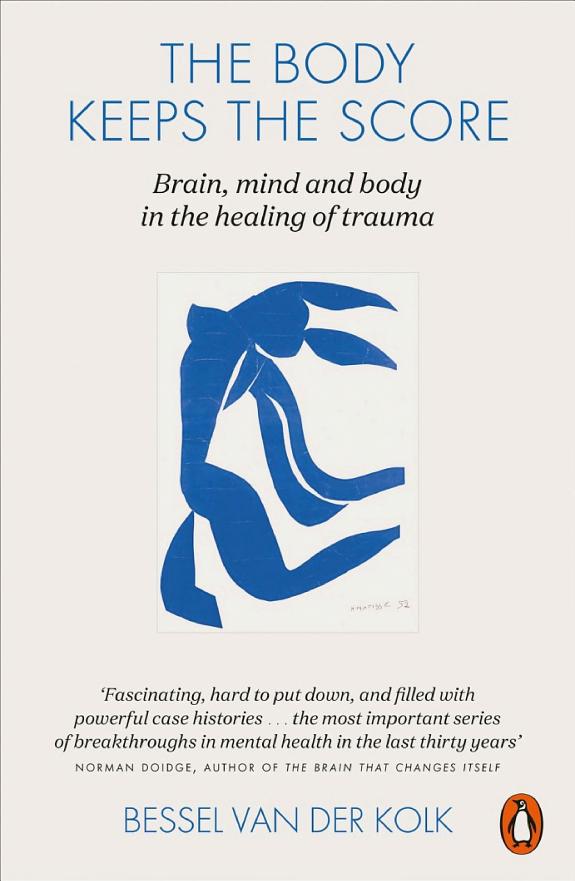
The Body Keeps the Score
6. The Body Keeps the Score by Bessel van der Kolk
Bessel van der Kolk is a psychiatrist who has spent his career working with trauma survivors, and this book is a serious piece of work. It is not a light read, and it is not meant to be. What it offers is something that no habit-focused book can fully provide: an explanation of why some patterns are so resistant to willpower, logic, and even genuine desire for change. The answer, van der Kolk argues, is that trauma lives in the body, not just the mind, and the body’s responses are not always accessible to conscious thought.
The book traces decades of research into how traumatic experiences reshape the brain and nervous system, and how those changes manifest as patterns of behavior, emotional reactivity, and physical symptoms that can look, from the outside, like bad choices or weak character. Van der Kolk is a compassionate writer, and the case studies throughout the book are handled with real care. Reading it can be a genuinely clarifying experience for people who have wondered why they keep doing things they do not want to do despite knowing better.
This is not a self-help manual in the conventional sense. It does not end with a five-step plan. The treatments van der Kolk champions, EMDR, yoga, theater, neurofeedback, are not things you can easily DIY from a book. But understanding the landscape of why certain patterns exist is often the necessary first step before any practical intervention can take hold. For readers who feel like standard habit advice has never quite addressed the root of their struggles, this book may be the missing piece.
“As long as you keep secrets and suppress information, you are fundamentally at war with yourself.”
This is perfect for readers who sense that their persistent patterns are connected to past experiences or emotional wounds, and who want to understand the physiological reality of that connection before exploring treatment options.
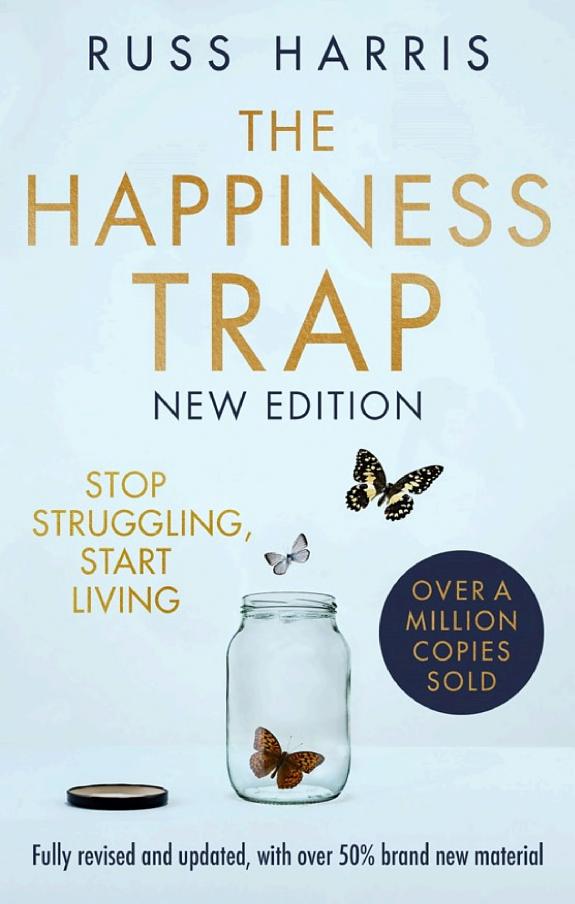
The Happiness Trap
7. The Happiness Trap by Russ Harris
Russ Harris is an Australian therapist who writes about Acceptance and Commitment Therapy, known as ACT, with unusual clarity and humor. The Happiness Trap starts with a premise that is almost aggressively counterintuitive: the pursuit of happiness, as most of us practice it, is itself a trap. The effort to avoid negative thoughts and feelings, to silence the inner critic, to stay positive, tends to make those thoughts and feelings louder and stickier, not quieter. If you have ever tried very hard not to think about something, you already know exactly what Harris is describing.
ACT does not ask you to challenge your negative thoughts or replace them with positive ones. Instead, it teaches a skill called defusion, the ability to observe your thoughts without being controlled by them. The goal is not to feel good all the time. The goal is to act in alignment with your values even when your thoughts and feelings are uncomfortable. For people stuck in patterns driven by anxiety, self-doubt, or emotional avoidance, this shift in approach can be genuinely clarifying. It stops making your inner life the enemy.
Harris writes with warmth and a dry wit that keeps the material from feeling clinical, though some readers find the ACT exercises a little awkward to do from a book without a therapist present. The concepts translate well to self-directed practice, but if your patterns are tied to significant mental health challenges, working with a professional alongside this book is worth considering. As an introduction to a genuinely different way of relating to your own mind, though, it is one of the most useful books on this entire list.
“The more we try to get rid of unwanted thoughts and feelings, the more they tend to persist and intensify.”
This is perfect for readers whose bad patterns are driven by emotional avoidance or anxiety, and who are open to a psychological approach that asks them to change their relationship with their thoughts rather than the thoughts themselves.
Breaking a bad pattern is rarely a single dramatic moment. It is usually a slow accumulation of small recognitions, a growing understanding of where the pattern came from, what it is doing for you, and what it would actually take to do something different. The books on this list reflect that complexity. Some are practical and structural, some are psychological and deep, and some are philosophical in ways that resist easy summary.
The honest truth is that no single book will do the work for you. But the right book at the right moment can shift something in how you see yourself, and sometimes that is exactly what needs to happen before anything else can change. Start with whichever one feels most relevant to where you actually are, not where you think you should be. That is usually the most useful place to begin.