

8 Books for Finding Happiness Within Yourself
Happiness is one of those things everyone wants and almost nobody can agree on. Is it a feeling? A habit? A side effect of living well? Books about happiness have a reputation for being either relentlessly cheerful or suspiciously vague, and plenty of them deserve that reputation. But a handful of writers have actually wrestled with the question seriously, and their work is worth your time.
The eight books gathered here come from very different directions. Some are rooted in psychology research. Some are personal memoirs. One was written by two of the most beloved spiritual figures of the twentieth century sitting together in a room for a week. What they share is a genuine attempt to understand happiness not as a product to be purchased or a goal to be achieved by Friday, but as something that grows from the inside. Whether you are skeptical of self-help, curious about philosophy, or just tired of feeling like you are missing something, there is likely a book on this list that will meet you where you are.
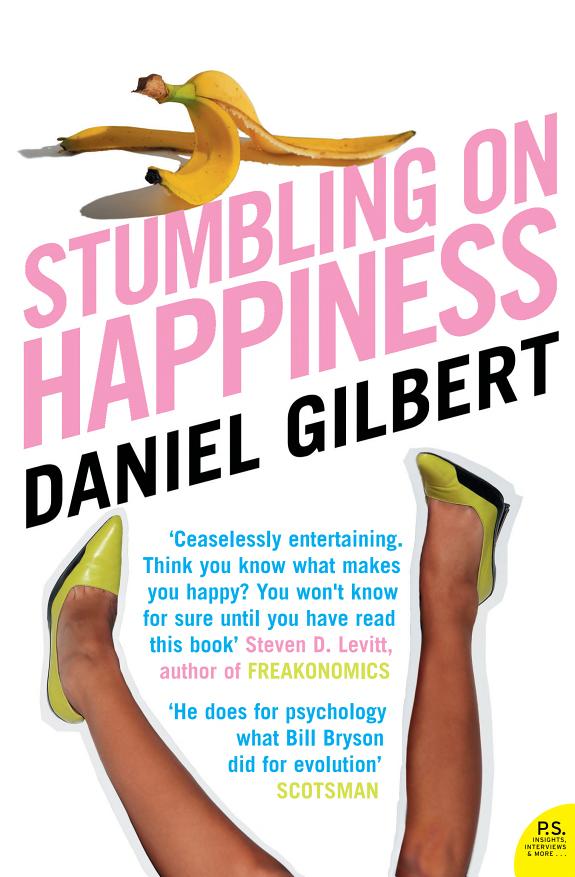
Stumbling on Happiness
1. Stumbling on Happiness by Daniel Gilbert
Daniel Gilbert is a Harvard psychologist with a gift for explaining research without making you feel like you are sitting in a lecture hall. The central argument of this book is both humbling and oddly freeing: human beings are remarkably bad at predicting what will make them happy. We overestimate how good good things will feel and how bad bad things will feel. Our brains are storytelling machines, and they are not always telling us the truth about our future emotional lives.
Gilbert writes with genuine wit. The book is funny in a way that feels earned rather than performed. He draws on decades of psychological research to show how imagination, memory, and perception all conspire to give us a warped picture of our own happiness. The chapter on how we rationalize our circumstances, which Gilbert calls the psychological immune system, is particularly worth reading slowly.
This is not a book that tells you what to do. There are no action steps, no morning routines to adopt. If you are looking for a prescription, you will leave frustrated. What Gilbert offers instead is a clearer understanding of why you keep expecting the next thing to fix everything, and why it never quite does. That self-knowledge, even without a tidy solution, turns out to be genuinely useful.
“The fact that we can be wrong about what will make us happy, and wrong in predictable ways, is one of the most important things psychology has discovered in recent decades.”
This is perfect for curious, analytically minded readers who enjoy science writing and want to understand the mechanics of happiness before trying to cultivate it.
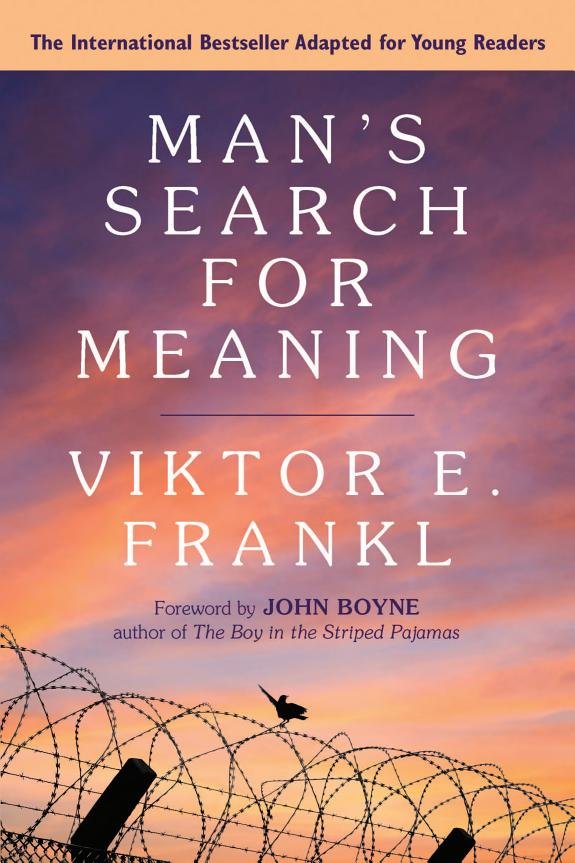
Man’s Search for Meaning
2. Man’s Search for Meaning by Viktor E. Frankl
Viktor Frankl was a psychiatrist and a Holocaust survivor. He wrote this book after his liberation from the concentration camps, drawing on his experiences to articulate a theory of human psychology centered not on pleasure but on meaning. The first half of the book is a memoir of his time in Auschwitz and other camps. It is harrowing, honest, and written without a trace of sentimentality. The second half introduces logotherapy, his therapeutic framework built on the idea that the primary human drive is the search for meaning.
Frankl’s voice is calm and precise even when describing circumstances that defy comprehension. He observed that prisoners who held onto a sense of purpose, whether a person waiting for them, a work left unfinished, or a faith they refused to abandon, were more likely to survive psychologically even when survival physically was not guaranteed. The argument is not that suffering is good. It is that suffering without meaning is unbearable, while suffering with meaning is something a person can endure and sometimes transcend.
This is a short book, under two hundred pages, but it carries an unusual weight. It does not offer comfort in any easy sense. It offers something more durable: a framework for understanding why your life matters even when it does not feel like it does. The happiness Frankl points toward is not the happiness of pleasant afternoons. It is the satisfaction of a life oriented toward something larger than the self.
“Those who have a ‘why’ to live can bear with almost any ‘how’.” Frankl borrowed this from Nietzsche, but he had earned the right to quote it.
This is perfect for readers going through difficulty, questioning their direction, or anyone who finds shallow positivity unconvincing and wants something with genuine philosophical weight.
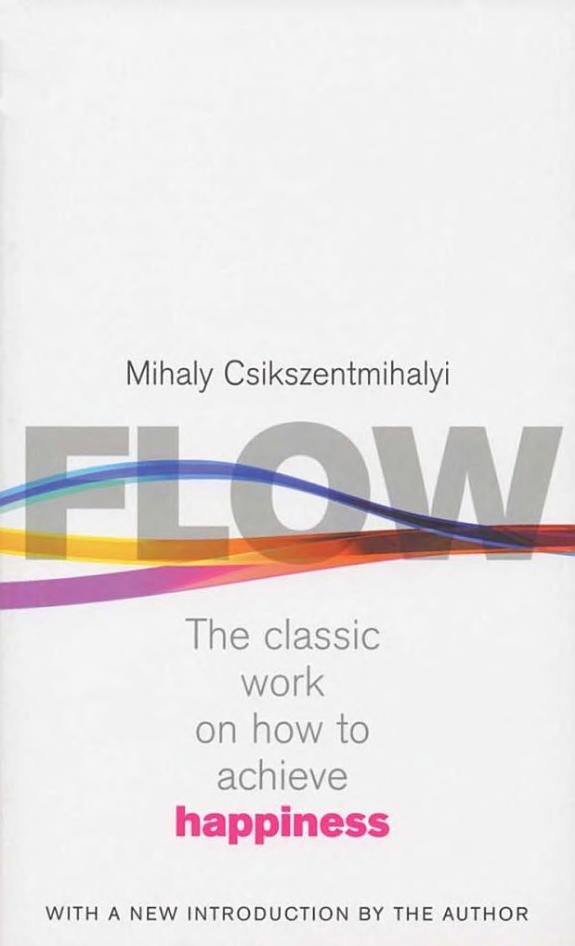
Flow: The Psychology of Optimal Experience
3. Flow: The Psychology of Optimal Experience by Mihaly Csikszentmihalyi
Mihaly Csikszentmihalyi spent decades studying the moments when people feel most alive, most focused, and most satisfied. He called this state flow, and you have almost certainly experienced it without having a name for it. It is the feeling of being so absorbed in something that time disappears. Athletes call it being in the zone. Musicians describe it as playing without thinking. The research behind this book spans surgeons, chess players, rock climbers, and factory workers, and the findings are surprisingly consistent across all of them.
The core insight is that happiness is not something that happens to you when conditions are favorable. It is something that emerges from engagement, from the specific experience of working at the edge of your current ability on a task that genuinely challenges you. Too easy and you get bored. Too hard and you get anxious. The sweet spot between those two is where flow lives, and where people consistently report their highest levels of wellbeing.
The writing is academic in places, more so than Gilbert or Frankl, and some readers find the middle sections slow going. Csikszentmihalyi is thorough to a fault, working through how flow applies to work, relationships, and even solitude in separate chapters that occasionally feel repetitive. But the central idea is genuinely useful and it holds up. If you want to understand why certain activities leave you feeling more alive and others leave you feeling hollow, this book will give you a clear and well-supported answer.
“The best moments in our lives are not the passive, receptive, relaxing times. The best moments usually occur if a person’s body or mind is stretched to its limits in a voluntary effort to accomplish something difficult and worthwhile.”
This is perfect for people who feel happiest when they are deeply engaged in creative or challenging work and want to understand why, and how to build more of that into their lives.
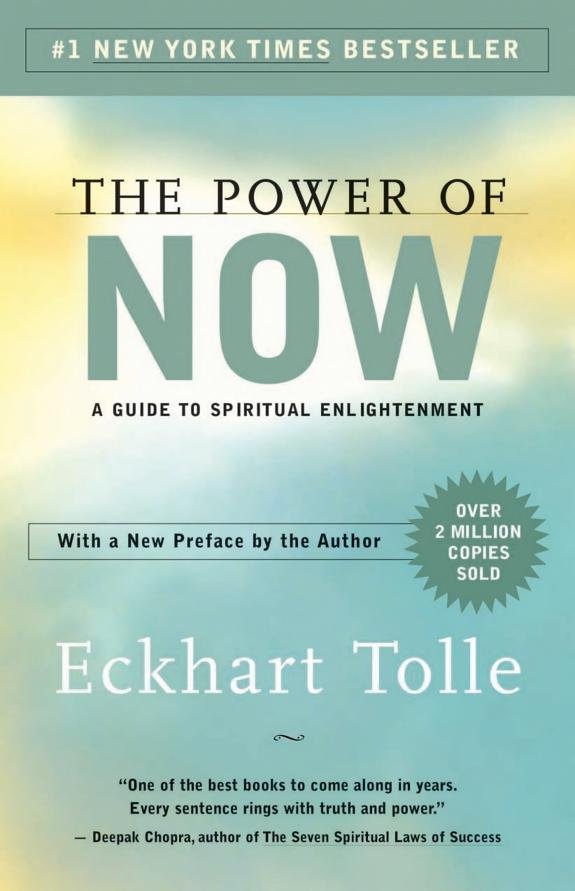
The Power of Now: A Guide to Spiritual Enlightenment
4. The Power of Now: A Guide to Spiritual Enlightenment by Eckhart Tolle
Eckhart Tolle is not for everyone, and it would be dishonest to pretend otherwise. His writing sits firmly in the spiritual rather than the scientific tradition, and his central claim, that most human suffering is caused by living in the mind rather than the present moment, is stated with a certainty that some readers will find either liberating or irritating depending on their temperament. The book is structured as a series of questions and answers, which gives it an unusual rhythm, conversational and sometimes repetitive by design.
That said, the core teaching has genuine depth. Tolle draws from Buddhist and Christian mystical traditions without being dogmatic about either. The idea that the thinking mind, the voice in your head that narrates, judges, and worries, is not the same as you, and that you can observe it rather than identify with it, is a concept that shows up in meditation practice, cognitive therapy, and contemplative philosophy across many traditions. Tolle arrives at it through his own story of sudden psychological collapse and recovery, which he describes in the introduction with disarming frankness.
The readers who get the most from this book tend to be those already drawn to contemplative or spiritual practice. If you are a committed materialist or if mystical language makes you impatient, the book will likely frustrate you before it helps you. But if you are someone who has spent years trapped in anxious or ruminative thinking and found that logic alone has not solved it, Tolle offers a different kind of door.
“Realize deeply that the present moment is all you ever have. Make the Now the primary focus of your life.” Simple to say, genuinely difficult to practice, and that tension is exactly what the book explores.
This is perfect for readers open to spiritual frameworks, particularly those drawn to mindfulness or contemplative traditions, who want something that addresses inner suffering directly rather than analytically.
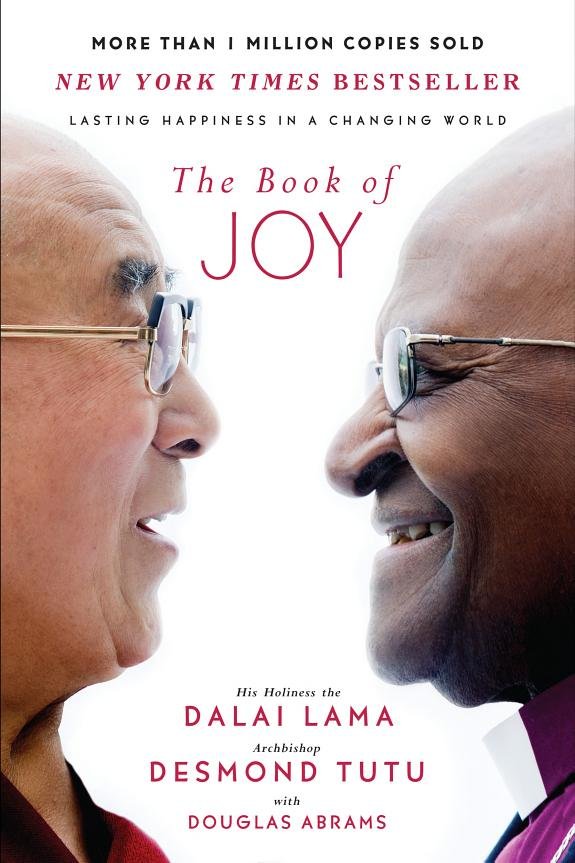
The Book of Joy: Lasting Happiness in a Changing World
5. The Book of Joy: Lasting Happiness in a Changing World by Dalai Lama, Desmond Tutu, and Douglas Abrams
In 2015, the Dalai Lama and Archbishop Desmond Tutu spent a week together in Dharamsala, India, to celebrate the Dalai Lama’s eightieth birthday. Douglas Abrams was in the room, and this book is his account of their conversations. The premise alone is enough to make you smile. Two elderly men who have each survived exile, persecution, and the deaths of people they loved, sitting together and talking about joy. They tease each other constantly. Tutu calls the Dalai Lama a mischievous monk. The Dalai Lama laughs at almost everything.
What makes the book more than a feel-good document is the seriousness underneath the warmth. Both men are clear that joy is not the absence of suffering. They have each experienced suffering in forms most people will never encounter, and they speak about it plainly. The joy they describe is not naivety. It is something that has been forged through hardship and chosen deliberately, over and over again, as a response to circumstances that could easily have produced bitterness instead.
Abrams weaves in research from positive psychology and neuroscience between the conversations, which adds useful context without overwhelming the central voices. The book is accessible enough to read in a weekend, and warm enough that you will probably want to. It is not a rigorous philosophical text. It is something more like sitting with two people who have figured something out and are generous enough to share it.
“Joy is much bigger than happiness. While happiness is often seen as being dependent on external circumstances, joy is not.” The distinction the two men draw between these words is one of the most useful things in the book.
This is perfect for readers who want warmth and wisdom in equal measure, and for anyone who finds purely academic treatments of happiness too cold to actually move them.
10% Happier: How I Tamed the Voice in My Head, Reduced Stress Without Losing My Edge, and Found Self-Help That Actually Works
6. 10% Happier: How I Tamed the Voice in My Head, Reduced Stress Without Losing My Edge, and Found Self-Help That Actually Works by Dan Harris
Dan Harris is a television news anchor who had a panic attack live on Good Morning America in front of five million people. That is a memorable way to start a journey toward mindfulness, and Harris tells the story with the self-deprecating honesty of someone who has genuinely reckoned with his own ego. He is constitutionally skeptical of anything that sounds too earnest, which makes him an unexpectedly good guide through the world of meditation and self-improvement for readers who share that skepticism.
The book follows his path from that public humiliation through his encounters with various spiritual teachers, including some whose behavior did not exactly model inner peace, to a meditation practice that he describes as making him not perfectly happy but measurably, practically better. The title is deliberately modest. He is not claiming enlightenment. He is claiming ten percent, and he argues that ten percent is worth a lot.
Harris writes with the pace and energy of someone who spent years covering breaking news, and the book moves quickly. It is funny, occasionally irreverent, and bracingly honest about the parts of meditation culture that can feel precious or self-congratulatory. Readers who are already committed practitioners may find his skepticism tiresome. But for people who have always thought meditation sounded like something for other people, Harris makes a persuasive and entertaining case that it might actually be for them too.
“Meditation is the one thing I’ve done that has made a measurable difference in my daily life. And I say that as someone who rolled his eyes at the whole enterprise for years.”
This is perfect for skeptics, journalists, high-achievers, and anyone who has always suspected that mindfulness was not for people like them but is curious enough to hear a counterargument.
The Happiness Project
7. The Happiness Project by Gretchen Rubin
Gretchen Rubin was sitting on a city bus one afternoon when she realized she was not as happy as she could be, and not entirely sure why. She was not depressed. Her life, by any reasonable measure, was good. But something felt off, a low-grade dissatisfaction that she could not quite name. So she spent a year deliberately trying to be happier, month by month, testing different theories and approaches and writing about what happened. The result is this book, which is part memoir, part experiment, and part practical guide.
Rubin is a former lawyer with a researcher’s instinct for evidence and a personal essayist’s willingness to be honest about her own flaws. She is not always likable in these pages, which is part of what makes the book work. She admits to being controlling, impatient, and prone to nagging. Her attempts to be more lighthearted with her family sometimes fail in ways she describes with uncomfortable candor. The happiness project does not produce a new person. It produces a slightly better version of the same person, which turns out to be exactly the right kind of outcome.
The book is organized by month, each chapter focused on a different area of life, marriage, work, parenthood, friendship, and each with its own set of resolutions. This structure makes it easy to read in pieces or to skip to the sections most relevant to your own life. It is not a book for people who want grand philosophical answers. It is a book for people who want to feel better in the specific, particular life they are actually living. That is a narrower aim, but it is an honest one.
“The days are long, but the years are short.” Rubin writes this about parenthood, but it applies to almost everything, and it is the kind of observation that lands differently once you are old enough to know it is true.
This is perfect for readers who prefer a practical, personal approach to happiness and want something warm and readable rather than academic or spiritual.
Authentic Happiness: Using the New Positive Psychology to Realize Your Potential for Lasting Fulfillment
8. Authentic Happiness: Using the New Positive Psychology to Realize Your Potential for Lasting Fulfillment by Martin E. P. Seligman
Martin Seligman is one of the founders of positive psychology, the branch of the field that shifted focus from treating mental illness to studying what makes people flourish. This book was his first major attempt to bring that research to a general audience, and it remains one of the clearer introductions to the field. Seligman argues that happiness has three distinct components, positive emotion, engagement, and meaning, and that genuine wellbeing requires attending to all three rather than chasing pleasant feelings alone.
His writing is direct and methodical, more textbook than memoir, though he includes enough personal anecdotes to keep it from feeling dry. He covers character strengths, the role of gratitude, the relationship between optimism and resilience, and the limits of what circumstances can do for your overall happiness level. Some of his findings have since been updated or complicated by further research, and Seligman himself revised parts of this framework in a later book called Flourish. But the core ideas here hold up well and are presented with enough rigor to satisfy readers who want something more than anecdote.
The book includes several self-assessments and exercises, which either add practical value or feel like homework depending on your disposition. If you are the kind of person who actually does the exercises in books like this, you will get considerably more from it than if you skip them, which most of us do, no judgment. The framework Seligman offers is genuinely useful for understanding why some people seem to carry happiness with them and others do not, and what the research suggests can actually shift that balance.
“The good life is using your signature strengths every day to produce authentic happiness and abundant gratification.” It sounds simple. The book does a thorough job of showing why it is not.
This is perfect for readers with a psychological or academic bent who want a research-grounded introduction to positive psychology and a clear framework for thinking about their own wellbeing.
None of these eight books will hand you happiness in a neat package, and any book that claims it can should probably be viewed with some suspicion. What they offer instead is something more durable: better questions, clearer frameworks, honest accounts of what has actually worked for real people in real circumstances. Some of them will resonate with you immediately. Some might not be right for you at this particular moment and might be exactly right in five years.
The best thing you can do is pick the one that sounds most like the conversation you are ready to have right now. Whether that is the rigorous skepticism of Gilbert, the quiet gravity of Frankl, or the warm laughter of two old men sitting together in Dharamsala, there is a voice here worth listening to. Start there. The rest can wait.