

7 Books That Help You Break Free From Guilt
Guilt has a way of setting up permanent residence in your chest. It sits there quietly most of the time, then ambushes you at two in the morning when you are trying to sleep. Some of it is useful, the kind that nudges you to apologize or do better. But a lot of it is just noise, old noise, inherited noise, noise that was never yours to carry in the first place.
The books on this list take guilt and its close cousin shame seriously. They do not offer quick fixes or cheery affirmations. What they offer is something more useful: honest frameworks, research-backed ideas, and the kind of compassionate thinking that can actually loosen guilt’s grip over time. Whether your guilt is tied to childhood, relationships, perfectionism, or something you cannot even name yet, there is something here for you.
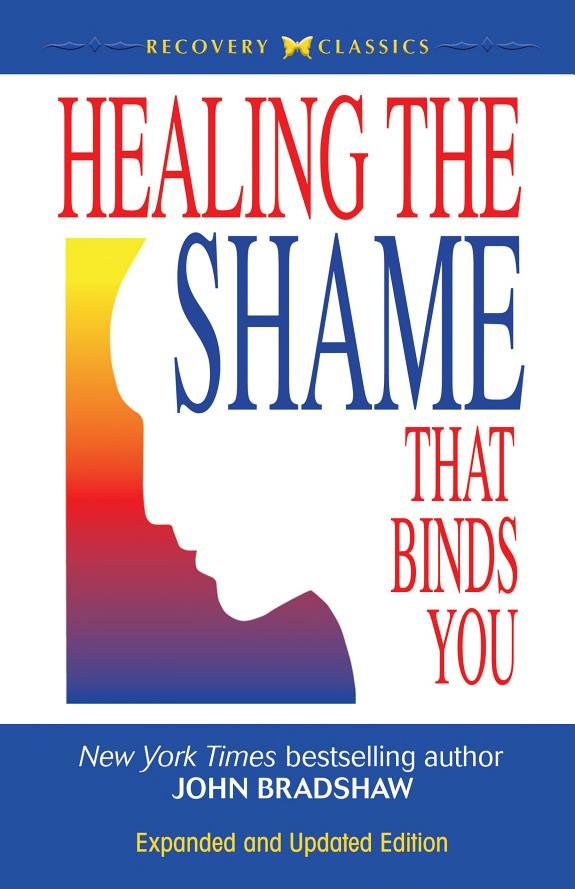
Healing the Shame That Binds You
1. Healing the Shame That Binds You by John Bradshaw
John Bradshaw was a counselor, theologian, and recovering addict who wrote this book in 1988, and it still holds up with startling clarity. His central argument is that there is a difference between healthy shame, the kind that reminds you that you are human and fallible, and toxic shame, the kind that convinces you that you are fundamentally broken as a person. That distinction sounds simple, but Bradshaw spends the whole book showing just how insidious toxic shame really is, how it gets passed down through families, how it hides inside perfectionism and rage and people-pleasing, and how most of us are walking around with shame we absorbed before we had any language for it.
Bradshaw’s voice is warm but unflinching. He draws on psychology, spirituality, and his own personal history, which gives the book a confessional quality that feels earned rather than indulgent. He walks through how shame develops in childhood, how it becomes internalized as an identity rather than a feeling, and what it actually takes to start separating who you are from what you were told you were. The chapter on how shame is passed through generations is particularly sobering. You may find yourself thinking about your parents in a new and complicated light.
This is not a light read. Bradshaw asks you to look at some uncomfortable patterns, and the exercises scattered throughout the book require genuine reflection. If you are someone who prefers to stay at a comfortable intellectual distance from your own emotional life, this book will politely refuse to let you do that. It is also worth noting that some of the therapeutic language feels slightly dated in places, a product of its era, but the core ideas remain genuinely useful.
“Toxic shame is not a feeling that we have. It is something we have become. That is the difference, and it changes everything about how we try to heal.”
This is perfect for anyone who suspects that their guilt runs deeper than specific mistakes, particularly those who grew up in households where shame was used as a tool for control.
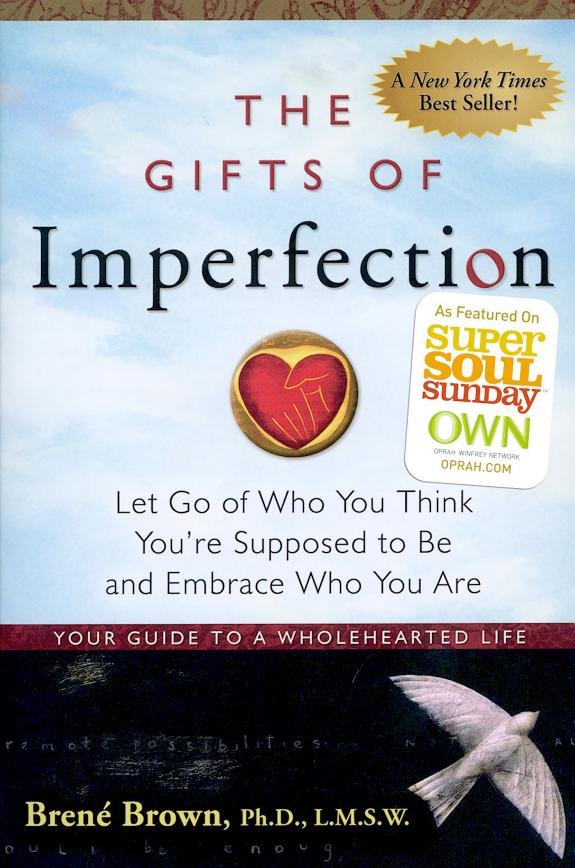
The Gifts of Imperfection: Let Go of Who You Think You’re Supposed to Be and Embrace Who You Are
2. The Gifts of Imperfection by Brené Brown
Brené Brown spent years as a shame researcher before she started writing for general audiences, and that academic background shows in the best possible way. The Gifts of Imperfection is built around what she calls Wholehearted living, a way of engaging with your life that starts with letting go of who you think you are supposed to be. That sounds like a bumper sticker until you read how she actually unpacks it. Brown is careful, specific, and consistently honest about the fact that she struggles with this stuff herself, which makes her a far more credible guide than someone who has already reached some imagined state of enlightenment.
The book is organized around ten guideposts, things like cultivating self-compassion, letting go of perfectionism, and practicing gratitude and joy without waiting for the other shoe to drop. Brown argues that guilt and shame thrive in the gap between who we are and who we think we should be, and that closing that gap requires not trying harder but actually releasing the exhausting project of self-improvement as a form of self-rejection. That reframe is one of the more quietly useful ideas in the book.
Brown’s writing style is conversational and occasionally funny in a self-deprecating way. She does not talk down to her readers, but she also does not assume everyone is ready to dive into deep psychological territory without some warmth and humor to ease the way. The book is relatively short, which is both a strength and a minor limitation. Some sections could benefit from more depth, and readers who want rigorous academic detail will want to supplement with her research papers. But as an entry point into shame resilience, it is genuinely accessible.
“Owning our story and loving ourselves through that process is the bravest thing we will ever do.”
This is perfect for people who are newer to thinking about shame and perfectionism, or for anyone who has tried to “fix” themselves through willpower alone and found it did not stick.
Self-Compassion: The Proven Power of Being Kind to Yourself
3. Self-Compassion: The Proven Power of Being Kind to Yourself by Kristin Neff
Kristin Neff is a psychology researcher at the University of Texas, and she essentially built the academic framework for self-compassion as a measurable, teachable skill. This book is the accessible version of that research, and it makes a compelling case that self-compassion is not self-pity, not self-indulgence, and not an excuse to stop caring about how you treat other people. It is, instead, the foundation from which genuine change and genuine accountability actually become possible. You cannot grow from guilt if you are too busy being destroyed by it.
Neff breaks self-compassion into three components: self-kindness, common humanity, and mindfulness. The common humanity piece is one of the most interesting and underrated parts of the book. The idea is that suffering and imperfection are not personal failures but shared human experiences, and recognizing that can dissolve some of the isolation that makes guilt so corrosive. When you believe your mistakes are uniquely shameful, you suffer alone. When you understand that everyone is stumbling around making a mess of things in their own way, something loosens.
The book includes exercises and meditations throughout, some of which feel a little awkward to do on your own if you are not already comfortable with that kind of practice. Neff is aware of this and addresses the resistance many people feel toward being kind to themselves, which she rightly notes can feel deeply uncomfortable, even threatening, for people who were raised to believe that self-criticism is the only responsible way to live. If you are the kind of person who finds it easier to comfort a friend than yourself, this book is essentially written for you.
“With self-compassion, we give ourselves the same kindness and care we would give to a good friend. The surprising result is that we become more, not less, motivated to do better.”
This is perfect for high achievers and chronic self-critics who have confused relentless self-judgment with personal responsibility, and who are ready to consider a different approach.
Forgive for Good: A Proven Prescription for Health and Happiness
4. Forgive for Good: A Proven Prescription for Health and Happiness by Fred Luskin
Fred Luskin is a researcher at Stanford who has spent decades studying forgiveness, including running forgiveness projects with people who survived some of the worst things human beings do to each other. This book is his attempt to bring that research into everyday life, and it addresses something that often gets tangled up with guilt: the question of forgiveness, both forgiving others and, crucially, forgiving yourself. The subtitle promises health and happiness, which sounds a bit clinical, but Luskin earns it by grounding every claim in actual data rather than wishful thinking.
One of the most useful concepts in the book is what Luskin calls the “grievance story.” This is the narrative we tell ourselves about being wronged, or about having done wrong, that we rehearse so often it starts to feel like our identity. He is not dismissive of real pain or real wrongdoing. He is simply pointing out that carrying a grievance story has measurable costs, physical ones, and that forgiveness is a skill you can develop rather than a gift that either arrives or does not. That reframing moves forgiveness out of the realm of the morally heroic and into the practical.
Luskin writes clearly and without unnecessary jargon, which makes the book easy to move through. Some readers find his tone a little brisk, particularly when dealing with serious trauma. He is careful to say that forgiveness does not mean excusing harm or reconciling with harmful people, but people who have experienced significant trauma may want to pair this book with something that spends more time on that nuance. For garden-variety guilt and resentment, though, this is one of the more grounded and practical books available.
“Forgiveness is the experience of peacefulness in the present moment. It does not require you to forget or condone. It requires you to stop letting the past run your present.”
This is perfect for people who understand intellectually that they need to let something go but have not yet found a practical method for actually doing it.
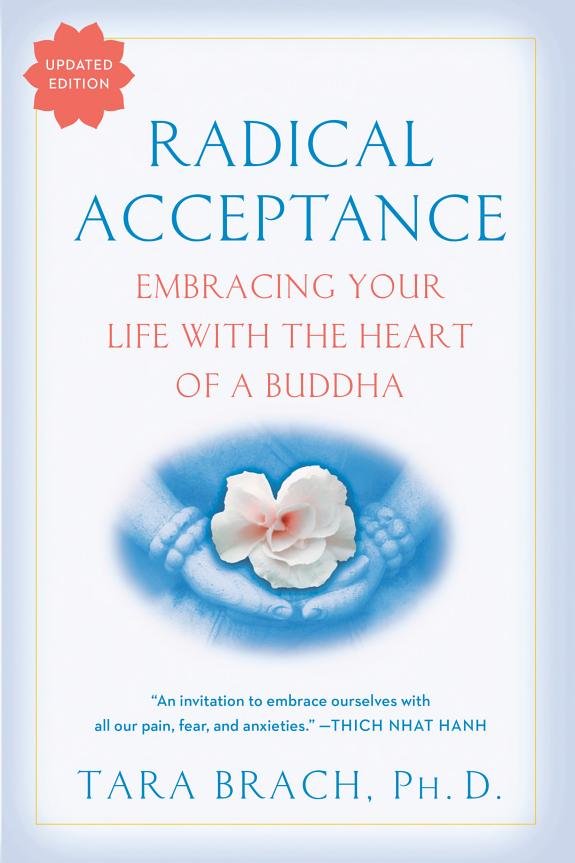
Radical Acceptance: Embracing Your Life With the Heart of a Buddha
5. Radical Acceptance: Embracing Your Life With the Heart of a Buddha by Tara Brach
Tara Brach is a psychologist and Buddhist meditation teacher, and this book sits comfortably at the intersection of both traditions. The central idea is that much of our suffering, including guilt, comes from what she calls the “trance of unworthiness,” a deeply ingrained sense that we are not okay as we are, that we need to earn our right to exist through productivity, goodness, or constant self-improvement. Radical acceptance is the antidote: not passive resignation, but a clear-eyed willingness to acknowledge reality, including our own mistakes, without adding a layer of self-condemnation on top.
Brach is a beautiful writer. The book opens with a story about a woman who spent years believing she was a bad person, and by the end of the first chapter, most readers will recognize something of themselves in that story. She weaves together Buddhist teachings, psychological insight, and personal anecdotes with a skill that makes complex ideas feel genuinely accessible. The chapters on working with painful emotions are particularly good, offering specific practices rather than just philosophy.
This book does have a spiritual dimension, and while Brach is careful not to require any particular religious belief, readers who are strongly averse to any meditation or mindfulness framing may find certain sections less useful. The pace is also slower and more contemplative than some of the other books on this list, which is either a feature or a limitation depending on what you are looking for. If you want to sit with ideas rather than race through them, Brach rewards that kind of reading.
“The boundary to what we can accept is the boundary to our freedom. When we stop fighting against our own experience, something in us begins to breathe again.”
This is perfect for readers who are drawn to contemplative or spiritual approaches and who want something that addresses guilt at a deeper level than behavioral strategies alone.
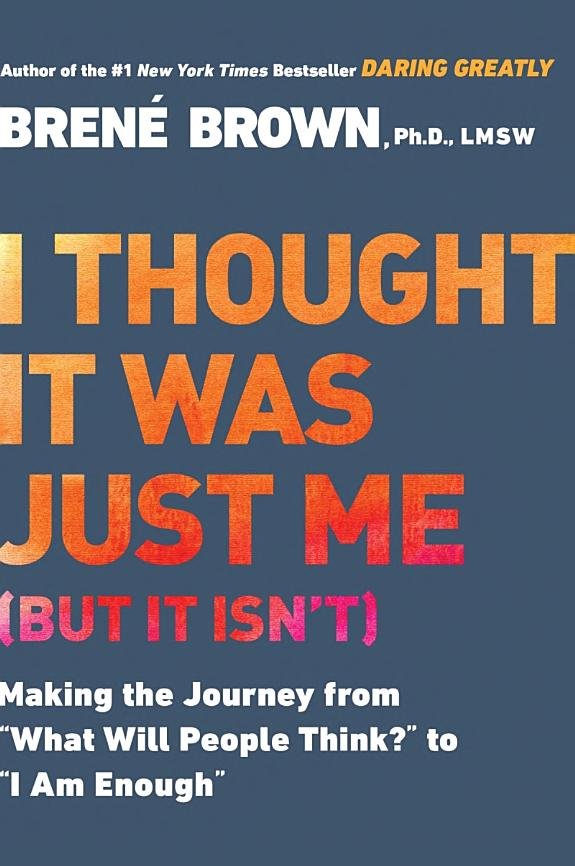
I Thought It Was Just Me (but it isn’t): Making the Journey from ‘What Will People Think?’ to ‘I Am Enough’
6. I Thought It Was Just Me (but it isn’t) by Brené Brown
This was actually Brené Brown’s first major book for general readers, written before The Gifts of Imperfection, and it goes considerably deeper into the mechanics of shame. Where her later work is more accessible and broadly appealing, this one is more focused and, in some ways, more rigorous. The full title tells you the core insight: shame thrives on secrecy and the belief that you are the only one who has felt this particular kind of terrible about yourself. The antidote, Brown argues, is connection and what she calls shame resilience, a set of skills for recognizing shame, moving through it, and reaching out rather than withdrawing.
Brown spent years interviewing women about their experiences of shame before writing this book, and that qualitative research gives it a texture that pure theory cannot match. The stories are specific and recognizable, covering everything from body image and motherhood to professional failure and sexuality. She organizes shame triggers into categories, which is genuinely useful because it helps readers identify the particular areas where they are most vulnerable. Knowing your own shame triggers is a significant part of being able to respond to them rather than just being swept away.
The book is primarily written with women in mind, and Brown is upfront about that. Men who read it will still find a great deal of value, but the examples and framing are drawn largely from women’s experiences. It is also worth knowing that this book asks more of the reader than The Gifts of Imperfection. It is longer, denser, and more emotionally demanding. That is not a criticism. It is just useful information for deciding when and how to read it.
“Shame is the intensely painful feeling or experience of believing that we are flawed and therefore unworthy of love and belonging. Guilt says I did something bad. Shame says I am bad.”
This is perfect for readers who want to understand the psychology of shame in real depth, particularly women who have felt isolated by experiences they assumed were uniquely their own failures.
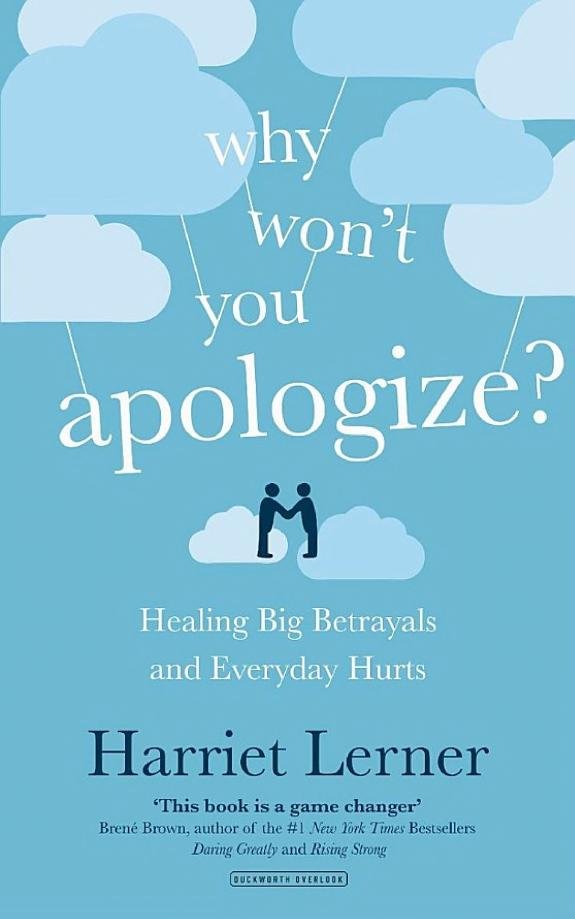
Why Won’t You Apologize?: Healing Big Betrayals and Everyday Hurts
7. Why Won’t You Apologize?: Healing Big Betrayals and Everyday Hurts by Harriet Lerner
Harriet Lerner is a clinical psychologist best known for The Dance of Anger, and this book tackles something that sits right at the intersection of guilt and relationships: the apology. Specifically, what makes an apology real, what makes one hollow, why some people cannot apologize to save a relationship, and what you do when someone who has hurt you refuses to acknowledge it. It is a book about guilt from a slightly different angle than the others on this list, examining it through the lens of accountability and repair rather than purely internal healing.
Lerner is a gifted explainer of human behavior. She writes about the difference between an apology that heals and one that is really just a performance designed to end the conversation, and she does so without being preachy. The chapters on over-apologizing are equally interesting. Some people apologize constantly, reflexively, for things that are not their fault, and Lerner examines how that habit develops and what it costs. If you find yourself apologizing for taking up space, for having needs, or for other people’s discomfort, she has a lot to say to you specifically.
The book is relatively short and reads quickly, which some readers will appreciate and others may find slightly unsatisfying. Lerner covers a lot of ground without always going as deep as you might want on any single topic. Still, the clarity of her thinking and the practicality of her advice make this one of the more useful books for anyone trying to navigate guilt in the context of a specific relationship or conflict. And honestly, the chapter on non-apologies, the “I’m sorry you felt that way” variety, is worth the price of the book on its own.
“A true apology does not include the word ‘but.’ It does not explain, minimize, or shift blame. It simply acknowledges the harm and takes responsibility for it.”
This is perfect for people working through guilt or hurt in the context of a specific relationship, or for anyone trying to understand why certain apologies feel like they make things worse instead of better.
Guilt and shame are not problems you solve once and put away. They are patterns, often old ones, that require patience and repeated attention. The books on this list will not do the work for you, but they will give you better tools and, perhaps more importantly, better company. Reading about these experiences has a way of making you feel less alone in them, which is not a small thing.
You do not have to read all seven at once. In fact, please do not. Pick the one that feels most relevant to where you are right now, sit with it, and let it do what good books do. There will be time for the others. The goal is not to consume information about guilt but to gradually, imperfectly, and with a fair amount of backsliding, stop letting it run the show.