
8 Books for Women Who Feel Invisible
There is a particular kind of exhaustion that comes from shrinking yourself for so long that you forget what your full size even looks like. Maybe you have been the one who speaks last in meetings, or not at all. Maybe you smile and say “I’m fine” so automatically that you have started to believe it. Maybe you have spent years making yourself easier to be around, quieter, smaller, less inconvenient, and somewhere along the way you started to wonder if anyone would notice if you simply disappeared.
These eight books will not fix everything. No book can do that, and any book that promises otherwise is lying to you. What these books can do is sit with you in that feeling of invisibility and then, slowly, help you trace it back to where it started. Some of them are research-backed and measured. Some are frank and a little irreverent. A few will make you cry on public transportation, which is always a fun experience. But all of them were written with women like you in mind, women who are tired of being overlooked and are quietly, stubbornly ready to stop cooperating with that arrangement.
Daring Greatly
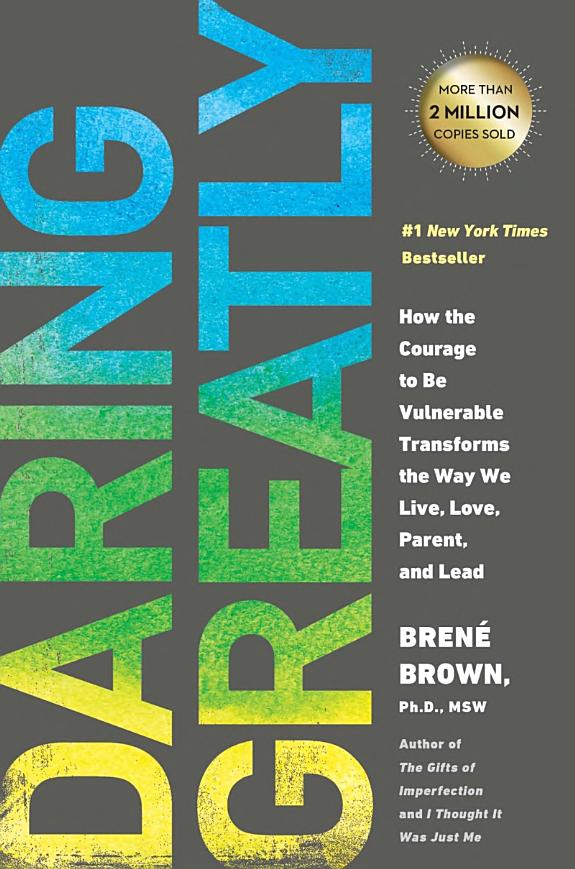
1. Daring Greatly by Brené Brown
Brené Brown spent years researching shame and vulnerability before she stood on a TED stage and changed the conversation about what it means to be human. “Daring Greatly” is the book that grew out of that research, and it asks a question that most of us have been quietly avoiding: what would happen if we stopped treating vulnerability as weakness and started treating it as the very thing that connects us to other people?
Brown’s voice is warm and direct, equal parts researcher and storyteller. She has a gift for taking concepts that feel abstract, like shame, worthiness, and belonging, and grounding them in real, recognizable moments. The chapter on the “vulnerability armory,” the various ways we protect ourselves from being seen, is particularly sharp. You will likely recognize yourself in more than one of those armor descriptions, which is uncomfortable and also oddly comforting.
The central argument is that invisibility is often self-imposed, not because we are weak but because we learned early that being seen was dangerous. Brown does not shame you for that. She simply makes a case, a fairly convincing one, that the cost of staying hidden is higher than the risk of showing up.
This is not a light read. Brown asks you to examine some uncomfortable patterns, and if you are in a season where you genuinely cannot handle that kind of excavation, it is okay to wait. The book will still be there.
“Vulnerability is not winning or losing; it’s having the courage to show up and be seen when we have no control over the outcome.”
This is perfect for women who suspect their invisibility is tied to a deep fear of judgment and are ready to start understanding where that fear came from.
You Are a Badass
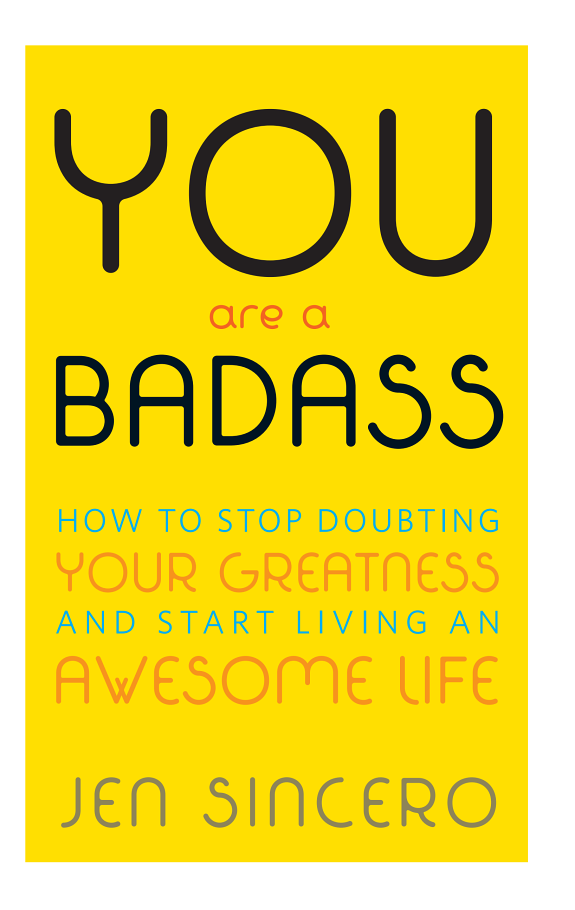
2. You Are a Badass by Jen Sincero
Jen Sincero does not have a lot of patience for hedging, and that energy comes through on every page of this book. “You Are a Badass” is self-help with its sleeves rolled up, casual and occasionally profane and entirely uninterested in being polite about the ways we hold ourselves back. If Brené Brown is your therapist, Sincero is your blunt friend who has had enough of watching you play small.
The book covers a lot of ground, from subconscious beliefs to money mindset to the mechanics of actually changing your life, and it does so in short, punchy chapters that are easy to read in stolen moments. Sincero’s own story, she was in her forties and sleeping in a garage before things turned around, gives the book a credibility that pure theory often lacks. She is not writing from a position of someone who has always had it figured out.
That said, this book leans heavily on the idea that your thoughts create your reality, and if that framework does not resonate with you, some sections will feel frustrating. The law of attraction elements are present and not subtle. Readers who prefer a more evidence-based approach may find themselves rolling their eyes at certain points, which is a perfectly valid response.
Where the book genuinely earns its reputation is in its refusal to be gentle about self-sabotage. Sincero names the internal monologue that keeps women invisible with a frankness that is, honestly, a little startling the first time you encounter it.
The conversation about why we stay small is often too polite. Sincero refuses to be polite, and that is exactly why it works for so many readers.
This is perfect for women who are tired of gentle nudges and need someone to speak to them with some real urgency about the stories they keep telling themselves.
Girl, Wash Your Face
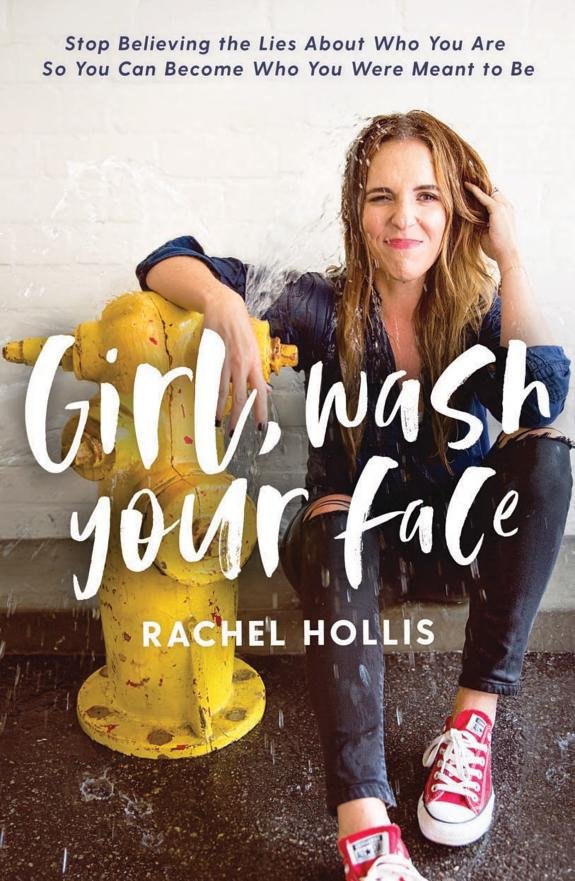
3. Girl, Wash Your Face by Rachel Hollis
Rachel Hollis wrote “Girl, Wash Your Face” as a collection of lies she had believed about herself, and the structure gives the book an immediacy that straight advice rarely achieves. Each chapter takes on one specific false belief, things like “I am not a good mom” or “I am defined by my weight,” and Hollis responds to each with a combination of personal story and practical pushback. It is conversational, fast-moving, and often funny in the self-deprecating way of someone who has made a lot of mistakes and is no longer embarrassed about them.
Hollis writes from a specific vantage point: she is a Christian, a entrepreneur, and a mother, and those identities shape the book considerably. Readers who share those identities will likely find her voice deeply relatable. Readers who do not may find that some chapters feel less universal than others. This is worth knowing going in, not as a criticism but as honest information about the book’s perspective.
The book has also received meaningful criticism since its publication, particularly around the ways some of its messaging oversimplifies systemic barriers. Hollis is talking about personal accountability, which is valuable, but the book does not engage much with the structural reasons why some women are made to feel invisible in ways that willpower alone cannot address. That gap is real and worth holding in mind as you read.
Still, for women who have been waiting for permission to take their own needs seriously, the directness of Hollis’s voice can feel like a hand extended across a table. She is not asking you to be perfect. She is asking you to stop lying to yourself about why you are not trying.
The book is most useful when read as one woman’s hard-won perspective rather than a universal prescription. Taken on those terms, it has a lot to offer.
This is perfect for women who grew up being told that putting themselves first was selfish and are ready to start questioning that particular piece of received wisdom.
The Gifts of Imperfection
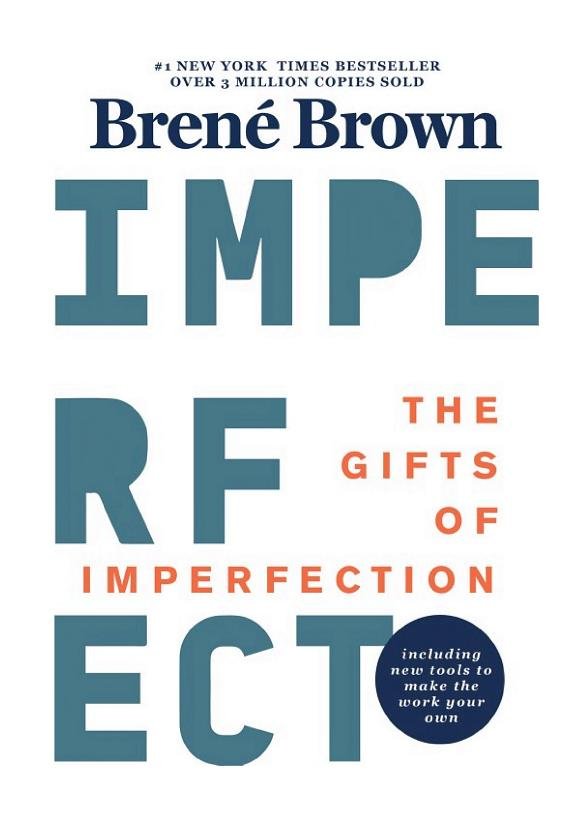
4. The Gifts of Imperfection by Brené Brown
If “Daring Greatly” is the argument, “The Gifts of Imperfection” is the practice. Brown organizes this book around ten guideposts for what she calls wholehearted living, and each one is a direct challenge to the perfectionism and people-pleasing that make so many women feel invisible. The writing is gentler here than in some of her other work, more like a conversation than a lecture, which makes it a good entry point for readers new to her ideas.
The chapter on the difference between fitting in and belonging is worth the price of the book on its own. Brown argues, with research to back her up, that fitting in actually requires you to suppress who you are, while true belonging requires you to be exactly who you are. For women who have spent years contorting themselves to be accepted, this distinction lands hard.
Brown is careful throughout to acknowledge that letting go of perfectionism is not a one-time decision. It is a daily, ongoing choice, and she does not pretend otherwise. That honesty makes the book feel trustworthy in a way that more triumphant self-help titles sometimes do not.
Readers looking for heavy data or clinical frameworks may find the book a little light. It is warm and accessible by design, and that accessibility is a feature, not a flaw, though it does mean the book sits closer to the inspirational end of the spectrum than the analytical one.
“Wholehearted living is about engaging with our lives from a place of worthiness. It means cultivating the courage, compassion, and connection to wake up in the morning and think, ‘No matter what gets done and how much is left undone, I am enough.'”
This is perfect for women who already understand intellectually that they are enough but need a book that helps them actually start living like it.
The Confidence Code
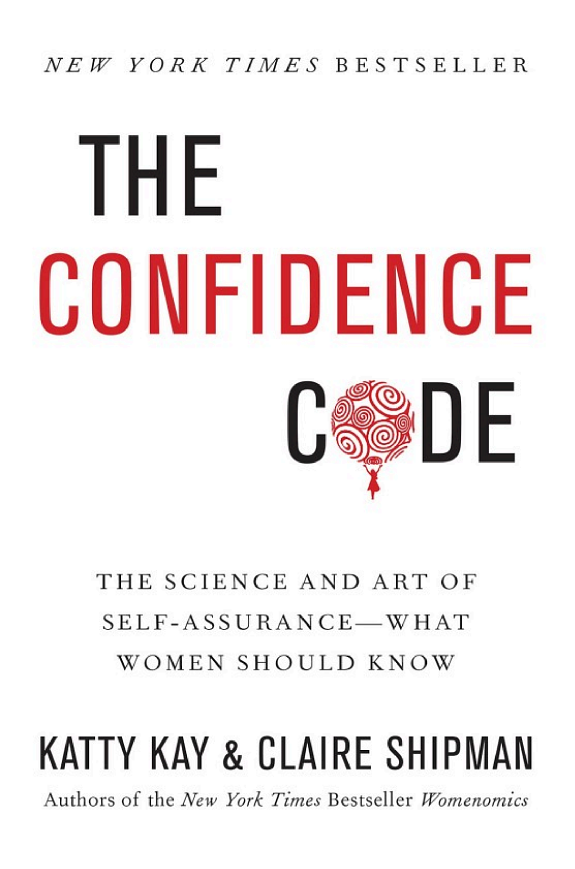
5. The Confidence Code by Katty Kay and Claire Shipman
Katty Kay and Claire Shipman are both accomplished journalists, and it shows in how they approach their subject. “The Confidence Code” is the most rigorously reported book on this list, drawing on interviews with scientists, psychologists, athletes, and politicians to ask a genuinely interesting question: why do women, even highly competent and successful ones, so often feel less confident than their male counterparts, and what can actually be done about it?
The research sections are absorbing. Kay and Shipman dig into genetics, brain science, and social conditioning without making any of it feel like a textbook. They are honest about the fact that some of the confidence gap has biological roots, but they are equally clear that biology is not destiny, and that the social and cultural pressures on women to be likable, agreeable, and undemanding do enormous damage to confidence over time.
One of the book’s more useful arguments is that confidence comes from action, not from feeling ready. Women, the authors find, tend to wait until they feel fully prepared before attempting something, while men tend to attempt things and let the doing build the confidence. This is not a moral failing. It is a pattern, and patterns can be interrupted.
The book is less useful for women dealing with deep-seated shame or trauma, as it operates more at the level of behavior and mindset than emotional healing. It is also, at times, quite focused on professional and career contexts, so if your sense of invisibility is more personal than professional, some chapters may feel less directly relevant.
The confidence gap is not a character flaw. It is the predictable result of being raised in a world that rewarded girls for being careful and boys for being bold.
This is perfect for women who want to understand the structural and scientific reasons behind their self-doubt before they start working to change it.
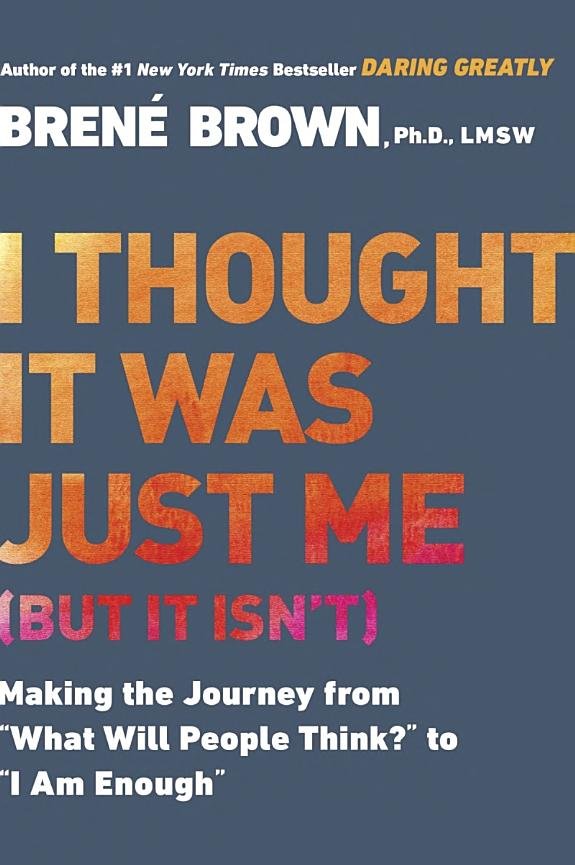
I Thought It Was Just Me (but it isn’t)
6. I Thought It Was Just Me (but it isn’t) by Brené Brown
This is the earliest of Brown’s major books, and in some ways it is the most focused. “I Thought It Was Just Me” is specifically about shame, what it is, how it works in women’s lives, and how to build resilience against it. The title captures something important: one of shame’s most effective tactics is convincing us that our experience is uniquely embarrassing, that everyone else has it together and we are the only ones falling apart. Brown’s research, drawn from hundreds of interviews with women, dismantles that illusion methodically.
The book is organized around the specific areas where women most commonly experience shame, things like appearance, motherhood, family, parenting, and professional competence, and Brown looks at each one with the same combination of research and story. The cumulative effect is significant. By the time you have read a few chapters, the isolation that shame depends on starts to loosen a little.
Brown introduces the concept of shame resilience here, a four-step process for recognizing shame, understanding it, reaching out, and speaking about it. It is practical without being prescriptive, and it gives the book a utility that some of her later, broader works trade away for scope.
This is probably the most emotionally demanding book on this list. Shame is not a comfortable topic, and Brown does not let you keep it at arm’s length. If you are in a fragile place, it may be worth having some support around you while you read it. That is not a warning against reading it. It is just honesty about what the book asks of you.
“Shame is the intensely painful feeling or experience of believing that we are flawed and therefore unworthy of love and belonging.” Understanding that definition is the first step to recognizing how much of your invisibility shame has authored.
This is perfect for women who have a nagging sense that something deeper than low confidence is keeping them hidden, and who are ready to look at shame directly.
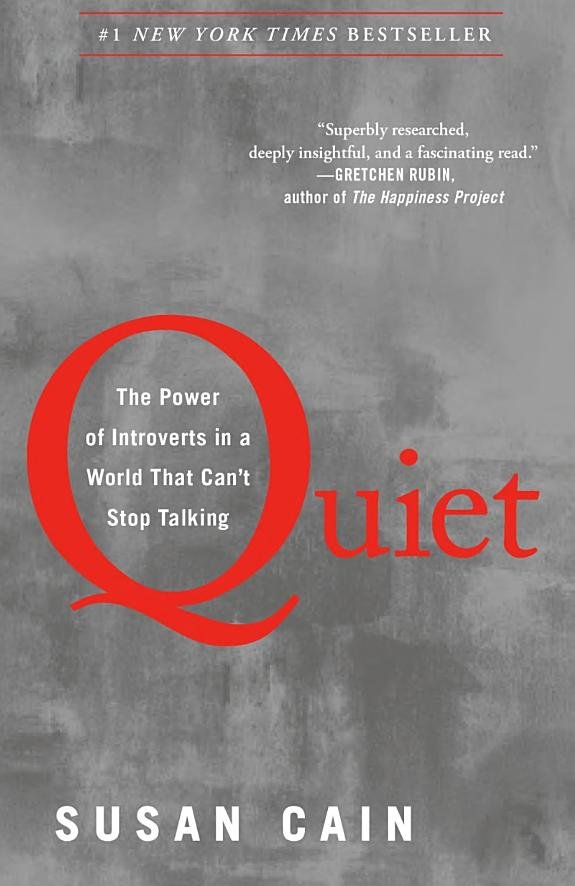
Quiet: The Power of Introverts in a World That Can’t Stop Talking
7. Quiet: The Power of Introverts in a World That Can’t Stop Talking by Susan Cain
For a certain kind of woman, the feeling of invisibility is not about shame or self-doubt in the conventional sense. It is about living in a culture that is structurally designed for a personality type that is not hers. Susan Cain’s “Quiet” is for that woman. It is a thorough, beautifully written examination of introversion, what it actually is, how it differs from shyness, and why a world that prizes extroversion above almost everything else has spent decades telling introverts that they are doing life wrong.
Cain is a researcher and a storyteller in roughly equal measure, and the book moves fluidly between neuroscience, history, and personal narrative. She traces the rise of what she calls the “Extrovert Ideal” in American culture and makes a compelling case that enormous amounts of talent, creativity, and wisdom are being suppressed because the people who carry them do not perform well in open-plan offices or group brainstorming sessions. The business world chapters are particularly sharp.
For introverted women specifically, this book can feel like finally being handed a document that explains your entire life. The relief of having your way of being in the world not just validated but rigorously defended is something many readers describe as genuinely significant. It is not a small thing to read a book that tells you the problem was never you.
Extroverts and ambiverts will still find the book interesting, but they are not its primary audience, and some sections may feel less personally urgent. The book is also more descriptive than prescriptive, so readers looking for a step-by-step action plan may find it a little light on that front.
The world has been telling quiet women to speak up, take up space, and perform extroversion. Cain’s book asks whether the world might instead consider making room for a different way of being brilliant.
This is perfect for introverted women who have spent years wondering what is wrong with them and are ready to discover that the answer is absolutely nothing.
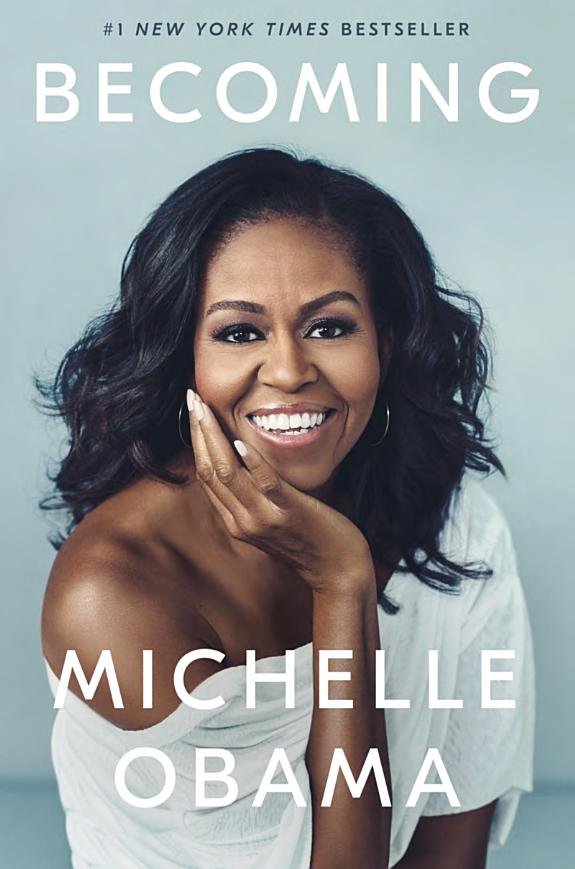
Becoming
8. Becoming by Michelle Obama
Michelle Obama’s memoir is the longest book on this list and earns every page. “Becoming” is not a self-help book in any conventional sense. It is a memoir, a careful and honest account of a life lived under extraordinary scrutiny, but it belongs on this list because of what it demonstrates rather than what it prescribes. Obama spent years being told, in various ways, that she was too much or not enough, too ambitious, too opinionated, not quite the right kind of representative figure, and she writes about navigating those messages with a clarity that is both generous and unflinching.
Her voice is one of the great pleasures of the book. She is warm without being saccharine, candid without being performative. The chapters about her childhood on the South Side of Chicago are as good as anything in contemporary memoir, and her account of the White House years, the loneliness, the constant negotiation of her own identity against a role that threatened to subsume it, is more honest than you might expect from someone who was, for eight years, one of the most visible women in the world.
The paradox at the heart of the book is interesting for women who feel invisible: Obama was hypervisible and still felt unseen in the ways that mattered. The external gaze, she suggests, is not the same as being truly known. That distinction is worth sitting with.
Readers who are looking for practical tools or structured frameworks will not find them here. This is a book you absorb rather than apply. But the experience of watching a woman move through doubt, pressure, and erasure and still arrive at something like herself is its own kind of instruction.
“Becoming” is a reminder that visibility is not the same as being known, and that the work of becoming yourself is ongoing, not a destination you reach and then stay at.
This is perfect for women who need to see, in careful and honest detail, what it looks like to hold onto yourself when the world has strong opinions about who you should be.
Every book on this list approaches invisibility from a slightly different angle, which is fitting, because the feeling itself arrives differently for different women. For some it is rooted in shame. For others it is the slow erosion of people-pleasing. For others still it is the simple fact of being introverted in a world that rewards loudness, or being a woman in spaces that were not designed with you in mind. There is no single explanation, and there is no single book that addresses all of it.
What these eight books share is a refusal to accept that invisibility is your permanent condition. They do not promise an easy fix, and the good ones are honest about how much work is involved. But they also make a case, collectively, that you are worth being seen. Not a future, improved version of you. The current one. The one reading this right now, probably with a cup of something warm and a faint sense that things could be different.
Start with whichever title pulled at you most. There is no wrong order. The only requirement is that you actually read it, which, given that you are here on a book blog, seems like a reasonable bet.