

7 Books for Self-Love and Confidence Worth Reading
There is a particular kind of afternoon when you catch your reflection and think something unkind, or when you shrink in a meeting you had every right to speak up in, and you wonder how other people seem to carry themselves so easily. Most of us have been there more times than we would like to admit. The good news is that writers, therapists, researchers, and people who have simply been through it have spent years putting their hard-won understanding into books, and some of those books are genuinely worth your time.
This list is not a collection of cheerful affirmations dressed up as literature. These seven books approach self-love and confidence from very different angles, ranging from neuroscience-backed self-talk to Buddhist psychology to blunt, funny coaching. Some will resonate immediately. Others might take a few chapters to click. What they share is a seriousness of purpose and a willingness to treat the reader as an adult who can handle real ideas. Pick the one that sounds most like what you actually need right now, and start there.

Love Yourself Like Your Life Depends On It
1. Love Yourself Like Your Life Depends On It by Kamal Ravikant
Kamal Ravikant wrote this book after hitting what he describes as a complete collapse, professionally and personally, and discovering that the single practice of repeating the phrase “I love myself” with genuine intention began to shift something fundamental in him. It sounds almost embarrassingly simple, and Ravikant is the first to acknowledge that. The book is short, barely a hundred pages, and it reads like a letter from someone who genuinely wants you to feel better rather than someone trying to build a brand.
The central argument is neurological as much as it is spiritual. Ravikant draws on the idea that the mind follows well-worn grooves, and that deliberately repeating a loving thought about yourself, consistently and with focus, starts to carve new ones. He pairs this with meditation and a practice of mentally noting when the old, critical loop kicks back in. It is not complicated. That is rather the point.
The writing is spare and direct, occasionally veering into territory that feels a little too earnest, but the sincerity is never in question. Ravikant is not performing wisdom here. He is sharing something that worked for him when nothing else did, and that vulnerability gives the book a quiet weight that longer, more elaborate self-help titles sometimes lack.
“If I loved myself truly and deeply, would I let myself experience this?” That one question, repeated honestly, does more work than most people expect.
This is perfect for readers who feel overwhelmed by lengthy self-help programs and want a single, focused practice they can start today, though those who prefer research-heavy frameworks may find the approach too minimal.
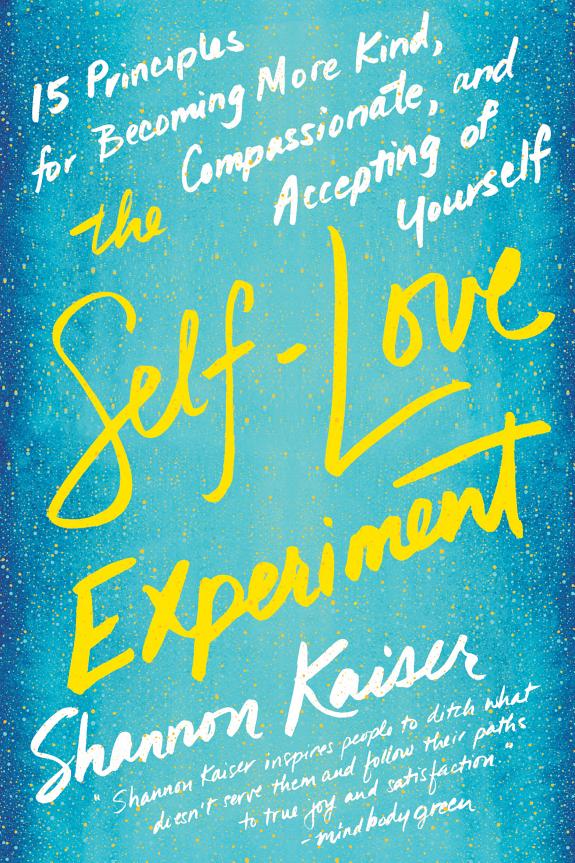
The Self-Love Experiment
2. The Self-Love Experiment by Shannon Kaiser
Shannon Kaiser structures this book around fifteen principles she developed after years of depression, addiction, and a persistent sense that she was fundamentally not enough. The premise is that self-love is not a destination you arrive at but a practice you return to, and the book is organized to reflect that, moving through principles like “stop comparing yourself” and “let go of what no longer serves you” with personal stories woven throughout.
Kaiser’s voice is warm and confessional, which will feel like a relief to some readers and a little too intimate to others. She is not shy about her own struggles, and that honesty gives the book credibility it might otherwise lack given how earnestly positive its tone can be. The practical exercises at the end of each chapter are genuinely useful, particularly the journaling prompts, which are specific enough to actually move the needle rather than leaving you staring at a blank page.
Where the book occasionally stumbles is in its tendency toward spiritual language that floats a bit free of any grounding. Phrases about the universe conspiring in your favor appear often enough to feel like a tic rather than a considered belief. Readers who are skeptical of that register may need to do some translation work as they go, extracting the practical core from the more New Age framing.
Choosing yourself is not selfish. It is, Kaiser argues, the only sustainable foundation for choosing anyone else well.
This is perfect for readers who connect with personal narrative and want structured exercises alongside the storytelling, though those who prefer secular, research-grounded approaches may find the spiritual framing a distraction.
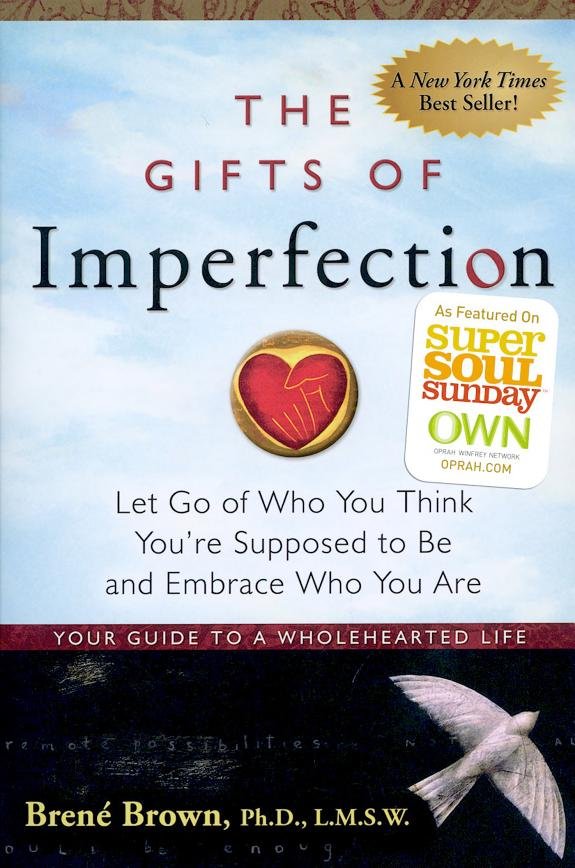
The Gifts of Imperfection
3. The Gifts of Imperfection by Brené Brown
Brené Brown spent years as a shame researcher before she became a household name, and that background shows in this book in the best possible way. “The Gifts of Imperfection” is built on actual qualitative research, thousands of interviews with people about what makes them feel worthy and what keeps them stuck in shame, and Brown has a gift for translating those findings into prose that feels personal rather than clinical.
The book is organized around ten guideposts for what Brown calls wholehearted living, each one asking the reader to let go of something, perfectionism, the need for certainty, the exhausting performance of having it all together, and cultivate something in its place. The chapter on cultivating rest and play is particularly good, and quietly radical for anyone who has spent years equating busyness with worth.
Brown’s writing is conversational and frequently funny in a dry, self-deprecating way that keeps the book from ever feeling preachy. She includes her own failures and resistances throughout, which is important because a book about letting go of perfectionism written by someone who appears to have everything figured out would be insufferable. This is not that book. It is honest about the ongoing nature of the work.
Worthiness, Brown insists, is not something you earn by achieving enough. It is something you practice believing before the evidence catches up.
This is perfect for high-achieving readers who suspect their drive is partly powered by shame and want a research-backed framework for understanding that, though those looking for quick tactical advice rather than deeper reflection may find it moves too slowly for them.
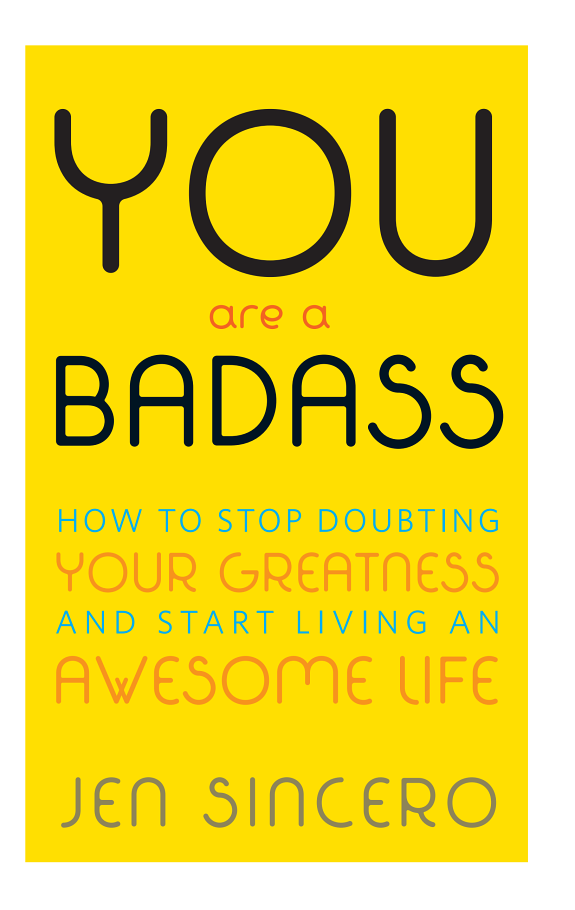
You Are a Badass
4. You Are a Badass by Jen Sincero
Jen Sincero is funny. That is the first thing to say about this book, because the humor is load-bearing. Without it, some of the content, which includes discussions of universal energy and getting clear on what you want so the universe can deliver it, would be difficult to take seriously. With it, the book is genuinely entertaining and, more importantly, it keeps you reading long enough for the useful parts to land.
Sincero’s central argument is that most people are living far below their potential not because they lack talent or opportunity but because of deeply ingrained subconscious beliefs about what they deserve. She wants you to identify those beliefs, decide they are nonsense, and start acting as though you are already the person you want to become. It is a version of the fake-it-till-you-make-it argument, but she makes a reasonably compelling case for why it actually works, drawing on both pop neuroscience and her own story of coaching herself out of financial ruin in her forties.
The book is not for people who want nuance. Sincero is not interested in complicated. She is interested in getting you unstuck, and she brings a cheerleader’s energy to that goal that can feel bracing or exhausting depending on your mood. The chapters are short, the exercises are direct, and the overall effect is a bit like being coached by a very enthusiastic friend who happens to have done a lot of personal development work.
The moment you decide your excuses are less interesting than your potential is, Sincero suggests, the moment things actually start to change.
This is perfect for readers who respond well to direct, irreverent encouragement and want to shake themselves out of a rut, though those who are skeptical of law-of-attraction thinking or who prefer careful, evidence-based arguments will find it frustrating.
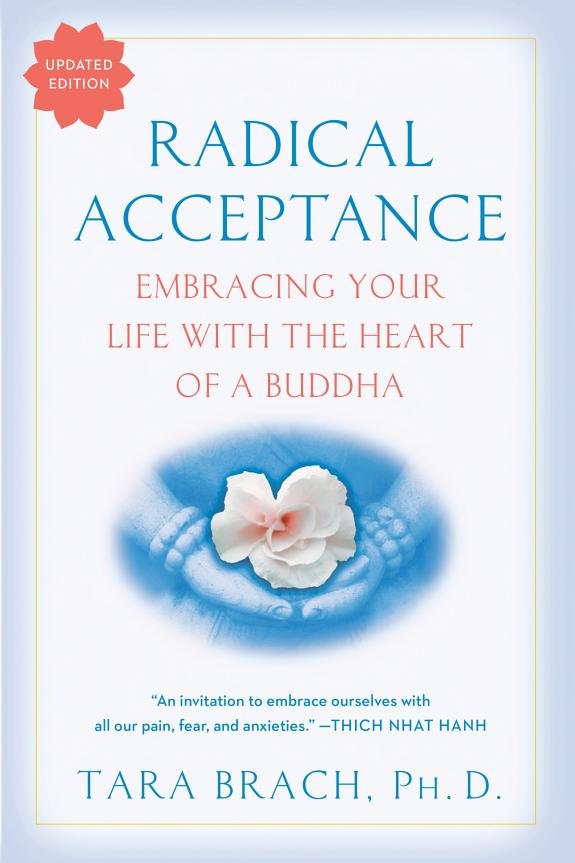
Radical Acceptance
5. Radical Acceptance by Tara Brach
Tara Brach is a psychologist and a Buddhist meditation teacher, and this book sits at the intersection of those two disciplines in a way that feels natural rather than forced. The central concept, radical acceptance, means meeting whatever is happening in your inner life with full presence and without judgment. Not fixing it, not pushing it away, not explaining it. Just meeting it. That sounds passive, but Brach makes a careful case for why it is actually the opposite of resignation.
The book opens with what Brach calls the trance of unworthiness, her term for the near-universal human experience of feeling fundamentally flawed or not enough. She traces this through Buddhist teaching and through the stories of her therapy clients, many of which are moving in a quiet, unhurried way. The writing is gentle without being soft. Brach is willing to sit with difficult material, grief, shame, fear, without rushing toward resolution, and that patience is itself a kind of teaching.
Meditation instructions are woven throughout, and they are among the clearest and most accessible you will find outside a dedicated meditation manual. You do not need any prior practice to follow them, though readers who already meditate will likely find they deepen an existing understanding. This is a slower book than most on this list, meant to be read in pieces rather than consumed in a weekend, and it rewards that kind of attention.
“The boundary to what we can accept is the boundary to our freedom,” Brach writes, and it is the kind of sentence that sits with you for days.
This is perfect for readers drawn to contemplative practice who want to address self-criticism at its psychological and spiritual roots, though those who prefer action-oriented frameworks or who have no interest in meditation may find the pace and approach too inward-facing.
What to Say When You Talk to Your Self
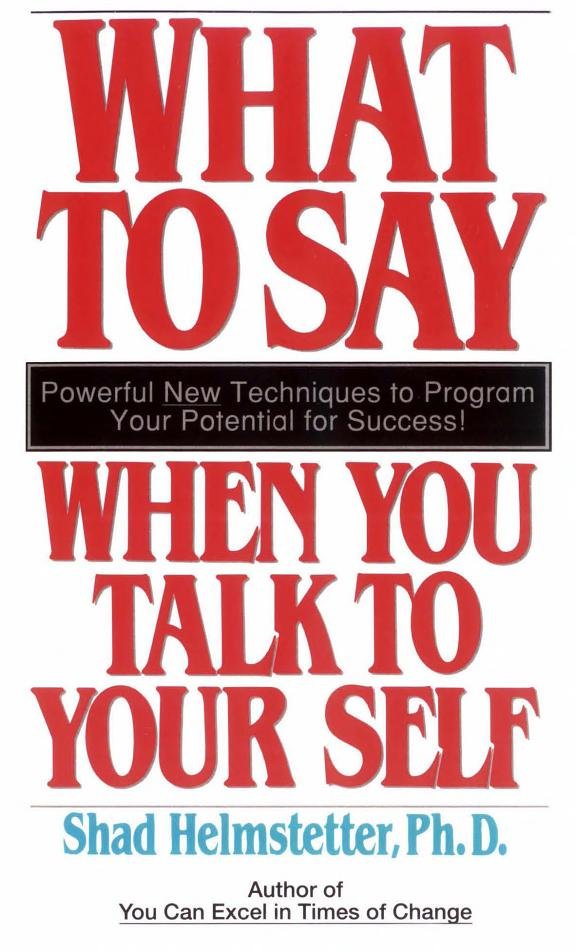
6. What to Say When You Talk to Your Self by Shad Helmstetter
Shad Helmstetter published this book in 1986 and it has never really gone away, which tells you something. The core idea is straightforward: the internal monologue most people run is largely negative, largely inherited from childhood, and largely responsible for keeping them stuck. Helmstetter argues that you can deliberately reprogram that inner voice through consistent, specific self-talk scripts, and he provides a great deal of practical detail about how to do that.
The neuroscience Helmstetter references has been updated and expanded considerably since the eighties, but the fundamental claim, that the brain responds to repeated input and that you can use that to your advantage, has held up reasonably well. The book is not flashy. The writing is plain and methodical, more instruction manual than personal essay, which will suit some readers perfectly and bore others to tears. Helmstetter is not trying to entertain you. He is trying to give you a usable system.
What distinguishes this from simpler affirmation books is the specificity. Helmstetter breaks self-talk into levels, from negative statements to positive commands to statements about the future you are building, and he explains why certain formulations work better than others. The sample scripts in the back of the book are dated in their cultural references but still functional, and most readers will want to write their own versions anyway, which he encourages.
You will become what you most consistently tell yourself you are. Helmstetter’s contribution is making that principle concrete enough to actually act on.
This is perfect for practically minded readers who want a specific, repeatable method for changing their internal dialogue, though those hoping for narrative depth or emotional resonance will find the workbook-style approach unsatisfying.
Feel the Fear and Do It Anyway
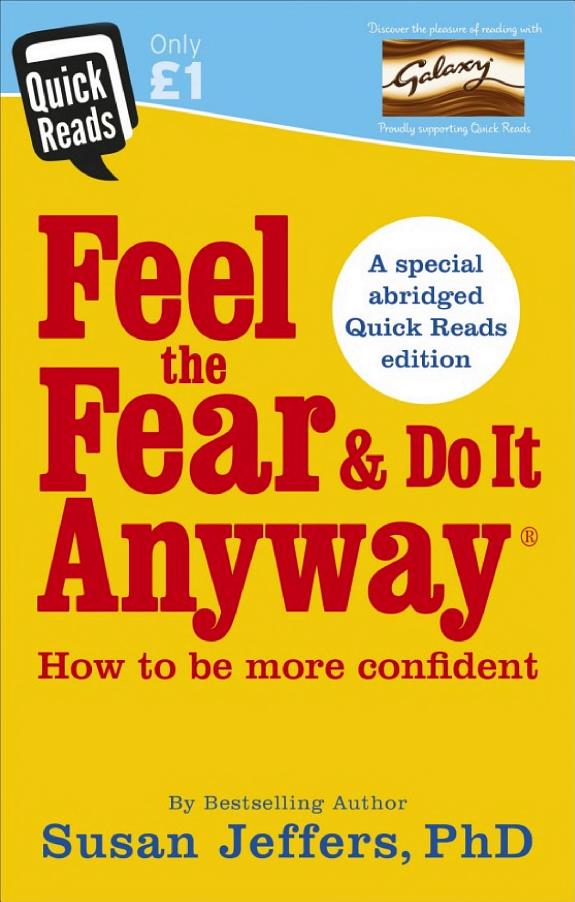
7. Feel the Fear and Do It Anyway by Susan Jeffers
Susan Jeffers wrote this book after her own experience of fear keeping her paralyzed, and the title contains the whole argument in six words. The insight is not that fear goes away when you become confident, but that confidence is built precisely by moving forward while the fear is still present. That reframe is simple, but for many readers it is genuinely releasing, because it stops confidence from being a prerequisite and makes it a consequence.
Jeffers identifies five truths about fear that anchor the book, including the idea that everyone feels fear when entering unfamiliar territory and that pushing through fear is less frightening than living with helplessness. She is a clear, friendly writer, not academic, not particularly literary, but direct and warm in a way that makes the book easy to spend time with. The chapters move quickly and the exercises are low-barrier enough that you might actually do them rather than just nodding along.
The book’s weakness is also its strength: it is optimistic to a fault. Jeffers is committed to the idea that you can handle whatever comes, and she says so repeatedly, which is encouraging the first few times and occasionally feels like a chant by the end. Readers going through genuinely acute grief or trauma may find that the “you can handle it” message lands as dismissive rather than empowering. For most situations, though, it is a useful corrective to the catastrophizing that fear tends to encourage.
“The fear will never go away as long as I continue to grow.” That single line reframes fear from a sign that something is wrong to a sign that something is right.
This is perfect for readers who know intellectually what they want to do but keep finding reasons to wait until they feel ready, though those dealing with clinical anxiety or significant trauma would benefit more from working with a therapist alongside or instead of this book.
Seven books, seven genuinely different approaches to the same underlying question: how do you start treating yourself like someone worth caring about? Some of these books will click for you immediately. Others might not be right for where you are today but could matter enormously in a year. That is how it tends to work with books about inner life. They find you when you are ready for them.
If you are not sure where to start, consider what you actually need most right now. If you want a simple daily practice, Kamal Ravikant. If you want research and framework, Brené Brown. If you want to understand your fear rather than outrun it, Susan Jeffers or Tara Brach. If you want someone to tell you to stop waiting and start moving, Jen Sincero is right there waiting to oblige. The right book is the one you will actually read, so pick the one that sounds most like a conversation you want to have, and begin.