

8 Books That Build Real Self-Discipline
Self-discipline is one of those things everyone wants more of and almost nobody feels they have enough of. You set the alarm for 6am, you hit snooze four times, and then you spend the rest of the day quietly negotiating with yourself about whether you really need to do that thing you said you would do. Sound familiar? It does to most of us.
The good news is that discipline is not some fixed personality trait you either have or you don’t. It is a skill, and like any skill, it can be studied, practiced, and slowly built up. The eight books below approach that challenge from different angles, from military grit to neuroscience to the quiet power of small daily choices. Some are intense and demanding. Some are surprisingly gentle. All of them have something worth taking seriously.
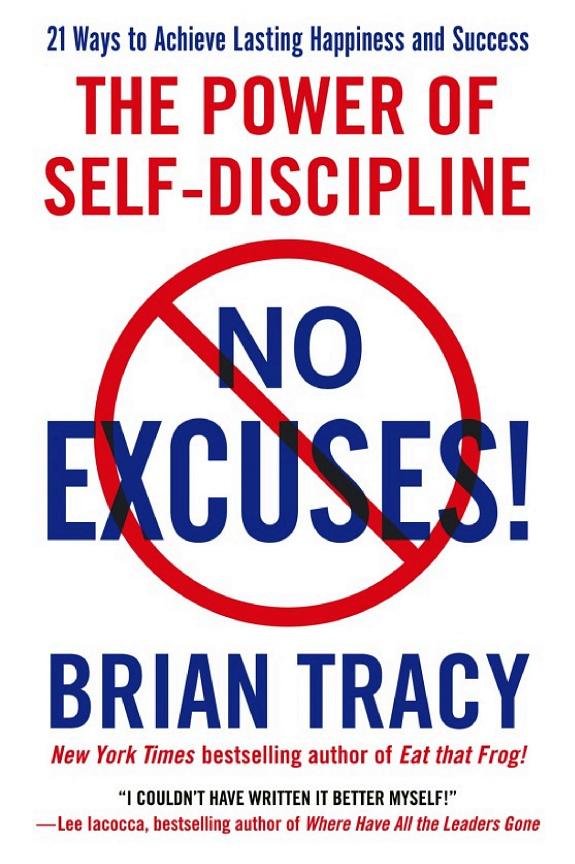
No Excuses!: The Power of Self-Discipline
1. No Excuses!: The Power of Self-Discipline by Brian Tracy
Brian Tracy has been writing and speaking about personal success for decades, and this book is one of his most direct. The core argument is simple: the willingness to delay gratification and do what needs to be done, regardless of how you feel in the moment, is the single most reliable predictor of long-term success. Tracy is not interested in nuance for its own sake. He wants you to stop making excuses and start moving.
The book is structured around different areas of life, work, finances, relationships, health, and it applies the discipline framework to each one. Tracy’s voice is confident and a little old-school, which some readers will find refreshing and others will find a bit much. He is not here to be your friend. He is here to tell you that you already know what to do and you are just not doing it.
Where Tracy excels is in stripping away the psychological complexity that can sometimes become its own form of procrastination. Not every book about discipline needs to cite fourteen studies. Sometimes you just need someone to say, clearly and without fuss, that the path forward requires showing up and doing the work. This book does that well.
Tracy’s greatest contribution here is the reminder that self-discipline is not about punishment. It is about choosing your future self over your present comfort, consistently and without drama.
This is perfect for readers who want a no-nonsense, practical framework for building discipline across every area of life, though it may feel too straightforward for those who prefer a more research-heavy or nuanced approach.
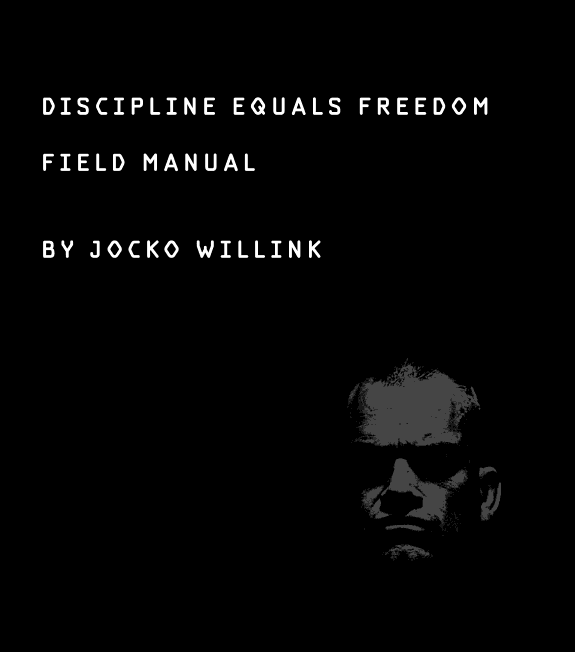
Discipline Equals Freedom: Field Manual
2. Discipline Equals Freedom: Field Manual by Jocko Willink
Jocko Willink is a former Navy SEAL commander, and this book reads exactly like you would expect from that background. It is blunt, intense, and designed to be picked up and put down quickly, like a manual rather than a narrative. The central idea, that discipline is not a restriction but the very thing that sets you free, is stated early and repeated often. Jocko means it every single time.
The writing style is short, punchy, and deliberately stripped of softness. Some sections are only a paragraph long. Others are a single sentence. There is a visual boldness to the layout that matches the tone. This is not a book you settle into with a cup of tea on a rainy afternoon. It is a book you read when you need someone to look you in the eye and tell you to get off the couch.
It is worth being honest about who this book is not for. If you are looking for compassion, complexity, or a gentle on-ramp, Jocko is not your guy. The book assumes you are capable of more than you are currently doing, and it does not apologize for that assumption. For the right reader, that directness is exactly what works. For others, it can feel more like a shout than a conversation.
The book’s real insight is that waiting to feel motivated is a trap. Discipline is what you fall back on when motivation has gone home for the evening.
This is perfect for readers who respond well to intensity and brevity, and who want a short, sharp book they can return to on difficult mornings, though those seeking warmth or scientific backing will want to look elsewhere.

Can’t Hurt Me: Master Your Mind and Defy the Odds
3. Can’t Hurt Me: Master Your Mind and Defy the Odds by David Goggins
David Goggins grew up in poverty, survived abuse, struggled with obesity, and went on to become a Navy SEAL, Army Ranger, and one of the most accomplished endurance athletes in the world. His story is not comfortable reading, and it is not meant to be. This memoir, co-written with Adam Sculner, is part autobiography and part challenge to the reader to stop accepting a diminished version of their own potential.
What separates Goggins from other voices in this space is the rawness. He is not presenting a polished success story. He is showing you the ugliness of the process, the self-doubt, the physical suffering, the moments of wanting to quit, and then showing you what it looks like to push through anyway. Each chapter ends with a practical challenge, which is an unusual structure that actually works. It keeps the book from becoming pure spectacle.
The concept of the “40% rule,” the idea that when your mind tells you you are done, you are actually only about 40% of the way to your real limit, is the kind of idea that sticks with you long after you close the book. Whether you buy it entirely or not, it reframes how you think about discomfort. This book is not for sensitive readers or those who find extreme physical challenges alienating. It is deliberately, almost defiantly, extreme.
Goggins does not argue that suffering is good. He argues that your relationship with difficulty is the thing standing between you and everything you say you want.
This is perfect for readers who want a visceral, personal account of building mental toughness from the ground up, though those put off by intense physical culture or a confrontational tone will find it a difficult read.
The Willpower Instinct: How Self-Control Works, Why It Matters, and What You Can Do to Get More of It
4. The Willpower Instinct: How Self-Control Works, Why It Matters, and What You Can Do to Get More of It by Kelly McGonigal
Kelly McGonigal is a health psychologist at Stanford, and this book grew out of a course she taught there on the science of self-control. If the previous two books are a cold shower, this one is the explanation of why cold showers work. McGonigal draws on psychology, neuroscience, and behavioral economics to build a genuinely useful picture of how willpower functions in the brain and why it so reliably fails us at the worst moments.
One of the book’s most valuable contributions is its honesty about the limits of willpower as a resource. Rather than treating self-discipline as a moral virtue you either have or lack, McGonigal frames it as something that depletes and recovers, that is influenced by sleep, stress, and blood sugar, and that can be strengthened with specific practices. That reframing alone is worth the read for many people who have spent years blaming themselves for failures that were partly physiological.
The structure follows a ten-week course format, with each chapter building on the last. This makes it unusually practical for an academic-leaning book. McGonigal writes with warmth and clarity, which is not always a given when scientists write for general audiences. The humor is dry and well-placed. This is not a book for readers who want inspiration without explanation. It is for people who want to understand the mechanism, not just be told to try harder.
McGonigal’s key insight is that self-compassion, not self-criticism, is what actually helps you recover from failure and keep going. That runs counter to a lot of conventional discipline advice, and the research backs her up.
This is perfect for readers who want a science-based understanding of willpower and self-control, though those looking for motivational fire rather than psychological explanation may find the tone a little too measured.
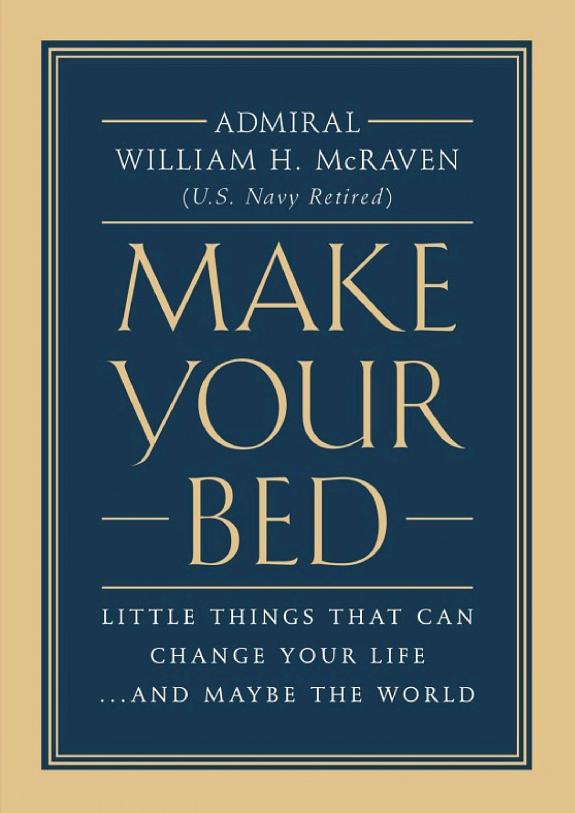
Make Your Bed: Little Things That Can Change Your Life…And Maybe the World
5. Make Your Bed: Little Things That Can Change Your Life…And Maybe the World by Admiral William H. McRaven
This book began as a commencement address at the University of Texas in 2014, and if you have not watched the original speech, it is worth doing before or after you read this. Admiral McRaven draws on his decades of military service, including his role in overseeing the Navy SEAL raid that resulted in the death of Osama bin Laden, to offer ten lessons about discipline, resilience, and the importance of small actions done well.
The central metaphor, making your bed every morning as the first act of order and intention in your day, is deceptively simple. McRaven is not actually arguing that a tidy bed will fix your life. He is arguing that the habit of completing tasks, of following through on even the smallest commitments to yourself, builds a kind of internal reliability that compounds over time. It is a short book and a quick read, which is part of its charm.
McRaven’s voice is steady, dignified, and occasionally moving. He tells stories from SEAL training that are harrowing without being gratuitous, and he draws lessons from them that feel earned rather than forced. The book is not deeply analytical. It does not need to be. It is a distillation of a life’s worth of experience into something a person can hold in one sitting and carry with them afterward.
The book’s quiet argument is that discipline starts not with grand gestures but with the smallest acts of integrity you perform when nobody is watching.
This is perfect for readers who want a brief, warm, and story-driven take on discipline and resilience, though those seeking data, research, or lengthy practical frameworks will need to supplement it with something more detailed.
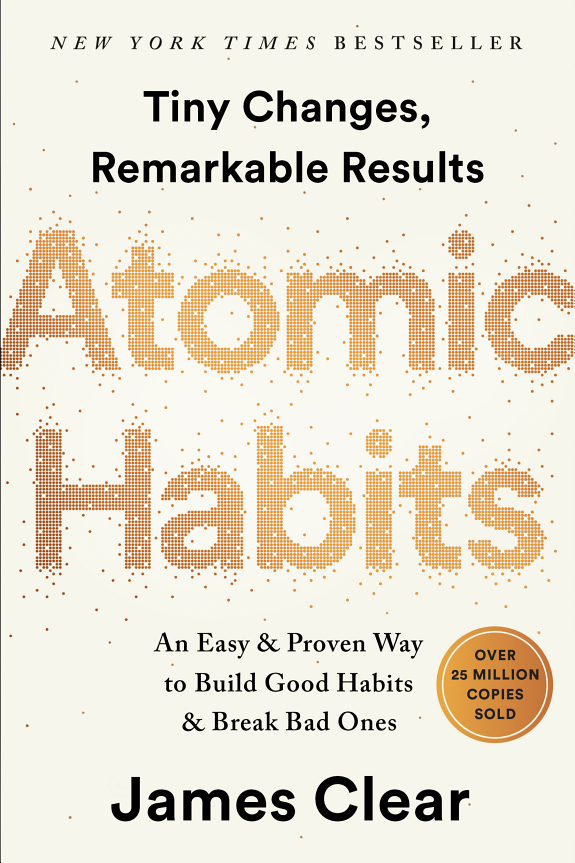
Atomic Habits: An Easy & Proven Way to Build Good Habits & Break Bad Ones
6. Atomic Habits: An Easy & Proven Way to Build Good Habits & Break Bad Ones by James Clear
James Clear spent years studying the science of habit formation and distilled it into a book that manages to be both highly readable and genuinely useful. The central argument is that dramatic results rarely come from dramatic actions. They come from tiny behaviors, repeated consistently over time, that accumulate into something significant. Clear calls these atomic habits, small enough to seem almost trivial, but potent precisely because of that smallness.
The framework Clear builds around the habit loop, cue, craving, response, and reward, is not entirely new territory, but his contribution is in how clearly and practically he explains how to work with it. He is particularly good on the idea of identity-based habits, the notion that lasting change comes not from setting goals but from deciding who you want to be and then casting small votes for that identity every day. That reframe is genuinely useful and not just clever wordplay.
The book is well-organized, well-paced, and full of concrete examples. Clear has a talent for finding the right story to illustrate a point without letting the storytelling overwhelm the substance. It is not a book for people who already have their habits dialed in and are looking for advanced strategies. It is a book for people who keep trying and failing to change their behavior and want to understand why, and what to do differently.
Clear’s most important point may be this: you do not rise to the level of your goals. You fall to the level of your systems. That single idea reframes almost every conversation about discipline.
This is perfect for readers who want a practical, research-informed guide to building better habits and breaking destructive ones, though those already deeply familiar with habit science may find parts of it cover familiar ground.
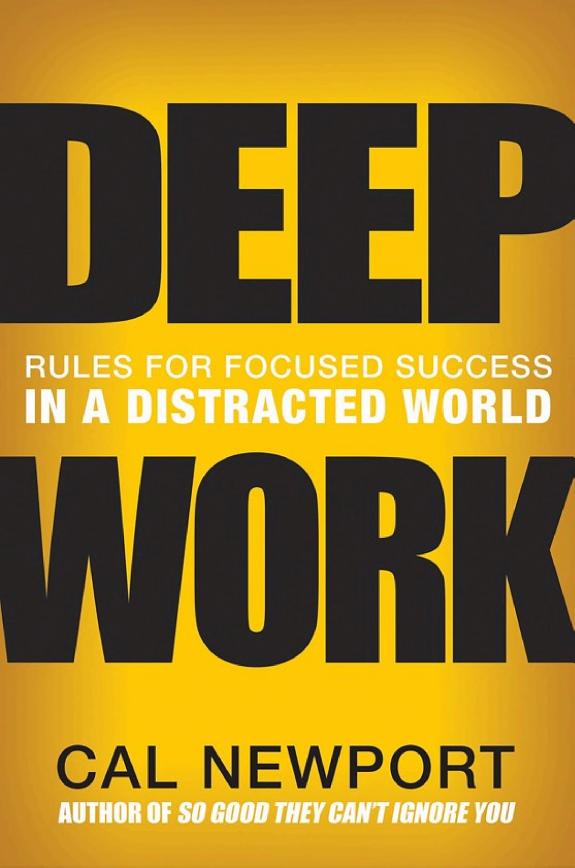
Deep Work: Rules for Focused Success in a Distracted World
7. Deep Work: Rules for Focused Success in a Distracted World by Cal Newport
Cal Newport is a computer science professor who does not have social media accounts and has thought very carefully about why that matters. Deep Work is built around the idea that the ability to focus without distraction on a cognitively demanding task is both increasingly rare and increasingly valuable. Newport argues that most of us have let our capacity for sustained concentration quietly erode, and that rebuilding it is one of the most worthwhile things a person can do.
The book is divided into two parts. The first makes the case for deep work, drawing on examples from history and the modern economy to argue that shallow, fragmented work is not just less productive but actively harmful to the quality of your thinking. The second part offers concrete strategies for restructuring your days around deep work, from scheduling philosophy to the management of digital distractions. Newport is precise and methodical, which suits the subject perfectly.
What Newport brings to the discipline conversation that others do not is a focus on the environment and structure of work rather than just the individual’s willpower. He is not asking you to simply try harder. He is asking you to design your life so that deep work becomes the default rather than the exception. That is a more sustainable approach than most. It is worth noting that Newport’s examples skew heavily toward knowledge workers and academics. If your work is primarily physical or relational, some sections will feel less relevant.
Newport’s argument that distraction is not a personal failing but a structural problem with modern work culture is both honest and quietly liberating. The solution, however, still requires real discipline to implement.
This is perfect for knowledge workers, writers, students, and anyone whose best work requires long stretches of uninterrupted thinking, though those in roles that demand constant communication and responsiveness may find the prescriptions difficult to apply directly.
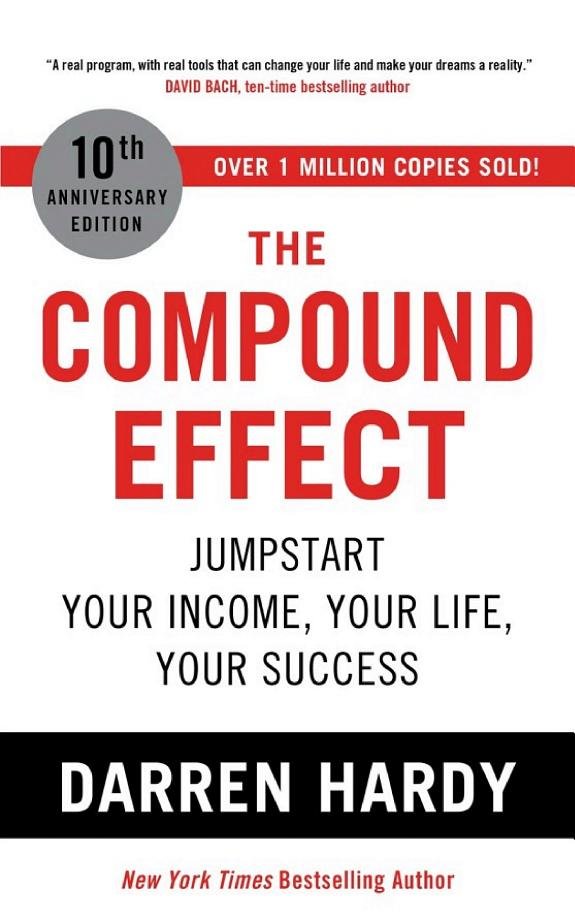
The Compound Effect: Jumpstart Your Income, Your Life, Your Success
8. The Compound Effect: Jumpstart Your Income, Your Life, Your Success by Darren Hardy
Darren Hardy, the former publisher of SUCCESS magazine, builds this book around one central and underappreciated truth: small, consistent actions compounded over time produce results that look almost magical from the outside but are completely logical from the inside. The compound effect is not a secret. It is just slow enough that most people give up before they see it working.
Hardy is a good storyteller and a practical thinker. The book moves quickly and is full of examples drawn from business, health, and relationships that illustrate how the same principle applies across every domain. He is particularly effective on the hidden cost of small negative habits, the daily choices that seem inconsequential in the moment but quietly accumulate into significant problems over months and years. That section alone tends to make readers a little uncomfortable, which is exactly the point.
The tone is motivational without being hollow, which is a harder balance to strike than it sounds. Hardy does not pretend the process is easy or fast. He is honest that the compound effect requires patience, and that patience is the hardest part. The book does not break new scientific ground, and readers looking for rigorous research will want to pair it with something like McGonigal’s work. But as a clear, energizing articulation of why consistency beats intensity, it earns its place on this list.
The book’s most honest moment is its acknowledgment that the compound effect works equally well in the wrong direction. Every small bad habit is also compounding. That is not a comfortable thought, but it is a useful one.
This is perfect for readers who want an accessible, story-driven case for the power of small consistent choices, though those seeking academic rigor or entirely new frameworks will want to treat it as inspiration rather than instruction.
These eight books do not all agree with each other, which is actually one of the things that makes reading them together worthwhile. Goggins and Jocko will tell you to push through discomfort without much ceremony. McGonigal will tell you that beating yourself up after failure makes the next failure more likely. Tracy will hand you a framework and tell you to use it. Newport will ask you to redesign your environment. All of them are right about something, and none of them are right about everything.
The best approach is to find the voice that speaks to how you actually work, not how you wish you worked, and start there. Self-discipline is not a personality trait reserved for exceptional people. It is a practice, built slowly, lost occasionally, and rebuilt again. Any of these books can be a reasonable place to start that work.