7 Books That Help You Stop Self-Sabotaging
There is a particular kind of frustration that comes from watching yourself do it again. You know the thing. The deadline you let slip by. The relationship you quietly ruined. The goal you abandoned right when it started to feel real. Self-sabotage is one of those topics that sounds like therapy-speak until you recognize it in yourself at two in the morning, staring at the ceiling, wondering why you keep doing this.
The good news is that a lot of very thoughtful people have written about this problem, and some of them have written about it brilliantly. The books on this list approach self-sabotage from different angles, including habit science, psychology, creativity, vulnerability, and neuroscience. Not all of them will speak to you equally, and that is fine. Reading is personal. But somewhere in this list, there is probably a book that will make you feel genuinely seen, and then give you something useful to do about it.
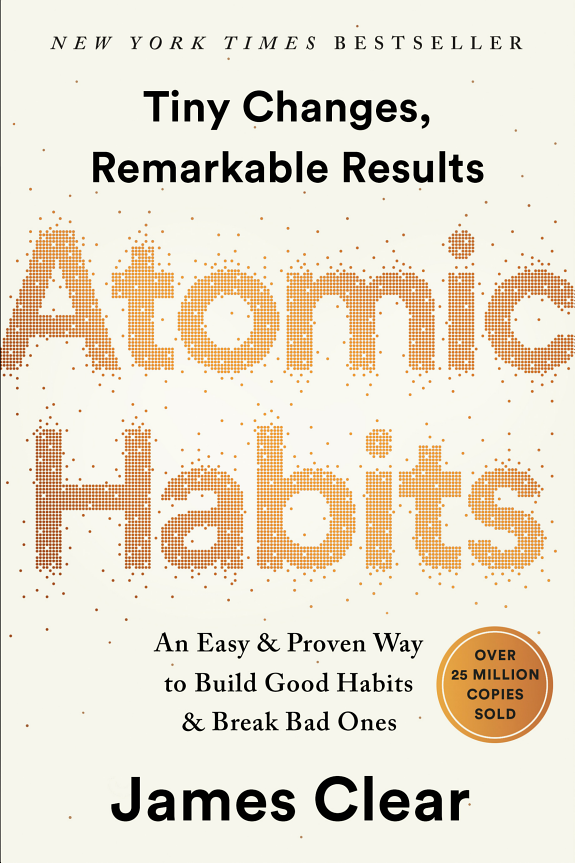
Atomic Habits
1. Atomic Habits by James Clear
James Clear is not a psychologist or a neuroscientist. He is a writer who got very serious about understanding why small behaviors compound into big outcomes, and the result is one of the most readable books on behavior change published in the last decade. Atomic Habits does not frame self-sabotage as a character flaw. Instead, Clear argues that the systems around you are producing exactly the results they are designed to produce, which means if you keep undermining yourself, your environment and your habits are quietly working against you.
The central idea here is deceptively simple: you do not rise to the level of your goals, you fall to the level of your systems. Clear walks through how habits are formed, why they stick, and how tiny adjustments in cues, cravings, responses, and rewards can shift your default behavior over time. He draws on research without drowning you in it, and his writing has a calm, practical quality that keeps the book from feeling preachy. The two-minute rule alone has probably saved more people from procrastination than any motivational speech ever delivered.
Where Atomic Habits earns its place on this list specifically is in its treatment of identity. Clear makes the case that lasting change requires you to stop asking what you want to achieve and start asking who you want to become. Self-sabotage, in his framework, often happens because your actions are out of alignment with the identity you actually hold about yourself. You say you want to write a novel but you identify as someone who is not really a writer. Of course the habit falls apart.
If you are looking for deep emotional excavation or want to understand the psychological roots of your patterns, this book will feel a little surface-level. It is not trying to be therapy. It is trying to give you a workable framework, and at that it genuinely succeeds.
“Every action you take is a vote for the type of person you wish to become.” The quiet implication is that every act of self-sabotage is a vote too, and you are the one casting it.
This is perfect for readers who want a structured, evidence-informed approach to breaking bad patterns and who respond well to practical systems rather than emotional exploration.
Stop Self-Sabotage: Six Steps to Unlock Your True Motivation, Harness Your Willpower, and Get Out of Your Own Way
2. Stop Self-Sabotage: Six Steps to Unlock Your True Motivation, Harness Your Willpower, and Get Out of Your Own Way by Judy Ho
Judy Ho is a clinical and forensic neuropsychologist, and that background shows in the best possible way. Stop Self-Sabotage is probably the most clinically grounded book on this list, and it treats self-sabotage not as a vague spiritual problem but as a set of specific, identifiable psychological mechanisms that can be understood and addressed. Ho defines self-sabotage with refreshing precision: it is any behavior that creates problems in your life and interferes with long-standing goals. That definition alone is worth sitting with for a moment.
The six-step framework Ho lays out moves through identifying your self-sabotage triggers, understanding the needs those behaviors are trying to meet, and developing concrete replacement strategies. She draws heavily on cognitive behavioral principles without turning the book into a textbook. There are worksheets and exercises throughout, which either makes this feel like a practical workbook or like homework, depending on your personality. If you are the kind of person who actually fills out exercises in books, you will get a lot from this one.
Ho is particularly good on the idea that self-sabotaging behaviors are not irrational. They are usually attempts to meet real psychological needs, such as avoiding rejection, maintaining a familiar sense of self, or protecting yourself from the vulnerability of genuine effort. Understanding that your self-sabotage is trying to protect you, even if it is doing a terrible job of it, is genuinely useful reframing.
This book is probably not the right choice if you dislike structured frameworks or prefer a more narrative, storytelling approach to nonfiction. It is methodical by design, and some readers will find that energizing while others will find it a bit dry.
Ho’s core insight is that self-sabotage is not stupidity or weakness. It is a misguided coping strategy, and you cannot dismantle a strategy you have not first understood.
This is perfect for readers who want a psychologically rigorous, step-by-step approach and who are willing to do the reflective work that structured exercises require.
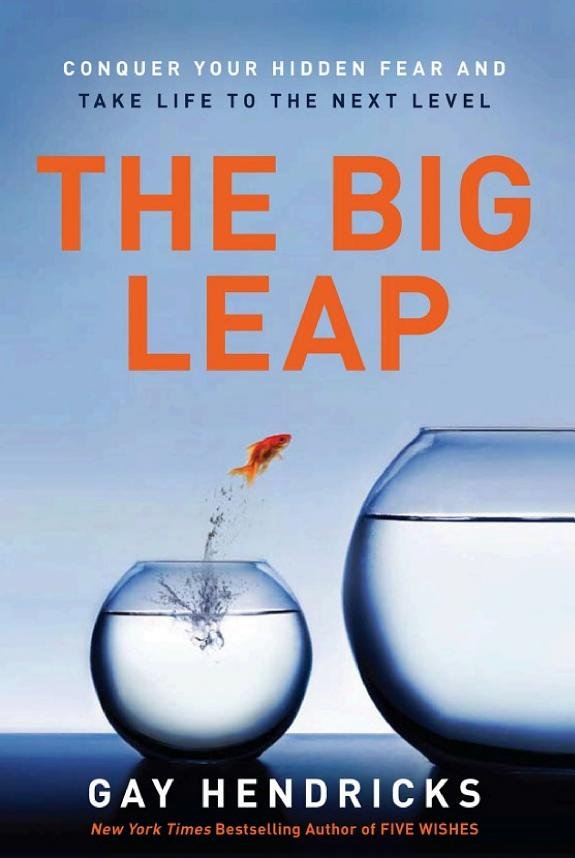
The Big Leap: Conquer Your Hidden Fear and Take Life to the Next Level
3. The Big Leap: Conquer Your Hidden Fear and Take Life to the Next Level by Gay Hendricks
Gay Hendricks has been a therapist and teacher for decades, and The Big Leap is the distillation of a concept he calls the Upper Limit Problem. The idea is this: each of us has an internal thermostat set to a certain level of success, happiness, and love. When things go too well, we unconsciously sabotage ourselves to bring the temperature back down to what feels familiar. If you have ever picked a fight with your partner right after a great week, or gotten sick the day before an important opportunity, or found yourself procrastinating on a project you actually care about, Hendricks would say your upper limit is showing.
The book is short and reads quickly, which is both a strength and a limitation. Hendricks writes with warmth and a certain confident directness that some readers find refreshing and others find a little too breezy. He is not hedging constantly or burying his ideas in qualifications. He makes his case and trusts you to do something with it. The concept of the Upper Limit Problem is genuinely one of the more useful frameworks for understanding why success can feel threatening, which is a strange and uncomfortable thing to admit about yourself.
Hendricks also introduces the idea of your Zone of Genius, the activities that come naturally to you and that the world most needs from you, as distinct from your Zone of Excellence, the things you are good at but that do not light you up. Spending your life in your Zone of Excellence while avoiding your Zone of Genius is, he argues, its own form of self-sabotage. That distinction has a way of landing differently for different readers, but for some people it is genuinely clarifying.
Readers who are skeptical of self-help as a genre may find the tone a little cheerful for their taste. The book also leans into some spiritual language that will resonate with certain readers and alienate others entirely.
The Upper Limit Problem reframes self-sabotage not as self-destruction but as self-regulation. You are not trying to fail. You are trying to stay safe inside a ceiling you did not consciously choose.
This is perfect for readers who have noticed a pattern of pulling back right when things are going well and want a clear, accessible framework for understanding why that happens.
You Are a Badass: How to Stop Doubting Your Greatness and Start Living an Awesome Life
4. You Are a Badass: How to Stop Doubting Your Greatness and Start Living an Awesome Life by Jen Sincero
Jen Sincero is funny. That is worth saying upfront because it is a genuine differentiator in this genre, where a lot of authors are earnest to the point of exhaustion. You Are a Badass has a voice that feels like your most self-aware, slightly irreverent friend giving you a very direct talking-to over coffee. Sincero writes about her own history of self-sabotage with the kind of specificity and humor that makes it feel honest rather than performative, and that tone carries the book through ideas that could easily tip into cliche in less capable hands.
The core argument is that most of us are held back by subconscious beliefs we absorbed in childhood, beliefs about whether we deserve good things, whether we are capable, whether the world is safe or generous. Sincero is not breaking new psychological ground here, but she is communicating these ideas in a way that is unusually accessible and entertaining. The chapters are short, the writing is punchy, and she keeps circling back to the same essential point: you are the one standing in your own way, and you can choose differently.
Where Sincero is at her best is in the sections on self-perception and the stories we tell ourselves. She is particularly good at pointing out how comfortable our self-limiting narratives become, how we mistake familiarity for truth, and how much of what we call realism is actually just fear wearing a sensible cardigan. The book is less strong on the practical mechanics of change, and some readers will want more concrete tools than Sincero provides.
If you find motivational language grating, or if you prefer your nonfiction to be heavily research-backed, this is probably not the book for you. Sincero is operating more in the realm of energy and mindset than in clinical psychology, and that will either feel liberating or vague depending on who you are.
Sincero’s most useful provocation is the suggestion that staying small is a choice, and that we dress that choice up in very sophisticated-sounding reasons to avoid admitting we are simply afraid.
This is perfect for readers who respond to humor and directness, who are newer to self-help as a genre, and who want a motivating read that does not take itself too seriously.
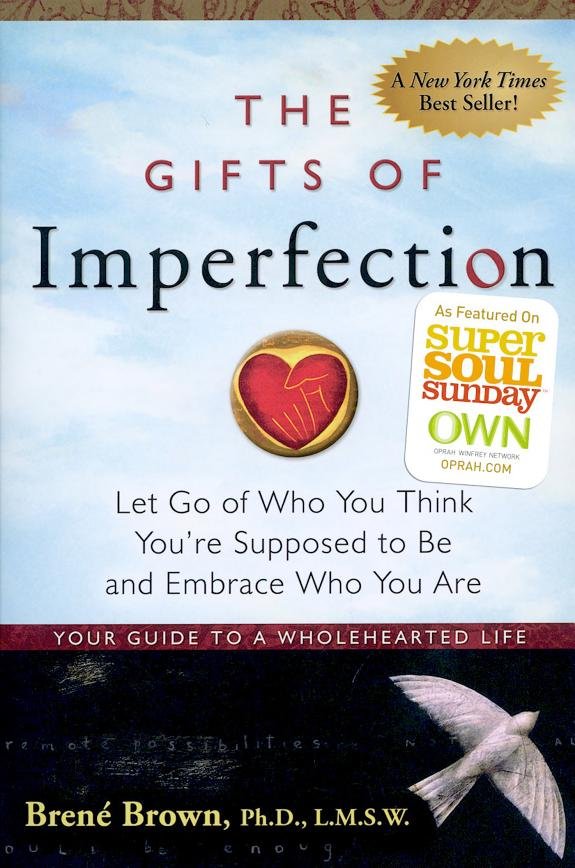
The Gifts of Imperfection: Let Go of Who You Think You’re Supposed to Be and Embrace Who You Are
5. The Gifts of Imperfection: Let Go of Who You Think You’re Supposed to Be and Embrace Who You Are by Brené Brown
Brené Brown spent years researching shame and vulnerability before she started writing books for general audiences, and that research background gives her work a credibility that a lot of self-help lacks. The Gifts of Imperfection is organized around what Brown calls guideposts for wholehearted living, and it is more quietly radical than its gentle title suggests. The central argument is that perfectionism, the relentless pursuit of an idealized self, is one of the most reliable engines of self-sabotage there is. Not because striving is bad, but because perfectionism is not really about doing things well. It is about avoiding shame.
Brown writes with a warmth that feels genuine rather than performed. She is not above sharing her own struggles with perfectionism and numbing behaviors, and those moments of self-disclosure give the book an intimacy that makes the harder ideas easier to absorb. The concept of wholehearted living, engaging with life from a place of worthiness rather than scarcity, is one of those frameworks that sounds simple and turns out to be surprisingly difficult to actually practice.
The book is particularly strong on the relationship between self-worth and self-sabotage. Brown makes the case that when we do not believe we are fundamentally worthy of good things, we unconsciously work to confirm that belief. We procrastinate, we withdraw, we pick fights, we drink too much, we stay too busy to feel anything. All of it, in her framework, is a way of managing the unbearable vulnerability of actually wanting something and risking not getting it.
Readers who are looking for a more action-oriented approach may find this book a little too focused on inner work and not focused enough on behavioral strategies. It is also worth noting that Brown’s writing can feel repetitive across her books, so if you have read Daring Greatly already, some of this will feel familiar.
Brown’s most sobering observation is that perfectionism is not the same as healthy striving. It is a shield, and like all shields, it keeps out the good along with the bad.
This is perfect for readers whose self-sabotage is rooted in perfectionism, shame, or a deep sense of not being enough, and who want a compassionate but honest exploration of those patterns.
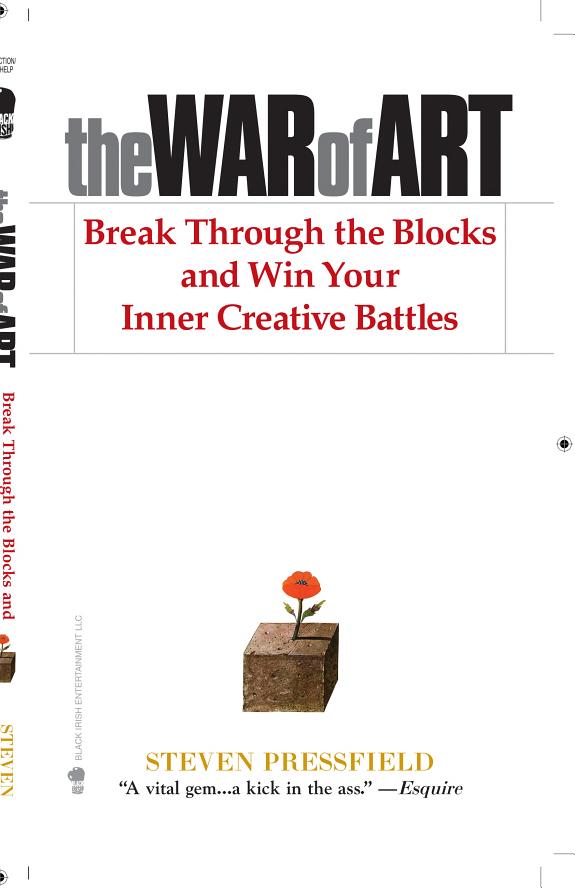
The War of Art: Break Through the Blocks and Win Your Inner Creative Battles
6. The War of Art: Break Through the Blocks and Win Your Inner Creative Battles by Steven Pressfield
Steven Pressfield wrote The Legend of Bagger Vance before he wrote The War of Art, which is a useful piece of context. He is a novelist writing about the internal experience of creative work, and that gives this book a texture and intensity that is quite different from anything else on this list. The War of Art is short, punchy, and structured in brief sections that read almost like entries in a field journal. It is also, depending on your temperament, either one of the most useful books you will ever read or one of the most annoying.
The central concept is Resistance, which Pressfield personifies as the force that stands between you and your creative work. Resistance is not laziness or distraction or fear, though it wears all of those disguises. It is something more fundamental: the part of you that will do absolutely anything to prevent you from doing the work that matters most to you. Pressfield is unflinching about the ways Resistance operates, including through rationalization, self-medication, drama, and the very human tendency to help everyone else with their work rather than do your own.
What makes this book relevant to self-sabotage more broadly is that Pressfield’s Resistance is essentially a description of self-sabotage in the creative domain, and many of his observations translate well beyond art and writing. The section on turning professional, on showing up consistently regardless of mood or inspiration, is genuinely useful for anyone trying to build any kind of meaningful practice. He is also unexpectedly funny in places, which earns him some goodwill when he gets more mystical in the book’s final section.
The spiritual dimension of the book, where Pressfield talks about Muses and divine assistance, will not land for everyone. If you are a committed materialist, the last third of the book may make you roll your eyes. The first two thirds, though, are hard to argue with.
Pressfield’s definition of Resistance is worth memorizing: it is always strongest closest to the work that matters most. The fact that something is hard to start is not evidence that you should not do it. It is evidence that you should.
This is perfect for writers, artists, and anyone engaged in creative work who keeps finding reasons not to do the thing they most want to do, and who wants a bracing, no-excuses perspective on why that happens.
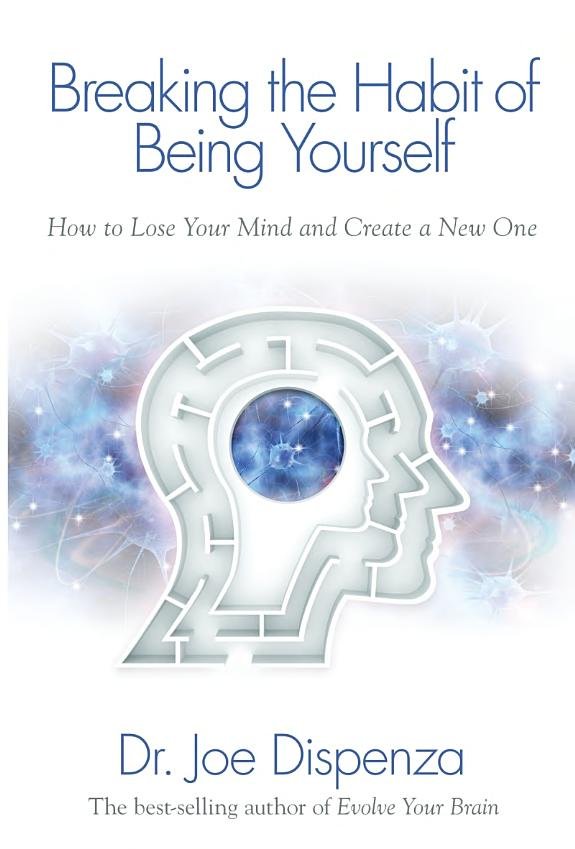
Breaking the Habit of Being Yourself: How to Lose Your Mind and Create a New One
7. Breaking the Habit of Being Yourself: How to Lose Your Mind and Create a New One by Joe Dispenza
Joe Dispenza comes from a chiropractic and neuroscience background, and Breaking the Habit of Being Yourself is his attempt to explain, through the lens of quantum physics and brain science, why people stay stuck in patterns they consciously want to change. The book’s central premise is that your personality is not fixed. It is a set of memorized emotional responses and thought patterns that your brain has automated over time, and those patterns can be interrupted and rewritten through deliberate mental practice. That is a genuinely interesting idea, and Dispenza pursues it with real commitment.
The neuroscience sections are accessible and mostly accurate in their broad strokes, though Dispenza occasionally stretches into quantum physics territory in ways that some scientists would find overstated. He is at his most credible when he sticks to what is well-established about neuroplasticity, the brain’s capacity to form new connections in response to new experiences and sustained mental rehearsal. The idea that you can literally rewire your brain by changing your habitual thoughts and emotions is not fringe science. It is a reasonable summary of what decades of neuroplasticity research suggests.
The practical portion of the book focuses on a meditation practice designed to help you break the emotional addiction to your old self and begin rehearsing a new identity. Dispenza is specific about the mechanics of this practice, which is useful, and the guided meditations he describes have apparently been helpful for a significant number of readers. He writes with a kind of earnest intensity that can feel inspiring or overwhelming depending on your baseline skepticism level.
If you are not willing to engage with the meditation components, the book will feel incomplete. It is also worth being honest that Dispenza’s work sits at the more speculative edge of the books on this list, and readers who want everything to be tightly evidence-based may find him frustrating. For readers open to a more expansive view of what is possible, though, this book offers something the others do not.
Dispenza’s most useful reframe is that you are not just a product of your past. You are a set of habits, and habits, by definition, can be changed. The self that keeps sabotaging you is not your true self. It is just the one you have practiced the most.
This is perfect for readers who are drawn to the intersection of neuroscience and personal change, who are open to meditation as a practice, and who want to understand the biological dimension of why old patterns are so hard to break.
Self-sabotage is one of those problems that can feel embarrassing to admit and surprisingly hard to fix, partly because the thing doing the sabotaging is the same mind you are trying to use to fix it. That is not a reason to give up. It is a reason to read carefully, to try different frameworks, and to be patient with yourself when progress is slower than you would like.
Not every book on this list will be the right fit for you. That is fine. If the clinical precision of Judy Ho’s approach speaks to you, start there. If you need someone to make you laugh while also making you uncomfortable, Jen Sincero might be your person. If you are a creative person who keeps abandoning your own work, Pressfield will probably feel uncomfortably accurate. The point is not to read all seven. The point is to find the one that meets you where you actually are, and then to do something with what you find there.
Good luck. And try not to sabotage your way out of reading the book once you have bought it. We have all been there.