

6 Books to Help You Stop Negative Thinking
Most of us have had the experience of lying awake at 2 a.m., replaying a conversation from three days ago and somehow concluding that everything is our fault. The brain, left to its own devices, can be a remarkably unpleasant roommate. It catastrophizes, it criticizes, and it has an almost supernatural ability to find the worst possible interpretation of any situation.
The good news is that negative thinking is not a personality flaw or a life sentence. It is a habit, and habits can be changed. The books on this list come from different traditions, including cognitive behavioral therapy, positive psychology, acceptance-based approaches, and contemplative spirituality, but they all point toward the same basic truth: you are not your thoughts, and you have more influence over your mental landscape than you probably realize. Some of these reads are workbooks, some are more philosophical, and one or two will ask you to sit quietly and pay attention to your breathing, which is either deeply helpful or mildly annoying depending on your personality.
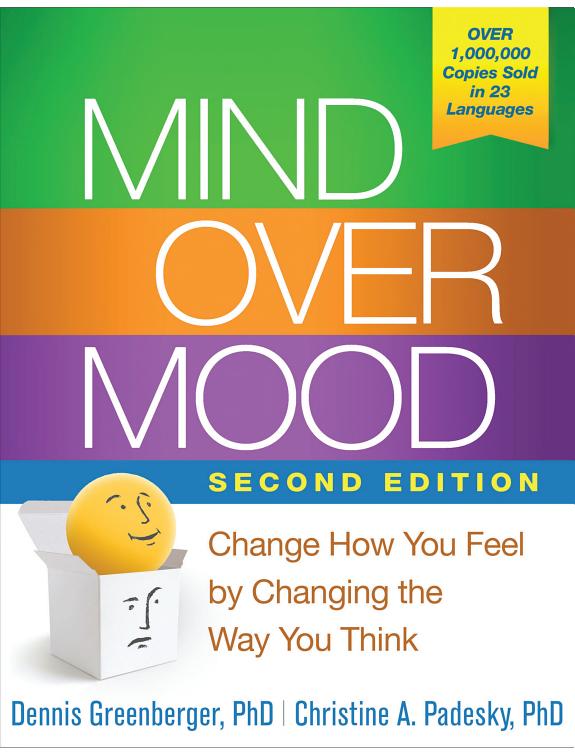
Mind Over Mood: Change How You Feel by Changing the Way You Think
1. Mind Over Mood: Change How You Feel by Changing the Way You Think by Dennis Greenberger and Christine A. Padesky
If you have ever worked with a therapist who practices cognitive behavioral therapy, there is a reasonable chance this book came up in conversation. Greenberger and Padesky are clinical psychologists who helped develop CBT techniques over decades of practice, and this workbook distills that expertise into something a general reader can actually use. The tone is warm but direct. It does not coddle you, but it also does not talk down to you.
The central idea is that thoughts, feelings, and behaviors are all connected in a loop, and that the most accessible entry point for change is often the thought itself. The book walks you through identifying automatic negative thoughts, examining the evidence for and against them, and gradually replacing distorted thinking patterns with more balanced ones. There are worksheets throughout, which either feels reassuringly structured or uncomfortably like homework, depending on your outlook.
What makes this book stand out from the crowded self-help shelf is its clinical grounding. The authors follow four fictional characters through the book, each dealing with different struggles including depression, anxiety, anger, and relationship difficulties, which makes the techniques feel concrete rather than abstract. It is not a light read, and it genuinely asks something of you. But if you are willing to put in the work, the payoff is real.
This is one of the few self-help books that functions as an actual therapeutic tool rather than just a pep talk. If you are going to do the exercises honestly, prepare to learn some uncomfortable things about your thinking habits.
This is perfect for readers who want a structured, evidence-based approach to managing depression or anxiety, and who are willing to treat the book like a course rather than a casual read. It is not ideal for someone looking for a quick, breezy fix or who bristles at worksheets.
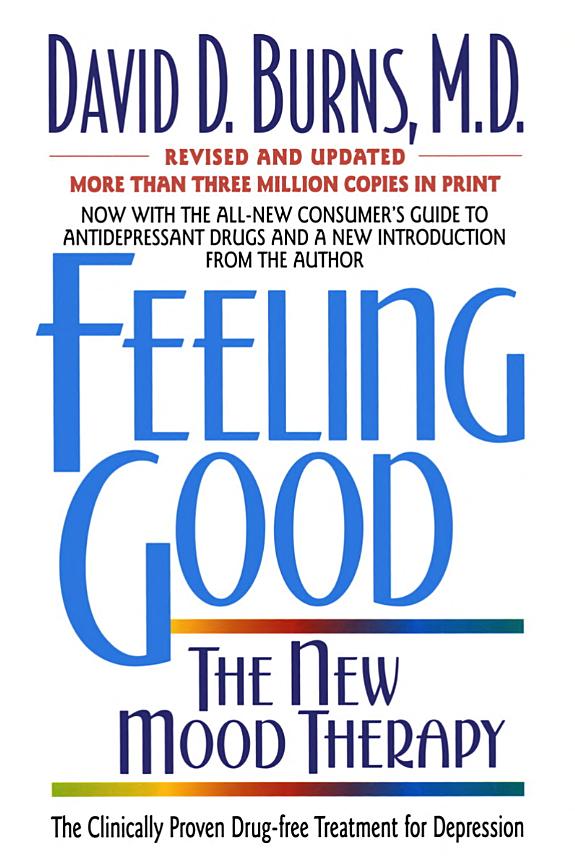
Feeling Good: The New Mood Therapy
2. Feeling Good: The New Mood Therapy by David D. Burns
David Burns published this book in 1980, and it has been selling steadily ever since, which is a pretty good sign that it works. Burns was a student of Aaron Beck, one of the founding figures of cognitive behavioral therapy, and this book was one of the first to bring CBT principles to a general audience. It remains one of the most widely recommended books in the field, and therapists still hand it to clients with some regularity.
The core argument is that depression and chronic negative thinking are fueled by cognitive distortions, specific, identifiable errors in thinking that feel true but are not. Burns catalogs these distortions with satisfying precision: all-or-nothing thinking, overgeneralization, mental filtering, jumping to conclusions, catastrophizing, and several others. Once you can name what your brain is doing, it becomes a little harder to take it at face value. The naming alone can be oddly freeing.
Burns writes with genuine enthusiasm, which makes the book more engaging than you might expect from something rooted in clinical psychology. He uses humor carefully and includes a lot of case examples that make the concepts feel grounded. The later sections cover topics like perfectionism and self-criticism, which will feel uncomfortably familiar to a large portion of the reading population. There is also a self-assessment tool at the beginning that lets you gauge where you are starting from, which is either useful context or a slightly sobering way to begin a book.
Burns makes a compelling case that the way you talk to yourself matters enormously, and that most of us would never speak to a friend the way we routinely speak to ourselves.
This is perfect for anyone experiencing mild to moderate depression or persistent negative self-talk who wants a readable, research-backed guide they can work through on their own. It is less suited to readers dealing with severe mental illness, who would benefit from professional support alongside any book.
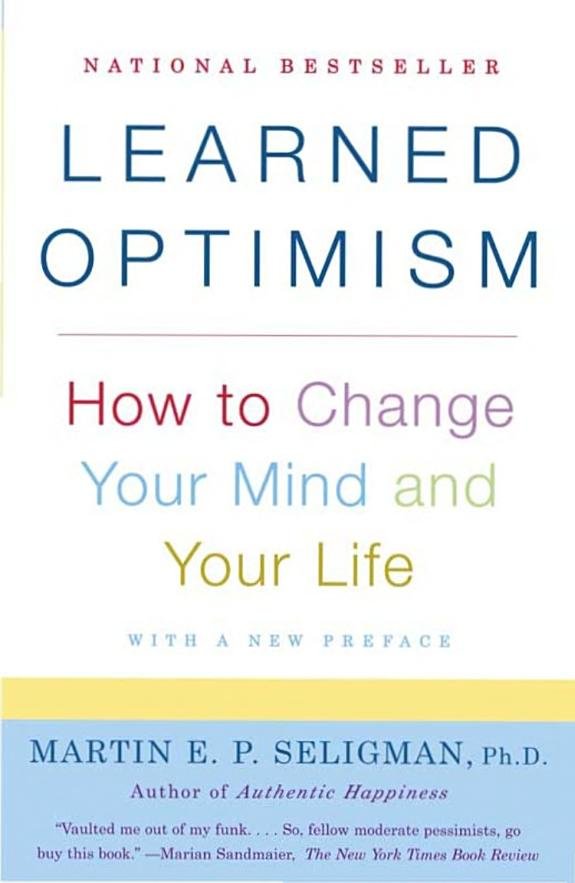
Learned Optimism: How to Change Your Mind and Your Life
3. Learned Optimism: How to Change Your Mind and Your Life by Martin E. P. Seligman
Martin Seligman spent years studying helplessness and depression before deciding to flip the question entirely and ask what makes people resilient instead. That pivot became the foundation of positive psychology, and this book is one of its most important early documents. It is part research summary, part self-assessment guide, and part practical manual, and it holds together better than that combination might suggest.
The key concept here is explanatory style, the habitual way you explain bad events to yourself. Pessimists tend to see setbacks as permanent, pervasive, and personal. Optimists see the same setbacks as temporary, specific, and not entirely their fault. Seligman argues, with a fair amount of research behind him, that explanatory style is not fixed. It can be identified, examined, and shifted. The technique he teaches, called ABCDE, involves disputing your own catastrophic interpretations the way you might dispute a false accusation from someone else.
The book covers a lot of ground, including chapters on children, work, health, and politics, and some sections feel more relevant than others depending on your situation. The writing is clear and occasionally dry in that particular way academic authors have when they are trying very hard to be accessible. But the core ideas are genuinely useful, and Seligman earns his arguments with data rather than just assertion, which is refreshing in a genre that can lean heavily on anecdote.
The distinction between pessimism as a thinking style and pessimism as a personality type is one of the most quietly useful reframes in this entire field.
This is perfect for readers who are drawn to a more research-oriented approach and want to understand the psychology behind negative thinking before trying to change it. It is probably not the right starting point for someone who finds academic prose tedious or who wants exercises over explanations.
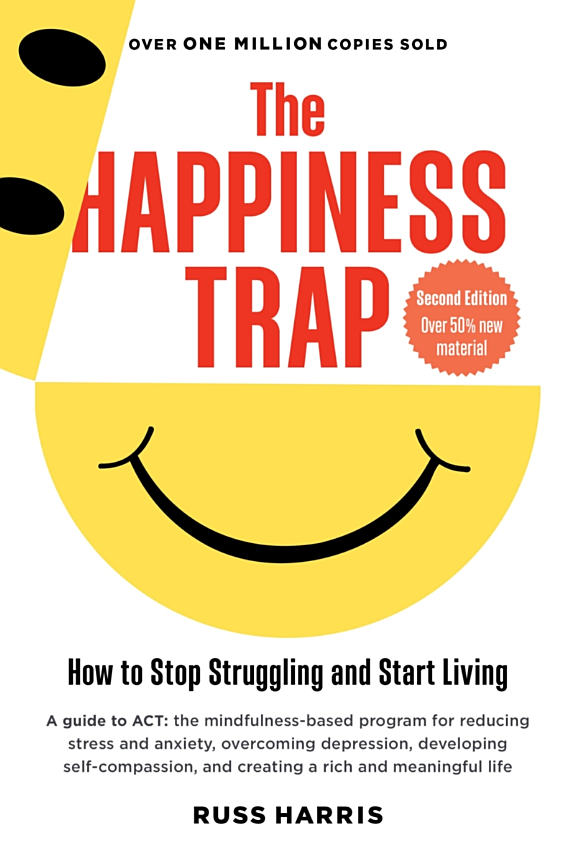
The Happiness Trap: How to Stop Struggling and Start Living
4. The Happiness Trap: How to Stop Struggling and Start Living by Russ Harris
Russ Harris opens this book by pointing out that the pursuit of happiness, as most of us practice it, is itself a significant source of misery. That is either a relief to hear or deeply annoying, depending on how your week has gone. The approach he teaches is called Acceptance and Commitment Therapy, or ACT, which is a newer branch of cognitive behavioral therapy that takes a somewhat different angle on negative thoughts.
Where traditional CBT asks you to challenge and reframe unhelpful thoughts, ACT asks you to change your relationship to those thoughts instead. The goal is not to eliminate negative thinking but to stop letting it run your life. Harris introduces the concept of defusion, learning to observe your thoughts as mental events rather than facts, and it is one of those ideas that sounds almost too simple until you actually try it and realize it requires real practice. The book is full of short exercises and metaphors that make the concepts stick.
Harris writes with a lightness that suits the subject matter well. He is not preachy, and he does not pretend that any of this is easy. The book is also refreshingly honest about the limits of positive thinking as a strategy, which will resonate with anyone who has ever tried to think their way into a better mood and ended up feeling worse for the effort. The underlying message is that a rich, meaningful life and a mind full of difficult thoughts are not mutually exclusive.
The idea that you can hold a painful thought without being controlled by it sounds simple, but it is one of the more genuinely useful skills you can develop.
This is perfect for readers who have tried other approaches to negative thinking and found them frustrating, or who tend to get into exhausting internal arguments with their own thoughts. It is less suited to readers who want a purely analytical framework without any experiential exercises.
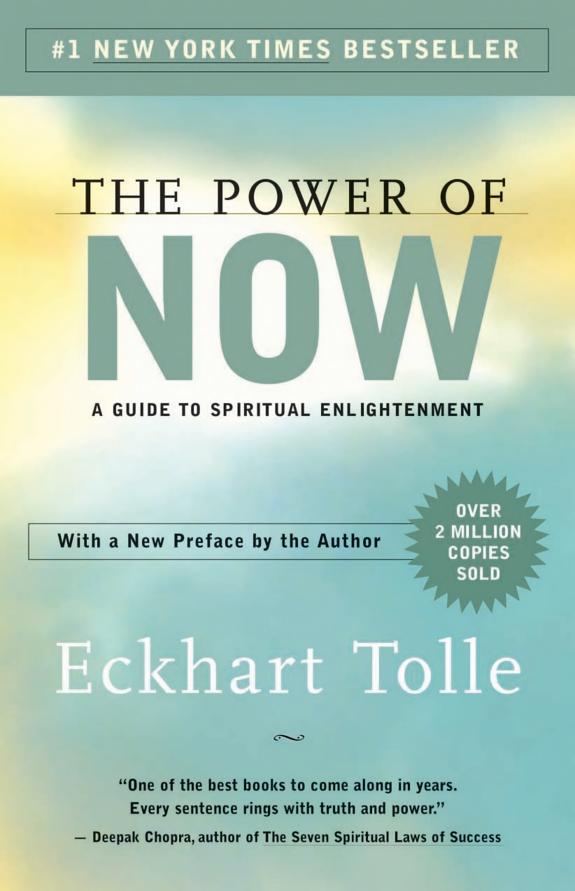
The Power of Now: A Guide to Spiritual Enlightenment
5. The Power of Now: A Guide to Spiritual Enlightenment by Eckhart Tolle
This book has sold tens of millions of copies, which means either that Tolle is onto something important or that a lot of people were very stressed in the late 1990s and needed somewhere to put it. Probably both. Tolle’s central argument is that most human suffering arises from identification with the thinking mind, and that the antidote is learning to be fully present in the current moment rather than lost in past regrets or future anxieties.
The book is structured as a kind of dialogue, with Tolle addressing questions from an imagined reader, which gives it an unusually conversational texture for spiritual writing. His concept of the “pain body,” an accumulated store of old emotional pain that feeds on negative thinking, is one of those ideas that either clicks immediately or sounds completely baffling. The writing oscillates between genuinely clarifying passages and stretches that require a fairly high tolerance for spiritual language and abstraction.
It is worth being honest that this book is not for everyone, and Tolle himself would probably agree with that. If you are looking for practical exercises with measurable outcomes, this will feel frustratingly vague. But if you are open to a more contemplative approach to the problem of negative thinking, the core insight, that your thoughts are not you and the present moment is always available as a refuge, can be genuinely settling. It pairs well with a meditation practice, or at least with a quiet afternoon.
The observation that most anxiety lives either in the past or the future, and that the present moment is almost always okay, is simple enough to dismiss and true enough to keep coming back to.
This is perfect for readers who are drawn to spiritual or contemplative approaches and are comfortable with abstract, philosophical language. It is not a good fit for readers who want structured techniques, clinical frameworks, or any book that stays firmly on the ground.
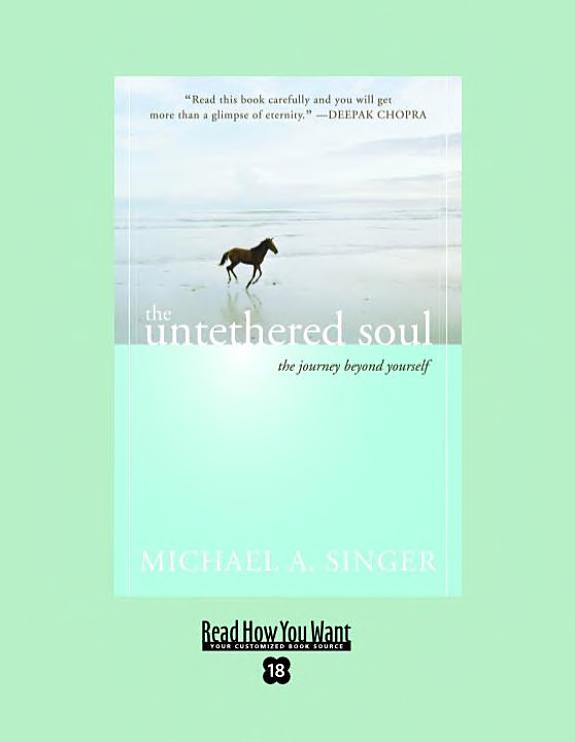
The Untethered Soul: The Journey Beyond Yourself
6. The Untethered Soul: The Journey Beyond Yourself by Michael A. Singer
Michael Singer asks a question early in this book that has a way of lodging itself in your brain: if you had a friend who constantly narrated your life, criticized your choices, and rehearsed worst-case scenarios out loud, would you keep spending time with that person? The point, of course, is that most of us do exactly that with our own inner voice, and we have somehow come to believe that voice is who we are.
The Untethered Soul is a book about consciousness and identity more than it is a practical guide to negative thinking, but the two are deeply related. Singer draws on both Eastern contemplative traditions and Western psychology to build a case that the observing awareness behind your thoughts is your truest self, and that identifying with the thoughts themselves is the source of most unnecessary suffering. The writing is unusually clear for a book dealing with these kinds of ideas, and Singer has a talent for making the abstract feel almost obvious.
The later chapters deal with how we block the natural flow of energy through the body by resisting difficult emotions, and Singer’s suggestion to simply let experiences pass through rather than clenching around them is easier to describe than to actually do. But the conceptual framework he offers is one that many readers find genuinely freeing over time. This is a book that rewards rereading, partly because the ideas deepen with practice and partly because it is short enough that returning to it does not feel like a commitment.
Singer’s point that you are not the voice in your head but the one who notices it is one of those sentences that can quietly rearrange how you move through a difficult day.
This is perfect for readers who are ready to explore their inner life from a more philosophical or spiritual angle and want something that goes beyond technique into the question of who is doing the thinking in the first place. It is not ideal for readers who need concrete, step-by-step strategies or who find spiritual frameworks off-putting.
None of these books will silence your inner critic overnight, and any that promised to would deserve your suspicion. What they offer instead is something more durable: a set of frameworks, practices, and perspectives that, used honestly and with some patience, can genuinely change the texture of daily life. Some of them will resonate immediately. Others might sit on the shelf for a year before the right moment arrives. That is fine. Good books wait.
Whether you are drawn to the structured worksheets of CBT, the philosophical spaciousness of contemplative writing, or something in between, the thread connecting all six of these titles is the same. Your thoughts are not facts, your mind is not your enemy, and you have more room to move than the loudest voice in your head would have you believe. That is worth sitting with.