
8 Books for Recovering From Burnout
There is a particular kind of tired that sleep does not fix. You know the one. You wake up exhausted, drag yourself through the day, and wonder when exactly you stopped feeling like a person and started feeling like a to-do list with legs. Burnout does not announce itself politely. It tends to arrive quietly, over months or years, until one day you realize you have nothing left to give and you are not entirely sure where it all went.
The good news is that people recover from burnout. Not overnight, and not by simply taking a long weekend, but genuinely and fully. Books have played a real role in that recovery for a lot of people, not because reading is a cure, but because the right book at the right moment can help you understand what happened to you, and more importantly, what to do next. The eight books below approach burnout from different angles, some scientific, some philosophical, some deeply personal. Together they form a kind of reading map for the long road back to feeling like yourself again.
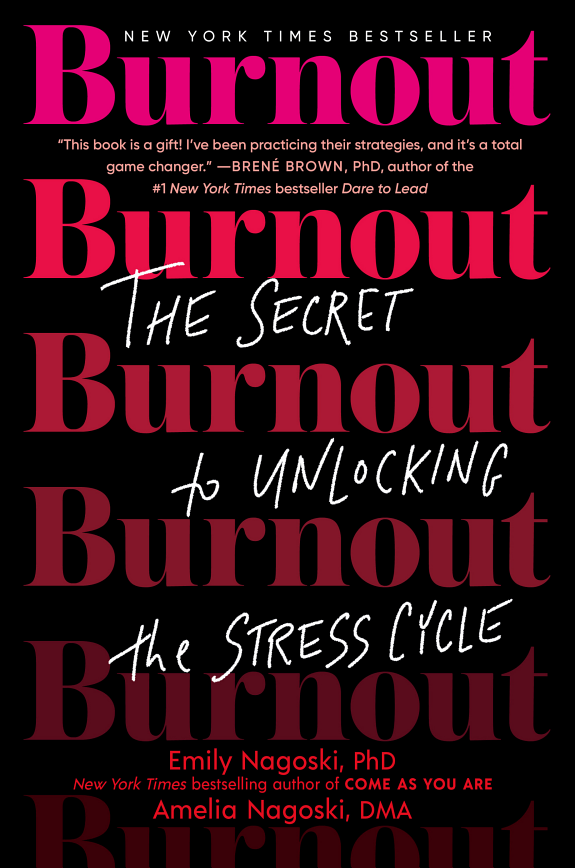
Burnout: The Secret to Unlocking the Stress Cycle
1. Burnout: The Secret to Unlocking the Stress Cycle by Emily Nagoski, Amelia Nagoski
Sisters Emily and Amelia Nagoski bring a rare combination of scientific rigor and genuine warmth to a subject that often gets buried under productivity advice and wellness clichés. Emily, a health educator, and Amelia, a conductor and performer, wrote this book partly out of their own experiences with burnout, and that personal investment shows on every page. The writing is conversational and sharp, occasionally funny, and never condescending.
The central idea here is one that sounds simple but is actually quite radical: stress is a biological cycle, and if you do not complete that cycle, the stress stays trapped in your body even after the stressor is gone. This explains why finishing a terrible project at work does not make you feel better the way you expected. The book focuses particularly on the experiences of women, examining how societal expectations around caregiving, appearance, and emotional labor create conditions where burnout becomes almost inevitable. The concept of the “Human Giver Syndrome” alone is worth the price of admission.
Practical tools are woven throughout, including movement, breathing, creative expression, and connection as ways to complete the stress cycle. None of it feels like homework. The Nagoskis write with enough humor and honesty that even their more research-heavy sections stay readable. They also spend real time on rest, play, and what they call “the bubble,” which is their term for the feeling of being fully, safely yourself with another person.
This is not a book for people who want to optimize their way out of burnout. It is for people who want to understand why they feel the way they do, and who are willing to consider that the problem might not be a personal failing but a structural one.
“You are not broken. You are human. And humans require completion, not just management.”
This is perfect for anyone who has ever finished a stressful period and still felt awful, especially women who are tired of being told to practice more self-care without anyone explaining why they are depleted in the first place.
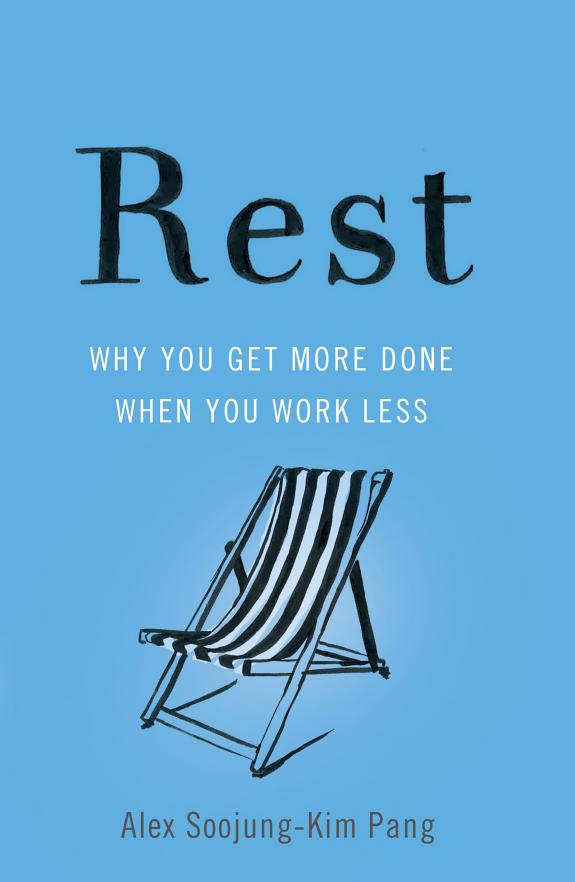
Rest: Why You Get More Done When You Work Less
2. Rest: Why You Get More Done When You Work Less by Alex Soojung-Kim Pang
Alex Soojung-Kim Pang is a researcher and consultant who spent years studying how history’s most productive thinkers actually spent their time. What he found was not what hustle culture would have you believe. Darwin walked. Dickens walked obsessively. Churchill napped without apology. Pang’s argument is that rest is not the opposite of work but a partner to it, and that our collective dismissal of rest as laziness is both historically uninformed and practically counterproductive.
The book draws on neuroscience, biology, and a wide range of biographical examples to make the case that the brain does not stop working when we step away from our desks. The default mode network, which activates during rest, is where a great deal of creative and integrative thinking actually happens. Pang is careful not to turn this into another productivity argument, though the subtitle does lean that direction. His deeper point is that rest has intrinsic value, and that we have been systematically trained to feel guilty about it.
Where the book gets especially interesting is in its chapters on deliberate rest practices: napping, sabbaths, deep play, and what Pang calls “restorative vacations.” He distinguishes these from passive collapse in front of a screen, which is not the same thing as genuine rest. If you have ever come back from a vacation feeling more tired than when you left, this section will resonate uncomfortably well.
The writing is clear and well-paced, though some readers may find the historical examples pile up faster than the personal application. This is ultimately a book of ideas more than a workbook, and it works best if you approach it that way.
“Rest is not something you earn after work. It is something your brain requires in order to do the work at all.”
This is perfect for high achievers who have convinced themselves that rest is a reward rather than a necessity, and for anyone who wants historical and scientific grounding for finally taking that nap without guilt.
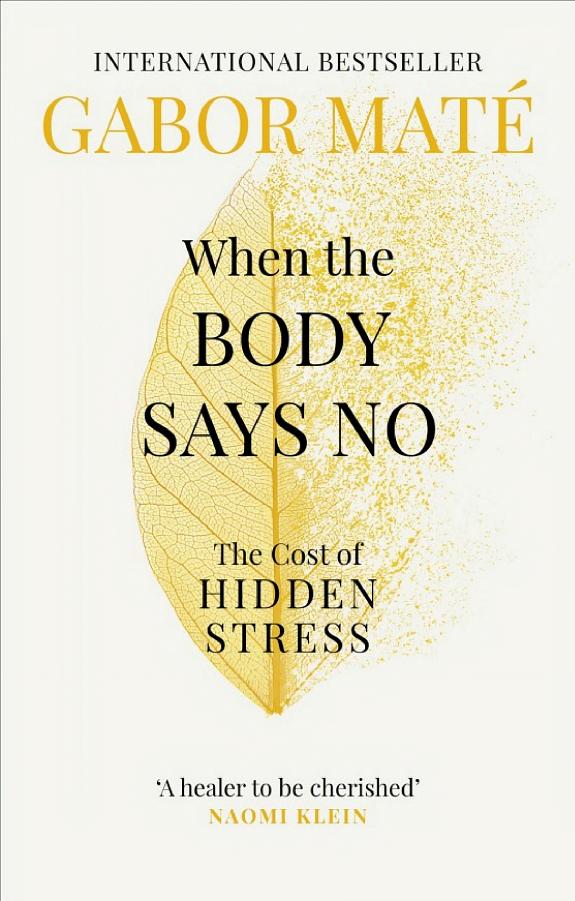
When the Body Says No: The Cost of Hidden Stress
3. When the Body Says No: The Cost of Hidden Stress by Gabor Maté
Gabor Maté is a Canadian physician whose work sits at the intersection of medicine, psychology, and compassion. This book is not a light read, and it is worth saying that upfront. Maté examines the relationship between chronic stress, repressed emotion, and serious illness, drawing on decades of clinical experience and a deep familiarity with the research on psychoneuroimmunology. The subject matter is heavy. The writing is humane.
Maté’s core argument is that the body keeps a kind of emotional ledger, and that when we consistently override our own needs, suppress anger, or live in chronic states of stress and self-denial, the body eventually registers that cost in physical terms. He traces this pattern through case studies of patients with multiple sclerosis, cancer, ALS, and other serious conditions, not to blame them for their illness but to illuminate the connections between emotional history and physical health. It is a careful, compassionate book that resists easy conclusions.
For burnout specifically, the book offers something that most recovery guides do not: a serious examination of why so many people who burn out are also people who have difficulty saying no, who learned early to prioritize others’ needs over their own, and who feel responsible for managing everyone else’s emotional world. Maté connects this to childhood experience and the development of the stress response system in ways that are genuinely illuminating.
This is not the book to pick up if you want quick fixes or cheerful reassurance. It is the book to read if you want to understand the deeper roots of why you got here, and why your body may have been trying to tell you something for a long time before you listened.
“The question is never why the addiction, but why the pain. The same is true of burnout.”
This is perfect for people whose burnout has manifested in physical symptoms, or for those who sense that their exhaustion has deeper roots than just overwork and want to understand the mind-body connection honestly.
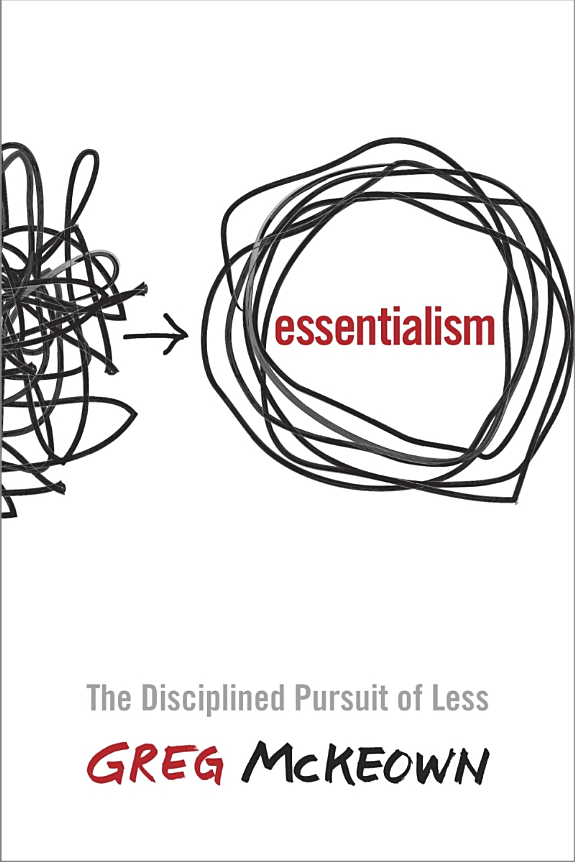
Essentialism: The Disciplined Pursuit of Less
4. Essentialism: The Disciplined Pursuit of Less by Greg McKeown
Greg McKeown is a consultant and speaker who has spent years helping organizations and individuals figure out what actually matters. Essentialism is his argument, made at length and with considerable conviction, that the relentless pursuit of more, more commitments, more options, more output, is not a path to success but a path to depletion. The Essentialist, in his framing, is someone who deliberately chooses where to direct their energy rather than defaulting to yes for everything.
The book is cleanly structured and moves at a good pace. McKeown is a clear writer who uses stories and examples effectively, and his central idea, that you cannot do everything well and that trying to is a form of self-defeat, is one that resonates deeply for anyone in burnout recovery. The permission to say no, to edit your life, to treat your time and energy as finite resources worthy of protection, is something many people need to read spelled out before they can actually believe it.
Where Essentialism is strongest is in its examination of how we end up overcommitted in the first place: social pressure, fear of missing out, the difficulty of disappointing people, and the mistaken belief that being busy is the same as being valuable. Where it is weaker is in its assumptions about autonomy. McKeown writes largely for people with significant professional flexibility, and readers in more constrained circumstances may find some of the advice harder to apply directly.
That caveat aside, the mindset shift this book offers is genuinely useful for burnout recovery. The question it keeps returning to, what is essential, and what is just noise, is one worth sitting with for a long time after you finish the last page.
“If you don’t prioritize your life, someone else will.”
This is perfect for people who burned out because they could not stop saying yes, and who need both philosophical permission and practical framing to start protecting their time and energy more deliberately.
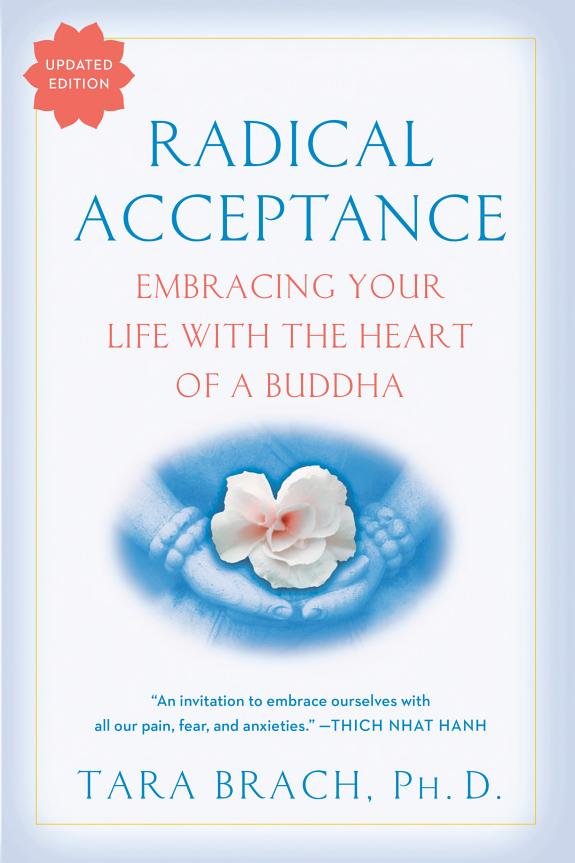
Radical Acceptance: Embracing Your Life With the Heart of a Buddha
5. Radical Acceptance: Embracing Your Life With the Heart of a Buddha by Tara Brach
Tara Brach is a psychologist and meditation teacher, and this book is one of the gentlest, most quietly useful things you can read when you are in the middle of recovery from burnout. The central concept is what Brach calls the “trance of unworthiness,” the persistent background hum of not-enoughness that drives so many people to overwork, over-achieve, and ultimately collapse. It is a concept that lands differently depending on where you are in your life, but for people in burnout, it often lands like a key in a lock.
Radical acceptance, in Brach’s framing, does not mean resignation or passivity. It means meeting your present experience, including pain, shame, fear, and exhaustion, with honesty and without adding a layer of self-judgment on top of it. She draws on Buddhist teachings and Western psychological frameworks in a way that feels integrated rather than awkward, and she writes with a warmth that comes from genuine practice rather than theoretical enthusiasm.
The book is full of meditations and stories from her teaching and clinical work, and these are among its greatest strengths. Brach has a gift for illustrating abstract ideas through specific, recognizable human moments. The stories of her students and clients carry the weight of real experience, and they make the book feel less like a self-help manual and more like a conversation with someone who has seen a great deal of human suffering and come away from it with genuine tenderness rather than detachment.
This is not a book for people who are looking for action plans or productivity hacks. It asks something more uncomfortable: that you stop running, at least for a moment, and turn toward what is actually there.
“The boundary to what we can accept is the boundary to our freedom.”
This is perfect for people whose burnout is entangled with perfectionism, self-criticism, or a deep-seated feeling that they are not doing enough, no matter how much they do.
The Art of Stillness: Adventures in Going Nowhere
6. The Art of Stillness: Adventures in Going Nowhere by Pico Iyer
Pico Iyer has spent most of his adult life traveling, writing about place, and thinking about what it means to be at home in the world. The Art of Stillness is a short book, barely a hundred pages, born from a TED Talk, and it is essentially Iyer’s meditation on why he stopped moving and what he found when he did. It is not a self-help book in any conventional sense. It is more like a long, thoughtful letter from someone who has thought seriously about the relationship between stillness and a well-lived life.
The book centers partly on the Japanese monastery where Iyer retreats regularly, and partly on conversations with figures like Leonard Cohen, who spent years in a Zen monastery on Mount Baldy. Iyer is not prescriptive. He does not tell you to meditate or unplug or move to the country. He simply describes what happens when you stop, and he does so with the elegant, unhurried prose of someone who has genuinely learned to be comfortable with silence.
For burnout recovery, this book works less as a guide and more as a permission slip. There is something in reading about someone who has chosen stillness deliberately, who has made going nowhere into a practice, that quiets the anxious voice insisting you should be doing more. Iyer is also honest about the difficulty of stillness in a distracted world, which keeps the book from feeling precious or unrealistic.
It is a book to read slowly, probably more than once. At its length it could easily be consumed in an afternoon, but that would be missing the point entirely. The irony of rushing through a book about stillness is not lost, presumably, on Iyer himself.
“In an age of acceleration, nothing can be more exhilarating than going slow. In an age of distraction, nothing is so luxurious as paying attention.”
This is perfect for people who are intellectually convinced they need to slow down but have not yet found a way to actually want it, and for anyone who responds more to beautiful writing than to structured advice.
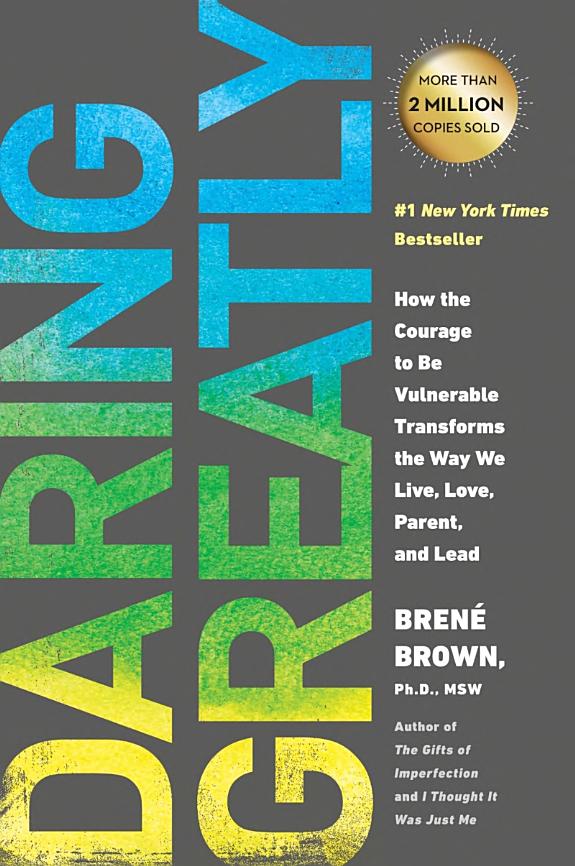
Daring Greatly: How the Courage to Be Vulnerable Transforms the Way We Live, Love, Parent, and Lead
7. Daring Greatly: How the Courage to Be Vulnerable Transforms the Way We Live, Love, Parent, and Lead by Brené Brown
Brené Brown is a researcher who spent years studying shame and vulnerability, and Daring Greatly is the book that brought those ideas to a wide audience. The title comes from Theodore Roosevelt’s “Man in the Arena” speech, and the book’s central argument is that vulnerability, the willingness to show up and be seen without guarantees, is not weakness but the foundation of genuine connection, creativity, and belonging. It is also, Brown argues, the thing that shame most effectively destroys.
The connection to burnout is not always explicit in the book, but it runs through almost every chapter. Many people burn out not simply because they work too much but because they are working from a place of chronic shame and scarcity, trying to earn their worth through performance, terrified of being found inadequate. Brown’s research into shame resilience offers a framework for understanding that pattern and, slowly, for loosening its grip.
Brown is a warm and engaging writer, and her willingness to include her own struggles and failures makes the book feel honest rather than instructional. She is also, it must be said, someone who has built a considerable brand around vulnerability, and readers who are sensitive to that kind of thing may occasionally notice the scaffolding. That does not make the underlying ideas less sound, but it is worth knowing going in.
The sections on perfectionism are particularly relevant for burnout recovery. Brown makes a clear and well-supported distinction between healthy striving and perfectionism, arguing that perfectionism is not about high standards but about avoiding shame and judgment. For anyone who has driven themselves into the ground trying to be enough, that distinction can be genuinely clarifying.
“Perfectionism is not the same as striving for excellence. It is the belief that if we do things perfectly we can avoid shame and judgment.”
This is perfect for people whose burnout is rooted in people-pleasing, perfectionism, or a persistent feeling that their worth is conditional on what they produce or achieve.
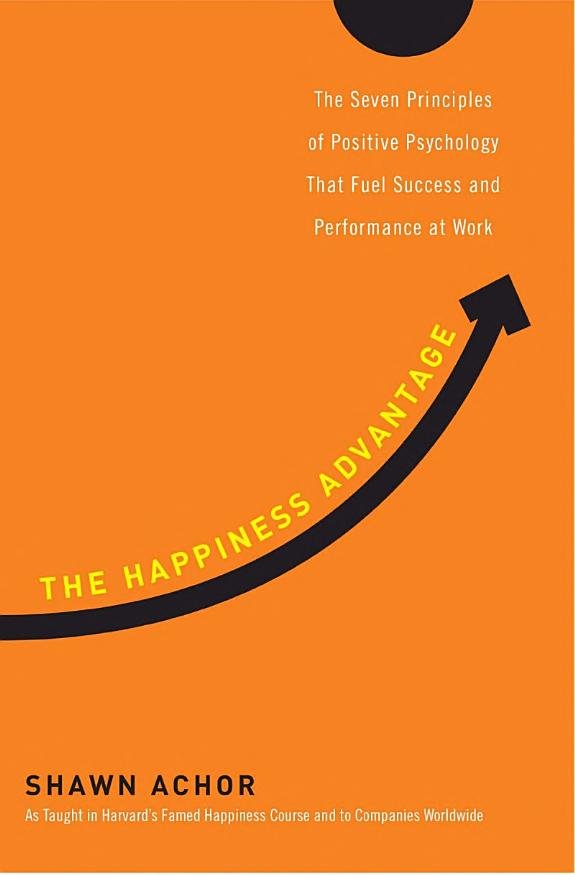
The Happiness Advantage: The Seven Principles of Positive Psychology That Fuel Success and Performance at Work
8. The Happiness Advantage: The Seven Principles of Positive Psychology That Fuel Success and Performance at Work by Shawn Achor
Shawn Achor is a Harvard-trained researcher who spent years studying what makes people thrive at work, and The Happiness Advantage is his accessible summary of the positive psychology research that came out of that work. The core argument flips a common assumption: happiness does not follow success, it precedes it. When we feel good, our brains are more creative, more resilient, and more productive. Waiting until you have achieved enough to allow yourself to feel good is, neurologically speaking, a losing strategy.
For someone in burnout recovery, this book can be a useful corrective to the grim seriousness that often accompanies the healing process. Achor is funny, genuinely so, and his writing moves quickly without sacrificing substance. He draws on a wide range of studies and his own experiences teaching at Harvard, and the result is a book that feels both grounded and energizing without tipping into false cheerfulness.
The seven principles he outlines include things like the Tetris Effect, which is about training your brain to scan for positives rather than problems, and the Zorro Circle, which is about regaining control by starting small. These are practical ideas backed by research, and they are presented in a way that makes them feel genuinely applicable rather than like bumper sticker wisdom. The principle on social investment is especially relevant for burnout recovery, given how often burnout leads people to withdraw from the relationships that would most help them heal.
Where the book has limits is in its focus on workplace performance. Some readers in deep burnout may find the emphasis on productivity and professional success a bit tone-deaf, at least in the early stages of recovery. This is probably better read once you have done some of the harder emotional work, not as a first step but as a later one.
“Happiness is not the belief that everything is perfect. It is the belief that you can navigate what is not.”
This is perfect for people who are past the acute phase of burnout and looking to rebuild a more sustainable relationship with work, particularly those who respond well to research-backed frameworks and appreciate a writer who does not take himself too seriously.
Recovering from burnout is not a linear process, and no single book will do it for you. What books can do is help you feel less alone in it, give language to experiences that have been hard to name, and offer frameworks that make the path forward a little clearer. The eight books above are not all the same kind of help. Some are scientific, some are philosophical, some are deeply personal. That variety is intentional, because burnout is not one thing and recovery is not one size.
If you are not sure where to start, consider where you are right now. If you are in the thick of it and need to understand what is happening in your body, start with the Nagoskis. If you are ready to think about rebuilding differently, McKeown or Achor might be more useful. If the emotional roots feel important, Brach or Brown. The books will still be there when you are ready for them, which is, in its own small way, a comforting thought.
Take your time. That is, after all, the whole point.