
7 Books Every Deep Thinker Should Read
Some books you finish and forget by Tuesday. Others sit with you for years, quietly reshaping the way you look at everything from morning traffic to your own mortality. The books on this list belong to the second category. They are the kind of reading that makes you put the book down mid-page just to stare at the ceiling for a while.
These seven titles span philosophy, science, history, and biology, but they share something important: each one asks genuinely hard questions and takes you seriously enough to attempt real answers. Whether you are a lifelong reader or someone who just finished their first nonfiction book and wants more, this list is a solid place to go deeper. Fair warning, though: a few of these will challenge ideas you did not even know you held.
Man’s Search for Meaning
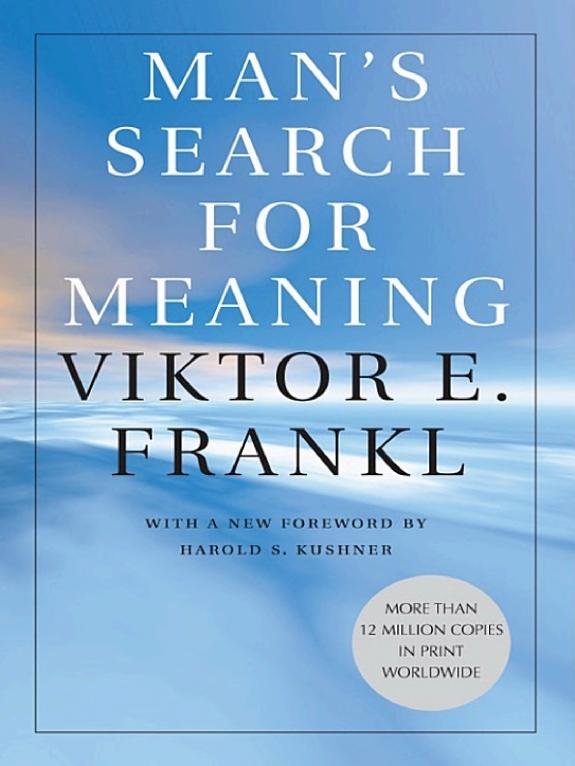
1. Man’s Search for Meaning by Viktor E. Frankl
Viktor Frankl was a psychiatrist and Holocaust survivor, and this book is both a memoir of his time in Nazi concentration camps and an introduction to his psychological framework called logotherapy. The combination is unlike anything else in print. Frankl writes with a restrained, almost clinical clarity that somehow makes the emotional weight hit harder, not softer. He is not asking for pity. He is making an argument, and he uses the most extreme human suffering imaginable as his evidence.
The central idea is deceptively simple: people can endure almost any suffering if they have a reason to endure it. Meaning, Frankl argues, is not something handed to us. It is something we choose, even when everything else has been taken away. That idea sounds like a motivational poster until you consider where he developed it. Then it becomes something else entirely.
Frankl’s voice is measured and precise, which is part of what makes this book so affecting. He never dramatizes. He observes. And his observations about human behavior under impossible conditions reveal things about ordinary life that are genuinely difficult to shake. This is not a comfortable read, but it is a remarkably clear one.
“Everything can be taken from a man but one thing: the last of the human freedoms, to choose one’s attitude in any given set of circumstances.” The weight of that sentence only grows the more you think about it.
This is perfect for anyone wrestling with questions of purpose, readers drawn to psychology and philosophy, and people who want their nonfiction to carry genuine moral seriousness. It is not the right fit for readers who prefer their ideas delivered with a light touch or who find accounts of historical atrocity too distressing to engage with.
The Demon-Haunted World: Science as a Candle in the Dark
2. The Demon-Haunted World: Science as a Candle in the Dark by Carl Sagan
Carl Sagan wrote this book in 1995, and it reads like he somehow knew what the internet was going to do to public discourse. His subject is scientific thinking, but more specifically, it is the failure to think scientifically and what that costs us as individuals and as a society. He covers pseudoscience, superstition, alien abduction claims, and political propaganda with equal parts patience and alarm.
What sets this book apart from other defenses of rationalism is Sagan’s tone. He is never contemptuous of the people who believe in nonsense. He is genuinely curious about why smart, sincere people end up there, and he takes that question seriously. His famous “baloney detection kit,” a set of tools for evaluating claims critically, is both practical and quietly witty. You will find yourself applying it almost immediately, possibly to things you already believe.
Sagan was one of the great science communicators of the twentieth century, and this book shows why. He makes complex epistemological ideas feel urgent and accessible without dumbing them down. The writing has warmth without being soft, and conviction without being preachy. Well, almost without being preachy. He has his moments. But given the subject, it is hard to blame him.
Sagan’s core argument is that skepticism is not cynicism. It is, in fact, a form of respect, for truth, for evidence, and for the people you are talking to.
This is perfect for readers interested in critical thinking, science journalism, and the philosophy of knowledge. It may frustrate readers who are deeply committed to spiritual or supernatural frameworks, and those looking for a pure celebration of science rather than a defense of the method behind it.
The Selfish Gene
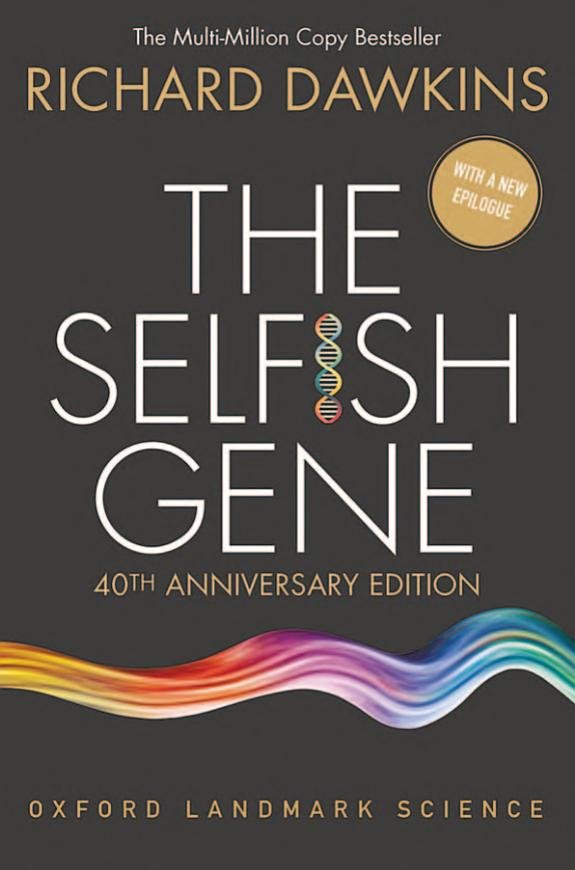
3. The Selfish Gene by Richard Dawkins
The title is deliberately provocative, and Dawkins knows it. This is not a book arguing that people are selfish. It is a book arguing that genes behave as if they are, in the sense that natural selection favors genes that are good at copying themselves, regardless of what that means for the organism carrying them. It is a subtle distinction, but once you grasp it, the whole of evolutionary biology starts to look different.
Published in 1976, this book introduced the concept of the “meme,” a word that has since been thoroughly colonized by internet culture, which is a shame, because the original idea is fascinating. Dawkins proposed that cultural ideas spread and evolve by the same basic logic as genes, replicating, mutating, competing for mental real estate. Whether you buy the full argument or not, it is a genuinely interesting lens to try on.
Dawkins writes with clarity and a certain relish for a well-constructed argument. Some readers find him combative. Others find that quality bracing. What is hard to dispute is that he explains complex evolutionary concepts with unusual precision, and that this book changed how biologists and philosophers alike think about the unit of selection in evolution. It is also, unexpectedly, quite funny in places.
The gene-centered view of evolution does not reduce life to something cold or mechanical. If anything, it makes the emergence of cooperation, altruism, and love stranger and more remarkable than a simpler story would allow.
This is perfect for readers with an interest in biology, philosophy of science, or the deep logic underneath human behavior. It is probably not the right book for readers who find materialist explanations of life deflating, or anyone who wants their science with fewer rhetorical elbows.
Cosmos
4. Cosmos by Carl Sagan
If “The Demon-Haunted World” is Sagan on guard, “Cosmos” is Sagan in full flight. Originally the companion book to his 1980 television series, it covers the history of astronomy, the origins of the universe, the nature of stars and galaxies, and the story of how human beings gradually figured out where they were in all of it. It is one of the most ambitious books of popular science ever written, and it largely pulls off what it attempts.
Sagan’s great gift here is his ability to hold the vast and the intimate together at the same time. A chapter about the lifecycle of stars will suddenly turn toward a meditation on human mortality, or a discussion of ancient Greek astronomy will open into something about the fragility of knowledge itself. The book never feels scattered because of it. It feels like the thoughts of someone who has genuinely internalized just how strange and enormous the universe is, and wants you to feel that too.
The writing has an almost lyrical quality in places, which puts some readers off if they came expecting dry exposition. But that quality is also what makes this book linger. Sagan is not just reporting facts. He is making a case for wonder as a serious intellectual posture, and he makes it persuasively. Reading “Cosmos” is one of those experiences that makes the night sky look different afterward.
“We are a way for the cosmos to know itself.” That line has been quoted so often it risks feeling like a cliche, but in context, surrounded by everything Sagan builds toward it, it lands with real force.
This is perfect for curious readers who want to understand the universe and humanity’s place in it, and for anyone who appreciates science writing that does not strip out the poetry. It is less suited to readers who want strict academic rigor or who find Sagan’s philosophical digressions more distracting than enriching.

Guns, Germs, and Steel
5. Guns, Germs, and Steel by Jared Diamond
Jared Diamond starts with a question posed to him by a politician in New Guinea: why did Europeans end up with all the cargo? Why did history produce such wildly unequal outcomes between different human societies? His answer, developed across nearly five hundred pages, is that geography, not race or culture or intelligence, is the primary driver. The societies that got ahead did so because of where they happened to live, what plants and animals were available to domesticate, and what diseases they were exposed to early enough to develop immunity.
It is a big argument, and Diamond supports it with evidence from archaeology, biology, linguistics, and anthropology. The scope is genuinely impressive. He traces the development of agriculture, the spread of epidemic disease, the advantages of certain domesticable animals, and the role of continental orientation in how quickly innovations spread. Each piece builds on the last, and by the end, the thesis feels less like a provocation and more like an obvious truth you somehow had not considered before.
The book has its critics, and they are not entirely wrong. Some historians argue Diamond oversimplifies, that geography explains a great deal but not everything, and that the framework can flatten important distinctions between societies. That is a fair pushback. But even if you end up with reservations, the intellectual exercise of following Diamond’s argument is enormously valuable. This is a book that teaches you how to think about large-scale historical causation, which is a skill worth having.
Diamond’s argument is ultimately an argument against fatalism in both directions. History was not inevitable, and the societies that fell behind were not destined to. That is a more hopeful conclusion than the book’s reputation sometimes suggests.
This is perfect for readers interested in history, anthropology, and big-picture thinking about why the world looks the way it does. It may not satisfy professional historians who want more nuance, or readers who find sweeping grand theories more frustrating than illuminating.
21 Lessons for the 21st Century
6. 21 Lessons for the 21st Century by Yuval Noah Harari
Harari’s earlier books, “Sapiens” and “Homo Deus,” looked at the past and the far future respectively. This one is about right now, which turns out to be the hardest subject of all. He takes on artificial intelligence, nationalism, religion, immigration, terrorism, education, and meditation in twenty-one relatively short chapters, each one organized around a question that feels genuinely pressing. The result is less a unified argument than a collection of serious thinking about the things that actually keep thoughtful people up at night.
Harari’s great strength is his ability to reframe familiar debates in ways that expose assumptions you did not know you were making. His chapter on nationalism, for instance, does not simply argue for or against it. It asks what nationalism is actually for, what problems it solves and what problems it creates, and what might replace it if it fails. That kind of structured curiosity is rare in writing about contemporary politics, where most authors already know what they think before they start.
The book is not without its weaknesses. Some chapters feel more developed than others, and Harari’s confident tone occasionally outruns his evidence. He is better at identifying important questions than at answering them, which is either a flaw or an honest acknowledgment of genuine uncertainty, depending on how you read it. Either way, the questions themselves are worth sitting with. That is more than most books on current events manage.
Harari’s most consistent argument across all his work is that the stories humans tell themselves shape reality more than reality shapes the stories. In a book about the present moment, that idea becomes uncomfortably relevant.
This is perfect for readers who want a thoughtful, wide-ranging engagement with the defining challenges of contemporary life. It is not the book for readers who want deep expertise on any single topic, or for those who find Harari’s broad generalizations more irritating than useful.
Meditations
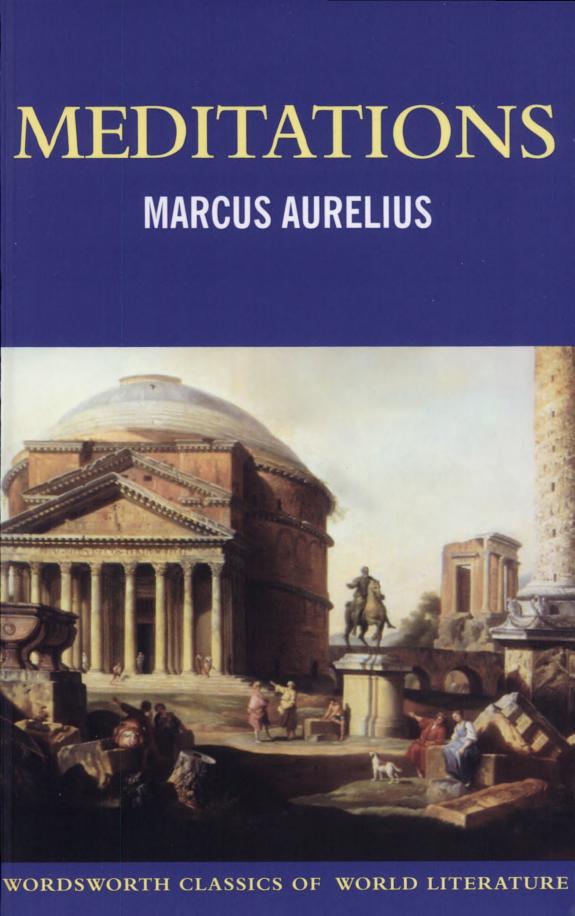
7. Meditations by Marcus Aurelius
Marcus Aurelius was the Roman emperor from 161 to 180 AD, and “Meditations” is his private journal, never intended for publication. He wrote it as a series of notes to himself, reminders of how to behave, how to think, how to keep his values intact under the pressure of running an empire. The result is one of the strangest and most affecting books in the Western tradition: a document of a man with great authority trying, repeatedly, to talk himself into being good.
The philosophy is Stoic, which means it is concerned with what is and is not within your control, with accepting the impermanence of everything including yourself, and with the idea that virtue is both necessary and sufficient for a good life. Aurelius returns to these themes again and again, sometimes in slightly different words, sometimes almost identically. The repetition is not a flaw. It is the point. He is not writing for an audience. He is doing the work of keeping his own mind in order.
What makes this book resonate across nearly two thousand years is its honesty. Aurelius does not present himself as someone who has mastered Stoic practice. He presents himself as someone who keeps failing at it and keeps trying anyway. There is something deeply human in that, and something quietly instructive. The translation matters here: Gregory Hays’s version for the Modern Library is widely considered the most readable, and it is the one worth starting with.
The book’s force comes partly from its context. This is not a philosopher writing for posterity. It is a man with enormous responsibilities reminding himself, again and again, not to be an idiot about it.
This is perfect for readers interested in Stoic philosophy, ancient history, or simply looking for a book that models rigorous self-examination. It may not appeal to readers who prefer their philosophy in systematic, argument-driven form, or those who find the fragmentary, repetitive structure of a private journal frustrating to read.
Seven books, a few thousand pages, and more ideas than you can comfortably hold in your head at once. That is not a complaint. The best reading stretches you, and every title on this list will do exactly that in its own way, whether it is Frankl asking what your life is for, or Marcus Aurelius reminding himself to stop complaining, or Sagan pointing at the stars and asking you to feel appropriately small and appropriately significant at the same time.
You do not have to read them all at once, and you do not have to agree with everything in them. In fact, arguing with a book is often a sign that it is doing its job. Start with whichever one speaks to whatever question is sitting with you right now. The others will still be there when you are ready, and they tend to reward coming back to.