

5 Basketball Books Every Fan Should Read
There is a specific kind of hunger that hits basketball fans in the off-season. The games are gone, the highlights have been rewatched seventeen times, and you find yourself reading Wikipedia pages about the 1986 Celtics at midnight. If that sounds familiar, you are in the right place.
These five books do not just recap box scores or string together statistics. They pull you into locker rooms, team buses, and front offices. They give you the friction and the friendship and the strange, competitive obsession that makes basketball more than a sport. Whether you fell in love with the game watching Jordan in the nineties or you came up on LeBron, there is something here that will deepen your appreciation for what happens between the tip-off and the final buzzer.
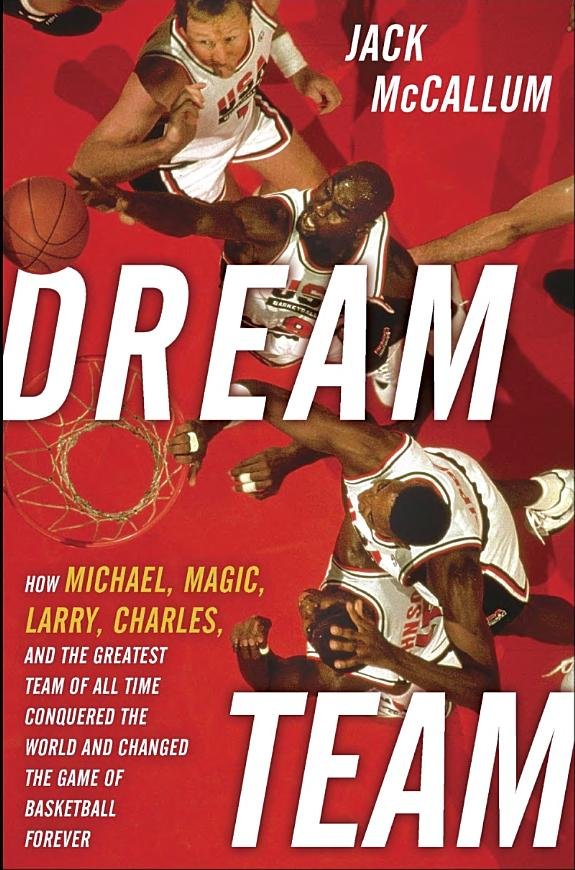
Dream Team: How Michael, Magic, Larry, Charles, and the Greatest Team of All Time Conquered the World and Changed the Game of Basketball Forever
1. Dream Team: How Michael, Magic, Larry, Charles, and the Greatest Team of All Time Conquered the World and Changed the Game of Basketball Forever by Jack McCallum
Jack McCallum covered the 1992 Olympic Dream Team from the inside, and that access shows on every page. This is not a distant, reverent tribute to a group of legends. It is a close, sometimes funny, sometimes tense account of what it actually looked like when the greatest collection of basketball talent ever assembled tried to coexist for a few weeks in Barcelona. McCallum writes with the ease of someone who genuinely loves the game and the people in it, and his prose never feels like a sports lecture.
The central tension of the book is fascinating. These were competitors who had spent years trying to destroy each other, suddenly wearing the same uniform. Michael Jordan would not room with Isiah Thomas. Charles Barkley was Charles Barkley at all times. Magic Johnson was managing his HIV diagnosis in the public eye while trying to prove he still belonged on the floor. McCallum handles each of these threads with care and honesty, never letting the mythology flatten the actual human beings involved.
What makes this book genuinely satisfying is how McCallum captures the cultural moment. The Dream Team did not just win gold. They changed how the world thought about American basketball, and how American basketball thought about itself. The ripple effects of that summer in Spain are still being felt today.
“The Dream Team was not just a team. It was a collision of enormous egos and enormous talent, and McCallum is the rare writer who could stand in that room without flinching.”
This is perfect for fans who want the behind-the-scenes reality of the most celebrated roster in basketball history, especially those who grew up watching these players and want to understand what they were actually like when the cameras were not rolling. It is not the book for readers who prefer a straightforward historical narrative without personality or anecdote.
The Book of Basketball: The NBA According to The Sports Guy
2. The Book of Basketball: The NBA According to The Sports Guy by Bill Simmons
Bill Simmons wrote a 700-page book about basketball and somehow made it feel like a conversation with your most opinionated friend. That is either a remarkable achievement or a warning, depending on your tolerance for strong takes delivered with total confidence. The Book of Basketball is sprawling, self-indulgent in the best possible way, and packed with the kind of obsessive detail that only comes from someone who has spent decades watching, arguing about, and loving the NBA.
The core of the book is Simmons building his own pyramid of the greatest players in NBA history, explaining his reasoning with a mix of statistics, personal memory, and genuine historical research. He introduces a concept he calls “The Secret,” which is his theory about what actually separates great teams from good ones, and it is genuinely worth sitting with. The argument is not airtight, but it is interesting, and Simmons makes you think about team dynamics in a way that pure numbers never quite capture.
Where the book stumbles is in its length and its author’s awareness of his own voice. Simmons can be repetitive, and his pop culture references, while charming at first, occasionally pile up in ways that slow the momentum. He is also writing from a very specific Boston fan perspective, which colors some of his rankings in ways that are hard to ignore. Still, no book captures the experience of being a passionate, slightly irrational NBA fan quite like this one.
“Simmons is not a journalist pretending to be neutral. He is a fan who did the homework, and that honesty is exactly what makes this book work.”
This is perfect for readers who have already spent years watching the NBA and want a long, engaging argument about its history from someone who cares as much as they do. It is not the right starting point for casual fans or anyone who finds long digressions irritating, and Lakers fans may need to take a few deep breaths in certain chapters.

When the Game Was Ours
3. When the Game Was Ours by Larry Bird and Earvin Magic Johnson
The rivalry between Larry Bird and Magic Johnson is one of the great stories in sports history, and this book tells it from both sides at once. Co-written with Jackie MacMullan, one of the best basketball journalists working, the book alternates between Bird’s perspective and Magic’s, tracing their relationship from mutual wariness to genuine friendship. It reads with a warmth that you do not always expect from athlete memoirs, largely because both men are willing to be honest about their own flaws and fears.
What Bird and Magic understood, even at the height of their competition, was that they needed each other. The NBA was struggling before they arrived, and their rivalry gave the league a narrative it desperately needed. The book does not shy away from this, exploring how race, media, and the economics of professional basketball shaped how each man was perceived and how they perceived themselves. Bird, in particular, is more reflective here than his public persona ever suggested he would be.
MacMullan’s role as collaborator is quietly essential. She keeps the narrative moving and asks the right questions, drawing out moments and admissions that might have stayed buried in a less skilled interview process. The result is a book that feels genuinely collaborative rather than ghostwritten, and that distinction matters when you are reading it.
“Two legends, one rivalry, and the unexpected truth that competition at its highest level can produce something that looks a lot like respect and even love.”
This is perfect for anyone who wants to understand the eighties NBA through the eyes of the two people who defined it, and for readers who appreciate athlete memoirs that go beyond highlight reels into real self-examination. Those looking for in-depth tactical analysis of the game itself will find this more emotional than strategic.
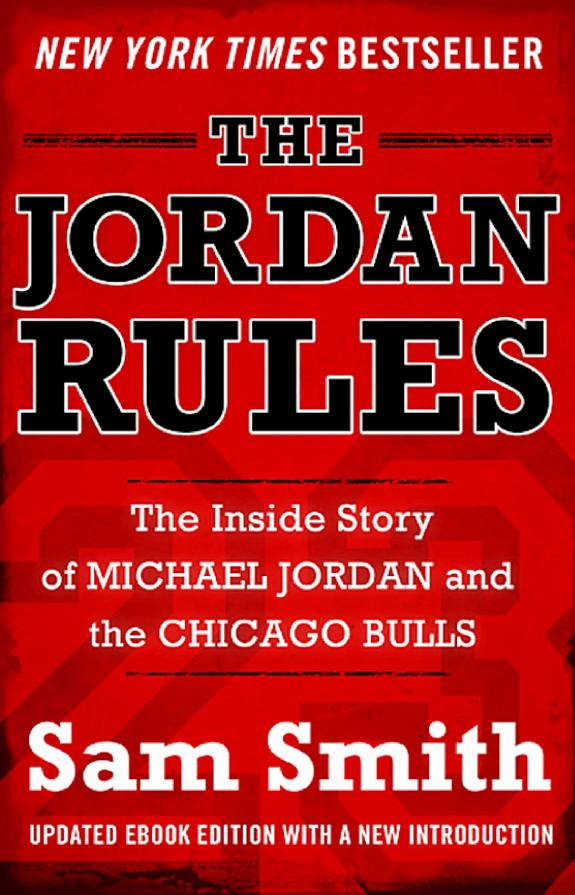
The Jordan Rules
4. The Jordan Rules by Sam Smith
When this book came out in 1992, Michael Jordan was reportedly furious. That reaction alone tells you something important about what Sam Smith accomplished. The Jordan Rules is not a celebration of greatness. It is a detailed, sometimes uncomfortable look at the 1990-91 Chicago Bulls season, written by a beat reporter who had extraordinary access and the courage to use it honestly. Smith shows you a Jordan who is brilliant, yes, but also controlling, hard on teammates, and capable of real cruelty in pursuit of winning.
The title refers to the defensive strategy the Detroit Pistons used to slow Jordan down, but it becomes a metaphor for the entire book. Everything in the Bulls organization revolved around Jordan, including the rules. Phil Jackson’s triangle offense was partly a system designed to distribute the ball and reduce Jordan’s stranglehold on every possession. Watching Jordan slowly accept that structure, and watching the team become something greater because of it, is the real story here.
Smith writes with the precision of someone who took notes in real time, and the book has an immediacy that most sports books lack. You feel the tension of a long NBA season, the fatigue, the small resentments, and the genuine joy when things finally click. It is a portrait of excellence that does not require you to pretend the subject was a saint, and that makes it more interesting, not less.
“The Jordan Rules reminds you that the most compelling stories about greatness are rarely the ones the great man would choose to tell about himself.”
This is perfect for readers who want a clear-eyed, reported account of what it was actually like inside the Bulls dynasty at its beginning, particularly those who are tired of the sanitized version of Jordan’s legacy. It is not the book for fans who prefer their heroes uncomplicated and their narratives tidy.
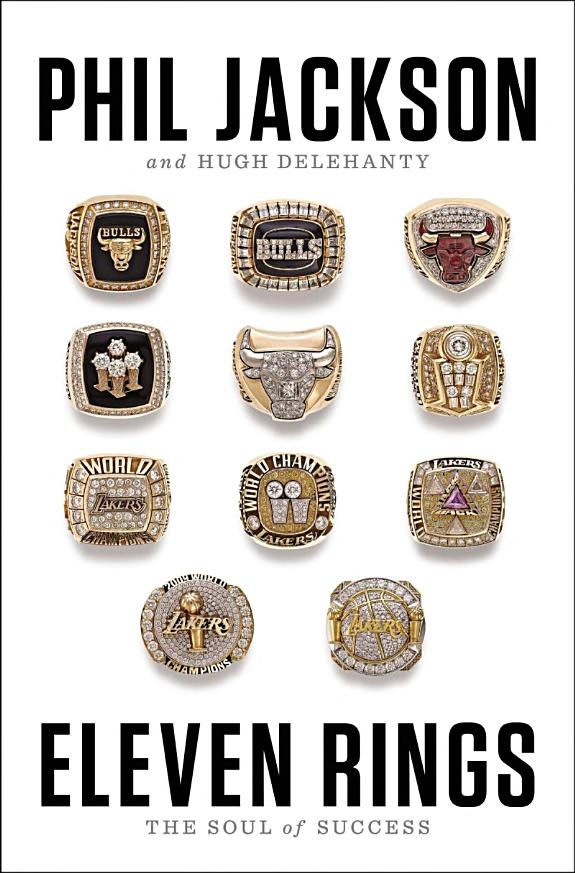
Eleven Rings: The Soul of Success
5. Eleven Rings: The Soul of Success by Phil Jackson
Phil Jackson won eleven NBA championships as a head coach. Eleven. The number is almost absurd, and yet the most interesting thing about this book is not the rings. It is Jackson’s genuine attempt to explain the philosophy behind them. Drawing on Native American spirituality, Zen Buddhism, and decades of watching how human beings behave under pressure, Jackson built a coaching approach that was unlike anything else in professional sports. Whether you find that fascinating or slightly eccentric probably depends on your own temperament.
Jackson is a thoughtful writer, and the book moves through his career with both candor and reflection. His accounts of managing Jordan, Scottie Pippen, Dennis Rodman, Shaquille O’Neal, and Kobe Bryant are genuinely illuminating. Each of those personalities required something different from him, and Jackson is honest about where he succeeded and where he fell short. His relationship with Kobe in particular is portrayed with a complexity that the simple championship narrative tends to erase.
The philosophical sections will not land equally for every reader. If you are deeply skeptical of mindfulness applied to professional sports, some passages will test your patience. But even if you set the Zen aside entirely, the basketball insights are substantial. Jackson understood team dynamics at a level that most coaches never reach, and this book gives you genuine access to that understanding. It is the kind of coaching memoir that makes you think about leadership in ways that extend well beyond the hardwood.
“Jackson never coached a team. He coached individuals who needed to become a team, and the difference between those two things is the whole book.”
This is perfect for basketball fans who are curious about the mental and philosophical side of coaching at the highest level, and for anyone interested in leadership and team dynamics more broadly. Readers who want a purely tactical breakdown of plays and schemes may find the spiritual framing more than they bargained for.
These five books cover different eras, different perspectives, and very different writing styles. Some are reported from the outside, some told from the inside, and one is essentially a very long, very passionate argument. What they share is a genuine love for the game and a willingness to take it seriously as something worth understanding deeply.
You do not need to read them in any particular order. Start with the rivalry, the dynasty, or the Olympics, depending on what pulls at you first. Just know that once you start down this road, a midnight Wikipedia spiral about the 1992 Dream Team is basically inevitable. Consider yourself warned.