
5 Best Stephen King Books of All Time
Stephen King has been scaring readers, breaking their hearts, and keeping them up until three in the morning for over fifty years. That is a long time to haunt someone. His output is so enormous that newcomers often freeze up trying to figure out where to start, and longtime fans argue endlessly about which of his books deserves the top spot. Both camps are welcome here.
This list is not about ranking King by how many copies he sold or how many movies got made from his work. It is about identifying the books that best capture what makes him genuinely great: his understanding of ordinary people under extraordinary pressure, his deep affection for small-town America, and his ability to make you care so much about a character that the horror actually hurts. These five books represent the full range of what King does well, and at least one of them will probably keep you from sleeping soundly tonight.
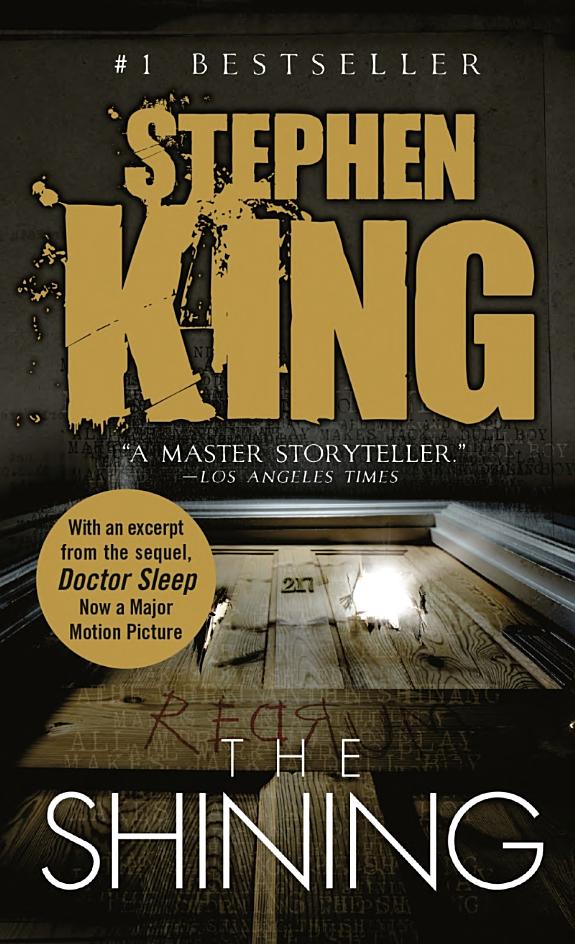
The Shining
1. The Shining by Stephen King
Published in 1977, The Shining is the book that cemented King’s reputation as something more than a pulp horror writer. It follows Jack Torrance, a struggling writer and recovering alcoholic, who takes a winter caretaker job at the isolated Overlook Hotel in Colorado. He brings his wife Wendy and his young son Danny, who has a psychic gift he calls “the shining.” What follows is a slow, suffocating descent into madness that is as much a portrait of a family fracturing under pressure as it is a ghost story.
King’s genius here is that Jack Torrance is not a villain you can dismiss. He is recognizable. He loves his son. He wants desperately to be better than he has been. The hotel simply finds the cracks that were already there and works its way inside. That is far more frightening than a monster you can point at. The Overlook itself becomes a character, breathing and patient, and King builds its menace so gradually that you barely notice how scared you are until you are completely inside it.
The writing is lean and controlled in a way that King’s longer books sometimes are not. Every detail earns its place. Room 217, the hedge animals, the roque mallet, the slow transformation of a man who wanted to do right by his family. It all adds up to something that lingers long after the last page. Stanley Kubrick made a famous film adaptation, and it is worth noting that King famously disliked it, largely because Kubrick stripped out the tragedy of Jack’s character. King’s version is sadder, and ultimately more disturbing, for exactly that reason.
The Shining works not because the Overlook is terrifying, but because Jack Torrance is someone you recognize, and watching him lose the fight he was already losing before he ever arrived is genuinely heartbreaking.
This is perfect for readers who want psychological horror rooted in family dysfunction, anyone curious about where King’s reputation truly began, and those who prefer their scares slow-building rather than sudden. It is not the right fit for readers who need a fast pace or who are looking for straightforward supernatural action.
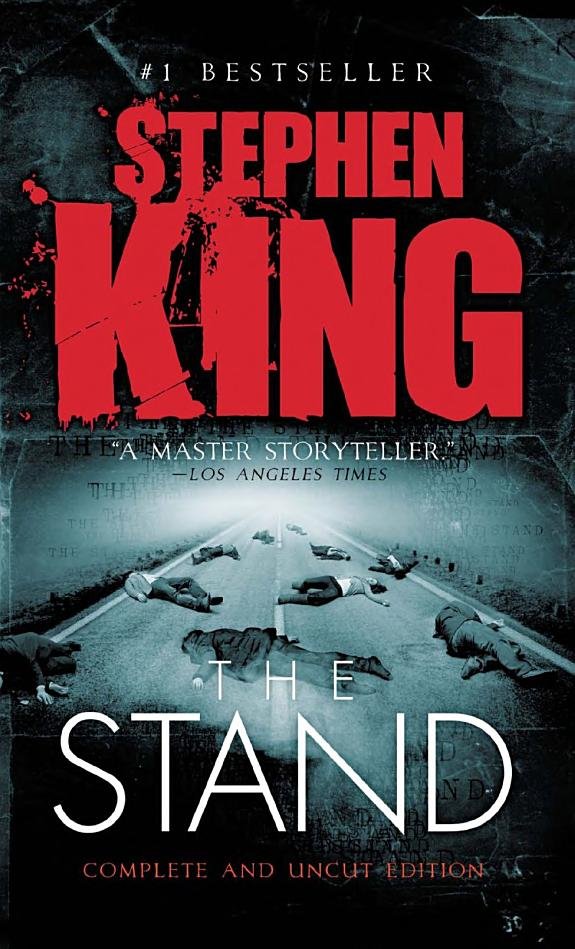
The Stand
2. The Stand by Stephen King
The Stand is King operating at full scale, and he knows it. Originally published in 1978 and then released in an expanded uncut edition in 1990, this is a post-apocalyptic epic about a weaponized flu that wipes out most of humanity, followed by the slow gathering of survivors into two opposing camps: one drawn toward a kind old woman in Nebraska named Mother Abagail, and one drawn toward the terrifying and charismatic Randall Flagg in Las Vegas. It is, at its heart, a story about the oldest conflict imaginable.
What makes The Stand extraordinary is not the apocalypse itself but the people who survive it. King gives you a cast of dozens and somehow makes nearly all of them feel real. Stu Redman, the quiet Texan who becomes an unlikely leader. Nick Andros, the deaf mute who might be the most decent person in the whole book. Larry Underwood, the self-absorbed rock musician who has to learn what it actually means to be responsible for other people. King spends hundreds of pages just letting you know these characters before the real conflict begins, and that investment pays off completely.
The book is long. Very long. The uncut edition runs over a thousand pages, and there are stretches where King clearly loves his world so much that he lingers longer than strictly necessary. If you are the kind of reader who resents a novel that takes its time, The Stand will frustrate you. But if you are the kind of reader who wants to live inside a story for a few weeks, who wants to feel genuinely bereft when you finish it, this is one of the most satisfying reading experiences King has ever offered. It is also, given recent history, uncomfortably easy to imagine.
The Stand asks a straightforward question: when civilization falls away, what do people actually choose to be? King’s answer is complicated and honest, and he does not let anyone off easy, including the reader.
This is perfect for fans of epic storytelling, readers who love character-driven fiction, and anyone who wants to spend serious time inside a fully realized fictional world. It is not ideal for readers who want a tight, fast narrative or who find large ensemble casts difficult to track.
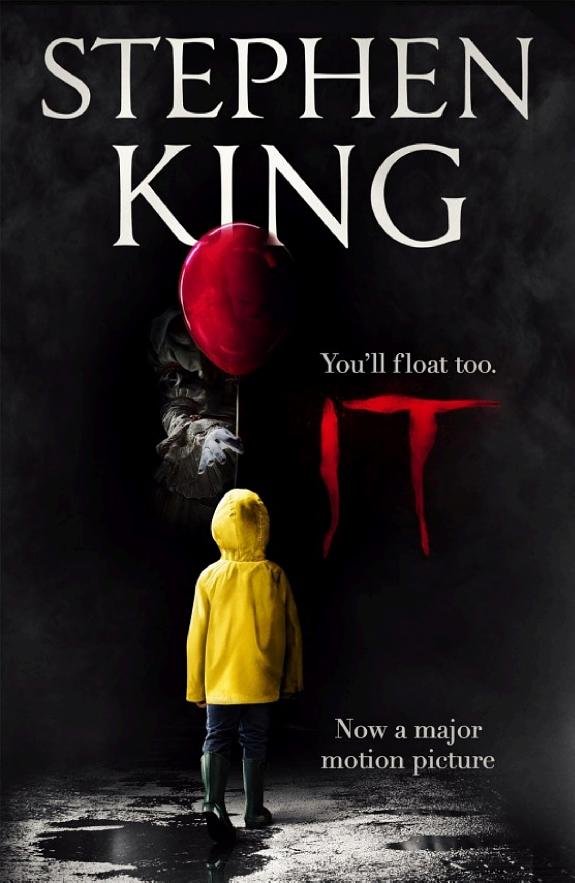
It
3. It by Stephen King
It was published in 1986 and it remains one of the most ambitious things King has ever attempted. Set in the fictional town of Derry, Maine, it follows a group of seven childhood friends who call themselves the Losers Club, and their encounters with an ancient, shapeshifting evil that most often appears as Pennywise the Dancing Clown. The story moves between two timelines, one in 1958 when the Losers first confront It as children, and one in 1985 when they are called back as adults to finish what they started.
The childhood sections are where King is at his absolute best. He captures the texture of being eleven years old with an accuracy that is almost uncomfortable. The friendships, the cruelties, the way summer feels endless, the specific terror of adults who do not listen or do not care. Pennywise is frightening precisely because It understands children, knows what they fear, and exploits it with gleeful precision. But the real horror in It is not the clown. It is the way Derry itself is complicit, the way the town forgets, the way adults look away, the way evil persists when communities decide it is easier not to see.
At over eleven hundred pages, It demands commitment. There are sections that wander, and the ending has been debated by readers for decades, not always charitably. King is swinging for something mythic in those final pages, and whether he connects depends largely on how much goodwill the preceding thousand pages have built up for you. For most readers, that goodwill is considerable. The friendships at the center of this book are written with so much warmth and specificity that the horror of losing them, or the possibility of losing them, hits harder than any monster could.
It is ultimately a book about the things we carry from childhood and the friendships that make those things bearable. Pennywise is just the part that gets the movie posters.
This is perfect for readers who grew up loving adventure stories and are ready for the adult version of that feeling, fans of horror that operates on multiple levels at once, and anyone who wants to understand why King’s readers are so fiercely loyal. It is not for readers who need a lean plot or who find extended childhood nostalgia sections slow going.
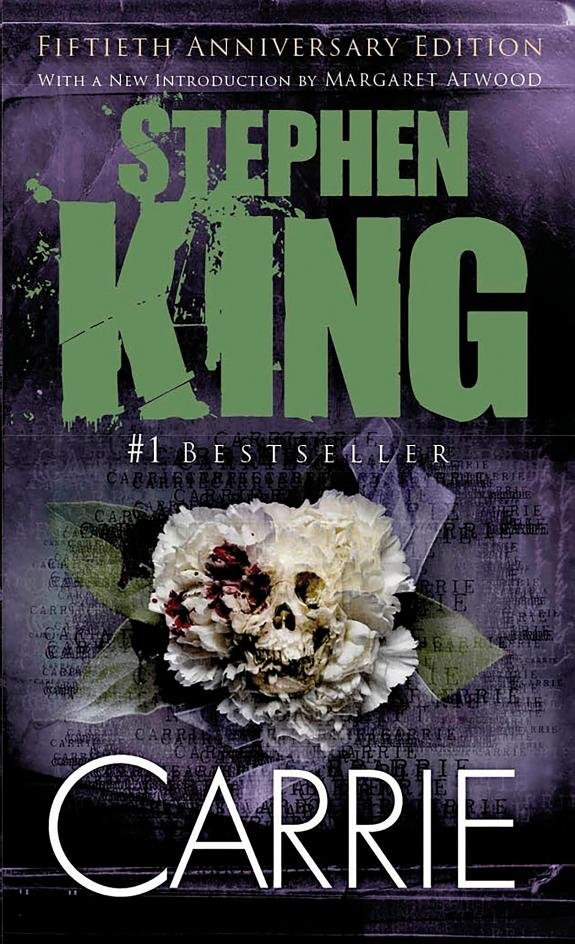
Carrie
4. Carrie by Stephen King
Carrie was King’s first published novel, released in 1974, and he famously fished it out of the trash after his wife Tabitha read the pages he had thrown away and told him to keep going. That is a good story. The book itself is even better. It follows Carrie White, a teenage girl raised by a fanatically religious mother, who is relentlessly bullied at school and who is slowly discovering that she has telekinetic abilities. It builds toward a prom night that becomes one of the most cathartic and devastating set pieces in horror fiction.
King tells the story through a clever structural device, weaving together traditional narrative with excerpts from fictional news reports, books, and testimonies written after the fact. This means you know from the very beginning that something terrible happens. The tension comes not from wondering if disaster strikes but from watching it become inevitable, from watching every small cruelty and every missed chance at kindness stack up into something that cannot be stopped. It is a tragedy dressed as a horror novel, and it is more honest about the social dynamics of adolescence than most books that claim to be about exactly that.
Carrie is short by King’s standards, barely over two hundred pages, and it moves with a propulsive energy that his longer books sometimes sacrifice. It is also a surprisingly empathetic portrait of its villain, if Carrie can even be called that. King never lets you forget that she is a frightened, lonely girl who wanted nothing more than to be treated like a human being. The horror of the ending is inseparable from the grief of it. If you have never read King before, this is actually a fine place to start, not because it is his best work, but because it contains everything that makes him worth reading in miniature.
Carrie works because King refuses to make her a symbol. She is a specific person with specific wounds, and that specificity is what makes the whole thing so hard to shake.
This is perfect for first-time King readers, fans of horror with strong social commentary, and anyone who wants a complete and emotionally resonant story they can finish in a weekend. It is not the right choice for readers who prefer King’s sprawling, world-building mode or who want a more complex plot structure.
11/22/63
5. 11/22/63 by Stephen King
11/22/63 is the book King wrote for readers who thought they did not like Stephen King. Published in 2011, it follows Jake Epping, a high school English teacher in Maine who discovers a time portal in the back of a diner that always leads to the same moment in 1958. His dying friend Al, who has spent years going back through the portal, has one unfinished mission: travel back, wait out the years, and prevent the assassination of John F. Kennedy on November 22, 1963. Jake agrees to try. The past, King tells us, does not want to be changed, and it will push back.
What makes this novel remarkable is that the Kennedy assassination plot is almost beside the point. The real story is about Jake falling in love, with a woman named Sadie and with the texture of late 1950s and early 1960s America, the food, the music, the cars, the particular quality of light in a time before everything accelerated. King writes that era with obvious affection, and his portrait of small-town Texas is some of the most purely pleasurable writing he has ever done. The romance at the center of the book is genuinely moving in a way that sneaks up on you.
The time travel mechanics are handled with care, and King is smart enough to keep them from overwhelming the human story. The question of whether stopping the assassination would actually make things better is handled with real intellectual honesty, and the ending earns its emotional weight without cheating. This is King at his most generous and his most melancholy. It is also his most accessible book, the one you can hand to someone who reads almost exclusively literary fiction and watch them disappear into it for a week. That is not nothing. That is, in fact, quite a lot.
11/22/63 is a love story about a man, a woman, and a particular moment in American history, and King handles all three with more tenderness than anyone who only knows his horror work would expect.
This is perfect for readers who love historical fiction, anyone curious about Kennedy-era America, fans of time travel stories that prioritize character over mechanics, and readers who want to introduce a skeptical friend to King’s work. It is not ideal for readers who want relentless horror or who find slower, more romantic pacing frustrating.
Stephen King’s body of work is large enough that you could spend years inside it and still find something you had not read. But these five books represent the clearest picture of what he does and why it matters. He is a writer who takes ordinary people seriously, who believes that fear and grief and love are not separate categories but parts of the same experience. That is rarer than it sounds.
If you are new to King, start with Carrie or The Shining and see how you feel. If you have been reading him for years, maybe 11/22/63 is the one you have been putting off. Any of these books will reward the time you give them. Some of them will ask for more time than you planned to give, but that is a complaint that tends to disappear once you are a hundred pages in and completely unable to stop.